




TL;DR:
- Experiential travel for teams involves purpose-driven trips that foster genuine trust and cultural bonding. Such programs deliver measurable business benefits, including increased engagement, better communication, and stronger team identity. Proper planning and personalized experiences ensure lasting emotional connections that surpass traditional incentive trips.
Most corporate leaders treat team travel as a reward, a break from the office, a pat on the back. That framing is costing them. Experiential travel for teams is something fundamentally different: it is a structured investment in human behavior, team culture, and measurable business performance. When designed correctly, it builds the kind of trust and communication that no offsite meeting room ever will. This guide breaks down what it is, why it matters, and exactly how to build a program that your executive team can actually justify.
Table of Contents
- What is experiential travel for teams and why does it matter?
- Core elements of successful experiential team travel programs
- Measuring the impact: ROI and employee outcomes of experiential incentive travel
- Practical tips for planning impactful team experiential travel
- Why experiential travel is more than just a trip: a fresh perspective
- Plan your next transformative experiential team travel with Elite Travel
- Frequently asked questions
What is experiential travel for teams and why does it matter?
Experiential travel for teams is the practice of designing curated trips around specific business outcomes, replacing generic resort getaways with purposeful, immersive experiences that bond people through shared challenge, novelty, and emotion. Think cooking a traditional meal with a local family in Tuscany, navigating a cultural challenge together in Marrakech, or learning to sail as a group off the coast of Croatia. These are not activities layered onto a trip. They are the trip.
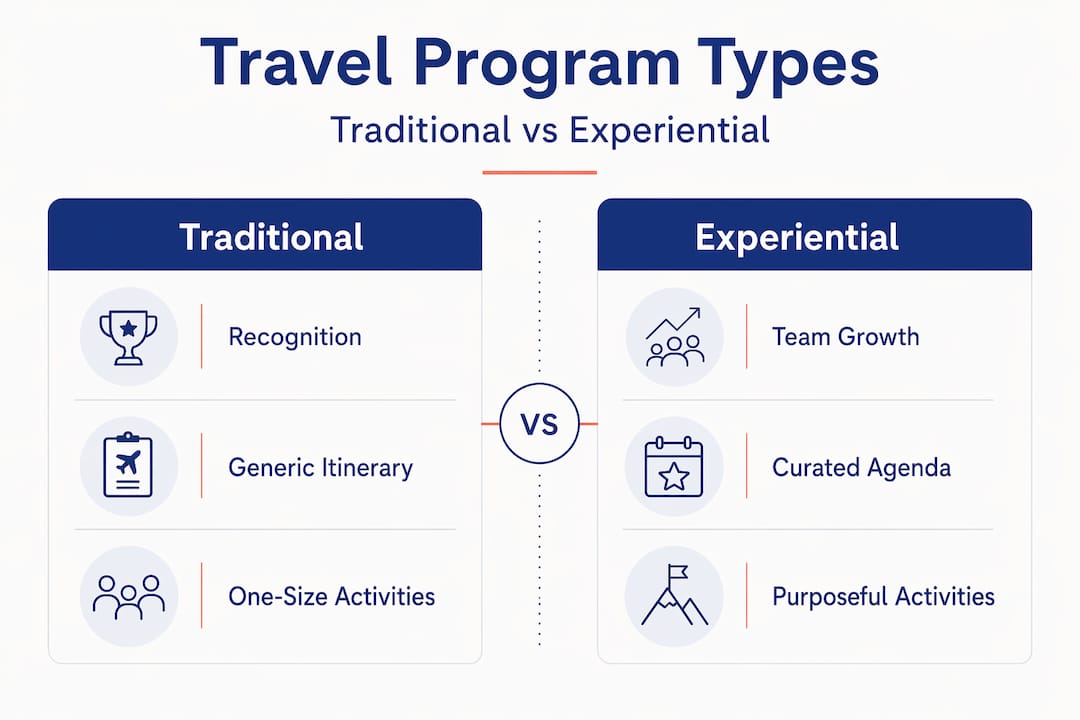
The distinction matters because traditional incentive travel, think hotel conferences and golf days, rewards performance without changing behavior. Experiential learning for teams works differently. It creates emotional memory. People remember how they felt navigating an unfamiliar city together far longer than they remember the buffet at a five-star hotel.
Here is why this model is gaining traction fast in corporate programs:
- Remote and hybrid teams lack the organic trust-building that comes from shared physical space. Experiential travel fills that gap in a concentrated way.
- Employee engagement and retention improve sharply when people feel genuinely invested in, not just rewarded. Well-designed experiential incentive trips produce a 64% increase in employee engagement.
- Culture building at scale is nearly impossible through video calls. Collaborative travel experiences create the shared stories that define a team’s identity.
- Cross-functional communication improves when colleagues interact outside their usual roles and hierarchies.
If you want to understand the impact of incentive travel on your specific team dynamics, the research is consistent: in-person, experience-driven travel moves the needle in ways that bonuses alone never do.
Core elements of successful experiential team travel programs
Now that we understand the importance of experiential travel, let’s explore the building blocks for creating successful programs your team will value.
What separates a forgettable trip from one people talk about for years? It almost always comes down to four elements: trip structure, destination fit, activity design, and timing. Here is how to get each one right.
- Trip length that respects real life. 50% of incentive trip participants consider 4 to 6 days the ideal duration for team experiential travel. Long enough to get past small talk and into genuine connection. Short enough to minimize work disruption.
- Structured versus unstructured time. The most effective programs allocate roughly 60% of the itinerary to facilitated experiences, workshops, and team-building travel activities, and the remaining 40% to free time where organic relationships develop. Over-scheduling kills the magic.
- Destination accessibility. Direct air access matters more than you think. A grueling travel day front-loads exhaustion and fragments your group. Prioritize destinations with reliable direct routes.
- Cultural immersion as a core feature. Novel environments stimulate learning and lower social defenses. Teams that are slightly outside their comfort zone together bond faster and deeper. Destination selection insights from experienced operators consistently show that destinations offering both luxury and cultural texture perform best.
- Inclusivity in activity design. Tiered activity options, meaning physical, creative, culinary, and experiential tracks, ensure no team member feels excluded. The last thing you want is the trip being remembered as the one where half the team sat out.
| Feature | Traditional incentive travel | Experiential team travel |
|---|---|---|
| Primary goal | Recognition and reward | Behavior and culture change |
| Activity design | Generic, recreation-focused | Curated, outcome-driven |
| Cultural engagement | Minimal | Central to itinerary |
| Personalization | Low | High |
| Measurable business outcomes | Rare | Built into program design |
| Emotional impact | Short-term | Long-lasting |
Pro Tip: Start planning incentive travel effectively at least 3 to 6 months in advance, especially if you want access to premium venues and exclusive local experiences. Also factor in whether domestic or international travel better serves your team’s needs before you set a destination.
Measuring the impact: ROI and employee outcomes of experiential incentive travel
Understanding core program elements helps us appreciate how these investments generate concrete returns for your organization.

HR leaders face a recurring challenge: justifying discretionary spend to finance teams. Experiential travel is discretionary until you put the numbers in front of them. The ROI story here is stronger than most people realize.
Hard ROI includes measurable sales performance and retention improvements. Sales teams with experiential programs achieve a 3:1 return on investment for every dollar spent. That is not a soft metric. That is revenue.
Soft ROI is equally important and often undervalued. When teams travel together, communication patterns change back at the office. Cross-functional collaboration improves. Psychological safety increases. People who navigated an unfamiliar destination together are less likely to avoid difficult conversations in a Monday morning meeting.
Key outcomes corporate programs consistently report include:
- 64% improvement in employee engagement with well-designed immersive trips for teams
- 17% improvement in cross-functional communication following shared experiential travel
- Increased retention rates particularly among high performers who feel genuinely valued
- Stronger team identity and cultural alignment between departments and locations
Budget benchmark: The average per-person spend for experiential incentive travel increased 4% to $5,100, reflecting growing confidence in its business value.
When building the business case for incentive travel for your leadership team, use these figures as anchors. And when evaluating destinations, keep in mind that selecting incentive trip destinations based on experience richness rather than cost alone consistently delivers better business outcomes.
Practical tips for planning impactful team experiential travel
With ROI clear and planning insights in place, let’s look at what actually separates a well-executed program from one that falls flat in practice.
The most common failure mode in experiential team travel is not budget. It is planning. Teams either start too late, over-schedule, or build itineraries that work on paper but not for actual people with different interests and energy levels.
Here is what expert planning research consistently recommends:
- Start 3 to 6 months out. Premium venues, local guides, and exclusive experiences book early. Last-minute planning means second-best options.
- Budget a 10 to 15% contingency. Upgrades, weather changes, and personalized touches always surface. Build the flexibility in from day one.
- Respect the 60/40 rule. Keep roughly 60% of the itinerary as free or semi-structured time. The best team bonding stories almost always happen during unplanned moments.
- Offer tiered activity tracks. A culinary experience, a walking tour, and a physical challenge should all be on the table so every team member finds something compelling.
- Tie the trip to a business narrative. Frame the travel program around a theme or company milestone. That context makes team-building travel activities feel meaningful rather than manufactured.
- Integrate with HR and talent strategy. Experiential travel that aligns with performance cycles and recognition programs earns executive support. It stops being a line item and starts being a retention tool.
Pro Tip: Send a short survey within two weeks of returning from the trip. Ask specific questions about behavioral changes, communication comfort, and cross-team trust. These post-trip metrics are what turn your effective incentive travel planning from a one-time event into a continuously improving program. When you are ready to explore what a program could look like, browsing curated incentive travel packages is a strong starting point.
Why experiential travel is more than just a trip: a fresh perspective
Here is the uncomfortable truth most travel vendors will not tell you: most corporate incentive trips are not actually experiential. They are recreational trips dressed up in business language. The difference is not in the destination. It is in the intent behind every single decision made during the planning process.
True experiential learning for teams requires that every activity, every meal, every free afternoon be chosen with a behavioral outcome in mind. Not manufactured, not forced, but thoughtfully designed. A winemaking session in Burgundy is just tourism unless you facilitate a reflection conversation at the end about what it felt like to fail at something and try again with your colleagues. That conversation is the asset. The wine is the context.
The programs that actually change how teams work when they return share three things we rarely see discussed. First, they are personal. Not just personalized to a demographic, but designed around the actual people going, their passions, their work history together, and what the team genuinely needs. Second, they create what we call micro-moments: a shared joke on day two, a moment of genuine vulnerability during a cultural challenge, a sunset conversation between colleagues who never talk at the office. These are not accidental. They are designed into the structure of the day.
Third, the best programs build in meaning beyond the company. Cause-aligned experiences, whether that is volunteering, supporting local artisans, or carbon-conscious itinerary design, give teams a shared moral purpose that outlasts the trip itself.
“Experiential incentive travel replaces standardized trips with personalized experiences that foster lasting emotional connections and strengthen cross-team trust.” — Marc Matthews, Pulse Experiential Travel
The ROI of trust and cultural strength is real. It is just harder to put on a spreadsheet. If your current program cannot answer the question “what did this trip change?” then it is recreation, not investment. That distinction is worth every planning hour it takes to get right.
Plan your next transformative experiential team travel with Elite Travel
If this article has shifted how you see team travel, the next step is working with experts who can translate that vision into an itinerary that actually delivers. Elite Travel Management Group has spent 35 years designing high-end, purposeful journeys for corporate groups who expect more than a standard package.
Our team handles every detail, from venue selection and activity design to logistics and on-the-ground support, so you can focus on your people. We offer concierge-level planning aligned to your company goals, with no service fees and a price match guarantee. Whether you are drawn to our incentive travel vacation packages, looking for something more active through our adventure travel packages, or ready to explore the full range of what Elite Travel luxury vacations can offer your team, we are available 24/7 to help you build something unforgettable.
Frequently asked questions
What exactly does experiential travel for teams involve?
Experiential travel for teams involves curated trips combining unique destination experiences, team-building activities, and purposeful social interaction designed to enhance engagement and collaboration. As Marc Matthews explains, these programs replace standardized trips with personalized ones that create lasting emotional connections and strengthen cross-team trust.
How long should an experiential team travel program last?
Most participants prefer 4 to 6 days for experiential travel, striking the right balance between meaningful connection time and minimal disruption to work and personal responsibilities.
How can we measure the success of our experiential travel program?
Success is best tracked through post-trip engagement surveys, observable changes in cross-functional communication, and retention and performance metrics in the weeks following the trip. Teams that travel together for incentives show a 17% communication improvement in cross-functional settings.
What budget should we expect for experiential travel?
Budgets typically range from $1,200 to over $5,100 per person depending on trip length, destination, and program complexity. The average per-person spend for high-impact experiential incentive programs reached $5,100 in 2026, reflecting the growing organizational commitment to meaningful team investment.
