




TL;DR:
- Effective travel budget optimization begins with clarifying your trip’s purpose to determine spending priorities.
- Accurately itemize all expenses, including overlooked costs like baggage fees and transfers, using real quotes and buffers.
- Using points valuation and flexible travel days helps reduce cash costs, while real-time tracking ensures adherence during the trip.
Travel budget optimization is the practice of intentionally allocating your spending across every trip category so you extract maximum value from every dollar. Done right, it means flying to Europe for less than a domestic weekend trip, staying in places that feel luxurious without the full-price tag, and returning home without financial regret. The tools that make this possible include Google Flights, NerdWallet’s points valuations, and award search platforms. Budget-conscious travelers who plan with purpose spend less and enjoy more. This guide walks you through every step.
How to optimize travel budgets: start with your trip’s purpose
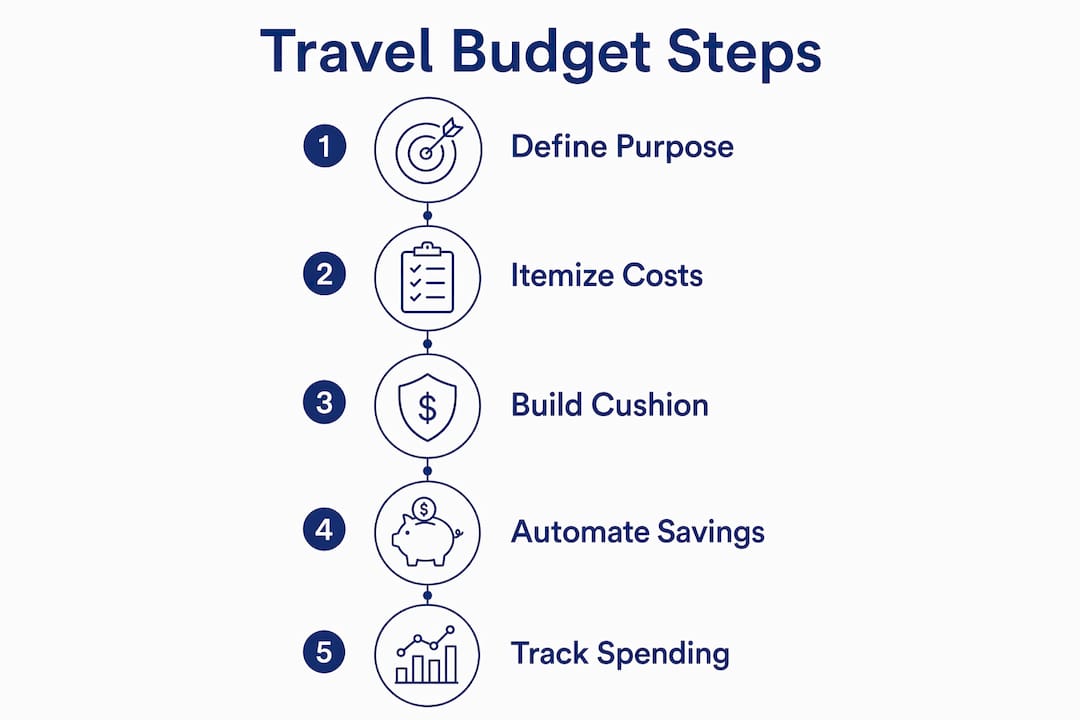
The single most powerful budgeting move you can make is deciding why you are traveling before you spend a dollar. Budget travel is about intentional trade-offs based on trip purpose, not just spending less. That distinction matters because a relaxation trip to the Amalfi Coast has completely different spending priorities than a cultural deep-dive through Kyoto or an adventure trek in Patagonia.

Once you know your purpose, your budget categories become obvious. A food-focused traveler in Tokyo should allocate heavily toward dining and lightly toward accommodation. An adventure traveler in Costa Rica needs to budget for guided tours and gear rentals, not fine dining. Misaligned spending is the number one cause of budget regret.
Trip length and destination also shape your numbers dramatically. A seven-night stay in Lisbon costs far less than the same duration in Zurich, even with identical behavior. Research destination-specific daily costs using resources like Numbeo or travel forums before you set any numbers.
Here is a practical framework for setting your purpose-driven budget:
- Define your trip type: relaxation, adventure, culture, food, or a mix
- List your non-negotiables: the experiences you will not compromise on
- Identify your flexible categories: where you are genuinely happy to spend less
- Set a total trip ceiling: the absolute maximum you will spend, including emergencies
- Work backward: divide the ceiling across categories based on your priorities
Financial adviser Nishann LaNata recommends six months of lead time for budgeting and building a financial cushion. That timeline gives you room to find deals, accumulate points, and avoid stress-driven last-minute bookings that always cost more.
Pro Tip: Set up a dedicated savings account the day you decide on a destination. Automating a fixed monthly transfer removes willpower from the equation entirely.
What expense categories do most travelers forget to budget?
Most travelers budget for flights and hotels, then act surprised when they run out of money. Overlooked expenses like airport transfers, baggage fees, travel insurance, daily meals, and souvenirs are the most common causes of budget overruns. Accounting for them upfront is what separates a working budget from a wishful one.
The table below shows every major expense category, a realistic budgeting approach for each, and the most common mistake travelers make per category.
| Category | Budgeting approach | Common mistake |
|---|---|---|
| Flights | Use Google Flights price calendar for real quotes | Budgeting the cheapest fare seen, not the one available on your dates |
| Lodging | Get actual quotes for your exact nights | Using average nightly rates instead of real availability pricing |
| Ground transport | Research airport transfer costs in advance | Assuming taxis or rideshares will be cheap in unfamiliar cities |
| Food and drink | Set a daily per-meal limit based on destination | Ignoring that tourist-area restaurants cost 2x to 3x local spots |
| Activities and tours | List planned activities and get real prices | Leaving activities as a vague “miscellaneous” line item |
| Travel insurance | Get quotes from providers like World Nomads or Allianz | Skipping it entirely to save money, then paying far more when things go wrong |
| Baggage fees | Check airline fee schedules before booking | Paying gate prices, which are significantly higher than prepaid rates |
| Visa and entry fees | Check government websites for exact costs | Forgetting visa fees exist until the airport |
| Local SIM or data | Research local carrier options before departure | Paying international roaming rates for an entire trip |
| Souvenirs and gifts | Set a fixed cash envelope limit | Treating souvenirs as “outside the budget” |
The best budgeting method is itemizing fixed quotes per category rather than relying on averages, then adding a contingency buffer of 10 to 15 percent on top of your total. Spreadsheets that use daily averages consistently break because real travel does not behave like an average. A single guided day tour in the Galápagos costs more than three days of food in Southeast Asia.
For low-cost carriers like Spirit or Ryanair, prepaying for baggage is always cheaper than paying at the gate. Budget this as a fixed cost at booking, not an afterthought. The same logic applies to seat selection fees, which can add up quickly on a family trip.
For ground transport, consider fixed-price transfers in destinations like Iceland, where metered taxis from Keflavík Airport to Reykjavík can vary wildly depending on traffic and route. Knowing your transfer cost in advance removes one of the most common budget surprises.
How do credit card points and flight tools reduce travel costs?
32% of 2026 summer travelers plan to use credit card points or miles to cover some travel expenses. That is a significant share of the traveling population, but nearly half of all consumers find rewards programs too complex to use effectively. Complexity is the enemy of savings here.
The way to cut through that complexity is to calculate the actual value of each redemption before you commit. NerdWallet’s formula is straightforward: take the cash price of the ticket or hotel, subtract any booking fees, then divide by the number of points required. This calculation tells you exactly what each point is worth in that specific redemption. If the result is lower than the program’s standard valuation, you are getting a bad deal.
Here is a step-by-step process for using points and technology to reduce cash spend:
- Track flight prices early. Use Google Flights’ price tracking feature or Hopper to monitor fare changes on your target route. Set alerts at least 60 days before departure.
- Know your points currency. Chase Ultimate Rewards, American Express Membership Rewards, and Capital One Miles each transfer to different airline and hotel partners at different rates. Know which partners give the best value before you accumulate.
- Calculate redemption value before booking. Apply the cash-minus-fees divided by points formula every single time. Never redeem on instinct.
- Use award search tools. Platforms like PointsYeah allow paid users to set up award alerts that monitor inventory and price changes, so you catch deals before they disappear.
- Book cash when points underperform. If a cash fare is genuinely cheaper per point of value, pay cash and save your points for a higher-value redemption later.
Pro Tip: Never transfer points to an airline or hotel program until you have a confirmed award booking in hand. Transferred points are locked in that program and cannot be moved back.
Practical travel budget tips for staying on track day to day
Effective travel budgeting does not end when you book your flights. The behaviors you practice before and during the trip determine whether your budget holds.
Choosing the right travel days makes a measurable difference. Flying on Sundays and Mondays consistently costs more due to weekend leisure demand and Monday business travel. Midweek departures, particularly Tuesday and Wednesday, tend to offer lower fares on most routes. Flexibility with dates by even two or three days can save hundreds of dollars on transatlantic routes.
Accommodation deserves more scrutiny than most travelers give it. The assumption that Airbnb is always cheaper than hotels is wrong in many cities. In Amsterdam, Paris, and Barcelona, short-term rental regulations have pushed Airbnb prices above comparable hotel rates in central neighborhoods. Always compare both options for your specific dates using real quotes, not assumptions. For off-peak travel, resources like off-peak savings strategies show how timing alone can cut accommodation costs by 30 to 40 percent in seasonal destinations.
Tracking your spending in real time is what separates travelers who finish under budget from those who do not. Apps like Trail Wallet or TravelSpend let you log every purchase by category and show you exactly how much daily budget remains. Behavioral controls and spending visibility are the same tactics corporate travel managers use to keep company trips on budget. The principle transfers directly to personal travel.
A few more habits that protect your budget:
- Use local currency and cash for small purchases. Dynamic currency conversion at card terminals always applies a worse exchange rate. Always choose to pay in local currency.
- Share your budget with travel partners. Misaligned expectations between travel companions are a leading cause of overspending. Agree on daily limits before you depart.
- Avoid best-case pricing. Budget for the realistic scenario, not the cheapest possible outcome. If your flight has a 20% chance of a delay requiring an overnight hotel, factor that into your contingency.
Pro Tip: Withdraw a fixed cash amount at an ATM on arrival and treat it as your daily spending envelope. When it runs out, you are done for the day. This single habit prevents the “I’ll just put it on the card” spiral.
Key takeaways
Maximizing travel savings requires purpose-driven planning, accurate expense itemization, and real-time spending discipline throughout the trip.
| Point | Details |
|---|---|
| Start with trip purpose | Define why you are traveling first; it determines every spending priority that follows. |
| Budget every expense category | Account for baggage fees, transfers, insurance, and souvenirs before departure to prevent overruns. |
| Calculate points value before redeeming | Use the cash-minus-fees divided by points formula to confirm every redemption delivers real savings. |
| Fly midweek and compare accommodation types | Tuesday and Wednesday departures and real-quote comparisons between hotels and rentals consistently reduce costs. |
| Track spending in real time | Apps like Trail Wallet or TravelSpend give you daily visibility and prevent gradual overspending. |
Why I think most travel budgets fail before the trip even starts
After years of watching travelers plan and then overspend, I have come to one conclusion: most travel budgets fail at the intention stage, not the execution stage. People set a number that sounds reasonable, skip the line-item work, and then discover mid-trip that “reasonable” was never grounded in reality.
The travelers I see get this right share one habit. They treat their budget like a project plan, not a rough estimate. They get actual quotes. They check baggage fee schedules. They calculate what their points are actually worth instead of assuming they are sitting on a goldmine. That level of specificity feels tedious before the trip, but it is the only thing that produces a budget you can actually trust.
The other shift that matters is moving away from the idea that budget travel means cheap travel. The goal is not to spend as little as possible. It is to spend deliberately, so that every dollar goes toward what genuinely matters to you on that specific trip. A traveler who spends $400 on a private cooking class in Bologna and $30 on accommodation has made a better budget decision than one who spent $200 on a forgettable hotel dinner. Intentionality, not frugality, is the real skill.
Early planning is not just about finding deals. It creates the mental space to make good decisions instead of reactive ones. When you are not rushed, you compare options. You calculate. You choose. That is where the real savings live, and that is where the best trips are built.
Let Elitetravelgroup build your best-value trip

Elitetravelgroup has spent 35 years designing trips that feel exceptional without requiring you to overpay for them. The team knows which hotels offer genuine value, which experiences are worth the splurge, and which corners of Europe and beyond deliver outsized returns on your travel investment. Whether you are planning an adventure trip or a milestone celebration, Elitetravelgroup’s adventure travel packages are built around your priorities, not a generic itinerary. There are no service fees, a price match guarantee, and 24/7 support. If you want expert planning that actually protects your budget while delivering a trip worth remembering, explore what luxury agents deliver for travelers who care about value.
FAQ
What is the best way to start optimizing a travel budget?
Define your trip’s purpose first, then build a line-item budget using real quotes for every expense category. Financial adviser Nishann LaNata recommends starting at least six months before departure to allow time for deal-finding and building an emergency fund.
How do I know if redeeming points is actually saving me money?
Use the formula: cash price minus booking fees, divided by the number of points required. If the result is lower than the program’s published point valuation, the redemption is a poor deal and paying cash is the better choice.
Which travel days are cheapest for flights?
Tuesday and Wednesday departures are consistently cheaper than Sunday and Monday flights, which carry premium pricing due to leisure and business travel demand. Flexibility of even two to three days can produce significant savings on international routes.
What expenses do most travelers forget to budget for?
Airport transfers, baggage fees, travel insurance, visa costs, local SIM cards, and souvenirs are the most frequently overlooked categories. Budgeting each as a fixed line item before departure prevents the overruns that catch most travelers off guard.
Is Airbnb always cheaper than hotels?
No. In cities like Amsterdam, Paris, and Barcelona, short-term rental regulations have pushed Airbnb prices above comparable hotel rates in central areas. Always compare real quotes for your specific dates rather than assuming one option is cheaper.
Recommended
- Luxury Travel Agents Deliver Value & Exclusivity | Elite Travel
- Unlocking Affordable Luxury Travel Secrets | Elite Travel
- How to Plan Luxury Travel: 15% Savings & 40% More Joy
- Reasons Why Online Travel Agents Save You Money | Elite Travel
