




TL;DR:
- Successful multi-generational trips require early communication, flexible planning, and accommodating diverse needs.
- Choosing destinations with variety and booking accommodations based on sleep habits help ensure group satisfaction and comfort.
Multi-generational travel is defined as any trip involving three or more generations of the same family traveling together, and organizing it successfully requires balancing mobility needs, energy levels, budgets, and personal preferences across a single itinerary. The challenge is real: grandparents need accessible rooms and slower pacing, toddlers need nap schedules, and teenagers need stimulation. Done right, these trips produce some of the most meaningful memories a family can share. This guide gives you a practical, step-by-step framework for how to organize multi-generational trips without the chaos.
How to communicate before booking a multi-generational trip
The single most common reason multi-generational trips fall apart is unspoken expectations. Someone assumed the grandparents would pay. Someone assumed everyone wanted a beach. Someone assumed the kids would just go along. Fix this before you book anything.
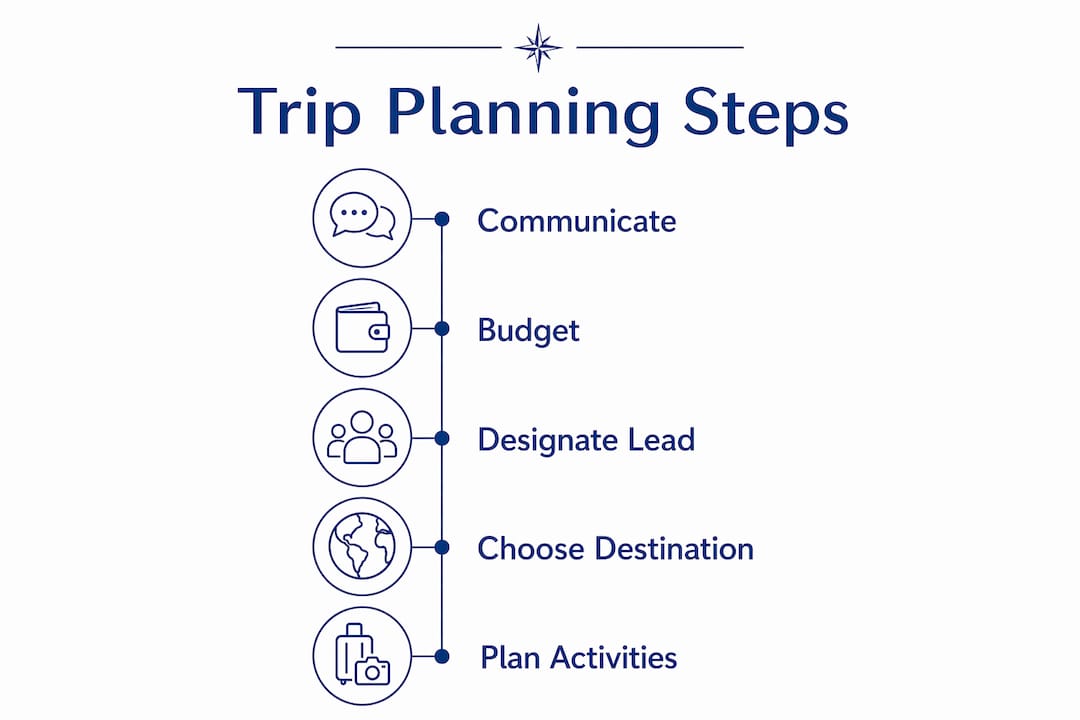
Start with a group video call on Zoom or Google Meet to surface preferences, concerns, and hard limits. Follow it up with a Google Forms poll so quieter family members can share honest opinions without social pressure. Ask specifically about budget range, preferred trip length, must-have activities, and any physical limitations. Collaborative tools like group chats and polling platforms are the most effective way to gather honest input and confirm accessibility needs for all ages.
Budget conversations deserve their own dedicated discussion. Clarify upfront whether costs are split evenly, divided per family unit, or partially covered as a gift from one generation. Honest pre-trip budget talks prevent the single most common source of conflict on group trips. Put the agreed structure in writing, even if it’s just a shared Google Doc.
Designate one person as the trip lead. This is not a dictatorship. It’s a logistics role: someone who holds the reservations, tracks the group chat, and makes the final call when the group hits a stalemate. Travel advisors recommend presenting no more than two choices when asking a large family to decide anything. Decision fatigue is real, and a group of twelve people will never agree on five options.
Pro Tip: Set togetherness expectations before you leave home. Decide which events are mandatory for the whole group, like a welcome dinner or a specific excursion, and make everything else optional. Converting unspoken expectations into clear agreements prevents resentment mid-trip.
What makes a destination right for all ages?
The best destinations for multi-generational travel offer what travel professionals call “middle ground”: enough variety that a 70-year-old and a 7-year-old can both have a genuinely good day without either one compromising. Destinations with built-in variety allow some family members to relax while others explore, which is the structural key to group satisfaction.
Here is a quick comparison of the most popular lodging formats for multi-generational groups:
| Lodging type | Best for | Watch out for |
|---|---|---|
| Vacation rental (VRBO, Airbnb) | Privacy, shared kitchen, flexible schedules | Fewer on-site amenities, no daily housekeeping |
| All-inclusive resort | Simplified budgeting, activities on-site | Less flexibility, can feel crowded |
| Cruise (Royal Caribbean, Disney Cruise Line) | Built-in entertainment, one-time packing | Motion sickness risk, limited shore time |
| Hotel suite cluster | Proximity with privacy, room service | Higher cost, less communal space |
Accessibility is non-negotiable when traveling with older relatives. Filter for “accessible rooms” and “elevator access” on Booking.com or Hotels.com before shortlisting any property. Check whether the destination’s main attractions involve cobblestones, steep stairs, or long walks, since many historic European cities are beautiful but physically demanding. Room adjacency and sleep habit compatibility matter more than raw bed count. An early-rising grandparent sharing a thin wall with a teenager who sleeps until noon creates friction that no itinerary can fix.
Book accommodations as early as possible. Large groups need specific room configurations, and those sell out first. For luxury family travel, properties like Four Seasons resorts and Aman hotels offer connecting suites and dedicated concierge support that simplify group logistics considerably.
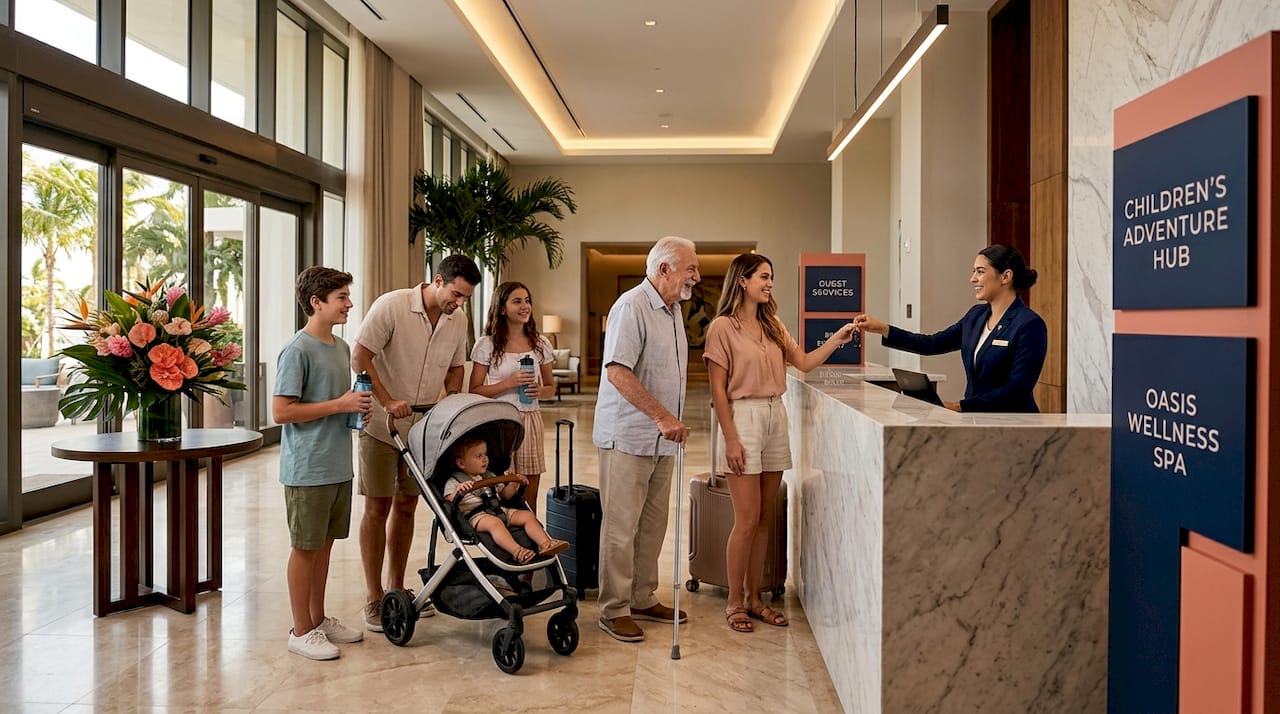
Pro Tip: When comparing resorts, check whether the property has a kids’ club and a spa within the same building. That single feature solves the “grandparents want quiet, kids want activity” problem without anyone having to compromise.
How to plan a flexible itinerary for diverse age groups
The most effective multi-generational itineraries are built in two layers. The first layer locks down anchor events: the welcome dinner, the one big excursion, the farewell breakfast. The second layer stays deliberately open, with breakout options and quiet time built in. Booking anchor logistics early while keeping the rest of the day flexible reduces stress and accommodates the mixed energy levels that define every multi-generational group.
Follow these steps when building your daily schedule:
- Limit planned activities to one main event per day. A morning museum visit followed by an afternoon boat tour followed by a sunset dinner is too much. Pick one. Limiting to one main activity and reserving dinner plans in advance keeps the group functional and the mood positive.
- Build in nap and quiet time. Young children and older adults both need recovery periods. Schedule a two-hour midday window where nothing is planned. This is not wasted time. It prevents the 4 p.m. meltdown that derails the entire evening.
- Create breakout groups. Not every activity needs every person. Breakout groups for some activities prevent exhaustion and allow each generation to do what they actually enjoy. Teenagers can kayak while grandparents sit at a café. Both groups have a better afternoon.
- Account for age-based pacing differences. Children have shorter attention spans and slower physical pace. Age-based pacing differences must be built into the schedule to avoid burnout, not managed reactively when someone starts crying in a museum.
- Plan meals with reservations. Walking a group of twelve into a restaurant without a reservation is a recipe for a 45-minute wait and a very hungry toddler. Book dinner reservations at least two weeks in advance, especially in peak season.
Nature-based activities are a reliable cross-generational choice. A beach walk, a national park visit, or a scenic boat ride provides calming, cross-generational appeal with less reliance on high stimulation. These activities also photograph well, which matters more than most families admit.
Pro Tip: Build a shared photo album on Google Photos before the trip and share the link with every family member. It becomes the trip’s living memory and gives teenagers a low-effort way to contribute to the group experience.
How to coordinate logistics for a large family group
Transportation is where multi-generational trips get logistically complicated. A family of twelve cannot fit in two sedans. Rent a passenger van through Enterprise or National Car Rental, or coordinate two vehicles with a designated lead driver for each. For international trips, pre-book airport transfers through the hotel or a local ground operator to avoid the chaos of finding taxis with luggage and car seats.
Use these logistics strategies to keep the group moving smoothly:
- Group flight bookings: Use a single booking session on Google Flights or through a travel advisor to keep the group on the same flights. Splitting across different flights creates coordination problems at every connection.
- Expense tracking: Use Splitwise or a shared Google Sheet to track shared costs in real time. Assign one person to manage it. Ambiguity about who paid for what is a reliable source of post-trip tension.
- Packing coordination: Assign a shared “family tech bag” for chargers, adapters, and first-aid supplies so these items aren’t duplicated across six suitcases. Color-coded luggage tags help at baggage claim with large groups.
- Reservation management: Keep all confirmations in a single shared folder on Google Drive. Every adult in the group should have access so the trip doesn’t collapse if the designated planner loses their phone.
For expert group travel planning, the difference between a smooth trip and a stressful one often comes down to who holds the information. Centralize it.
Pro Tip: Download offline maps on Google Maps for every destination before you leave. Cell service is unreliable in many resort areas and rural destinations, and a group of twelve people standing at a crossroads without directions is nobody’s idea of a vacation.
Key takeaways
Successful multi-generational trips require locking down anchor logistics early, building flexible daily schedules, and converting unspoken expectations into clear group agreements before departure.
| Point | Details |
|---|---|
| Communicate before booking | Use Google Forms polls and video calls to surface honest preferences and budget limits from every generation. |
| Choose middle-ground destinations | Select locations with variety so each generation can have a genuinely good day without compromising. |
| Build a two-layer itinerary | Lock anchor events early and keep the rest of the day open with breakout options and quiet time. |
| Prioritize room adjacency | Book accommodations based on sleep habits and proximity, not just bed count, to reduce daily friction. |
| Centralize all logistics | Use Splitwise, Google Drive, and shared photo albums to keep information accessible to every adult in the group. |
What I’ve learned from years of watching these trips succeed and fail
I’ve seen families spend months planning a trip and still arrive exhausted by day two. The problem is almost never the destination. It’s the assumption that a well-designed itinerary will manage human dynamics. It won’t.
The trips that work are the ones where someone had the uncomfortable conversation before departure. Not the “what do you want to do?” conversation, but the real one: “How much time do you actually want to spend together each day?” Most families discover they want less togetherness than they planned for, and that’s not a failure. It’s honest. Balancing shared moments with alone time is what separates a trip people remember fondly from one they quietly agree never to repeat.
The other thing I’d push back on is the instinct to fill every hour. Families often feel guilty about “wasted” vacation time if they’re not doing something. But the best memories from multi-generational trips are almost always unplanned: the afternoon everyone ended up in the hotel pool, the spontaneous gelato stop that turned into a two-hour conversation. You can’t schedule those moments, but you can create the conditions for them by leaving space in the day.
One more thing: give the teenagers a job. Ask them to document the trip, manage the music playlist, or research one restaurant for the group. Teenagers who feel useful behave differently than teenagers who feel dragged along. That’s not a parenting tip. It’s a logistics insight.
Let Elitetravelgroup handle the complexity for you
Planning a multi-generational trip involves dozens of moving parts, and the stakes are high when you’re coordinating three generations of expectations. Elitetravelgroup has 35 years of experience designing custom group travel experiences that accommodate diverse ages, mobility needs, and travel styles without the stress of doing it yourself.

From securing connecting suites at the right properties to coordinating airport transfers and pre-booking anchor dinners, Elitetravelgroup manages every detail with concierge-level precision. There are no service fees, a price match guarantee, and 24/7 availability because family travel doesn’t follow office hours. If you want a trip that works for everyone from the grandparents to the grandchildren, explore Elitetravelgroup’s adventure travel packages and let a real expert build the itinerary.
FAQ
How far in advance should you book a multi-generational trip?
Book accommodations and major activities at least six months in advance for peak travel seasons. Large groups require specific room configurations that sell out early, and popular attractions often have limited group availability.
What are the best destinations for multi-generational family travel?
Beach resorts, all-inclusive properties, and national park destinations consistently work well because they offer built-in variety that lets different generations pursue different activities without splitting the group entirely.
How do you handle different budgets within a multi-generational group?
Agree on a cost-sharing structure before booking, whether that’s splitting evenly, dividing by family unit, or having one generation cover specific costs as a gift. Use Splitwise to track shared expenses in real time and eliminate post-trip confusion.
How many activities should you plan per day for a mixed-age group?
Limit planned activities to one main event per day and build in a midday quiet period of at least two hours. This pacing prevents burnout for both young children and older adults while leaving room for spontaneous moments.
What is the biggest mistake families make on multi-generational trips?
The most common mistake is over-scheduling and assuming everyone wants to spend every hour together. Designate certain events as group-wide and treat everything else as optional to reduce pressure and improve the overall experience for all generations.
