


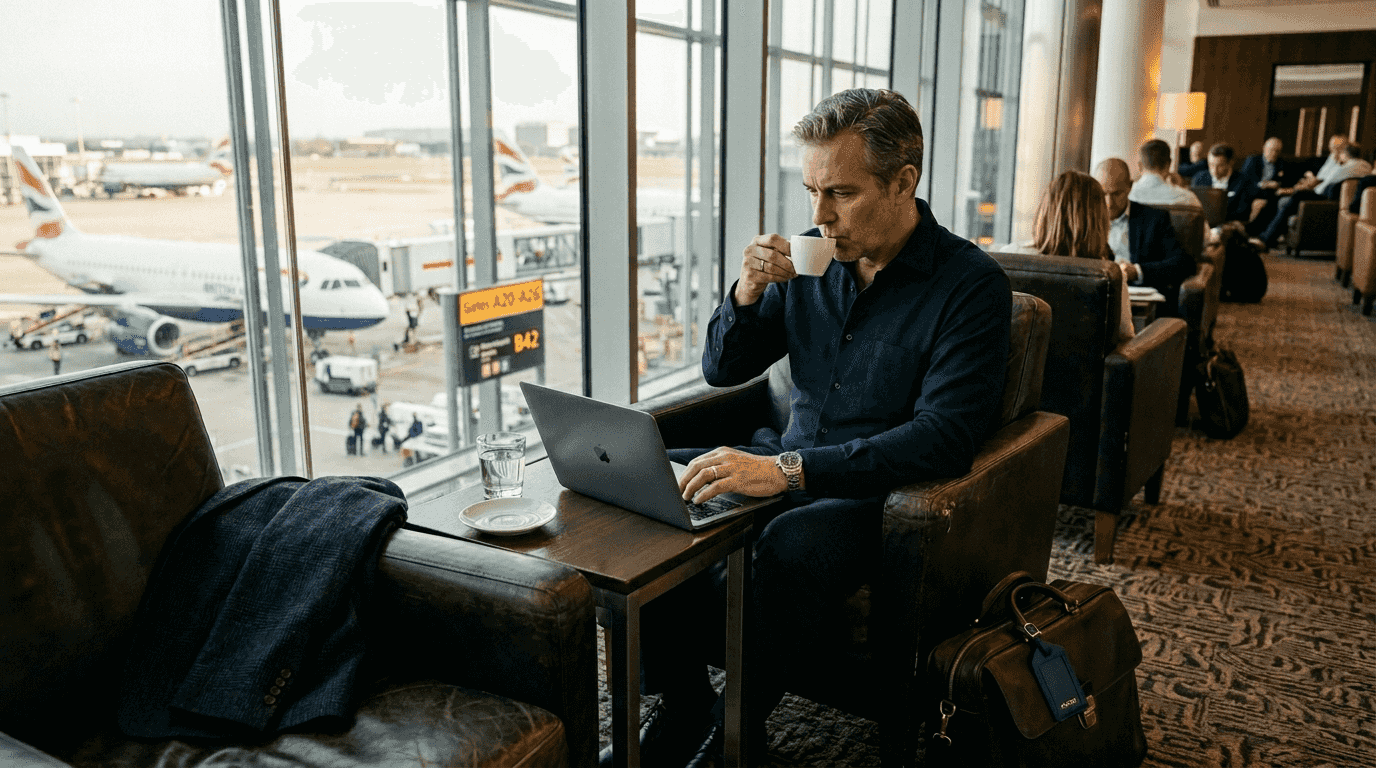
Corporate travel spending is surging toward unprecedented levels, with global expenditure projected to exceed $2 trillion by 2029 despite persistent economic headwinds and geopolitical uncertainty. This remarkable resilience signals a fundamental shift in how organizations view business travel: not as a discretionary expense, but as a strategic investment in relationships, talent retention, and competitive advantage. For executives planning luxury business trips in 2026, understanding emerging trends in personalization, AI integration, wellness focus, and strategic program design is essential to maximize return on investment while meeting evolving traveler expectations.
Table of Contents
- Unpacking The Growth And Resilience Of Corporate Travel In 2026
- Personalized Incentive Travel And Wellness: The New Standards For Luxury And ROI
- AI And Technology Transforming Corporate Travel Management
- Strategic Implications: Managing Risks, Payments, And Extended Stay Travel In 2026
- Explore Tailored Luxury Corporate Travel Solutions With Elite Travel
Key takeaways
| Point | Details |
|---|---|
| Travel frequency rising | Nearly half of business travelers now take six or more trips annually, reflecting growing program investment |
| AI gains trust rapidly | Three-quarters of travelers now trust AI for routine travel and expense tasks, transforming management workflows |
| Wellness becomes central | Companies prioritize fewer, higher-impact rewards focused on restoration and personalized experiences |
| Payment strategies shift | Automation and banking disruptions require new vendor approaches and continuous hotel procurement |
| Extended stays overlooked | High-spend long-term travel demands tailored lodging solutions often missing from standard programs |
Unpacking the growth and resilience of corporate travel in 2026
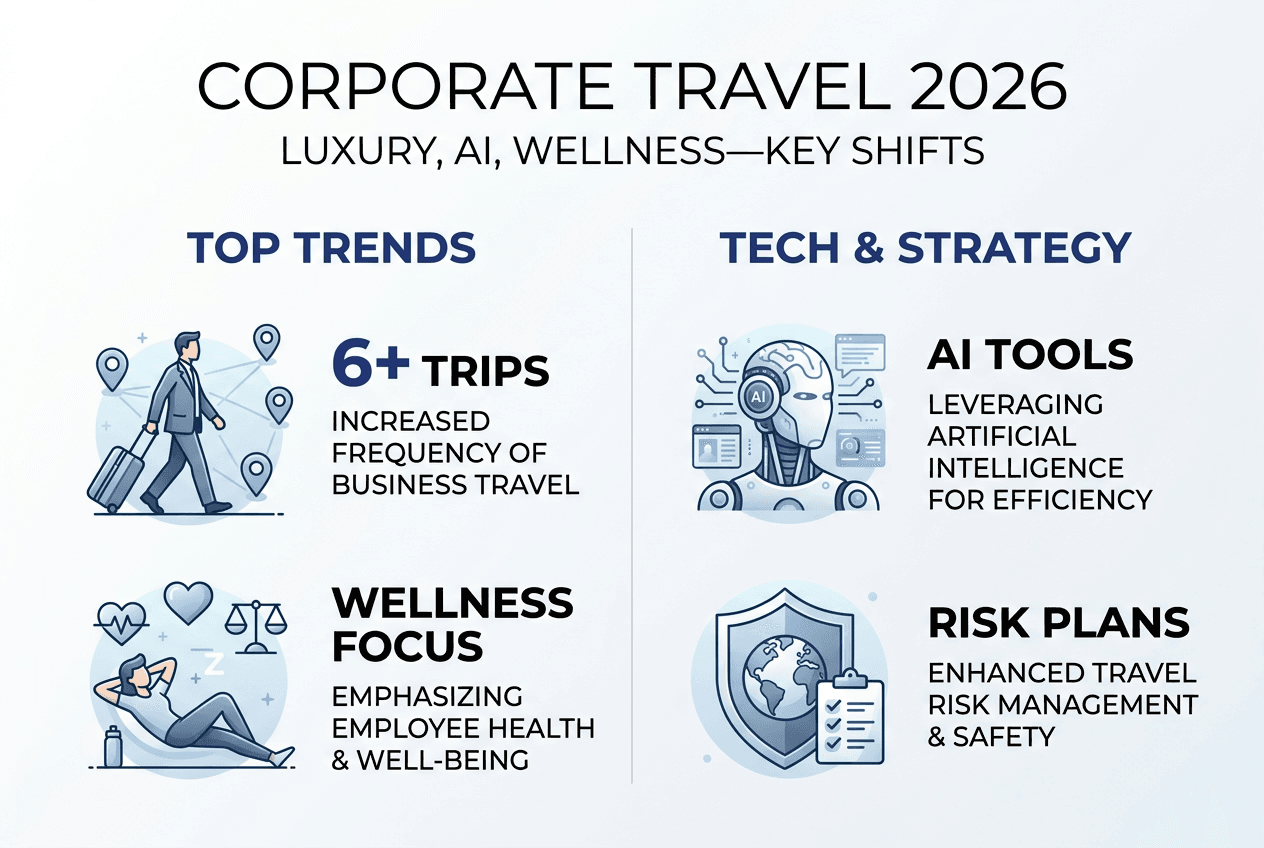
Corporate travel is experiencing a powerful resurgence that defies conventional economic wisdom. Nearly half of all travelers took 6 or more business trips in the past year, jumping from just 40% in each of the previous two years. This acceleration reflects more than simple recovery, it represents a fundamental recalibration of how organizations approach relationship building, deal closing, and team collaboration in an increasingly distributed business environment.
The perceived value of business travel has climbed sharply alongside trip frequency. 90% of survey respondents consider business travel essential or necessary, up 8 percentage points from the previous year. This growing consensus among decision makers signals that travel programs will continue receiving budget priority even as organizations face competing investment demands. The message is clear: executives who cut travel budgets risk competitive disadvantage in talent retention, client relationships, and market presence.
Yet this growth comes with complexity. Travel managers now navigate a landscape marked by geopolitical tensions, evolving visa requirements, sustainability mandates, and rapidly changing traveler expectations. Global business travel spending forecasts acknowledge these headwinds while projecting continued expansion, underscoring the sector’s resilience. Organizations that streamline corporate group travel workflows through strategic planning and expert partnerships position themselves to capture maximum value from this investment.
Several factors drive this sustained momentum:
- Remote work normalization makes in-person meetings more intentional and valuable
- Global deal activity requires face-to-face relationship building that virtual tools cannot replicate
- Talent competition pushes companies to offer meaningful travel experiences as retention tools
- Complex negotiations benefit from the trust and nuance only possible in person
The strategic implication for executives is straightforward: prepare for sustained, possibly increased, investment in travel programs. Organizations that treat travel as discretionary spending rather than strategic investment will find themselves at a disadvantage in talent wars and client relationships. The question is not whether to invest, but how to optimize those investments for maximum impact.
Personalized incentive travel and wellness: The new standards for luxury and ROI
Incentive travel is undergoing a profound transformation from standardized group rewards to highly personalized, wellness-centered experiences that deliver measurable business outcomes. 45% of companies plan to grow travel-based incentives by 2026, but the strategy has shifted dramatically: fewer participants, higher individual investment, and laser focus on experiences that align with personal values and wellness goals.

This evolution reflects changing employee expectations and a more sophisticated understanding of motivation. Generic group trips to resort destinations no longer generate the engagement or loyalty they once did. Instead, wellness and restoration themes deliver superior ROI by addressing burnout, supporting mental health, and demonstrating genuine investment in employee wellbeing. A personalized wellness retreat to Tuscany or a curated mindfulness journey through Japan creates lasting emotional connections that standardized rewards cannot match.
The financial logic is compelling. Rather than sending 50 people on a moderately nice trip, leading organizations now invest in 15 truly exceptional, individually tailored experiences. The per-person cost rises, but so does the impact: higher satisfaction scores, stronger retention of top performers, and genuine word-of-mouth advocacy that enhances employer brand. This approach also allows for precise targeting, rewarding those whose contributions most directly drive business results.
| Traditional incentive travel | Modern personalized approach |
|---|---|
| Large group, standard itinerary | Small group or individual, customized experiences |
| Resort-based, activity focused | Wellness-centered, restoration emphasis |
| One-size-fits-all rewards | Aligned with personal values and interests |
| Moderate per-person investment | High per-person investment, fewer participants |
| Generic ROI measurement | Targeted retention and engagement metrics |
Implementing this shift requires understanding individual preferences at a granular level. Survey top performers about their ideal travel experiences: culinary immersion, adventure activities, cultural exploration, or pure relaxation. Then design rewards that authentically deliver on those preferences through corporate incentive travel luxury programs that prioritize quality over quantity.
Pro Tip: Partner with specialists who understand individual incentive travel design to create experiences that feel personally meaningful rather than corporately mandated. The difference between a trip someone takes because they won it and a journey they would have dreamed about anyway is the difference between obligation and genuine reward.
Wellness integration goes beyond spa appointments. It means building in time for rest, choosing destinations that inspire rather than exhaust, providing options for solo exploration alongside group activities, and respecting that restoration looks different for different people. Some find it in vigorous hiking, others in quiet museum visits or cooking classes. The luxury lies in the personalization, not just the price point.
AI and technology transforming corporate travel management
Artificial intelligence has crossed a critical threshold in corporate travel: from experimental tool to trusted partner. 76% of travelers now trust AI for straightforward travel and expense tasks, a dramatic jump from 59% just three years ago. This rapid acceptance reflects both improved AI capabilities and growing comfort with automation in high-stakes business processes.
The applications transforming travel management span the entire journey:
- Intelligent booking assistants that learn individual preferences and company policy simultaneously
- Automated expense categorization and receipt processing that eliminates manual data entry
- Predictive analytics identifying cost-saving opportunities across hotel, air, and ground transportation
- Real-time traveler support through chatbots handling routine questions 24/7
- Risk monitoring systems that alert travelers and managers to safety concerns automatically
Hotel procurement exemplifies this transformation. Traditional annual sourcing cycles are giving way to continuous, data-driven decision-making that optimizes rates and quality in real time. Rather than locking in rates 12 months ahead based on projected volume, sophisticated systems now analyze booking patterns, seasonal pricing, and traveler feedback to source accommodations dynamically. This approach captures savings that static contracts miss while improving traveler satisfaction through better property matching.
Yet technology adoption faces persistent challenges. Speed and helpfulness of travel service providers remain areas where traveler expectations outpace reality. Off-platform bookings continue plaguing program managers, driven by travelers who find better options, faster service, or simply prefer familiar consumer booking tools. Each off-platform transaction creates data gaps that undermine program analytics and policy compliance.
| AI application | Current adoption rate | Primary benefit |
|---|---|---|
| Expense report automation | 68% | Time savings, accuracy |
| Booking assistance | 54% | Policy compliance, preference matching |
| Risk monitoring | 47% | Traveler safety, duty of care |
| Dynamic hotel sourcing | 39% | Cost optimization, quality improvement |
The solution lies not in forcing technology adoption but in making AI-enhanced tools genuinely superior to alternatives. When your booking platform is faster, smarter, and more personalized than consumer options, compliance becomes natural rather than enforced. Organizations that streamline corporate group travel workflows through intelligent integration of AI and human expertise achieve both efficiency gains and traveler satisfaction.
Pro Tip: Implement AI as an enhancement to human service, not a replacement. Use automation for routine tasks like expense coding and policy checks, but ensure travelers have immediate access to knowledgeable people for complex situations, last-minute changes, or high-stakes bookings. The combination of AI efficiency and human judgment delivers experiences technology alone cannot match.
Data privacy and algorithmic transparency remain valid concerns. Organizations must ensure AI systems comply with data protection regulations, explain decisions in understandable terms, and provide override mechanisms when automated recommendations miss context. The corporate travel and expense insights from leading programs show that transparency builds trust faster than any feature set.
Strategic implications: Managing risks, payments, and extended stay travel in 2026
Corporate travel programs in 2026 face a convergence of strategic challenges that demand proactive adaptation rather than reactive crisis management. Travel managers must navigate rising geopolitical risks, evolving visa rules, sustainability pressures, and shifting employee expectations, fundamentally reshaping program design and policy frameworks.
Geopolitical volatility has moved from occasional disruption to constant variable. Visa processing times fluctuate unpredictably, travel advisories change with little warning, and political tensions can render previously safe destinations problematic overnight. Organizations need flexible booking policies that allow rapid itinerary changes without financial penalty, real-time intelligence feeds that alert travelers to emerging risks, and backup destination strategies for critical meetings.
Payments and bank strategy present major disruption points, driven by fintech automation and banking sector consolidation. Virtual card programs promise tighter expense control and fraud prevention but require vendor acceptance and integration with existing systems. Cross-border payment friction increases costs and creates reconciliation headaches. Organizations must evaluate payment technologies not just on features but on global acceptance, integration complexity, and total cost of ownership.
Extended stay travel represents a particularly challenging blind spot. Extended stays are high-spend and often overlooked, requiring lodging and cost strategies distinct from standard short-trip programs. A three-week assignment demands apartment-style accommodations with kitchen facilities, workspace, and neighborhood amenities that traditional hotels lack. Yet many programs apply the same per-diem rates and booking processes to extended stays as overnight trips, creating both cost overruns and traveler dissatisfaction.
Key strategic adaptations for 2026 programs:
- Develop tiered risk protocols that automatically adjust travel policies based on destination threat levels
- Negotiate flexible cancellation terms across all travel categories to manage geopolitical uncertainty
- Implement extended stay lodging categories with appropriate rate structures and property types
- Build sustainability metrics into vendor selection and traveler decision-making frameworks
- Create wellness guidelines that balance duty of care with employee autonomy and personal choice
Sustainability has evolved from nice-to-have to program requirement. Investors, employees, and customers increasingly evaluate organizations on environmental commitments, and travel represents a visible, measurable component of corporate carbon footprints. Leading programs now track emissions by trip, offer lower-carbon alternatives, and integrate sustainability performance into vendor scorecards. The challenge lies in balancing environmental goals with cost control, traveler convenience, and business necessity.
Employee expectations around flexibility and personalization continue rising. The same individuals who book personal travel through intuitive consumer apps expect corporate tools to match that experience. They want choices, transparency, and trust that the organization values their time and preferences. Programs that treat travelers as policy subjects rather than customers face compliance erosion and satisfaction decline. Those that streamline corporate group travel workflows while respecting individual needs build loyalty and program adherence simultaneously.
The financial stakes are substantial. A well-designed program that addresses these strategic challenges delivers measurable ROI through reduced costs, improved traveler productivity, enhanced safety, and stronger talent retention. A poorly designed program creates friction, drives off-platform booking, exposes the organization to unnecessary risk, and wastes money on inefficient processes. The difference lies in treating travel management as a strategic function rather than an administrative task.
Explore tailored luxury corporate travel solutions with Elite Travel
Navigating the complex landscape of corporate travel trends in 2026 requires more than reading insights, it demands expert partnership that translates knowledge into flawlessly executed experiences. Elite Travel Management Group specializes in the exact intersection of luxury, personalization, and strategic program design that defines successful modern corporate travel.
Our individual incentive travel packages align perfectly with the shift toward fewer, higher-impact rewards that drive genuine engagement and retention. We design personalized immersive journeys that incorporate wellness, cultural depth, and individual preferences into cohesive experiences your top performers will remember for years. With 35 years of expertise creating unforgettable high-end journeys, we understand how to elevate corporate travel from transactional necessity to strategic advantage. Our 24/7 availability, no service fees, and price match guarantee mean you get concierge-level planning without premium costs. Explore how Elite Travel luxury solutions can transform your 2026 corporate travel program into a competitive differentiator.
Frequently asked questions
What are the biggest corporate travel trends for 2026?
The dominant trends include AI-powered travel management gaining widespread trust, personalized wellness-focused incentive programs replacing generic group rewards, continuous data-driven hotel procurement, and strategic adaptation to geopolitical risks and payment disruptions. Organizations are investing more in fewer, higher-impact trips while demanding better technology integration and traveler experience.
How is AI changing corporate travel management?
AI now handles routine booking assistance, automated expense processing, predictive cost optimization, and real-time risk monitoring with 76% traveler trust. The technology enables dynamic hotel sourcing, intelligent policy compliance, and 24/7 support while freeing human experts to focus on complex situations and strategic program design. Success comes from blending AI efficiency with human judgment.
Why are companies focusing more on wellness in business travel?
Wellness-centered travel addresses employee burnout, demonstrates genuine investment in wellbeing, and delivers superior ROI through improved retention and engagement. Modern travelers expect experiences that restore rather than exhaust them, and companies recognize that supporting mental and physical health during travel strengthens loyalty and productivity more effectively than traditional perks.
What challenges do extended stay business trips present?
Extended stays require apartment-style accommodations with kitchens and workspaces that standard hotels lack, yet many programs apply inappropriate per-diem rates and booking processes. This high-spend category often falls outside normal procurement strategies, creating cost overruns and traveler dissatisfaction. Organizations need dedicated extended stay policies, vendor relationships, and rate structures.
How should travel managers handle geopolitical risks in 2026?
Implement tiered risk protocols that automatically adjust policies based on destination threat levels, negotiate flexible cancellation terms across all travel categories, maintain real-time intelligence feeds for traveler alerts, and develop backup destination strategies for critical meetings. Proactive risk management protects both travelers and business continuity while demonstrating duty of care.
What makes personalized incentive travel more effective than group rewards?
Personalized experiences align with individual values and preferences, creating emotional connections that generic trips cannot match. By investing more per person in fewer, tailored rewards, organizations achieve higher satisfaction scores, stronger retention of top performers, and authentic word-of-mouth advocacy. The approach allows precise targeting of those whose contributions most directly drive results.
