




TL;DR:
- Destination weddings vary from beach ceremonies to castle celebrations, each with unique logistics and costs. Couples should prioritize venue flexibility, legal arrangements, and guest experience to ensure a memorable event. Expert planning and destination knowledge greatly simplify the complexities involved in executing an extraordinary wedding abroad.
You already know you want your wedding somewhere extraordinary. The harder question is which kind of extraordinary. The types of destination weddings available today range from barefoot beach ceremonies in the Caribbean to castle celebrations in Tuscany, and each comes with its own set of tradeoffs on budget, guest logistics, and legal complexity. This guide cuts through the fantasy and gives you a clear, honest look at your real options so you can match your vision to a venue type that actually works.
Key takeaways
| Point | Details |
|---|---|
| Beach weddings need logistics planning | Wind, tide, and shade matter as much as scenery when choosing a beachfront ceremony site. |
| Symbolic vs. legal ceremonies | Most destination weddings use symbolic ceremonies abroad and handle legal registration at home. |
| Micro weddings save money and stress | Intimate venues like private villas reduce vendor coordination and often cut costs significantly. |
| Unconventional venues leave lasting impressions | Overwater villas, vineyards, and castles offer memorable experiences that guests talk about for years. |
| Venue type drives your budget model | Resort packages and villa rentals follow very different cost structures, affecting your total spend. |
1. The most popular types of destination weddings
The term “destination wedding” covers a broad spectrum of ceremony styles, venue categories, and travel experiences. In the wedding industry, planners often break these into setting-based categories: beach, mountain or nature, urban luxury, and intimate or micro. Understanding these categories up front helps you filter choices by what matters most to you, whether that is guest accessibility, visual drama, or cost control.
Each category also carries different assumptions about formality, weather exposure, and vendor availability. A beachfront resort in Cancun operates nothing like a clifftop vineyard in Santorini. Knowing the category you are drawn to is the first step toward making the rest of your decisions.
2. Beach destination weddings
Beach ceremonies remain the most requested destination wedding style globally, and for good reason. The combination of natural light, open sky, and water creates an atmosphere no ballroom can replicate. But beach weddings involve more practical complexity than most couples expect at the start.
What makes beach weddings work:
- Beachfront resort packages with bundled catering, décor, and officiant services
- All-inclusive models that simplify group travel logistics for guests
- Private beach buyouts for exclusivity at higher-end properties
- Barefoot, casual ceremony styles that feel genuinely relaxed rather than forced
Package pricing at resorts typically runs $150 to $350 per person, but minimum spend models can catch couples off guard when optional add-ons become mandatory surcharges.
The detail most couples underestimate? Outdoor conditions. Wind, lack of shade, and tidal timing affect ceremony quality far more than the scenic backdrop. A stunning beach at 2 p.m. in August can be brutal for guests standing in direct sun.
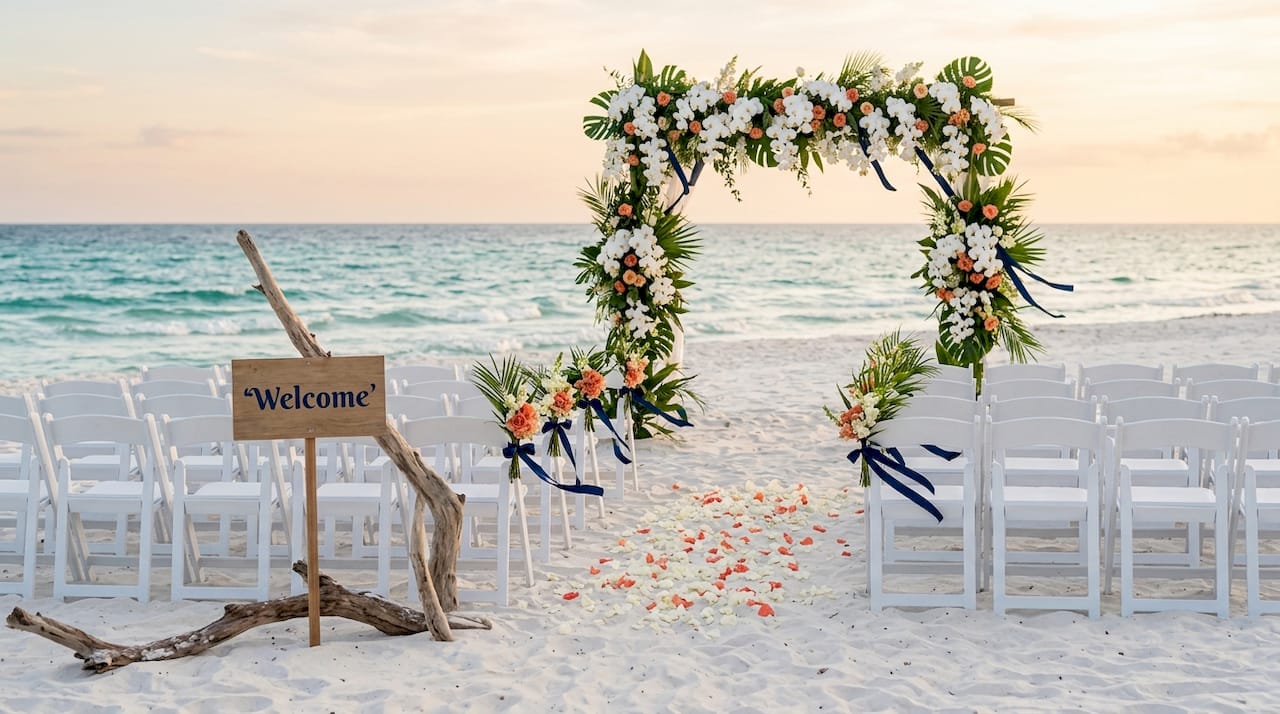
Pro Tip: Ask your resort coordinator for the specific ceremony site at different times of day before you commit. Request photos from recent weddings at that exact spot, not just marketing images.
The Caribbean and Mexico remain the top beach wedding destinations for North American couples. Europe’s Amalfi Coast and Greek islands appeal to those willing to manage longer travel for guests in exchange for a more dramatic setting.
3. Mountain and nature-inspired destination weddings
Mountain destination weddings have grown substantially in popularity as couples seek settings that feel grounded and dramatic without the sand-in-your-shoes complications of beach events. Think rustic lodges in Aspen, chalets in the Swiss Alps, or forest clearings in the Pacific Northwest.
The appeal is real. Crisp air, towering trees, and mountain backdrops photograph beautifully and create a completely different emotional tone from tropical settings. The guest experience tends to feel more adventurous, which works well if your crowd skews outdoorsy.
Key considerations for mountain weddings:
- Weather is genuinely unpredictable. Book a venue that has a solid indoor backup option
- Accessibility matters more than in beach settings. Not all guests can manage altitude or remote roads easily
- Seasonal timing is critical. Summer and early fall offer the most reliable conditions in most mountain regions
- Rustic lodge venues often require importing vendors, which adds to catering and décor costs
Garden and forest venues in temperate climates offer a softer version of nature-inspired weddings. These work particularly well for bohemian or rustic-romance aesthetics without the altitude challenges.
Pro Tip: Check the venue’s vendor list carefully. Some mountain lodges operate as exclusive-use facilities that require you to use their in-house catering, which can limit your menu options and inflate per-head costs.
Sound system setup in open mountain settings is also trickier than it looks. Wind interference and natural acoustics behave differently than in enclosed spaces, so budget for an experienced audio technician.
4. Intimate and micro destination weddings
The micro wedding trend has reshaped what couples think is possible with a modest budget and a small guest list. A micro wedding typically means 20 guests or fewer, held in a setting chosen for intimacy rather than spectacle.
Private villas, boutique hotels, and small historic properties are the standout venues for this format. They offer something large resorts genuinely cannot: the feeling that the entire place belongs to you and your people for the weekend.
Why micro weddings work so well abroad:
- Coordination is dramatically simpler with fewer guests to house and feed
- Boutique venues often include concierge-level service that larger resorts charge extra for
- The per-person budget can go much further when you are feeding 15 instead of 150
- Emotional intimacy is built in. Everyone at your wedding is someone you actually want there
One legal point that surprises many couples: symbolic ceremonies abroad do not create legal marriage status in your destination country. They look and feel identical to legal ceremonies, but you handle the official paperwork at home before or after. This is actually good news. Legal ceremonies abroad carry translation requirements, waiting periods, and bureaucratic complexity that most couples are happy to avoid.
Luxury micro wedding packages in destinations like Tuscany, Provence, and coastal Portugal have become a popular choice for couples who want the Europe experience without the large-group logistics.
5. Overwater and villa destination weddings
Overwater villa weddings, most famously associated with the Maldives, represent the most visually distinctive category in destination wedding planning. Your ceremony takes place above the water on a private deck, with the Indian Ocean as your backdrop. It is genuinely unlike anything else.
The Maldives offers multiple wedding settings beyond the iconic overwater option, including beach and tropical garden ceremonies, each with its own microclimate and logistics profile. Wind is a bigger factor on water than anywhere else, which affects everything from floral arrangements to sound systems to your veil.
These weddings are not budget-friendly. They work best for couples prioritizing an exceptional visual and experiential impact for a very small guest list. The cost per person is high, but the memories are proportional.
6. Vineyard, castle, and urban luxury destination weddings
Not every destination wedding idea involves sand or snow. Vineyards, castles, and urban rooftop venues represent a distinct category that blends architectural drama with curated culinary experiences.
Vineyard weddings in regions like Napa Valley, Tuscany, or Bordeaux offer a built-in hospitality narrative. Your guests spend the weekend eating and drinking extraordinarily well, and the setting ages beautifully in photos. Destination weddings in Europe at historic castle properties deliver the kind of visual grandeur that beach venues simply cannot match.
Urban luxury weddings on hotel rooftops or in private city clubs offer a completely different appeal: skyline views, sophisticated catering, and proximity to the kind of cultural experiences that make the trip feel like a real event rather than just a ceremony.
The tradeoff with villa or non-resort venues is cost structure. Villa and non-package venues require importing vendors, which eliminates the bundling efficiencies that resort packages provide. You pay more per line item but gain significantly more creative control.
7. Vintage and multi-day experiential destination weddings
Vintage destination weddings draw on historic architecture and period-inspired décor to create an atmosphere of timeless romance. Think lace tablecloths in a Provençal farmhouse, candlelit ceremonies in a converted Venetian palazzo, or a countryside estate in the Cotswolds with a formal English garden reception.
Beyond aesthetics, the more significant trend shaping this space is the shift toward multi-day hospitality experiences. Couples are no longer planning a single ceremony day. They are designing two to four day experiences for their guests: welcome dinners, day-after brunches, group excursions, and curated tastings. This experiential wedding demand has fundamentally changed how destination properties structure their packages.
This approach costs more but delivers considerably more value for guests who are traveling internationally. It transforms your wedding from an event into a trip worth taking.
8. Destination wedding type comparison
Use this table as a quick decision reference when weighing your options:
| Wedding type | Best for | Cost range | Legal complexity | Guest accessibility |
|---|---|---|---|---|
| Beach resort | Tropical lovers, large groups | Moderate | Low (symbolic) | High |
| Mountain or nature | Outdoorsy, intimate crowds | Moderate to high | Low to medium | Medium |
| Micro or villa | Small guest lists, personalizers | Variable | Low (symbolic) | Medium to high |
| Overwater or Maldives | Dramatic visuals, couples-focused | High to very high | Low (symbolic) | Low |
| Vineyard or castle | Wine lovers, European dreamers | High | Medium | Medium |
| Urban luxury | City lovers, sophisticated couples | Moderate to high | Medium | High |
| Multi-day experiential | Experience-driven hosts | High | Medium | Medium to high |
The core insight this table reveals: legal complexity is low across almost all types when you opt for a symbolic ceremony. That single decision simplifies planning more than almost any other choice you will make.
My honest take on picking the right wedding type
I have seen couples spend months obsessing over the perfect location only to realize midway through planning that the venue they fell in love with online does not fit the guest list they actually have. That is the most common trap in destination wedding planning. You fall for an aesthetic before you have asked the hard questions.
Here is what I have learned: flexibility in venue type almost always produces a better outcome than rigidity around a specific setting. A couple set on an overwater Maldives wedding with 50 guests is setting themselves up for sticker shock and logistical pain. The same budget applied to a Tuscany vineyard for 30 guests creates a more generous, memorable experience for everyone.
I have also seen real confusion around legal status. Many couples assume the ceremony they hold abroad legally marries them. Most destination weddings actually use symbolic ceremonies precisely because the paperwork for legal ceremonies at international destinations is genuinely complex. Handle the legal piece at home, and give yourself complete creative freedom abroad.
Weather and guest comfort are consistently underrated in early planning conversations. Beautiful locations become difficult memories when guests are sunburned, windblown, or altitude-sick. Factor that in before you fall in love with a clifftop ceremony at noon in July.
Finally, the couples who have the best destination weddings in my experience are the ones who work with experts who know the destination and the venue before day one. Not travel generalists. People who have been to the property, know the local vendors, and can anticipate the problems you do not know to ask about yet.
Plan your destination wedding with Elite Travel
Choosing the right wedding type is just the first decision. Getting every detail right from venue selection to guest travel logistics to on-the-ground coordination requires the kind of expertise that only comes with 35 years of doing this at a high level. Elitetravelgroup specializes in exactly this.
Whether you are drawn to Caribbean and Mexico beach packages, a curated European vineyard experience, or a truly intimate luxury micro wedding abroad, the Elitetravelgroup team brings established on-the-ground partnerships and concierge-level planning to every detail. No service fees, a price match guarantee, and 24/7 availability mean you have real support from the first conversation through your return home.
Explore your options with Elitetravelgroup’s full destination wedding packages and start planning a wedding worth traveling for.
FAQ
What are the most popular types of destination weddings?
Beach resort weddings in the Caribbean and Mexico are the most booked destination wedding format for North American couples, followed by European vineyard and castle weddings and intimate villa ceremonies.
Do destination weddings have to be legally binding at the venue?
No. Most couples choose symbolic ceremonies abroad and handle legal registration at home, which avoids complex translation and waiting period requirements at international destinations.
How many guests do you need for a destination wedding?
There is no minimum. Micro destination weddings work beautifully with as few as 10 to 20 guests, while resort package models are often designed to accommodate groups of 50 or more.
Are mountain destination weddings more expensive than beach weddings?
They can be, particularly when the venue requires importing vendors. Resort beach weddings often benefit from bundled package pricing that mountain or forest venues cannot match, though costs vary significantly by region and season.
What is the biggest mistake couples make when choosing a destination wedding type?
Choosing a venue based on photos before confirming that it works for their actual guest list size, travel budget, and ceremony timing. Logistics and guest comfort consistently matter more than aesthetics once you are on the ground.
