




TL;DR:
- Personalized travel significantly impacts travelers’ confidence, value perception, and mental wellbeing beyond mere comfort. AI supports tailored planning by analyzing preferences and reducing friction, fostering trust, and driving booking intention. Genuine customization relies on human expertise, transparency, and understanding individual priorities to create memorable, stress-reducing experiences.
Most travelers think personalization just means choosing between a window seat and an aisle. That framing misses the real story entirely. Understanding why personalized travel matters reveals something far more significant: a fundamental shift in how people experience confidence, value, and even mental wellbeing when they travel. 43% of travelers now use AI to build personalized itineraries, and that number is climbing fast. The difference between a generic trip and a tailor-made one is not just comfort. It’s the difference between a trip you survive and one you remember for the rest of your life.
Table of Contents
- Key takeaways
- Why personalized travel matters more than ever
- The psychology behind personalized travel
- How personalization reduces friction and supports wellbeing
- How to apply personalized travel principles to your own trips
- My perspective on why this shift is genuinely important
- Plan your personalized trip with Elitetravelgroup
- FAQ
Key takeaways
| Point | Details |
|---|---|
| Personalization builds real confidence | Tailored travel creates a trust pathway that turns perceived value into genuine booking intent. |
| AI amplifies personal preferences | Technology helps travelers find better deals and reduce friction while still honoring individual needs. |
| Mental wellbeing drives demand | Travelers increasingly plan around stress reduction, pacing, and autonomy, not just destinations. |
| Transparency earns trust | Verifiable, clearly explained recommendations outperform vague personalization in driving satisfaction. |
| Expert advisors close the gap | Human expertise converts good personalization into extraordinary, friction-free travel experiences. |
Why personalized travel matters more than ever
Personalized travel is not about overwhelming you with 400 hotel options. It is about receiving the right options, built around your budget, travel style, health needs, interests, and preferred pace. That is a meaningful distinction.
The importance of personalized travel has grown directly from how chaotic modern travel planning has become. Booking platforms show the same generic results to every user. Hotels pitch the same packages to honeymooners and business travelers alike. The result? Decision fatigue, missed experiences, and that nagging feeling you paid too much for too little.
Technology is changing that. AI tools for travel planning now analyze preferences at a granular level, surfacing options that match your actual priorities rather than algorithmic popularity. According to current data, 86% of travelers prioritize maximizing their budget while 71% say getting a great deal is central to their planning process. Personalization directly serves both goals.
Here is what a genuinely personalized travel experience includes:
- Itinerary pacing matched to your energy level and preferred daily rhythm
- Accommodation selection filtered by your actual priorities, not star ratings alone
- Activity curation based on your interests, whether that is culinary tourism, adventure, or slow cultural immersion
- Proactive problem-solving that anticipates friction points before they ruin your day
- Budget alignment so your spend matches your values, not someone else’s definition of luxury
Pro Tip: Before engaging any travel service, write down your three non-negotiables and your three biggest travel stressors. A good personalization process addresses both lists before it touches the itinerary.
The psychology behind personalized travel
The reason why customized travel is essential goes deeper than preference. Research shows a clear psychological pathway at work when travelers engage with personalization done well.
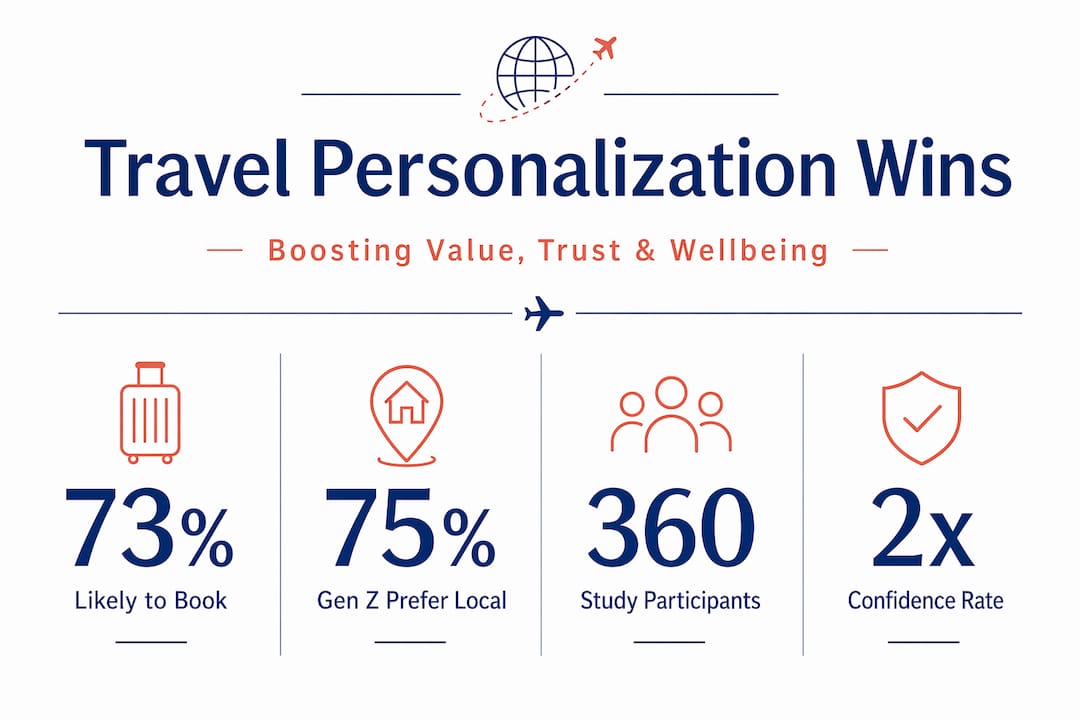
A 2025 study of 360 travelers found that AI personalization raises perceived value and trust while simultaneously reducing privacy concerns. That combination is powerful. It means that when personalization is handled correctly, skepticism drops and willingness to commit rises.
A 2026 study in Frontiers in Sustainable Tourism mapped this even further, identifying that decision confidence mediates the path from perceived value through trust all the way to purchase intention. In practical terms: when you feel that a recommendation was built for you, you trust it more. When you trust it, you feel confident deciding. When you feel confident deciding, you book.
Compare how personalized and generic travel planning actually feel in practice:
| Experience factor | Generic travel planning | Personalized travel planning |
|---|---|---|
| Decision load | High. Too many irrelevant options. | Low. Curated choices match your profile. |
| Perceived value | Uncertain. Is this a good deal? | Confident. You can see why it fits. |
| Trust level | Low. Anyone gets the same recommendation. | High. Recommendations are explained and verifiable. |
| Anxiety before booking | Common. What if I miss something better? | Reduced. You know your priorities were addressed. |
| Post-trip satisfaction | Variable. Often regrets. | Consistently higher. Expectations were set accurately. |
The role of transparency deserves special attention here. Verifiable personalization increases trust and willingness to delegate travel decisions, according to 2026 eye-tracking research. That means a recommendation that explains why it fits you is measurably more effective than one that just says “we think you’ll love this.” Unverifiable claims, on the other hand, create credibility stress that actively undermines the experience.
“Personalization improves control, value, and confidence for travelers. It’s most rewarded when it reduces anxiety and friction rather than simply adding options.”
— Barclays 2026 Travel Report
How personalization reduces friction and supports wellbeing
The personalized travel advantages most people overlook are not the big dramatic ones. They are the small, friction-eliminating details that change the emotional texture of an entire trip.

Consider this: personalized room attributes like early check-in and preferred room views can generate over $1 million in annual revenue for a single mid-scale hotel. Hotels know this because travelers pay for it. They pay because it matters. Arriving at a hotel after a red-eye flight and walking directly to a prepared room is not a luxury indulgence. For many travelers, it is the difference between starting a trip energized or spending the first day recovering.
Here are the five most impactful personalization features travelers consistently report as stress-reducing:
- Early check-in and late check-out options pre-arranged based on flight schedules
- Sleep and wellness packages that account for jet lag, dietary restrictions, or health needs
- Local orientation kits tailored to your interests, with vetted neighborhood-specific recommendations
- Flexible itinerary days built in specifically for travelers who want spontaneity without anxiety
- Real-time advisor access so questions or changes mid-trip do not spiral into crises
Gen Z travelers have pushed this conversation forward significantly. 75% of Gen Z travelers prefer local activity recommendations and 64% want personalized hotel and flight options. More telling is their preference for personalization that feels like a human partner rather than an algorithm controlling their choices. That framing reflects a broader truth: good personalization expands your autonomy. It does not narrow it.
Pro Tip: Ask your travel advisor specifically how your itinerary handles a “slow day.” How a plan treats your downtime tells you more about its quality than its headline experiences.
The mental wellbeing dimension of travel personalization is increasingly central, not peripheral. Understanding how a custom travel experience supports your specific pace and stress profile is part of planning a trip that actually restores you rather than depletes you.
How to apply personalized travel principles to your own trips
Knowing the benefits of tailor-made trips is one thing. Actually accessing them requires a different kind of preparation. These are the practical steps that separate travelers who get genuine personalization from those who just think they do.
- Audit your travel history honestly. What have you regretted? What have you paid for and never used? That information is more valuable than any preference quiz.
- Separate your travel priorities from your travel ego. Many travelers book what sounds impressive rather than what genuinely suits them. A well-fitted itinerary designed around your real preferences beats a prestigious one designed for someone else’s lifestyle.
- Look for explainability in recommendations. Any service worth your trust should be able to tell you why a particular hotel or experience was chosen for you specifically. If the answer is vague, the personalization is vague.
- Evaluate the human layer. Working with an expert travel advisor adds a verification and accountability layer that purely algorithmic tools cannot replicate. Technology finds the options; expertise filters them.
- Watch for personalization theater. Many platforms use your name and show you products from your last search and call that personalization. Real personalization accounts for your travel style, budget philosophy, physical needs, and emotional goals.
73% of travelers say personalization increases their likelihood to book. That statistic reflects something real: when a trip feels like it was designed for you, the hesitation dissolves. The challenge is building the discernment to recognize when that feeling is earned versus when it is manufactured.
A customized itinerary built with care does not just look different from a package tour. It functions differently. Every element reinforces your priorities rather than a one-size compromise between the preferences of a million different travelers.
My perspective on why this shift is genuinely important
I’ve spent enough time watching travelers come back from trips describing how “fine” everything was, and I’ve noticed that “fine” is almost always the result of a generic plan. Nobody books a trip hoping for fine.
What I’ve learned is that personalization isn’t really a product feature. It’s a trust mechanism. When a trip is built around you, you stop second-guessing every decision mid-experience. You stop wondering if you’re missing something better two streets over. That mental freedom, more than any specific hotel or experience, is what creates the memories people actually talk about years later.
The research on verifiable recommendations building traveler confidence confirms something I’ve observed repeatedly: people don’t just want to be told what to do. They want to understand why a recommendation fits them. When that explanation is there, the anxiety disappears.
I’m also convinced that the technology conversation gets overblown. AI is genuinely useful for surfacing options and reducing planning friction. But AI functions best as a justification scaffold, helping travelers feel confident in decisions, not as a replacement for the human judgment that turns a good option into the right option. The best personalized travel still requires someone who has actually been to the destination, knows the right local partners, and understands the difference between what looks good on paper and what delivers in practice.
The travelers I see getting the most from personalized experiences are the ones who bring honest self-knowledge to the planning process and pair it with genuine expert guidance. That combination is hard to replicate with a search filter.
Plan your personalized trip with Elitetravelgroup
If you’ve read this far, you already understand that the benefits of tailor-made trips go well beyond convenience. At Elitetravelgroup, personalization is not a feature we offer. It’s the foundation of every itinerary we design.
For 35 years, Elitetravelgroup has built custom travel experiences for clients who want more than a packaged tour. Whether you’re planning a luxury Europe escape, a tailor-made Phuket retreat, or an immersive Sydney luxury experience, our advisors design every detail around your specific priorities. We work with vetted local partners who transform trips from good to exceptional. We charge no service fees, offer a price match guarantee, and we’re available 24/7 because travel doesn’t follow a schedule. Neither do we.
FAQ
What does personalized travel actually mean?
Personalized travel means your itinerary, accommodations, pacing, and experiences are selected based on your specific preferences, budget, travel style, and priorities rather than a generic package. It goes well beyond choosing a destination to address how every element of the trip fits you specifically.
How does personalized travel enhance experiences compared to package tours?
Personalized travel reduces decision fatigue, aligns expectations accurately, and removes friction points before they become problems. Research shows 73% of travelers are more likely to book when they feel a trip was designed for them, pointing to the direct link between personalization and satisfaction.
Does personalized travel cost significantly more?
Not necessarily. Personalization is primarily about alignment, not price. Travelers who prioritize maximizing their budget actually get more value from personalized planning because every dollar goes toward what genuinely matters to them rather than default add-ons they never use.
Is AI enough for planning a personalized trip, or do I need a travel advisor?
AI is excellent at surfacing options and organizing preferences, but research identifies it as most effective as a decision-support tool rather than a decision-maker. A human advisor adds verification, local knowledge, and the judgment to distinguish what looks good from what actually delivers, making the two most powerful when used together.
Why is transparency so important in personalized travel services?
Unverifiable personalization creates what researchers call credibility stress, which actively reduces trust rather than building it. When a recommendation explains specifically why it fits your profile, travelers engage more and trust the decision, making them far more confident and satisfied with the final experience.
