




TL;DR:
- Travel insurance offers essential financial protection for trip cancellations, medical emergencies, evacuations, and delays, especially abroad where coverage is limited or unavailable through domestic plans. Its key benefits include trip interruption, emergency medical care, medical evacuation, baggage delay, and 24/7 assistance services, which are vital during unforeseen disruptions. Buying coverage early ensures eligibility for time-sensitive upgrades like Cancel for Any Reason and helps protect travelers in remote or international destinations from substantial costs.
Travel insurance is defined as a financial protection product that reimburses travelers for covered losses before and during a trip, including trip cancellations, emergency medical care, evacuations, baggage issues, and travel delays. The Texas Department of Insurance confirms that benefits vary by policy but consistently address the most costly travel disruptions. For anyone booking a nonrefundable vacation, a luxury honeymoon, or an international adventure, understanding this protection is not optional. It is the difference between a disruption that costs you nothing and one that costs you everything.
What key coverages define the role of travel insurance?
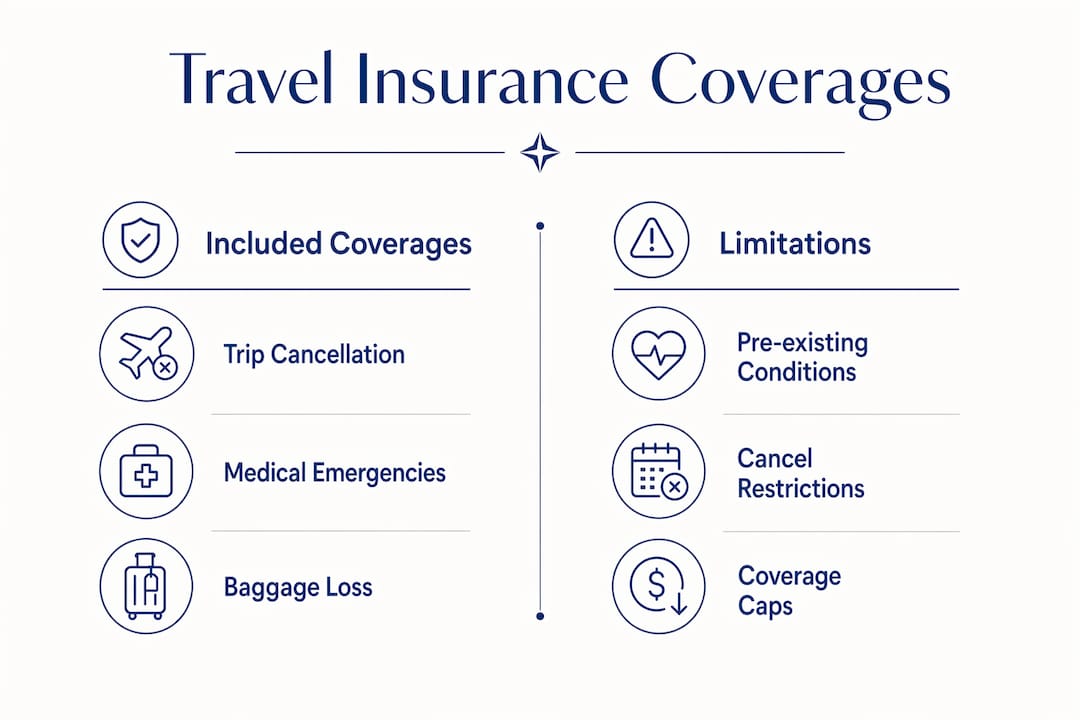
Travel insurance coverage falls into five core categories, and each one addresses a distinct financial risk. According to InsureMyTrip, the primary protections are trip cancellation, trip interruption, emergency medical, medical evacuation, and travel delay. Knowing what each one does helps you choose a policy that actually matches your trip.
- Trip cancellation reimburses prepaid, nonrefundable costs when you cancel for a covered reason, such as a sudden illness, a death in the family, or a natural disaster at your destination. This is the coverage most travelers think of first, and for good reason. A $10,000 European itinerary with nonrefundable flights and hotels represents real money at risk.
- Trip interruption protects you if your trip is cut short after it starts. If you fly home early because of a family emergency, this benefit covers the unused portion of your trip and the cost of last-minute flights home.
- Emergency medical coverage fills the gap that your regular health plan leaves open when you travel abroad. The Texas Department of Insurance specifically notes that most U.S. health plans do not cover treatment in foreign countries, which makes this benefit critical for international travelers.
- Medical evacuation covers the cost of transporting you to an adequate medical facility when local care is insufficient. Without coverage, air ambulance costs can exceed $80,000 for a single transport. That figure alone justifies the cost of most annual travel insurance plans.
- Baggage loss and delay reimburses you for lost, stolen, or delayed luggage. If your bags arrive two days late on a ski trip, this benefit covers the gear rentals and clothing you need in the meantime.
Pro Tip: Buy your policy within 10 to 21 days of your initial trip deposit. Waiting longer can disqualify you from time-sensitive upgrades and pre-existing condition waivers.
How does travel insurance benefit you during the trip?
Most travelers buy insurance thinking about cancellation. The in-trip benefits are where the real value often shows up, and most people never think about them until they need them.
Here is how in-trip coverage works in practice:
- Travel delay reimbursement. If your flight is delayed by six or more hours due to weather or a mechanical issue, your policy reimburses meals, lodging, and incidentals up to the plan’s daily limit. A single overnight hotel stay in an airport city can run $200 to $400. Without coverage, that expense is yours.
- Missed connection coverage. If a delayed first flight causes you to miss a cruise departure or a connecting international flight, this benefit covers the cost of catching up to your itinerary. Missing a cruise departure in Barcelona because of a delayed transatlantic flight is a real scenario that InsureMyTrip identifies as one of the most common in-trip claims.
- Baggage delay benefits. Separate from total loss, this covers essentials you need to purchase while your bags are in transit. Think toiletries, a change of clothes, and any medication you checked by mistake.
- 24/7 travel assistance services. AXA Travel Insurance and other major carriers provide round-the-clock coordination support. This means a real person helps you find a hospital, rebook a flight, or arrange emergency cash transfer at 2 a.m. in a foreign country.
“Travelers frequently underestimate the value of in-trip coverage such as delay reimbursement and 24/7 assistance, which often prevent paying out-of-pocket for unexpected interruptions.” — InsureMyTrip
The operational support element is what separates a good policy from a great one. Financial reimbursement matters, but having someone coordinate logistics during a crisis is what actually gets you home.
What nuances and limitations should you understand?

Travel insurance reduces financial risk. It does not eliminate it. CNBC Select is direct on this point: exclusions and benefit caps apply to every policy, and even the most generous plans have limits.
| Coverage type | What it covers | Key limitation |
|---|---|---|
| Standard trip cancellation | Covered reasons only (illness, death, weather) | Does not cover change of mind or work conflicts |
| Cancel for Any Reason (CFAR) | Any reason you choose | Reimburses only 50% to 75% of trip costs |
| Emergency medical | Foreign hospital and doctor bills | Benefit caps vary widely by plan |
| Medical evacuation | Air ambulance and transport costs | Must be medically necessary per policy terms |
| Travel delay | Meals, lodging, and incidentals | Minimum delay threshold (often 6 to 12 hours) |
Cancel for Any Reason coverage deserves special attention. CFAR typically reimburses 50% to 75% of your prepaid costs and must be purchased within a specific window after your initial deposit, usually 10 to 21 days. That timing constraint catches many travelers off guard. If you wait until a week before departure to add CFAR, you will find you are no longer eligible.
Benefit limits also vary by coverage category, not just by total policy maximum. A plan with a $500,000 total benefit cap might only cover $50,000 in medical evacuation and $2,500 in baggage loss. Model your coverage needs against each individual limit, not the headline number.
Pro Tip: Match your coverage to your actual trip cost and destination. A domestic weekend trip has very different risk exposure than a three-week safari in Tanzania. Overpaying for coverage you do not need is just as much a mistake as underinsuring.
Why is travel medical insurance critical for international travelers?
Medical coverage is the single most important reason international travelers need a dedicated travel insurance policy. Medicare does not cover medical treatment abroad, and most U.S. employer-sponsored health plans follow the same rule. The moment you leave the country, your domestic coverage effectively stops.
Here is what that gap looks like in real terms:
- A hospitalization in Japan or Switzerland can cost $3,000 to $10,000 per day.
- Emergency surgery in a private hospital in Southeast Asia, while cheaper than the U.S., still runs $15,000 to $40,000 without insurance.
- Air ambulance transport from a remote destination back to the United States can exceed $80,000. That is not a worst-case estimate. It is a median cost for international air evacuations.
Travel medical insurance fills this gap directly. It covers emergency physician visits, hospitalization, prescription medications, and in many cases, the cost of a family member flying out to be with you during a serious illness. For travelers heading to remote destinations, high-altitude trekking regions, or countries with limited medical infrastructure, this coverage is not a luxury add-on. It is the foundation of the entire policy.
Elitetravelgroup consistently advises clients to review their domestic health insurance limitations before finalizing any international itinerary. The travelers who skip this step are the ones who end up with five-figure medical bills and no recourse. Checking your plan’s international coverage takes 10 minutes. Paying an uninsured hospital bill in a foreign country takes years.
For travelers booking private villas or remote properties far from major medical centers, evacuation coverage becomes even more critical. Distance from care multiplies cost and complexity in equal measure.
Key takeaways
Travel insurance protects your financial investment and physical safety by covering trip cancellations, medical emergencies, evacuations, and in-trip disruptions that your domestic health plan and credit card benefits cannot fully address.
| Point | Details |
|---|---|
| Medical coverage gap abroad | Medicare and most U.S. health plans do not cover treatment outside the country. |
| Evacuation costs are extreme | Air ambulance transport can exceed $80,000 without travel insurance coverage. |
| CFAR has strict timing rules | Cancel for Any Reason must be purchased within 10 to 21 days of your initial deposit. |
| In-trip benefits matter | Delay reimbursement and 24/7 assistance prevent significant out-of-pocket spending. |
| Benefit limits vary by category | Review individual coverage caps, not just the total policy maximum. |
What I have learned after years of planning high-stakes trips
The travelers who get burned by inadequate coverage almost always made the same mistake: they thought about insurance as a cancellation refund tool and nothing else. They bought the cheapest policy, skimmed the summary, and assumed they were covered. They were not.
What I have seen over years of working with luxury travelers is that the real value of a strong policy shows up in three places most people never think about. First, medical evacuation. Nobody books a trip to the Maldives expecting to need an air ambulance, but remote destinations are exactly where you need that coverage most. Second, 24/7 assistance. When something goes wrong at midnight in a country where you do not speak the language, having a coordinator who can find you a hospital, translate, and manage logistics is worth more than the financial reimbursement. Third, CFAR timing. I have watched travelers lose eligibility for Cancel for Any Reason coverage because they waited three weeks after their deposit to add it. That window closes fast, and most people do not know it exists until it is too late.
My honest advice: treat travel insurance the way you treat your trip deposit. Do it on day one. Read the benefit limits for each category individually. And if you are heading somewhere remote or internationally, prioritize medical and evacuation coverage above everything else. The cancellation benefit is the one you hope to use. The medical benefit is the one that protects you when things get serious.
How Elitetravelgroup helps you travel with confidence

Elitetravelgroup has spent 35 years building itineraries where every detail is considered, including the protection behind the trip. When you plan a luxury vacation with our team, insurance guidance is part of the conversation from the start. We help you understand what your existing coverage does and does not include, and we point you toward the right options for your specific destination and travel style.
For travelers drawn to high-adventure experiences, our adventure travel vacation packages are designed with risk awareness built in. From remote trekking destinations to expedition-style journeys, we know where coverage gaps are most likely to appear and how to address them before you depart. Reach out to our team to start planning a trip that is both extraordinary and protected from the ground up.
FAQ
What does travel insurance actually cover?
Travel insurance covers trip cancellation, trip interruption, emergency medical care, medical evacuation, baggage loss or delay, and travel delays. The Texas Department of Insurance confirms that specific benefits and limits vary by policy, so reading your plan’s benefit schedule is critical.
Does my regular health insurance work abroad?
No. Medicare does not cover medical treatment outside the United States, and most U.S. employer health plans follow the same rule. Travel medical insurance fills this gap and covers emergency care, hospitalization, and evacuation costs that your domestic plan excludes.
What is Cancel for Any Reason coverage?
Cancel for Any Reason is a policy upgrade that lets you cancel your trip for reasons not listed in a standard policy. It reimburses 50% to 75% of prepaid costs and must be purchased within 10 to 21 days of your initial trip deposit to qualify.
How much does a medical evacuation cost without insurance?
Air ambulance costs can exceed $80,000 for international evacuations. This figure represents median billing for remote or international air transport, not a rare worst-case scenario.
When should I buy travel insurance?
Buy your policy as soon as you make your first trip payment. Early purchase unlocks pre-existing condition waivers and CFAR eligibility. Waiting until close to departure eliminates most of the policy’s most valuable upgrade options and time-sensitive protections.
Recommended
- Why It’s Crucial to Book Trips With Travel Advisors | Elite Travel
- The Importance of Travel Insurance for Your Incentive Travel | Elite Travel
- Travel Insurance 101 | Elite Travel Management Group | Elite Travel
- What Americans Need to Know About Health Insurance When Traveling Internationally | Elite Travel
