


Elite Travel
  • Vacation Types
    • Luxurious Vacations
    • Group Travel
    • Destination Weddings
      • Caribbean and Mexico Destination Weddings
      • Destination Weddings in Europe
      • Micro Destination Weddings
    • Honeymoon
    • All-Inclusive
    • Incentive Travel
      • Group Incentive Travel
      • Individual Incentive Travel
      • Corporate Incentive Travel
      • Company Incentive Program
    • Luxury Cruises
    • Adventure Travel
    • Solo Travel
    • Wellness Travel
    • Short Getaways and More
    • Elite Vip Groups
      • Blue Zone Experiences
  • Destinations
    • Europe
      • Greece
        • Athens
        • Corfu
        • Crete
        • Delphi
        • Ikaria
        • Meteora
        • Mykonos
        • Naxos
        • Paros
        • Patmos
        • Rhodes
        • Santorini
        • Zakynthos
      • Italy
        • Alberobello
        • Amalfi
        • Apulia
        • Bari
        • Dolomites
        • Florence
        • Lake Como
        • Lecce
        • Matera
        • Milan
        • Naples
        • Positano
        • Rome
        • Sardinia
          • Alghero
          • Cagliari
          • Olbia
          • Su Gologone
        • Sicily
        • Sorrento
        • Venice
        • Verona
      • Spain
        • Barcelona
        • Granada
        • Madrid
        • Ibiza
        • Seville
        • Valencia
      • Portugal
        • Porto
        • Faro
        • Lisbon
        • Douro Valley
      • France
        • French Alps
        • Paris
        • Nice
      • Ireland
        • Aran Islands
        • Dingle Peninsula
        • Dublin
        • Galway
        • Killarney
      • Iceland
      • Scotland
      • England
        • London
      • Croatia
      • Austria
      • Norway
      • Netherlands
      • Cyprus
      • Germany
      • Hungary
      • Sweden
      • Switzerland
      • Turkey
    • Caribbean
      • Aruba
      • Bahamas
      • Barbados
      • Bermuda
      • Cayman Islands
      • Dominican Republic
        • Cap Cana
        • La Romana
        • Punta Cana
      • Jamaica
      • Puerto Rico
      • St. Barts
      • St. John
      • St. Kitts and Nevis
      • St. Lucia
      • St. Martin
      • St. Thomas
      • Turks and Caicos
    • Mexico
      • Cancun
      • Los Cabos
      • Riviera Maya
      • Puerto Vallarta
    • Central America
      • Belize
      • Costa Rica
      • Panama and Nicaragua
    • South America
      • Argentina
      • Brazil
      • Colombia
      • Ecuador
        • Quito
      • Peru
      • Venezuela
    • North America
      • Canada
      • United States
        • Alaska
        • Colorado
        • Florida
        • Hawaii
          • Big Island
          • Kauai
          • Maui
    • Oceania
      • Australia
        • Adelaide
        • Brisbane
        • Cairns
        • Kangaroo Island
        • Melbourne
        • Sydney
      • Fiji
      • French Polynesia
      • New Zealand
      • Tasmania
    • Asia
      • Thailand
        • Bangkok
        • Chiang Mai
        • Phuket
        • Phi Phi Islands
      • Japan
      • Bali
      • Vietnam and Cambodia
      • Philippines
      • India
    • Middle East
      • Abu Dhabi
      • Dubai
      • Israel
      • Jordan
    • Africa
      • Egypt
      • Ghana
      • Kenya
      • South Africa, Cape Town, and Botswana
      • Morocco
    • Antarctica
  • Testimonialswhat others are saying
  • About
    • Meet Our CEO
    • It’s My Bag
    • Press
    • ABC TV Show
    • Just Go Trav
    • Trip Giveaway
  • Contact
    • Newsletter
  • (727) 726-9090
info@elitetravelgroup.net
Elite Travel
  • Vacation Types
    • Luxurious Vacations
    • Group Travel
    • Destination Weddings
      • Caribbean and Mexico Destination Weddings
      • Destination Weddings in Europe
      • Micro Destination Weddings
    • Honeymoon
    • All-Inclusive
    • Incentive Travel
      • Group Incentive Travel
      • Individual Incentive Travel
      • Corporate Incentive Travel
      • Company Incentive Program
    • Luxury Cruises
    • Adventure Travel
    • Solo Travel
    • Wellness Travel
    • Short Getaways and More
    • Elite Vip Groups
      • Blue Zone Experiences
  • Destinations
    • Europe
      • Greece
        • Athens
        • Corfu
        • Crete
        • Delphi
        • Ikaria
        • Meteora
        • Mykonos
        • Naxos
        • Paros
        • Patmos
        • Rhodes
        • Santorini
        • Zakynthos
      • Italy
        • Alberobello
        • Amalfi
        • Apulia
        • Bari
        • Dolomites
        • Florence
        • Lake Como
        • Lecce
        • Matera
        • Milan
        • Naples
        • Positano
        • Rome
        • Sardinia
          • Alghero
          • Cagliari
          • Olbia
          • Su Gologone
        • Sicily
        • Sorrento
        • Venice
        • Verona
      • Spain
        • Barcelona
        • Granada
        • Madrid
        • Ibiza
        • Seville
        • Valencia
      • Portugal
        • Porto
        • Faro
        • Lisbon
        • Douro Valley
      • France
        • French Alps
        • Paris
        • Nice
      • Ireland
        • Aran Islands
        • Dingle Peninsula
        • Dublin
        • Galway
        • Killarney
      • Iceland
      • Scotland
      • England
        • London
      • Croatia
      • Austria
      • Norway
      • Netherlands
      • Cyprus
      • Germany
      • Hungary
      • Sweden
      • Switzerland
      • Turkey
    • Caribbean
      • Aruba
      • Bahamas
      • Barbados
      • Bermuda
      • Cayman Islands
      • Dominican Republic
        • Cap Cana
        • La Romana
        • Punta Cana
      • Jamaica
      • Puerto Rico
      • St. Barts
      • St. John
      • St. Kitts and Nevis
      • St. Lucia
      • St. Martin
      • St. Thomas
      • Turks and Caicos
    • Mexico
      • Cancun
      • Los Cabos
      • Riviera Maya
      • Puerto Vallarta
    • Central America
      • Belize
      • Costa Rica
      • Panama and Nicaragua
    • South America
      • Argentina
      • Brazil
      • Colombia
      • Ecuador
        • Quito
      • Peru
      • Venezuela
    • North America
      • Canada
      • United States
        • Alaska
        • Colorado
        • Florida
        • Hawaii
          • Big Island
          • Kauai
          • Maui
    • Oceania
      • Australia
        • Adelaide
        • Brisbane
        • Cairns
        • Kangaroo Island
        • Melbourne
        • Sydney
      • Fiji
      • French Polynesia
      • New Zealand
      • Tasmania
    • Asia
      • Thailand
        • Bangkok
        • Chiang Mai
        • Phuket
        • Phi Phi Islands
      • Japan
      • Bali
      • Vietnam and Cambodia
      • Philippines
      • India
    • Middle East
      • Abu Dhabi
      • Dubai
      • Israel
      • Jordan
    • Africa
      • Egypt
      • Ghana
      • Kenya
      • South Africa, Cape Town, and Botswana
      • Morocco
    • Antarctica
  • Testimonialswhat others are saying
  • About
    • Meet Our CEO
    • It’s My Bag
    • Press
    • ABC TV Show
    • Just Go Trav
    • Trip Giveaway
  • Contact
    • Newsletter
  • (727) 726-9090
  • Vacation Types
    • Luxurious Vacations
    • Group Travel
    • Destination Weddings
      • Caribbean and Mexico Destination Weddings
      • Destination Weddings in Europe
      • Micro Destination Weddings
    • Honeymoon
    • All-Inclusive
    • Incentive Travel
      • Group Incentive Travel
      • Individual Incentive Travel
      • Corporate Incentive Travel
      • Company Incentive Program
    • Luxury Cruises
    • Adventure Travel
    • Solo Travel
    • Wellness Travel
    • Short Getaways and More
    • Elite Vip Groups
      • Blue Zone Experiences
  • Destinations
    • Europe
      • Greece
        • Athens
        • Corfu
        • Crete
        • Delphi
        • Ikaria
        • Meteora
        • Mykonos
        • Naxos
        • Paros
        • Patmos
        • Rhodes
        • Santorini
        • Zakynthos
      • Italy
        • Alberobello
        • Amalfi
        • Apulia
        • Bari
        • Dolomites
        • Florence
        • Lake Como
        • Lecce
        • Matera
        • Milan
        • Naples
        • Positano
        • Rome
        • Sardinia
          • Alghero
          • Cagliari
          • Olbia
          • Su Gologone
        • Sicily
        • Sorrento
        • Venice
        • Verona
      • Spain
        • Barcelona
        • Granada
        • Madrid
        • Ibiza
        • Seville
        • Valencia
      • Portugal
        • Porto
        • Faro
        • Lisbon
        • Douro Valley
      • France
        • French Alps
        • Paris
        • Nice
      • Ireland
        • Aran Islands
        • Dingle Peninsula
        • Dublin
        • Galway
        • Killarney
      • Iceland
      • Scotland
      • England
        • London
      • Croatia
      • Austria
      • Norway
      • Netherlands
      • Cyprus
      • Germany
      • Hungary
      • Sweden
      • Switzerland
      • Turkey
    • Caribbean
      • Aruba
      • Bahamas
      • Barbados
      • Bermuda
      • Cayman Islands
      • Dominican Republic
        • Cap Cana
        • La Romana
        • Punta Cana
      • Jamaica
      • Puerto Rico
      • St. Barts
      • St. John
      • St. Kitts and Nevis
      • St. Lucia
      • St. Martin
      • St. Thomas
      • Turks and Caicos
    • Mexico
      • Cancun
      • Los Cabos
      • Riviera Maya
      • Puerto Vallarta
    • Central America
      • Belize
      • Costa Rica
      • Panama and Nicaragua
    • South America
      • Argentina
      • Brazil
      • Colombia
      • Ecuador
        • Quito
      • Peru
      • Venezuela
    • North America
      • Canada
      • United States
        • Alaska
        • Colorado
        • Florida
        • Hawaii
          • Big Island
          • Kauai
          • Maui
    • Oceania
      • Australia
        • Adelaide
        • Brisbane
        • Cairns
        • Kangaroo Island
        • Melbourne
        • Sydney
      • Fiji
      • French Polynesia
      • New Zealand
      • Tasmania
    • Asia
      • Thailand
        • Bangkok
        • Chiang Mai
        • Phuket
        • Phi Phi Islands
      • Japan
      • Bali
      • Vietnam and Cambodia
      • Philippines
      • India
    • Middle East
      • Abu Dhabi
      • Dubai
      • Israel
      • Jordan
    • Africa
      • Egypt
      • Ghana
      • Kenya
      • South Africa, Cape Town, and Botswana
      • Morocco
    • Antarctica
  • Testimonialswhat others are saying
  • About
    • Meet Our CEO
    • It’s My Bag
    • Press
    • ABC TV Show
    • Just Go Trav
    • Trip Giveaway
  • Contact
    • Newsletter
  • (727) 726-9090
Elite Travel
  • Vacation Types
    • Destinations
      • Luxury Granada Vacation Packages
      • Luxury Seville Vacation Packages
      • Luxury Madrid Vacation Packages
    • Elite Vip Groups
      • Luxury Valencia Vacation Packages
      • Luxury Ibiza Vacation Packages
    • Testimonials
      • Luxury Big Island Vacation Packages
  • About Us
  • Contact Us
  • Lets start planning
Home » Travel » Page 5
Category:

Travel

Couple reviewing luxury honeymoon plans at home desk
Travel

What Is VIP Honeymoon Service? Your 2026 Guide

by Tammy Levent July 6, 2026
written by Tammy Levent


TL;DR:

  • A VIP honeymoon provides a fully personalized luxury experience with private transfers, upgrades, and exclusive activities. Travel advisors secure special perks, coordinate logistics, and tailor every detail to reflect each couple’s preferences. These services start around $10,000 and offer unmatched benefits, making them well worth the investment for a stress-free, memorable first trip as a married couple.

A VIP honeymoon service is defined as a fully personalized, luxury travel experience built around the specific preferences, pace, and romantic vision of a newly married couple. Unlike a standard package, it delivers end-to-end concierge support including private airport transfers, suite upgrades, exclusive dining, and custom excursions without other tourist groups. The industry term for this category is bespoke honeymoon travel, and it sits at the top tier of romantic travel planning. Elitetravelgroup has spent 35 years designing exactly this kind of experience, combining destination expertise with trusted on-the-ground partnerships to turn a honeymoon from a nice trip into something genuinely unforgettable.

What is VIP honeymoon service, and what does it include?

A VIP honeymoon service covers every detail of your trip from the moment you leave home to the moment you return. The goal is simple: you should never have to solve a problem, wait in a line, or wonder what comes next. Every element is pre-arranged, pre-confirmed, and designed specifically for you as a couple.

The term “VIP” in travel is not a marketing label. It refers to a defined set of services that separate this category from a standard all-inclusive or self-booked trip. Luxury travel advisors secure access to perks that are simply not available through public booking platforms, including complimentary room upgrades, daily breakfast credits, romantic room decorations, and meet-and-greet airport service. These are relationship-driven benefits, earned through years of partnership between advisors and hotels.

The core components of a VIP honeymoon experience include:

  • Private airport transfers: A dedicated driver meets you at arrivals with your name, handles your luggage, and delivers you directly to your hotel without shared shuttles or waiting.
  • Suite upgrades and romantic room setup: Rooms are often pre-decorated with flowers, champagne, and personalized touches arranged before you arrive.
  • Exclusive dining: Private beachfront dinners, in-room chef experiences, and reserved tables at restaurants that are otherwise fully booked.
  • Personalized excursions: Activities are designed for two, not for groups. Think private snorkeling tours, exclusive cooking classes, or guided hikes with no other couples present.
  • 24/7 concierge support: A real person is available around the clock to handle flight changes, medical needs, or any unexpected issue.

Pro Tip: Ask your travel advisor to request a “honeymoon amenity” note on your hotel reservation. Most luxury properties will add a complimentary gift or room upgrade when they know you are celebrating.

How do travel advisors enhance the VIP honeymoon experience?

A skilled travel advisor does not just book hotels. They act as your personal intelligence source for every destination on your itinerary. Their value comes from relationships built over years with specific hotels, local guides, and private experience providers.

Travel advisor consulting client with luxury portfolio

Professional travel advisors unlock perks like early check-in, late check-out, and exclusive amenities that are not accessible through any public booking channel. These benefits do not cost you extra. They exist because the advisor’s business relationship with the property creates mutual value. That is the real meaning of VIP access.

Here is how a travel advisor shapes the experience from start to finish:

  1. Destination intelligence: They know which Maldives resort has the best house reef for snorkeling, which Tuscany villa has the quietest rooms, and which Bali spa is worth the price. You get that knowledge without spending months researching.
  2. Vendor relationships: Trusted vendor partnerships unlock private guides, exclusive venues, and flexible itinerary management that regular bookings cannot access.
  3. Logistics coordination: Flights, transfers, accommodations, and activity timing are all aligned so nothing overlaps or creates unnecessary stress.
  4. Pace management: Full-service honeymoon agencies balance exploration and relaxation so the trip never becomes a stressful checklist. Honeymoon fatigue is real, and a good advisor builds in breathing room.
  5. Real-time problem solving: If a flight is canceled or a restaurant closes unexpectedly, your advisor handles it immediately. You find out after the solution is already in place.

The difference between booking a trip yourself and working with a specialist is the difference between managing your honeymoon and actually enjoying it.

What customization options make each VIP honeymoon unique?

Every couple is different, and a genuine VIP honeymoon service reflects that. Customization is not about choosing from a menu of options. It is about building an itinerary from scratch around who you are as a couple.

Infographic showing VIP honeymoon customization steps

Luxury honeymoon travel agents curate trips around unique couple preferences, securing VIP perks like spa credits, private dining, and personalized activities that match your specific interests. A couple who loves adventure gets a different itinerary than a couple who wants to read books on a private terrace. Both are VIP. Neither is a template.

Common customization options include:

  • Destination selection: From European cities to private island resorts to African safari camps, the destination is chosen based on your travel style, not a popularity ranking.
  • Romantic moments on demand: Champagne breakfasts delivered to your villa, private sunset cruises, couples’ spa treatments, and starlit dinners are all arranged in advance.
  • Privacy by design: Private excursions such as exclusive safaris, hot air balloon rides with champagne breakfasts, and private picnics are built into the itinerary so you are never sharing the moment with strangers.
  • Pace control: Your advisor adjusts the schedule so you have time to sleep in, wander without a plan, and recover between activities.
  • Yacht and water experiences: Couples seeking something truly distinctive can explore luxury yacht amenities as part of a private sailing itinerary.

“The couples who get the most from their honeymoon are not the ones who pack in the most activities. They are the ones whose itinerary was built around how they actually want to feel, not just what they want to see. Personalization at that level requires someone who knows both the destination and the couple.”

High-end honeymoon experiences prioritize complete privacy and personalization, including private 4×4 vehicles, exclusivity in excursions, and rooms designed specifically for honeymooners. That level of detail creates genuine romantic immersion rather than a polished but generic resort stay.

How much does a VIP honeymoon cost, and is it worth it?

VIP honeymoon pricing starts around $10,975 for a 7-night luxury package that includes private transport and personalized services. High-end packages often begin at $10,000 and scale significantly based on destination, duration, and the level of exclusivity involved.

The value is not just in what you receive. It is in what you avoid. Couples who book VIP services do not spend their honeymoon troubleshooting logistics, waiting for customer service, or compromising on experiences because something was unavailable.

Package tier Typical starting price What it includes
Entry-level VIP $10,000 Suite upgrade, private transfers, breakfast daily
Mid-range VIP $15,000–$25,000 Private excursions, exclusive dining, spa credits
Ultra-luxury VIP $30,000+ Full private itinerary, exclusive venues, 24/7 advisor

The cost comparison with a standard honeymoon package is instructive. A self-booked trip at $5,000 may look cheaper on paper, but it rarely includes the upgrades, private access, or real-time support that define a VIP experience. The gap in quality is far wider than the gap in price.

Pro Tip: Work with your advisor to set a total budget before you start planning. A good advisor will tell you exactly what that budget unlocks and where to prioritize spending for maximum impact.

Key Takeaways

A VIP honeymoon service is defined by personalization, exclusive access, and expert coordination, not simply by price or destination prestige.

Point Details
Core definition VIP honeymoon service delivers bespoke, end-to-end luxury travel built around each couple’s preferences.
Advisor value Travel advisors unlock perks unavailable through public booking, including upgrades, private access, and real-time support.
Customization depth Every element, from destination to daily pace, is tailored to reflect the couple’s style and energy.
Pricing reality Packages typically start around $10,000, with value delivered through exclusive experiences and stress-free logistics.
Privacy as a feature Private guides, exclusive excursions, and couple-only experiences are built in, not added as afterthoughts.

Why VIP honeymoon services are worth more than their price tag

I have seen couples return from honeymoons they planned themselves and describe the experience as “fine.” Fine is not what your first trip as a married couple should be. After years of observing how different couples experience travel, the pattern is clear: the ones who invest in expert planning come back with stories. The ones who wing it come back with complaints.

The conventional wisdom says you can research your way to a great honeymoon. You cannot. No amount of reading reviews on a booking platform gives you the insider knowledge that a travel advisor with real vendor relationships brings to the table. Personalization and stress reduction are central to what makes a VIP honeymoon work, and those two things require human expertise, not algorithms.

The couples I have watched get the most from their honeymoons share one trait: they trusted someone who knew more than they did. They handed over the logistics and focused on each other. That is the point of a honeymoon. A VIP service makes that possible in a way that no self-booked trip can replicate. The investment is real. So is the return.

— tammylevent@gmail.com

Elitetravelgroup’s VIP honeymoon packages for newlyweds

Elitetravelgroup designs luxury honeymoon packages that go well beyond standard travel booking. With 35 years of experience and a network of trusted on-the-ground partners, the team builds itineraries that reflect exactly who you are as a couple.

https://elitetravelgroup.net

Every package includes private transfers, exclusive suite upgrades, and personalized experiences chosen for your specific destination and travel style. Elitetravelgroup charges no service fees, offers a price match guarantee, and provides 24/7 support from your first conversation through your return home. Whether you are drawn to European destinations or a private island escape, the team handles every detail so you can focus entirely on each other.

FAQ

What is a VIP honeymoon service?

A VIP honeymoon service is a fully personalized luxury travel experience that includes private transfers, suite upgrades, exclusive dining, custom excursions, and 24/7 concierge support designed specifically for newlyweds.

How is a VIP honeymoon different from a standard package?

Standard packages offer fixed itineraries with shared services. A VIP honeymoon service builds every detail around the couple’s preferences and includes exclusive perks not available through public booking platforms.

Do I need a travel advisor to book a VIP honeymoon?

A travel advisor is the primary way to access true VIP perks. Advisors unlock complimentary upgrades, private experiences, and real-time support that cannot be secured through self-booking.

How much does a VIP honeymoon service typically cost?

High-end VIP honeymoon packages typically start around $10,000 for a week-long experience, with pricing scaling based on destination, level of privacy, and the range of exclusive services included.

What destinations work best for a VIP honeymoon?

The best destination depends entirely on the couple’s preferences. Popular choices include the Maldives, Tuscany, Bali, and private island resorts in the South Pacific, all of which offer strong infrastructure for exclusive, private honeymoon experiences.

Recommended

  • VIP vacation guide: Plan seamless luxury journeys
  • What Is a VIP Cruise Experience? Your 2026 Guide
  • Luxury Honeymoon Booking: Step-by-Step Guide 2026
  • Discover VIP Vacations: 5 Luxury & Exclusivity Secrets
July 6, 2026 0 comments
0 FacebookTwitterPinterestEmail
Mother booking family-friendly hotel online
Travel

How to Book Family-Friendly Hotels: A Parent’s Guide

by Tammy Levent July 5, 2026
written by Tammy Levent


TL;DR:

  • Families should carefully plan their hotel bookings by considering room configurations, hidden fees, and flexible cancellation policies to ensure a smooth stay. Calling hotels directly after booking reveals unadvertised advantages and helps match accommodations to the family’s actual needs. Prioritizing amenities like free breakfast and separate sleeping areas can significantly reduce costs and improve comfort.

Booking family-friendly hotels means prioritizing room configurations, accurate guest declarations, cancellation flexibility, and family-focused amenities before you confirm any reservation. The industry term for this process is “family accommodation planning,” and it goes well beyond picking the cheapest nightly rate. Families who skip this step often arrive to find a standard room with one sofa bed, surprise resort fees, and no crib in sight. This guide gives you the exact framework to avoid those situations and find kid-friendly hotels that actually work for your family.

What hidden costs should families expect when booking hotels?

The base nightly rate is rarely what you pay. Resort fees average $50 per night in the US, and that number does not appear in most search results. That single fee can add $350 or more to a week-long stay before you factor in anything else.

Extra-person charges are the second trap. Extra-person fees range from $20–$50 per night depending on the property and the age of your children. A family of four staying seven nights could pay an additional $280–$700 just for declaring the right number of guests. Age cutoffs vary widely by property, so a 12-year-old might be free at one hotel and charged as an adult at another.

Crib and rollaway bed fees add another layer. Hotels charge anywhere from free to $30 per night for these items. Confirm the fee before you arrive so it does not show up as a surprise on checkout day.

The table below shows the most common fees families encounter beyond the base rate:

Fee Type Typical Range What to Do
Resort fee $50/night average Ask before booking; factor into total cost
Extra-person charge $20–$50/night Declare all guests; check age cutoffs
Crib or rollaway bed Free to $30/night Call ahead to confirm and reserve
Parking $20–$50/night Ask if hotel parking is included
Early check-in or late checkout $25–$75 Request at booking; sometimes waived

Pro Tip: Call the hotel directly and ask for a full breakdown of fees before you book. Front desk staff will tell you things the booking page does not show.

Infographic showing steps for booking family-friendly hotels

Which room types work best for families?

Suite-style or apartment-style rooms are the best choice for families with young children. The most common mistake families make is assuming a standard room with a sofa bed counts as a family-friendly setup. It does not. A sofa bed in the same room as your sleeping toddler means no one sleeps well.

Overhead view of family hotel suite layout

Separate sleeping areas solve the core problem. When parents and children have distinct spaces, bedtime routines stay intact and adults can stay up without waking the kids. Suite-style rooms dramatically improve family comfort by accommodating different sleep schedules under one roof.

Connecting rooms are another strong option, especially for larger families or those traveling with grandparents. The catch is that connecting rooms are rarely guaranteed through online booking systems. Call the hotel directly to confirm availability and request that the connection be noted on your reservation.

Here are the room types ranked by family suitability:

  • Suite with separate bedroom: Best for families with infants or toddlers on strict sleep schedules
  • Connecting rooms: Best for families of five or more, or multi-generational groups
  • Studio suite with kitchenette: Best for longer stays where meal prep saves money
  • Standard room with sofa bed: Acceptable only for older children who sleep through noise

Pro Tip: Ask specifically for a corner suite or a room at the end of a hallway. These rooms are quieter, often larger, and hotel front desks can reveal options that never appear in online search results.

One underrated trick for nap time: families create a DIY quiet zone by moving a toddler into the darkened bathroom with white noise playing. It sounds unconventional, but it works. Parents stay active in the main room while the child sleeps undisturbed. For families traveling with a Lake Garda-style resort setup, separate sleeping areas are often a standard feature worth requesting at check-in.

How should families handle booking flexibility and cancellation policies?

Always book a free-cancellation rate for family travel. Children get sick. School schedules shift. Plans change in ways that adult-only travel rarely does. A non-refundable rate that saves you $30 per night is not worth the risk of losing the full booking cost.

The one exception: if a non-refundable rate offers a discount greater than 20%, it may be worth considering. Even then, weigh that savings against the realistic chance your plans could change.

Follow these steps to protect your reservation from the moment you book:

  1. Book the free-cancellation rate as your default, regardless of the price difference.
  2. Declare all guests accurately at booking. Age-based policies vary widely and older children may trigger fees or require a larger room category.
  3. Screenshot your confirmation page immediately after booking. Note the cancellation deadline in your calendar.
  4. Monitor the rate after booking. Hotel prices fluctuate. If the rate drops, cancel and rebook at the lower price while the free-cancellation window is still open.
  5. Call the front desk within 48 hours of booking. Mention your family’s needs, request your preferred floor or room location, and ask about any unadvertised upgrades.

Pro Tip: Set a calendar reminder three days before your cancellation deadline. That gives you time to rebook at a lower rate or adjust plans without losing money.

Confirming guest declarations matters more than most families realize. A hotel that charges extra-person fees for children over 12 will apply those fees at check-in whether you declared the guests or not. Declaring accurately upfront lets you budget correctly and sometimes opens access to larger room categories at the same price.

What amenities and location factors matter most for families?

Free breakfast is the single highest-value amenity for families. Free breakfast saves $40–$60 per day on dining costs. Over a seven-night stay, that is $280–$420 back in your pocket. A hotel charging $30 more per night but including breakfast is almost always the better financial choice.

Location matters as much as the room itself. A hotel 20 minutes from the main attractions adds up to hours of extra travel time across a week. Families with young children feel that friction most. Proximity to a beach, theme park, or city center reduces stress and increases the time you actually spend enjoying the trip.

The amenities worth prioritizing, in order of practical value:

  • Free breakfast: Saves the most money and simplifies mornings
  • Pool: High-value for children of all ages; confirm hours and whether a lifeguard is on duty
  • Kitchenette or in-room microwave and mini-fridge: Cuts food costs on snacks and simple meals
  • Playground or kids’ club: Gives children structured activity time
  • Shuttle service to attractions: Eliminates parking costs and logistics

The table below compares how these amenities affect the real cost and convenience of a family stay:

Amenity Daily Value Why It Matters for Families
Free breakfast $40–$60 saved Eliminates morning restaurant logistics
Pool on-site High Kids’ activity built into the stay
Kitchenette $20–$40 saved Snacks and simple meals without restaurant trips
Kids-eat-free policy $15–$30 saved Reduces dinner costs significantly
Shuttle to attractions $10–$30 saved Removes parking fees and car seat hassle

Luxury family travel often comes down to choosing hotels that bundle these amenities rather than paying for each one separately. A property with free breakfast, a pool, and a shuttle frequently costs less in total than a cheaper hotel where you pay for all three separately.

Key Takeaways

Booking the right family hotel requires evaluating total costs, room configurations, cancellation terms, and amenities before you confirm any reservation.

Point Details
Calculate total nightly cost Add resort fees ($50 average) and extra-person charges ($20–$50) to the base rate before comparing hotels.
Choose suite-style rooms Separate sleeping areas prevent disruptions and accommodate different bedtime schedules for children and adults.
Always book free cancellation Family plans change due to illness or schedule shifts; protect your budget with a refundable rate.
Prioritize free breakfast This single amenity saves $40–$60 per day, often offsetting a higher base room rate.
Call the hotel after booking Front desk staff can reveal room configurations, quiet locations, and unadvertised options that online systems miss.

What I’ve learned from booking hotels with kids that most guides won’t tell you

The advice most articles give you is technically correct but practically incomplete. Yes, book free cancellation. Yes, check for a pool. But the part no one talks about is how much the phone call changes everything.

I have found that calling a hotel after booking online is the single most underused tactic in family travel. Automated systems show you what is available. A front desk agent tells you what is actually good. Ask for the room farthest from the elevator. Ask if the connecting rooms on the third floor are quieter than the ones near the ice machine. These are not things any booking platform will surface for you.

The other thing I have learned is that families often optimize for the wrong variable. They spend hours comparing base rates and miss the $50 resort fee that makes the “cheaper” hotel more expensive. Or they book a room that looks spacious in photos but has one sleeping area, which means the whole family is on the same schedule from 7:30 PM onward.

My honest take: treat the hotel search like you are solving a logistics problem, not shopping for a deal. The right room for your family is the one that fits your actual daily rhythm, not the one with the best photos. If your kids nap at 1:00 PM, you need a room with a separate space. If mornings are chaotic, you need free breakfast. Match the hotel to your family’s real life, and the stay almost always goes well.

For families planning multi-generational trips, this logic applies even more. More people means more variables. The phone call becomes even more important.

— tammylevent@gmail.com

How Elitetravelgroup helps families find the right hotel

Families who want expert help navigating hotel fees, room configurations, and amenity comparisons work with Elitetravelgroup. With 35 years of experience in luxury family travel, Elitetravelgroup handles the research, the phone calls, and the policy fine print so you do not have to.

https://elitetravelgroup.net

Elitetravelgroup charges no service fees and offers a price match guarantee, so you get expert planning without paying more than you would booking alone. Whether you are looking at Europe vacation packages with family-friendly resorts or a custom itinerary built around your children’s ages and interests, the team is available 24/7 to build a trip that fits your family’s real needs.

FAQ

What is the average resort fee at family hotels?

Resort fees average $50 per night at US hotels. Always add this to the base rate when comparing properties to get an accurate total cost.

Should I book a refundable or non-refundable rate for family travel?

Book a free-cancellation rate for family travel. Only consider a non-refundable rate if the discount exceeds 20%, since family plans frequently change due to illness or school schedules.

What room type is best for families with young children?

Suite-style rooms with separate sleeping areas are the best choice. Standard rooms with sofa beds place children and adults in the same space, which disrupts sleep for everyone.

How much can free breakfast save a family?

Free breakfast saves $40–$60 per day on dining costs. Over a week-long stay, that adds up to $280–$420 in savings, which often justifies a higher base room rate.

How do I find room options not listed online?

Call the hotel front desk directly after booking. Front desk staff can reveal connecting rooms, corner suites, and quieter room locations that automated booking systems do not display.

Recommended

  • Family Travel Tips 2026: Plan Smarter, Stress Less
  • Cheap Family Vacations | Elite Travel
  • How to Organize Multi-Generational Trips for Families
  • How to Plan Luxury Family Travel for Exceptional Trips
July 5, 2026 0 comments
0 FacebookTwitterPinterestEmail
Couple planning honeymoon at kitchen table
Travel

Honeymoon Planning: Your Complete 2026 Guide

by Tammy Levent July 4, 2026
written by Tammy Levent


TL;DR:

  • Effective honeymoon planning starts 9 to 12 months before the wedding. It involves aligning on travel style, budget, and building a paced itinerary for rest, exploration, and winding down. Early organization ensures availability, reduces stress, and fosters meaningful connection.

Honeymoon planning is the deliberate preparation and coordination of a couple’s first trip together after marriage, designed to create lasting memories and foster connection. Unlike a standard vacation, a honeymoon carries emotional weight that rewards intentional effort. The honeymoon planning process covers everything from setting a shared vision and budget to booking flights at the right time and building an itinerary that balances romance with real rest. Start too late, and you risk limited availability, inflated prices, and the kind of logistical stress that no couple needs right after a wedding.

What is honeymoon planning and why does it matter?

Honeymoon planning is the structured process of turning a couple’s post-wedding travel vision into a confirmed, personalized trip. Travel professionals call this bespoke itinerary design, and the best versions of it treat the trip as a curated experience rather than a series of bookings. Applying the same intentionality to honeymoon preparation that couples give to their wedding produces significantly higher satisfaction and more meaningful experiences.

The financial stakes are real. A honeymoon is often the single largest discretionary trip a couple takes together, and the emotional stakes are even higher. Getting the planning right sets the tone for how you travel as a team for years to come. Getting it wrong, through rushed decisions or mismatched expectations, creates tension at the worst possible time.

One critical early check: passports must be valid for at least 6 months beyond your return date and typically require at least 2 blank pages for international travel. Catching a passport issue 8 months out is a minor errand. Catching it 3 weeks before departure is a crisis.

What are the essential steps in the honeymoon planning process?

A clear sequence separates couples who arrive relaxed from those who arrive exhausted. Follow these steps in order.

  1. Start 9–12 months out. Luxury accommodations in high-demand destinations sell out 9–12 months in advance. Starting only 4 months ahead risks limited options and higher costs. Overwater bungalows in the Maldives and private safari camps in Kenya routinely book out a full year before peak season.

  2. Agree on your travel style together. Before you pick a destination, decide what kind of trip you both want. Beach and rest? Active adventure? Cultural immersion? Misaligned expectations are the root cause of most honeymoon disappointments.

  3. Set a realistic budget. Your budget must cover flights, accommodations, meals, activities, transfers, gratuities, and a contingency fund of roughly 10–15%. Setting up a dedicated honeymoon savings account and using points-earning credit cards can meaningfully offset costs. Strategizing finances early prevents last-minute stress.

  4. Build a destination shortlist. Compare 3–5 destinations on climate, travel time, activity options, and cost. Narrow to one based on your combined priorities, not social media appeal.

  5. Book accommodations first, then flights. Secure your hotel or resort before locking in flights. Once accommodations are confirmed, book international flights at the 90-day mark to leverage airline pricing algorithms for the best rates.

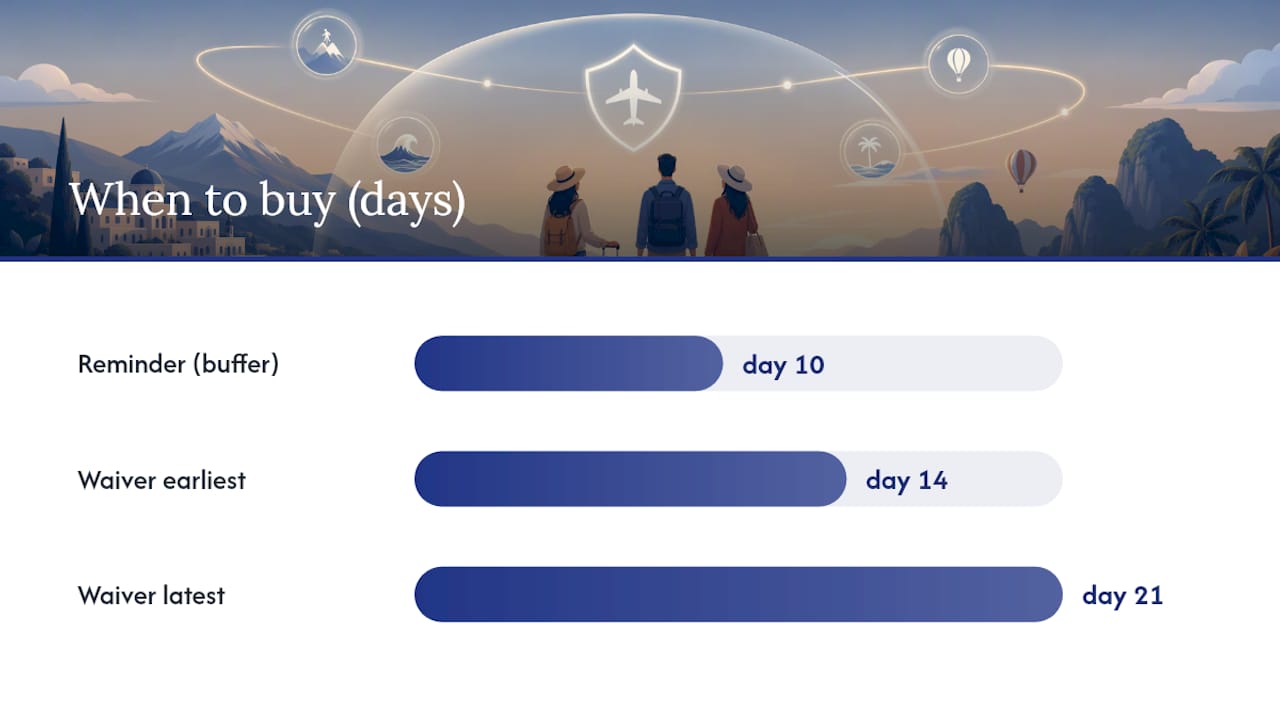
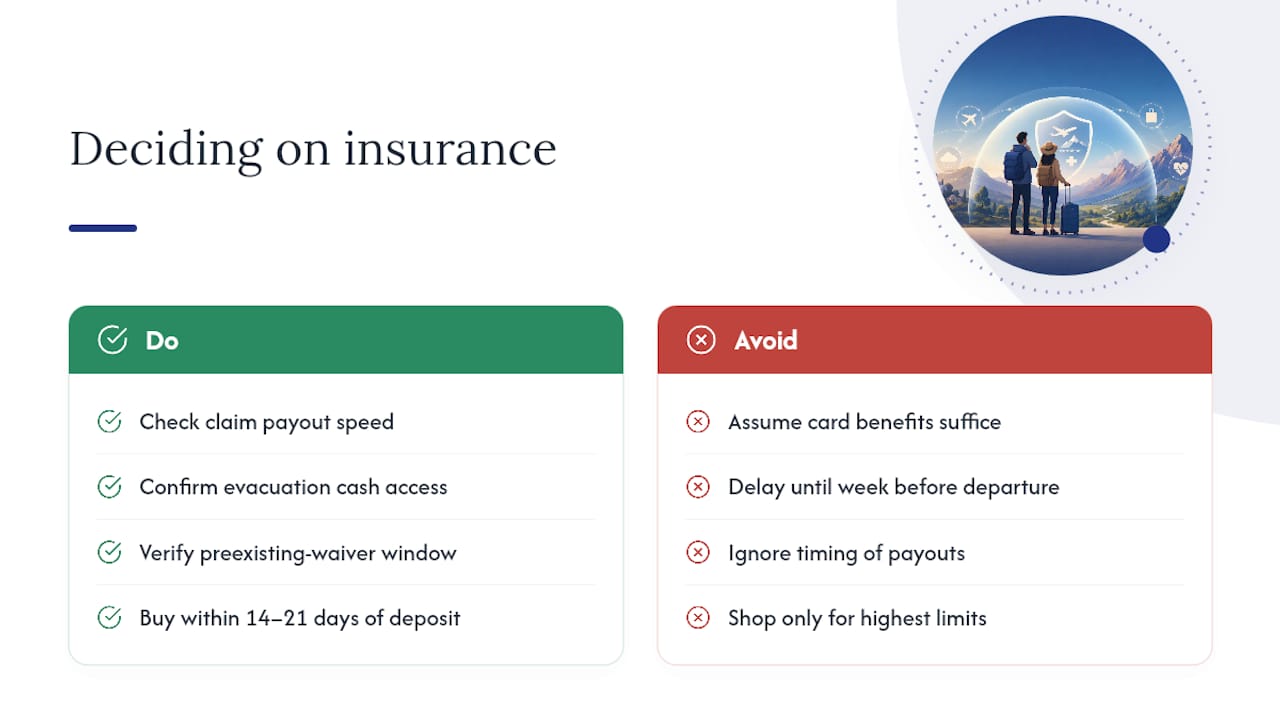
  6. Handle documents and insurance immediately. Arrange visas well in advance. Purchase travel insurance within 21 days of your first deposit to qualify for pre-existing condition coverage and the broadest policy benefits.

  7. Build your itinerary last. Once logistics are confirmed, structure your days using a three-act model: rest, explore, and unwind. More on this in the itinerary section below.

Pro Tip: If you are exhausted from wedding planning, consider a short “minimoon” right after the ceremony and save the full honeymoon for 3–6 months later. This approach aligns your trip timing with your energy and budget.

How do couples choose the right honeymoon destination?

Infographic outlining honeymoon planning steps

The most effective destination selection starts with you, not a map. Choosing based on social media appeal rather than personal needs leads to “destination fatigue,” where the location looks perfect in photos but feels wrong in person. An inverted approach works better: define your emotional and pacing needs first, then find destinations that match.

Couple consulting travel advisor about honeymoon

Ask yourselves two questions before looking at any destination. First, how much energy do we want to spend? Second, how far are we willing to travel right after the wedding? A 14-hour flight to Southeast Asia is spectacular, but not if you spend the first two days recovering from jet lag instead of enjoying your resort.

Once you have those answers, use this framework to compare your shortlist:

Criteria What to evaluate
Climate and season Is it peak, shoulder, or off-season during your travel dates?
Travel time How many hours door to door, including connections?
Activity fit Does the destination offer what you both actually want to do?
Budget alignment Do accommodation and dining costs fit your ceiling?
Visa and entry requirements How complex and time-sensitive is the process?

Popular destinations like Paris, Santorini, and Bali offer proven infrastructure and romance. Off-the-beaten-path options like the Azores, Slovenia, or Sri Lanka offer fewer crowds and often lower costs. The right choice depends entirely on your priorities, not on what trended last season.

Expert travel advisors can secure hard-to-book luxury accommodations and personalize the experience in ways that generic booking platforms cannot. For couples targeting specific resorts or remote destinations, professional guidance is not a luxury. It is a practical advantage. You can also explore a couple tour planning guide for detailed advice on personalizing European itineraries.

What are common pitfalls in honeymoon planning and how can couples avoid them?

Most honeymoon mistakes are predictable. Knowing them in advance is the simplest way to avoid them.

  • Planning too late. The most common mistake is squeezing honeymoon planning into the weeks between sending wedding invitations and the ceremony. This leads to rushed, error-prone bookings and mismatched choices.
  • Chasing Instagrammable spots. Choosing a destination for its visual appeal rather than its fit for your travel style causes disappointment. A stunning overwater bungalow means nothing if one partner gets seasick and the other is bored without activities.
  • Ignoring passport and visa timelines. Passport renewal can take 6–10 weeks in peak periods. Visa applications for destinations like India, Vietnam, or Ethiopia require lead time. Missing these windows cancels trips.
  • Over-scheduling every day. A packed itinerary feels exciting in planning and exhausting in practice. Couples who schedule every hour leave no room for spontaneity, rest, or the unexpected moments that become the best memories.
  • Skipping travel insurance. Purchasing insurance after the 21-day deposit window closes eliminates coverage for pre-existing conditions and reduces overall protection. This is a fixed deadline, not a flexible one.
  • Avoiding the budget conversation. Couples who do not align on spending expectations before booking create financial tension mid-trip. Set a clear ceiling together, then plan within it.

Pro Tip: Talk openly early in the planning process to align on priorities. Travel experts consistently identify communication failures, not budget limits, as the primary source of honeymoon conflict.

How can couples build a honeymoon itinerary that balances romance and rest?

A great honeymoon itinerary follows a three-act structure. This pacing model prevents burnout and promotes meaningful connection by matching your energy levels to your activities throughout the trip.

  1. Act one: Rest and arrive. Spend the first 2–3 days recovering from the wedding and adjusting to your destination. Prioritize late checkouts, spa treatments, slow mornings, and meals without a schedule. This phase is not wasted time. It is the foundation for everything that follows.

  2. Act two: Active exploration. Once you feel rested, introduce the experiences you came for. Guided cultural tours, snorkeling excursions, cooking classes, or hiking. This is the heart of the trip and where most of your planned activities belong.

  3. Act three: Contemplative wind-down. In the final 2–3 days, slow back down. Revisit a favorite restaurant, take a sunset cruise, or simply spend unscheduled time together. This phase helps you transition back to real life without the abrupt crash of going from full activity to home.

Build flexibility into every act. Leave at least one afternoon per week completely unplanned. 1 in 4 couples now use AI-powered trip planners to create realistic day-by-day schedules and avoid overbooking. These tools help identify conflicts and pacing issues before you arrive. That said, no algorithm replaces knowing your own rhythms as a couple.

Meaningful shared experiences outperform a checklist of sights. One private dinner on a cliffside in Positano creates a stronger memory than four rushed museum visits. Prioritize depth over volume when building your honeymoon itinerary ideas.

Key Takeaways

Effective honeymoon planning requires starting 9–12 months early, aligning on shared travel goals, and building a paced itinerary that supports rest, exploration, and genuine connection.

Point Details
Start early Book luxury accommodations 9–12 months out to secure availability and better pricing.
Align before you book Agree on travel style and budget before choosing any destination or property.
Use the three-act model Structure your itinerary around rest, exploration, and wind-down to prevent burnout.
Handle documents first Check passport validity and visa requirements as soon as you set a destination.
Buy insurance immediately Purchase travel insurance within 21 days of your first deposit for full coverage.

What I have learned about planning a honeymoon the right way

Couples often treat the honeymoon as an afterthought, something to figure out once the wedding is done. That is the single most expensive mistake in the entire process, financially and emotionally.

The couples I have seen have the most restorative, connected honeymoons share one trait: they planned with honesty. They talked about what they actually wanted, not what looked impressive. One partner wanted to sleep until 10 AM every day. The other wanted one big adventure. They found a destination that offered both, and they built a schedule that honored both. That conversation took 20 minutes and saved them from a week of low-grade resentment.

Couples who plan with emotional honesty consistently report more restorative and connected experiences. This is not soft advice. It is the most practical thing you can do before you book a single night.

Stress during a honeymoon is normal. A delayed flight, a room that does not match the photos, a restaurant that is closed. None of these ruin a trip unless you let them. The couples who handle disruption well are the ones who went in with realistic expectations and a flexible mindset. Perfection is not the goal. Connection is.

Working with a trusted travel expert, particularly for complex or luxury itineraries, removes the logistical burden and gives you back the mental space to actually enjoy the planning process. That is not outsourcing your honeymoon. That is protecting it.

— tammylevent@gmail.com

How Elitetravelgroup helps couples plan their perfect honeymoon

Elitetravelgroup has spent 35 years designing luxury travel experiences for couples who want their honeymoon done right. Every itinerary is built from scratch around your preferences, your pace, and your budget, with no service fees and a price match guarantee.

https://elitetravelgroup.net

Whether you are drawn to a private villa in Tuscany, an overwater suite in the Maldives, or a luxury European honeymoon with hand-selected hotels and private guides, Elitetravelgroup handles every detail. Our advisors are available 24/7, from your first conversation through your return home. You can also browse bespoke itinerary examples to see exactly how we build trips for couples like you. When the planning feels like too much, we are the team that makes it feel effortless.

FAQ

How far in advance should couples start honeymoon planning?

Start 9–12 months before your wedding date. Luxury accommodations in high-demand destinations sell out at that window, and earlier planning gives you better pricing and more options.

What documents do couples need to check before booking?

Check passport validity first. Passports must be valid for at least 6 months beyond your return date and typically need at least 2 blank pages for international travel.

When is the best time to buy travel insurance?

Purchase travel insurance within 21 days of your first trip deposit. This window qualifies you for pre-existing condition coverage and the broadest available policy benefits.

What is the three-act itinerary model for honeymoons?

The three-act model structures your trip as rest and arrival, active exploration, and a contemplative wind-down. This pacing prevents burnout and supports emotional connection throughout the trip.

Should couples use a travel advisor for honeymoon planning?

Yes, particularly for luxury or complex itineraries. Expert advisors can secure hard-to-book properties, personalize the experience, and handle logistics that generic booking platforms cannot manage.

Recommended

  • Must-Have Honeymoon Itinerary Ideas for Couples in 2026
  • Types of Honeymoon Destinations: Your 2026 Guide
  • How to Plan a Destination Wedding: Your 2026 Guide
  • Luxury Honeymoon Booking: Step-by-Step Guide 2026
July 4, 2026 0 comments
0 FacebookTwitterPinterestEmail
Family planning vacation at home table
Travel

Your Guide to Stress-Free Family Vacations

by Tammy Levent July 3, 2026
written by Tammy Levent


TL;DR:

  • A stress-free family vacation relies on realistic planning, age-appropriate pacing, and flexibility to reduce exhaustion. Starting planning early, limiting daily activities, and choosing family-friendly destinations help prevent common stress points. Building buffer time and having a reentry day protect the trip’s restorative benefits for everyone involved.

A stress-free family vacation is defined by realistic planning, age-appropriate pacing, and the flexibility to let go of perfection. Most family trip stress traces back to three root causes: booking too late, over-scheduling each day, and choosing destinations that don’t match the family’s actual needs. This guide to stress-free family vacations gives you a clear, step-by-step framework covering timelines, itinerary design, destination selection, packing, and the mindset shifts that separate a restorative trip from an exhausting one. Apply these strategies and your next family getaway becomes something everyone actually wants to repeat.

How far in advance should you plan a family vacation?

Planning timelines are the single most controllable factor in reducing family trip stress. Start too late and you pay more, choose less, and scramble on documents. Start at the right time and every decision feels calm.

The standard rule is straightforward:

  • Standard domestic trips: Begin planning 12 weeks (3 months) out.
  • International or peak-season travel: Start 4–6 months in advance.
  • Passport processing: Routine applications take 4–6 weeks. Factor this in before anything else.
  • Domestic flights: Book 1–3 months ahead for the best fares.
  • International flights: Book 3–6 months out to avoid price surges.

The average family trip costs around $2,700, while a week-long domestic trip for two adults runs closer to $4,500. That number climbs fast when last-minute bookings replace planned ones. Setting fare alerts through your airline’s app or a flight-tracking tool locks in prices without daily manual searching.

Pro Tip: Set a single “booking day” on your calendar 3 months before departure. Knock out flights, accommodations, and any required reservations in one focused session rather than spreading decisions across weeks.

Passports are the most overlooked planning item. If any family member’s passport expires within 6 months of your return date, many countries will deny entry. Check every passport the day you decide on a destination, not the week before you leave.

Infographic showing family vacation planning steps

What are the best strategies for building a low-stress daily itinerary?

The most common itinerary mistake families make is treating every day like a highlight reel. A packed schedule feels exciting on paper and exhausting in practice. The fix is simple: limit activities to 1–2 main events per day when traveling with young children.

Pacing by age group is the core principle here. Match the day’s rhythm to your youngest traveler:

  1. Infants (under 12 months): Plan one outing per day maximum. Build in nursing, nap, and feeding breaks every 2–3 hours. Choose flights under 4 hours whenever possible.
  2. Toddlers (1–3 years): Two short activities work well. Prioritize outdoor spaces where movement is natural. Avoid long restaurant waits.
  3. School-age children (4–12 years): Two solid activities plus downtime. Include at least one activity they chose themselves.
  4. Teens: Give them genuine input on one activity per day. Autonomy reduces friction more than any other single tactic.

Matching pace to the youngest traveler is the primary factor preventing family burnout on vacation. This is not a compromise. It is the strategy that keeps everyone functional and happy through day five.

Downtime is not wasted time. An unscheduled afternoon at the hotel pool often produces the memories families talk about for years. Build at least one fully open block into every two days of travel.

Child’s view of family itinerary in car

Pro Tip: Write your itinerary in pencil, not pen. List planned activities as options, not obligations. If the morning runs long, drop the afternoon plan without guilt.

How should families choose destinations and accommodations?

Destination choice determines how hard the rest of your planning has to work. A destination with kid-friendly infrastructure, mild weather, and accessible healthcare removes dozens of potential stress points before the trip begins.

The fly-and-flop vacation model is one of the fastest-growing approaches in family travel. The concept is simple: pick one place, stay there, and relax rather than hopping between cities. Fewer transitions mean fewer logistics, fewer meltdowns, and more genuine rest.

When evaluating destinations and lodging, prioritize these factors:

  • Kitchen access: Vacation rentals with full kitchens cut food costs and give you control over meals for picky eaters or dietary needs.
  • On-site amenities: Family resorts with pools, kids’ clubs, and dining options reduce the need to leave the property every day.
  • Healthcare proximity: Know where the nearest clinic or hospital is before you need it.
  • Travel time from home: Shorter travel days protect young children’s routines and your own energy.
  • Climate predictability: Destinations with stable weather during your travel window reduce the chance of a ruined beach day or a cold snap.

Relaxing vacations require letting go of the need to “do it all.” The families who return home genuinely rested are the ones who chose depth over breadth, one great beach over five cities.

Ignore external pressure to visit the most photogenic or trendy destination. The right destination for your family is the one that matches your children’s ages, your budget, and your actual energy level. Elitetravelgroup specializes in matching families to destinations that fit their real needs, not just what looks good on a list.

What smart packing habits reduce travel day stress?

Packing is where good intentions meet reality. Most families overpack clothing and underpack the items that actually prevent crises. The goal is a bag that handles the unexpected without weighing you down.

Travel day essentials vs. checked bag items

Category Travel Day Bag Checked Bag
Food Snacks, water bottles Specialty items
Health First-aid kit, medications Backup prescriptions
Comfort Comfort objects, headphones Extra toys
Documents Copies of passports, insurance Originals in hotel safe
Tech Chargers, tablets, power bank Adapters

Packing a first-aid kit and comfort items prevents the most common sources of in-transit stress. A child’s favorite stuffed animal or blanket costs nothing to pack and buys hours of calm on a long flight.

A few rules that make travel days dramatically easier:

  • Plan stops or breaks every 2–3 hours on road trips. Skipping breaks to “make time” reliably backfires.
  • Keep the first and last days of any trip simple. Avoid scheduling major activities on arrival or departure days.
  • Use a printed or digital checklist. Checklists reduce last-minute stress by moving tasks out of your head and onto paper.

For families preparing a road trip, this guide to car vacation prep covers packing logistics in practical detail.

Pro Tip: Pack one complete change of clothes for each child in your carry-on. Checked bag delays happen. A child in wet or soiled clothes for a 6-hour layover is avoidable.

How can families stay flexible and enjoy trips when things go wrong?

Building buffer time into your schedule is the structural version of flexibility. It means leaving gaps between activities, not booking the last possible flight home, and resisting the urge to fill every hour. Buffer time turns a delayed train from a disaster into a minor inconvenience.

The mindset shift matters just as much as the schedule. Families who return from trips feeling restored share one common trait: they stopped trying to execute a perfect trip and started focusing on connection.

Practical ways to protect your family’s enjoyment when plans change:

  • Reframe mishaps immediately. A wrong turn that led to a great local restaurant is a story, not a failure.
  • Let family members choose. When a child picks the afternoon activity, they invest in it. Complaints drop.
  • Lower the bar on meals. Grocery store picnics and pizza nights are not failures. They are often the most relaxed moments of the trip.
  • Plan a reentry day. Schedule a transition day after returning home before going back to work or school. Reserve an hour of that day for groceries, laundry, and email. This protects the restorative effect of the vacation.

Successful family vacations focus on connection over accomplishment. The families who enjoy travel most are the ones who accept that mishaps become the stories they tell for years.

The post-trip reentry day is the most underused tool in family travel planning. Returning home on a Sunday night and going straight back to a full Monday schedule erases the vacation’s benefits within 48 hours. One buffer day changes that outcome completely.

Key Takeaways

Stress-free family travel requires matching your planning timeline, daily pace, and destination choice to your youngest traveler’s actual needs, not your ideal itinerary.

Point Details
Start planning early Standard trips need 12 weeks; international travel needs 4–6 months, including passport checks.
Pace to the youngest Limit activities to 1–2 per day for young children to prevent burnout and family friction.
Choose the right destination Prioritize kid-friendly amenities, stable weather, and short travel times over trendy locations.
Pack for crises, not comfort Carry snacks, a first-aid kit, comfort objects, and document copies in your travel day bag.
Build in buffer time Leave gaps in your schedule and plan a reentry day after returning home to preserve rest.

What I’ve learned from watching families travel well and badly

The families I’ve seen return from trips genuinely happy share one habit: they planned for the trip they actually have, not the trip they imagined. That means accounting for a toddler who naps at noon, a teen who needs 30 minutes of quiet, and a parent who hits a wall by 4:00 PM.

The conventional advice to “be spontaneous” sounds freeing but often backfires without structure underneath it. Spontaneity works when the basics are locked in. When flights, accommodations, and one anchor activity per day are confirmed, everything else can flex. That is the real meaning of flexible travel.

The hardest thing to let go of is the idea that a great family vacation looks a certain way. Social media has made this worse. Families arrive at destinations trying to recreate photos rather than have experiences. The best trips I’ve witnessed had at least one day that looked nothing like the plan and everything like a real family having a real time together.

Post-trip reentry is where most families lose the gains they made. Coming home to a full inbox, an empty fridge, and school prep on the same day you land is a design flaw, not bad luck. One buffer day fixes it. It is the simplest, most ignored piece of family travel advice I know.

— tammylevent@gmail.com

How Elitetravelgroup designs trips families actually enjoy

Elitetravelgroup has spent 35 years building itineraries that work in practice, not just on paper. Every family trip the team designs accounts for children’s ages, pacing needs, and the kind of rest the parents actually need, not just the highlights.

https://elitetravelgroup.net

Elitetravelgroup’s concierge approach means your family’s accommodations, activity timing, and travel days are structured around your specific situation. The team handles kid-friendly hotel selection, activity pacing, and on-the-ground support so you are not problem-solving on vacation. For families ready to travel without the logistics burden, Elitetravelgroup’s luxury family adventure packages offer fully planned, personalized experiences with no service fees and a price match guarantee. You can also browse bespoke itinerary examples to see how customized planning translates into real trips.

FAQ

How far in advance should I book a family vacation?

Book standard trips 12 weeks out and international or peak-season travel 4–6 months in advance. Check all passports on the day you decide to travel, since routine processing takes 4–6 weeks.

How many activities should families plan per day?

Limit daily plans to 1–2 main activities when traveling with young children. Fewer planned activities reduce pressure and leave room for the spontaneous moments families remember most.

What is a fly-and-flop vacation?

A fly-and-flop trip means choosing one destination and staying there to relax rather than moving between multiple locations. This approach cuts logistics, reduces transitions, and is one of the most effective stress-free travel ideas for families.

What should always go in a carry-on for family travel?

Pack snacks, a first-aid kit, comfort objects, chargers, medications, and copies of travel documents in your carry-on. Include one full change of clothes per child to handle delays or spills before checked bags arrive.

How do families recover well after a vacation?

Plan a reentry buffer day between returning home and resuming normal schedules. Use one hour of that day for groceries, laundry, and inbox tasks to avoid the stress spike that erases vacation benefits.

Recommended

  • Family Travel Tips 2026: Plan Smarter, Stress Less
  • Master the Luxury Family Travel Planning Process for Unforgettable Vacations
  • How to Plan Luxury Family Travel for Exceptional Trips
  • How to Organize Multi-Generational Trips for Families
July 3, 2026 0 comments
0 FacebookTwitterPinterestEmail
Woman enjoying VIP cruise balcony at sunset
Travel

What Is a VIP Cruise Experience? Your 2026 Guide

by Tammy Levent July 2, 2026
written by Tammy Levent


TL;DR:

  • A VIP cruise experience combines exclusive accommodations, personalized services, and private amenities that elevate a standard cruise to luxury. Many of these experiences include private enclaves with restricted access, dedicated butlers, and priority services that remove logistical friction. Choosing the right VIP option depends on service quality, booking channels, and your desire for authentic, personalized attention.

A VIP cruise experience is defined as a combination of exclusive accommodations, premium personalized services, and private amenities that transform a standard cruise into a refined, effortless vacation. The industry term for the most immersive version of this is the “ship-within-a-ship” concept, where a dedicated enclave operates as a private retreat inside a larger vessel. These sections offer private pools and butler service that most passengers on the same ship never see. Elitetravelgroup has spent 35 years helping travelers access exactly these kinds of experiences, and the difference between knowing where to look and booking blind is enormous.

What is a VIP cruise experience, and what features define it?

A VIP cruise experience centers on three pillars: exclusive space, attentive service, and the removal of everyday travel friction. Each pillar shows up in concrete, measurable ways once you board.

Butler setting dinner in luxury cruise suite

The most visible feature is the private enclave. VIP areas use key card access to restrict entry, meaning guests on the same ship may never realize these sections exist. That level of discretion is intentional. The enclave typically includes a private pool, dedicated sun deck, exclusive restaurant, and a lounge reserved solely for suite guests.

Butler and concierge service is the second defining feature. A dedicated butler handles everything from unpacking luggage to booking specialty dining and arranging private shore excursions. Guest-to-crew ratios as low as 2-to-1 make this level of attention possible. That ratio means your butler is never stretched thin across dozens of cabins.

Priority access rounds out the core VIP package. This includes:

  • Priority embarkation and disembarkation: No standing in line at the terminal or waiting on the gangway.
  • Pre-arranged restaurant reservations: Your dining schedule is set before you board.
  • Dedicated shore excursion planning: Curated private tours replace generic group outings.
  • Exclusive lounge access: A private space for breakfast, cocktails, and concierge consultations.
  • Early booking windows: Concierge-level guests book activities up to 130 days before departure, giving them first access to the most popular experiences.

Pro Tip: Ask your travel advisor specifically about “suite-only” amenities versus “concierge-tier” amenities. These are often different programs on the same ship, and conflating them leads to unmet expectations.

How do VIP cruise experiences vary across cruise lines and packages?

Infographic comparing VIP cruise features

Not all VIP designations are equal. The label covers a wide spectrum, from a slightly upgraded cabin with lounge access to a full private-deck experience on an ultra-luxury vessel.

The price gap reflects this range. VIP enclave accommodations cost 4 to 5 times more than standard fares on the same ship. That premium buys a meaningfully different product, not just a larger room.

The table below shows how VIP tiers differ across cruise categories:

Category VIP designation Key differentiators
Mainstream cruise lines Suite or Yacht Club tier Private enclave, butler, priority boarding
Premium cruise lines Concierge class or suite Dedicated lounge, early booking windows, enhanced dining
Ultra-luxury cruise lines All-inclusive, ship-wide No tiers needed; entire ship operates at VIP standard

Ultra-luxury vessels cap passenger counts at 200–450 guests to create an intimate, boutique hotel atmosphere. That cap is the product. When a ship carries fewer than 500 people, the entire experience feels personalized without requiring a separate enclave.

Booking channel matters as much as the tier you choose. Many VIP perks, including personalized hosts and curated shore excursions, are only available through specialized luxury travel consortia. Booking directly with the cruise line often means missing these extras entirely. Elitetravelgroup operates within these networks, which is why clients frequently receive amenities that are not listed on any public booking page.

Loyalty programs add another layer. Elite loyalty tiers starting around 30 points can unlock priority boarding, dedicated lounges, and concierge service. If you cruise regularly, your existing status may already qualify you for benefits you have not claimed.

Why is “de-frictioning” central to the VIP cruise experience?

“De-frictioning” is the deliberate removal of every logistical barrier between a guest and their enjoyment. It is the clearest way to separate genuine luxury from surface-level upgrades.

VIP cruise strategy focuses on eliminating travel friction through priority embarkation, pre-arranged reservations, and private transport. The goal is a vacation where you never wait, never negotiate, and never manage logistics in the moment. Every decision has already been made on your behalf.

True luxury at sea is measured by the absence of friction, not the presence of flamboyance. You never sign a receipt. You never present a card. Services simply appear when you need them, and disappear when you don’t. That is the standard that separates ultra-luxury from premium.

The psychological impact of this is real. When travelers do not spend mental energy on logistics, they relax faster and enjoy more. A pre-arranged private transfer from the airport to the ship removes one decision. A butler who already knows your dietary preferences removes another. Multiply that across seven days, and the cumulative effect is a fundamentally different state of mind.

Ultra-luxury lines operate with no queues and no receipt signing, creating what one reviewer described as effortless access to every service onboard. That frictionless standard is increasingly the benchmark travelers use to evaluate whether a VIP experience is worth the premium.

Pro Tip: Before booking, ask specifically: “What do I never have to wait for?” If the answer is vague, the experience probably has not been fully de-frictioned.

What should you expect on a VIP cruise, and how do you choose the best option?

Knowing what to expect prevents the most common VIP cruise disappointment: paying a premium for a label rather than a genuine upgrade.

What the onboard experience actually looks like

Your day starts with breakfast delivered to your suite or served in a private restaurant with no wait. Your butler has already confirmed your dinner reservation and arranged your afternoon shore excursion. You board a private tender rather than waiting with the general population. When you return, your cabin has been refreshed and your evening clothes are laid out.

That rhythm, repeated across every day of the voyage, is the VIP cruise experience in practice. It is not about one spectacular moment. It is about the consistent removal of friction and the consistent presence of attentive service.

How to assess and choose the right VIP option

Use this checklist when evaluating any VIP cruise package:

  1. Confirm the suite category in writing. “Suite” can mean a 300-square-foot room with a sofa or a 1,200-square-foot two-bedroom apartment with a private terrace. Get the exact square footage and layout.
  2. Ask about the guest-to-crew ratio in the VIP section. A ratio above 3-to-1 in a “VIP” enclave suggests the service will feel stretched.
  3. Verify which amenities are included versus charged separately. Specialty dining, spa access, and premium beverages are sometimes included and sometimes not.
  4. Check your loyalty status before booking. Platinum and Diamond tier members often receive priority boarding and lounge access without paying suite prices.
  5. Book through a luxury consortia-connected advisor. Personalized hosts and unique shore excursions are frequently only available through specialized booking channels.

Common misconceptions to avoid

  • A larger cabin is not the same as a VIP experience. Square footage without dedicated service is just a bigger room.
  • “Concierge class” on some lines means a slightly upgraded cabin, not a full concierge service. Read the fine print.
  • Wellness-focused ultra-luxury lines, which emphasize space, wellness, and boutique atmosphere, often deliver a more satisfying VIP experience than ships that lead with visible opulence.

For travelers who want to see exclusive cruise experiences before committing, reviewing curated examples helps calibrate expectations against real offerings.

Key Takeaways

A VIP cruise experience is defined not by size or price alone, but by the consistent removal of friction and the presence of genuinely personalized service at every touchpoint.

Point Details
Core VIP definition Exclusive accommodations, butler service, and priority access form the foundation of any true VIP cruise.
Price premium is real VIP enclave accommodations cost 4 to 5 times more than standard fares, reflecting a meaningfully different product.
De-frictioning is the standard The best VIP experiences remove every logistical barrier, from embarkation to daily dining reservations.
Booking channel matters Many VIP perks are only available through luxury consortia, not direct cruise line bookings.
Loyalty status unlocks value Elite loyalty tiers can grant VIP benefits like priority boarding and concierge service without suite pricing.

What I’ve learned after years of watching travelers get VIP cruising wrong

The most persistent mistake I see is treating VIP as a synonym for “expensive.” Travelers book the highest-priced suite on a mainstream ship and expect an ultra-luxury experience. They get a beautiful room and decent service. They do not get the thing they actually wanted, which is the feeling that the entire ship is organized around their comfort.

The shift happening right now in luxury cruising is worth paying attention to. Ultra-luxury lines are moving toward unpretentious inclusivity, creating intimate social environments rather than segregated enclaves. The best experiences I have seen are not the ones with the most visible opulence. They are the ones where guests stop thinking about the logistics entirely.

Wellness, space, and a boutique state of mind are replacing gold-plated fixtures as the markers of real luxury. A ship with 300 guests and a 2-to-1 crew ratio will almost always outperform a ship with 3,000 guests and a VIP deck, regardless of how the brochure reads.

My honest advice: align your choice with how you actually want to feel, not with how the cabin photographs. If you want to feel known, attended to, and free from logistics, prioritize service ratio and de-frictioning over square footage. If you want a partner who knows which ships actually deliver on that promise, work with an advisor who has been inside these programs. The difference between a good cruise and a genuinely exceptional one is almost always made before you board.

— tammylevent@gmail.com

How Elitetravelgroup curates your VIP cruise experience

Elitetravelgroup brings 35 years of luxury travel expertise to every cruise booking, with direct access to the consortia networks that unlock VIP perks most travelers never find on their own.

https://elitetravelgroup.net

Whether you are drawn to a private-enclave experience on a premium ship or the all-inclusive intimacy of an ultra-luxury vessel, Elitetravelgroup designs the itinerary around your preferences, not a template. The agency charges no service fees, offers a price match guarantee, and is available 24/7. Clients gain access to exclusive cruise packages and personalized shore excursions that are simply not available through standard booking channels. For travelers ready to plan a VIP vacation that goes beyond the cruise itself, Elitetravelgroup’s luxury adventure travel packages pair seamlessly with premium cruise itineraries worldwide.

FAQ

What is a VIP cruise experience in simple terms?

A VIP cruise experience is a premium tier of cruising that includes exclusive accommodations, dedicated butler service, private dining, and priority access to ship amenities. The defining feature is personalized, frictionless service from embarkation to disembarkation.

How much more does a VIP cruise cost than a standard cabin?

VIP enclave accommodations typically cost 4 to 5 times more than standard fares on the same ship. The premium reflects private amenities, dedicated service staff, and exclusive access areas unavailable to general passengers.

Can loyalty program status get you VIP cruise benefits?

Yes. Elite loyalty tiers starting around 30 points on some cruise lines grant VIP perks including priority boarding, dedicated lounges, and concierge service without requiring a suite booking.

What is the “ship-within-a-ship” concept?

The ship-within-a-ship concept refers to a key card-restricted VIP enclave inside a larger cruise ship. These sections operate as a private retreat with exclusive pools, restaurants, and lounges that most passengers never access or even know exist.

Should you book a VIP cruise directly or through a travel advisor?

Booking through a luxury travel advisor connected to specialized consortia networks is the better option. Many VIP perks, including personalized hosts and curated shore excursions, are only available through these channels and cannot be accessed through direct cruise line bookings.

Recommended

  • Luxury cruise travel tips for a bespoke 2026 experience
  • Discover VIP Vacations: 5 Luxury & Exclusivity Secrets
  • 10 VIP vacation examples for ultimate luxury in 2026
  • How travel agencies elevate VIP luxury experiences in 2026
July 2, 2026 0 comments
0 FacebookTwitterPinterestEmail
Parents reviewing family travel safety materials
Travel

Family Travel Safety Explained: A Parent’s Guide

by Tammy Levent July 1, 2026
written by Tammy Levent


TL;DR:

  • Family travel safety involves preparing for medical needs, security, and emotional stability before trips. Proper planning, emergency protocols, and safety gear help protect children during transit and stays abroad. Building a written contingency plan and using official resources ensure families handle emergencies effectively.

Family travel safety is defined as the combination of medical preparedness, physical security, and emotional wellbeing strategies that protect children at every stage of a trip. Experienced travelers cite sudden illness or injury as their top travel concern, which means reactive planning is not enough. The families who travel well are the ones who prepare before they leave home. This guide covers the core principles of traveling with children safely, from pre-trip health consultations to building a crisis plan your kids can actually participate in.

Infographic outlining five family travel safety steps

What does family travel safety explained mean for parents?

Family travel safety covers three distinct layers: physical protection, health management, and emotional stability. Most parents focus on the first two and underestimate the third. A child who is anxious, overtired, or disoriented is harder to keep safe. Addressing all three layers before you leave is the foundation of every sound safety plan.

The standard industry term for this approach is travel risk management, and pediatric travel medicine specialists apply it the same way corporate security teams do. You assess the destination, identify the risks specific to your children’s ages and health conditions, and build protocols for each scenario. The difference for families is that the protocols need to work for a five-year-old as much as for the adults.

Proactive preparation using official government resources, including the U.S. State Department’s Smart Traveler Enrollment Program (STEP), significantly improves family safety abroad. STEP sends real-time destination alerts and connects you to embassy support. Registering takes five minutes and costs nothing.

What safety preparations must parents complete before the trip?

Pre-trip preparation is where most family travel safety plans succeed or fail. The steps below are not optional extras. They are the baseline.

  • Pediatric pre-travel consultation: Schedule this 4–6 weeks before departure, especially for infants or children with chronic conditions. Your pediatrician will update immunizations, prescribe destination-specific medications, and flag any health risks at your destination.
  • Travel insurance with medical evacuation: Standard trip cancellation policies are not enough. Choose a policy that covers emergency medical treatment and medical evacuation. Read the fine print on pre-existing conditions before you buy.
  • Document organization: Carry physical copies of passports, insurance cards, vaccination records, and prescription information. Store one set in your carry-on and leave a second set with a trusted home contact.
  • Home base contact: Designate one person at home who holds copies of all critical documents and knows your full itinerary. This person is your first call if phones fail or wallets are lost.
  • Age-appropriate medical kit: Pack children’s pain reliever, antihistamine, oral rehydration salts, bandages, antiseptic wipes, and any prescription medications in original labeled containers.

Pro Tip: Ask your pediatrician for a signed letter listing your children’s medications and diagnoses. This document speeds up treatment at foreign hospitals and clears customs without delays.

For more ideas on preparing for sudden illness or injury during family travel, the family travel planning guide from Elitetravelgroup covers practical steps parents often miss.

How do you keep kids physically safe during transport and at the hotel?

Physical safety during transit is the area with the clearest standards and the most preventable injuries. Follow the guidelines from the FAA and the American Academy of Pediatrics, and you eliminate the most common risks.

Child buckled in car seat with parent securing straps

On the airplane

The FAA and American Academy of Pediatrics recommend that children under 2 be secured in their own FAA-approved child restraint system (CRS) rather than held on a parent’s lap. Lap-held infants are vulnerable during turbulence because a parent cannot maintain grip under sudden force. The FAA-approved CARES harness is designed specifically for children weighing 22–44 pounds and attaches directly to the aircraft seat. For infants, a rear-facing car seat that carries FAA approval works on the aircraft and in the car. For more on flying with young children, Elitetravelgroup’s guide on traveling with an infant covers seat selection and boarding logistics in detail.

In cars, taxis, and rideshares

Never assume a taxi or rideshare vehicle will have a car seat. Bring a portable, lightweight car seat for any destination where you will be using ground transportation. Install it yourself and check the angle indicator before every ride.

At the hotel

Safety Area Risk Solution
Crib safety Hotel cribs often fail ASTM standards Bring a portable travel crib that meets ASTM F406
Door security Toddlers can open standard hotel door handles Install a secondary high-mounted door lock or door alarm
Balcony access Falls from balconies are a leading child injury abroad Lock balcony doors and block access with furniture
Outlet covers Exposed outlets at child height Pack universal outlet covers in your carry-on
Window guards Upper-floor windows without stops Request a lower floor or ask the hotel to install window stops

Hotel-provided cribs frequently do not meet current safety standards. Bringing your own portable crib is one of the most underrated safety decisions a parent can make.

Pro Tip: Walk through the hotel room before your children enter. Check the balcony lock, test the crib mattress firmness, and locate the nearest emergency exit. This takes three minutes and removes the most common hazards before your kids find them.

What strategies help families manage health and supervision risks on the road?

Managing safety during the trip itself requires a different mindset than pre-trip preparation. You are making real-time decisions in unfamiliar environments, often while tired.

Maintaining predictable routines for meals and sleep reduces children’s anxiety and keeps their behavior more predictable. A well-rested child is easier to supervise. A hungry child is a distracted one. Protect nap times and mealtimes as much as your itinerary allows.

Teach your children what to do if they get separated from you. Children as young as four can memorize a parent’s phone number. School-aged children can learn to find a uniformed employee, a store cashier, or a family with children and ask for help. Practice this before you travel, not after you arrive.

  • ID wristbands: Write your cell number on a waterproof wristband for children under 8. In crowded places like theme parks or markets, this is faster than any app.
  • GPS trackers: Clip-on GPS devices give parents real-time location data in large venues or unfamiliar cities. They work best as a backup to supervision, not a replacement for it.
  • Handwashing discipline: Wash hands before every meal and after every public transit ride. Carry alcohol-based hand sanitizer for situations where soap and water are not available.
  • Early medical intervention: Do not wait to see if a fever resolves on its own. Contact your travel insurance’s 24/7 assistance line at the first sign of serious illness. Early contact activates direct billing and connects you to pre-vetted local providers.

Pro Tip: Take a photo of your children each morning before you leave the hotel. If they go missing in a crowd, you have a current image of exactly what they are wearing.

Safety strategies should shift as children age. Toddlers need physical barriers and constant proximity. School-aged children benefit more from situational awareness training and clear rules about what to do when something goes wrong.

How do you build a family travel contingency plan?

A contingency plan is a written set of instructions your family follows when something goes wrong. It removes the need to make decisions under stress.

  1. Divide emergency roles. One parent handles the children. The other handles communication, documents, and logistics. Decide this before you travel so there is no confusion in the moment.
  2. Set a meeting point. Designate a specific, easy-to-describe meeting point at every major venue you visit. Tell your children the plan before you enter.
  3. Store emergency contacts offline. Write the local emergency number, your hotel address, your insurance assistance line, and the nearest U.S. embassy or consulate on a physical card. Keep it in your wallet, not just your phone.
  4. Register with STEP. The State Department’s Smart Traveler Enrollment Program sends destination-specific alerts and gives the embassy your contact information if a crisis occurs.
  5. Brief your children. Run a short, age-appropriate rehearsal before the trip. Ask your child: “What do you do if you can’t find me?” Practice the answer until it is automatic.

“The families who handle travel emergencies best are the ones who made the decisions before the emergency happened.” This principle applies whether the crisis is a lost passport, a medical event, or a natural disaster.

Keeping physical, offline copies of passports and insurance documents is non-negotiable. Digital storage fails when you need it most, specifically when your phone is dead, stolen, or without a signal.

Pro Tip: Email your contingency plan to yourself and your home base contact before departure. Include hotel addresses, flight numbers, insurance policy numbers, and embassy contacts for every country on your itinerary.

Key Takeaways

Effective family travel safety requires layered preparation across health, physical security, and emotional wellbeing, starting at least 4–6 weeks before departure.

Point Details
Start preparation early Schedule a pediatric travel consultation 4–6 weeks before departure to update vaccinations and address destination risks.
Use approved restraints The FAA recommends a CRS for children under 2 on flights; never rely on lap-holding during turbulence.
Audit hotel rooms first Bring a portable ASTM-compliant crib and secondary door locks; hotel-provided equipment often fails current safety standards.
Build a written contingency plan Assign emergency roles, set meeting points, and store all critical contacts offline before you leave home.
Protect routines on the road Consistent meal and sleep schedules reduce child anxiety and make supervision easier throughout the trip.

What I’ve learned after years of watching families travel

The most common mistake I see families make is treating safety as a checklist they complete once and then forget. Real travel safety is a living practice. You reassess it every time your children grow, every time you choose a new destination, and every time the world changes around you.

Physical safety gets most of the attention, and rightly so. But the families I have seen struggle most on trips are the ones whose children are emotionally dysregulated, not physically at risk. A child who has not slept, has not eaten on schedule, and has no idea what is happening next is a child who is hard to keep track of and hard to reason with. Protecting routines is not soft parenting. It is a safety strategy.

The detail most parents overlook is the portable door lock. A standard hotel door lock stops adults. It does not stop a determined three-year-old who wakes up at 5 a.m. and wants to explore the hallway. A secondary high-mounted lock costs less than $15 and eliminates that risk entirely. I have never seen it mentioned on a hotel safety card.

My other strong opinion: stop treating government resources as bureaucratic formalities. The STEP program, the CDC’s destination health pages, and the State Department’s travel advisories exist because they work. Families who use them make better decisions. Families who skip them are planning blind.

Build your safety framework around your specific children, your specific destination, and your specific trip type. A beach week with a toddler and a ski trip with a ten-year-old require completely different protocols. The families who travel confidently are the ones who know the difference.

— tammylevent@gmail.com

How Elitetravelgroup supports safe family travel

Planning a family vacation with safety built into every detail is exactly what Elitetravelgroup does best. With 35 years of experience and a concierge-level approach, Elitetravelgroup designs itineraries that account for your children’s ages, health needs, and the specific demands of each destination.

https://elitetravelgroup.net

Every itinerary includes vetted accommodations, trusted ground partners, and 24/7 support so you are never making critical decisions alone. Whether you are planning a luxury adventure vacation for the whole family or a curated European trip, Elitetravelgroup handles the logistics so you can focus on the experience. No service fees, a price match guarantee, and real experts available around the clock. Contact Elitetravelgroup to start building a trip your family will travel safely and remember forever.

FAQ

What is a family travel safety checklist?

A family travel safety checklist covers pre-trip medical consultations, document organization, travel insurance, child restraint systems, hotel room hazard checks, and a written emergency plan. Complete each item at least two weeks before departure.

When should I take my child to a travel medicine doctor?

Schedule a pre-travel pediatric consultation 4–6 weeks before departure. This allows enough time to complete any required vaccine series before you leave.

Do children need their own airplane seat?

The FAA and American Academy of Pediatrics both recommend that children under 2 use an FAA-approved child restraint system in their own seat rather than sitting on a parent’s lap during flights.

What should I do if my child gets sick abroad?

Contact your travel insurance’s 24/7 assistance line immediately. Early contact activates direct billing and connects you to pre-vetted medical providers at your destination.

How do I prepare my child for getting separated in a crowd?

Teach children to memorize a parent’s phone number and to approach a uniformed employee or a family with children for help. Practice this conversation at home before the trip so the response is automatic.

Recommended

  • Family Travel Tips 2026: Plan Smarter, Stress Less
  • As a World Travel Expert, She Shares Need-to-Know Safety Facts and Strategic, Smart Advice for Travelers. | Elite Travel
  • Travel Travelling with infant tips on the plane | Elite Travel
  • How to Organize Multi-Generational Trips for Families
July 1, 2026 0 comments
0 FacebookTwitterPinterestEmail
Woman planning Mediterranean cruise itinerary
Travel

Top European Cruise Destinations 2026: Best Ports

by Tammy Levent June 30, 2026
written by Tammy Levent


TL;DR:

  • European cruise destinations in 2026 are defined by port availability, scenic access, and cultural richness. Smaller ships will have better access due to growing port restrictions, rewarding planning and early bookings. Northern Europe offers distinct natural and cultural experiences with fewer crowds, making it a serious alternative to the Mediterranean.

The top European cruise destinations 2026 are defined by three factors: cultural depth, scenic access, and port availability. Italy alone handles nearly 25% of all European cruise traffic, anchored by Civitavecchia, Venice, and Naples. At the same time, new port restrictions in Barcelona, Amsterdam, and Cannes are reshaping which itineraries are even possible. Northern Europe is rising fast as a serious alternative, drawing travelers who want fjords and Baltic capitals instead of crowded Riviera beaches. Knowing which ports are open, which are capped, and which are worth your time is the difference between a great cruise and a frustrating one.

Cruise ship sailing through Northern European fjord

1. Which Mediterranean cruise destinations are most popular in 2026?

The Mediterranean remains the core of European cruising, and Italy sits at the top. Civitavecchia serves as Rome’s gateway port, offering direct access to the Vatican, the Colosseum, and Trastevere. Naples connects you to Pompeii, the Amalfi Coast, and Capri. Venice, despite ongoing debates about large ship access, remains one of the most photographed arrivals in the world.

Spain’s ports are equally compelling. Barcelona combines Gothic architecture with world-class food, though capacity cuts of 16% mean fewer passengers per day will experience it in 2026. Valencia and Palma de Mallorca are picking up the overflow, and both are genuinely worth the visit on their own terms. Palma’s cathedral and Valencia’s City of Arts and Sciences are not consolation prizes.

France’s Riviera ports add glamour to any itinerary. Marseille offers the Calanques National Park and a raw, authentic city culture that Nice and Cannes do not. Cannes itself now restricts ships to under 1,000 passengers, which actually works in your favor if you book the right vessel.

Greece leads Mediterranean cruise growth in 2026, with passenger traffic up 20% over 2025. Santorini, Mykonos, and Corfu are the headline ports, but each requires planning. Santorini enforces a daily visitor cap, and Corfu rewards travelers who skip the port town and head inland.

Pro Tip: Book shore excursions in Santorini before 8:00 AM. Early-morning visits beat the ferry crowds and give you the caldera views without the shoulder-to-shoulder experience.

Port Country Key Restriction Top Draw
Civitavecchia Italy None currently Rome, Vatican, Colosseum
Barcelona Spain 16% daily capacity cut Gothic Quarter, La Sagrada Família
Cannes France Ships under 1,000 passengers only Riviera beaches, film festival venues
Santorini Greece 8,000 daily visitor cap Caldera views, Oia village
Palma de Mallorca Spain None currently Cathedral, old town, beaches

2. What are the top Northern European cruise destinations gaining popularity?

Northern Europe is rapidly emerging as a premier cruise region for travelers who want nature over nightlife. Norway’s fjords, particularly Geirangerfjord and Nærøyfjord, deliver scenery that no Mediterranean port can match. Glaciers, waterfalls, and mountain villages line the route in ways that feel genuinely remote even from the deck of a cruise ship.

The Baltic capitals form one of the most culturally rich circuits in European cruising. Copenhagen offers design, cycling culture, and Nyhavn’s iconic waterfront. Stockholm spreads across 14 islands and delivers one of the most dramatic harbor arrivals in the world. Helsinki is compact, architecturally striking, and far less crowded than its Scandinavian neighbors.

Germany’s Hamburg and Kiel serve as major embarkation points for Baltic itineraries. Hamburg is a world-class city in its own right, with the Elbphilharmonie concert hall and the Speicherstadt warehouse district worth a full day before you even board. Ireland’s Cork and Dublin are seeing rising cruise traffic, offering a softer, greener counterpoint to Scandinavian drama.

Pro Tip: The best window for Northern European cruises runs from june through august, when daylight lasts well past 10:00 PM in Scandinavia. Book at least 9–12 months ahead, as cabins on fjord itineraries sell out faster than Mediterranean routes.

Destination Country Best Season Key Appeal
Geirangerfjord Norway june–august UNESCO fjord scenery, waterfalls
Copenhagen Denmark may–september Design culture, Nyhavn harbor
Stockholm Sweden june–august Archipelago arrival, Old Town
Helsinki Finland june–august Architecture, less crowded
Dublin Ireland may–october History, pub culture, coastal scenery

3. How are 2026 port restrictions affecting European cruise itineraries?

Port restrictions in 2026 are the single biggest planning variable for cruise travelers. They are not obstacles so much as filters. They push larger, less thoughtful itineraries out and reward travelers who plan carefully.

The key restrictions to know:

  • Barcelona is cutting daily cruise passenger capacity by 16% and closing two terminals. Travelers arriving on large ships may face longer waits and reduced shore time.
  • Amsterdam has reduced annual cruise calls to a maximum of 100 per year, a 50% cut. Ships that do dock offer a far less crowded experience than in previous years.
  • Cannes now bars any ship carrying more than 1,000 passengers. This restriction caused a 48% drop in large vessel visits since the rule took effect in january 2026.
  • Venice continues its ban on large cruise ships entering the historic lagoon. Ravenna and Trieste serve as alternative embarkation points for Adriatic itineraries.

The practical effect is positive for travelers who adapt. Smaller ships access more ports, spend less time in queues, and attract a more engaged passenger base. Port restrictions tend to improve shore excursion quality by reducing crowds at key sites. Rotterdam replaces Amsterdam for many North Sea itineraries and is genuinely underrated, with world-class architecture and the Kinderdijk windmill network nearby.

4. What are the top tips for booking and enjoying European cruises in 2026?

Booking windows are getting longer. Travelers in 2026 prioritize immersive cultural itineraries over price, which means the best cabins on the best ships at the best ports fill up well ahead of departure. Waiting until spring to book a summer Mediterranean cruise is a losing strategy this year.

Key tips for getting the most from your 2026 cruise:

  • Book early. Aim for 10–14 months ahead for peak summer sailings, especially on smaller ships targeting restricted ports.
  • Choose ship size deliberately. Ships under 1,000 passengers guarantee docking rights at Cannes and access to smaller Greek island ports. Smaller ships also dock closer to city centers in many Northern European ports.
  • Plan shore excursions before you board. Santorini, Mykonos, and Dubrovnik all have visitor management systems that reward early risers and penalize late planners.
  • Consider river cruises for city-focused itineraries. River cruises dock directly in historic city centers, cutting transfer time and putting you inside the culture immediately. The Danube, Rhine, and Douro routes are particularly strong in 2026.
  • Budget for eco-taxes. Several ports now charge per-passenger environmental fees. These are small individually but add up across a multi-port itinerary.
  • Travel in shoulder season. Late april through may and september through october offer lower prices, thinner crowds, and comfortable temperatures across both Mediterranean and Northern European routes.

Pro Tip: For personalized cruise itineraries that account for 2026 port restrictions, work with a specialist who knows which ships have guaranteed docking rights at your target ports before you commit.

5. What makes family-friendly and luxury European cruises different in 2026?

Family-friendly European cruises in 2026 work best on itineraries that mix short port days with genuine downtime at sea. The Greek islands circuit, covering Athens, Santorini, Mykonos, and Rhodes, gives families history, beaches, and manageable distances between stops. Norwegian fjord routes offer a different kind of family experience: kayaking, hiking, and wildlife that children remember for years.

Luxury cruises in Europe in 2026 are defined less by ship size and more by access. A luxury cruise experience means private shore excursions, preferred docking positions, and itineraries built around what you want to see rather than what fits the largest number of passengers. The shift toward immersive travel preferences is reshaping what luxury even means on a cruise. It is no longer about the biggest ship. It is about the most meaningful stops.

For milestone celebrations, Mediterranean itineraries combining the Amalfi Coast, Dubrovnik, and the Greek islands deliver the visual drama and cultural weight that make anniversaries and milestone birthdays feel genuinely special. Elitetravelgroup specializes in exactly this kind of bespoke planning, building itineraries around your specific ports, dates, and preferences rather than a fixed catalog.

Key Takeaways

The best European cruise itineraries in 2026 combine early booking, deliberate ship selection, and port-specific planning to deliver richer, less crowded experiences across both Mediterranean and Northern Europe.

Point Details
Italy leads Mediterranean traffic Italy handles nearly 25% of European cruise passengers, making its ports the most in-demand.
Port restrictions reward smaller ships Cannes, Amsterdam, and Barcelona all limit access, favoring vessels under 1,000 passengers.
Northern Europe is a serious alternative Fjords, Baltic capitals, and Irish ports offer nature and culture with fewer crowds than the Mediterranean.
Book 10–14 months ahead Demand for immersive itineraries is pushing booking windows longer across all European routes.
River cruises maximize city access Docking in historic city centers cuts transfer time and deepens cultural immersion on European routes.

Why port restrictions are the best thing to happen to European cruising

I have been watching the European cruise market shift for years, and the 2026 port restrictions are the most interesting development in a long time. The conventional reaction is frustration. Fewer ships, smaller vessels, reduced capacity. But that framing misses the point entirely.

What Barcelona, Amsterdam, and Cannes are actually doing is pricing out the lowest-quality cruise experience. The traveler who wants to tick off six ports in seven days on a 5,000-passenger ship is not the traveler these cities want. And honestly, that traveler is not getting the best version of Europe anyway.

The travelers who benefit are the ones who plan with intention. A smaller ship in Cannes means you are one of a few hundred people walking the Croisette, not one of several thousand. An Amsterdam visit capped at 100 ships per year means the city feels like a city again, not a cruise terminal with a canal attached.

My honest advice: stop treating port restrictions as a problem to work around and start treating them as a quality signal. If a port is restricting access, it is because it is worth protecting. That is exactly where you want to spend your time.

— tammylevent@gmail.com

Plan your 2026 European cruise with Elitetravelgroup

Elitetravelgroup has spent 35 years building the kind of relationships that get clients into the right cabin on the right ship at the right port. For 2026, that expertise matters more than ever.

https://elitetravelgroup.net

The team at Elitetravelgroup designs luxury European cruise packages around your specific preferences, whether that means a private villa tender in Santorini, a pre-dawn fjord excursion in Norway, or a river cruise that docks steps from a Michelin-starred restaurant in Lyon. There are no service fees, a price match guarantee, and advisors available 24/7. If you are ready to plan a 2026 European cruise that actually delivers, connect with a cruise specialist at Elitetravelgroup today.

FAQ

Which European country has the most cruise passengers in 2026?

Italy handles nearly 25% of all European cruise passengers in 2026, with Civitavecchia, Venice, and Naples serving as the three primary hubs.

What ports have restrictions for cruise ships in 2026?

Barcelona has cut daily capacity by 16%, Amsterdam limits annual cruise calls to 100, and Cannes bars ships carrying more than 1,000 passengers since january 2026.

What is the best time of year for a Northern European cruise?

june through august is the optimal window, offering long daylight hours in Scandinavia and the most reliable weather across Baltic and Norwegian fjord routes.

Are river cruises worth it compared to ocean cruises in Europe?

River cruises dock directly in historic city centers, eliminating long transfers and providing immediate access to cultural sites. They are the better choice for travelers who prioritize authentic city experiences over beach stops.

How far in advance should I book a European cruise for 2026?

Book 10–14 months ahead for peak summer sailings. Demand for immersive, culturally focused itineraries is pushing booking windows longer, and the best cabins on smaller ships fill first.

Recommended

  • Luxury cruise travel tips for a bespoke 2026 experience
  • Luxury Cruises: The #1 Travel Trend for 2026
  • How to choose a luxury cruise: expert steps for 2026
  • Luxury Cruise Booking Guide: Curate Your Dream Voyage
June 30, 2026 0 comments
0 FacebookTwitterPinterestEmail
Couple having wedding ceremony on cruise ship deck
Travel

What Is a Destination Wedding Cruise? Your 2026 Guide

by Tammy Levent June 29, 2026
written by Tammy Levent


TL;DR:

  • A destination wedding cruise combines ceremony, travel, and accommodations in one experience, simplifying planning for couples and guests. Most packages include a ceremony, officiant, basic flowers, a cake, and photography, but legal marriage requires separate arrangements before sailing. This format suits adventurous, flexible travelers but presents legal complexities and limitations in customizing the onboard celebration.

A destination wedding cruise is defined as a wedding celebration held aboard a cruise ship, combining the ceremony, reception, honeymoon, and guest travel into one integrated experience. Unlike a traditional venue booking, a cruise wedding packages the location, accommodations, and entertainment under a single contract. Couples increasingly choose this format because it removes the need to coordinate multiple vendors across multiple cities. Elitetravelgroup has planned dozens of these celebrations and consistently finds that the combined logistics of ceremony, reception, and honeymoon in one environment reduce planning stress more than any other wedding format. For couples who want adventure, intimacy, and a celebration their guests will remember for decades, a wedding at sea delivers all three.

What is a destination wedding cruise and what do packages include?

A destination wedding cruise gives couples two ceremony options: symbolic and legally binding. Most shipboard ceremonies are symbolic, meaning the legal marriage must be arranged separately through a licensed officiant on land. Legal ceremonies require obtaining a marriage license in the port of departure or a destination port, and couples must comply with local laws before sailing. This distinction surprises many couples, so clarifying it early prevents last-minute paperwork problems.

Standard wedding packages typically bundle the following elements:

  • Ceremony venue (deck, chapel, or private lounge)
  • Licensed officiant or celebrant
  • Basic floral arrangements and bouquet
  • A small wedding cake
  • Photography coverage for the ceremony
  • Dedicated wedding coordinator for the day

Common exclusions include upgraded photography, videography, live music, additional floral arrangements, and specialty catering beyond the standard cake. Guests pay their own flights, daily gratuities, and shore excursions separately. Communicating these exclusions clearly to guests before they book protects everyone’s expectations.

Itinerary length also shapes the experience. Short weekend sails of 3–4 days suit smaller guest lists and tighter budgets. Longer voyages of 7–10 days across multiple ports suit couples who want the wedding to double as a group vacation. The Caribbean, Mediterranean, and Alaska are the most popular routing choices for cruise weddings, each offering dramatically different scenery and port experiences.

Hands holding cruise wedding planning documents

Pro Tip: Ask the cruise line for a full written list of package inclusions and exclusions before signing. What is verbally described as “photography included” often means 30 minutes of coverage, not a full-day photographer.

Infographic showing typical wedding cruise package features

How to plan a wedding cruise: logistics, timelines, and guest management

Planning a wedding cruise follows a tighter timeline than most couples expect. Book the sailing and secure group blocks 6–12 months before the departure date to lock in cabin availability and group pricing. Waiting beyond that window risks losing the staterooms your guests need, especially on popular itineraries during peak season.

A practical planning sequence looks like this:

  1. Choose the itinerary and sailing date. Select a route and length that fits your guest list’s travel comfort and budget. A 4–7 day sailing balances celebration time with guest convenience.
  2. Confirm the wedding package. Review inclusions, exclusions, and upgrade options with the cruise line’s wedding department before paying a deposit.
  3. Set up a group block. Reserve a block of staterooms at a negotiated group rate. This is the single most important logistical step for guest management.
  4. Assign a travel agent to manage guest bookings. Delegating guest reservations to a travel agent removes the couple from the middle of individual payment disputes and cabin changes.
  5. Handle legal paperwork. Research marriage license requirements for your port of departure at least 3 months out. Requirements vary by country and state.
  6. Communicate costs to guests. Send a clear breakdown of what the group rate covers and what guests pay independently, including gratuities and excursions.
  7. Plan anchor events. Schedule one or two group activities, such as a shore excursion or a group dinner, and leave the rest of the time unstructured for guests to enjoy freely.

Weather and port timing also affect the ceremony location. Cruise weddings move locations if a port is missed due to weather or scheduling changes. Couples who build flexibility into their expectations handle these moments far better than those who are fixed on a specific backdrop.

Pro Tip: Never act as the travel agent for your own guests. One missed payment or cabin dispute will consume your planning energy for weeks. Let a professional handle it.

What does a destination wedding cruise cost?

Cruise wedding packages start at approximately $2,500 for basic ceremonies with minimal customization. Packages range up to $10,000 or more depending on guest count, itinerary length, and the depth of inclusions. The $5,000–$10,000 range is most common for couples who want a complete, polished celebration rather than a bare-bones ceremony.

Cost category Typical range Notes
Wedding package $2,500–$10,000+ Ceremony, coordinator, basic florals, cake
Guest cabin (per person) Varies by ship and itinerary Covered by each guest individually
Flights Varies by origin Not included in any package
Daily gratuities $15–$20 per person per day Guests pay this separately
Shore excursions $50–$300 per person Optional, paid individually
Photography upgrades $500–$3,000+ If the base package is insufficient

Compared to a traditional destination wedding in Europe or the Caribbean, a cruise wedding often costs less per guest because accommodations, meals, and entertainment are bundled into the cruise fare. The couple’s wedding package cost is separate, but guests are not paying for a hotel, restaurant dinners, and separate event tickets. That bundled structure makes the total trip cost more predictable for everyone.

Budget-conscious couples should prioritize which upgrades matter most. Upgraded photography and live music tend to have the highest emotional return. Specialty floral arrangements and custom catering add cost without the same lasting impact.

  • Negotiate with the cruise line’s wedding department directly for package upgrades, especially if your group block is large.
  • Ask about off-peak sailing dates, which often carry lower package prices and better cabin availability.
  • Confirm whether the wedding coordinator fee is included or billed separately.

What are the benefits and drawbacks of a cruise wedding?

The primary benefit of a cruise wedding is consolidated logistics. Ceremony, reception, honeymoon, and guest accommodations all exist in one place, eliminating the shuttling and multi-venue coordination that exhausts couples planning traditional destination weddings. Guests board once and stay in one place while the ship moves to new destinations each day. That structure lets everyone relax and be fully present rather than managing transportation and check-ins.

Additional benefits include:

  • Built-in entertainment for guests between events (pools, restaurants, shows, casinos)
  • Multi-destination experiences without separate hotel bookings
  • Specialized onboard wedding planners who handle day-of coordination
  • The honeymoon begins the moment the ship leaves port

The drawbacks are real and worth weighing honestly. Guests with seasickness concerns may find the experience uncomfortable, particularly on open-ocean crossings. Legal paperwork for a binding ceremony adds complexity that a land-based venue does not require. Guests also have less flexibility to extend their trip independently or explore a destination at their own pace, since the ship operates on a fixed schedule.

“A cruise wedding works best when your guest list is made up of travelers who enjoy the ship itself, not just the ports. If your guests are the type who want to spend three days in one city, a cruise may frustrate them. Know your crowd before you book.”

Couples who are best suited for cruise weddings tend to have adventurous guest lists, a preference for consolidated planning, and flexibility about specific ceremony backdrops. Couples who need a fixed, iconic location for their ceremony photos or who have many guests with mobility limitations may find a land-based destination wedding a better fit.

Key takeaways

A destination wedding cruise is the most logistically consolidated wedding format available, combining ceremony, travel, and guest accommodations into one contract.

Point Details
Symbolic vs. legal ceremony Most onboard ceremonies are symbolic; legal marriage requires a separate license obtained before sailing.
Package pricing Wedding packages start at $2,500 and commonly reach $5,000–$10,000 for full celebrations.
Book 6–12 months out Securing group blocks early protects cabin availability and locks in group pricing.
Delegate guest bookings Assign a travel agent to manage guest reservations and avoid personal liability for individual payments.
Know your guest list Cruise weddings suit adventurous travelers; guests who prefer extended stays in one place may prefer a land-based format.

Why I think most couples underestimate the legal side of cruise weddings

After years of working with couples on destination celebrations, the single most common surprise I see is the legal paperwork gap. Couples assume that booking a “wedding package” with a cruise line means they will be legally married when they disembark. That assumption is wrong more often than it should be. Legal marriage at sea is rare, and the requirements vary dramatically depending on the port of departure and the ship’s registry country.

My honest recommendation: treat the onboard ceremony as the celebration and handle the legal marriage separately, either at a courthouse before you sail or at a licensed venue in your home city. This removes all legal uncertainty and lets you focus entirely on the experience aboard the ship. Couples who try to manage both the legal and symbolic elements simultaneously often find the paperwork stress bleeds into the celebration itself.

The other thing I have seen evolve significantly is how couples approach guest experience. The best cruise weddings I have been involved with follow the anchor events model: one or two planned group moments, then freedom. Couples who over-schedule their guests with mandatory group dinners and excursions every day get pushback by day three. Give your guests room to breathe, and they will remember the wedding as a gift rather than an obligation.

Cruise weddings in 2026 are also more personalizable than they were five years ago. Couples are negotiating custom menus, bringing their own photographers aboard, and selecting itineraries specifically for the ports rather than the ship. That shift toward personalization is where the real value lives.

— tammylevent@gmail.com

Planning your cruise wedding with Elitetravelgroup

Elitetravelgroup has 35 years of experience designing luxury travel for couples who want their celebration done right. For couples ready to move from concept to confirmed booking, Elitetravelgroup’s concierge team handles every detail: package negotiation, group block management, legal paperwork guidance, and bespoke itinerary design tailored to your guest list and vision.

https://elitetravelgroup.net

Elitetravelgroup charges no service fees and offers a price match guarantee, so you book with full confidence. The team is available 24/7, because wedding planning questions do not follow office hours. Whether you are drawn to a Caribbean sailing, a Mediterranean route, or something more remote, Elitetravelgroup connects you with the right ship, the right package, and the right group travel support to make the experience genuinely exceptional.

FAQ

What is the difference between a symbolic and legal cruise wedding?

A symbolic ceremony is a celebration without legal standing. A legal cruise wedding requires a marriage license obtained in the port of departure or destination, following local laws, and is far less common than symbolic ceremonies.

How far in advance should you book a destination wedding cruise?

Book 6–12 months before the sailing date to secure group cabin blocks and preferred package options. Popular itineraries during peak season sell out faster than most couples expect.

What do standard wedding cruise packages typically include?

Standard packages include a ceremony venue, officiant, basic florals, a small cake, and a wedding coordinator. Photography, videography, upgraded catering, and live music are usually excluded and priced separately.

How much does a destination wedding cruise cost?

Wedding packages start at approximately $2,500 for basic ceremonies and reach $10,000 or more for fully customized celebrations. Guest cabin costs, flights, and gratuities are separate expenses paid individually by each guest.

Who is a cruise wedding best suited for?

Couples with adventurous guest lists who value consolidated planning and multi-destination experiences get the most from a cruise wedding. Couples who need a fixed iconic location or have guests with limited mobility may prefer a land-based destination wedding format.

Recommended

  • What Is a Destination Wedding? Your 2026 Guide
  • Types of Destination Weddings: Your Planning Guide
  • Luxury cruise travel tips for a bespoke 2026 experience
  • How to Prepare for Luxury Cruises: Your 2026 Guide
June 29, 2026 0 comments
0 FacebookTwitterPinterestEmail
Group meeting on destination partnerships
Travel

The Role of Destination Partnerships in Tourism

by Tammy Levent June 28, 2026
written by Tammy Levent


TL;DR:

  • Destination partnerships are collaborative alliances that boost a destination’s attractiveness and economy through coordinated efforts. These alliances, embedded in governance structures, generate measurable benefits like increased hotel sales and cultural sustainability. Effective partnerships require shared goals, transparent data sharing, and ongoing operational integration.

Destination partnerships are collaborative alliances between tourism stakeholders designed to amplify a destination’s attractiveness and economic value through coordinated marketing, management, and resource sharing. The role of destination partnerships goes far beyond co-branded brochures or joint social media posts. These alliances, formally structured under Destination Management Strategies (DMS), represent the core governance mechanism through which hotels, tour operators, local governments, and community organizations align their efforts toward shared growth. Collaboration is foundational for long-term resilience in travel and tourism. Elitetravelgroup has built its 35-year reputation on exactly this principle, working with trusted on-the-ground partners to deliver experiences that isolated operators simply cannot replicate.

What benefits do destination partnerships deliver to tourism and local communities?

The economic case for destination collaboration is concrete and measurable. A regional cooperative marketing campaign called “Together at Last,” which united historically competing destinations, generated $6 million in hotel sales during a single campaign period. That result proves that pooling resources across competing destinations produces returns no single operator could achieve alone.

Tourism manager reviewing marketing materials

The benefits extend well beyond hotel revenue. Destination Management Strategies mediate the relationship between public-private partnerships and socio-cultural sustainability, meaning well-governed alliances protect local culture while driving economic growth. Communities gain shared responsibility for visitor management, which reduces the social friction that overtourism creates.

Marketing efficiency is another direct gain. When destinations share costs for visitor databases, printed guides, and digital content, each partner accesses professional-grade outputs at a fraction of the individual cost. Coordinated visitor data also sharpens product development, because partners can identify gaps in the experience and fill them together.

Stakeholder Primary benefit
Hotels and accommodations Increased direct bookings and shared marketing reach
Local tour operators Access to visitor data and cooperative promotional budgets
Community organizations Socio-cultural protections and revenue-sharing agreements
Destination Management Organizations Broader stakeholder alignment and stronger governance
Travelers Richer, more cohesive destination experiences

The table above reflects a consistent pattern: every stakeholder gains something distinct, and those gains reinforce each other. That interdependence is what makes well-structured destination collaborations durable.

How do destination partnerships function operationally and strategically?

Partnerships fail when they exist only on paper. Collaboration must be embedded into annual business planning to create long-term value. That means partnership goals appear in budget cycles, staff KPIs, and board-level reporting, not just in a memorandum of understanding signed at a conference.

Operationally, effective destination alliances run on four repeatable activities:

  1. Joint marketing campaigns. Partners pool budgets to fund campaigns that reach audiences none could afford to target individually. The “Together at Last” initiative is a documented example of this model producing measurable hotel revenue.
  2. Shared visitor databases. A centralized data asset lets every partner understand traveler behavior, spending patterns, and satisfaction scores. This replaces guesswork with evidence.
  3. Event collaboration. Co-hosted festivals, trade show appearances, and familiarization trips spread costs and amplify reach across the full destination network.
  4. Co-opetition frameworks. Competing communities pool resources for professional marketing assets, turning rivalry into collaborative advantage. Regional magazines, visitor guides, and digital content become shared infrastructure rather than duplicated expenses.

Governance matters as much as activity. DMS frameworks define who makes decisions, how conflicts get resolved, and how performance gets measured. Without that structure, partnerships drift toward the priorities of the most powerful partner.

Pro Tip: When launching a new destination alliance, communicate the “why” behind every shared initiative to local partners. Transparent communication of strategy bridges knowledge gaps and converts passive participants into active contributors.

Infographic showing key benefits of destination partnerships

What are effective strategies to create and maintain successful destination partnerships?

Building a destination alliance that lasts requires deliberate design from the first conversation. The following practices separate partnerships that produce results from those that stall after the launch announcement.

  • Map stakeholders before you recruit them. Identify every organization that influences the visitor experience, from accommodation providers and transport operators to cultural institutions and community groups. Prioritize those whose goals overlap most directly with the destination’s growth targets.
  • Align on shared goals in writing. Vague commitments dissolve under budget pressure. Specific, measurable targets, such as a defined increase in overnight stays or a target visitor satisfaction score, give every partner a clear reason to stay engaged.
  • Share data openly. Sharing audience insights with local businesses turns passive partners into aligned stakeholders. When a small tour operator understands exactly which traveler segments are arriving and what they want, that operator can tailor its product and contribute more meaningfully to the overall destination offer.
  • Build equity into contracts. Local hiring quotas, revenue-sharing agreements, and community veto rights prevent larger partners from capturing disproportionate value. These mechanisms are not optional goodwill gestures. They are the structural safeguards that keep smaller partners committed.
  • Coordinate content across channels. A unified content calendar, shared photography assets, and consistent destination messaging across all partner websites multiply the reach of every individual piece of content.

Pro Tip: Avoid launching with too many partners at once. A tight founding group of four to six organizations with genuinely aligned goals builds faster momentum than a broad coalition that cannot agree on priorities.

The most common failure mode is power asymmetry. When one large hotel group or government body dominates the partnership, smaller operators disengage. Structured governance, including rotating leadership and equal voting rights on key decisions, counteracts this tendency before it becomes a crisis.

What challenges can arise in destination partnerships, and how can they be addressed?

Destination collaborations face predictable obstacles. Recognizing them early is the most effective mitigation.

  • Power imbalances. Large operators naturally hold more resources and louder voices. Without contractual protections, community exploitation risks become real. Revenue-sharing clauses and community veto rights are the proven corrective.
  • Misaligned stakeholder priorities. A luxury hotel group and a community cultural center rarely share the same definition of success. Facilitating a structured goal-alignment workshop at the partnership’s outset surfaces these differences before they become conflicts.
  • DMO limitations in direct sales. Destination Management Organizations build awareness and coordinate strategy, but they do not typically close bookings. Hotels have lost approximately 80% of their distribution to online travel agencies. That figure underscores why DMO partnerships must focus on driving direct relationships between travelers and local operators, not just generating impressions.
  • Sustainability drift. Partnerships that start with strong environmental and social commitments often dilute those commitments under commercial pressure. Embedding sustainability metrics into the annual reporting cycle, alongside revenue figures, keeps accountability visible.
  • Fragmented execution. When each partner runs its own campaigns without coordination, the destination sends mixed messages to travelers. A shared editorial calendar and a single point of contact for media inquiries solve this at low cost.

Sister-city and regional twinning arrangements offer a proven governance model for addressing several of these challenges simultaneously. These formalized structures boost local GDP and infrastructure resilience when backed by institutional support, providing a template that destination marketers can adapt for their own alliances.

Key Takeaways

Destination partnerships deliver sustained tourism growth only when they are embedded in governance structures, funded through shared resources, and protected by contractual equity mechanisms.

Point Details
Economic impact is proven Cooperative campaigns like “Together at Last” generated $6 million in hotel sales in a single period.
Governance drives outcomes Destination Management Strategies mediate between partnerships and socio-cultural sustainability.
Data sharing activates partners Transparent audience insights turn passive local businesses into aligned, contributing stakeholders.
Equity prevents collapse Revenue-sharing agreements and local hiring quotas protect smaller partners from power asymmetry.
Embed partnerships in planning Collaboration embedded in annual business plans produces long-term value; ad hoc efforts do not.

Why I think most destination partnerships are set up to fail

After years of watching destination alliances form with great fanfare and dissolve quietly, I have reached an uncomfortable conclusion: most partnerships are designed for the launch, not for the long term. The founding MOU gets signed, the press release goes out, and then everyone returns to their individual priorities. The partnership becomes a logo on a website rather than a living operational structure.

The shift I have seen work is treating the partnership like a product with its own budget line, its own staff accountability, and its own performance review cycle. That sounds obvious, but the role of expert partnerships in travel planning is consistently underestimated until something goes wrong on the ground. The destinations that build real resilience are the ones where the hotel, the tour operator, and the local cultural organization have been in a room together recently, not just at the founding ceremony.

The other thing I would push back on is the assumption that more partners equals more strength. A tight network of four deeply committed organizations outperforms a loose coalition of twenty every time. Depth of alignment matters more than breadth of participation. Travel marketers who champion this approach, and who build the governance structures to support it, are the ones whose destinations hold up when conditions get difficult.

— tammylevent@gmail.com

How Elitetravelgroup builds on destination partnerships

Elitetravelgroup has spent 35 years cultivating the on-the-ground relationships that make the difference between a good trip and an exceptional one. Every luxury adventure travel package Elitetravelgroup designs draws on a network of vetted local partners, from boutique hoteliers to specialist guides, who are aligned around delivering a single cohesive experience.

https://elitetravelgroup.net

That network is not accidental. It is the product of the same partnership principles this article describes: shared goals, transparent communication, and mutual accountability. Elitetravelgroup charges no service fees and backs every booking with a price match guarantee, so you get the full benefit of those partnerships without paying a premium for access. Whether you are planning a milestone celebration or a curated group experience, the right local relationships are already in place.

FAQ

What is the role of destination partnerships in tourism?

Destination partnerships align hotels, tour operators, local governments, and community organizations around shared marketing and management goals. The result is a more cohesive visitor experience and stronger economic outcomes for all stakeholders.

How do destination partnerships create economic value?

Cooperative regional campaigns have demonstrated direct revenue impact, including $6 million in hotel sales generated through a single joint initiative between competing destinations. Shared marketing budgets and visitor databases multiply the return on each partner’s investment.

What is co-opetition in destination management?

Co-opetition is the practice of competing destinations or operators pooling resources for shared marketing assets, such as visitor guides and databases, that none could afford individually. It turns rivalry into a structural advantage for the entire region.

How can destination marketers prevent power imbalances in partnerships?

Contractual mechanisms including local hiring quotas, revenue-sharing agreements, and community veto rights are the proven tools for preventing larger partners from capturing disproportionate value. These provisions should be written into the founding agreement, not added later.

Why do destination partnerships fail?

Most partnerships fail because collaboration is treated as a one-time initiative rather than an ongoing operational commitment. Embedding partnership goals into annual business planning, staff accountability, and budget cycles is the structural fix that separates durable alliances from short-lived ones.

Recommended

  • The Role of Local Partnerships in Travel
  • The Role of Expert Partnerships in Travel Planning
  • The Role of Local Partners in Luxury Cruises
  • How local partners transform your luxury travel experience
June 28, 2026 0 comments
0 FacebookTwitterPinterestEmail
Travel consultant reviewing luxury trip plans
Travel

Top 3 Vacations.aircanada.com Alternatives 2026

by Tammy Levent June 27, 2026
written by Tammy Levent

Securing custom luxury travel plans with true concierge-level service and vetted access remains difficult for affluent travelers and corporations. Many agencies lack transparent pricing, do not publish supplier details, or limit itinerary customization to preset tours and properties. This list shows how each alternative handles bespoke planning, published rates, and planning support so affluent travelers and organizations can choose the right fit.

Table of Contents

  • Elite Travel Group
  • Tully Luxury Travel
  • The Luxury Travel Agency
  • Comparison of alternatives

Elite Travel Group

https://elitetravelgroup.net

At a Glance

No service fees and a price match guarantee sit alongside round the clock support. The agency advertises 35 years of experience crafting luxury travel for couples, groups, and corporate clients. Clients receive concierge-level planning and safety measures meant for high end travelers.

Core Features

Elite Travel Group builds fully customizable luxury packages and tailors itineraries for yacht cruises, wellness retreats, adventure trips, and destination weddings. The agency covers destinations across Europe, Asia, Africa, the Caribbean, the Americas, Oceania, the Middle East, and Antarctica while combining expert local partnerships with personalized recommendations. Safety and travel assistance are part of service offerings, including enrollment in the US STEP program for U.S. travelers.

Key Differentiator

Over three decades of firm experience anchor the agency’s approach to bespoke planning and vetted local partners. That depth of experience shows up in curated hotel choices, timed reservations, and on the ground contacts for special requests. The result is a planning process aimed at reducing friction when clients require unique, high end arrangements.

Pros

Highly personalized, white glove service aligns with clients who expect tailored itineraries for honeymoons, milestone celebrations, or VIP vacations. The agency’s destination coverage and multiple travel types make it easy to combine a cruise with a wellness stay or a private villa for a group event. The firm highlights safety and convenience through travel assistance programs and supplements planning with in depth articles and destination guides. The operation advertises 24/7 availability to support changes while traveling.

Cons

  • Service targets affluent clients, so pricing can be prohibitive for budget travelers and small groups who need low cost options.

Who It’s For

Affluent travelers and corporate clients who need a planner to manage complex logistics and exclusive experiences will benefit most. Couples planning destination weddings or honeymoons gain access to one of a kind venue and vendor recommendations. Organizations running incentive travel or curated group programs will find the concierge model useful for delivering consistent, high end results.

Unique Value Proposition

No service fees plus a price match guarantee change the cost calculus for clients who want bespoke planning without added booking surcharges. That combination lets clients hand over logistics while preserving price confidence when comparing quotes. With concierge level service and 24/7 support, the workflow moves from price shopping to experience design.

Real World Use Case

A company hires Elite Travel Group to run an incentive program across Europe and the Caribbean. The agency creates tailored itineraries, books luxury hotels, and secures exclusive experiences coordinated with local partners. Onsite support and continuous availability keep the program running smoothly for traveling employees.

Pricing

Pricing is not published online. The agency states packages are customized and priced to client preferences, indicating a premium, bespoke model. Expect quotes created per itinerary rather than set public tiers.

Website: https://elitetravelgroup.net

Tully Luxury Travel

https://tullyluxurytravel.com

At a Glance

According to the company, nearly four decades of industry relationships fuel access to private estates, invitation only events, and yacht charters. That long tenure supports rare entry into properties and experiences most travelers cannot book directly. For affluent clients this translates into curated access and discreet handling from inquiry to return travel.

Core Features

Tully Luxury Travel builds curated luxury travel experiences around client preferences, offering private yacht charters and exclusive suites alongside small ship cruising and bespoke land tours. The team uses global relationships to open invitation only opportunities and private properties not available through standard booking sites. Personalized itineraries are crafted to match pace, taste, and special requests for each client.

Key Differentiator

That nearly four decades of relationships and industry recognition underpins access to invitation only events and private residences. This track record matters when you need introductions, discreet logistics, and last minute adjustments handled by well known local partners.

Pros

Long standing relationships with hotels, operators, and local guides produce privileges many travelers cannot obtain alone. Recognition from major travel publications and awards supports the company reputation and client trust. High touch service shows up in tailored itineraries, positive client feedback about responsiveness, and repeat bookings for complex, multi component trips.

Cons

  • No specific pricing information is published, so cost expectations require direct inquiry.
  • Limited detail about booking platform features or technology for online itinerary management.
  • No clear offerings for large groups or budget conscious travelers.

When It May Not Fit

Tully Luxury Travel is designed for high end clientele rather than price sensitive vacationers. The focus on exclusivity and private access may not match travelers who want self service booking or standardized package tours. Groups needing large scale, low cost arrangements will likely find the service misaligned with their needs.

Who It’s For

Affluent travelers and high net worth individuals who value privacy, privileged access, and white glove planning will find the agency appropriate. People who want custom cruises, private estates, or invitation only experiences benefit most from the firm’s connections. Travelers who expect published rates or do most planning themselves will find the model inconvenient.

Real World Use Case

A client asked for an around the world itinerary combining private yacht segments, stays at private estates, and invitation only cultural events. Tully Luxury Travel coordinated yacht charters, secured private villa access, and handled discreet on the ground transfers. The agency managed permits and local introductions so the trip stayed on schedule and private.

Pricing

Not applicable — informational only. Tully Luxury Travel does not publish standard rates and quotes are bespoke for each itinerary. Prospective clients must contact the agency to receive a proposal and pricing based on specific requests and access needs.

Website: https://tullyluxurytravel.com

The Luxury Travel Agency

https://theluxurytravelagency.com

At a Glance

The agency maintains dedicated sections for personal and business travel and publishes curated travel notes and guides. Its public materials emphasize personalized advice and a focus on travel safety and well being. The site positions the firm for discerning travelers who want tailored planning rather than self service booking.

Core Features

The Luxury Travel Agency centers on Tailored luxury vacation planning and Exclusive itinerary customization, which combine advisor input with bespoke supplier choices. It also offers Business travel solutions alongside a travel safety focus and curated destination guides. Advisors coordinate logistics, local partners, and experience details to create fully planned trips rather than packaged, do it yourself options.

Key Differentiator

The agency blends long experience in personal travel advising with a curated network of global luxury partners to deliver highly personalized itineraries. That combination aims to remove the typical back and forth clients face when arranging complex or special occasion travel. The result reads as an advisor driven model that prioritizes relationships with suppliers over mass market inventory.

Pros

The agency reports high client satisfaction with personalized touches. Its advisors bring extensive travel experience and a reputation as trusted advisors, which helps when requests require on the ground contacts and special access. The firm supports both leisure and corporate needs and builds plans with an emphasis on traveler safety and well being.

Cons

  • Limited detailed partner information. The available content does not list specific luxury hotels or named ground partners, which makes it hard to verify supplier quality.
  • No public booking platform. The site does not describe a self service reservation system or client portal for independent booking.
  • Pricing not published. The agency does not provide transparent rates or package pricing on its site.

When It May Not Fit

This agency is not suitable for budget travelers seeking low cost, no frills trips. It also does not fit people who prefer to book independently through an online marketplace. Companies that require automated reporting or an enterprise booking platform will find the offering too advisory and hands on.

Who It’s For

Affluent individuals and families who value a high touch planning relationship will get the most from this agency. Corporate clients wanting premium executive travel arranged with concierge level service also match the profile. People who need public price transparency or DIY booking should look elsewhere.

Real World Use Case

A couple planning a milestone anniversary receives a fully tailored itinerary with exclusive accommodations and private guides. The agency coordinates unique experiences and local partners and handles all logistics. The client receives a point of contact who manages changes and local support through the trip.

Pricing

Pricing is not publicly detailed and the site lists pricing as not applicable for its informational pages. Prospective clients must contact the agency for a consult and a custom cost estimate. The model relies on bespoke quotes rather than published tiers.

Website: https://theluxurytravelagency.com

Comparison of alternatives

“Choosing the right luxury travel agency depends on balancing specialized expertise, service offerings, and cost advantages. Each option excels in unique areas, catering to diverse traveler priorities.”

Varying Focus and Special Features

Elite Travel Group stands out with global destination coverage and integrated safety-focused services like the US STEP program. This agency provides a high degree of customization, ensuring each itinerary matches its clients’ specifications precisely. Meanwhile, Tully Luxury Travel distinguishes its offering with highly exclusive access to rare properties and events due to their longstanding industry relationships, catering predominantly to those seeking unique and elite experiences. The Luxury Travel Agency offers a blend of personal and business travel with continuity-focused planning for both contexts, making it adaptable yet more focused on advisory interaction rather than self-service options.

Cost Structures and Transparency

Cost considerations play a significant role in choosing an agency. Elite Travel Group provides a competitive edge through its price match guarantee and absence of service fees, offering a distinct advantage for those seeking cost assurances paired with premium services. Conversely, both Tully Luxury Travel and The Luxury Travel Agency do not provide public pricing information, implying the target clientele perceives value in bespoke pricing over pre-set packages. This distinction may guide travelers depending on their priorities regarding budget transparency.

Best fit

  • For travelers seeking extensive global destination options, personalized itineraries, and attention to safety, Elite Travel Group excels with adaptability.
  • Clients desiring exclusive access to elite properties and invitation-only events would benefit from Tully Luxury Travel’s network and ability to arrange specialized experiences.
  • Professionals and families needing a blend of business and personal itinerary management will find The Luxury Travel Agency’s dual-purpose approach beneficial.

Our pick

For those who value meticulous customization, global coverage, and budget-related guarantees for their luxury travel arrangements, Elite Travel Group aligns with these priorities. Its unique advantages include “no service fees,” “price match guarantee,” and tailored planning, setting it apart from competitors. However, clients focusing more on exclusive access to private properties or curated private events might consider the specialized offerings of Tully Luxury Travel as a compelling choice for their travel endeavors.

Elite Travel Group offers highly personalized luxury travel planning with over three decades of experience, making it a strong choice for affluent individuals seeking bespoke services.

Provider Core Feature Key Differentiator Best For Pricing Notable Limitation
Elite Travel Group Luxury packages across global destinations Decades of experience ensuring seamless planning Affluent travelers and corporate clients Price not published Pricing unsuitable for budget travelers
Tully Luxury Travel Private yacht charters and bespoke land tours Exclusive access to private estates and events High net worth individuals seeking privacy Price not published Limited options for large groups
The Luxury Travel Agency Tailored luxury vacation and business travel Global luxury partner network for unique plans Families and organizations requiring premium executive travel Price not published No public booking platform

Are vacations.aircanada.com alternatives meeting your high-end travel needs?

Finding bespoke vacations that match your exact preferences can be difficult when you want more than just standard packages. Many alternatives lack concierge-level support for safe, luxurious, and fully customized trips. Elitetravelgroup offers no service fees and a price match guarantee, providing expert planning backed by 35 years of experience crafting unique luxury travel across Europe and worldwide.

https://elitetravelgroup.net

Explore how Elitetravelgroup tailors exclusive itineraries with trusted local partners and 24/7 client support. Visit Elitetravelgroup to connect with a specialist and receive a personalized quote to secure your next unforgettable, carefully managed vacation.

FAQ

What makes Elitetravelgroup a great choice for customized luxury travel planning?

Elitetravelgroup excels in providing tailored itineraries for luxury travel experiences. The agency’s ability to craft personal travel plans enables clients to enjoy unique arrangements that suit their preferences. Prospective clients should expect an individualized service that simplifies the planning process.

How does Tully Luxury Travel compare to Elitetravelgroup in terms of planning exclusive experiences?

Tully Luxury Travel is renowned for its long-standing relationships that facilitate access to private estates and invitation-only events. Elitetravelgroup, on the other hand, specializes in personalized planning that focuses on smooth logistics and curated recommendations for high-end travelers. Depending on your focus, either agency can provide valuable services tailored to exclusive experiences.

What kind of support does Elitetravelgroup offer clients during their travels?

Clients of Elitetravelgroup benefit from 24/7 availability for support and assistance. This ensures that any changes or needs during travel can be addressed promptly and efficiently. Travelers seeking around-the-clock assistance will appreciate this level of service.

Can I expect pricing transparency with Elitetravelgroup?

Elitetravelgroup customizes its packages based on individual client preferences, so specific pricing information is not published online. Clients can expect quotes tailored to their specific itineraries, making it essential to inquire directly for detailed pricing information.

What types of travel does Elitetravelgroup specialize in?

Elitetravelgroup offers an array of luxury travel options, including yacht cruises, wellness retreats, and destination weddings. This variety in services allows affluent travelers to mix and match experiences to create unique trips tailored to their desires. Travelers interested in diverse luxury engagements should consider Elitetravelgroup for their planning needs.

Recommended

  • Top 4 Goway.com Alternatives 2026
  • Top 3 kensingtontours.com Alternatives Agencies 2026
  • Top 6 luxuryvacationstravelgroup.com Alternatives Agencies 2026
  • Top 4 tripcentral.ca Alternatives 2026
June 27, 2026 0 comments
0 FacebookTwitterPinterestEmail
Newer Posts
Older Posts

Latest Posts

  • Luxury expedition ship by Antarctic glacier
    Antarctica Cruise Cost: Realistic Budgets for Luxury TravelersAugust 15, 2026
  • Concierge hands preparing VIP wedding travel plans
    Tips for VIP Wedding Guests: Concierge ChecklistAugust 14, 2026
  • Vatican Museums fast-track entrance with scanner
    Vatican Skip-the-Line Tours: Your Complete 2026 GuideAugust 13, 2026
  • Luxury terrace table set for romantic anniversary meal with ocean view
    Anniversary Trip Ideas Couples Will Love: From Weekend to Once-in-a-LifetimeAugust 12, 2026
  • Guide arranging Rome tour maps and itinerary
    Rome Private Guides: Your Complete VIP Tour PlaybookAugust 11, 2026
  • Luxury overwater bungalow deck with ocean view
    Honeymoon Planning Tips 2026: Your Complete Couples GuideAugust 10, 2026
sticky-logo.png

For the past 35 years with Elite Travel, I have explored the world across all six continents (Antarctica is still on my bucket list).

Useful Links

  • Home
  • Vacation Types
  • Destinations
  • Elite Vip Groups
  • Testimonials
  • About Us
  • Contact Us

Our Services

  • Luxurious Vacations
  • Group Travel
  • Destination Weddings
  • Honeymoon
  • All-Inclusive
  • Incentive Travel
  • Luxury Cruises
  • Adventure Travel

Subscribe to our newsletter!

Subscribe to our newsletter for exclusive offers, destination inspiration, and future giveaways.

Contact Elite Travel

Email: info@elitetravelgroup.net


Phone: (727) 726-9090

asta certified travel agency

Copyright ©2026 Elite Travel Group. All Rights Reserved. Terms and Conditions

Seller of Travel: FL ST34260


Back To Top
Elite Travel
  • Vacation Types
    • Luxurious Vacations
    • Group Travel
    • Destination Weddings
      • Caribbean and Mexico Destination Weddings
      • Destination Weddings in Europe
      • Micro Destination Weddings
    • Honeymoon
    • All-Inclusive
    • Incentive Travel
      • Group Incentive Travel
      • Individual Incentive Travel
      • Corporate Incentive Travel
      • Company Incentive Program
    • Luxury Cruises
    • Adventure Travel
    • Solo Travel
    • Wellness Travel
    • Short Getaways and More
    • Elite Vip Groups
      • Blue Zone Experiences
  • Destinations
    • Europe
      • Greece
        • Athens
        • Corfu
        • Crete
        • Delphi
        • Ikaria
        • Meteora
        • Mykonos
        • Naxos
        • Paros
        • Patmos
        • Rhodes
        • Santorini
        • Zakynthos
      • Italy
        • Alberobello
        • Amalfi
        • Apulia
        • Bari
        • Dolomites
        • Florence
        • Lake Como
        • Lecce
        • Matera
        • Milan
        • Naples
        • Positano
        • Rome
        • Sardinia
          • Alghero
          • Cagliari
          • Olbia
          • Su Gologone
        • Sicily
        • Sorrento
        • Venice
        • Verona
      • Spain
        • Barcelona
        • Granada
        • Madrid
        • Ibiza
        • Seville
        • Valencia
      • Portugal
        • Porto
        • Faro
        • Lisbon
        • Douro Valley
      • France
        • French Alps
        • Paris
        • Nice
      • Ireland
        • Aran Islands
        • Dingle Peninsula
        • Dublin
        • Galway
        • Killarney
      • Iceland
      • Scotland
      • England
        • London
      • Croatia
      • Austria
      • Norway
      • Netherlands
      • Cyprus
      • Germany
      • Hungary
      • Sweden
      • Switzerland
      • Turkey
    • Caribbean
      • Aruba
      • Bahamas
      • Barbados
      • Bermuda
      • Cayman Islands
      • Dominican Republic
        • Cap Cana
        • La Romana
        • Punta Cana
      • Jamaica
      • Puerto Rico
      • St. Barts
      • St. John
      • St. Kitts and Nevis
      • St. Lucia
      • St. Martin
      • St. Thomas
      • Turks and Caicos
    • Mexico
      • Cancun
      • Los Cabos
      • Riviera Maya
      • Puerto Vallarta
    • Central America
      • Belize
      • Costa Rica
      • Panama and Nicaragua
    • South America
      • Argentina
      • Brazil
      • Colombia
      • Ecuador
        • Quito
      • Peru
      • Venezuela
    • North America
      • Canada
      • United States
        • Alaska
        • Colorado
        • Florida
        • Hawaii
          • Big Island
          • Kauai
          • Maui
    • Oceania
      • Australia
        • Adelaide
        • Brisbane
        • Cairns
        • Kangaroo Island
        • Melbourne
        • Sydney
      • Fiji
      • French Polynesia
      • New Zealand
      • Tasmania
    • Asia
      • Thailand
        • Bangkok
        • Chiang Mai
        • Phuket
        • Phi Phi Islands
      • Japan
      • Bali
      • Vietnam and Cambodia
      • Philippines
      • India
    • Middle East
      • Abu Dhabi
      • Dubai
      • Israel
      • Jordan
    • Africa
      • Egypt
      • Ghana
      • Kenya
      • South Africa, Cape Town, and Botswana
      • Morocco
    • Antarctica
  • Testimonialswhat others are saying
  • About
    • Meet Our CEO
    • It’s My Bag
    • Press
    • ABC TV Show
    • Just Go Trav
    • Trip Giveaway
  • Contact
    • Newsletter
  • (727) 726-9090