



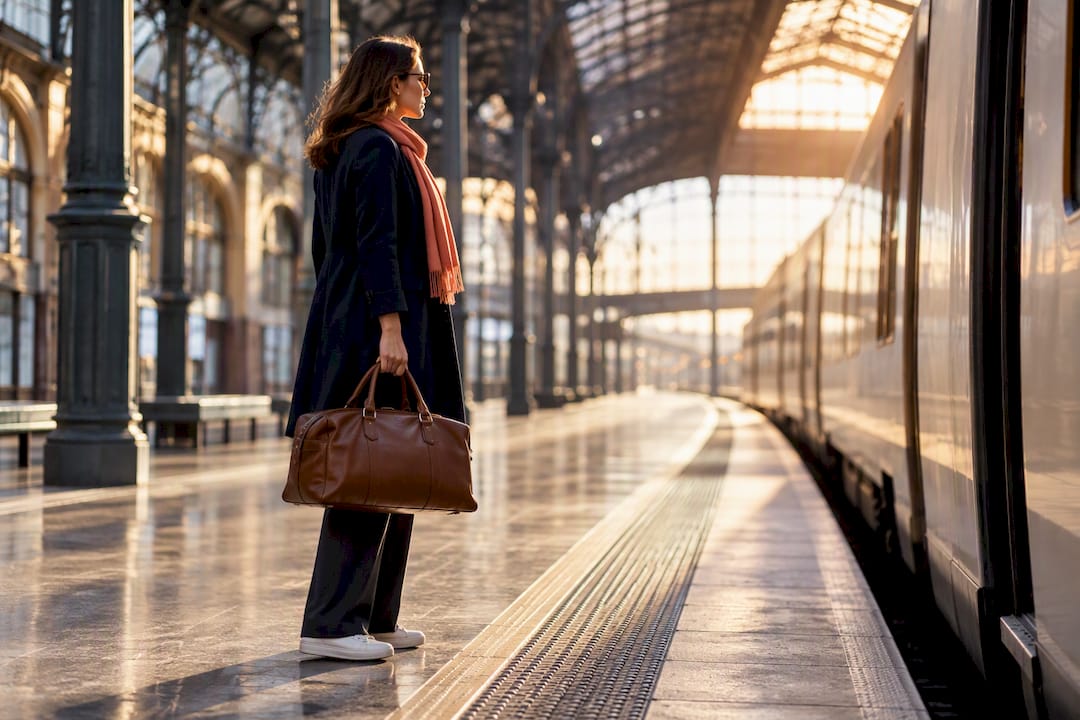
The most efficient way to see both regions is to start in Paris, take the TGV to Avignon, settle into a Provence base for day trips, then finish on the Riviera or fly home from Marseille or Nice. A week works for a fast introduction, 10 days lets you actually relax, and 12 to 14 days add room for the Luberon or the coast. Whatever the length, book your TGV seats early: fares climb as departure gets closer.
TL;DR:
- Booking TGV seats early is essential, as fares increase closer to departure, especially for the Paris to Avignon route which covers about 300 miles in under 3 hours.
- A 10-day itinerary with four nights in Paris and four in Provence offers a balanced mix of sightseeing and relaxation, with optional extensions for the Luberon or Riviera.
- Travelers should consider a base in Avignon for proximity to key sights like Arles and the Pont du Gard or choose Cassis for direct Calanques access and coastal activities.
- Peak lavender bloom from late June to mid-July requires flexible scheduling and early reservation of accommodations and park access to avoid missing the best fields.
- Renting a car is recommended for Provence day trips, particularly from towns like Avignon or the Luberon, but not necessary within Paris, where walking and public transit suffice.
Table of Contents
- How long should your Paris Provence itinerary be?
- A sample 10-day Paris and Provence itinerary you can copy
- Getting from Paris to Provence and around once you arrive
- Choosing a Provence base and mapping your day trips
- Timing your trip: lavender, bookings, and park access rules
- What to pack and what the weather will actually be like
- What to eat in Provence, from market lunches to long dinners
- Where to sleep in Paris and across Provence
- Festivals and events worth building your dates around
- Filling your Paris days before heading south
- Why this itinerary structure actually works
- Let Elite Travel handle the details for you
- Sources
- FAQ
How long should your Paris Provence itinerary be?
Trip length shapes everything else, from pace to which towns make the cut. Here is how the three most common frameworks break down.
- 7 days: Paris gets 3 nights and Provence gets 3, with one travel day between them. This suits first-timers who want the headline sights of both regions without much wiggle room.
- 10 days: Paris gets 4 nights, Provence gets 4, and one extra day covers the transfer and a slower pace. This is the balanced option for travelers who want real sightseeing time, not just checklist stops.
- 12 to 14 days: The extra nights go toward the Luberon, the Gorges du Verdon, or a few nights on the Riviera. This fits travelers who want immersion rather than a highlight reel.
Airport routing matters as much as the number of nights. An open-jaw flight, flying into Paris and out of Nice or Marseille, avoids backtracking and lets you move in one direction the entire trip, a pattern frequently recommended for 10 to 14 day itineraries that combine Paris, Provence, and the Riviera. Shorter, 7-day trips usually round-trip through Paris instead, since the added flight complexity rarely pays off over such a short window.
A sample 10-day Paris and Provence itinerary you can copy
This template assumes the balanced 10-day flow: four nights in Paris, a travel day, four nights in Provence, and a final departure day. Swap specific sights for your own priorities, the structure holds either way.
- Day 1, arrival in Paris: Settle in, take an easy walk along the Seine, and have dinner near your hotel to reset after the flight.
- Day 2, Paris landmarks: Cover the Eiffel Tower, a Seine-side stroll through the Marais, and dinner in Saint-Germain-des-Prés.
- Day 3, one major timed-entry visit: Book either Versailles or the Louvre in advance for a specific entry slot, then spend the afternoon around that neighborhood.
- Day 4, Paris at your own pace: Use this flexible day for a market, a smaller museum, or a return to a neighborhood you loved, then have an early dinner before tomorrow’s travel.
- Day 5, TGV to Avignon: Depart from Gare de Lyon on a morning train. The fastest run takes about 2 hours 38 minutes, though the average trip runs closer to 3 hours 20 minutes depending on the specific departure. Arrive by early afternoon, check into your Avignon base, and spend the evening wandering the Place de l’Horloge and its market stalls.
- Day 6, Luberon hill towns: Rent a car for the day and loop through Gordes, Roussillon, and Ménerbes, with lunch in one of the villages.
- Day 7, Arles and Les Baux: Spend the morning in Arles among its Roman arena and Van Gogh sites, then drive up to Les Baux-de-Provence for the afternoon.
- Day 8, Pont du Gard and Nîmes: Visit the Roman aqueduct in the morning, then continue to Nîmes for its own Roman arena and old town before returning to your base.
- Day 9, Cassis and the Calanques: Drive or train to Cassis for a boat trip or hike along the Calanques, weather and park access permitting.
- Day 10, departure: Head to Marseille or Nice for your flight home, or loop back to Paris by train if your return flight departs from there.
Pro Tip: Rent a car only for the Provence half of the trip. You will not need one in Paris, and picking it up in Avignon rather than Paris avoids a day of city driving you do not want.
Travelers who prefer not to drive can substitute regional trains and organized day tours for the Luberon and Arles legs, though a car gives far more flexibility for hopping between hill villages on your own schedule.
Getting from Paris to Provence and around once you arrive
The TGV is the standard way to cover the distance. Trains depart from Gare de Lyon, and the fastest connection to Avignon takes about 2 hours 38 minutes, with an average journey around 3 hours 20 minutes across the day’s departures. Booking a few weeks ahead typically secures better fares than booking the week of travel.
The TGV from Paris to Avignon covers roughly 300 miles in under 3 hours on the fastest run, which is faster than driving and removes any need for a rental car until you actually reach Provence.
- Fly instead of taking the train if you are short on time and heading straight to the coast, using Paris CDG or Orly to reach Marseille or Nice directly.
- Take a morning train rather than an afternoon one if you want a full evening to settle into Avignon or Aix on arrival day.
- Rent a car in Provence, not Paris, picking it up after your TGV arrival to avoid city traffic and expensive urban parking.
- Expect limited parking in hill towns like Gordes and Roussillon, where many centers are closed to cars entirely and require a walk in from a lot outside the village.
Choosing a Provence base and mapping your day trips
Where you sleep in Provence determines how far each day trip stretches. Avignon offers the best rail access and puts you close to Arles, the Pont du Gard, and the Luberon within an hour’s drive. Aix-en-Provence suits travelers who want market mornings and a food-forward pace, with easy reach into the Luberon and toward Marseille. The Luberon itself works as a base for anyone who wants to wake up inside the hill-town landscape rather than driving into it each day. Cassis is the right choice if coastal time and Calanques access matter more than inland sightseeing.
- From Avignon: loop to Arles, Les Baux, and the Pont du Gard, all under an hour’s drive.
- From Aix-en-Provence: reach the Luberon in about 45 minutes and Marseille in 30.
- From the Luberon: stay put for village-hopping between Gordes, Roussillon, and Ménerbes with short drives between each.
- From Cassis: access the Calanques directly and reach Marseille in roughly 30 minutes.
Lavender chasers should pick a base with the bloom in mind: Valensole for the widest fields, Sault for a quieter, mountain-backed setting, or the Luberon if you want lavender alongside hill-town sightseeing in one loop.
Timing your trip: lavender, bookings, and park access rules
Lavender season is the single biggest scheduling factor for a Provence trip. Fields generally bloom from mid-June through early August, with peak color typically landing between late June and mid-July, though the exact window shifts with each year’s weather. Build in flexible dates around that stretch rather than locking a single day to one field.
Peak lavender bloom typically runs from late June through mid-July, according to Provence’s regional tourism authority, though timing varies from year to year based on weather.
- Book Versailles and major Paris museums with a timed entry slot in advance, since many monuments now require reserved time slots even for otherwise free categories.
- Reserve your TGV seats early, as Paris to Avignon fares rise as departure dates approach.
- Check Calanques access daily if your trip falls between June 1 and September 30, since the park restricts or closes many sectors seasonally to manage wildfire risk, with updates posted directly on the official site.
- Build a buffer day around any single-purpose excursion, like lavender fields or a Calanques hike, in case weather or access rules shift your plans.
What to pack and what the weather will actually be like
Provence summers run hot and dry, often into the 80s and 90s Fahrenheit during peak lavender season, while Paris tends to stay milder and occasionally damp even in summer. Pack layers rather than a single wardrobe for the whole trip: a light jacket or shawl covers cooler Paris evenings and air-conditioned trains, while breathable cotton and linen carry you through Provence afternoons.
Spring and early fall bring milder temperatures and thinner crowds than the height of summer, which makes April through June and September into October comfortable windows for travelers who prioritize walking tours and outdoor dining over lavender fields specifically. If your trip falls in that window, pack a light rain layer for Paris and a warmer layer for Provence evenings, which cool off more than the daytime heat suggests.
Comfortable walking shoes matter more than any other packing decision. Cobblestones dominate both Paris neighborhoods and Provence hill towns, and a day trip through Gordes or Roussillon involves considerably more uneven ground and incline than a flat city stroll. Sun protection is worth prioritizing for Provence specifically: wide-brimmed hats and strong sunscreen matter more there than in Paris, especially on exposed lavender routes or Calanques hikes with little shade. A refillable water bottle earns its space in every bag, since summer heat in the Luberon and around Cassis can be intense by midafternoon.
If your itinerary includes the Calanques, pack sturdy shoes with grip rather than sandals. The terrain is rocky limestone, and access points require real walking even when a boat trip covers part of the route.
What to eat in Provence, from market lunches to long dinners
Provence cooking runs on olive oil, garlic, tomatoes, and whatever vegetables the market had that morning. Ratatouille, tapenade, and bouillabaisse anchor most menus, and a proper Provençal lunch often means a market-fresh salade niçoise eaten outdoors rather than a formal sit-down meal. Markets themselves are worth building time around: Aix-en-Provence, Arles, and Avignon all run substantial produce and food markets on set mornings each week, and planning a day trip or base-day around market hours turns grocery shopping into a genuine activity.
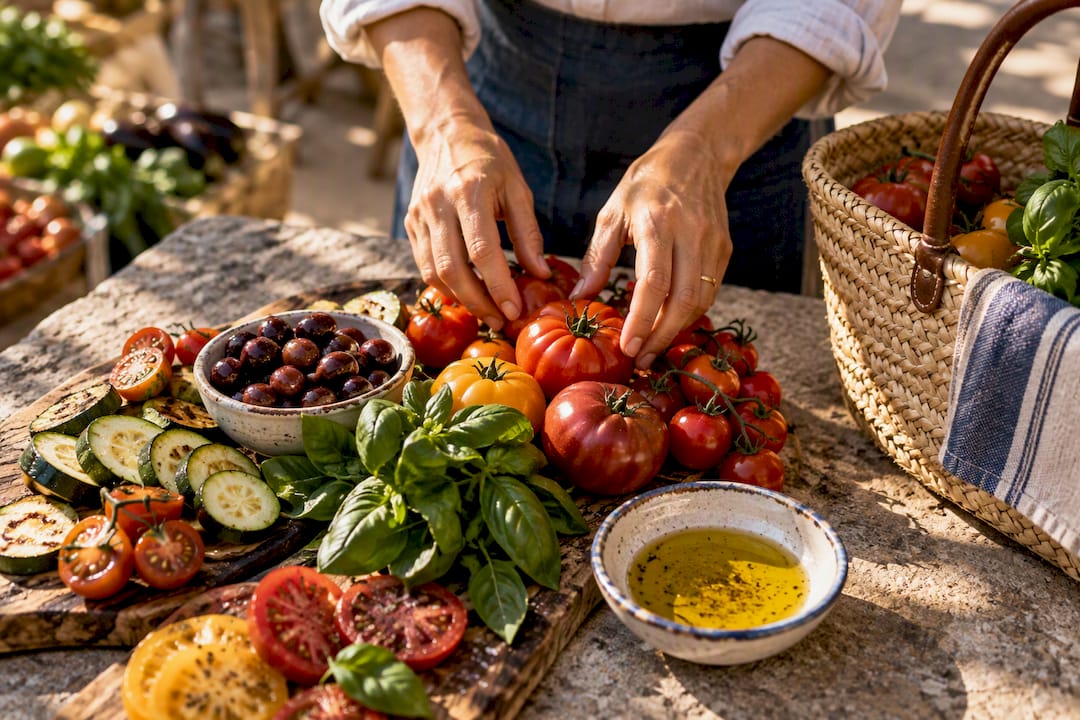
Wine matters as much as food in this region. Rosé from the Luberon and reds from the Rhône Valley pair naturally with the local cooking, and many countryside restaurants pour local bottles by the glass rather than importing a broader list. A long lunch, two or three courses stretched over an hour or more, is the regional norm rather than a splurge, and building slower midday meals into your itinerary matches how the region actually eats.
Paris deserves its own dining plan before you ever reach Provence, with practical advice on how to combine lodging and gastronomy to enhance your travel experience. Reservations at sought-after tables fill weeks out, and concierge-level booking strategies can secure tables that would otherwise be unavailable on short notice. Pairing a memorable Paris dinner with the more casual, market-driven meals of Provence gives the trip real range, rather than one dining register for the whole two weeks.
Where to sleep in Paris and across Provence
Paris hotels cluster by neighborhood personality as much as by price. Saint-Germain-des-Prés and the Marais put you within walking distance of major sights and strong dining, while a base near the Eiffel Tower or Champs-Élysées trades some walkability for views and proximity to shopping. For tailored Paris accommodation options matched to your itinerary’s pace, working with a planner who knows which properties suit early museum entries versus late dinners saves real time.
Provence lodging splits along different lines. Avignon offers city-style hotels close to the train station, useful if you are not renting a car until later. Aix-en-Provence leans toward boutique properties near its market squares. The Luberon is where the classic Provence stay lives: converted farmhouses and small countryside inns, often with pools and views over lavender or vineyard rows, though many sit outside walking distance of a village center and require a car. Cassis hotels tend to be smaller and book up fast in summer given the town’s size relative to its Calanques popularity.
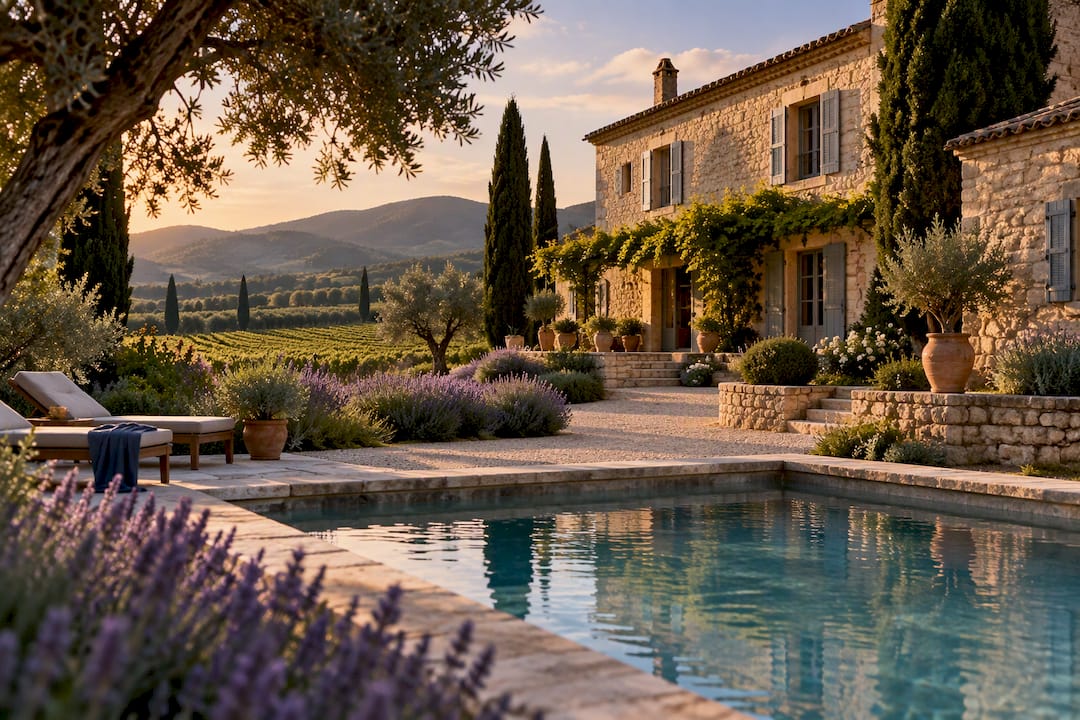
Whichever base you choose, book Provence lodging further ahead for a June or July trip than you might in Paris. Lavender season pulls visitors into a handful of specific towns, and rooms in Valensole, Sault, and the Luberon’s best-known villages fill months in advance for that window.
Festivals and events worth building your dates around
Provence’s calendar includes several events substantial enough to shape when you visit rather than just what you do once there. The Avignon Festival, a major theater and performing arts event, fills the city each summer and changes both hotel availability and the evening atmosphere in the old town. Aix-en-Provence hosts its own summer festival built around opera and classical music, drawing a different crowd than Avignon’s theater scene.
Smaller town festivals tied to harvests, markets, or local patron saints run throughout the year in villages across the Luberon and around Arles, and checking a specific town’s calendar before locking your dates can turn an ordinary stop into the highlight of the day trip. If a festival lands during your visit, expect fuller restaurants and a livelier square in the evening, along with earlier hotel bookings than you would otherwise need.
Because these events cluster in summer, they overlap directly with peak lavender season and the busiest Calanques access period. A trip built around late June through July gets the fullest calendar of festivals but also the tightest competition for rooms and restaurant tables, another reason to book both lodging and any timed-entry sights well ahead of arrival.
Filling your Paris days before heading south
If your itinerary gives Paris four nights before the TGV south, use the extra time for at least one day trip outside the city rather than a fifth day of central sightseeing. Versailles is the obvious choice and pairs naturally with the timed-entry booking advice above, best tackled as a half-day with the palace in the morning and the gardens in the afternoon once crowds thin.
Giverny, Monet’s home and garden, makes a strong alternative for travelers who want a quieter countryside half-day rather than another palace visit, and it runs on a similarly bookable, timed basis in peak season. Either option fits comfortably into a single day without cutting into your core Paris sightseeing time, and both set up the shift toward Provence’s countryside pace that the second half of the trip delivers.
For travelers building a longer Paris stay before the TGV, mixing one day-trip day with three city days keeps the front half of the itinerary varied without overloading the schedule before a full week of Provence still ahead.
Why this itinerary structure actually works
Most Paris and Provence itineraries fail for one reason: they try to cram Riviera glamour, Luberon villages, and full Paris sightseeing into a week that only has room for two of the three. The travelers who come back happiest are the ones who picked one Provence base and let day trips radiate out from it, rather than changing hotels every two nights chasing every town on a list.
The lavender photo everyone wants is also the itinerary’s biggest scheduling trap. Bloom windows shift year to year, and travelers who lock a single non-negotiable day around a specific field often miss it by a week. Building in flexibility around the peak window matters more than picking the “right” field months in advance.
— tammylevent@gmail.com
Let Elite Travel handle the details for you
Planning the TGV timing, timed-entry tickets, and Luberon back roads yourself takes real hours. Elite Travel Management Group has spent 35 years building custom itineraries with a concierge-level approach for Europe and beyond, and we charge no service fees on the trips we build.

- We handle train bookings, timed-entry reservations, and day-trip logistics so nothing falls through on arrival.
- We match you with the right Provence base and the right Paris neighborhood before you ever pack a bag.
- We support every itinerary with around-the-clock assistance throughout your trip.
Start with our Luxury Vacation Packages page to see how a concierge-built Paris and Provence trip comes together, or reach out for a tailored consultation.
Sources
- Train times — Paris to Avignon TGV | TheTrainline
- All about lavender in Provence | Provence-Alpes-Côte d’Azur Tourism
- Visiting conditions — Château de Versailles
- Access rules to the Calanques — Marseille Tourism
FAQ
How many days are enough for Provence?
Four to five days gives you enough time to base yourself in one town and cover the Luberon, Arles, and either the Pont du Gard or Cassis without rushing. Shorter trips of two or three days work if you pick just one or two day trips rather than trying to cover the whole region.
Is there a direct train from Paris to Avignon?
Yes, the TGV runs direct between Paris and Avignon, with the fastest trip taking about 2 hours 38 minutes and the average closer to 3 hours 20 minutes depending on the specific departure. Trains leave from Gare de Lyon in Paris.
Which town in Provence is considered the prettiest?
Gordes and Roussillon are the two most frequently cited hill towns for their dramatic settings, with Gordes perched on a cliff and Roussillon known for its ochre-colored buildings. Beauty is subjective here, and many travelers add both to a single Luberon day-trip loop rather than choosing one.
What is the best month to go to Provence?
Late June through mid-July brings peak lavender bloom, though it also means the highest crowds and hotel prices. Spring and early fall offer milder weather and fewer crowds if lavender fields are not the priority.
Do I need a car for a Paris and Provence trip?
You do not need a car in Paris, where walking and the metro cover everything. You do want one in Provence for reaching Luberon hill towns and other countryside stops that trains and buses do not serve directly.
