

A 7 to 10 day African safari in 2026 runs roughly several thousand to over ten thousand dollars per person, and the spread comes down to three levers: accommodation tier, trip length, and season. Budget rest camps sit at the low end, and private fly-in camps in Botswana push toward the top. International flights, park fees, and gratuities are almost always separate from the quoted lodge rate.
TL;DR:
- Self-drive safaris in South Africa offer significant savings, with costs starting around $150 per day and often including park fees and basic accommodation.
- International airfare usually adds at least $1,200 to $2,500 per person, making air travel the largest unexpected expense for U.S. travelers.
- Botswana’s private concessions and fly-in logistics push per-person costs into the high thousands or tens of thousands for extended trips.
- Booking during shoulder seasons can reduce costs by up to one-third, especially if flexible on wildlife viewing timing and specific activities.
- Working with a safari specialist helps optimize budget estimates, access exclusive camps, and secure permits well in advance for peak viewing seasons.
Table of Contents
- What Does an African Safari Cost by Travel Tier?
- What’s Actually Included in a Safari Package Price?
- Which African Country Offers the Best Safari Value?
- What Do Sample Safari Itinerary Budgets Look Like?
- When Is the Cheapest Time to Book a Safari?
- How Can You Lower Your Safari Cost Without Losing Quality?
- Why Work With a Safari Specialist for Accurate Budgeting?
- How Much Should You Tip on a Safari?
- Value or Exclusivity: Which Should You Prioritize?
- Ready to Turn These Numbers Into a Real Itinerary?
- Where Can You Verify Current Safari Prices Yourself?
- Sources
- FAQ
What Does an African Safari Cost by Travel Tier?
Every safari quote starts with a per-person-per-day rate, and that number swings harder than almost any other travel category because it bundles guiding, lodging, meals, and park access into one line.
Budget safaris run $150 to $350 per person per day. Think self-drive trips through South African national park rest camps, shared group vehicles, and simple chalets or camping. Mid-range safaris, the sweet spot for most first-timers, land at $350 to $800 per day and typically include a private or small-group vehicle, en-suite lodge rooms, and full board with two daily game drives. Luxury safaris climb to $800 to $1,500 or more per day, adding private guiding, smaller exclusive camps, and higher-end dining. Ultra-luxury trips, the private-use villas, helicopter transfers, and fully bespoke itineraries, can exceed $3,000 per day, according to aggregated operator pricing from Duma Explorer.
Stretched across a real trip, those daily rates add up fast:
- A 7-day mid-range safari for one person typically costs several thousand dollars before flights.
- A 10-day luxury safari costs in the mid to high thousands per person.
- A 12-day ultra-luxury itinerary with multiple private camps costs tens of thousands or more per person.
Nearly all of these rates exclude international airfare, and most exclude alcohol, spa treatments, and premium activities like hot-air balloon flights.
What’s Actually Included in a Safari Package Price?
Operator quotes look simple on the surface. What they actually cover varies enough to blow a budget if you don’t check line by line.
Most “all-inclusive” safari packages cover lodging, three meals a day, standard game drives, a local guide, and the park entry fees for the reserve where you’re staying. That’s the core. Everything else tends to sit outside the headline price, and Duma Explorer’s cost breakdown confirms this is the norm across operators, not an exception.
Here’s what commonly gets billed separately:
- International flights to and from your home country
- Internal charter or scheduled flights between camps and parks
- Visa fees for your destination country or countries
- Travel insurance, including medical evacuation coverage
- Gratuities for guides, trackers, and camp staff
- Premium add-ons like balloon safaris, night drives, or spa services
- Alcoholic beverages at some camps
The single biggest line item most U.S. travelers underestimate is the international flight itself. Long-haul fares to Johannesburg, Nairobi, or Kilimanjaro frequently run $1,200 to $2,500 round trip from the U.S., and that’s before you’ve spent a dollar on the ground.
Which African Country Offers the Best Safari Value?
Destination changes your budget more than almost any other single decision, largely because of how each country structures access to its wildlife.
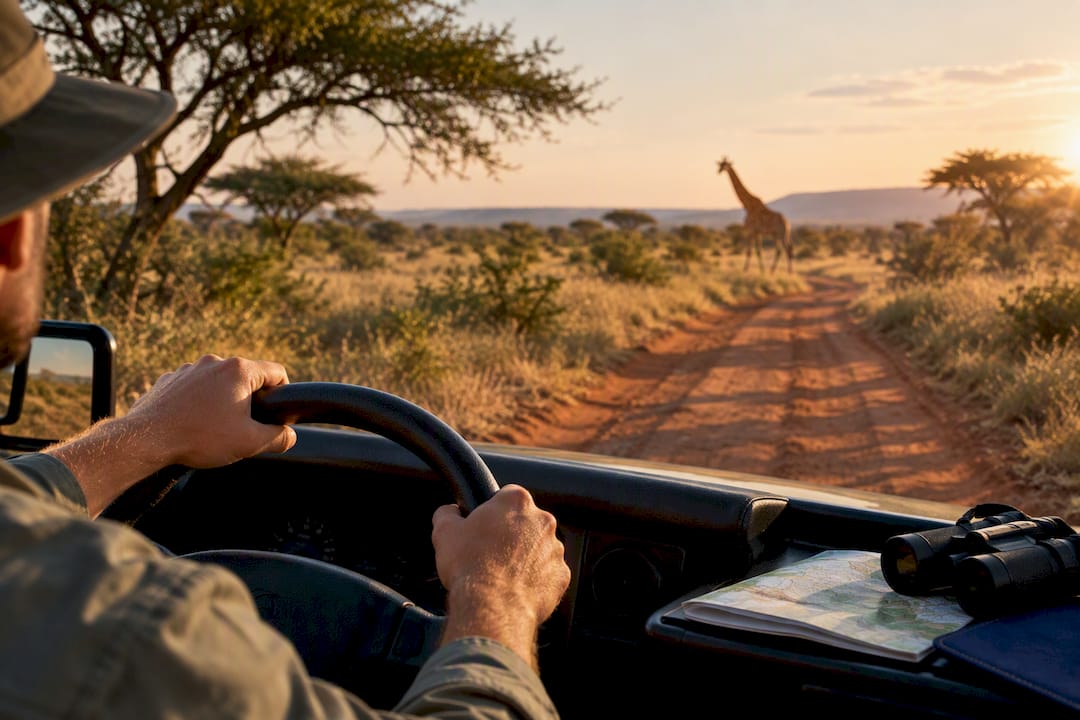
South Africa consistently offers the best entry point for cost-conscious travelers. Kruger National Park allows self-drive access, and its official rest camps, run through South African National Parks, let visitors skip pricey private lodges entirely. According to Kruger’s own 2025 cost guide, a self-drive Kruger trip can cost a fraction of a fly-in safari elsewhere on the continent, since you control your own vehicle, accommodation tier, and pace.
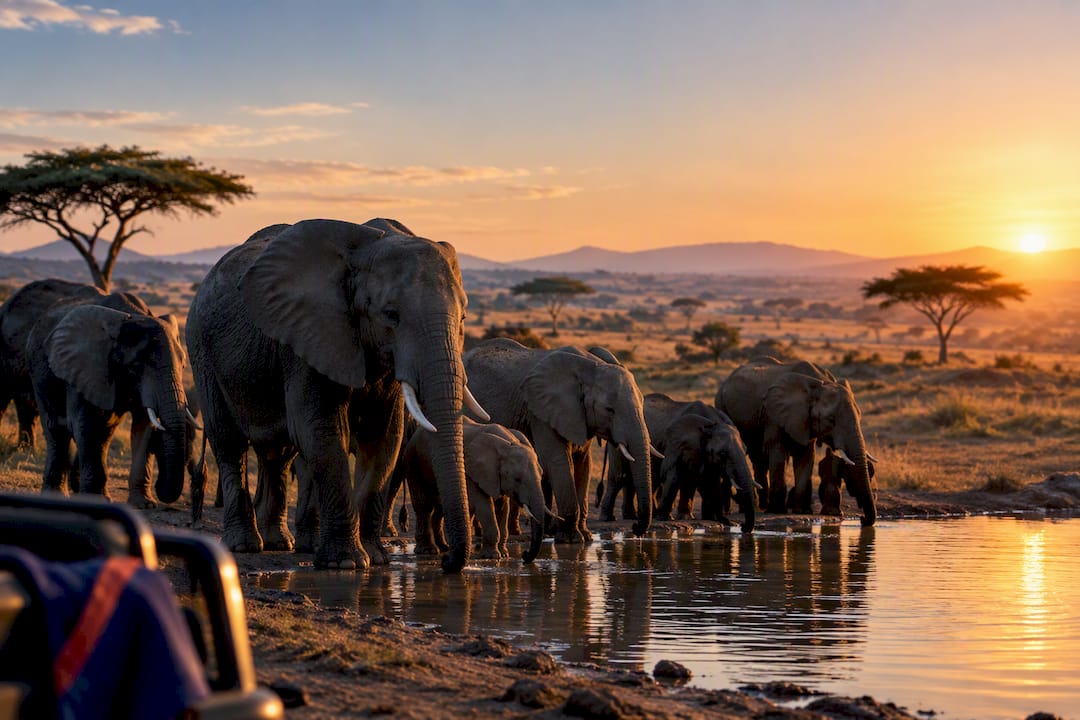
Botswana sits at the opposite end. The Okavango Delta and private concessions run almost entirely on fly-in logistics, and the government deliberately caps visitor numbers to protect the ecosystem and preserve exclusivity, a policy industry reporting on African safari costs points to directly as the reason per-person rates run so high there.
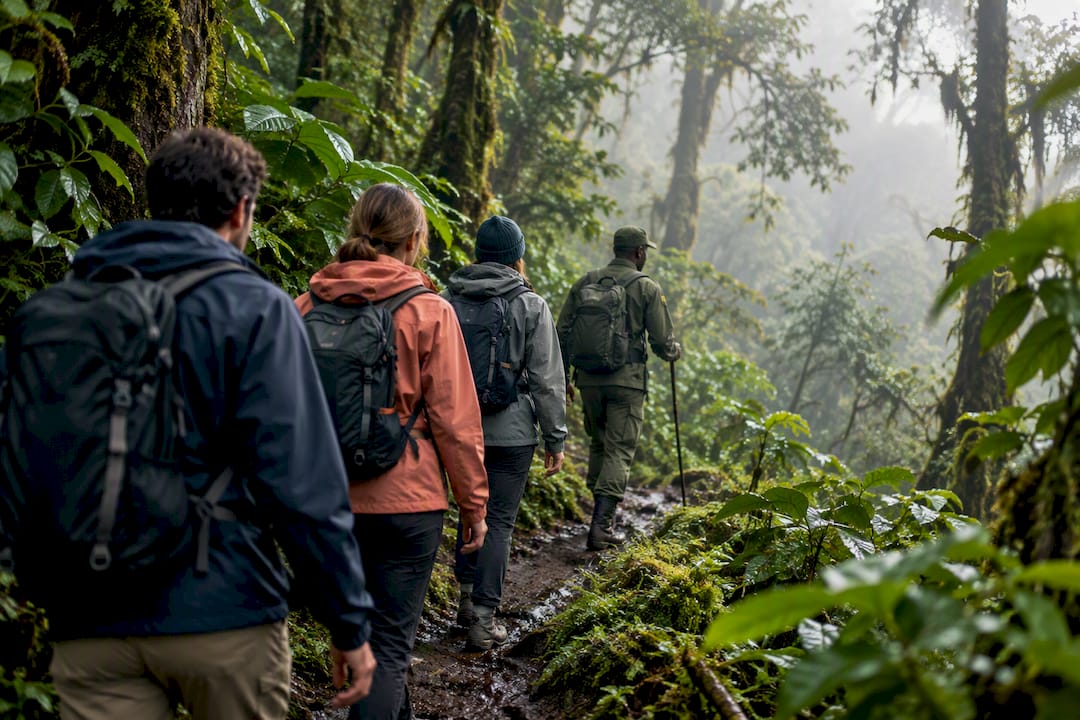
Kenya and Tanzania land in the middle, with strong mid-range lodge networks around the Serengeti and Maasai Mara. Rwanda and Uganda carry a distinct high-cost line: gorilla trekking permits, which run into the hundreds of dollars per person and, according to one detailed 2026 safari budget breakdown, often sell out months ahead for peak trekking season.
What Do Sample Safari Itinerary Budgets Look Like?
Numbers get real once you attach them to an actual trip length and route. Three examples show how far the same week or two can stretch depending on style.
- 7-day Kruger self-drive (South Africa): Round-trip flights, a week of rental car, park fees, and rest camp lodging bring a per-person total near a few thousand dollars.
- 7 to 10 day mid-range northern circuit (Kenya/Tanzania): International flights (~$1,600), internal light-aircraft transfers between parks (~$500), park fees, and full-board lodge stays typically bring two travelers to a combined $6,300 to $11,200, a range consistent with sample totals published by Duma Explorer’s safari calculator.
- 10 to 12 day luxury fly-in Botswana concession: Multiple private camps, helicopter or light-aircraft transfers between concessions, and exclusive-use guiding push per-person totals to a very high range, often tens of thousands of dollars or more.
When Is the Cheapest Time to Book a Safari?
Timing shifts prices as much as destination does, sometimes more, because supply and demand for game viewing swings hard by season.
Peak season, roughly June through October across East and Southern Africa, aligns with dry weather, easier wildlife viewing, and the Great Migration river crossings in the Serengeti and Maasai Mara. Prices run highest here, and camps fill up first. Shoulder season, typically November and March through May, offers meaningfully lower rates with still-solid game viewing.
Two things need booking far in advance regardless of season: migration river-crossing dates and gorilla trekking permits, both of which sell out six to twelve months ahead for peak windows.
Pro Tip: If the Great Migration is your top priority, book 9 to 12 months out for July through September dates. If you’re more flexible on exactly which animals you see, a green-season trip can cut your total cost by a third while still delivering excellent sightings.
How Can You Lower Your Safari Cost Without Losing Quality?
A handful of decisions move the needle more than any single discount code or last-minute deal ever will.
- Travel during shoulder or green season instead of peak months.
- Choose a self-drive or shared-vehicle format over a fully private guide and vehicle.
- Trim a 12-day itinerary to 7 or 8 days without cutting your best park days.
- Mix a lower-cost destination like South Africa with one splurge camp elsewhere.
- Bundle internal flights and transfers through one operator instead of booking separately.
- Build a checklist covering visas, travel insurance, and gratuities before you compare quotes, so nothing gets left out of your total.
Why Work With a Safari Specialist for Accurate Budgeting?
Rate cards, park fee schedules, and seasonal pricing shift constantly across dozens of camps and countries, and comparing them yourself eats hours. A specialist who already tracks those rates removes most of the guesswork before you ever request a quote.
Travel specialists with extensive experience build relationships with on-the-ground partners across Africa, giving clients access to private conservancies and camp allocations that aren’t always visible on public booking sites. Every itinerary is custom-built rather than pulled from a template. Some luxury travel agencies charge no service fees, offer price match guarantees, and provide support around the clock, which matters when a migration date or gorilla permit needs to be secured fast, before availability disappears. If you want a specialist-built quote instead of piecing one together from ten different websites, that’s the next logical step.
How Much Should You Tip on a Safari?
Tipping on safari follows a fairly consistent structure across East and Southern Africa, even though it’s rarely spelled out clearly in the operator’s quoted price.
Guides typically earn $15 to $25 per person per day from each guest, given directly at the end of your stay or your full trip. Camp staff, covering the kitchen, housekeeping, and general support team, usually receive a separate $10 to $15 per person per day, often dropped into a communal tip box at the lodge rather than handed to any one person. If a dedicated tracker accompanies your vehicle, which is common in Botswana and parts of Kenya, plan for an additional $10 per person per day for them as well.
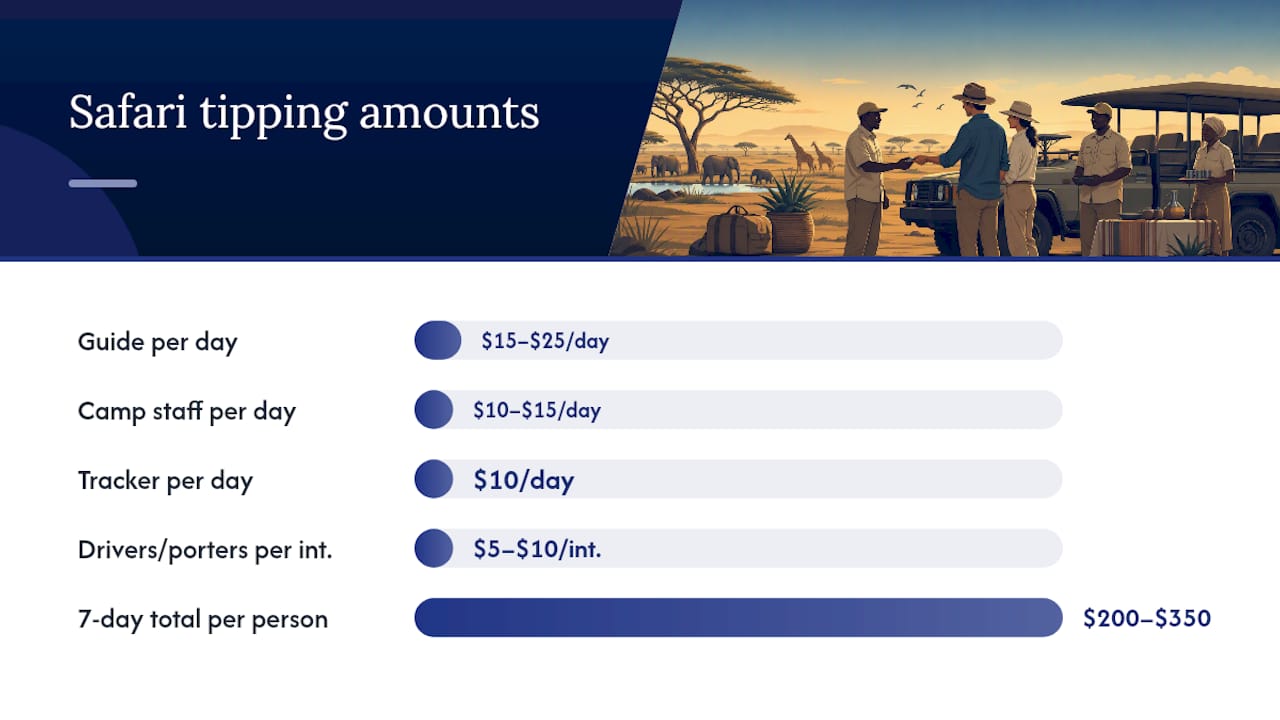
Private transfer drivers, porters at airstrips, and any specialty guide (a gorilla trekking ranger, for instance) typically get $5 to $10 per interaction rather than a daily rate. Most camps keep small tip envelopes at reception with suggested amounts printed inside, which makes the math easier once you’re actually there.
Bring U.S. dollars in small, clean bills. Many camps sit far enough from towns that there’s no ATM for hundreds of miles, and torn or older bills sometimes get refused at rural lodges. A rough rule of thumb for a 7-day trip with one guide and shared camp staff: budget $200 to $350 per person in gratuities for the full stay, separate from whatever the lodge or operator quoted you upfront.
Value or Exclusivity: Which Should You Prioritize?
If your budget forces a choice, a shorter luxury stay usually beats a longer mid-range trip. Three nights in one exceptional private camp, with a guide who knows every lion pride by name, delivers more than a diluted week of average lodges.
That said, I’d rather sacrifice thread count for another game drive. Access to wildlife, not turndown service, is the whole reason you’re on the continent.
— tammylevent@gmail.com
Ready to Turn These Numbers Into a Real Itinerary?
Every range in this guide gives you a starting point, but the actual number depends on which camps have availability the week you want to travel, and that changes daily. Each safari itinerary can be custom-built from scratch around your dates, budget tier, and the specific parks or private concessions that matter to you, rather than starting from a fixed package and hoping it fits.
No service fees may be added to quotes, and proposals are sometimes backed with price match guarantees, so you can compare them with confidence. Support often runs 24/7, which counts for a lot when a migration-season camp releases new availability at midnight your time. If you’re ready to see what a custom luxury Kenya safari itinerary or a South Africa and Botswana combination trip actually costs for your dates and party size, request a quote through Elite Travel’s luxury vacation packages and get real numbers back, not a generic price range.
Where Can You Verify Current Safari Prices Yourself?
Before you commit to any quote, cross-check it against a couple of independent sources. The Safari Cost Calculator estimates totals within about 10 to 15% of a final operator quote once you enter trip length, season, and group size. SafariBookings aggregates thousands of listed packages so you can benchmark per-day rates across regions. For South Africa specifically, check Kruger’s official park fee page directly, since park fees update periodically and third-party guides don’t always catch changes right away.
Sources
- Safari Cost Calculator: Estimate Your African Safari Budget (2026)
- African Safari Cost Calculator: Get an Instant FREE Trip Estimate
- SafariBookings: Compare 16,342 African Safari Holidays
- How much does a Kruger National Park safari cost? (2025 guide)
- African Safari Cost: What a Real Safari Really Costs (2026)
FAQ
How much does a 7-day African safari cost?
A 7-day safari runs roughly $2,500 per person for a budget self-drive trip in South Africa up to tens of thousands or more per person for a luxury fly-in itinerary in Botswana. Mid-range East African trips for two travelers commonly total $6,300 to $11,200 combined, according to Duma Explorer’s safari cost data. International flights are typically not included in these figures.
Why can’t you wear white on safari?
White and other bright colors reflect light and stand out against natural bush tones, making it easier for wildlife to spot you and harder for your guide to approach animals quietly. Most operators recommend earth tones like khaki, olive, and brown instead, which blend into the terrain and don’t show dust as visibly on multi-day drives.
Are African safaris worth the money?
For most travelers, yes, a safari delivers wildlife encounters and landscapes that don’t have a direct substitute anywhere else, and even a budget tier trip through South Africa’s national parks provides genuine big-game viewing. Whether a luxury or ultra-luxury tier is “worth it” depends on how much you value private guiding and exclusive camps versus putting that same money toward a longer trip.
Is 70 too old to go on safari?
No, age alone rarely disqualifies anyone from a standard safari, since most game drives involve sitting in a vehicle rather than strenuous physical activity. Gorilla trekking in Rwanda or Uganda involves more walking over uneven terrain, so travelers with mobility concerns should discuss fitness requirements with their operator or a travel specialist before booking that specific experience.
