



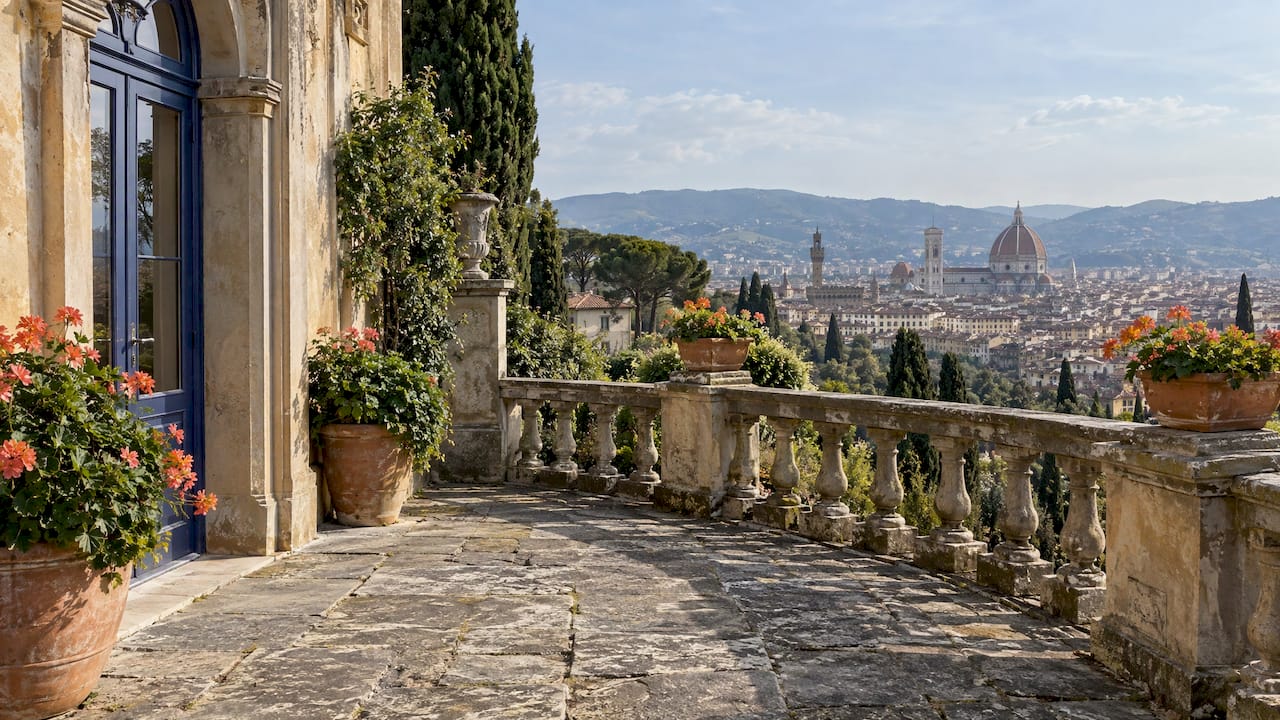
The best Tuscany wedding venue is the one that matches your guest count, your season and how much of the weekend you want in one place. Florence suits couples who want grand palazzo rooms and easy travel for guests. Chianti castles and Val d’Orcia estates suit couples who want vineyards, a chapel and a guest list that stays on site for several nights. Below are real venues, what they hold, and what to settle before you pay a deposit.
TL;DR
- Choose Florence or the nearby hills for historic ballrooms, city access and hotel-style service. Choose Chianti or Val d’Orcia for estates where guests can sleep on site.
- Check capacity for the ceremony, the dinner and the overnight stay separately. They are often three different numbers.
- Many Tuscan weddings run as a three-day program: welcome dinner, wedding day and farewell brunch.
- U.S. couples should settle the legal route (civil ceremony in Italy or a legal marriage at home plus a symbolic ceremony) before choosing a date.
- A planner who knows the on-the-ground partners can shortlist venues against your guest list and budget, which saves months of email.
Table of Contents
- Why Tuscany works so well for a destination wedding
- Florence versus the countryside: how to choose
- Wedding venues in and around Florence
- Castles, villas and estates in Chianti and beyond
- Matching venue type to your wedding
- When to marry in Tuscany
- Planning the weekend, not just the day
- What to confirm with any venue
- Legal steps for U.S. couples
- Let us shortlist your Tuscany venues
- FAQ
- Sources
Why Tuscany works so well for a destination wedding
Tuscany pairs medieval towns, olive groves, vineyards and Renaissance villas in a region small enough to move around easily. The Knot’s roundup of Tuscany venues describes it as a favorite European destination wedding choice for exactly that mix. For guests, that means a wedding weekend that doubles as a trip: wine tastings, a day in Florence, a drive through Siena or Chianti.
The region also offers very different wedding styles within an hour or two of each other. You can hold a black-tie dinner in a palazzo ballroom on Friday and look at the same couple’s friends dancing in a lemon house in the hills the next weekend. That range is why the first decision is not a venue name but a venue type.
Florence versus the countryside: how to choose
Start with how your guests will experience the weekend. A few practical contrasts help.
| Factor | Florence and the hills above it | Chianti, Siena and Val d’Orcia estates |
|---|---|---|
| Setting | Palazzi, convents, hotel ballrooms, city views | Castles, villas, vineyards, olive groves, chapels |
| Guest travel | Easy for arrivals; guests can walk to sights | A rental car or private transfers are usually needed |
| Where guests sleep | Hotels in the city or at the venue | Often on site, or in nearby farmhouses |
| Feel | Elegant, urban, formal | Relaxed, private, multi-day |
| Best for | Larger guest lists, short stays, city-loving guests | Exclusive-use weekends, intimate to mid-size groups |
A few questions settle most of it:
- Do you want guests to stay together? Estates with on-site rooms make the welcome dinner and farewell brunch effortless. City venues rely on hotels.
- How mobile is your guest list? Countryside roads are winding and venues can be a 40-minute drive from Florence. Older relatives may prefer a venue 15 minutes from the city.
- How formal is the wedding? Ballrooms and palazzi suit formal evenings. Gardens and cloisters suit long, casual dinners.
- Do you want the whole property? Exclusive use gives privacy but usually requires a minimum stay and a larger commitment.
If you are still weighing regions, our comparison of Tuscany and Umbria walks through how the two feel on the ground.
Wedding venues in and around Florence
Villa San Michele, Fiesole
Villa San Michele sits in the Fiesole hills above Florence at Via Doccia 4. Its open-air panoramic terrace overlooks the city and works for ceremonies, while smaller ceremonies can take place in the terraced gardens or in large suites. The property was a 15th-century monastery, and its façade is inspired by Michelangelo’s work. It is a strong fit for couples who want a view of the Duomo skyline without being in the middle of the city.
Four Seasons Hotel Florence
The Four Seasons Hotel Florence offers five wedding spaces: the Convent Ballroom (a former convent church and the largest room), Tempio Lawn (surrounded by a botanical garden), the Gherardesca Ballroom in the historic Palazzo della Gherardesca, Duomo View, and The Chapel. The Chapel was the first built inside a private Florentine home, with special permission from the Archbishop of Florence in 1475.
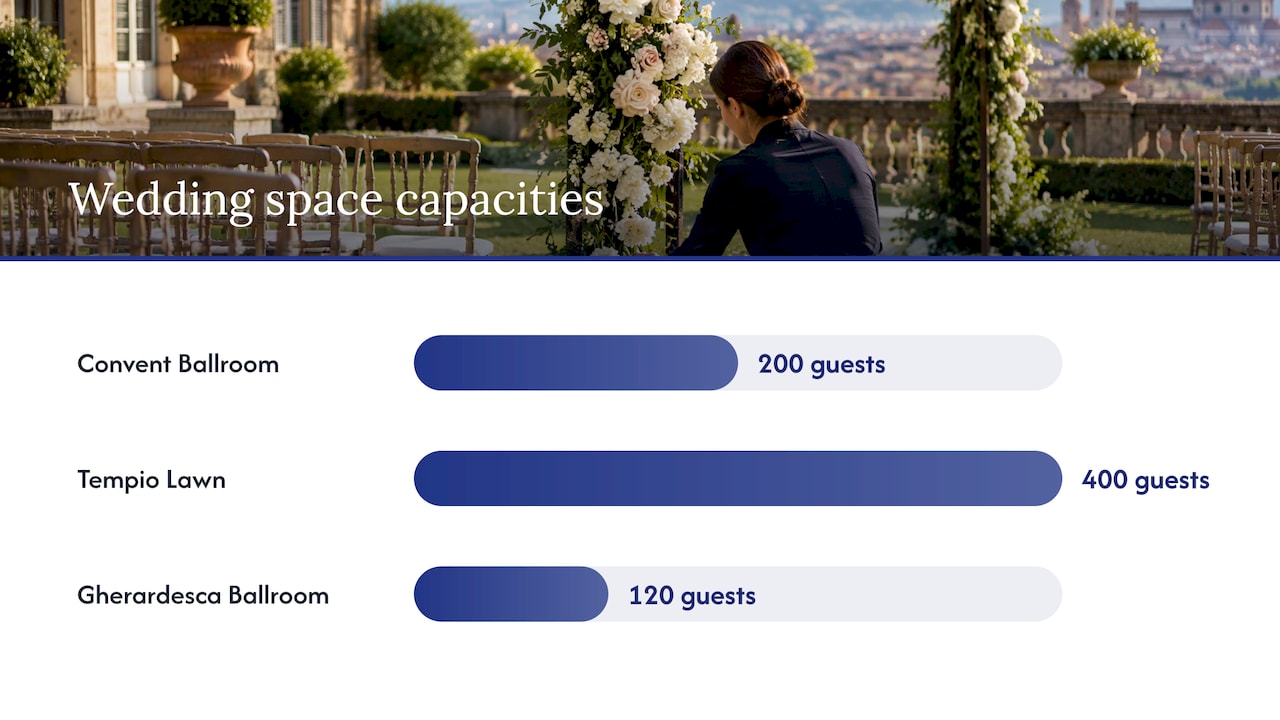
On capacity, The Knot reports that the former convent church holds up to 200 guests, Tempio Lawn receptions accommodate 400 and the Gherardesca Ballroom hosts up to 120. That spread lets you scale from a refined dinner to a large celebration within one hotel.
Villa Gamberaia, Settignano
Villa Gamberaia is a 14th-century Renaissance villa about 8 km, or 15 minutes by car, from the center of Florence. According to Italian Venues, its Limonaia Hall seats up to 170 for dinner, the gardens and terraces host up to 250 for outdoor celebrations, and 18 double bedrooms sleep 36 guests on site. It is a good example of a venue near the city that still lets the couple and closest family stay together.
Civic and public spaces in Fiesole and Florence
The regional tourism board lists some unusual options. According to Visit Tuscany, couples in Fiesole can gather 150 guests on the terrace in front of the Archaeological Museum, or 400 in the Roman Theatre. In Florence, the Giardino delle Rose beneath Piazzale Michelangelo features 400 varieties of roses, some dating to the 16th century. These suit couples who want a dramatic ceremony and plan to hold the dinner elsewhere.
Castles, villas and estates in Chianti and beyond
COMO Castello Del Nero, Chianti
Housed in a 12th-century castle, COMO Castello Del Nero blends historic Renaissance frescoes with modern interiors by Milanese designer Paola Navone. It offers ten event spaces, including the garden terrace, Italian garden, chapel and wine cellar, and the hotel can organize details such as stationery. It is a natural choice for couples who want a historic setting with hotel-level service.
Tenuta Casenuove, near Panzano
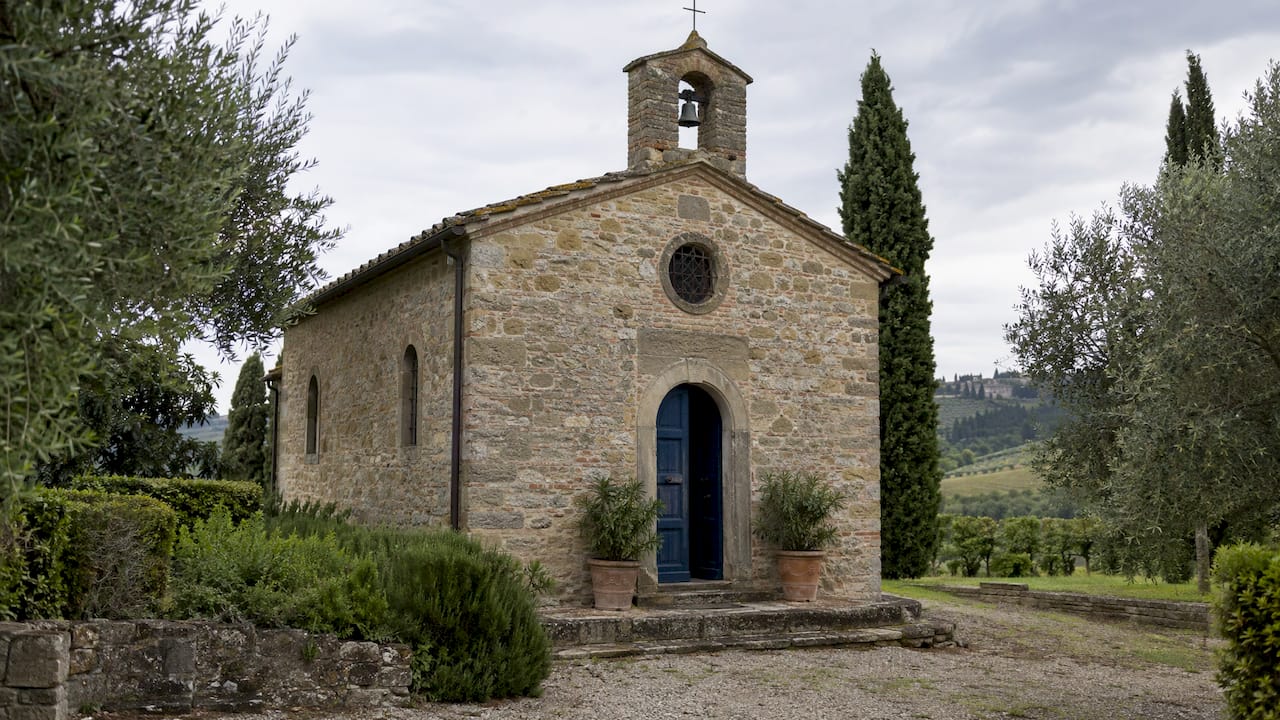
About a 40-minute drive from Florence, Tenuta Casenuove covers nearly 300 acres of rolling hills, with olive rows, lemon groves and a restored villa lined with original frescoes. A small stone chapel on the property provides a ceremony spot, according to The Knot. Think of it for a wedding where the landscape is the main decoration.
Castello di Tornano, Gaiole in Chianti
In the heart of Chianti Classico, Castello di Tornano offers accommodation for up to 51 guests. Symbolic ceremonies can be held on the lawn in front of the tower or on the panoramic terrace, and gala dinners take place under the stars in the lemon house, with dishes from the chef of restaurant La Vedetta di Tornano paired with estate wines. It suits a mid-size, stay-together weekend.
Villa Castiglioncelli, Cavriglia
This 18th-century villa dates to 1737. Italian Venues describes it with three panoramic gardens for up to 200 guests, an indoor ground-floor hall for up to 100, and a farmhouse with seven apartments sleeping 21 guests (27 with sofa beds) 300 meters from the villa. It is authorized to host legally binding civil ceremonies, which matters if you want the legal marriage to happen on the wedding day itself.
Antico Convento i Cappuccini, Val d’Orcia
For an exclusive-use weekend, this former convent offers four nights with accommodation for up to 24 guests, and weddings of up to 120 guests across the cloister, gardens and poolside spaces. WedInspire lists pricing from €30,000 for 60 wedding guests, including reception catering, three hours of bar service and professional wedding planning. Treat that as a starting point and confirm current rates directly.
Matching venue type to your wedding
| Your wedding | Venue type to shortlist |
|---|---|
| 30 to 60 guests, everyone stays together | Exclusive-use convent, castle or villa with on-site rooms |
| 100 to 150 guests, formal evening | Hotel ballroom in Florence or a large villa with a hall and garden |
| 200 guests or more | Estates with large gardens or a hotel with a lawn and ballroom |
| Legal ceremony on the wedding day | A venue authorized for civil ceremonies, or a town hall ceremony plus a venue reception |
| Heavy emphasis on food and wine | Chianti estates with their own cellars and kitchens |
Capacity figures above come from each venue’s marketing or a listing site, and layouts change with the season and setup. Confirm the number in writing for your exact format: seated dinner, cocktail reception, rain plan.
When to marry in Tuscany
Tuscany’s seasons shape both the look of the wedding and your logistics. As a general pattern, spring and early fall bring comfortable temperatures and landscape color, summer is hot and busy, and winter suits intimate weddings held indoors in a villa hall or a lemon house. Evenings can cool quickly outside peak summer, so plan wraps and heaters for outdoor dinners. Spring and fall are also the seasons when most couples compete for the best dates, so popular venues book out far ahead.
Two practical points:
- Always plan a weather backup. Ask each venue where the ceremony moves if it rains, and how many guests that room holds.
- Check what else is happening. Harvest, local festivals and holidays affect hotel availability and prices in Florence and the hill towns.
Your planner can check dates against a venue’s calendar and your guests’ travel patterns before you commit.
Planning the weekend, not just the day
Italian Venues notes that Tuscan destination weddings often follow a three-day structure: welcome dinner, wedding day and farewell brunch. It simplifies guest travel and gives everyone more time in the region. The same guide points out that limiting the guest count is a primary lever for managing costs, because catering, favors and transportation scale with the number of attendees.
So a smaller guest list does two things: it widens your venue options (more castles and convents become possible) and it gives you more budget per guest for food, wine and details.
What to confirm with any venue
Before you pay a deposit, get these in writing:
- Exact capacity for ceremony, seated dinner and overnight stays.
- What is included: tables, chairs, linens, catering, bar hours, planner, staff.
- Exclusive use: minimum nights, who else may be on the property, and noise or music cutoffs.
- Legal status: whether the venue can host a legally binding civil ceremony or only a symbolic one.
- Access: parking, shuttle needs, road conditions and distance from the nearest airport and hotels.
- Rain plan: where the ceremony and dinner move, and any change in capacity.
- Payment schedule: deposit, balance dates and cancellation terms, in euros and in what currency you will pay.
- Vendor rules: whether you can bring your own caterer, florist or photographer.
For a realistic view of what a full wedding costs, see our guide to U.S. couples’ Italy wedding costs.
Legal steps for U.S. couples
The legal side decides your timeline, so address it early. In practice, U.S. citizens who want a legal civil marriage in Italy need documents such as a passport and birth certificate with an apostille and Italian translation, plus a declaration at an Italian consulate and a statement of no impediment obtained through the U.S. consular process in Italy. Requirements and processing times change, so confirm them with the Italian consulate for your area and the U.S. Embassy in Italy.
Many couples avoid the paperwork altogether. They marry legally at home, then hold a symbolic ceremony in Tuscany with the same guests, vows and celebration. Whichever route you choose, our legal steps guide for destination weddings lays out the U.S. paperwork to handle before booking.
Our perspective: why venue choice is a strategy decision
After 35 years designing high-end journeys, we have learned that a Tuscany wedding is won or lost before anyone looks at a photo gallery. The question is not which villa is prettiest. It is which venue fits your guest list, your season and the way you want your people to spend three days together.
That is why we start with a conversation, not a catalog. We ask how many guests are traveling, who needs easy access, what the legal plan is and what a perfect Saturday night feels like. Then we use our on-the-ground partners to match you to venues that suit those answers, and we design the rest of the trip around them: arrivals, hotels, excursions, the farewell brunch.
We charge no service fees, we offer a price match guarantee, and we are open 24/7, so a question about a transfer or a rain plan never waits for office hours. Our aim is a wedding that feels effortless to you and your guests, because the work behind it was done carefully.
tammylevent@gmail.com
Let us shortlist your Tuscany venues
If you would rather not compare dozens of venues alone, our team designs destination weddings from first conversation to the farewell brunch. Share your guest count, season and style, and we will build a shortlist and a full itinerary around it. See our destination wedding packages to start.

Want to see the region first? Our 7-day Tuscany tour is a good way to scout, and our list of concierge-ready Tuscany villas shows how we match places to a trip goal. Couples planning a honeymoon after the wedding can browse our honeymoon vacation packages.
FAQ
How many guests can a Tuscany wedding venue hold?
It varies widely. Four Seasons Florence’s largest room holds up to 200 seated guests and its lawn up to 400 for receptions, according to The Knot, while exclusive-use convents may cap overnight guests at around two dozen. Ask for ceremony, dinner and overnight numbers separately.
Is a Florence venue or a countryside estate better?
Florence works best for formal weddings and guests who want city access. Estates in Chianti or Val d’Orcia work best if you want everyone staying together for a multi-day celebration. Your guest list’s mobility and your season usually decide it.
Can we have a legal wedding at a Tuscan venue?
Some venues are authorized for civil ceremonies, such as Villa Castiglioncelli, while others only host symbolic ceremonies. Many couples marry legally at home first. Ask each venue which it offers before you book.
How far ahead should we start planning?
Start as early as you can, particularly for spring and fall dates and exclusive-use properties. A planner can check availability across several venues at once, which shortens the search.
Sources
- 10 Best Tuscany Wedding Venues for a Celebration in Italy, The Knot
- Weddings at Villa San Michele, Belmond
- Unique Wedding Venues in Florence, Four Seasons
- Where to get married in Tuscany, Visit Tuscany
- Villa Gamberaia, Italian Venues
- Villa Castiglioncelli, Italian Venues
- Castello di Tornano weddings
- Antico Convento i Cappuccini, WedInspire
- Italian Wedding Cost Guide, Italian Venues
