



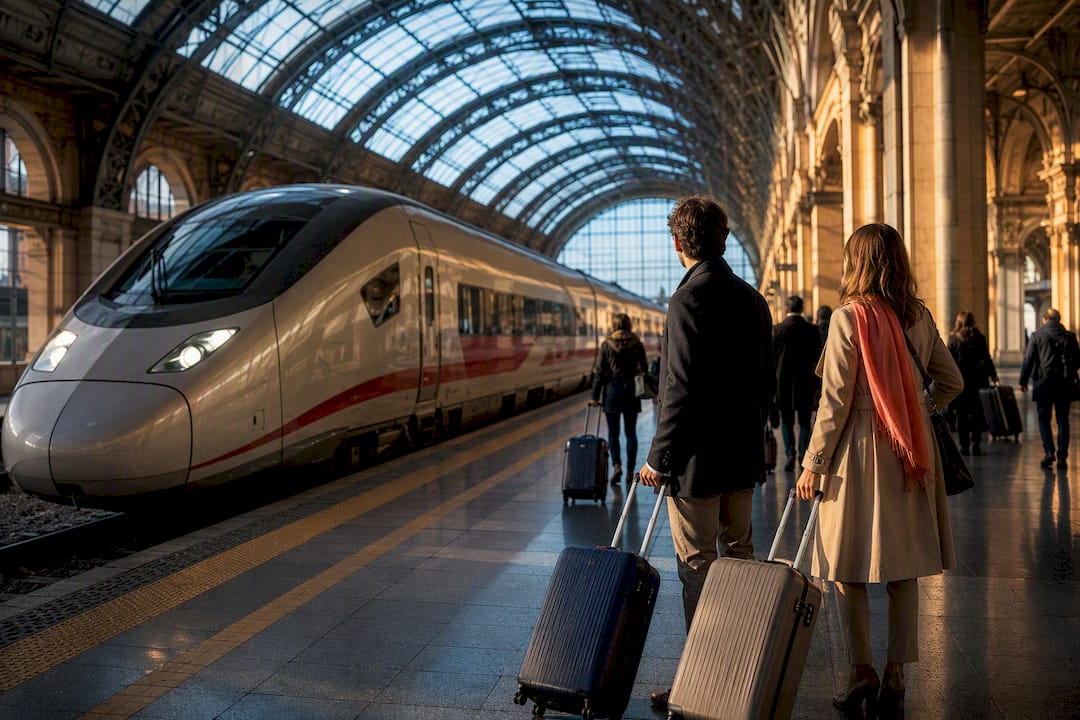
The strongest Italy 10 day itinerary runs Rome to Florence to Venice, three bases connected by high-speed rail, with a few nights in each city. This northbound route avoids repacking every other morning, lines up with the Frecciarossa train network, and works cleanly with an open-jaw flight into Rome and out of Venice. Book your fixed-time tickets for the Colosseum and Vatican before anything else, then build the rest of the days around them.
TL;DR:
- Booking fixed-entry tickets for the Colosseum and Vatican Museums early is crucial to secure scarce slots during peak season.
- Traveling between Rome, Florence, and Venice by high-speed train minimizes travel time and avoids long transfers typical of flying.
- Staying in central neighborhoods near major sights in each city saves hours that would otherwise be lost to commuting and helps maintain a relaxed pace.
- A three-base model of Rome, Florence, and Venice offers a balanced experience, preventing excessive move-related delays and promoting deeper exploration.
- A private travel concierge can customize the itinerary, secure priority tickets, and arrange seamless transfers, elevating the trip beyond a DIY plan.
Table of Contents
- Italy 10 Day Itinerary at a Glance
- Day-by-Day Plan for Your 10 Days in Italy
- Getting to and Between Rome, Florence, and Venice
- Where to Stay in Rome, Florence, and Venice
- What Tickets Do You Need to Book in Advance?
- Packing, Pacing, and Practical Trip Tips
- When Does Bespoke Planning Beat a DIY Italy Trip?
- What the Conventional Italy Itinerary Advice Gets Wrong
- Plan Your Italy Trip with a Dedicated Travel Concierge
- Sources
- FAQ
Italy 10 Day Itinerary at a Glance
Here’s the skeleton before the details. This is the version Rick Steves and most seasoned Italy planners land on for a first trip, because it minimizes hotel changes while still covering the country’s three signature cities.
- Day 1: Arrive Rome, settle in, easy evening walk near your hotel
- Day 2: Colosseum, Roman Forum, Palatine Hill
- Day 3: Vatican Museums, Sistine Chapel, St. Peter’s Basilica, Trastevere at night
- Day 4: Train to Florence, afternoon at the Duomo complex
- Day 5: Uffizi Gallery morning, Oltrarno neighborhood afternoon
- Day 6: Day trip to Siena or Chianti wine country
- Day 7: Train to Venice, St. Mark’s Square and Doge’s Palace
- Day 8: Vaporetto to Murano and Burano
- Day 9: Rialto Market morning, gondola or private boat afternoon
- Day 10: Departure
Two variants are worth knowing. Families or travelers who want beach time swap the Siena day trip for a longer Tuscany stay and shave a day off Venice, since young kids tend to burn out faster on canal walking than on hill towns with pools nearby. Romantic or slower-paced trips push south instead of north after Rome, replacing Venice with a Positano or Amalfi Coast finish, flying out of Naples rather than Venice. Art-focused travelers should do the opposite: add a fourth night in Florence and cut Venice to two, since Florence’s museum density rewards extra time far more than Venice’s does.
Day-by-Day Plan for Your 10 Days in Italy
Days 1 to 3: Rome
Day 1 is a wash day, and that’s fine. Flights from the U.S. land in Rome mid-morning to early afternoon, and jet lag makes ambitious sightseeing a mistake. Check into your hotel, drop bags, and take a slow walk toward the Trevi Fountain or the Spanish Steps. Dinner should be simple and early: a trattoria near your hotel, not a reservation across town. Save your energy for tomorrow.
Day 2 belongs to ancient Rome. Book a morning entry, ideally 8:30 or 9:00 AM, for the Colosseum, the Roman Forum, and Palatine Hill, which run on a single combined ticket. Going early beats the heat and the crowds that build by 11:00 AM, especially from May through September. Plan two to three hours for the Colosseum and its underground and arena-floor add-ons if you booked those, then another two hours winding through the Forum and up to Palatine Hill for the best skyline views in the city. Lunch near the Forum tends to be tourist-trap pricing, so walk ten minutes into the Monti neighborhood instead for better food at a fairer price. Evening is for the Jewish Ghetto: fried artichokes, old-world bakeries, and a quieter version of Rome than the postcard center.
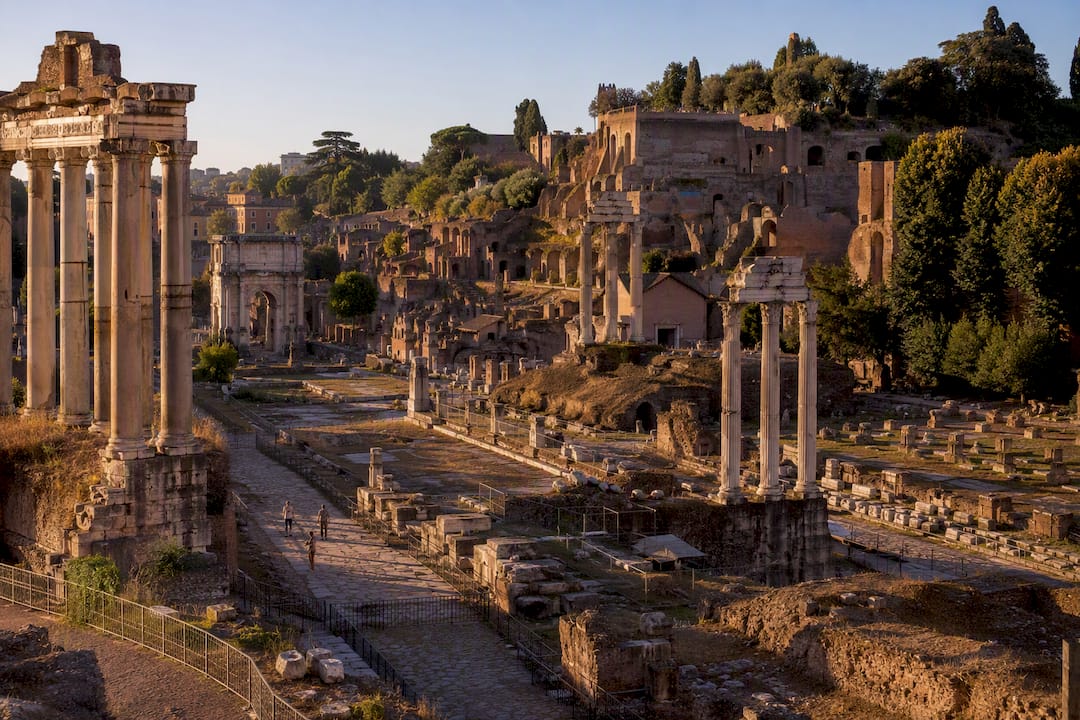
Day 3 is Vatican day, and it needs to start early. The Vatican Museums sell timed tickets that are valid only for the date and slot you choose, with no refunds if you miss it, so book this one the moment your dates are firm. Arrive for your entry slot, work through the museum’s long corridor of galleries, and end at the Sistine Chapel, budgeting three to four hours total. St. Peter’s Basilica sits right next door and is free to enter, though the line moves slowly in peak season. Spend the afternoon easing into St. Peter’s Square and, if you have energy left, climb the dome for the best rooftop view in Rome. Evening belongs to Trastevere: cobblestone lanes, ivy-covered buildings, and Rome’s best concentration of low-key, high-quality restaurants.
Pro Tip: Buy Colosseum and Vatican tickets the day you book your flights, not the week before you fly. Peak-season slots for popular entry windows disappear weeks in advance, and a missed morning slot can force you to rework an entire day.
Days 4 to 6: Florence and Tuscany
Day 4 starts with a short train ride. The Rome to Florence Frecciarossa run takes about an hour and a half, and trains leave roughly every 30 minutes during the day, which means you don’t need to plan your morning around a single departure. Arrive by late morning, check into your Florence hotel, and spend the afternoon at the Duomo complex: Santa Maria del Fiore, the Baptistery, and Giotto’s bell tower if you’re up for the climb. Florence groups nearly all of its essential sights within a walkable core centered on this complex, which is part of why three nights here works so well for a first visit.
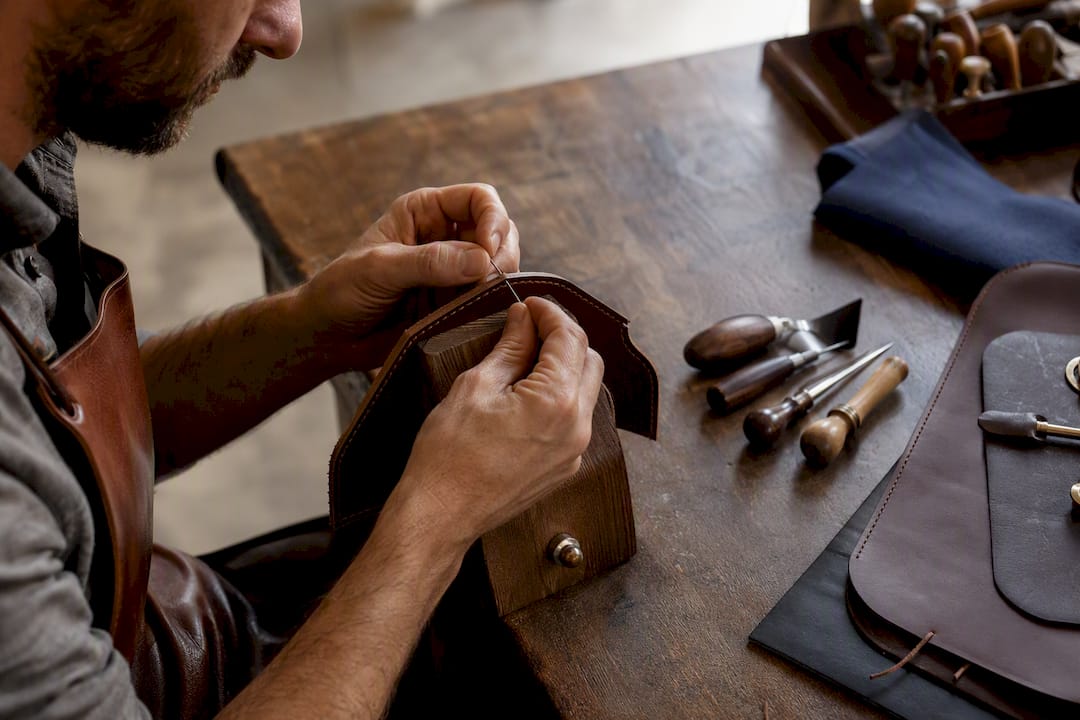
Day 5 is the Uffizi. Book a morning slot, because the gallery’s Botticelli and Renaissance holdings pull crowds that thicken fast after 10:00 AM. Give it two to three hours, then cross the Ponte Vecchio into the Oltrarno district for the afternoon. This is Florence’s artisan quarter, full of leather workshops, small ateliers, and restaurants with far less tourist markup than anything near the Duomo. It’s also where you’ll find the Pitti Palace and the Boboli Gardens if museum fatigue hasn’t set in yet.
Day 6 is your day-trip day, and Florence works as well as a jumping-off point for the surrounding region as it does as a standalone city. Siena is roughly 90 minutes by bus or car and gives you a medieval hill town with none of Florence’s crowd density. Chianti wine country is closer, better by rental car or private driver, and suits travelers who want a slower, vineyard-paced afternoon over another museum. Bologna is a lesser-known but genuinely rewarding option too, about 40 minutes by high-speed train, known for food that rivals anything in Tuscany. One caution worth taking seriously: a single well-planned excursion into the countryside, with a private driver who knows the back roads, usually beats stacking two rushed public day trips into one day. If Tuscany is the priority, consider giving it more than a single day.
Days 7 to 9: Venice
Day 7 moves you north. Florence to Venice by Frecciarossa runs about two hours, arriving at Santa Lucia station, which sits right on the Grand Canal, so there’s no separate transfer into the city center. Check into your hotel, then spend the afternoon at St. Mark’s Square, working through the Basilica and the Doge’s Palace. Give the Doge’s Palace at least ninety minutes; its prison cells and the Bridge of Sighs are more atmospheric than they sound from the outside.
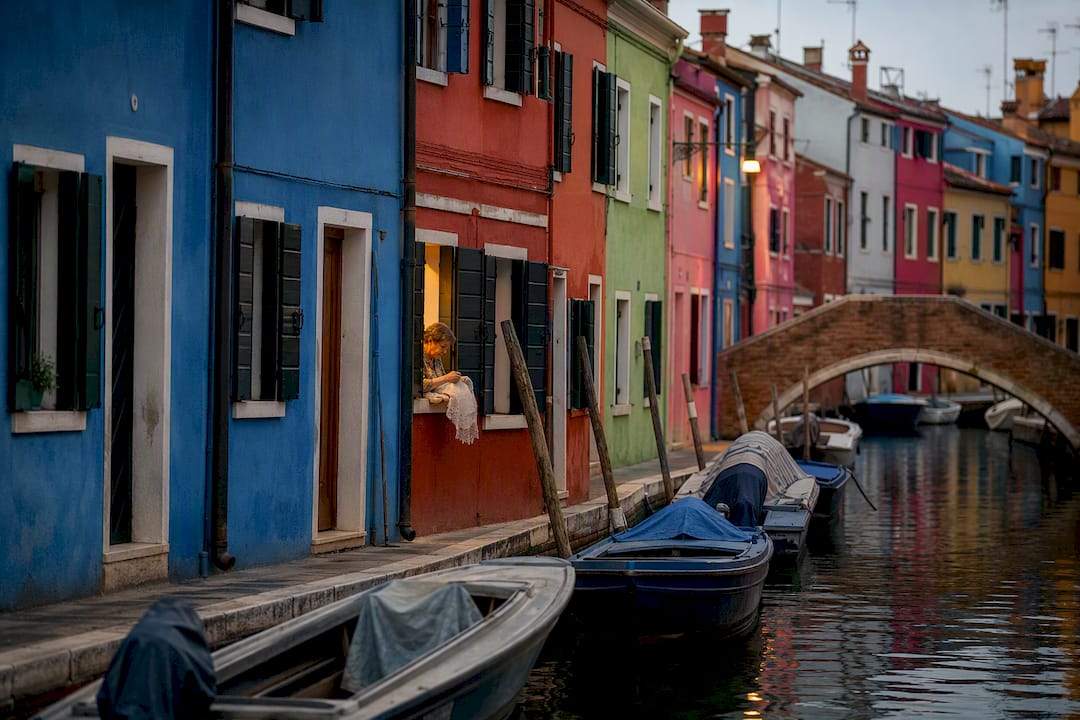
Day 8 is for the islands. Murano and Burano sit 30 to 45 minutes away by vaporetto, and they’re worth a full day rather than a rushed half-day, since the public ferry schedule doesn’t reward hurrying. Murano is glassblowing demonstrations and showroom shopping; Burano is candy-colored houses and lace-making, and it’s the better photo destination of the two. Buy a multi-trip vaporetto pass rather than single tickets if you’re island-hopping, since the per-ride cost adds up fast.
Day 9 starts at Rialto Market, best visited before 10:00 AM while the fish stalls are still full and the crowds haven’t arrived. The afternoon is where you decide between a gondola and a private boat. A shared gondola ride runs 30 minutes and covers a fixed, well-worn canal loop. A private water taxi or a chartered boat costs more but lets you set the route and the pace, and it’s the better call if you’re celebrating something or traveling as a couple rather than checking a box.
Day 10: Departure
If you’re flying out of Venice, keep the morning light. A short walk near your hotel, one final espresso at a café rather than a sit-down breakfast, and a taxi or water taxi to Marco Polo Airport with real buffer time, since airport transfers by water can run longer than they look on a map. If your flight isn’t until the evening, you have room for one more relaxed stop, like the Peggy Guggenheim Collection or a last walk through Dorsoduro, before heading to the airport. Travelers running the southbound variant instead, departing from Naples, should treat this the same way: light morning, generous transfer buffer, no ambitious sightseeing squeezed in before a flight.
Getting to and Between Rome, Florence, and Venice
An open-jaw flight, meaning you fly into one city and out of another, is the single easiest way to make this route work. Flying into Rome and out of Venice means you never backtrack, and it usually costs about the same as a round trip into a single city. Airlines price open-jaw itineraries individually now more often than they used to, so it’s worth checking a couple of combinations rather than assuming it costs extra.
Once you’re on the ground, the train does almost all the heavy lifting. Frecciarossa services connect Rome, Florence, Bologna, and Venice with frequent departures and stations that drop you directly into each city’s historic core, no shuttle bus or long taxi ride required. That’s a real advantage over flying between cities, where you’d lose an hour or more to airport transfers on both ends.
A rental car earns its place only in one part of this trip: Tuscany. If Chianti, San Gimignano, or the wider hill-town region is on your list, a car gives you the flexibility that a bus schedule cannot. Inside Rome, Florence, or Venice, though, a car is a liability. Rome’s historic center has restricted traffic zones that fine tourists who don’t know the rules, Florence’s parking is scarce and expensive, and Venice has no cars at all.
- Rome to Florence: about 1.5 hours by Frecciarossa
- Florence to Venice: about 2 hours by Frecciarossa
- Rome to Venice direct: about 3.5 to 4 hours if you skip Florence
Pro Tip: Budget three to six hours as “lost” on any travel day, covering hotel checkout, the train or transfer itself, and check-in at the next hotel. Treat that day as a half-sightseeing day, not a full one, and the whole trip will feel far less rushed.
Where to Stay in Rome, Florence, and Venice
Neighborhood choice matters more in Italy than in most destinations, because narrow streets and limited transit mean a bad location costs you real hours over ten days.
In Rome, the historic center near the Pantheon or Trastevere puts you within walking distance of most major sights and Rome’s best evening atmosphere. Staying near Termini station saves money and helps if you’re train-focused, but it trades away the charm that makes Rome worth visiting in the first place, and it’s a longer walk or taxi to the Colosseum and Vatican.
In Florence, lodging near the Duomo keeps the Uffizi, Accademia, and Baptistery within a ten-minute walk. The Oltrarno side of the river is quieter and slightly less expensive, with easy access to the Ponte Vecchio, and it suits travelers who want to feel less like they’re in a tourist zone at night.
In Venice, San Marco is the postcard choice but also the most expensive and most crowded. Cannaregio offers a calmer, more residential feel with strong restaurants and shorter lines at the vaporetto stops. Dorsoduro suits art-focused travelers, since it sits near the Peggy Guggenheim Collection and the Accademia bridge, with fewer day-tripper crowds.
- Rome: historic center or Trastevere for atmosphere, Termini only for budget or transit convenience
- Florence: Duomo area for museum access, Oltrarno for a quieter evening base
- Venice: San Marco for convenience, Cannaregio or Dorsoduro for a calmer stay
For travelers booking through a luxury planner, this is also where private airport transfers and pre-arranged luggage assistance make the biggest difference. Arriving in Venice with bags via water taxi is a very different experience with someone meeting you at the dock than navigating it alone. Pairing the right lodging with the right dining choices for each city, something Wild Foodz covers well in its own lodging and dining guidance, tends to make the daily rhythm of a multi-city trip feel far less like a checklist.
What Tickets Do You Need to Book in Advance?
Some Italy sightseeing simply doesn’t work if you show up and hope for the best. The Colosseum sells timed tickets for its main entry along with limited-availability special experiences like the underground and arena floor, and those slots sell out weeks ahead in high season, so book this early. The general guidance from the site itself is to lock in fixed-entry sights first and build the rest of your days around them.
The Vatican Museums are stricter still: tickets are valid only for the specific date selected, with no refunds and no date changes, according to the museum’s own ticketing rules. Get this booked as soon as your Rome dates are set.
In Florence, the Uffizi and the Accademia both sell out common time slots during summer and around major holidays, and a reserved entry ticket is worth the small booking fee to skip what can be a two-hour standby line. In Venice, island ferries run on a public schedule rather than a booking system, but a multi-day vaporetto pass is worth buying in advance if you know you’re island-hopping.
Skipping the line at Rome’s biggest three sights, the Colosseum, Vatican, and Borghese, is one of the clearest places where a concierge booking service earns its cost back in saved hours, particularly in July and August when standby lines routinely run past two hours.
- Colosseum: book as far ahead as your dates allow, especially for underground or arena-floor add-ons
- Vatican Museums: book the exact date you’ll visit; there are no refunds or changes
- Uffizi and Accademia: reserve summer and holiday slots at least a few weeks out
- Venice vaporetto: buy a multi-day pass if visiting more than one island
Packing, Pacing, and Practical Trip Tips
Ten days across three cities rewards travelers who pack light and pace themselves deliberately.
- Bring one carry-on and a soft daypack; cobblestones in Rome and Florence destroy hard-shell luggage wheels fast.
- Pack real walking shoes, not sandals; you’ll cover five to eight miles most days without noticing.
- Layer clothing for spring and fall, since Italian weather swings 15 to 20 degrees between morning and afternoon.
- Structure each day around one big sight in the morning, a relaxed lunch, and two flexible late-afternoon options so a tired day doesn’t derail the whole plan.
- Carry a portable charger, a printed copy of key reservations, and a small amount of cash for markets and small trattorias that don’t take cards.
When Does Bespoke Planning Beat a DIY Italy Trip?
A self-planned Italy 10 day itinerary works fine for travelers comfortable managing multiple bookings across time zones. It gets harder the moment you want private transfers, guaranteed skip-the-line access, or a day trip built around your specific interests rather than a generic bus tour schedule.
The gap between a good Italy trip and a great one usually isn’t the itinerary itself. It’s who’s meeting you at the train platform, whether your dinner reservation was made by someone who actually knows the restaurant, and whether a closed museum on your one free morning gets rerouted before you ever notice the problem.
Some luxury travel agencies with extensive experience and on-the-ground partnerships can arrange exclusive experiences such as private after-hours museum viewings or personalized day trips. For couples, milestone trips, or families who want the three-base structure without managing every reservation themselves, that’s where a curated Tuscany itinerary or a private Positano extension tends to outperform stitching it together alone.
What the Conventional Italy Itinerary Advice Gets Wrong
Most Italy trip planning advice treats the ten days as a checklist problem: hit these cities, see these sights, book these tickets. That’s not wrong, exactly, but it undersells the real constraint on a trip like this, which is time lost to logistics rather than time spent sightseeing.
The three-base model works because it’s honest about that cost. Every hotel change eats half a day. Every city added beyond Rome, Florence, and Venice adds another transfer, another checkout, another round of repacking. The travelers who regret their Italy trip almost never say they saw too little. They say they spent too much of it moving.
Where I’d push back on the standard advice is the assumption that more cities equal a better trip. A fourth base, even a beautiful one, usually subtracts more than it adds on a first ten-day visit. Depth in three places beats a rushed glance at five. If there’s one thing worth prioritizing above all else, it’s protecting unstructured time in each base rather than filling every hour with another reservation.
— tammylevent@gmail.com
Plan Your Italy Trip with a Dedicated Travel Concierge
A dedicated travel concierge can customize the Rome to Florence to Venice route around your priorities, including optimizing flight routing, securing timed tickets promptly, and arranging private transfers for stress-free arrivals.
A consultation starts with a conversation about what matters most to you, whether that’s art-focused time in Florence, a honeymoon-paced finish in the Amalfi region, or a family trip with the right balance of sightseeing and downtime. The service includes personalized itinerary design, advanced booking of fixed-entry sights, and coordination of accommodations and transfers, often with no service fee, a price match guarantee, and 24/7 support in case of changes. Start planning your custom Italy vacation package today, or explore honeymoon itinerary options if this is a milestone trip.
Sources
Confirm current hours and prices directly before you travel. The Colosseum’s official ticket page and the Vatican Museums’ ticketing rules cover entry logistics, while Trenitalia lists live Frecciarossa schedules and Italia.it offers official city overviews for Rome and beyond.
- Italy Itinerary | Rick Steves
- Italia
- Opening Times and tickets – Parco archeologico del Colosseo
- Vatican Museums — Tickets and prices
FAQ
Is 10 Days Enough Time to Visit Italy?
Ten days is enough for a first-timer to properly cover Rome, Florence, and Venice at a comfortable pace, roughly three to four nights each, without the constant hotel-hopping that makes a trip feel rushed.
Is $10,000 Enough for a Trip to Italy?
For two travelers on a ten-day trip, a budget covering mid-range to upper mid-range hotels, most meals, high-speed train tickets, and entry fees leaves room for a private day trip or two; a bespoke concierge itinerary can flex above or below that depending on the hotels and experiences chosen.
Is $5,000 Enough for a Trip to Italy?
For one traveler, or a couple watching costs closely, a budget covering a ten-day trip with budget to mid-range hotels, train travel between the three bases, and standard entry tickets leaves little room for splurge dinners or private guides.
What Is Rick Steves’ Recommended Itinerary for Italy?
Rick Steves’ Italy guidance centers on the same three-base structure this article follows: Rome, Florence, and Venice, with about three to four nights in each city to limit hotel changes and travel fatigue.
Should I Rent a Car for This Italy Itinerary?
Skip the car for the Rome, Florence, and Venice cities themselves and rely on high-speed rail; only rent one if you’re extending into the Tuscan countryside, where train access is limited.
