



Lisbon, Barcelona, Provence, the Amalfi Coast, Lake Como, the Dalmatian Coast, the Swiss Alps, and Ljubljana consistently rank as the strongest incentive trip destinations Europe has to offer, and each one earns its spot for a different reason. The rule that matters more than any single destination: match the location to your program’s objective. A reward trip for top sales performers wants a different setting than a leadership reset or a creative offsite. Below, you’ll find the logistics, budgets, and sample itineraries to make that match with confidence.
TL;DR:
- Larger groups benefit from established venue and DMC infrastructure in destinations like Lisbon, Barcelona, and the Swiss Alps, ensuring smooth logistics.
- Shifting program dates to off-peak seasons or mid-week can significantly reduce costs while maintaining desired activity quality.
- Destination choice should prioritize program objectives, with locations like Provence for intimacy, Lake Como for luxury, or Ljubljana for uniqueness and value.
- Budget sensitivity now strongly influences destination ranking, pushing planners toward Portugal, Croatia, and the Balkans for cost-effective options.
- Expert planning services offer vendor relationships, contingency support, and negotiation leverage that improve program execution and value.
Table of Contents
- Top Incentive Trip Destinations in Europe, Ranked by Objective
- How to Choose the Right Destination for Your Program
- Sample Incentive Program Formats by Trip Length
- What Actually Drives Your Incentive Travel Budget
- Why Concierge-Level Planning Expertise Changes the Outcome
- Visa and Entry Requirements for Incentive Travel to Europe
- Accommodation Standards for Corporate Incentive Groups
- Local Event Services and Hospitality Support
- Health and Safety Planning for European Incentive Trips
- Cultural Etiquette That Makes or Breaks a European Incentive Program
- The Trends Reshaping Destination Choice in 2026
- Let Elite Travel Build Your European Incentive Program
- Where the Research Behind This Guide Came From
- An Editorial Take on Picking the Right Destination
- Sources
- FAQ
Top Incentive Trip Destinations in Europe, Ranked by Objective
Picking from Europe’s best incentive travel sites gets easier once you stop asking “which city is nicest” and start asking “what is this trip supposed to accomplish.” A rewards trip for a sales team that just crushed quota calls for indulgence and visible luxury. A leadership offsite calls for quiet, private space and minimal distraction. A creative team needs stimulation, not seclusion. Here’s how the leading corporate retreat locations in Europe stack up against those goals.
Lisbon, Portugal. Best for value-driven reward trips and larger groups. Standout activities include private tastings in the Alfama district, a sailing sunset cruise on the Tagus River, and a day trip to Sintra’s palaces for a change of pace. Humberto Delgado Airport sits about 25 minutes from most downtown hotels, and Lisbon has become a highly requested European destination because it combines strong execution with accessible mid-market pricing. Ideal program length: 3 to 5 days. Best months: April through June or September through October, when the weather is mild and rates haven’t hit peak summer levels. Cost level: value to mid-range.
Barcelona, Spain. Best for programs that need to blend business sessions with genuine cultural texture. Gaudí architecture tours, a private paella and wine workshop, and yacht excursions along the Costa Brava all work well as half-day add-ons around meetings. Barcelona-El Prat Airport is roughly 20 minutes from the city center, and the city’s convention infrastructure means large groups (200-plus attendees) are routine, not exceptional. Ideal length: 3 to 4 days. Best months: May, June, or September, avoiding the July and August heat and crowds. Cost level: mid-range to premium depending on venue choice.
Provence, France. Best for smaller executive groups wanting an intimate, sensory-rich creative offsite. Lavender field visits (seasonal, peaking in late June through July), private château dinners, and hands-on culinary workshops with regional chefs give this region a different energy than a city break. Marseille Provence Airport connects to most of the region in under an hour, which keeps transfer fatigue low for a destination that feels remote. Ideal length: 3 to 5 days. Best months: June and September, since lavender season drives July prices up sharply. Cost level: premium.
The Amalfi Coast and Lake Como, Italy. Best for milestone incentive trips and top-tier reward tiers where the destination itself is the reward. Private boat tours along the Amalfi cliffs, a villa dinner on Como’s shoreline, and guided visits to Positano or Bellagio deliver the kind of visual impact that photographs well and motivates future performance. Naples Airport serves Amalfi (about 90 minutes by car or boat transfer), while Milan Malpensa or Linate serve Como (roughly an hour). Italy’s reputation for premium, culture-forward retreats holds up in comparative destination analysis, which places it firmly in the premium tier. Ideal length: 4 to 6 days. Best months: May, June, or September through early October. Cost level: premium.
The Dalmatian Coast, Croatia. Best for adventure-oriented programs and groups chasing value without sacrificing scenery. Sea kayaking around Dubrovnik’s old walls, island-hopping by chartered boat to Hvar or Korčula, and wine tastings in inland vineyards give this coastline range that pure beach destinations lack. Dubrovnik Airport is about 25 minutes from the old town. Croatia has gained real traction as cost sensitivity reshapes corporate travel decisions, with planners increasingly steering budget-conscious programs toward the Balkans instead of the traditional Western Mediterranean. Ideal length: 4 to 6 days. Best months: May, June, or September, sidestepping the July and August tourist surge. Cost level: value to mid-range.
The Swiss Alps. Best for leadership retreats where reliability and privacy outweigh everything else. Private chalet buyouts, guided alpine hikes, and facilitated strategy sessions with mountain views work because Switzerland’s infrastructure simply does not fail. Zurich or Geneva airports connect to most alpine resort towns in 90 minutes to two hours by private transfer. Switzerland’s standing as the go-to choice for leadership-focused programs comes up repeatedly in European corporate retreat comparisons, largely because of consistent service standards even in remote settings. Ideal length: 3 to 5 days. Best months: June through September for hiking-based programs, or December through March for a ski-incentive format. Cost level: premium.
Athens and the Greek islands. Best for hybrid programs that pair historic gravitas with beach-based reward time. A private evening tour of the Acropolis, a day cruise to Hydra or Aegina, and a closing gala dinner on a rooftop overlooking the Parthenon give a program real range in a short window. Athens International Airport sits about 45 minutes from downtown, with quick domestic connections or ferries to the islands. Ideal length: 4 to 7 days if combining Athens with an island extension. Best months: May, June, or September through early October. Cost level: mid-range to premium.
Ljubljana, Slovenia. Best for planners looking for something genuinely different without sacrificing polish. Slovenia’s capital pairs a walkable, riverside old town with easy access to Lake Bled and the Julian Alps, making it one of the more unique incentive trips Europe currently offers at scale. Ljubljana Jože Pučnik Airport is about 30 minutes from the center. Ideal length: 3 to 4 days. Best months: May, June, or September. Cost level: value to mid-range.
The Netherlands (Amsterdam). Best for programs prioritizing walkability, canal-based experiences, and fast, direct flight access from North America. Private canal cruises, bike-based city challenges, and museum buyouts at institutions like the Van Gogh Museum give teams a low-fatigue, high-interaction format. Amsterdam Schiphol Airport is one of Europe’s best-connected hubs, roughly 20 minutes from the city center. Ideal length: 2 to 4 days. Best months: April through June or September. Cost level: mid-range.
All ten of these destinations have mature venue and destination management company (DMC) infrastructure, which matters more than scenery once your group passes 50 people. A gorgeous location with no local event production support turns into a logistical headache fast.
How to Choose the Right Destination for Your Program
Start with the objective, not the map. A destination that thrills a sales team might completely miss the mark for a leadership offsite that needs quiet and focus. Once the objective is clear, run it through five criteria before you commit.
- Program objective fit. Does the destination’s character (energetic, restorative, adventurous, luxurious) match what this specific group needs to feel or accomplish?
- Accessibility. How many direct flights connect your attendees’ home cities to the destination, and what’s the realistic transfer time from airport to venue?
- Venue and meeting infrastructure. Can the destination support your group size with private-use venues, reliable AV, and enough quality hotel rooms under one roof or a short walk apart?
- Cost and date flexibility. Are you locked into peak-season dates, or can you shift by a week or two to capture better rates?
- Local supplier and DMC reliability. Does the destination have an established ground team that has run programs at your scale before, or would you be the test case?
Before signing anything, run your shortlisted venues and DMCs through a short vetting round:
- Can you provide three references from groups of similar size in the last 18 months?
- What’s your contingency plan for weather, transit strikes, or vendor cancellations?
- Are the quoted rates inclusive of local taxes, service charges, and gratuities?
- How many staff will be on-site during our program, and who is the single point of contact?
- What’s your cancellation and rebooking policy if dates shift?
- Can you show us a floor plan or walk-through of the venue for our exact group size?
- What’s included in the quote versus billed as an add-on?
Pro Tip: Shifting your program by even one week off peak season, or building it around a Tuesday-through-Thursday block instead of a weekend, can meaningfully lower venue and hotel rates without changing the experience your attendees actually see. Date flexibility remains one of the most reliable cost levers planners have, and it costs nothing to ask.
Sample Incentive Program Formats by Trip Length
Program length should follow the objective, not the budget alone, though the two are obviously connected. Here’s how the three most common formats break down.
- One-day reward format. Morning arrival, a curated city experience or short excursion (a boat tour, a walking food tour, a private museum visit), then a gala dinner with recognition awards in the evening, and late-night or early-morning departure. Works well for regional groups within a few hours’ flight of the destination.
- Three-day balanced format. Day one: arrival, welcome reception, light icebreaker activity. Day two: core experience, whether that’s a facilitated strategy session in the morning followed by a team challenge in the afternoon, then a signature dinner event. Day three: a relaxed closing activity or free time, followed by departure. This format dominates because it fits inside a standard workweek disruption.
- Four-to-seven-day immersive format. Best for leadership retreats or multi-location programs. Days one and two focus on arrival and acclimation with light structure. The middle days carry the heaviest programming: facilitated sessions, adventure-based team challenges, and one full rest day with no scheduled activity. The final one to two days taper toward departure with a closing dinner and reflection session.
Book arrival and departure flights within a tight window, ideally within four hours of each other, so no one loses a program day to a late landing or an early checkout. Curated, all-inclusive formats that bundle accommodation, facilitation, and activities into one package have become the standard approach across European incentive programs, largely because they remove the coordination burden from in-house planners.
What Actually Drives Your Incentive Travel Budget
Season is the biggest lever by far. A Provence château that runs at a premium rate in July can drop meaningfully in early June or September, while the weather barely changes. Hotel category comes next: a five-star property with private-use meeting space costs more than a four-star with shared conference rooms, but the gap narrows once you factor in the productivity loss from a noisy, shared venue. Group size cuts both ways. Larger groups unlock volume discounts on rooms and transport but also limit your venue options to properties that can actually hold everyone under one roof.
Real cost levers worth pushing on:
- Shift dates mid-week or off-peak rather than defaulting to a weekend.
- Bundle transport, venue, and catering through a single DMC instead of contracting each separately.
- Source activities locally rather than importing entertainment or equipment from another region.
- Contract with venues and DMCs early. Rates firm up and availability narrows as the date approaches.
For accessibility, check direct flight routes from your attendees’ major departure cities, confirm realistic transfer times (not the number on a map, but actual door-to-door time), and, for multi-site programs, map internal travel legs before you finalize the itinerary.
Programs increasingly span a wide range of formats and durations, and industry data on cost sensitivity shows that budget now functions as a genuine go/no-go filter for corporate buyers, not just a negotiating point. That shift is exactly why Portugal and the Dalmatian Coast have climbed the destination rankings over the last few years.
Why Concierge-Level Planning Expertise Changes the Outcome
Thirty-five years of running high-end travel means knowing which venues actually deliver on their photos, which DMCs answer the phone at midnight when a flight gets cancelled, and which contracts hide fees that surface three weeks before departure. A travel agency with extensive experience brings established, on-the-ground vendor relationships, private-venue access that isn’t available through a standard booking channel, and 24/7 operational support for the moment something inevitably goes sideways.
That experience also translates into negotiating leverage: price-match backing, bundled package rates, and group concessions that an in-house planner booking one program every year or two simply can’t extract on their own. A proven planning framework for motivating programs starts with the reward goal and works backward to the destination, not the other way around.
Visa and Entry Requirements for Incentive Travel to Europe
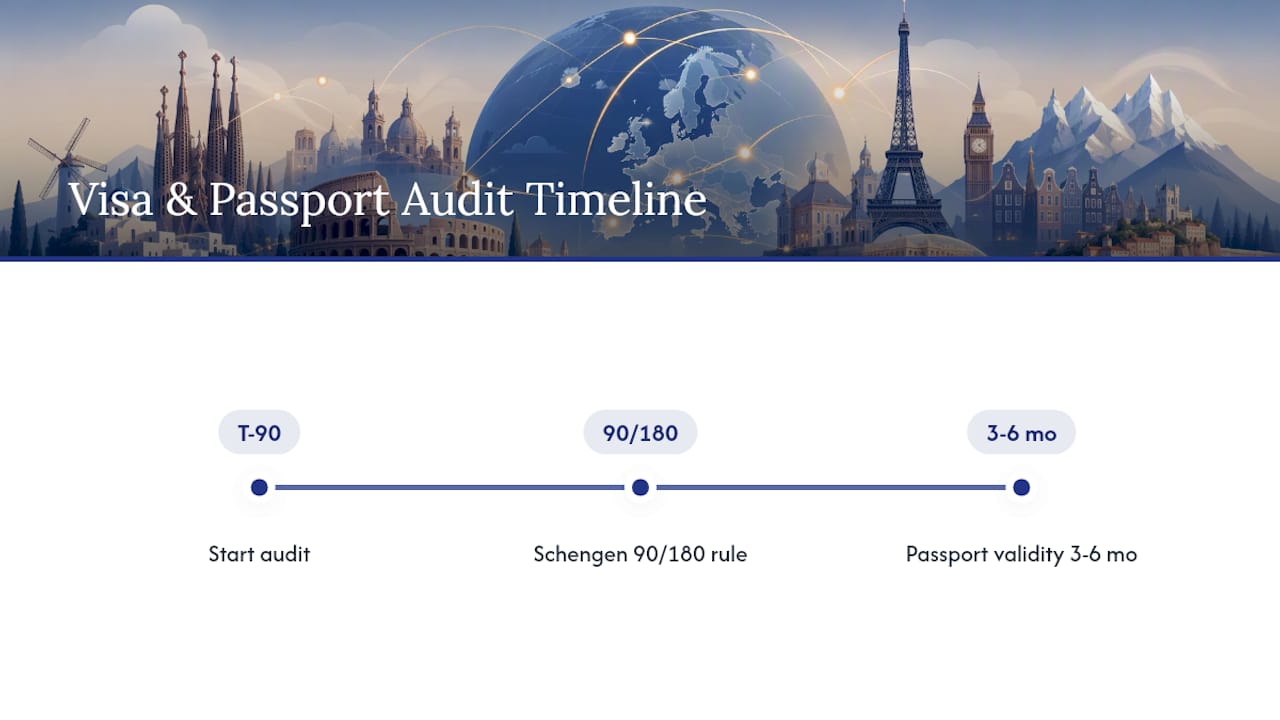
Most of the destinations above sit inside the Schengen Area, which means a single visa (where required) covers travel across member countries without additional border checks. Citizens of the United States, Canada, and many other countries can currently enter Schengen countries visa-free for stays up to 90 days within any 180-day period for business or tourism purposes, though this depends on nationality and should be confirmed against current government guidance well before booking.
Croatia joined the Schengen Area for border-free travel in 2023, simplifying multi-country itineraries that combine the Dalmatian Coast with Italy or Slovenia. The United Kingdom, notably, sits outside Schengen and has its own separate entry rules.
For groups with mixed nationalities, always build in a passport and visa audit at least 90 days before departure. Attendees holding passports that require a Schengen visa need lead time for appointments and processing, and that timeline varies by consulate and season. Corporate groups should also confirm passport validity requirements. Many European countries require at least three to six months of remaining validity beyond the departure date. A single attendee stuck at check-in over an expired passport is an entirely avoidable problem with enough lead time.
Accommodation Standards for Corporate Incentive Groups
Corporate incentive groups need something different from a leisure traveler’s hotel search: consistent room quality across every attendee, private meeting or event space, and a property that can execute a group check-in without turning the lobby into a bottleneck. Four- and five-star properties in the destinations above generally offer dedicated group coordinators, private dining buyouts, and flexible meeting room configurations that a boutique property often can’t match at scale.
For groups above roughly 40 people, single-property stays make logistics dramatically simpler. Splitting a group across two or three nearby hotels might be unavoidable in smaller destinations like Ljubljana or parts of the Dalmatian Coast, but it adds transfer time and coordination overhead that should be priced into your planning from the start.
Quality standards worth confirming before contracting: whether the property has hosted a group your size before, what backup power and Wi-Fi capacity exist for meeting spaces, and whether room blocks are guaranteed or released on a rolling cutoff date. Villa and château buyouts, popular in Provence and around Lake Como, offer privacy and exclusivity that hotels can’t replicate, but they typically require a more hands-on approach to catering, staffing, and transport since the property itself doesn’t come with built-in hotel infrastructure.
Local Event Services and Hospitality Support
The quality of your incentive program often comes down to the strength of the local team executing it, not just the destination itself. Established DMCs in cities like Barcelona, Lisbon, and Athens run dozens of corporate programs a year, giving them relationships with caterers, entertainment, transport companies, and venues that a planner booking remotely simply doesn’t have access to.
Coverage of European meetings and incentive travel consistently points back to venue quality and local DMC support as the differentiator between a program that runs smoothly and one that doesn’t. Smaller or emerging destinations, including parts of Croatia and Slovenia, have expanded their DMC capacity significantly over the last several years to keep pace with rising demand, but it’s still worth confirming a supplier’s specific track record with groups your size before committing.
For multi-day or multi-site programs, contracting a single on-the-ground DMC to coordinate the entire itinerary, rather than piecing together separate local vendors for transport, catering, and activities, reduces day-of friction and keeps the schedule from unraveling when one piece runs late.
Health and Safety Planning for European Incentive Trips
Europe’s healthcare infrastructure is strong across every destination on this list, but planning still matters. Confirm that group travel insurance covers medical evacuation, particularly for programs in the Swiss Alps or on multi-island Croatian or Greek itineraries where the nearest major hospital might be a boat or helicopter ride away.
Build a simple emergency protocol before departure: a designated on-site contact, local emergency numbers, and the nearest hospital or clinic to each venue. For adventure-based activities, kayaking off Dalmatia, alpine hiking in Switzerland, or sailing near Provence, confirm that operators carry their own liability insurance and that guides are certified for the specific activity and terrain.
Attendees with existing medical conditions should be encouraged, discreetly, to flag any needs during registration so catering and activity choices can accommodate them. Altitude matters more than planners often realize. Alpine programs above roughly 1,500 meters can affect attendees unaccustomed to elevation, so building a lighter first-day schedule helps people acclimate before anything strenuous.
Cultural Etiquette That Makes or Breaks a European Incentive Program
Small missteps in business etiquette can undercut an otherwise flawless program. In France and Italy, business meals run long and skipping courses or rushing through a dinner reads as disrespectful to the host and the culture. In Switzerland and Germanic-influenced regions, punctuality carries real weight. A program that starts sessions late repeatedly will register as disorganized, not relaxed.
Tipping norms vary widely. Service charges are often built into restaurant bills across much of continental Europe, so an additional 15% to 20% tip, standard in the United States, can come across as excessive or simply confusing to local staff. Dress expectations also shift by destination. Beach-adjacent programs in Croatia and Greece run more casual than a Swiss Alps leadership retreat, where business-casual is generally expected even during downtime activities.
Language matters more as a gesture than a necessity. Attendees don’t need fluency, but a brief note in the program materials with a handful of local greetings shows respect and tends to warm up interactions with venue and activity staff considerably.
The Trends Reshaping Destination Choice in 2026
Cost sensitivity and demand for genuinely experiential programming, rather than passive sightseeing, are steering more programs toward Portugal and the Balkans and away from traditional Western European hubs. The practical takeaway: build date flexibility into every contract from the start, and choose destinations for what the activity roster can deliver, not for name recognition alone.
Let Elite Travel Build Your European Incentive Program
Elite Travel has spent 35 years designing high-end journeys where every detail, from the hotel to the timing to the on-the-ground partner, gets chosen with intention rather than guessed at. For corporate incentive travel, that means custom itineraries built around your program’s actual objective, vendor negotiation that captures group concessions you won’t find booking directly, and 24/7 support so a canceled flight or a weather delay never becomes your problem to solve alone.
Group logistics, from room blocks to multi-site transfers, get handled by a dedicated planner who has run these programs before, not figured out in real time. There is no additional service fee for expert travel planning, and some agencies offer price-match guarantees, so clients can book with confidence in their travel expertise and value. If you’re ready to talk through your program’s objective and see which destination actually fits it, start a conversation about your corporate incentive travel program and get a custom itinerary built around what your team needs to walk away with.
Where the Research Behind This Guide Came From
- Beyond the Team Building Weekend: What Modern Incentive Travel Looks Like
- The Best Corporate Retreat Destinations in Europe | Midstay
- Europe | Meetings & Incentive Travel
- Corporate Retreat Locations in Europe: Top 8 Destinations
An Editorial Take on Picking the Right Destination
Most incentive travel guides list destinations by popularity, not by fit, and that’s backward. The planners who get this right define the reward goal first, then find the destination that naturally supports it, rather than picking a trendy city and forcing the program to work around it. That sequencing sounds obvious written out, but it’s routinely skipped under deadline pressure.
The bigger shift worth watching is the move away from passive sightseeing toward shared, challenging experiences, a kayaking trip off Dubrovnik instead of a scripted walking tour. That’s not a minor programming tweak. It changes what attendees actually remember about the trip six months later, and memory is the entire point of an incentive program. Chase destinations, and you’ll get pretty photos. Chase objectives, and you’ll get results that show up in next year’s numbers.
— tammylevent@gmail.com
Sources
- Beyond the Team Building Weekend: What Modern Incentive Travel Looks Like
- The Best Corporate Retreat Destinations in Europe | Midstay
- Europe | Meetings & Incentive Travel
FAQ
What Are the Best Destinations for Incentive Trips?
The strongest options depend on your program’s objective. Lisbon and Croatia’s Dalmatian Coast suit value-focused reward trips, Provence and Lake Como fit premium or creative offsites, and the Swiss Alps work best for leadership retreats needing privacy and reliability. Comparative destination analysis consistently backs this objective-based approach over picking by popularity alone.
What Is Considered a Hidden Gem for Incentive Travel in Europe?
Ljubljana, Slovenia stands out as one of the more unique incentive trip destinations in Europe, pairing a walkable, polished old town with easy access to Lake Bled and the Julian Alps. It offers the atmosphere of a premium European city break at a value-tier cost, without the crowds found in Barcelona or Athens.
What Is the Cheapest Month to Travel in Europe for a Corporate Program?
Late winter through early spring, generally February and March, tends to bring the lowest hotel and venue rates across most of Europe outside ski destinations. For incentive travel specifically, aim for the shoulder months of May, June, or September, which balance lower costs with reliable weather and full venue availability.
How Do I Choose the Right European Destination for My Incentive Trip?
Start by defining what the trip is meant to accomplish: reward, team cohesion, leadership development, or creative reset. Then weigh five factors: objective fit, flight and transfer accessibility, venue capacity for your group size, date flexibility for cost, and the reliability of the local DMC.
Does Elite Travel Handle Full Incentive Trip Planning for Corporate Groups?
Elite Travel designs custom incentive travel programs from destination selection through vendor negotiation and on-site support, backed by 35 years of luxury travel experience. Current pricing and program details are available directly through the site rather than a published rate, since every itinerary is built around the specific group and objective.
