




A minimoon is a 2 to 4-night trip taken right after your wedding, built for rest rather than a bucket-list itinerary. The best minimoon ideas share one trait: proximity. Pick a property within a short drive or flight, book one high-amenity base, and skip the multi-stop planning. Most couples spend somewhere between $500 and $2,000 and head out within a few days of the wedding, well before a bigger honeymoon later in the year.
TL;DR:
- Staying within a two to three-hour travel radius allows couples to arrive energized and avoid losing a day to transit.
- Prioritizing properties with high amenity density, such as on-site spas, private dining, and easy reservation access, enhances the restorative potential of the trip.
- Booking one well-chosen activity and reserving one full lazy day prevents travel fatigue and keeps the minimoon relaxing.
- Most minimoon costs range from $500 to $2,000, with midweek stays often offering better rates, especially for lower budgets.
- Hiring a concierge travel planner can secure upgrades, tailor experiences, and streamline booking, saving time and ensuring a quality stay.
Table of Contents
- Minimoon Ideas by Style: Which Fits Your Energy Level
- Best Minimoon Destinations Across the US
- How to Plan a Minimoon in Under Two Weeks
- What a Minimoon Actually Costs and When Couples Go
- Why “Amenity Density” Should Drive Your Minimoon Pick
- Small Mistakes That Turn a Minimoon Into a Blur
- A Faster Way to Book Your Minimoon
- Sources
- FAQ
Minimoon Ideas by Style: Which Fits Your Energy Level
Not every couple wants the same kind of quiet. Some want a spa robe and a fireplace. Others want a hike, a wetsuit, or a wine flight. The category you pick should match how depleted you actually feel after the wedding, not how the trip looks on Instagram.
Luxury hotel staycation. Book a five-star property in or near your own city and treat it like a foreign country. No flight, no packing stress, and you still get room service, a soaking tub, and a do-not-disturb sign.
- Why it fits: zero transit time means more hours actually resting.
- Try this: a suite upgrade, in-room breakfast, and a late checkout built into the rate.
- Cost per night: typically ranges from moderate to higher rates at a solid four or five-star property.
Cozy cabin escape. A private cabin in the mountains or woods, often 1 to 3 hours from home, trades hotel service for total privacy.
- Why it fits: no schedules, no other guests, just a fireplace and a hot tub.
- Try this: stock the fridge before arrival so you never have to leave.
- Cost per night: generally moderate depending on size and amenities.
Beach weekend. A short flight or drive to the coast gives you sun, saltwater, and a built-in excuse to do nothing.
- Why it fits: beach towns naturally slow the pace.
- Try this: an oceanfront room and one sunset dinner reservation, nothing else scheduled.
- Cost per night: $200 to $500, more in peak summer.
Wine country retreat. Rolling hills, tasting rooms, and farm-to-table dinners make for a sensory reset without much walking.
- Why it fits: the pace is slow by design, and you can plan almost nothing in advance.
- Try this: one private tasting, then leave the rest of the days open.
- Cost per night: often falls within a moderate to higher range for boutique inns in premium wine regions.
City escape. A boutique hotel in a new city gives you museums, restaurants, and rooftop bars without a long flight.
- Why it fits: good for couples who find cabins too quiet.
- Try this: a hotel with a concierge who can book same-week dinner reservations.
- Cost per night: typically moderate to higher in most major US cities.
National park or adventure trip. Hiking, stargazing, and a lodge with a view suit couples who recharge through movement, not stillness.
- Why it fits: physical activity plus disconnection from phones and email.
- Try this: one guided hike or sunrise viewpoint, then an afternoon of nothing.
- Cost per night: moderate depending on the lodge.
All-inclusive resort. One price covers meals, drinks, and most activities, which removes the daily “where should we eat” decision entirely.
- Why it fits: decision fatigue drops to almost zero.
- Try this: a swim-up suite or adults-only section for a quieter stay.
- Cost per night: varies, often moderate to higher depending on the resort tier.
Pro Tip: Pick the style that matches your post-wedding exhaustion level, not the style that photographs best. A couple running on four hours of sleep needs a cabin with a hot tub, not a city itinerary packed with reservations.
Most minimoons run 2 to 4 nights, and that window is short enough to keep decision-making simple: one property, one region, one vibe.
Best Minimoon Destinations Across the US
The strongest minimoon destinations share two things: they’re reachable in a few hours, and they deliver a resort-level experience without requiring you to plan much once you land.
- Napa Valley, California. Vineyard views and spa-forward hotels make this a favorite for a slow, romantic pace; a private tasting at a small-production winery is the signature move.
- Sedona, Arizona. Red rock scenery and wellness resorts pair well with couples who want light hiking and a spa day in the same trip; go in spring or fall to skip the summer heat.
- Hudson Valley, New York (Beacon or the Roundhouse). A short drive from New York City puts you in a boutique inn with river views and farm-to-table dinners without airport logistics.
- Half Moon Bay or Big Sur, California. Coastal cliffs, foggy mornings, and quiet oceanfront lodges suit couples who want dramatic scenery without a crowded beach scene.
- Florida Keys. Warm water, laid-back island energy, and direct flights into Key West make this an easy pick for couples chasing sun in the off-season.
- Charleston, South Carolina. Historic charm, walkable streets, and boutique hotels give you a city escape with a slower Southern pace.
- Aspen, Colorado. A mountain-town minimoon works year-round, from summer hiking to winter skiing, with lodge-style luxury built in.
- Asheville, North Carolina. Blue Ridge Mountain views, a strong food scene, and easy access to hot springs make this a quieter alternative to bigger mountain towns.
- Zion or Joshua Tree National Park. For couples who recharge outdoors, a lodge near either park delivers stargazing, hiking, and almost no cell signal, which is its own kind of restorative.
Editorial roundups regularly point to properties in these exact regions as delivering honeymoon-caliber experiences without the long-haul flight, which is really the whole point of a minimoon.
How to Plan a Minimoon in Under Two Weeks
You don’t need a spreadsheet for this. You need four decisions made in order.
- Set a 2 to 3 hour travel radius. Staying within that window means you land or arrive with energy left, instead of losing a full day to travel and starting the trip already tired.
- Book one base property, not a multi-stop itinerary. Pick a suite or a package rate that bundles breakfast, a spa credit, or a late checkout. One good hotel beats three mediocre ones.
- Pre-book exactly one activity. A couples massage, a sunset sail, a wine tasting. One reservation gives the trip shape without turning it into a checklist.
- Reserve one full lazy day. Wedding and travel planners consistently recommend building in a day with nothing scheduled, since that’s usually the day couples remember most.
For the booking itself, look at refundable rate options in case your wedding timeline shifts, ask your registry about a honeymoon fund, and check credit card travel points before paying cash. If you’re within a week or two of travel, last-minute booking strategies built around flexible dates and off-peak weekdays can shave real money off a short stay.
Pro Tip: Call the hotel directly after booking online and mention it’s a minimoon. Independent and boutique properties will often add a small room upgrade or a bottle of champagne at no extra charge, something a third-party booking site rarely triggers.

What a Minimoon Actually Costs and When Couples Go
Most couples travel within zero to three days of the wedding, often departing the morning after or waiting just long enough to open gifts and repack. The trip itself typically runs 2 to 4 nights.
Budgets fall into three rough brackets, based on typical minimoon cost ranges from wedding and travel planning guides:
| Budget tier | Total cost (2 to 4 nights) | What’s included |
|---|---|---|
| Economy | $500 to $1,000 | Midrange hotel, driving distance, one dinner out |
| Midrange | $1,000 to $2,000 | Boutique hotel or resort, one activity, some meals included |
| Luxury | $2,000+ | Five-star property, spa treatments, private experiences |
If your budget sits at the lower end, a midweek stay instead of a weekend can cut room rates by 20% to 40% at most resorts, and putting registry cash toward one splurge night (rather than spreading it thin) tends to make the whole trip feel more special.
Why “Amenity Density” Should Drive Your Minimoon Pick
The single biggest lever for a restorative minimoon isn’t the destination. It’s how many things you can do without leaving the property. Planners call this amenity density, and it’s the difference between a trip that feels like a honeymoon and one that feels like a nice weekend away.
Run any property through this checklist before booking:
- On-site spa or wellness program
- Private or in-room dining option
- At least one on-site activity (pool, trail, tasting room, water sport)
- Late checkout available on request
- A concierge or front desk that can book same-day reservations
- Easy transport from the airport or your home, without a rental car requirement
High amenity density lets couples trade logistics for curated experiences, which matters more on a 3-night trip than a 10-night one, because there’s no time to recover from a bad location choice.
A concierge planner’s local relationships often unlock a room upgrade, a private experience, or a guaranteed late checkout, the kind of detail that turns a short stay into something that actually feels like a honeymoon.
With 35 years arranging trips like this, Elite Travel applies that exact checklist before recommending any property, then uses supplier relationships to add upgrades a couple couldn’t book on their own.
Small Mistakes That Turn a Minimoon Into a Blur
Three patterns show up again and again in post-wedding travel. One couple booked four activities into three days and spent the whole trip checking a schedule instead of each other; the fix was cutting it to one reservation and letting the rest of the days breathe. Another chose a destination that required a 6 a.m. flight the morning after the wedding, arriving exhausted before the trip even started; a same-city or short-drive option would have saved the whole first day. A third skipped confirming check-in time and arrived to a room that wasn’t ready, losing two hours standing in a lobby.
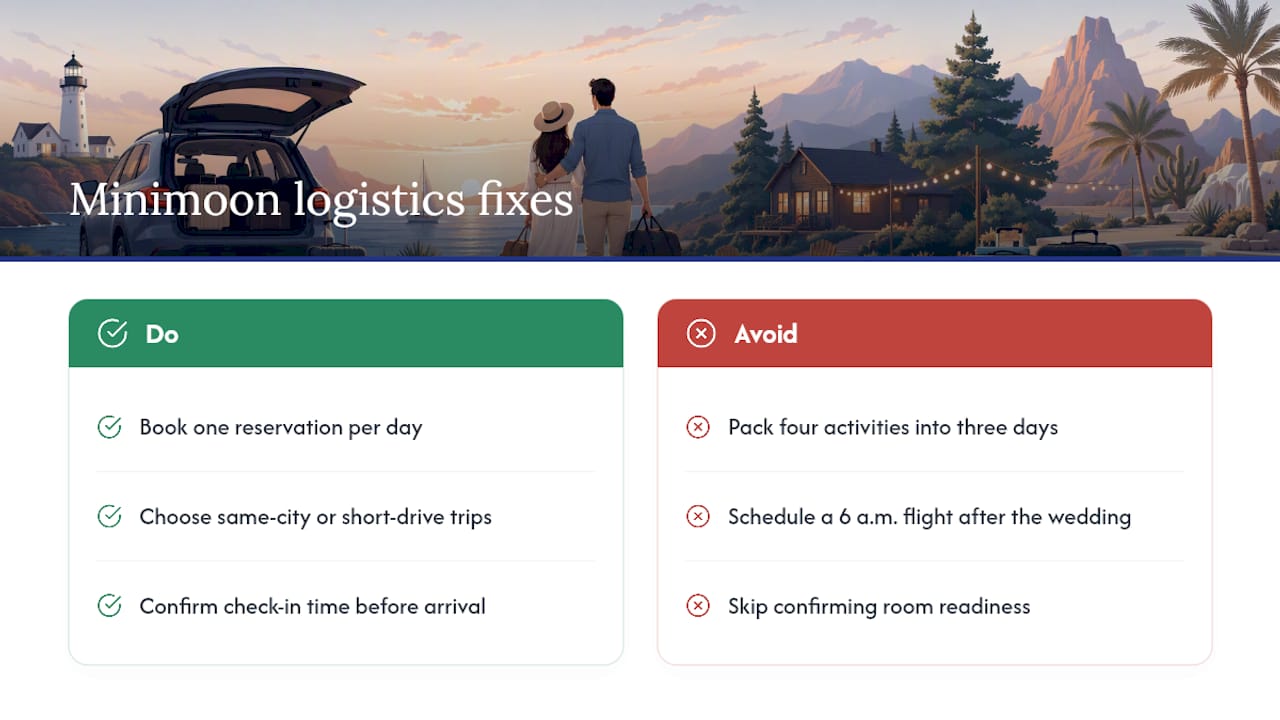
None of these are exotic mistakes. They’re all logistics. Prioritizing rest over itinerary density is what separates a minimoon that actually restores you from one you spend recovering from.
A Faster Way to Book Your Minimoon
Planning all of this yourself is doable, especially with a short travel radius and one solid property. But if you’re short on time, want a property vetted for amenity density, or you’re hoping for an upgrade you can’t get by booking direct, that’s exactly where a concierge planner earns its keep. Travel planners often build custom itineraries, work with on-the-ground suppliers most couples can’t access alone, and may offer price match guarantees with no service fees, so hiring a planner doesn’t necessarily mean paying more than booking on your own.

A professional travel planning team can be helpful if you’re planning a wedding and a minimoon simultaneously and don’t have bandwidth left for hotel research, or if you want a luxury-tier stay without guessing which resort actually delivers. Around-the-clock availability can matter when a wedding timeline shifts and your travel dates need to move with it.
Start with the Honeymoon Vacation Packages page to see how a concierge-planned minimoon or honeymoon comes together, or browse Luxury Vacation Packages for short-getaway options built around the same amenity-dense properties covered above. If you’re weighing a minimoon now against a bigger honeymoon later, the Honeymoon Packages 101 guide walks through how to split the budget and timing between both trips.
Sources
- Minimoon Ideas: 15 Short Honeymoon Getaways for Newlyweds – Joy
- Minimoon Ideas: Short, Sweet Getaways for Couples Who Cannot (or Do Not Want to) Leave Right Away
- The best mini-moon destinations for newlyweds in 2026
FAQ
Is $4,000 Enough for a Minimoon?
Yes, $4,000 comfortably covers a luxury minimoon, since typical budgets range from $500 to $2,000 for 2 to 4 nights, leaving room for a top-tier property or added experiences like a couples’ spa day.
What Are the Best Destinations for a Minimoon in the US?
Napa Valley, Sedona, the Hudson Valley, the Florida Keys, Charleston, and Aspen consistently rank among the best short-trip destinations because they combine easy access with high-amenity properties.
How Long Does a Minimoon Last?
A minimoon typically lasts 2 to 4 nights, taken within a few days of the wedding.
What Is the Point of a Minimoon?
A minimoon gives newlyweds immediate rest and celebration right after the wedding, often serving as a bridge before a longer honeymoon planned later in the year.
Should We Hire a Planner for a Minimoon?
If you’re short on time or want a property matched to your amenity and budget preferences, a concierge planner like Elite Travel can secure upgrades and vet properties faster than researching alone, all with no added service fee.
