



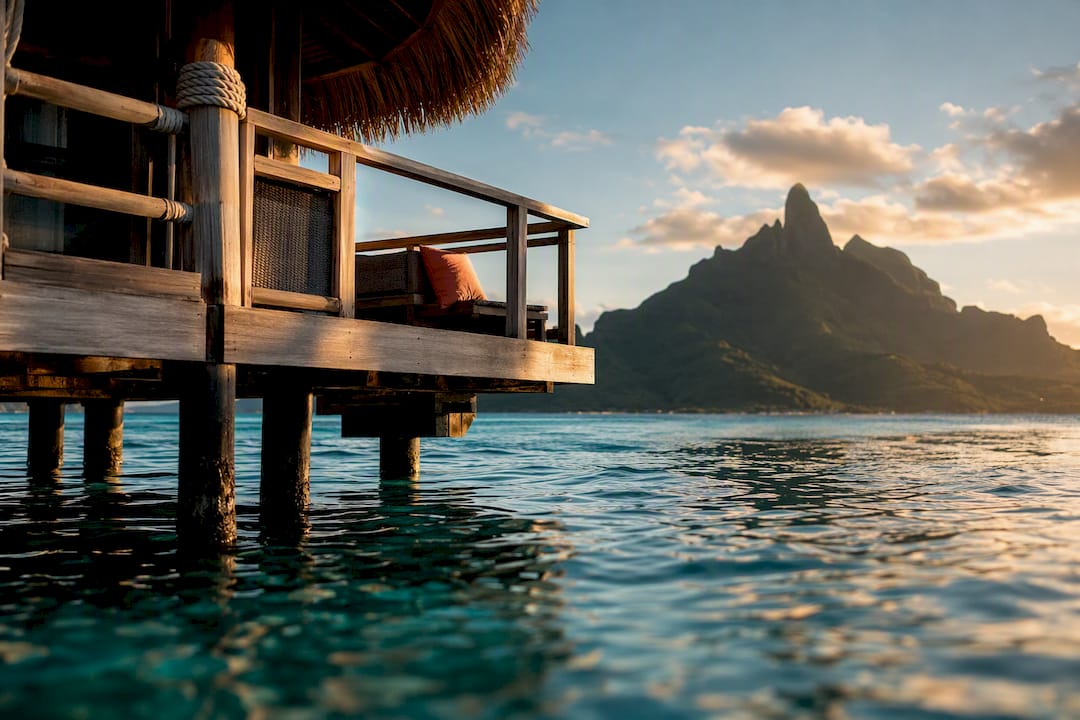
Book the overwater bungalow. For a milestone trip, a honeymoon, or any escape where the setting has to match the occasion, nothing else in the Pacific delivers the same private, glass-floor-and-lagoon payoff. Expect a wide range for nightly rates depending on island and season, varying from more affordable to very high-end prices. Plan around the dry season from May through October, and let an experienced travel designer handle the inter-island routing and room upgrades that make or break the trip.
TL;DR:
- Peak availability for top-tier overwater bungalows occurs six to twelve months in advance, especially during the busy dry season from May to October.
- Waterfront access varies: some units have direct lagoon swim-up entry, while others face marinas or shallower waters with less privacy, affecting water activities.
- Cost ranges from around $800 per night for entry-level options to over $2,500 for premium private-motu suites, with seasonality impacting prices and booking windows.
- Transfers, resort fees, taxes, and meal plans significantly influence the total trip cost, so verifying inclusions upfront prevents surprise expenses.
- The ideal trip length is five to seven nights to relax and explore without repetition, while shorter stays can feel rushed, and longer trips may diminish novelty.
Table of Contents
- What Makes a Tahiti Overwater Bungalow Worth the Splurge
- Bora Bora, Moorea, Taha’a, or Tahiti: Picking Your Island
- What a Tahiti Bungalow Actually Costs, and When to Go
- A Day in an Overwater Bungalow: What You’re Actually Paying For
- Booking Your Flights, Transfers, and Inter-Island Connections
- The Full Cost: Resort Fees, Taxes, and the Extras That Add Up
- Comparing Top Resorts by What They’re Actually Good At
- From First Inquiry to Check-In: How the Booking Timeline Works
- How Many Nights You Actually Need in an Overwater Bungalow
- How to Actually Choose Between Options
- What to Ask a Resort Before You Book
- Elite Travel’s Perspective: Where a Specialist Actually Earns Their Keep
- Let Elite Travel Plan Your Tahiti Escape
- Sources
- FAQ
What Makes a Tahiti Overwater Bungalow Worth the Splurge
The difference between a good overwater bungalow and a forgettable one comes down to five things: how close you actually are to open water, how much private outdoor space you get, what the bathroom looks like, whether you have a plunge pool, and how the resort itself fills your days.
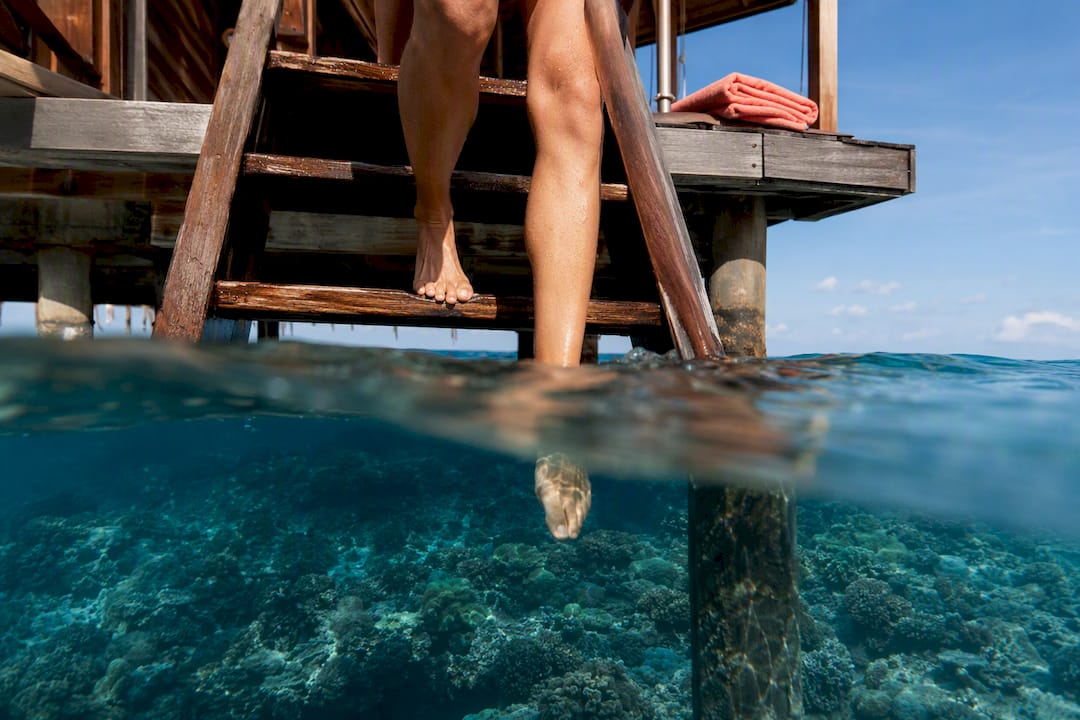
Start with access. Some bungalows sit on shallow lagoon flats with genuine swim-up access from your own steps. Others are technically “overwater” but face a marina or sit closer to shore, with murkier water and less privacy. Ask specifically whether your unit has direct, deep-enough lagoon access for swimming at any tide, not just a scenic view of it.
Size matters more than people expect. The InterContinental Tahiti Resort & Spa lists its overwater bungalows with approximately mid-sized indoor space plus a modest terrace, which is a useful benchmark for what “standard luxury” looks like on this island. Anything smaller starts to feel like a nice hotel room on stilts rather than a private retreat. Anything larger, especially with a wraparound deck, changes how you actually use the space, since you end up living outside as much as inside.
A few features consistently separate a good bungalow from an exceptional one:
- A glass floor panel in the living area or bedroom, so you can watch fish and rays without leaving your bed.
- A private plunge pool on the deck, which matters most for travelers who want to avoid the main pool entirely.
- An outdoor shower and freestanding bathtub with a lagoon view, common in higher-tier categories at properties like InterContinental Tahiti.
- A dedicated ladder or steps straight into the lagoon, rather than a shared dock.
- Deck furniture built for two, since most overwater bungalows are designed with couples in mind.
Romance-focused travelers should prioritize privacy and glass floors over square footage. Families need wider decks, sturdy ladders, and proximity to the main pool rather than an isolated end-of-pier unit. Active travelers who plan to snorkel constantly should weight water clarity and depth above almost everything else, since a beautiful bungalow over a shallow, sandy lagoon still limits what you can see.
Pro Tip: Ask the resort or your travel designer for the exact unit number and a recent photo of the view from that specific bungalow. Categories can look identical on paper, but sun exposure, distance from the restaurant, and lagoon depth vary a lot between two rooms in the same class.
Bora Bora, Moorea, Taha’a, or Tahiti: Picking Your Island
Island choice shapes the trip more than resort choice does, and it’s the decision most first-time visitors get wrong.
Bora Bora is the postcard: the volcanic peak, the turquoise lagoon, the bungalow you’ve seen in every ad. It’s also the most expensive island and the most heavily booked, so premium locations sell out early. If the photo is the point, this is the island.
Moorea sits a short flight or ferry from Tahiti and offers dramatic mountain scenery with a noticeably lower price tag than Bora Bora. It suits travelers who want the overwater experience without the extra transfer time or cost, and it works well for couples pairing a few beach days with hiking or a pineapple plantation tour.
Taha’a is the quiet luxury pick. Several properties here sit on private motus, and Tahiti Tourisme’s sample packages built around Le Taha’a by Pearl Resorts show how these itineraries typically bundle round-trip transfers with a private island stay. This is where you go to disappear.
Tahiti itself, home to the main international airport, functions mostly as a gateway. A night or two here on arrival or departure makes sense logistically, but it’s rarely the main event for an overwater-focused trip.
The real variable is transfer time. Bora Bora and Taha’a typically require a domestic flight from Tahiti followed by a boat transfer, adding half a day to arrival and departure. Moorea can be reached by a fast ferry in under an hour. If you’re combining islands, a French Polynesia itinerary built around minimizing backtracking saves real vacation time, especially on shorter trips.
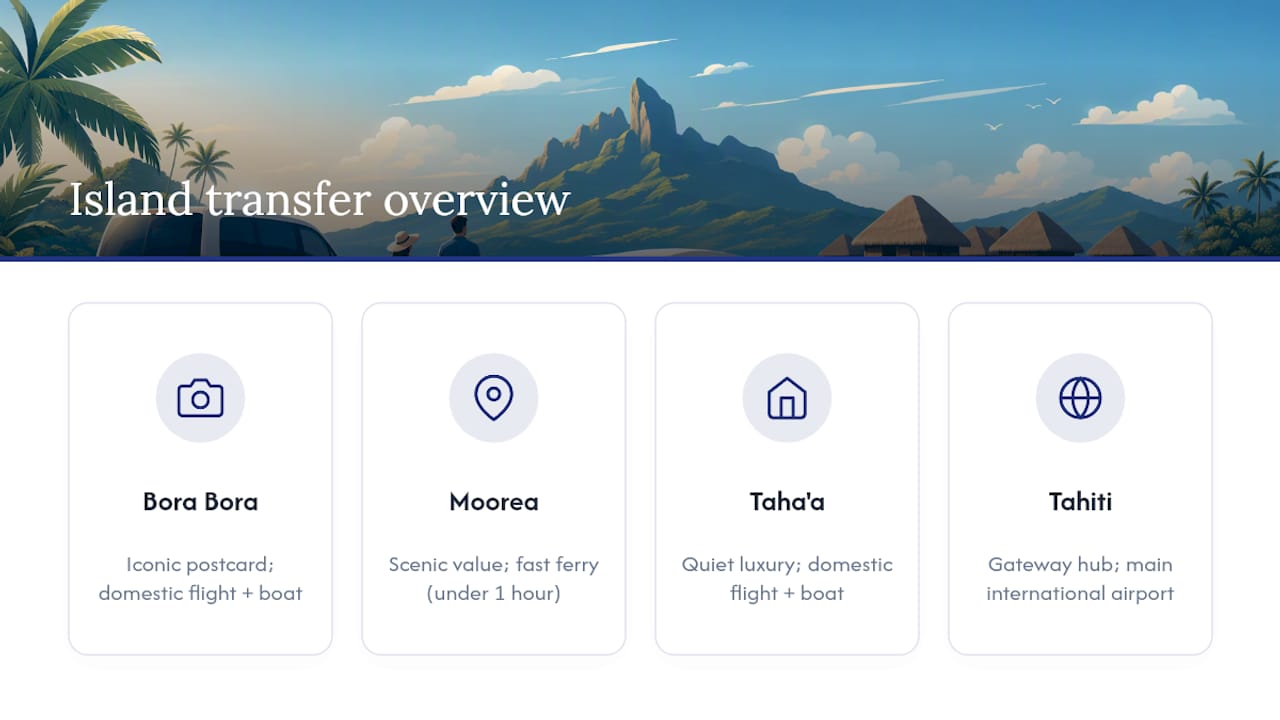
Match the island to what you actually want: Bora Bora for the iconic shot, Moorea for value and scenery, Taha’a for total seclusion.
What a Tahiti Bungalow Actually Costs, and When to Go
Budget in different tiers. Entry-level overwater bungalows start at an affordable luxury level, premium categories with added features cost more, and ultra-luxury units on private motus can reach very high nightly rates before taxes and transfers.
Package pricing from Tahiti Tourisme shows how much flights, transfers, and bundled inclusions swing the total cost. Two travelers looking at the “same” resort can pay very different amounts depending on whether airfare, seaplane or boat transfers, and meals are included in the quote.
Season drives both price and experience. The dry season, roughly May through October, brings lower humidity, calmer lagoon conditions, and better underwater visibility, which matters if snorkeling is part of the plan. It’s also when rates run highest and the best bungalow locations book out first.
A few numbers worth knowing before you commit:
- Some months in the heart of the dry season typically see peak demand with higher pricing and more limited availability on premium units.
- The wet season (November through April) offers lower rates and fewer crowds, with a higher chance of brief afternoon showers.
- Booking many months ahead is usually necessary to secure the best bungalow locations during peak season due to limited inventory.
Flexible-rate bookings cost more upfront but let you adjust dates or cancel without penalty, which matters given how far in advance premium rooms need to be locked in. Nonrefundable rates save money but lock you into a specific room and date the moment you pay.
A Day in an Overwater Bungalow: What You’re Actually Paying For
Mornings usually start the same way: coffee on the deck, then straight into the lagoon off your own steps before breakfast arrives. Many resorts offer canoe breakfast delivery, where staff paddle out and hand your meal through the window or onto the deck, a small touch that photographs well and feels genuinely special the first time.
The rest of the day tends to follow a loose rhythm rather than a schedule. Here’s what most travelers end up doing from an overwater base:
- Lagoon snorkeling right off the bungalow, often with rays and reef fish visible within minutes of getting in the water.
- A private boat excursion to a nearby motu or reef, usually bookable through the resort’s activities desk a day or two ahead.
- A spa treatment in an overwater treatment room, a signature offering at many properties including Sofitel Moorea.
- A pearl farm visit, common on Taha’a and Bora Bora, giving a look at how Tahitian black pearls are actually cultivated.
- Sunset drinks on the deck, which sounds obvious until you realize it’s the moment most couples say made the whole trip worth it.
Families should check ladder height and lagoon depth before booking, since not every unit is safe for young swimmers to access unsupervised. Resorts generally brief guests on marine-life etiquette, particularly around rays and reef fish, and most bungalow ladders are built for adult use rather than small children.
Booking Your Flights, Transfers, and Inter-Island Connections
Every Tahiti itinerary starts at Faa’a International Airport near Papeete, and how you route from there determines whether your trip starts smoothly or with a scramble.
From Papeete, onward connections run three ways: short domestic flights on Air Tahiti to Bora Bora or Raiatea (for Taha’a), a fast ferry to Moorea, or in some cases a seaplane transfer arranged directly by the resort. Domestic flights to the outer islands often connect to a boat transfer that the resort operates, so your travel day doesn’t end at the airstrip.
Before you lock in dates, confirm a few specifics with the resort or your travel designer:
- Whether the lagoon boat transfer is included in your room rate or booked separately.
- The exact meeting point at the domestic terminal, since some resorts meet guests at a specific counter rather than baggage claim.
- Baggage weight limits on domestic flights, which run stricter than international routes.
- Transfer timing windows, since late-arriving international flights can mean a last boat transfer of the day rather than the next morning.
Pack light for the inter-island legs. Air Tahiti’s domestic weight allowances are tighter than most international carriers, and oversized bags slow down the boat transfer process at the resort dock.
Pro Tip: Build a buffer day into arrival. Flying internationally into Papeete, connecting same-day to a domestic flight, and then taking a boat transfer to your bungalow is doable but leaves zero room for a delay. One overnight in Tahiti before continuing removes most of that risk.
The Full Cost: Resort Fees, Taxes, and the Extras That Add Up
The nightly rate you see quoted rarely reflects what you’ll actually pay. French Polynesia applies a tourism tax per person per night, typically a few dollars, collected locally rather than at booking. Most resorts also add a resort fee or service charge, often in the 10 to 15 percent range, covering amenities like Wi-Fi, water sports equipment, and daily housekeeping.
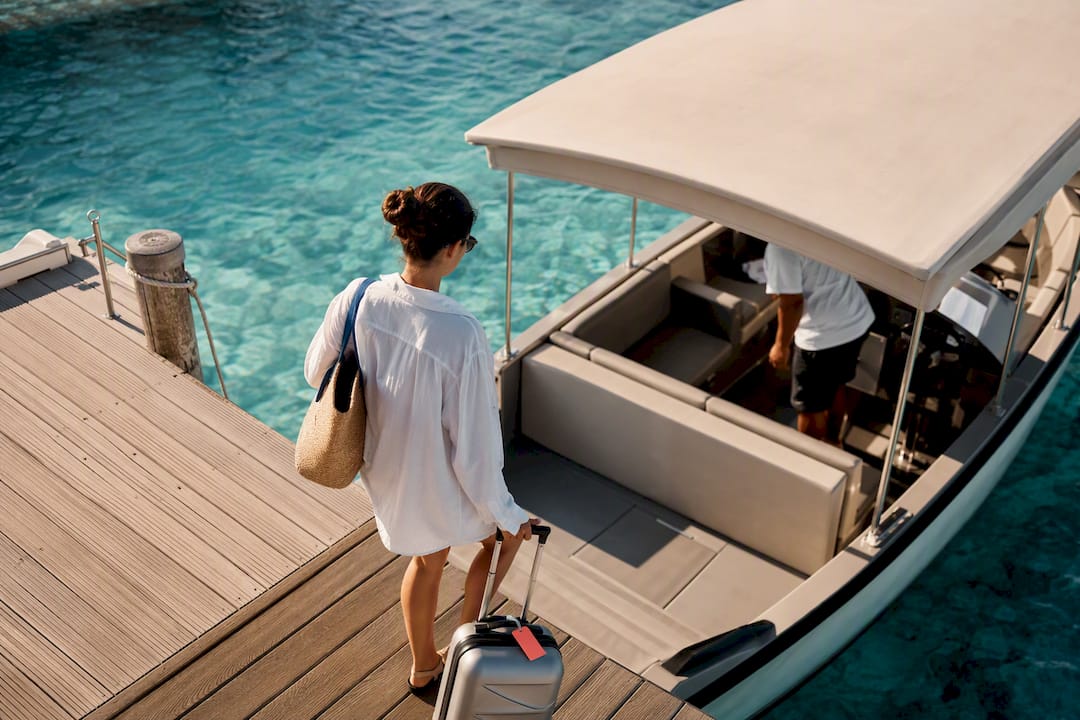
Transfers are the biggest hidden variable. Round-trip lagoon boat transfers from the airport or domestic terminal can run anywhere from complimentary (bundled into higher room categories) to several hundred dollars per person if booked separately. Seaplane transfers, where available, cost significantly more than boat transfers but cut travel time dramatically.
Meal plans deserve scrutiny too. Overwater resorts are often isolated from outside dining options, so a half-board or full-board plan can actually save money compared to paying à la carte for every meal, especially on remote islands like Taha’a. Spa treatments, private excursions, and pearl shopping sit entirely outside any package and can add a meaningful amount to a week-long stay.
Ask for an all-in quote before booking, one that itemizes the room rate, resort fee, tourism tax, and transfers as separate line items. A quote that bundles everything into one number makes it hard to compare properties honestly, and it’s the single most common source of sticker shock at checkout.
Comparing Top Resorts by What They’re Actually Good At
No single resort wins every category. A property built around private-motu seclusion will rarely have the family infrastructure of a larger Moorea resort, and the reverse is just as true. The right match depends on which column matters most to your trip, not which resort has the most five-star reviews.
From First Inquiry to Check-In: How the Booking Timeline Works
Most travelers underestimate how far in advance the best inventory disappears. Premium end-of-jetty bungalows and private-motu suites for peak season, May through October, are often booked six to twelve months out, based on how quickly those categories sell.
The realistic sequence looks like this: initial inquiry and itinerary design, a deposit (commonly 20 to 30 percent) to hold the reservation, final payment due somewhere between 45 and 90 days before arrival depending on the resort, and a room-preference request submitted roughly a month before check-in.
Cancellation policies vary sharply between flexible and nonrefundable rates. Flexible bookings typically allow free cancellation up to a set window, often 7 to 14 days before arrival, while nonrefundable rates lock in the discount but forfeit the full amount if plans change. Given how far ahead peak-season rooms need to be secured, that gap between rate types is worth real money, and it’s worth a real decision rather than defaulting to whichever price is lower.
Check-in at most overwater resorts runs early afternoon, generally 2:00 PM to 3:00 PM, with checkout by 11:00 AM or noon. If your flight schedule creates a long gap either direction, ask about early check-in or late checkout when you book. It’s often granted for free when the room is available, and it’s rarely offered automatically.
Confirm the exact room number and transfer pickup point 48 to 72 hours before arrival. Resorts reassign specific units close to arrival based on occupancy, so locking in details early doesn’t guarantee the same room stays yours until you reconfirm.
How Many Nights You Actually Need in an Overwater Bungalow
Three nights is the practical minimum, and it works because it gives you one arrival day, one full day, and one morning before departure without feeling rushed.
Five to seven nights is where the trip actually pays off. That’s long enough to settle into the rhythm of the place, book a spa treatment or private excursion without cramming it into day one, and add a second island if you’re combining, say, Moorea with Bora Bora. Most honeymoon and destination-wedding itineraries land in this range for a reason.
Beyond seven or eight nights on a single island, returns start to diminish for most travelers, since the day-to-day activities repeat and the novelty of the bungalow itself settles into background comfort rather than daily excitement. If you want a longer trip, splitting time across two islands, three or four nights each, tends to hold interest better than a single ten-night stay in one place.
How to Actually Choose Between Options
Start by ranking your three priorities: romance, privacy, or activity level. Nearly every other decision, island, bungalow category, resort size, follows from that ranking rather than the other way around.
If romance tops the list, prioritize glass floors, private decks, and sunset-facing units over square footage or amenity count. If privacy is the priority, look specifically at private-motu properties on Taha’a rather than assuming a higher price tag on Bora Bora automatically buys seclusion, since some of the most photographed resorts are also the busiest. If snorkeling and water activity drive the trip, weight lagoon depth and clarity above almost every other feature, since a stunning bungalow over a shallow, murky lagoon still limits what you’ll actually see in the water.
Budget second, not first. It’s tempting to filter by price before anything else, but travelers who lead with budget often end up in the wrong location entirely, saving on the room rate while overspending on transfers and excursions to compensate for choosing a less convenient island.
Read recent guest photos of the specific room category, not just the resort’s marketing shots. Categories described identically on a booking page can look meaningfully different in person, particularly around sun exposure and distance from shared facilities.
What to Ask a Resort Before You Book
A short list of direct questions before you commit prevents most of the surprises that show up on arrival.
- Is the lagoon boat or seaplane transfer included in the room rate, or billed separately per person?
- What is the exact deck and indoor square footage for this specific room category, not the resort average?
- Can you confirm or request a specific room number, and is that request guaranteed or only preferred?
- What is the cancellation policy for this rate type, and what is the exact deadline?
- Are meals included, and if not, what does a realistic daily food budget look like on this island?
- What is the resort fee or service charge, and what does it actually cover?
Asking these questions in writing, and getting written answers back, gives you something to reference if the room or inclusions don’t match what was described at booking.
Elite Travel’s Perspective: Where a Specialist Actually Earns Their Keep
The value of a Tahiti overwater trip isn’t really about which resort you pick. It’s about whether every connection between flights, transfers, and room requests holds together without you having to manage it from three time zones away.
Elite Travel handles the parts that go wrong most often: confirming transfer pickup points, submitting preferred-room requests before the deadline that actually matters, and building in the buffer days that prevent one delayed flight from unraveling a honeymoon. The value isn’t in finding you a resort you couldn’t find yourself. It’s in knowing which room category is worth the upgrade, which transfer window is too tight, and who to call at 11:00 PM if a domestic flight gets rebooked. Our French Polynesia specialists handle exactly this kind of coordination for a living.
— tammylevent@gmail.com
Let Elite Travel Plan Your Tahiti Escape
Elite Travel designs the entire Tahiti itinerary around you, not the other way around: bungalow selection by island and priority, inter-island transfer coordination, VIP room requests submitted at the right moment, and honeymoon or destination-wedding touches built in from the start. Unlike booking direct and hoping the resort’s reservations team remembers your preferences, you get one point of contact who tracks every transfer, deadline, and upgrade opportunity from inquiry to check-out.

After you reach out, expect a short planning call to define priorities (romance, privacy, activity level), a proposed itinerary within days, and a deposit to lock in your dates once you approve it. We’ll flag flexible versus nonrefundable rate tradeoffs specific to your travel window and handle every transfer and room request directly with the resort. If a wedding or honeymoon is part of the trip, our destination wedding planning guide walks through how those logistics layer onto an island itinerary. Start by exploring French Polynesia vacation packages or reach out directly to begin building your itinerary.
Sources
- Overwater Bungalow Ocean View – InterContinental Tahiti Resort & Spa
- Taha’a Overwater Bliss, featuring Le Taha’a by Pearl Resorts – Tahiti Tourisme
- Vacation Packages – Tahiti Tourisme
FAQ
What Do Overwater Bungalows in Tahiti Typically Cost?
Nightly rates generally run from about $800 for entry-luxury categories to very high-end prices for ultra-luxury or private-motu suites, with premium mid-tier bungalows landing around $1,200 to $2,500 before taxes and transfers.
Is Tahiti Cheaper Than Bora Bora?
Tahiti itself is less expensive since it functions mainly as a gateway island, while Bora Bora carries the highest overwater bungalow rates in French Polynesia due to demand and its iconic status; Moorea and Taha’a generally sit below Bora Bora in price.
What Should Travelers Be Careful of in Tahiti?
Watch transfer timing closely, since a delayed international flight can mean missing the last boat or domestic connection of the day, and always confirm whether resort fees and taxes are included in a quoted rate before booking.
What Is the Best Month to Visit Tahiti?
The dry season, roughly May through October, offers the most reliable weather and best lagoon visibility for snorkeling, though July and August bring peak pricing and the tightest availability on premium bungalows.
