



Budget a base weekly rate of roughly $2,600 for a bareboat sailboat up to well over $200,000 for a large crewed motor yacht, then add another 40 to 63 percent for advance provisioning, VAT, and gratuity. That all-in multiplier, not the headline number that a broker quotes first, is what actually determines your final bill. Yacht size, season, and how many guests you’re feeding and fueling for a week drive most of the swing.
TL;DR:
- The final yacht charter cost can increase by 40 to 63 percent over the base rate due to provisioning, VAT, and gratuity, with vessel size and season strongly influencing expenses.
- For larger yachts, costs escalate from around €30,000 to over €1 million weekly, with peak season and popular routes significantly raising overall expenses.
- Additional costs such as provisioning (typically 20 to 40 percent of the base), mooring fees, and crew gratuities (10 to 15 percent) are common expenses that can drastically raise the total budget.
- Booking well in advance, especially for crewed yachts during peak months, helps secure availability and better prices, with multi-week or shoulder season bookings offering discounts.
- Engaging a luxury travel advisor before signing contracts can ensure accurate budgeting, VAT routing insights, and access to negotiated rates and on-the-ground support.
Table of Contents
- How Much Does a Greece Yacht Charter Cost by Type and Size?
- What Fees Get Added to the Base Charter Rate?
- When Is Yacht Charter Season in Greece, and How Much Does Timing Matter?
- What Does a Realistic Week Actually Cost, All In?
- Bareboat, Skippered, or Crewed: Which Fits Your Trip?
- When Should You Bring In a Luxury Travel Advisor?
- How Long Does It Take to Book a Yacht Charter?
- How Do Cancellation Policies Affect Your Total Cost?
- Do Water Toys and Onboard Extras Add to the Bill?
- An Editorial Take on Greece Charter Budgeting
- Let Elitetravelgroup Build Your Greece Charter Budget
- Sources
- FAQ
How Much Does a Greece Yacht Charter Cost by Type and Size?
Base weekly rates in Greece split into three broad tiers, and within each tier, size matters more than almost anything else. A 24 to 30 meter crewed motor yacht runs a very different budget than a 55 meter, even in the same week of July.
Bareboat and skippered sailing yachts sit at the accessible end. The Moorings list 2026 starting prices for a standard 7 day charter at roughly $2,634 for bareboat and power options, climbing toward $3,059 once you add a professional skipper. Crewed charters start much higher, with The Moorings quoting figures from about $27,749 for a fully staffed week.
Once you move into the dedicated crewed yacht market, the bands widen considerably by length:
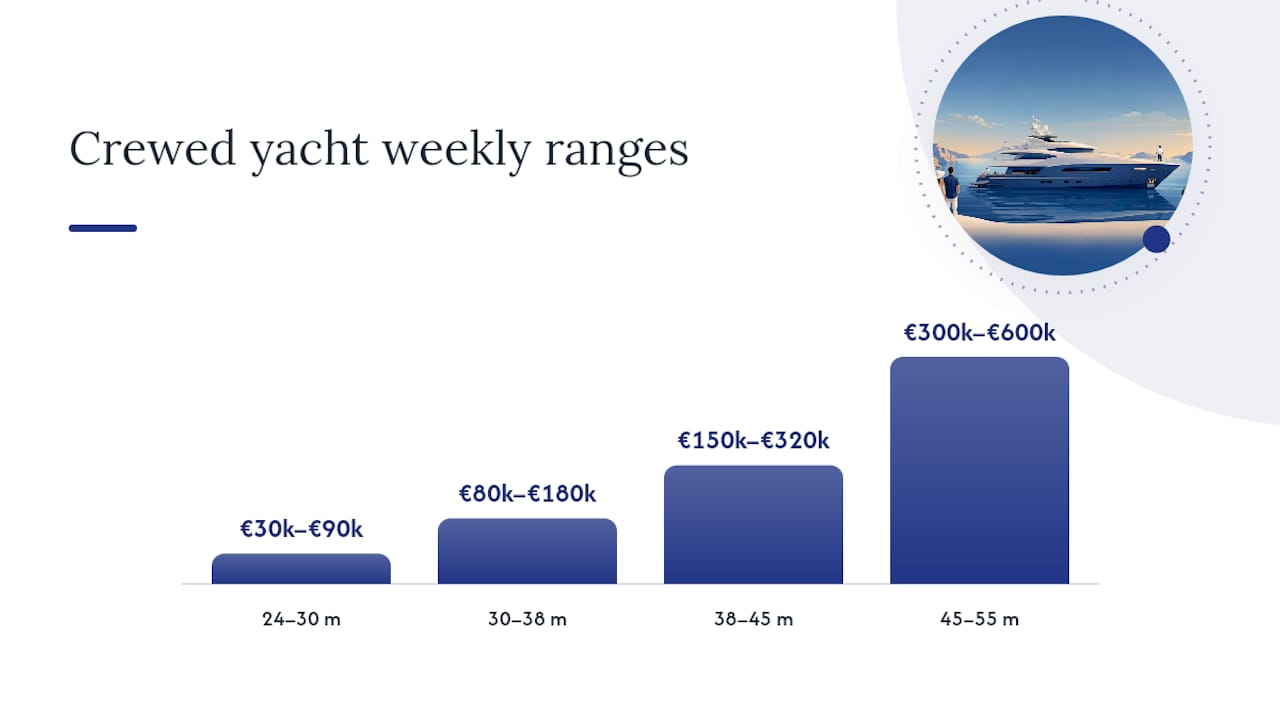
- 24 to 30 meters: Roughly €30,000 to €90,000 per week for a well maintained crewed motor yacht or sailing catamaran, depending on age and refit history.
- 30 to 38 meters: Approximately €80,000 to €180,000 per week, a range where interior finish and crew size start pulling prices apart within the same size class.
- 38 to 45 meters: Around €150,000 to €320,000, often including a larger tender, water toy inventory, and a bigger crew complement.
- 45 to 55 meters: Commonly €300,000 to €600,000, the tier where owner-specification yachts and true superyacht amenities become standard.
- 55 meters and above: Rates can exceed €1,000,000 per week at the very top of the market, according to GetBoat’s 2026 pricing guide, which puts the full headline spread at roughly €32,000 to €1,100,000 depending on vessel size and season.
Bareboat and crewed catamarans occupy a middle lane worth calling out separately. George Yachts’ working figures for 2026 put bareboat catamarans at roughly €8,000 to €18,000 per week, while crewed catamarans of similar size run €18,000 to €42,000.
Region changes the math too. Cyclades charters, with their longer open-water hops between Mykonos, Paros, and Santorini, tend to sit at the higher end of a given size band because of fuel burn and marina demand. Ionian itineraries, with shorter, more sheltered routes, often land 10 to 15 percent lower for a comparable yacht. Expect 20 to 30 percent variance even within the same length band, driven by how recently a yacht was refit, current demand for that particular week, and how aggressively the owner prices for repeat charter business.
What Fees Get Added to the Base Charter Rate?
The headline weekly rate is only the starting point. Four categories of add on cost, advance provisioning, VAT, gratuity, and running expenses, stack on top of it, and together they explain most of the gap between what a broker first quotes and what actually gets charged to your card.
Advance Provisioning Allowance (APA) covers fuel, food, drinks, marina fees, and other consumables incurred during the charter. It is paid separately from the base fee, held in a client account, and reconciled at the end of the week with receipts. GetBoat’s guide estimates APA at 28 to 35 percent of base for motor yachts over 30 meters, while George Yachts’ pricing index puts the broader range at 20 to 40 percent depending on itinerary and fuel intensity. A commonly used planning band across the market is 25 to 35 percent.
VAT is where a lot of first-time charterers get surprised. Greece applies VAT to charter fees, but for yachts over 24 meters, routing rules can dramatically change the effective rate. Shorter yachts and domestic-only itineraries don’t qualify for that stacking and pay closer to the standard rate.
A quick gut check on total add-ons: Combine a mid-range APA of 30 percent with VAT and 10 to 15 percent gratuity, and you land squarely inside the 40 to 63 percent uplift that George Yachts recommends budgeting above the base rate.
Beyond APA and tax, plan for:
- Crew gratuity: Typically 10 to 15 percent of the base charter fee, paid in cash at the end of the week.
- Provisioning per person: $50 to $75 per person per day if you’re managing food and drink separately from a bundled APA.
- Mooring fees: Roughly €5 to €65 per night in smaller island harbors, rising to €25 to €65 or more in popular marinas like Mykonos in peak season.
- Fuel intensity: Longer Cyclades passages burn noticeably more than sheltered Ionian hops, which feeds directly into your APA reconciliation.
When Is Yacht Charter Season in Greece, and How Much Does Timing Matter?
Peak season runs roughly mid-June through early September, with the last two weeks of August representing the single most expensive stretch of the calendar. Shoulder season, covering May, early June, late September, and October, delivers meaningfully softer pricing without a dramatic drop in weather quality for most Cyclades and Ionian routes.
Expect peak weeks to carry a 15 to 30 percent premium over shoulder rates on the same yacht, driven mostly by marina scarcity and crew demand rather than the base charter fee alone. George Yachts’ pricing index notes that well-timed shoulder season bookings often deliver much better value than peak weeks, a point worth weighing heavily if your travel dates have any flexibility.
- Cyclades routing (Mykonos, Paros, Santorini) tends to push fuel and APA costs higher than a comparable Ionian week.
- Multi-week bookings frequently unlock 10 to 15 percent discounts off the standard weekly rate.
- Last-minute availability, particularly in shoulder months, can produce meaningful savings on yachts that would otherwise sit empty.
What Does a Realistic Week Actually Cost, All In?
Here’s how the math plays out across five common trip profiles, using a 30 percent APA, 15 percent gratuity, and a conservative VAT estimate for each scenario.
Bareboat sailing yacht, Ionian, shoulder season, 4 guests. Base fee $2,900. Add a skipper at roughly $380 per night for a 7 night charter ($2,660), provisioning at $60 per person per day ($1,680), and modest mooring fees (~€200). All in: approximately $7,600.
Skippered monohull, Cyclades, shoulder season, 6 guests. Base fee $6,500. Skipper included, provisioning at $65 per person per day for 6 guests ($2,730), mooring fees in busier harbors (~€400), plus a modest VAT component. All in: roughly $10,500.
Crewed catamaran, Ionian, peak season, 8 guests. Base fee €22,000. APA at 30 percent (€6,600), gratuity at 12 percent (€2,640), transfers for 8 guests (~€600). All in: approximately €31,800.
Crewed motor yacht, 38 meters, Cyclades, peak season, 10 guests. Base fee €200,000. APA at 30 percent (€60,000), gratuity at 12 percent (€24,000), mooring in premium marinas (~€3,000), transfers and provisioning extras (~€2,000). All in: roughly €289,000.
Large crewed superyacht, 55 meters, mixed itinerary, peak season, 12 guests. Base fee €700,000. APA at 25 percent given VAT-optimized routing over 24 meters (€175,000), gratuity at 10 percent (€70,000), premium mooring and event provisioning (~€8,000). All in: approximately €953,000.
Adjust these by swapping your actual guest count, base fee, and season into the same framework: base, plus APA, plus gratuity, plus mooring and transfers, equals your realistic all-in number.
Bareboat, Skippered, or Crewed: Which Fits Your Trip?
The headline fee gap between bareboat and crewed charters looks enormous on paper, but it narrows once you count what a crewed charter actually includes. A crewed booking bundles APA-covered provisioning, a chef, deck crew, security deposit handling, and berthing logistics that a bareboat charterer has to arrange personally.
- Bareboat suits confident sailors who want full control over the itinerary and don’t mind managing provisioning, fueling, and mooring arrangements themselves.
- Skippered bareboat adds a professional skipper for around $380 per night on top of the base rate, removing navigation and docking stress while keeping costs well below a fully crewed charter.
- Crewed charter suits travelers who want a chef, stocked bar, water toys ready to go, and zero operational responsibility, with APA absorbing most of the day-to-day spending.
George Yachts notes that once provisioning, fuel, and an optional skipper are factored into a bareboat budget, the experience gap with a crewed charter often justifies the premium for travelers who value a relaxed, hands-off week.
Pro Tip: If you’re torn between skippered bareboat and full crew, ask what the base rate excludes before comparing numbers. A skippered quote that looks cheaper can still leave you managing provisioning runs and fuel top-offs a crewed charter would have handled invisibly.
When Should You Bring In a Luxury Travel Advisor?
The right time to loop in an advisor is before you sign a charter agreement, not after. A concierge with real charter experience vets the contract terms, flags whether VAT routing genuinely qualifies for reduced rates, and negotiates pricing that a solo inquiry often can’t reach. A luxury travel advisor with extensive experience builds relationships with on-the-ground partners across Europe, supporting bookings with price match guarantees and 24/7 assistance if issues arise mid-charter. That combination matters most exactly when APA reconciliation or an unexpected mooring change threatens to blow past your budget.
How Long Does It Take to Book a Yacht Charter?
Plan for six to twelve weeks between your first inquiry and departure for a standard bareboat or skippered charter, and three to six months for a crewed yacht in peak season. The timeline compresses or stretches based almost entirely on yacht availability, not paperwork.
Popular crewed yachts in the 30 to 45-meter range often get booked out for July and August well before spring arrives, which pushes serious planners toward locking dates the previous fall or winter. Bareboat and skippered sailing yachts have more inventory and can sometimes be arranged with just a few weeks’ notice, particularly in shoulder season.
Once a yacht is selected, expect roughly one to two weeks to finalize the charter agreement, pay the deposit (typically 50 percent), and confirm the itinerary with the captain or broker. The remaining balance, along with the APA, is usually due 30 to 60 days before embarkation. Final provisioning preferences, guest lists for immigration purposes, and any special requests, dietary needs, celebration setups, water toy additions, get locked in during the final two to four weeks before departure.
Booking further ahead doesn’t just protect availability. It also gives you more negotiating room on pricing and a better shot at securing a specific yacht rather than settling for whatever remains on the market.
How Do Cancellation Policies Affect Your Total Cost?
Most Greek charter agreements follow a tiered cancellation structure tied to how close you cancel to departure. Deposits, typically 50 percent of the base fee, are often non-refundable once paid, and cancellations inside 60 to 90 days of departure can forfeit the full charter fee depending on the operator’s terms.
This makes charter insurance worth serious consideration, not an afterthought. A policy covering trip interruption and cancellation can offset a five or six figure loss if illness, a family emergency, or a logistics failure forces you to pull out close to departure. Some brokers and yacht owners also offer limited flexibility, allowing a date change rather than a full cancellation, but that flexibility is rarely guaranteed and depends heavily on the yacht’s other bookings that season.
Read the cancellation clause before signing, specifically the exact day thresholds and what percentage is forfeited at each stage. Charters booked during peak season windows tend to carry stricter terms because operators have less room to rebook a canceled week. If your APA has already been paid and the charter is canceled early enough, that portion is generally refundable since it hasn’t been spent, but confirm the specific reconciliation process with your broker rather than assuming standard practice applies universally.
Do Water Toys and Onboard Extras Add to the Bill?
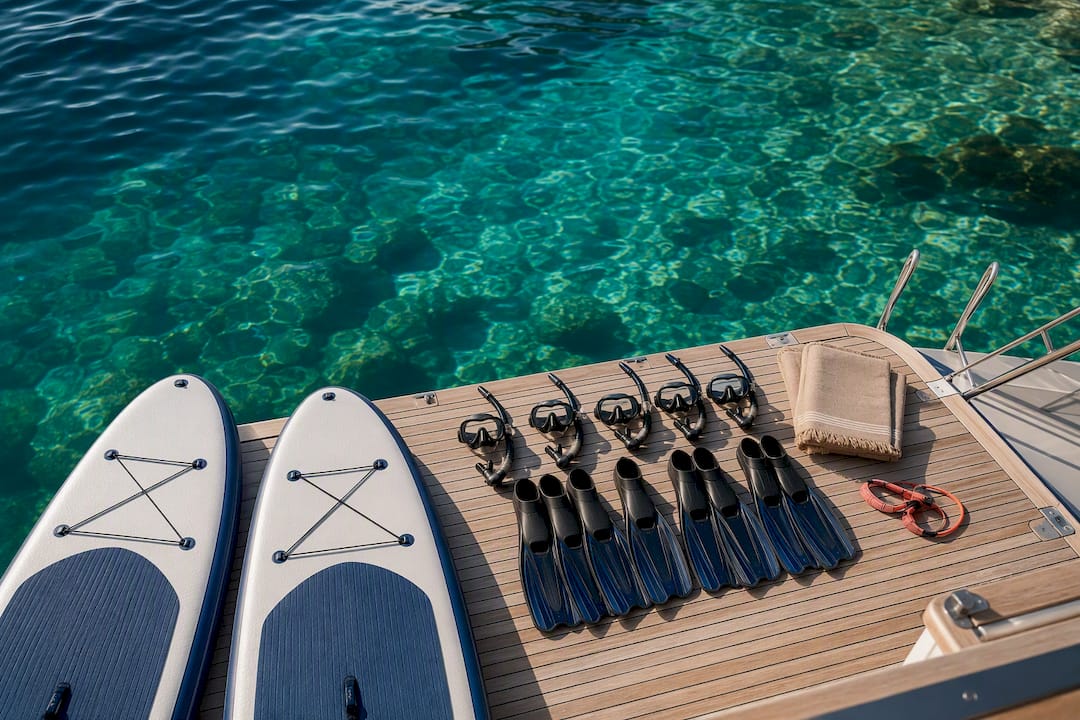
Most crewed yachts include a base package of water toys, paddleboards, snorkel gear, and a tender, at no extra charge, but anything beyond that baseline typically costs more. Seabobs, jet skis, and diving equipment with a certified instructor are often available as optional add-ons, either included on larger yachts as a marketing differentiator or charged separately on smaller vessels.
Diving trips with tanks, weights, and a dive master can run several hundred dollars per excursion if not already part of the yacht’s standard inventory. Special onboard events, a birthday dinner with decor, a proposal setup, a private beach barbecue arranged through local partners, generally get quoted separately and paid through the APA rather than the base charter fee. These costs vary widely enough by yacht and request that getting a specific quote before departure, rather than assuming inclusion, avoids an unpleasant surprise during APA reconciliation.
Larger yachts in the 45 meter and above range increasingly compete on toy inventory, sometimes including a seabob or inflatable water park as standard. If particular toys or experiences matter to your trip, ask about them during initial yacht selection rather than after the contract is signed, since availability and inclusion vary yacht to yacht even within the same size band.
An Editorial Take on Greece Charter Budgeting
Expect roughly 1.4 to 1.6 times the base fee for a crewed charter once APA, VAT, and gratuity land. Bareboat looks cheaper on paper, but it trades cost for hours spent on provisioning and docking. The single mistake I see repeatedly: travelers budget against the base rate alone and never build in APA or VAT until the final invoice arrives.
— tammylevent@gmail.com
Let Elitetravelgroup Build Your Greece Charter Budget
Getting an accurate all-in number, not just a headline base rate, is exactly the kind of work a concierge advisor earns their keep on. Experienced travel advisors vet charter contracts, confirm VAT routing qualifications, and negotiate pricing that may be difficult to obtain through solo inquiries, leveraging long-standing on-the-ground partnerships in Europe.

That expertise extends past the yacht itself. If your Greece trip includes island stays before or after the charter, transfers, or a milestone celebration onboard, Elitetravelgroup builds the full luxury Greece itinerary around your charter dates rather than treating the boat as a separate booking. Every quote comes with a price match guarantee and 24/7 support, so a mid-charter question doesn’t wait for office hours.
Ready to see real numbers for your dates and party size? Start a conversation through Elitetravelgroup’s Europe vacation planning page and request a bespoke charter quote built around your actual guest count and season.
Sources
- Private Yacht Charter Greece 2026: Pricing & Itinerary Guide | GetBoat Blog
- Guide to Yacht Charter Costs in Greece | The Moorings
- Crewed vs Bareboat Charter in Greece | George Yachts
FAQ
How much is a 3 day charter on a yacht in Greece?
A 3 day charter typically runs 45 to 60 percent of the equivalent 7 day rate, since operators price short charters at a premium per day to offset lost booking flexibility. For a bareboat sailing yacht, expect roughly half the weekly base rate before APA and gratuity.
What is the 12 person rule on a yacht?
Greek and broader EU maritime regulations generally cap commercial charter yachts under a specific certification at 12 paying guests, a limit tied to passenger vessel safety rules rather than yacht size. Larger groups typically require a yacht certified for more passengers, which usually means a bigger vessel or a different licensing category.
Which country is the cheapest to charter a yacht?
Pricing varies by destination’s demand, marina density, and tax structure, and Greece’s shoulder season rates are frequently more competitive than peak Mediterranean pricing elsewhere in the region. Rather than country shopping alone, timing your Greece charter for May, early June, or late September often delivers better value than chasing a cheaper destination in peak summer.
Do the below deck guests pay?
Guests aboard a crewed charter pay the base charter fee plus APA and gratuity, covering the crew’s service, provisioning, and running costs for the week. There’s no separate “guest fee” beyond these standard charter costs, though optional extras like special onboard events or additional water toys are billed separately through the APA.
Does the quoted charter price include VAT?
Not always. Many brokers quote the base fee before VAT, so always confirm whether tax is included or added separately, since Greek VAT treatment for yachts over 24 meters can shift the effective rate significantly depending on routing and certification.
