



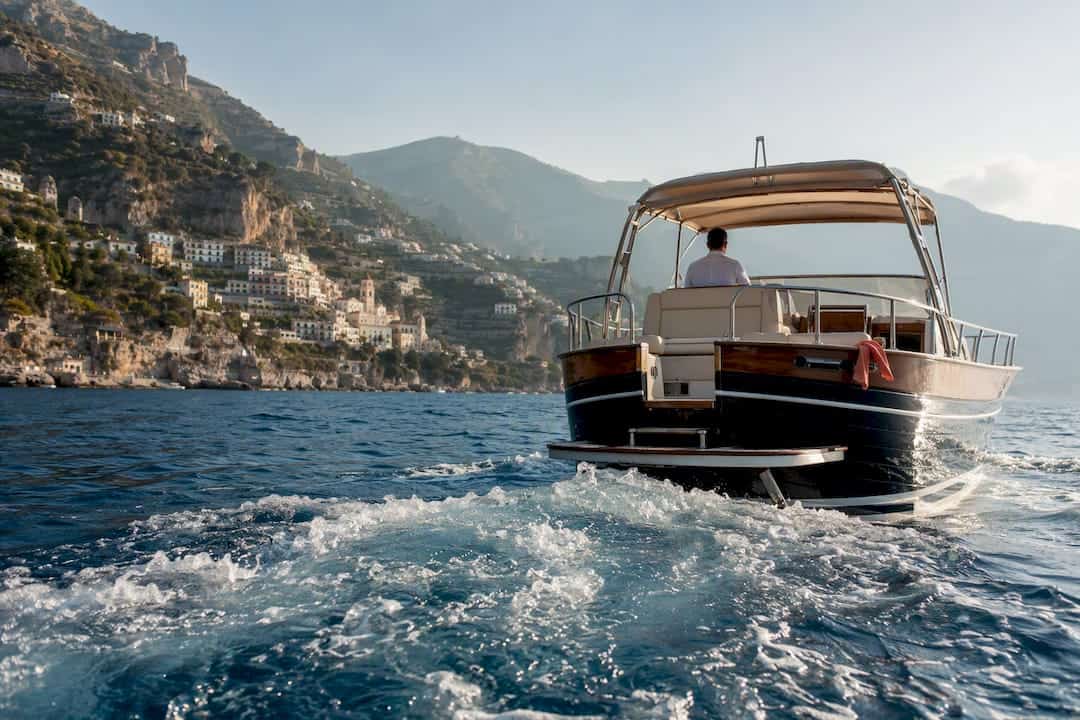
The best months to visit the Amalfi Coast are May, early June, and September. All three combine warm, swim-ready water with fully open hotels and restaurants, and none of them come close to the crush of July and August. September edges out the rest for sea temperature; May wins on scenery and calm. Elite Travel plans most client trips around these exact windows for a reason.
TL;DR:
- Visiting in September offers the warmest sea temperatures and lower crowds, with hotel prices starting to decline after Labor Day.
- May provides the best scenery and calm waters, with hotels and restaurants fully open and wildflowers in bloom, making it ideal for a balanced trip.
- June sees an increase in crowds and hotel rates after mid-month, as family travelers arrive and boat trips to Capri become more difficult to book in advance.
- July and August are peak months for crowds, heat, and prices, with heavy traffic on the coastal road and ferries selling out well ahead of departure.
- Shoulder seasons like late September and May are preferred for avoiding congestion, ensuring better access to private boats, beach clubs, and a more luxurious experience.
Table of Contents
- What is the best time to visit the Amalfi Coast?
- Amalfi Coast weather and crowds, month by month
- How do the seasons compare for weather, crowds, and cost?
- How many days should you spend on the Amalfi Coast?
- Where should you stay, and how do you get around once you’re there?
- How does a luxury travel planner time an Amalfi Coast trip?
- Why shoulder season beats the conventional summer advice
- Let Elite Travel Handle the Timing for You
- Where to check current weather and ferry schedules
- Sources
What is the best time to visit the Amalfi Coast?
Pick your month by what you actually want from the trip:
- May — the strongest all-around choice. Mild days, wildflowers still blooming on the cliffs, and hotels and restaurants back in full swing after winter.
- Early June — nearly identical to May but warmer, with crowds starting to build after the 15th as European school schedules shift.
- September — the warmest sea temperatures of the year hit in late summer and carry into this month, while visitor numbers drop noticeably after Labor Day.
- July–August — peak beach season. Hottest weather, heaviest crowds, and the highest prices of the year. Book six months out if you’re set on these months.
- November through March — the cheapest stretch, with plenty of closures and the wettest weather of the year.
Amalfi Coast weather and crowds, month by month
April brings mild afternoons and wildflowers along the cliff paths, though Easter week can pack the towns with domestic visitors. It’s a solid pick for travelers on a tighter budget who don’t mind a jacket some evenings.
May is where the Amalfi Coast hits its stride. Daytime highs run in the low 70s to mid 70s°F, and the sea warms into the upper 60s, cool but swimmable for anyone not chasing bathtub temperatures. Every restaurant terrace is open, the lemon groves are green, and you can still get a table at Il San Pietro without booking a year ahead.
June starts as an extension of May, then changes character fast. Before mid-month, expect the same easy pace. After the 15th, family travelers begin arriving en masse, hotel rates climb, and boat trips to Capri need booking days rather than hours in advance.
July turns hot and loud. This is when the beach and pool season truly peaks, with the region’s tourism scores topping out for swimming and lounging. It’s also when the coastal road becomes a genuine problem: the SS163 backs up for miles on summer weekends, and ferries between Positano, Amalfi, and Sorrento sell out well ahead of departure.
August is the busiest, warmest, and most expensive month of the year, driven largely by Italy’s own domestic vacation calendar. Ferragosto (mid-August) shuts down entire towns for local festivals, and traffic restrictions sometimes close stretches of road to non-resident vehicles. If you’re traveling in August, plan every transfer by private boat rather than car.
September might be the single best-kept secret on this coastline. Sea temperatures stay near their yearly high, the light softens, and by mid-month the crowds thin out considerably. Hotel rates start easing even as the weather holds. This is the month most experienced Amalfi Coast travelers quietly prefer over May.
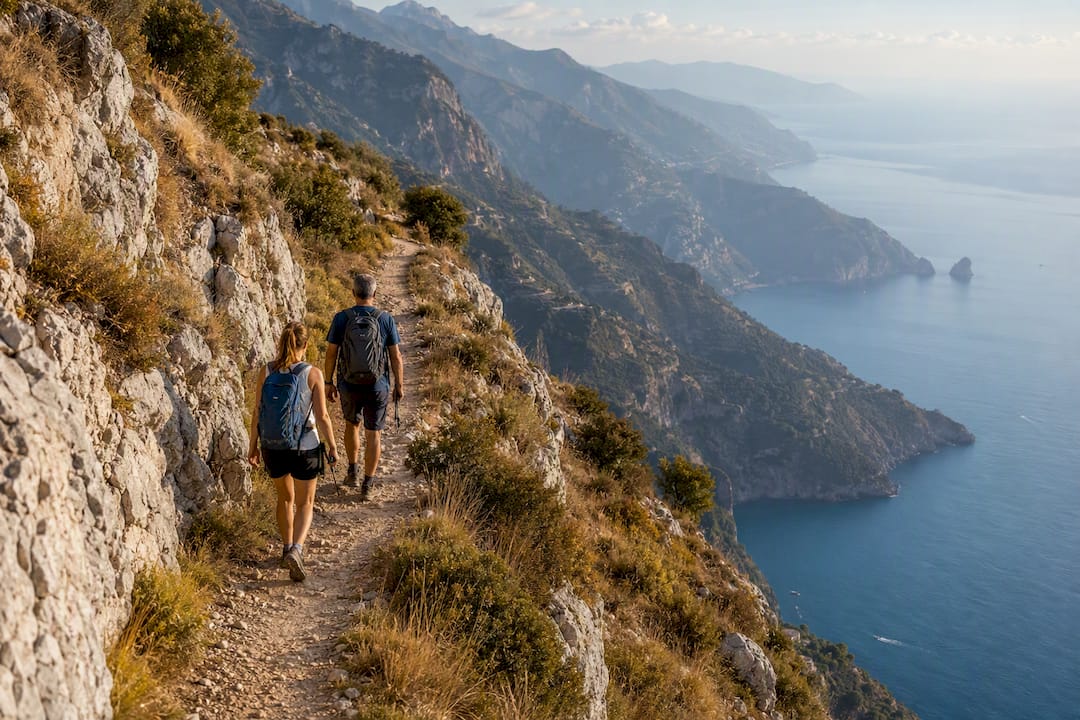
October rewards hikers and photographers with cooler, clearer days and thinner crowds on trails like the Path of the Gods. Ferry schedules start to contract in the back half of the month, so anyone relying on public hydrofoils rather than private transfer should check timetables before locking in an itinerary.
November through March is the true off-season. Rain increases sharply starting in November, and many restaurants, boutique hotels, and boat operators close entirely for the winter, reopening around Easter.
How do the seasons compare for weather, crowds, and cost?
Breaking the year into four seasons makes the trade-offs obvious:
- Spring (April–May): Best hiking conditions, thinner crowds, and services ramping back up after winter.
- Summer (June–August): The most reliable beach weather of the year, but also peak prices, packed towns, and real risk of road delays on the SS163.
- Autumn (September–October): Warm sea, easing crowds after Labor Day, and a harvest-season energy in the restaurants. Ferries generally still run a full schedule through early autumn.
- Winter (November–March): The cheapest season by far, but with limited transport and widespread closures.
November stands out as the wettest month of the year, with roughly six inches of rain on average, more than double what most spring or early autumn months see. That single statistic explains most of the winter closures: businesses that depend on outdoor seating and boat traffic simply can’t operate through it profitably.
The transport picture shifts just as sharply. Ferries run their fullest schedule from May through September, then thin out fast. Road traffic follows the opposite pattern, worst exactly when ferries are busiest. A private boat sidesteps both problems at once.
How many days should you spend on the Amalfi Coast?
Plan on a minimum of four to five days to see the coast properly without racing between towns.
- Day 1–2: Base in Positano. Walk the town, swim at Spiaggia Grande, and settle into the pace.
- Day 3: Take a private or ferry day trip to Capri, one of the best half-day excursions on this stretch of coast.
- Day 4: Move to Amalfi town itself, then up to Ravello for the gardens and the view from Villa Cimbrone.
- Day 5 (if staying longer): A relaxed final day, either a boat ride past the Grotta dello Smeraldo or simply more beach time.
Travelers who prefer a slower, luxury pace typically stretch this to seven days, adding a full private-boat day, a leisurely inland excursion to Pompeii or Paestum, and more unstructured dining time. Whichever length you choose, book accommodations and private boats first if traveling in peak months. If you’re relying on public ferries instead, reserve those early too, since summer routes fill fast.
Where should you stay, and how do you get around once you’re there?
Positano delivers the glamour and the best direct beach access, at the cost of steep stairs everywhere you go. Amalfi town offers easier logistics, being the coast’s main transport hub, plus more historical depth. Ravello, perched higher on the hillside, runs several degrees cooler and trades beach proximity for some of the best views on the coast.
On transport:
- Avoid driving the SS163 in July and August if you can help it; private transfers or boat travel hold up far better than a rental car in peak traffic.
- Ferry schedules contract outside the May through September window, so check current timetables before assuming a route runs year-round.
- Pack layers for shoulder-season evenings, rain gear if traveling November through March, and genuinely comfortable shoes. These towns are built on stairs.
Pro Tip: Book restaurant tables and private boat charters at the same time you book your hotel, especially for July and August travel. The best boats and the best dinner reservations disappear months before the good hotel rooms do.
How does a luxury travel planner time an Amalfi Coast trip?
Experienced planners rarely default to the obvious July or August window, and the reasoning comes down to logistics as much as weather. Booking a private boat becomes almost mandatory once summer traffic hits the SS163, since a car transfer that should take twenty minutes can stretch past an hour on a bad August afternoon. Hotels with their own boat pickup arrangements remove that risk entirely, which is why they’re worth paying for during peak months.
Private beach clubs also run on their own calendar. Many begin dismantling platforms and loungers by mid-September, so a trip planned for late September versus early October can mean the difference between private beach access and none at all.
One client had a full week booked for mid-August, chasing a specific hotel’s beach-club reputation. Shifting the trip to late September instead secured a private-beach arrangement that was already gone by August, at a noticeably lower room rate, with a fraction of the crowd on the water.
Why shoulder season beats the conventional summer advice
Most generic travel advice treats the Amalfi Coast as a July and August destination, then hedges with a footnote about crowds. That framing gets the priority backwards. Weather alone doesn’t decide whether a trip feels luxurious; access does; whether you can get a boat, a table, a beach club platform without a three-day wait.
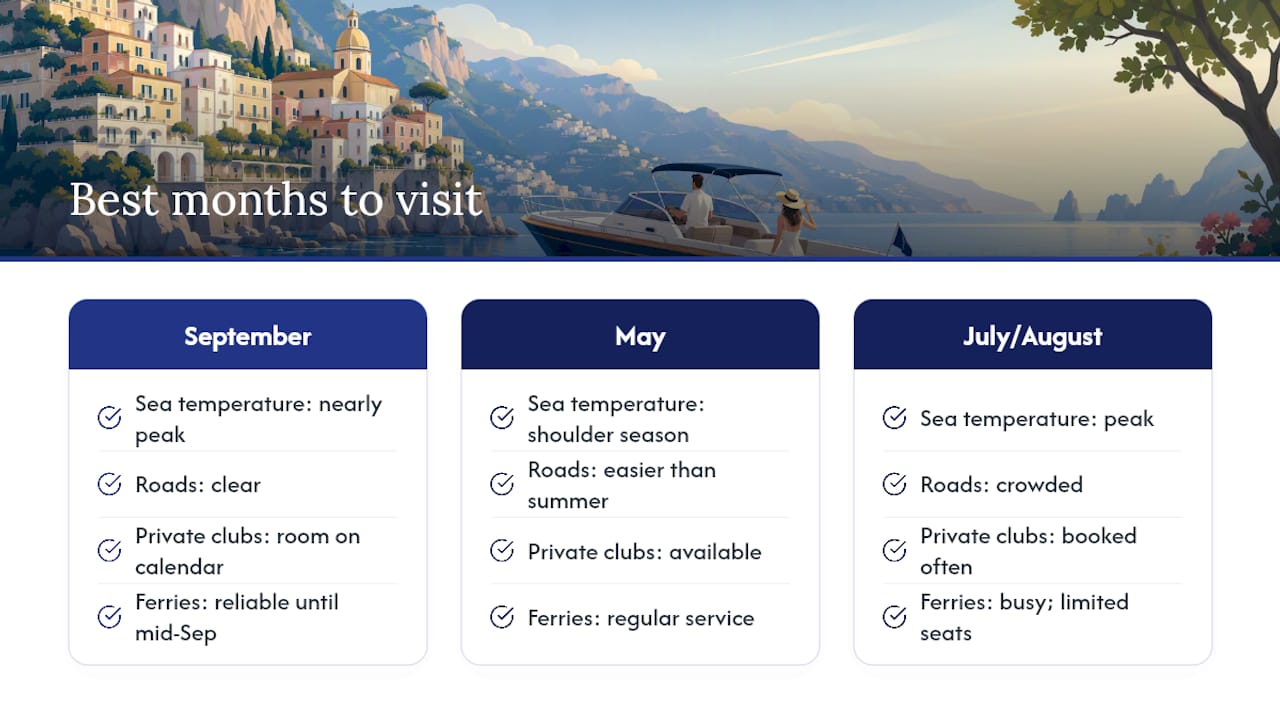
Shoulder season wins on every axis that actually determines trip quality: sea temperature nearly matches peak summer by September, roads clear up, and private-club calendars still have room. The one piece conventional guides consistently underplay is ferry seasonality. Public boats thin out fast once you’re past mid-September, and by October a trip planned around hydrofoil schedules can fall apart if you haven’t checked timetables recently.
My take, after looking at how this coast actually functions operationally rather than how it photographs: prioritize September first, May second, and treat July or August as a last resort reserved for travelers who have no flexibility and a serious budget for private transfers. The luxury isn’t the beach chair. It’s not waiting for one.
— tammylevent@gmail.com
Let Elite Travel Handle the Timing for You
Elite Travel is the direct alternative to piecing this trip together yourself: instead of tracking ferry seasonality, beach-club calendars, and SS163 traffic patterns on your own, our concierge team times the whole trip around them. We book private boats before they sell out, choose hotels with their own pickup arrangements, and secure restaurant tables months ahead in peak season.
Every itinerary comes with our price match guarantee and no service fees, and our team is available 24/7 if plans need to shift, say, from an August week to a quieter, better-priced one in late September. Start with our Amalfi Coast vacation packages or browse European luxury itineraries to see what a planner-timed trip actually looks like, then reach out for a itinerary built around the exact month that fits your priorities.
Where to check current weather and ferry schedules
Before locking in dates, confirm current conditions against Weatherspark’s year-round climate data and check live departures through Travelmar’s ferry route schedule, since both shift slightly year to year. Local event calendars are worth a look too. Ferragosto and town patron-saint festivals can quietly reroute an entire day’s plans if you don’t know they’re coming.
Sources
- Best Time to Visit the Amalfi Coast: A Month-by-Month Guide (2026)
- Best Times to Visit Amalfi Coast (U.S. News Travel)
- Average weather in Amalfi Coast, Italy year‑round (Weatherspark)
- When to Visit the Amalfi Coast (Lonely Planet)
