



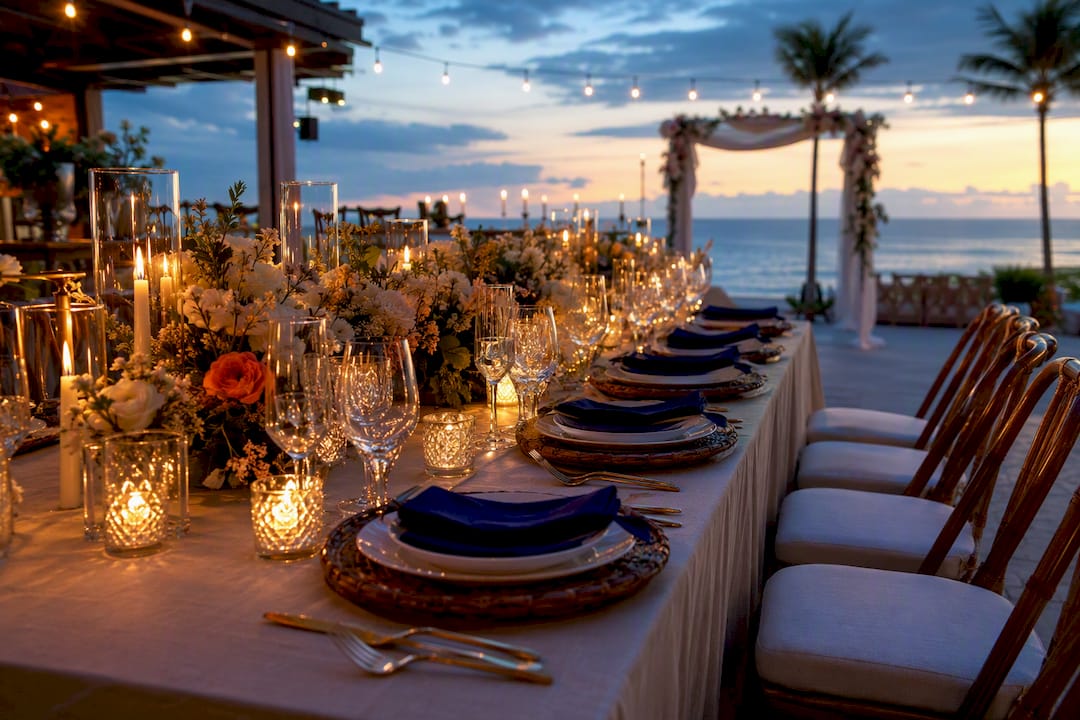
A destination wedding typically runs anywhere from $15,000 for a small, off-season resort ceremony to $70,000 or more for a luxury villa buyout in Italy or Greece, with the average landing near $39,000. Guest count and venue model, meaning an all-inclusive package versus a private villa or vendor-buyout venue, drive that spread more than location alone. Budget roughly a moderate to high amount per guest as your starting math, then adjust for tier.
TL;DR:
- Fixed costs like planning, photography, and music remain constant regardless of guest count, making larger weddings more cost-efficient per person.
- Venue and catering expenses typically account for 40% to 50% of the total budget, with venue models influencing overall costs more than location.
- Cutting guest numbers, booking in shoulder season, and choosing package deals over à la carte services can substantially lower total expenses.
- Local vendor availability, import costs, and transfer logistics cause significant cost variations across destinations such as Mexico, Caribbean, Greece, and Hawaii.
- Setting aside 10% to 15% of your budget for contingencies and considering currency exchange buffers are essential for managing unpredictable costs.
Table of Contents
- How Much Is a Destination Wedding, Really?
- What’s the Budget Breakdown by Category?
- How Much Should Guests Expect to Pay?
- What Do Real Destination Wedding Budgets Look Like by Location?
- What Are the Best Ways to Cut Destination Wedding Costs?
- What Hidden Fees Should You Watch for in Contracts?
- How Much Contingency and Currency Buffer Do You Need?
- What Does a 12 to 18 Month Planning Timeline Look Like?
- Why a Concierge Planner Changes Your Cost Math
- Should Guest Travel and Lodging Be Part of Your Wedding Budget?
- Local Wedding Planner or Destination Travel Specialist: Which Costs Less?
- How Does Weather Season Affect Destination Wedding Pricing?
- Do You Need Wedding Insurance for a Destination Event?
- The Budget Advice Nobody Wants to Hear
- Ready to Turn Your Budget Into a Real Wedding?
- Sources
How Much Is a Destination Wedding, Really?
The average destination wedding cost lands around $39,000, according to The Knot’s Real Weddings Study. But that single number hides three very different experiences, and where you fall depends almost entirely on guest count and venue style.
At the value tier, 30 to 50 guests at an all-inclusive resort during shoulder season typically costs $15,000 to $25,000 total. Mid-tier weddings with the same guest count, a hired planner, and upgraded catering usually run $30,000 to $50,000. Premium and luxury tiers, especially with 60 to 100 guests, a private villa, and flown-in vendors, regularly reach $60,000 to $100,000 or beyond.
Here’s the part most couples miss: doubling your guest count doesn’t double your budget evenly. Fixed costs like the planner fee, photography package, and music stay flat whether you host 40 people or 90. Variable costs, mainly catering and room-night minimums, scale directly with headcount. That means a 30 guest wedding often has a higher per-person cost than a 70 guest one, because the fixed line items get spread across fewer plates.
- For smaller guest counts at the value tier, costs tend to be on the lower end.
- Mid-tier weddings with similar guest counts have moderately higher totals.
- Larger guest counts at the mid tier increase the budget further.
- Premium and luxury weddings with large guest lists incur the highest expenses.
Both Zola and industry cost trackers like ExpenseBot confirm the same pattern: venue model, not geography, is usually the bigger swing factor.
What’s the Budget Breakdown by Category?
Every destination wedding budget follows a similar spine, regardless of whether you’re marrying in Cancun or the Cotswolds. Venue and catering eat 40% to 50% of the total. Planner, photography, florals, and music take another 30% to 40%. The remaining 15% to 20% covers guest logistics, transportation, and a contingency cushion.
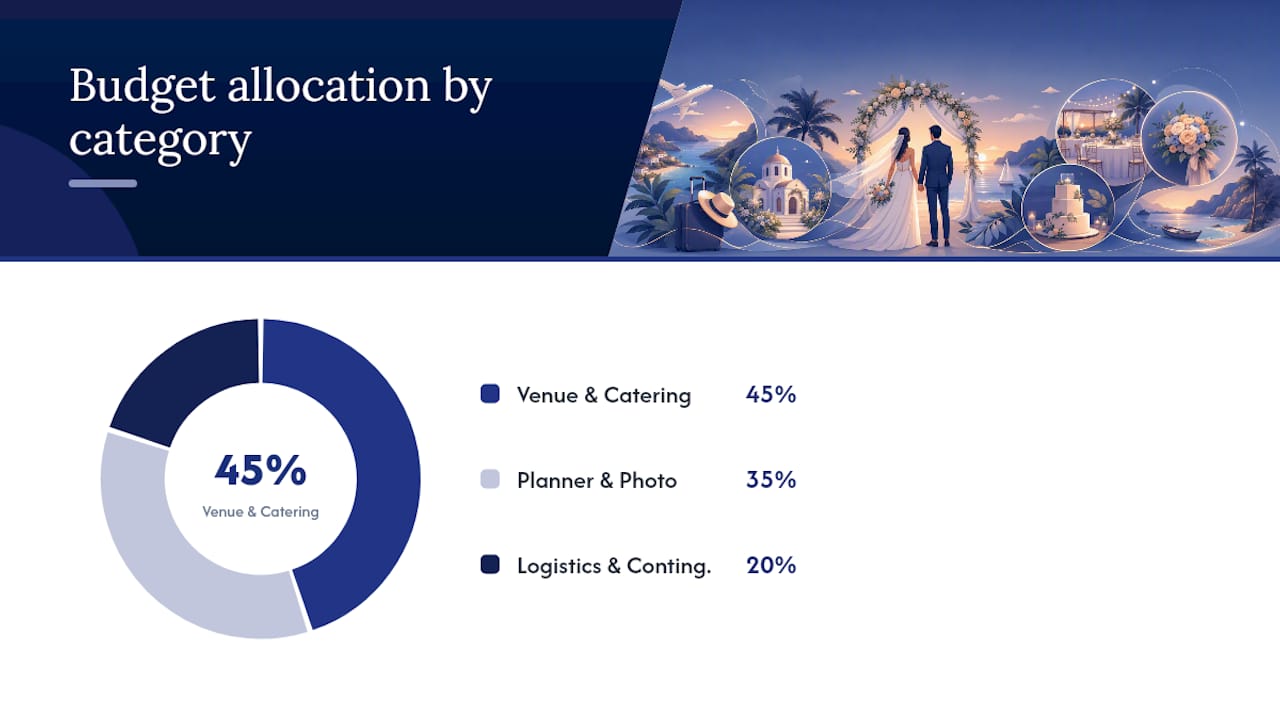
Line-item averages from The Knot help ground these percentages in real dollars. A typical reception venue runs about $13,030, photography averages $3,015, a planner’s fee averages $2,972, and catering averages $114 per person. Those figures reflect a broad mix of guest counts, so treat them as anchors, not gospel.
Here’s a worked example for a 50-guest wedding at the mid tier, targeting a $35,000 total budget:
- Venue rental: $6,000 to $9,000
- Catering: $114 to $150 per person × 50 guests = $5,700 to $7,500
- Planner fee: $2,500 to $4,000
- Photography: $3,000 to $4,500
- Florals: $1,800 to $3,000
- Music/DJ: $1,200 to $2,500
- Rentals (chairs, linens, decor): $1,500 to $2,500
- Guest logistics + contingency: $5,000 to $7,000
Add those ranges up and you land squarely in the $27,000 to $40,000 window, which matches published averages closely. The exercise matters because it forces you to price your own guest list and region instead of anchoring on a national average that may not reflect your venue.
How Much Should Guests Expect to Pay?
Guest costs vary enormously by destination, and this is where couples often underestimate the ripple effect of their location choice. For a domestic trip within driving distance, guests might spend $400 to $800 total on lodging and incidentals. For an international wedding in the Caribbean or Europe, that figure climbs to $1,200 to $2,500 per guest once flights, hotel nights, and meals factor in.
Per-guest estimates from Brides put the total wedding cost per attendee, host expenses included, between $350 and $1,000. Hosts typically cover a welcome dinner ($40 to $90 per person) and sometimes a shared airport shuttle ($15 to $40 per guest), while leaving flights and most hotel nights to guests themselves.
A few moves reduce the burden without shrinking your guest list:
- Negotiate a room block with tiered pricing so budget-conscious guests have an affordable option alongside upgraded suites.
- Offer optional paid excursions instead of building every activity into the invitation, so guests choose their own spending level.
- Give guests 10 to 12 months’ notice on dates, since early booking is the single biggest lever they control over their own airfare costs.
What Do Real Destination Wedding Budgets Look Like by Location?
Numbers shift meaningfully once you pick an actual destination, because local vendor availability, import costs, and transfer logistics all change the math.
- Cancun/Riviera Maya, 50 guests: $15,000 to $30,000. Resort packages bundle venue, catering, and often a coordinator, per ExpenseBot’s destination cost ranges, which makes this one of the most predictable budgets to plan against.
- Caribbean islands (Turks & Caicos, Jamaica), 40 guests: $20,000 to $40,000. Import costs on florals and alcohol push premium tiers higher than Mexico.
- Italy or Greece, 60 guests: $30,000 to $70,000. Villa buyouts replace resort packages, and vendor travel plus multi-day event schedules add up fast.
- Hawaii, 50 guests: $25,000 to $55,000. Domestic for U.S. couples, but resort minimums and limited vendor competition on the islands keep prices closer to European levels than to Mexico.
- US domestic (national park lodges, wine country), 40 guests: $18,000 to $40,000. No passports or customs fees, but permit costs and remote logistics for parks can surprise first-time planners.
All-inclusive resort packages give you a single predictable number. Villa buyouts and a la carte vendor bookings give you more control over the experience but far less budget certainty until every contract is signed. If price predictability matters more than customization, lean toward the package model.
What Are the Best Ways to Cut Destination Wedding Costs?
Three levers move the needle more than anything else: timing, guest count, and package choice.
- Shift to shoulder season. Booking outside peak months typically saves 25% to 40% on accommodation and venue packages, according to Zola’s planning guidance. A Caribbean wedding in late May or early November often prices thousands less than the same package in February.
- Trim the guest list before you negotiate anything else. Cutting 20 guests from a 70-person wedding reduces catering costs directly and often drops you into a lower room-block tier with the resort.
- Compare package pricing against a la carte before you sign. All-inclusive per-person rates typically run $150 to $350, while minimum-spend contracts at boutique venues can require $15,000 to $75,000 in guaranteed spend regardless of your actual headcount.
- Ask for concessions, not just discounts. Offer the venue two or three possible dates and request a complimentary upgrade (welcome cocktail hour, room upgrade for the couple) instead of a price cut. Venues often have more flexibility on perks than on the sticker price.
Pro Tip: Request the resort’s group sales manager directly rather than booking through the general reservations line. Group sales teams have contract flexibility that standard booking agents simply don’t.
The trade-off with off-season and package deals is usually weather risk and less flexibility on menu customization, so weigh that against the savings before locking a date.
What Hidden Fees Should You Watch for in Contracts?
The number on a venue’s website is rarely the number you’ll actually pay. Resort vendor fees, sometimes called “outside vendor fees,” can add $500 to $2,000 if you bring in your own photographer or florist instead of using the property’s approved list. Minimum-spend shortfalls hit even harder: if your group’s food and beverage total falls short of the contracted minimum, you pay the difference regardless of attendance.
Vendor travel costs are another line item couples forget to model. Flying in a photographer or hair and makeup team for North American destinations typically adds $800 to $2,500 in airfare, lodging, and per diem on top of their standard fee.
- Corkage or outside-caterer fees for bringing your own alcohol or food
- Shipping and customs charges for decor items sent internationally
- Cleanup or damage deposits, often $500 to $1,500, refundable only after inspection
- Legal and administrative fees for international marriage licenses, which vary widely by country
Ask every vendor for an itemized quote that separates the base fee from travel and logistics costs before you sign anything.
How Much Contingency and Currency Buffer Do You Need?
Set aside 10% to 15% of your total budget as a general contingency fund for the surprises every wedding produces, from last-minute rentals to weather-related venue changes. For international bookings, add a separate currency buffer on top of that.
Brides recommends budgeting roughly 3% specifically for currency exchange volatility when your vendors invoice in a foreign currency.
- Venue deposits are typically due at contract signing, often 20% to 30% of the total.
- Planner retainers are usually due upon hiring, separate from the planning fee itself.
- Final catering guarantees and balance payments are typically due 30 to 60 days before the event.
- Consider prepaying vendor invoices when the exchange rate is favorable rather than waiting until the final due date.
Specify invoice currency in vendor contracts wherever possible, and use a low-fee transfer service instead of a credit card for large international payments to avoid extra conversion markup.
What Does a 12 to 18 Month Planning Timeline Look Like?
Budget decisions and payment deadlines move fast once you commit to a destination, so a rough month-by-month view keeps you from missing a deposit window.
- Months 18 to 15: Set total budget, pick destination tier, and book venue with initial deposit.
- Months 14 to 12: Hire planner and photographer; secure room block with the resort or hotel.
- Months 11 to 8: Book florist, music, and any additional vendors; send save-the-dates so guests can book flights early.
- Months 7 to 5: Finalize menu tastings and rental orders; review every vendor contract for hidden fees.
- Months 4 to 3: Lock final guest count and catering guarantee numbers.
- Months 2 to 1: Pay final balances, confirm currency exchange timing, and reconfirm all logistics with on-site coordinators.
Protect the budget by reviewing every contract for cancellation and weather clauses, keeping your contingency fund untouched until week-of emergencies, and locking exchange rates as early as your bank or FX provider allows.
Why a Concierge Planner Changes Your Cost Math
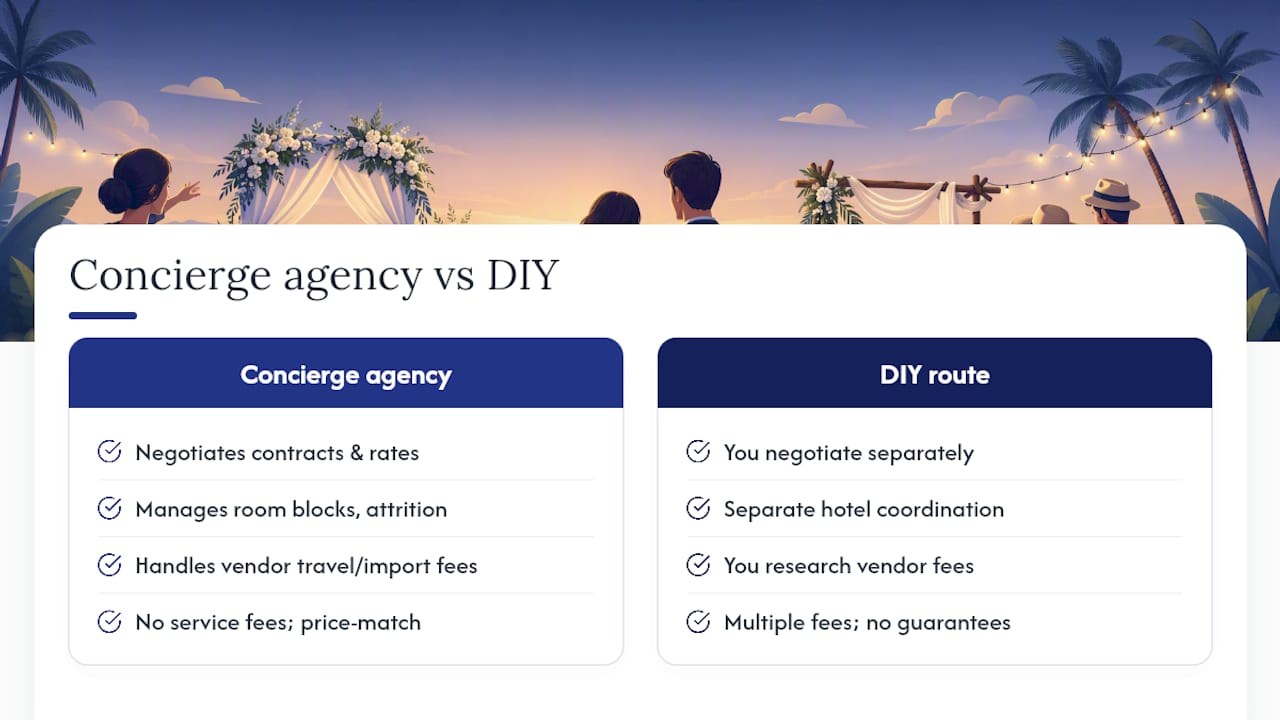
Award-winning agencies with decades of destination-wedding experience bring something a couple planning solo simply can’t replicate: negotiated rates with vetted, on-the-ground vendors and resorts. Some experienced agencies have spent decades building relationships across popular wedding destinations worldwide, which can mean room-block pricing, package upgrades, and contract terms often come pre-negotiated before you ever see a quote.
The practical value shows up in three places: avoiding minimum-spend shortfalls because someone experienced modeled your guest count against the venue’s contract terms, catching hidden vendor travel fees before they’re buried in a final invoice, and having a single point of contact if a resort changes terms mid-planning. Some agencies charge no service fees and back bookings with a price match guarantee, with support available 24/7 for the inevitable question that comes up outside business hours.
Should Guest Travel and Lodging Be Part of Your Wedding Budget?
Most couples separate their own wedding costs from what guests pay out of pocket, but that split isn’t always clean, and pretending it is can create budget surprises later. If you’re hosting at a resort with a minimum-spend contract, guest room nights often count toward that minimum. Fewer guests booking through your room block can mean you personally owe the shortfall, even though you never intended to “pay for” anyone’s hotel room.
This is why room-block structure deserves its own line in your planning math, not just a mental note. Ask the resort directly how room-night pickup applies to any food and beverage minimum before you sign.
Some couples choose to subsidize specific costs directly: covering one shared shuttle from the airport, hosting a welcome dinner, or picking up the resort fee that many properties tack onto every room reservation regardless of who’s paying. These are optional, but they shift real dollars from “guest expense” to “host budget” and should show up in your contingency planning, not as a surprise add-on discovered during final reconciliation.
International guests add another layer: visa costs, travel insurance, and currency conversion on their own hotel payments. None of that touches your budget directly, but factoring it into your guest communications reduces the number of guests who decline simply because the true cost caught them off guard.
Local Wedding Planner or Destination Travel Specialist: Which Costs Less?
The catch: a planner who specializes in local weddings often lacks the destination-specific vendor relationships, resort contract experience, and travel logistics knowledge that international or multi-day events actually require.
Some destination travel specialists operate on a different cost structure. Because some agencies earn commission from travel suppliers, resorts, and hotels rather than charging the couple directly, there’s frequently no separate planning fee stacked on top of a wedding budget the way a traditional planner’s percentage works. That difference alone can offset thousands of dollars compared to paying a local planner’s fee plus hiring a separate travel agent for guest logistics, which many couples end up doing anyway once flights and room blocks get complicated.
The trade-off isn’t really about cost, though. It’s about scope. A local planner excels at day-of coordination and vendor management within a single venue. A destination travel specialist manages the layer most local planners never touch: negotiated room blocks, group air logistics, resort contract review, and the on-the-ground relationships that catch a minimum-spend problem before it becomes a $10,000 surprise. Many couples end up using both, a destination specialist for logistics and contracts, a day-of coordinator for the ceremony itself.
How Does Weather Season Affect Destination Wedding Pricing?
Weather doesn’t just affect your photos. It directly sets the price floor and ceiling for nearly every destination on a couples’ shortlist. Peak season in the Caribbean and Mexico runs roughly December through April, when temperatures are mild and hurricane risk is essentially zero, and pricing reflects that demand with the highest venue and room rates of the year.
Hurricane season, June through November across the Caribbean and Gulf Coast destinations, is exactly when Zola’s shoulder-season savings guidance delivers the biggest discounts, because resorts need to fill rooms despite the weather risk.
Europe follows the opposite pattern. Italy and Greece peak from May through September, when weather is most reliable for outdoor ceremonies, and shoulder months like April, late September, and October offer meaningful savings with only modest weather trade-offs. Hawaii sits in between: it has no true off-season weather risk, but hotel pricing still spikes around winter holidays and summer school breaks regardless of climate.
The practical rule: match your season choice to your actual weather tolerance, not just the discount. A rainy backup plan matters more in hurricane season than the savings percentage does, and every resort contract should specify exactly what happens to your deposit if a named storm forces a cancellation.
Do You Need Wedding Insurance for a Destination Event?
Wedding insurance for a destination event typically costs $200 to $600 for a policy covering $10,000 to $50,000 in protected expenses, depending on your total budget and the specific perils you insure against. Two separate types matter here, and couples often only buy one.
Event liability and cancellation insurance covers the wedding itself: vendor no-shows, venue bankruptcy, extreme weather forcing a postponement, or a sudden illness preventing the ceremony from happening as planned. Basic policies start around $75 to $150, while comprehensive coverage matching a $40,000 to $60,000 budget runs closer to $400 to $600.
Travel insurance is the second, separate policy, and it protects guests and the couple against flight cancellations, lost luggage, and medical emergencies abroad.
The gap most couples miss: standard event insurance rarely covers currency losses or vendor price increases from exchange rate shifts, which is exactly why the separate FX contingency buffer matters even when you’re fully insured. Insurance protects against disaster. It doesn’t protect against a weaker dollar the month before your final payment is due.
The Budget Advice Nobody Wants to Hear
Most destination wedding content sells the fantasy that location alone determines cost, so couples spend months comparing Tulum against Tuscany when the real budget lever sits somewhere else entirely: guest count. Cut your list from 100 to 60 and you’ll often save more than switching from Greece to Mexico. That’s not intuitive, and it’s not what most wedding blogs lead with.
The second piece of conventional wisdom that deserves pushback: chasing the lowest sticker price on a venue package almost always costs more once minimum-spend shortfalls, vendor travel fees, and currency shifts get added back in. A transparent all-inclusive package at $250 per person beats a “cheaper” a la carte venue that turns into a $12,000 surprise once the contract’s fine print kicks in.
If you take one thing from this article, prioritize modeling your actual guest count against a resort’s minimum-spend terms before you fall in love with a venue’s Instagram photos. A specialist who’s negotiated hundreds of these contracts can catch that shortfall in a single phone call, which is worth more than any discount code you’ll find searching for deals yourself.
— tammylevent@gmail.com
Ready to Turn Your Budget Into a Real Wedding?
Elitetravelgroup exists for exactly the moment this article describes: when the math gets complicated and you need someone who’s already negotiated the contract terms, room-block attrition rates, and vendor travel fees you just read about. Unlike piecing together a venue, a local planner, and a separate travel agent yourself, some agencies handle resort negotiations, guest room blocks, and logistics under one concierge relationship, sometimes with no service fees added and price match guarantees backing quotes.

That matters most for couples choosing between Mexico, the Caribbean, and Europe, where vendor availability and import costs shift the math in ways that are hard to research from a spreadsheet alone. Decades of on-the-ground partnerships can help catch minimum-spend risks and hidden fees before signing, not after.
Start by exploring Elitetravelgroup’s destination wedding packages to see real pricing structures for popular destinations, or review the concierge planning workflow to understand exactly what a specialist handles versus what a local planner leaves for you to figure out. Support is available 24/7, because venue contracts and currency rates don’t wait for office hours.
This article is general information, not a substitute for advice from a qualified financial advisor. Consult a qualified financial professional about your own circumstances before acting on anything here.
Sources
- The Knot: The Average Cost of a Destination Wedding
- Brides: How Much Does a Destination Wedding Cost?
- Zola expert advice: Cut destination wedding costs
- ExpenseBot: Destination Wedding Budget Planning (2026)
