



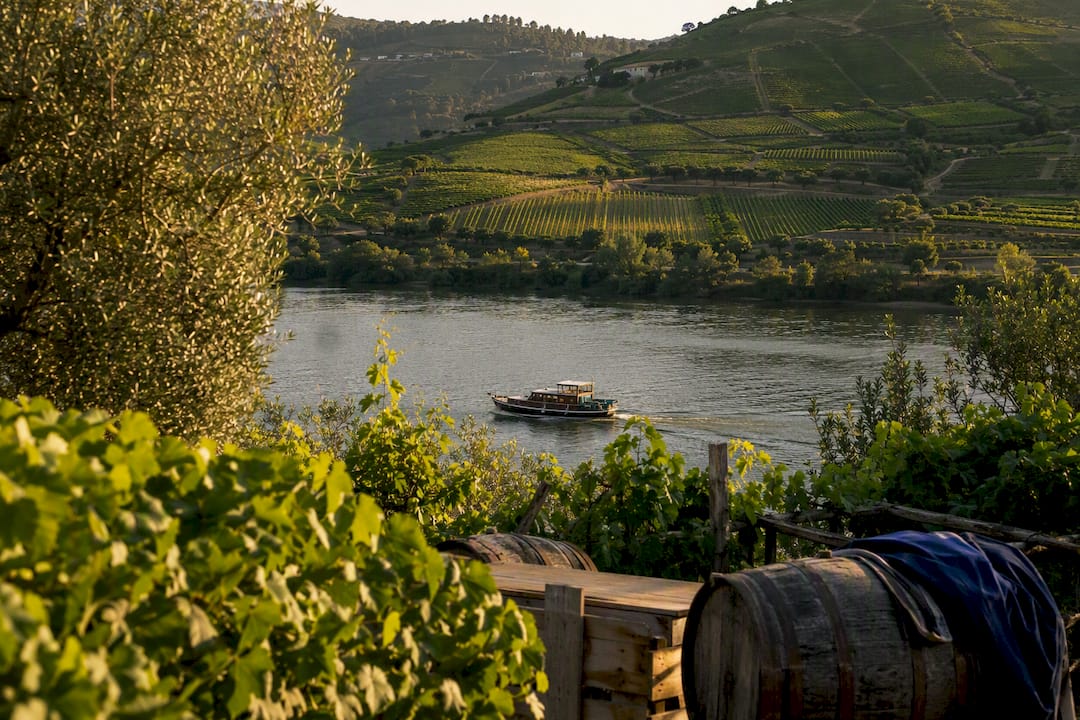
Yes, a properly chosen Douro Valley wine tour delivers what most travelers actually want: a full day handed over to someone else, spent among terraced vineyards, guided tastings, and often a river cruise. A typical booking covers round-trip transport from Porto, a couple of winery visits, a proper lunch, and usually the option of a Rabelo boat ride from Pinhão. It works best for anyone short on time, unfamiliar with the region, or simply done with renting a car on switchback mountain roads.
TL;DR:
- Tours typically include two to three winery visits with guided tastings, a seated lunch, and an optional river cruise from Pinhão, often starting around $100 to $150 per person.
- The drive from Porto to Douro towns like Régua and Pinhão takes about 1.5 to 2 hours each way, with stops at viewpoints along the winding N222 route that are key to pacing and photo opportunities.
- The best time to visit is during harvest season from September to early October, though shoulder seasons in spring and early fall generally offer better weather and less crowded experiences.
- Smaller, private tours allow for more flexible pacing, deeper educational content, and better access to estates, especially important during harvest when cellar access is limited.
- Proper preparation includes comfortable shoes, layering clothing, sun protection, and requesting specific accommodations if mobility or motion sickness is a concern.
Table of Contents
- What Does a Douro Valley Wine Tour Actually Include?
- How Long Does It Take to Get There, and What Should You Expect on the Road?
- When Is the Best Time to Take a Douro Valley Wine Tour?
- How Do You Choose the Right Douro Valley Wine Tour?
- Compact Day Trip or Multi-Day Douro Stay: Which Fits Your Trip?
- What Should You Pack for a Day in the Douro?
- How Elite Travel Curates a Better Douro Experience
- Why the “More Wineries” Advice Gets Douro Trips Wrong
- Skip the Group Bus: Book a Private Douro Day Through Elite Travel
- Where to Verify These Details Before You Book
- Sources
What Does a Douro Valley Wine Tour Actually Include?
Most day tours follow the same skeleton, even when the operator dresses it up differently. A van picks you up in central Porto early, usually between 8 and 9 a.m., then heads east along the N222, one of the most scenic drives in the world, stopping at viewpoints where the terraced hillsides first come into view. From there, the day settles into a rhythm: winery, tasting, lunch, maybe a boat, then the drive home.
Here’s what a standard itinerary tends to include:
- Round-trip transport from Porto with commentary along the N222
- Two to three winery visits with guided tastings at each
- A sit-down lunch, often at a quinta terrace overlooking the river
- An optional Rabelo cruise from Pinhão, the valley’s river hub
- Tastings that mix Port styles (ruby, tawny, sometimes aged vintage) with dry table wines
The tastings themselves vary more than people expect. Some estates pour a quick flight of two or three wines standing at a counter; others sit you down for a full walk-through of ruby versus tawny Port, explain how a 10-year tawny differs from a 20-year one, and finish with a dry red or white from the same estate. Full-day itineraries with lunch, winery visits, and a panoramic cruise are the most common format sold to Porto-based travelers. Prices for that kind of package often start around $100 to $150 per person.
Before booking, confirm exactly what’s included versus what costs extra. Lunch and the two core tastings are almost always bundled in. The boat cruise, wine purchases, and any premium aged-Port tastings are the usual add-ons that catch people off guard when the bill arrives.
How Long Does It Take to Get There, and What Should You Expect on the Road?
Plan on roughly 1.5 to 2 hours each way between central Porto and the core Douro towns of Régua and Pinhão. That number holds whether you’re in a private car or a group minivan, since the road itself sets the pace, not the vehicle.
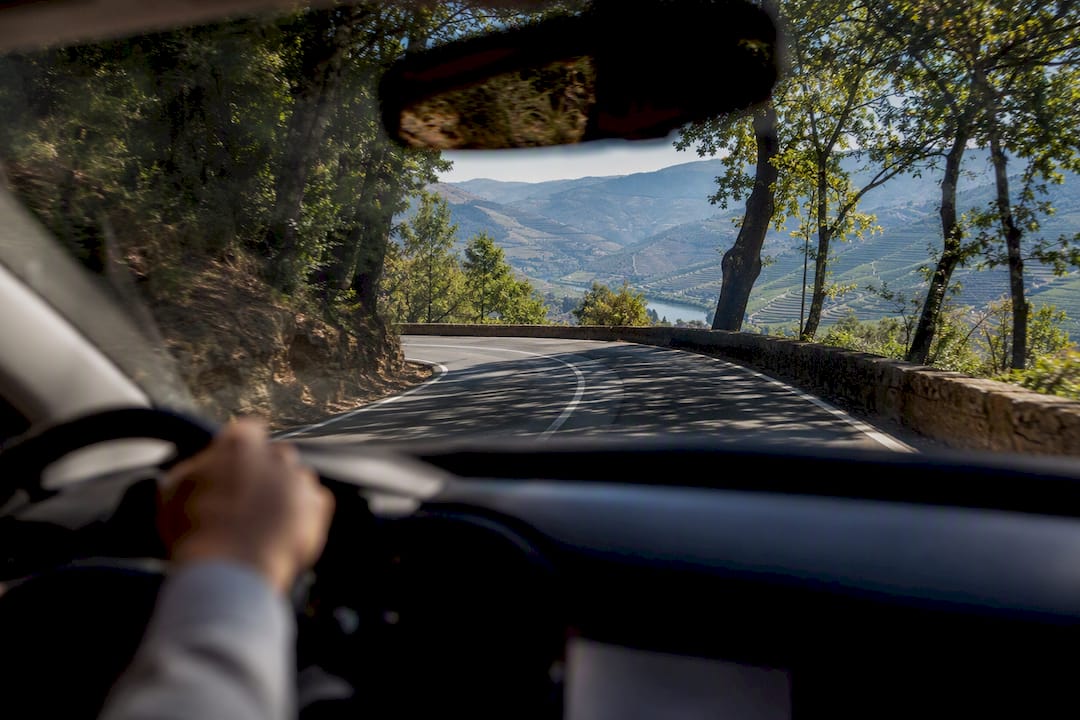
The N222 is the reason the drive takes as long as it does, and also the reason nobody complains about it. The route curves along the river gorge past miradouros (viewpoints) where guides often time stops to catch better light for photos, which is one detail that separates a well-paced tour from a rushed one. That single road structures the entire day’s timing, and a driver who knows exactly where to pause makes the transfer feel like part of the experience rather than dead time before the wine starts.
The road itself is winding, with tight hairpin turns along the gorge. If you’re prone to motion sickness, plan around it rather than hoping it won’t be an issue:
- Ask for a front row or aisle seat with a clear forward view
- Skip a heavy breakfast right before departure
- Keep water on hand and avoid tasting too aggressively early in the day
- Request a private vehicle if you want flexibility on seating and stop timing
Pro Tip: If you know you get carsick, book a smaller private tour rather than a full-size coach. A minivan lets the driver adjust pace and stops for you, and you can usually claim the front passenger seat without asking twice.
When Is the Best Time to Take a Douro Valley Wine Tour?
September into early October is harvest season, and it’s the most dramatic time to visit. Estates schedule special visitor activities around harvest, including vineyard walks and lagares demonstrations where grapes are still trodden by foot in some traditional cellars. It’s also the busiest stretch of the year, which means some tasting rooms run shorter visits simply because the cellar staff is buried in production.
Spring (April to June) and early fall outside the harvest crunch tend to offer the best balance: comfortable temperatures, green terraces, and shorter lines at popular quintas. Summer is hot, often over 90°F in the valley floor, and the most crowded season for day tours out of Porto. Winter is quiet, sometimes too quiet: some smaller estates cut back tasting hours or close certain cellar sections, and river cruises can run a reduced schedule depending on water levels.
- Harvest (September to early October): highest energy, most limited cellar access
- Spring/early fall: best weather-to-crowd ratio
- Summer: hot, busy, book well ahead
- Winter: slower pace, verify hours before you commit to a specific quinta
How Do You Choose the Right Douro Valley Wine Tour?
The gap between an average tour and a genuinely great one usually comes down to pacing and depth, not price. A guide who explains why a 20-year tawny tastes different from a vintage Port, or who can talk through how lagares treading actually shapes tannin extraction, changes the entire day. Expert commentary on the region points to exactly this: educational depth separates a forgettable tasting from a memorable one.
Run through these before you book:
- Group size. Smaller vans (8 to 16 people) allow more flexible timing than a 50-seat coach.
- Number of estates. Two well-paced visits beat three rushed ones. Firsthand visitor reports consistently note that fitting more than two reservation-based quintas into one day is logistically tough, since estates sit far apart and tasting slots are tightly booked.
- What’s actually included. Lunch, boat cruise, and tasting fees should be spelled out, not implied.
- Guide language and depth. Ask whether the tasting is guided in English (or your language) start to finish, not just narrated during the drive.
- Cancellation policy. Weather and harvest scheduling both affect Douro operations more than most regions.
Watch for vague listings that promise “multiple wineries” without naming them, or itineraries that cram in a fourth stop with no listed tasting. Those are the ones that turn into a rushed afternoon.
Reservation-based estates typically cap same-day tasting slots, which is why operators padding an itinerary with three or four quintas often end up cutting each visit short to make the schedule work.
Compact Day Trip or Multi-Day Douro Stay: Which Fits Your Trip?
A single day works if you’re based in Porto and short on time. A typical 8 to 10-hour schedule runs something like this:
- 8:30 a.m.: Depart Porto, drive the N222 with a viewpoint stop
- 10:30 a.m.: First winery visit and guided tasting
- 12:30 p.m.: Lunch at a quinta terrace above the river
- 2:00 p.m.: Second winery visit, often including aged Port samples
- 4:00 p.m.: Rabelo river cruise from Pinhão, usually 50 to 60 minutes
- 6:30 p.m.: Return to Porto
If you want more than a checklist of stops, a two to three-day stay changes the equation entirely. Basing yourself in Pinhão or Régua for a couple of nights opens up boutique cellar visits that day-trippers never see, unhurried vineyard walks at golden hour, and river time that isn’t squeezed into a single afternoon slot. This is the version that suits collectors, photographers, and anyone who wants private access rather than a shared group schedule. Combine it with a short Porto stay on either end, and you’ve covered the region properly instead of skimming it.
What Should You Pack for a Day in the Douro?
Comfortable, closed-toe shoes matter more than anything else on this list, since most estates involve stairs, gravel paths, or uneven terraces. Layer your clothing since river valleys run warmer at midday than the drive out suggests. Bring sun protection, a refillable water bottle, and a small bag for wine purchases you’ll inevitably make.
- Closed-toe shoes for cellar floors and terraced paths
- Layers for temperature swings between morning and midday
- Sunscreen and a hat, especially May through September
- A small bag or tote for bottles picked up along the way
Accessibility varies a lot between estates. Many quintas involve stairs, sloped vineyard paths, or gravel courtyards with no ramp access, so call ahead if mobility is a concern and ask specifically about minimal-walking tasting rooms.
Pro Tip: If motion sickness is a real concern, skip the alcohol-heavy tastings early in the itinerary and pace yourself. A queasy stomach on a winding return drive ruins an otherwise excellent day faster than anything else on this list.
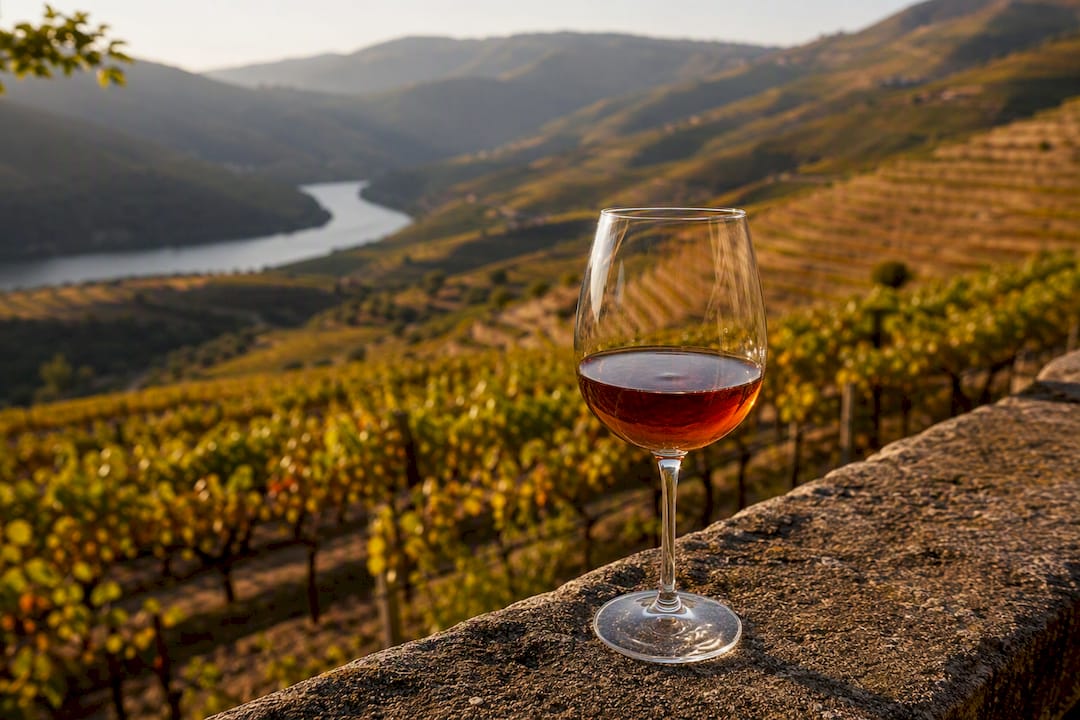
How Elite Travel Curates a Better Douro Experience
Standard group tours run on fixed schedules built for volume, not for you. Elite Travel’s approach to the Douro works differently: pre-booked private cellar access, meal reservations timed outside peak hours, and photography windows planned around the light on the terraces rather than a bus schedule. That’s the difference between visiting a quinta and actually experiencing one.
Typical upgrades include dedicated vehicle seating for comfort on the N222, food pairings built around the estates you’re actually visiting, and flexibility to add a second day in Pinhão if the first one leaves you wanting more. Reach out through Elite Travel’s Douro Valley planning page to start that conversation.
Why the “More Wineries” Advice Gets Douro Trips Wrong
Most advice about Douro Valley wine tours treats it like a checklist problem: more estates, more tastings, more stops crammed into one itinerary. That’s backward. The valley rewards slowness. A rushed four-quinta day leaves you with four blurry tasting rooms and a stomachache from the hairpin turns; a well-paced two-estate day leaves you with an actual memory of the place.
The conventional wisdom also underplays timing. Harvest season gets sold as the obvious “best” time to go, but it’s also when cellar access gets tightest and prices climb. Shoulder-season visits, with fewer crowds and full cellar access, often deliver more of what people actually came for: real conversation with the winemaker, unhurried tastings, a boat ride that isn’t shared with forty strangers.
If there’s one thing to prioritize first, it’s pacing over quantity. Ask any operator how much time you’ll actually spend at each estate before asking how many estates are on the list. That single question filters out most of the mediocre tours before you ever book one.
— tammylevent@gmail.com
Skip the Group Bus: Book a Private Douro Day Through Elite Travel
Elite Travel is the alternative to the standard group coach tour for travelers who want the Douro done right without managing logistics themselves. Instead of a fixed-departure bus splitting your day between forty strangers, you get a private itinerary built around your pace: handpicked quintas, reserved lunches, timed river activities, and a vehicle scheduled to your preferences instead of a tour operator’s fixed slot.
That matters most during harvest season, when reservation-based cellars fill fast and same-day bookings often mean settling for whichever estate still has room. Elite Travel secures access ahead of time and handles the cancellation risk that comes with unpredictable Douro weather, backed by 24/7 support if plans shift mid-trip. There’s no service fee added on top, and every itinerary is priced against a match guarantee before you commit.
If a Douro day or a multi-day valley stay is on your radar, start with Elite Travel’s Douro Valley planning page and request a bespoke itinerary built around your dates and pace. Pair it with a Porto stay on either end, or fold it into a broader Portugal itinerary if you’re covering more ground.
Where to Verify These Details Before You Book
- The N222 scenic route guide covers driving times and viewpoint stops
- Operator listings show current pricing and standard inclusions
- Symington’s Quinta do Bomfim page details harvest-season visiting hours
- The wine tasting formats guide explains the difference between Port and table wine tastings
Sources
- Douro car drive tour: N222 scenic route — Porto North Portugal
- Douro Valley: Historical Sites, Wine Experience, Lunch & Cruise — Viator
- Douro Valley Full Day Tour with River Cruise and Wine Tastings – Douro Valley Guide
- 6 of the Best Wineries in the Douro Valley to Visit — The Grape Pursuit
- Visits and tastings in the heart of the Douro — Quinta do Bomfim / Symington
