


A site inspection checklist must let you verify guest room quality, meeting space logistics, accessibility and compliance, life safety readiness, food and beverage operations, and vendor logistics, all documented for contract protections. It should anchor to real standards, including ADA lodging guidance and the fire prevention rules in 15 U.S.C. §2225, and travel with you on-site alongside your RFP and contract terms.
TL;DR:
- Guest room inspections should verify consistent condition across all room types and include checks of amenities, noise levels, and water pressure.
- Accessibility assessments require documentation of accessible routes, rooms, staff training, and confirm fire safety equipment, including recent inspection dates.
- Confirm room capacity, sightlines, rigging points, and A/V capabilities to prevent production failures during events or photo shoots.
- Verify food service capacity, kitchen cleanliness, allergen procedures, and ensure all fees and terms are clearly documented in the contract.
- Conduct unannounced walkthroughs and gather detailed photos to support negotiations and ensure property compliance with safety and accessibility standards.
Table of Contents
- Quick site inspection checklist by zone
- How to plan, schedule, and staff a site inspection
- Accessibility and fire safety checks that protect your guests
- Meeting space logistics, A/V, and rigging reality checks
- Food, beverage, and kitchen operations checks
- Safety documentation and contract clauses to require
- Tools and templates that make inspections repeatable
- What matters most when vetting venues for VIP programs
- Let Elite Travel handle the vetting for you
- Sources
- FAQ
Quick site inspection checklist by zone
Print this or load it into a mobile form so you can move through the property zone by zone.
Arrival and exterior
- Confirm parking capacity, drop-off flow, signage clarity, shuttle service, and ADA-designated parking near accessible entrances.
Public spaces
- Walk the lobby at a busy hour to judge traffic flow, air quality, wayfinding signage, and visible security presence.
Meeting and function spaces
- Measure room dimensions against your floor plan, check sightlines and pillar placement, and listen for sound bleed through dividing walls.
Guest rooms
- Request a breakdown of room types and inspect at least one of each category your block will use.
- Check condition consistency across rooms, not just the one shown first.
- Test in-room amenities, water pressure, and noise levels from hallways or adjoining rooms.
Food and beverage
- Inspect kitchen cleanliness and inquire about menu options being considered for your event.
Logistics
- Confirm loading dock hours, freight elevator dimensions, and available storage for décor or production gear.
Compliance and safety
- Verify accessible routes, accessible restrooms, smoke detector placement, and sprinkler coverage.
On-site, note who you met (general manager, banquet manager, chief engineer), take dated photos of every space, and record any verbal concessions in writing before you leave.
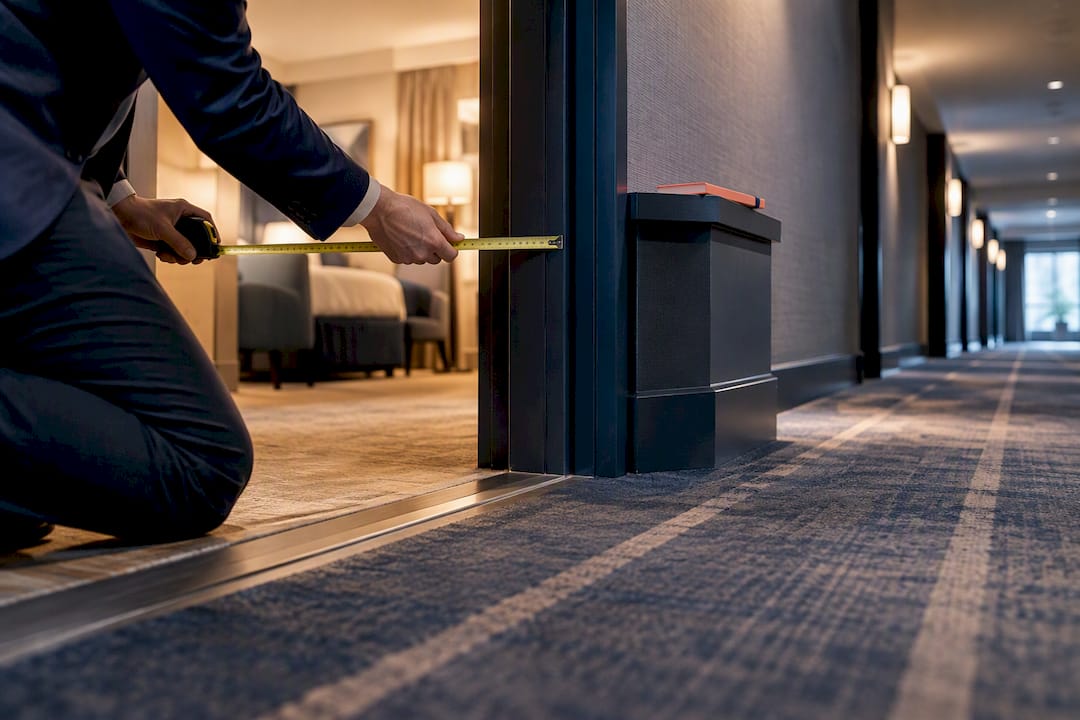
Pro Tip: Photograph door thresholds, hallway widths, and bathroom grab bars separately. These are the details that get missed until a guest with mobility needs arrives.
How to plan, schedule, and staff a site inspection
Book your visit early enough to negotiate contract terms before signing, and if possible during a period that mirrors your event’s day of week and season so you see realistic staffing and traffic. For a destination wedding or VIP program, a single thorough visit is usually enough. For multi-day group programs, a second walkthrough closer to the event date helps confirm any changes.
- Send the property a written RFP and spec sheet in advance covering room block needs, A/V requirements, and accessibility requests.
- Bring a small team: the client lead, an event manager, an A/V specialist if production is complex, and an accessibility reviewer for any program serving guests with disabilities.
- Ask for a scheduled walkthrough with department heads, then request time to wander unannounced through public areas to see the property as a guest would.
Meeting the general manager and department heads directly, rather than only a sales contact, is a recurring recommendation across hotel site inspection checklists used by professional planners.
Accessibility and fire safety checks that protect your guests
Accessibility and life safety are not negotiable items on any inspection, and both come with specific documentation you should request rather than assume.
- Ask for an accessible route map, an inventory of accessible guest rooms, and the property’s policy on alternate-format materials.
- Check whether staff receive training to assist guests who are blind or have low vision, including offering large print, Braille, or audio versions of menus and materials, a practice recommended in ADA guidance for places of lodging.
- Confirm smoke detector type in guest rooms and sprinkler coverage throughout the property, and ask for the date of the property’s most recent fire inspection.
- Get the contact information for the local fire or building authority having jurisdiction, in case you need to verify records independently.
Under 15 U.S.C. §2225, places of public accommodation affecting commerce must have hard-wired smoke detectors in each guest room and, with limited exceptions, automatic sprinkler systems meeting NFPA standards. Knowing this gives you a concrete standard to check against rather than taking a property’s word for it.
For programs serving guests with disabilities, our guide on accessible and inclusive hotel practices covers what to look for beyond the legal minimum.
Meeting space logistics, A/V, and rigging reality checks
Production failures on show day almost always trace back to something that could have been caught on the inspection.
- Confirm actual usable square footage against your floor plan, not just the room’s rated capacity, and note pillar placement and sightline obstructions.
- Document the venue’s in-house A/V capabilities, internet bandwidth, and backup connectivity, along with whether outside A/V vendors are permitted.
- Check rigging points and floor-loading limits before assuming you can hang signage, lighting, or décor.
- Verify freight routes, loading dock hours, freight elevator dimensions, and where production gear can stage or store overnight.
These are the same categories covered in the IAOM site selection checklist, which lists loading and unloading logistics alongside room capacities and A/V as standard inspection items.
Food, beverage, and kitchen operations checks
A property can have a beautiful ballroom and still fail your event if the kitchen cannot execute the menu at the speed and quality your guests expect.
- Inspect the kitchen for cleanliness and ask about its capacity relative to your expected covers and service style.
- Request a tasting of key menu items where the venue allows it, especially for a plated dinner or a menu with complex components.
- Ask how the property handles allergen requests and dietary accommodations, and how much advance notice they need.
- Confirm banquet staffing ratios, who manages service on the night of your event, and expected timing between courses.
- Get every F&B fee in writing: food and beverage minimums, service charges, corkage, overtime rates, and tasting fees.
Safety documentation and contract clauses to require
What you verify on-site should translate directly into contract language, not just notes in a folder.
- Request written emergency procedures, evidence of staff training, and confirmation of evacuation aid equipment for guests with disabilities, a point emphasized in accessible meeting site selection guidance.
- Ask for the venue’s insurance limits and require additional-insured language for your vendors where appropriate.
- Confirm who is responsible for securing special permits, pyrotechnics, open flame cooking, or temporary outdoor structures, and get copies once issued.
- Build move-in and move-out inspection sign-offs and a damage-assessment procedure directly into the contract.
If renovation is possible during your event window, insist on a no-penalty exit clause with reimbursement, a protection the Meetings & Conventions site inspection guide specifically recommends.
Tools and templates that make inspections repeatable
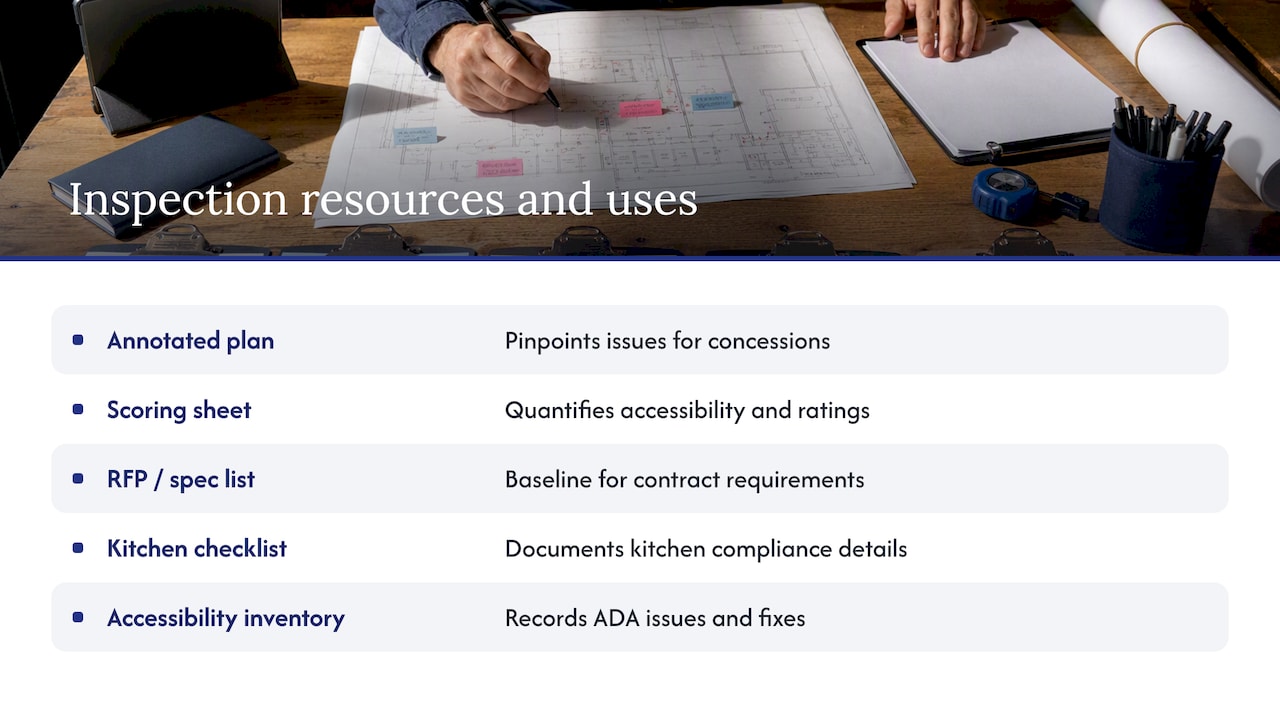
Carry or request an annotated floor plan, a scoring sheet, your RFP and spec list, a kitchen checklist, and an accessibility inventory. Annotated photos and floor plans give you leverage when negotiating concessions or contract language later, since you can point to specifics instead of impressions.
A weighted comparison spreadsheet covering cost, capacity, accessibility, and A/V readiness across properties makes the final decision defensible to clients or corporate procurement.
Pro Tip: Share your completed inspection report, photos, and scoring sheet with every stakeholder within 48 hours, while details are still fresh and before contract negotiations move forward.
What matters most when vetting venues for VIP programs
Reliability beats novelty every time. Guest room quality has to be consistent across the whole block, not just in the suite the sales team shows you, and arrival flow needs to feel discreet and unhurried for VIP guests. Never compromise on life safety, ADA access, or backup power. Everything else is negotiable.
— tammylevent@gmail.com
Let Elite Travel handle the vetting for you
Running a full site inspection takes time most planners do not have, especially when a program spans multiple properties or countries. A travel management group with extensive experience vets hotels and venues for destination weddings, VIP stays, and group programs, and negotiates contracts, coordinates site visits, and remains reachable 24/7 when questions come up mid-planning.
- They charge no service fees and offer a price match guarantee.
- Our team handles the RFP, the walkthrough, and the contract language so you do not have to build it from scratch.
Explore our destination wedding packages or start with our luxury vacation planning page to see how we can take venue vetting off your plate.
Sources
- ADA guide for places of lodging: Serving guests who are blind or who have low vision
- §2225. Fire prevention and control guidelines for places of public accommodation
- IAOM Site Selection checklist (sample)
- Conducting a site inspection | Meetings & Conventions
- Hotel site inspection checklist | Meetings Today
FAQ
What should be on a hotel site inspection checklist?
A hotel site inspection checklist should cover guest rooms, meeting and function spaces, food and beverage operations, accessibility and life safety compliance, and logistics like loading docks and freight elevators. It should also include space to document who you met on-site and any verbal concessions.
Who should attend a site inspection for a large event?
Bring your client lead, an event manager, and an A/V specialist for complex production needs, plus an accessibility reviewer for programs serving guests with disabilities. Meeting the venue’s general manager and department heads directly, rather than only a sales contact, is standard practice according to hotel site inspection guidance.
What ADA items must a venue have for accessible events?
Venues should provide accessible routes, accessible guest rooms, and alternate-format materials like large print or Braille, along with staff trained to assist guests who are blind or have low vision, per ADA lodging guidance. Ask for their accessible route map and room inventory before you sign a contract.
What fire safety standards apply to hotels and event venues?
Places of public accommodation affecting commerce must have hard-wired smoke detectors in each guest room and, with limited exceptions, sprinkler systems meeting NFPA standards under 15 U.S.C. §2225. Ask the property for its most recent fire inspection date and the local fire authority’s contact information.
How can a travel advisor help with site inspections?
A luxury travel advisor can coordinate the site visit, negotiate contract terms, and vet accessibility and safety documentation on your behalf. Elite Travel Management Group offers this kind of concierge-level support with extensive experience, no service fees, and 24/7 availability.
