

The best time to visit Italy for most travelers is spring (April to June) or early fall (September to October). The weather is warm without being punishing, the gardens and harvests are at their best, and you can still get into the major sights without the full weight of summer crowds. The right month for you also depends on where you are going and what you want to do, so this guide breaks Italy down by season, by region and by trip type.
TL;DR
- Best overall: April to June and mid-September to October. Lonely Planet points to April to June for the best weather, with May and June mostly clear and sunny.
- Hottest and busiest: July and August. The south is hot, many Italians take their own vacations, and small family-run businesses often close around mid-August.
- Quietest and most affordable: November to March, with the trade-off of shorter days, rain and closed coastal resorts.
- Region matters: the Dolomites, Rome, Venice and Sicily each have a different best month. Match the month to the place, not the other way around.
- Beach and island trips: aim for late May to June or September, when the sea is inviting and the hotels are open.
Table of Contents
- Italy by season at a glance
- Spring: April, May and early June
- Summer: June to August
- Early fall: September and October
- Late fall and winter: November to March
- Weather by region
- Shoulder season in Italy: what it gets you
- The cheapest and the worst times to go
- Which month fits your kind of trip
- Our perspective
- Plan your Italy dates with us
- FAQ
- Sources
Italy by season at a glance
Italy runs about 1,200 km from north to south, and the climate changes along the way. The broad pattern is Mediterranean, with hot, dry summers and cold, rainy winters, but the Alps, the Po Valley, the central hills and the islands each behave differently. Travel + Leisure defines the calendar this way: high season runs May to September, shoulder seasons are March to April and October to November, and low season is December to February.
| Season | Months | Weather | Crowds and cost | Best for |
|---|---|---|---|---|
| Spring | April to early June | Mild, increasingly sunny, some showers | Busy at Easter and in May, then manageable | Cities, gardens, countryside, hiking |
| Summer | Late June to August | Hot, very hot in the south and in cities | Peak crowds and peak rates | Beaches, islands, the Alps and Dolomites |
| Early fall | September to October | Warm days, cooler evenings, rain rising by late October | Fewer crowds than summer | Wine regions, food, cities, coast in September |
| Late fall | November | Cool and often rainy | Lowest crowds in many cities | Museums, food, city breaks |
| Winter | December to March | Cold in the north, mild in the south | Quiet, except for Christmas and ski weeks | Skiing, Rome, art, Christmas markets |
Spring: April, May and early June
If you want one answer, this is it. Lonely Planet says April to June brings the best weather, and notes that late spring suits outdoor activities, with rural accommodation deals and often-empty beaches early in the season. Condé Nast Traveler likewise reports mild weather and fewer crowds from April to June than in the months that follow, which works for both city and coast travel.
Some practical notes from how we plan Italy trips:
- April can be changeable, with showers in the north. It is a lovely month for Rome, Florence and the south, but pack a light rain layer. Easter week is a separate, very busy period, so book early.
- May is the sweet spot for many travelers: long daylight, flowering countryside and warm days. It is also popular, so the best hotels and private guides fill up months ahead.
- Early June gives you summer light and warm sea temperatures at the south’s beaches before July heat arrives.
If you are choosing between Tuscany and its neighbor for a spring trip, our comparison of Tuscany vs. Umbria helps you decide which landscape suits your plans.
Summer: June to August
Summer is for the water and the mountains, not for walking around Rome at noon. Temperatures in the south reach the 90s Fahrenheit in July and August. Long-term averages from WeatherSpark show the contrast: Rome averages a high of 87°F and a low of 65°F in July, Milan 85°F and 66°F, and Palermo 86°F and 73°F, while Bolzano, gateway to the Dolomites, is cooler at 82°F and 60°F.
Summer works well when:
- You are planning a beach, boat or island trip, such as the Amalfi Coast, Capri, Sardinia or Sicily.
- You are heading to the Dolomites or Lakes for hiking and cooler evenings.
- Your family is tied to the school calendar. Most families have no choice here, and the way to make it work is to build the trip around mornings out, midday pools and late dinners.
What happens in mid-August
Italy slows down in August, especially around Ferragosto on August 15. The Local reports that many private businesses and offices close for at least a couple of weeks, and that on Ferragosto itself cities can feel like ghost towns, though state-run museums and archaeological sites are usually open. Smaller family-run restaurants and shops may be shuttered. If you travel then, have your restaurant bookings and transfers arranged in advance, and favor resort areas, which stay open for visitors.
Early fall: September and October
For many travelers who have been to Italy before, this is the favorite window. Lonely Planet’s southern Italy guide says April to May and September to October are warm and dry enough to enjoy the outdoors without the sizzling heat and heaving crowds of summer. It also notes that daytime highs in Sicily still reach 30°C into September, which makes early September excellent for the sea.
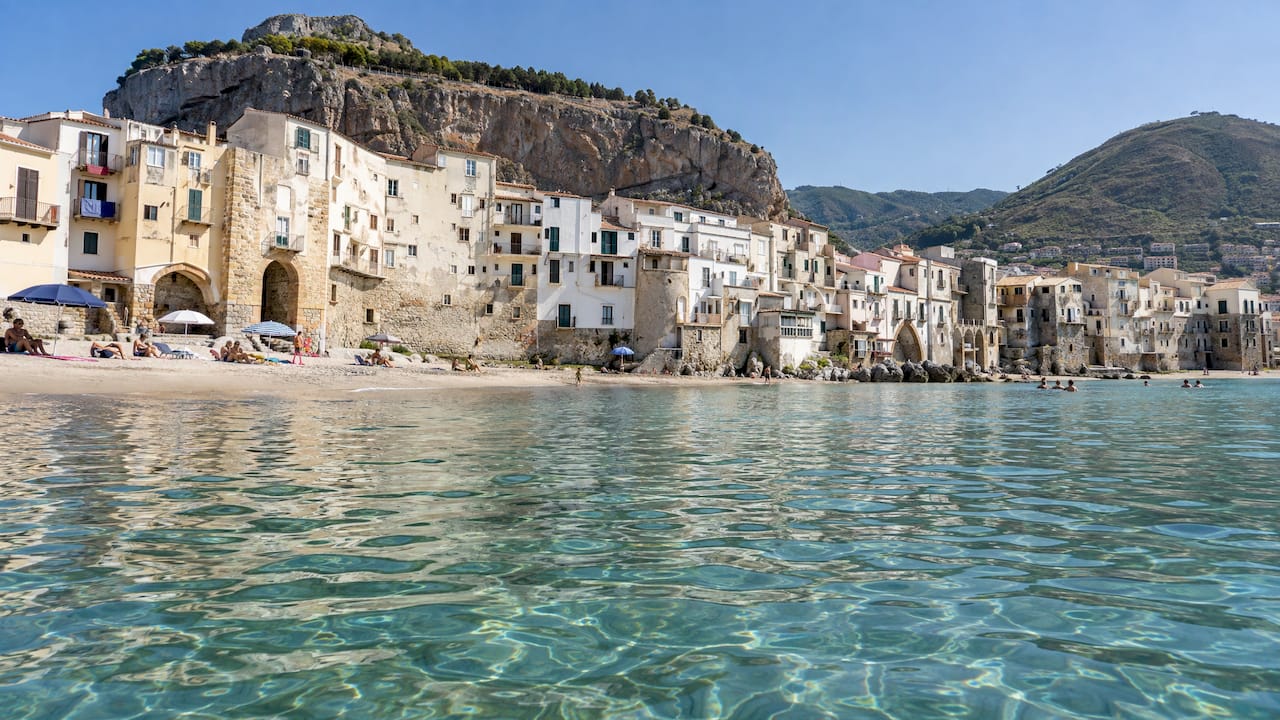
AFAR recommends April through June and mid-September through October for beaches, and reports northern beach regions in the mid-60s to low-70s Fahrenheit, with Lazio and the south in the low to mid-70s.
What fall adds is food. The grape harvest and truffle season turn Piedmont, Tuscany and Umbria into the best places to be. Plan around:
- September: warm sea, harvest begins, Venice and Lake Como still lively.
- October: the best month for wine country and for cities. Rain increases, and some coastal hotels begin to close by the end of the month.
Late fall and winter: November to March
This is the quiet season. AFAR describes October and November as the time to avoid crowds. It is also the wetter stretch of the year in much of the country, so build in museum days, long lunches, cooking classes and private tours.
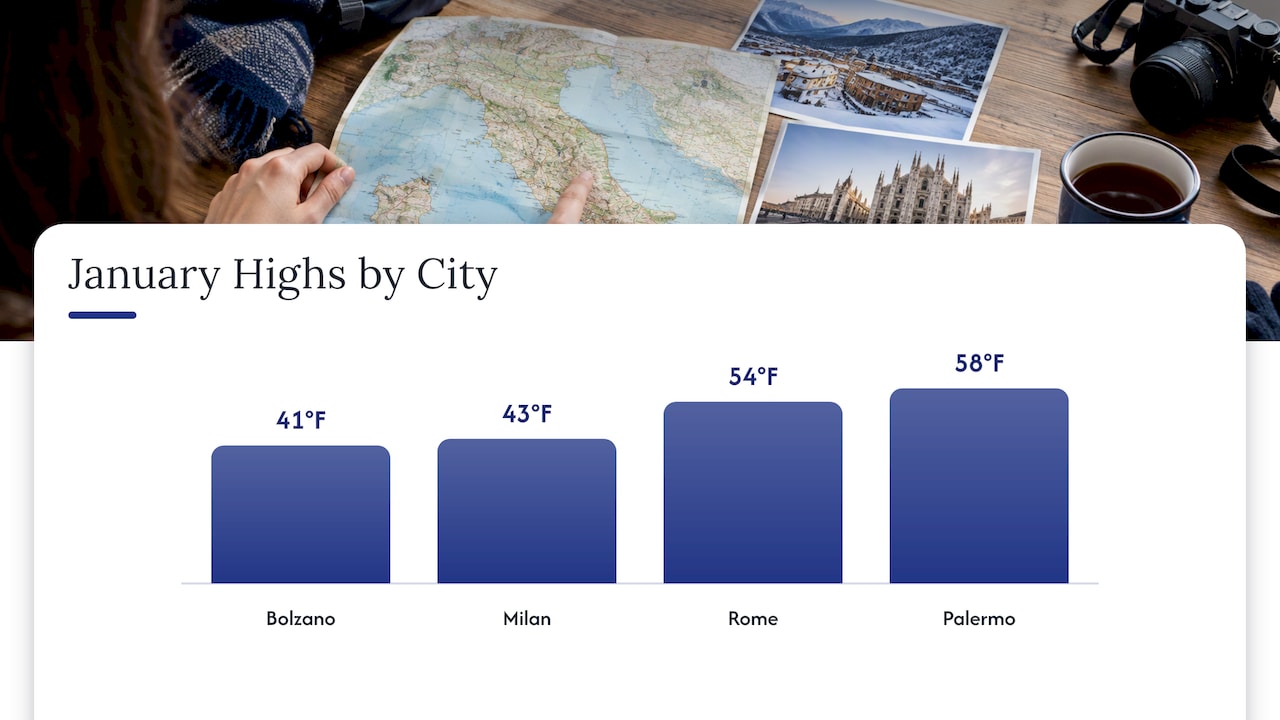
Winter temperatures vary widely. WeatherSpark’s long-term averages give Rome a January high of 54°F and low of 37°F, and Milan 43°F and 31°F. Palermo is much milder, at 58°F and 49°F, and Bolzano is the coldest, at 41°F and 24°F.
What to know before booking a winter trip:
- Coastal areas wind down. Condé Nast Traveler reports that coastal destinations largely shut down from October to April, with shuttered shops and deserted beaches. Rick Steves-style budget itineraries aside, a seaside luxury stay in winter needs careful hotel selection.
- Cities stay fully open. Rome, Florence, Milan, Venice and Naples are all excellent in the cooler months, and winter is the time to see the great museums with room to breathe.
- Skiing is a separate trip. The Dolomites and Alps are at their best in winter for snow sports, and the weather there is the opposite of the south.
Weather by region
Weather is the main reason one traveler’s “perfect month” is another’s disappointment. A simple way to think about it:
- North (Milan, Lakes, Dolomites, Venice): colder winters with more snow in the mountains, and hot, humid summers in the valleys. Late spring through September suits the Lakes and Dolomites.
- Central (Rome, Florence, Tuscany, Umbria): hot, dry summers and mild, wet winters, according to TripSavvy. April to early June and late September to October are the most comfortable.
- South and islands (Naples, Amalfi Coast, Puglia, Sicily, Sardinia): the hottest, driest summers and mild winters. Late spring and September are the sweet spots, and the water stays warm into the fall.
Here is a quick matrix of where to aim:
| Destination | Best months | Why | Months to approach with care |
|---|---|---|---|
| Rome | April to early June, late September to October | Comfortable for walking | July and August heat |
| Florence and Tuscany | May, June, September, October | Green landscape, then harvest | Mid-summer heat |
| Venice | April to June, September to October | Pleasant for canals and islands | Peak summer crowds |
| Amalfi Coast and Capri | Late May to June, September | Open hotels, swimmable sea | Winter closures, August crowds |
| Sicily | April to June, September to October | Warm without extreme heat | Midsummer |
| Dolomites | Late June to September for hiking, December to March for skiing | Depends on activity | Shoulder months between seasons |
| Lakes | May to September | Gardens and boat service | Winter |
Shoulder season in Italy: what it gets you
Shoulder season is the period on either side of summer, and in Italy it is the best value for the experience. Travel + Leisure lists March to April and October to November as shoulder months, and says mid-to-late spring and early-to-mid fall give pleasant weather, lower prices and foot traffic, and shorter lines at top attractions. Crowds do not disappear, particularly in popular spots in May and late September, so reservations still matter.
For a deeper look at how this works across the continent, see our guide to Europe in shoulder season. If the coast is your focus, our piece on shoulder season and private boats on the Amalfi Coast explains how the timing changes what you can do on the water.
The cheapest and the worst times to go
The cheapest time is generally the low season, from December to February, plus the wetter stretch of November. Rates on hotels and flights tend to be lower when demand is lowest, though holiday weeks around Christmas and New Year are an exception. The tradeoff is real: shorter daylight, more rain and, on the coast, closed hotels and restaurants.
There is no single worst time. It depends on what you want:
- Rome, Florence or Venice in July and August: heat, crowds and the highest rates.
- Beach towns from November to March: mostly shut, so the trip you imagine is not available.
- Mid-August, if you want local life: many small family businesses close for the holiday, as The Local describes.
- Easter week and major holidays: fine if planned, frustrating if you arrive without reservations.
If price matters most, the best compromise is the edge of the shoulder season: late April, early May, early October, or the first days of November for city trips.
Which month fits your kind of trip
- Honeymoon: late May, June and September combine romance, warm evenings and open coastal hotels. See our Italy honeymoon itinerary for a 12-night plan.
- Food and wine: September and October, for the harvest and truffle season.
- Art and cities: April, May, October and the cooler winter months.
- Islands and boats: June and September. Our guide to Capri covers what to do when you arrive.
- Hiking: June to September in the mountains, spring and fall in the hills.
- Family trips: July and August are the realistic window for most school calendars, so choose cooler regions, early starts and hotels with pools.
Our perspective
We have been designing luxury trips for 35 years, and the question we hear most about Italy is “when should we go?” Our answer is rarely a single month. It is a match between the month, the region and the kind of experience you want.
The mistake we see is choosing the month first and the place second. A June trip to the Amalfi Coast, a September trip through Tuscany and a December trip to Rome are all excellent, but they are three different trips with different hotels, guides and pacing. We build the itinerary backward from the moment you want most: the harvest lunch, the private boat day, the empty gallery.
This is where a real expert changes the outcome. We know which hotels hold their best rooms in May, which on-the-ground partners can open doors in the shoulder season, and how to shape a summer trip around the heat. We charge no service fees, offer a price match guarantee and are available 24/7, so you can plan with confidence.
tammylevent@gmail.com
Plan your Italy dates with us
If you already know your travel window, we can design the trip around it: hotels, private guides, transfers, boat days and tables at the right restaurants, all timed for the season. Our team plans Italy as a luxury Italy vacation, whether you are traveling as a couple, as a family or with a larger group.
For couples, our honeymoon vacation packages are built around timing as much as destination. Tell us your dates, or tell us your priorities and we will recommend the dates.
FAQ
What are the best months to go to Italy?
Most sources point to April to June and September to October. Lonely Planet highlights April to June for the best weather, and AFAR and Travel + Leisure also favor spring and early fall. Choose May or June for gardens and long days, and September or October for food, wine and fewer crowds.
What is the cheapest month to go to Italy?
Off-peak months, from December to February and often November, usually carry the lowest rates, since Travel + Leisure classes December to February as low season. The tradeoff is cooler, wetter weather and closures along the coast. For better weather at lower prices, try the edges of the shoulder season.
Which month is rainiest in Italy?
It varies by region. In general, fall is the wetter season, and November is often rainy across much of the country. The south is rainiest in winter, with dry summers. Check the area you are visiting before you pack.
What month does Italy shut down for vacation?
August, especially around Ferragosto on August 15. The Local reports that many businesses close for a couple of weeks, and public transport is reduced, though state-run museums and archaeological sites are usually open. Resort areas keep operating for visitors.
Is Italy worth visiting in winter?
Yes, for cities, museums, food and skiing. Rome is mild enough to explore comfortably, with a January average high of 54°F according to WeatherSpark. Avoid planning a beach or boat trip on the coast, where many hotels close.
Sources
- The best time to visit Italy, Lonely Planet
- When is the best time to visit Southern Italy, Lonely Planet
- When Is the Best Time to Visit Italy, Condé Nast Traveler
- The Best Time to Visit Italy, AFAR
- Best Times to Visit Italy, Travel + Leisure
- The Weather and Climate in Italy, TripSavvy
- Italy Climate, Weather By Month, WeatherSpark
- Everything that changes in Italy in August 2026, The Local
