



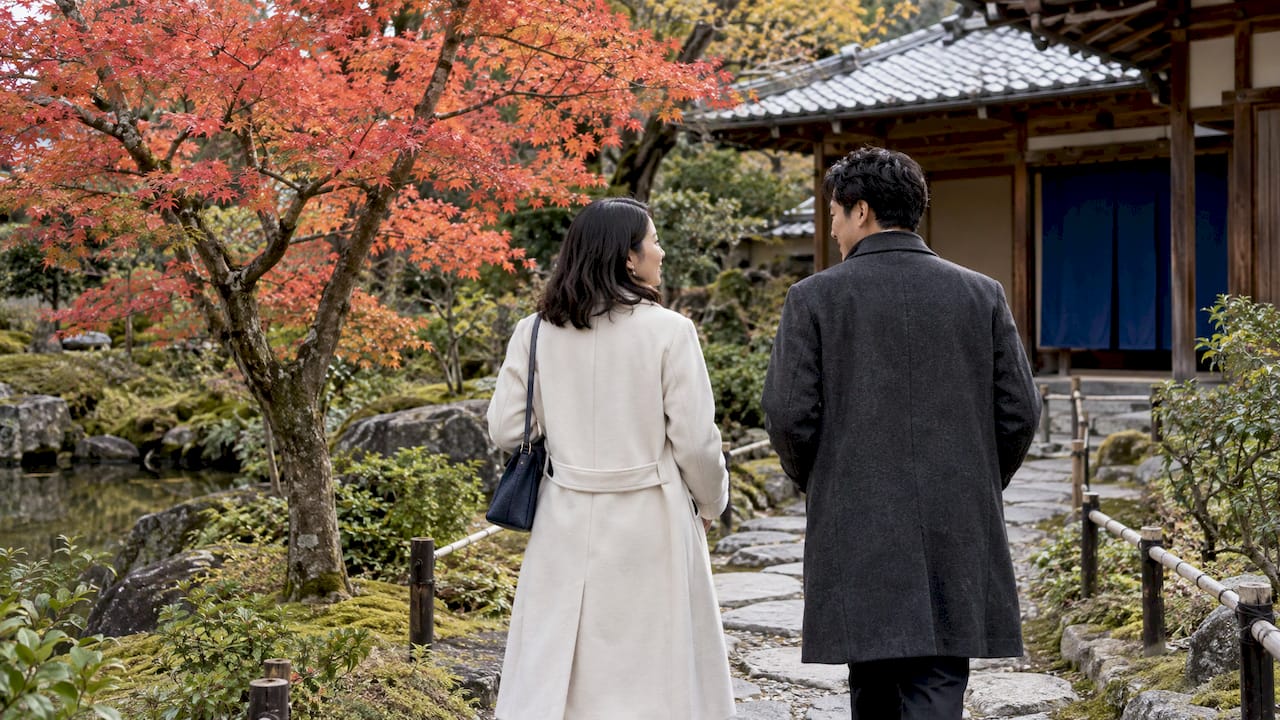
A honeymoon in Japan works best when you give it at least ten days, split it between a big city, a hot-spring town and the temples of Kyoto, and time it around the season you most want to see. Cherry blossoms in late March and early April are the famous draw, but the country rewards couples in every season. Below you will find the route, the timing, the romantic details worth paying for, and the preparation U.S. travelers need.
TL;DR
- Japan lets one trip hold city energy, quiet nature, food, culture and real relaxation, which is why so many couples choose it.
- Cherry blossoms generally bloom from the latter half of March to early May, moving north from Kyushu. Peak dates shift every year, so book flexible and watch the official forecast.
- A classic first route is Tokyo, Hakone, Kyoto and Nara, with Osaka or Hiroshima added if you have two weeks.
- Stay at least one or two nights in a ryokan, ideally with a private bath, and let a specialist arrange the rooms and dinners that are hardest to get.
- U.S. citizens should check passport validity and current entry rules well before departure.
Table of Contents
- Why couples choose Japan for a honeymoon
- The best time for a honeymoon in Japan
- How many days and which route
- Romantic experiences worth building the trip around
- Planning and preparing as a U.S. couple
- Our perspective: why a specialist is worth it in Japan
- Let us design your Japan honeymoon
- FAQ
- Sources
Why couples choose Japan for a honeymoon
The traditional fly-and-flop honeymoon is losing ground. Condé Nast Traveler reported in 2023 that couples increasingly want relaxation paired with local culture, new activities and active experiences, and it described Japan as a destination that offers that mix through cities, food, art, nature and traditional stays.
The Japan National Tourism Organization (JNTO) describes the same range in its honeymoon guide: modern and ancient cities, seasonal food, culture, nature and hospitality, with different highlights in each season. In practice that means you can spend a morning in a quiet garden, an afternoon wandering a neighborhood of tiny restaurants, and an evening soaking in a private hot spring, all within the same week.
There is also a practical reason. Japan’s rail network links the main honeymoon stops, so you spend your time on the experience rather than on logistics. JNTO notes that Tokyo to Kyoto takes only a couple of hours by shinkansen, and that Nara sits right next to Kyoto.
The best time for a honeymoon in Japan
The honest answer depends on what you want your photographs to look like. Most couples asking about timing are asking about cherry blossoms, so start there.
Cherry blossom season
JNTO’s cherry blossom forecast says sakura generally bloom from the latter half of March to early May, starting in Kyushu and moving north. Mountain areas, Tohoku and Hokkaido bloom later. For 2026, its estimates of first bloom ran from March 16 in Kochi and March 19 in Tokyo to April 19 in Sapporo and May 5 in Kushiro.
Tokyo’s official tourism guide describes the same pattern: Okinawa begins in mid-January, Tokyo in the last days of March, Tohoku in April, and Sapporo and Hakodate in the first week of May.
What this means for your plan:
- Pick a window, not a day. Bloom dates are not fixed and move from year to year. A trip built around one exact date can miss the peak by a few days either way.
- Build in a second chance. Starting in the south and heading north, or finishing in a cooler region, gives you more than one shot at full bloom.
- Book early. This is the most requested time of year, so the best ryokan rooms and restaurant tables go first. We usually advise couples to start planning many months ahead.
- Check the forecast close to departure. JNTO updates its forecast through winter and spring, and it is the best guide for fine-tuning which city you visit first.
The other seasons
JNTO’s guide to honeymoons is organized by season for a reason: Japan changes character as the year turns. Spring brings picnics under blossoming trees, and the cooler months bring seasonal menus and the deep pleasure of a hot spring. Each season suits a different kind of honeymoon, so choose by mood. If you are drawn to festivals and seasonal flowers, plan around them. If you want quieter temples and long, slow dinners, a time outside the blossom rush can feel far more private. Your wedding date will often decide this for you, and a good itinerary can be built around any month.
How many days and which route
Ten days is a comfortable minimum for Tokyo, Hakone and Kyoto without feeling rushed. Two weeks lets you add a fourth or fifth stop and still have rest days built in.
JNTO’s own two-week Golden Route is a useful template for a first visit. It links Tokyo, Hakone, Kyoto and Nara, Hiroshima and Osaka by rail, balancing cities, history, hot springs and food. We take that structure as a starting point and then personalize it, because a honeymoon should have fewer, better stops than a sightseeing tour.
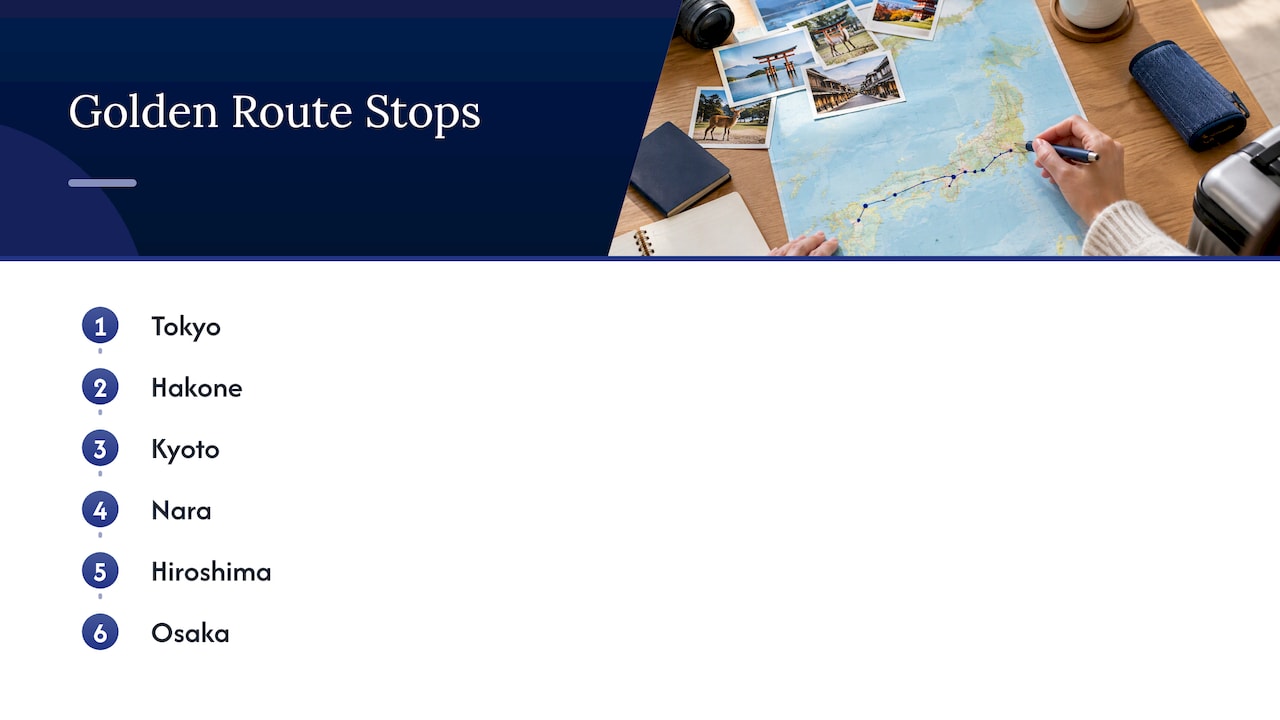
A sample 10 to 14 day honeymoon route
This is our suggested way to pace the trip, not a fixed package:
| Stop | Suggested nights | What it gives you |
|---|---|---|
| Tokyo | 3 to 4 | Restaurants, skyline views, neighborhoods, shopping, contemporary culture |
| Hakone | 1 to 2 | Hot springs, museums, ryokan stays, mountain scenery |
| Kyoto | 3 to 4 | Temples, gardens, tea ceremonies, bamboo groves, kimono walks |
| Nara (day trip) | 0 | Temples and the famous deer, next to Kyoto |
| Osaka | 1 to 2 | Street food, nightlife, entertainment |
| Hiroshima or Okinawa (optional) | 2 to 4 | History and reflection, or beach resort days to finish |
The order matters. Put Hakone between Tokyo and Kyoto so the busiest city days are followed by a real exhale. If your trip is long enough, end with beach time in Okinawa, which JNTO lists among the honeymoon options for beaches and resorts. You arrive home rested rather than needing a vacation from your vacation.
Where to spend your nights
Tokyo and Osaka are for dining and entertainment. JNTO points couples to restaurants, skyline views and contemporary culture in Tokyo. Think dusk over the city, a drink with a view, or a helicopter flight over the skyline for a splurge.
Kyoto and Nara are for tradition: temples, gardens, tea, Zen meditation, bamboo groves and ryokan hospitality.
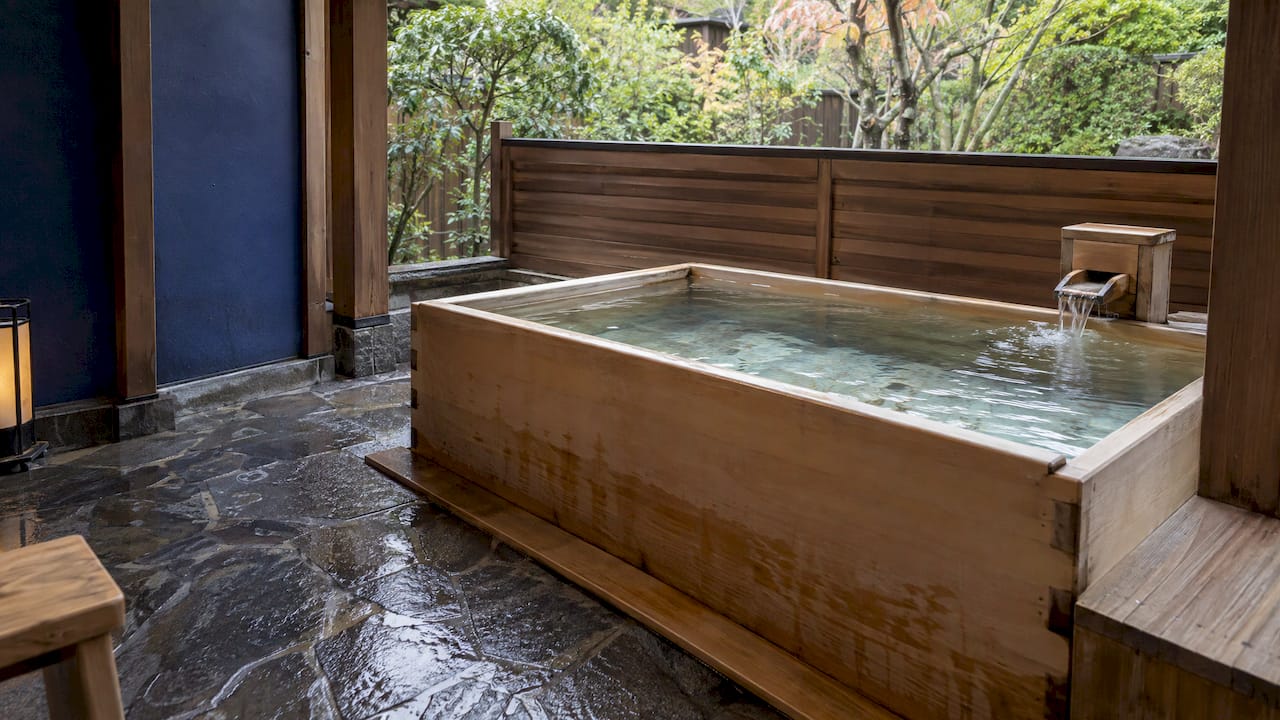
Hakone is the classic hot-spring escape, listed by JNTO for its hot springs and museums. Some Hakone ryokan are known for Mount Fuji views and private outdoor baths, which makes them a natural place for the quietest nights of the trip.
The Fuji Five Lakes are an alternative when you want outdoor and cultural experiences near the mountain.
If you only have a long weekend added to a business trip or you want a gentle sampler, our luxury Japan 3 day vacation package shows how a short stay can still feel considered.
Romantic experiences worth building the trip around
JNTO lists the romantic highlights couples can choose from: private onsen and ryokan stays, in-room kaiseki dinners, kimono walks and photography in Kyoto, skyline drinks in Tokyo, sushi or cooking classes, sake tasting, scenic train rides, seasonal flower viewing and hands-on crafts. That is a long menu, so here is how we would sort it.
- Choose one ryokan night as the centerpiece. A traditional inn with a private bath and a multi-course kaiseki dinner served in your room is the experience people remember longest. Ask for a room with a private bath when you book, since these rooms are limited.
- Do one hands-on thing together. A cooking class, a sushi lesson or a craft workshop gives you a shared memory that is not just something you looked at.
- Spend one evening on sake. A guided tasting teaches you what to order for the rest of the trip.
- Photograph Kyoto early. A kimono walk through the old streets is lovelier before the crowds arrive. Many of the major shrines and temples get busy, so a private guide and an early start change the experience.
- Take one scenic train ride. Rail is part of the romance in Japan, not just transport.
For more ideas to mix in, see our guide to romantic honeymoon experiences and our broader piece on luxury honeymoon ideas.
Ryokan etiquette in brief
A ryokan is a different rhythm from a hotel. Dinner is often served at a set time, you change into the yukata provided, and baths follow their own customs, with washing before you soak. Tell your planner about tattoos, dietary needs or allergies in advance, because shared baths and set menus are where these details matter most. A private bath removes most of that worry, which is why we pay attention to it when we choose rooms.
Planning and preparing as a U.S. couple
Start with passports. One entry-requirements guide says U.S. citizens can visit visa-free for up to 90 days for tourism, with a passport valid at least six months from entry, at least one blank page and a return ticket, and that airlines check this before boarding. Rules can change, so confirm them with the U.S. Department of State and the Japanese embassy before you book flights. If either of you has just changed your name after the wedding, make sure your passport and your tickets match.
A few other points we raise with every couple:
- Book flights and key stays together. Peak blossom weeks sell out, and ryokan rooms with private baths go early.
- Plan for jet lag. Japan is many hours ahead of the U.S., so keep your first day light and your first dinner close to the hotel.
- Pack for ryokan and temples. Slip-on shoes make life easier, since you will remove them often.
- Think about safety and logistics the way you would for any wedding-related trip. These wedding travel safety tips cover the preparation habits worth building before you leave.
- Decide on budget early. Costs vary widely by season and hotel level, and our honeymoon cost guide walks through how couples set a budget and where to spend it.
If you are also marrying in Japan rather than only honeymooning there, the paperwork is a separate project. Our guide to destination wedding legal steps explains the U.S. side of that process, and we can coordinate it with your travel plans.
Our perspective: why a specialist is worth it in Japan
We have spent 35 years designing high-end journeys, and Japan is one of the destinations where expert planning changes the result most.
The country is easy to enjoy and hard to optimize. The best ryokan rooms, the most sought-after tables and the guides who open doors are not always visible to a traveler searching online. We work with on-the-ground partners who know the right neighborhoods, the right timing and the right pace, so you spend your days in the experience rather than in a booking queue.
We also think the order of a honeymoon matters as much as the list. Cities first, hot springs in the middle, rest at the end. We design that rhythm around you, whether you want blossoms, food, quiet or all three.
We charge no service fees, we offer a price match guarantee, and we are open 24/7, so if a train, a flight or a reservation changes while you are halfway around the world, a real person is on it.
tammylevent@gmail.com
Let us design your Japan honeymoon
Elite Travel creates customized honeymoons with a concierge-level approach, from your first conversation to your return home. Tell us your season, your pace and what you picture, and we will build a route that suits you, with the right hotels, experiences and timing. See our honeymoon vacation packages or explore our luxury travel agency for Japan vacation packages to start.

If you want to compare Japan with other romantic destinations first, our honeymoon packages guide and our must-have honeymoon itinerary ideas are good next reads.
FAQ
When is the best time to see cherry blossoms in Japan?
JNTO says cherry blossoms generally bloom from the latter half of March to early May, beginning in Kyushu and moving north. Tokyo’s bloom typically arrives in the last days of March, while Sapporo and Hakodate bloom in the first week of May. Dates change every year, so choose a flexible window and check the official forecast as you get closer.
How long should a honeymoon in Japan be?
Ten days is a comfortable minimum for Tokyo, Hakone and Kyoto, and two weeks lets you add Osaka, Hiroshima or a beach finish. JNTO’s two-week Golden Route is built on that scale. Fewer stops with more nights each usually feels more romantic than a fast tour.
What are the most romantic things to do in Japan?
JNTO highlights private onsen and ryokan stays, in-room kaiseki dinners, kimono walks in Kyoto, skyline drinks in Tokyo, sushi or cooking classes, sake tasting and scenic train rides. Pick one signature experience per city rather than trying them all.
Do U.S. citizens need a visa for a honeymoon in Japan?
One entry guide says U.S. citizens can visit visa-free for up to 90 days for tourism, with a passport valid at least six months from entry and a return ticket. Rules can change, so confirm current requirements with the U.S. Department of State or the Japanese embassy before booking.
Sources
- Seasonal Guide to Honeymoons in Japan, Japan National Tourism Organization
- Spring in Japan: Cherry Blossom Forecast, Japan National Tourism Organization
- Sakura: where, when, and how to enjoy Japanese cherry blossoms, GO TOKYO
- How Japan Became the Hottest Honeymoon Destination, Condé Nast Traveler
- Golden Route two-week itinerary, Japan National Tourism Organization
- Japan Entry Requirements for US Citizens 2026
