



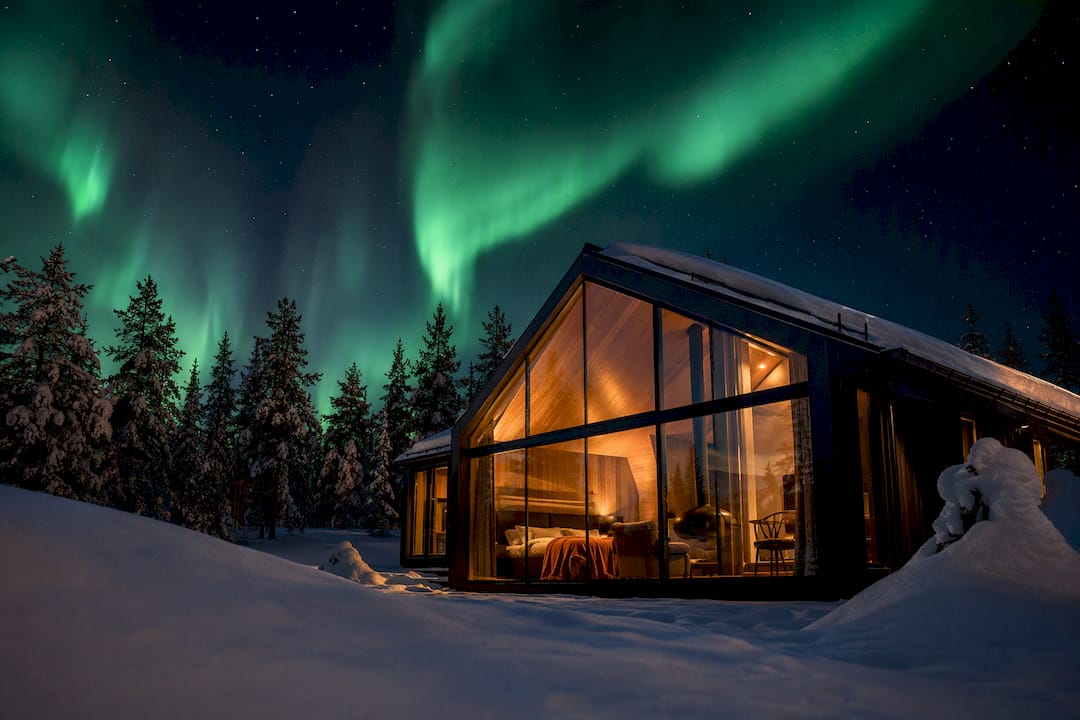
Finnish Lapland is one of the best places to combine luxury accommodations with strong odds of seeing the Northern Lights, but success depends on multi-night planning and concierge-level flexibility. The season runs long, the sky does the rest, and no operator can promise a display on any single night. Affluent travelers do best when they book several nights in a comfort-forward property and pair it with a concierge who can monitor conditions and pivot plans on short notice.
TL;DR:
- The best chances to see the Northern Lights in Lapland occur during September/October and February/March, with peak viewing hours around midnight to 2 a.m.
- Choosing multi-night stays and properties with private guides, real-time Aurora-alerts, and flexible transfers significantly increases the likelihood of witnessing a display.
- Booking accommodations with in-room glass viewing and private outdoor heaters or sauna sessions provides comfort during long observation periods.
- Pairing aurora watching with cultural experiences like reindeer herding, traditional dining, and sauna routines enhances the overall luxury trip.
- Local weather conditions, cloud cover, and timely movement are critical factors to monitor, requiring real-time forecasts and private transfers for optimal viewing.
Table of Contents
- Best times and nightly hours to see the Northern Lights in Lapland
- Luxury accommodation types that let you watch the aurora in comfort
- Curated high-end experiences to pair with aurora viewing
- Viewing logistics: weather, clouds, and the KP-index
- How to plan and book a luxury Northern Lights trip to Lapland
- Cultural experiences and local heritage integration in luxury Northern Lights trips
- Sustainability and eco-friendly luxury travel options in Lapland
- Health and safety considerations specific to winter luxury travel in Arctic conditions
- Concierge practices that raise the odds of a sighting
- How Elite Travel designs a luxury Lapland aurora trip
- Planning resources and aurora forecast tools worth bookmarking
- Sources
- FAQ
Best times and nightly hours to see the Northern Lights in Lapland
The Northern Lights season in Finnish Lapland runs from late August through early April, with the equinox periods in September and October, then again in February and March, often showing the strongest statistical activity. Outside those windows, either the skies stay too bright or the winter darkness closes in without the same seasonal boost in geomagnetic activity.
On a clear night, the most productive hours tend to fall between roughly 9 p.m. and 2 a.m., with midnight often the prime stretch. None of this guarantees a display on any given evening.
- Aim for a trip that spans the September/October or February/March windows for the best statistical odds.
- Keep evenings between 9 p.m. and 2 a.m. open and unscheduled.
- Treat any single night as one attempt among several, not the whole plan.
In northern Lapland, auroras can appear on roughly every other clear night during peak season, which is why the plan matters more than the date.
Luxury accommodation types that let you watch the aurora in comfort
Glass-sky suites and igloo-style rooms let guests watch from bed, which removes the discomfort of standing outside in subzero temperatures for hours. The tradeoff is that some glass properties sit closer to towns, where ambient light can dull a faint display, so privacy and exact positioning vary by property.
Heated wilderness cabins and private lodges sit farther from light pollution and usually pair with private transfers, so guests can be moved to a clearer patch of sky within minutes rather than relying on a shared shuttle schedule. Boutique lodges round out the top tier with Aurora-alert wake-up calls, private guides, in-room spa treatments, and late-night dining timed to a display rather than a set dinner hour.
- Look for heated glass ceilings or walls that allow in-room viewing without opening a door to the cold.
- Confirm private transport is included or bookable on demand, not shared with other guests.
- Ask whether the property offers an Aurora-alert or wake-up service tied to real-time conditions.
- Check for late-night dining or room service that can be timed around a sighting.
- Prioritize properties with an on-site spa or sauna for warming up between viewing sessions.
Pro Tip: Book a property with both an in-room glass viewing option and a private guide, so you are never choosing between comfort and mobility if the sky clears somewhere else.
Luxury lodging in Finland increasingly bundles these features together, which is worth confirming before you book rather than assuming every glass cabin includes a guide or alert service.
Curated high-end experiences to pair with aurora viewing
A well-designed Lapland itinerary treats the aurora as one part of the night, not the entire evening. Visit Finland recommends pairing a Northern Lights chase with other premium activities such as dining, sauna culture, and wildlife excursions, so the trip delivers regardless of what the sky does.
- Book a private aurora hunt with flexible transport, whether a minivan, a private snowmobile, or a helicopter where terrain allows, so your guide can reach clear skies fast.
- Add an exclusive husky or reindeer excursion timed for early evening, before the prime viewing hours begin.
- Arrange a gourmet private dinner scheduled around the forecast window rather than a fixed seating time.
- Set up heated outdoor viewing, whether a private terrace, a fire pit, or a heated tent, so you can stay out longer without discomfort.
- Close the night with a private sauna or heated pool session to warm up after hours in the cold.
Pairing lodging with a strong dining program is its own art, and outlets covering luxury hospitality and gastronomy have noted how much a well-timed meal adds to a late-night stay, something Lapland’s boutique lodges have leaned into with aurora-timed menus.
Viewing logistics: weather, clouds, and the KP-index
Cloud cover is the single biggest factor standing between you and a sighting. Even strong solar activity goes unseen if the sky above you is overcast, which is why guides watch hyper-local forecasts rather than regional ones.
The geomagnetic KP-index, measured on a scale of 0 to 9, indicates how far south a display might reach. A KP of 1 or 2 is often enough for northern Lapland, while higher readings push auroral visibility toward more southern latitudes. Auroral-oval forecast models estimate that intensity and location for short windows, but they do not account for local cloud cover or altitude, so pairing them with a live weather check matters.
- Watch hyper-local cloud forecasts alongside the KP-index rather than relying on either alone.
- Keep a private transfer on standby so you can move to a clear-sky pocket with little notice.
- Pack layered thermal wear, hand warmers, and a tripod if you plan to photograph the display.
Auroral-oval maps update in near real time, giving planners a short-term read on where activity is concentrated, though they still need a weather check to be useful on the ground.
How to plan and book a luxury Northern Lights trip to Lapland
A trip of four to seven nights gives you several attempts at clear skies rather than betting everything on one evening. Prime-season suites and private guides book out well ahead of the September and February peaks, so reserving early matters more than almost anything else in the process.
- Choose a trip length of four to seven nights within the September/October or February/March windows.
- Reserve accommodation and private guides as early as possible for peak dates.
- Ask any provider about private transfer availability, their Aurora-alert or monitoring process, and cancellation or rebooking flexibility.
- Confirm medical and travel insurance coverage suited to remote Arctic conditions before departure.
- Hold at least two or three evenings completely open for guided hunts rather than scheduling every night solid.
Pro Tip: Ask any lodge or guide directly how they monitor conditions overnight. A property with genuine 24/7 weather tracking will describe the process specifically rather than offering a vague assurance.
Bespoke, concierge-led planning tends to reduce the logistical risk of a fixed itinerary falling apart when the weather does not cooperate, since a planner can rebuild the schedule around what the sky is actually doing rather than what a brochure promised months earlier.
Cultural experiences and local heritage integration in luxury Northern Lights trips
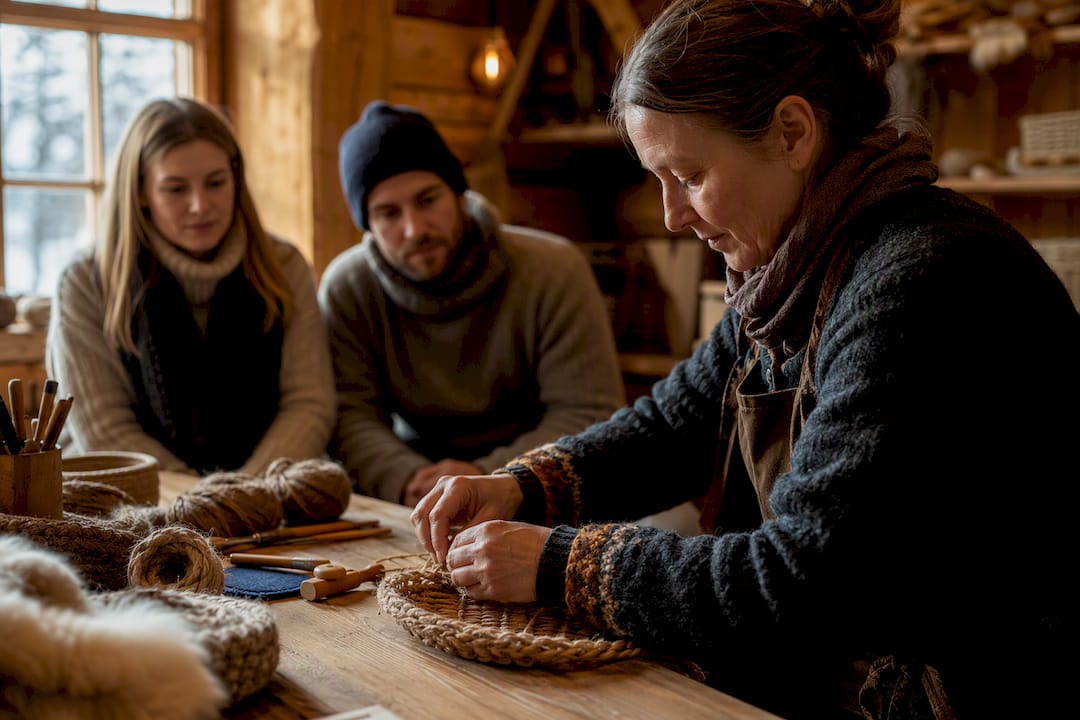
A Lapland trip built only around the sky misses much of what makes the region distinct. Sámi culture, the Indigenous heritage of the region, shows up in luxury itineraries through guided storytelling evenings, traditional reindeer husbandry visits, and craft demonstrations that go well beyond a quick photo stop. Many boutique lodges partner with local families to offer these experiences privately rather than as part of a larger group tour, which suits travelers who want depth over spectacle.
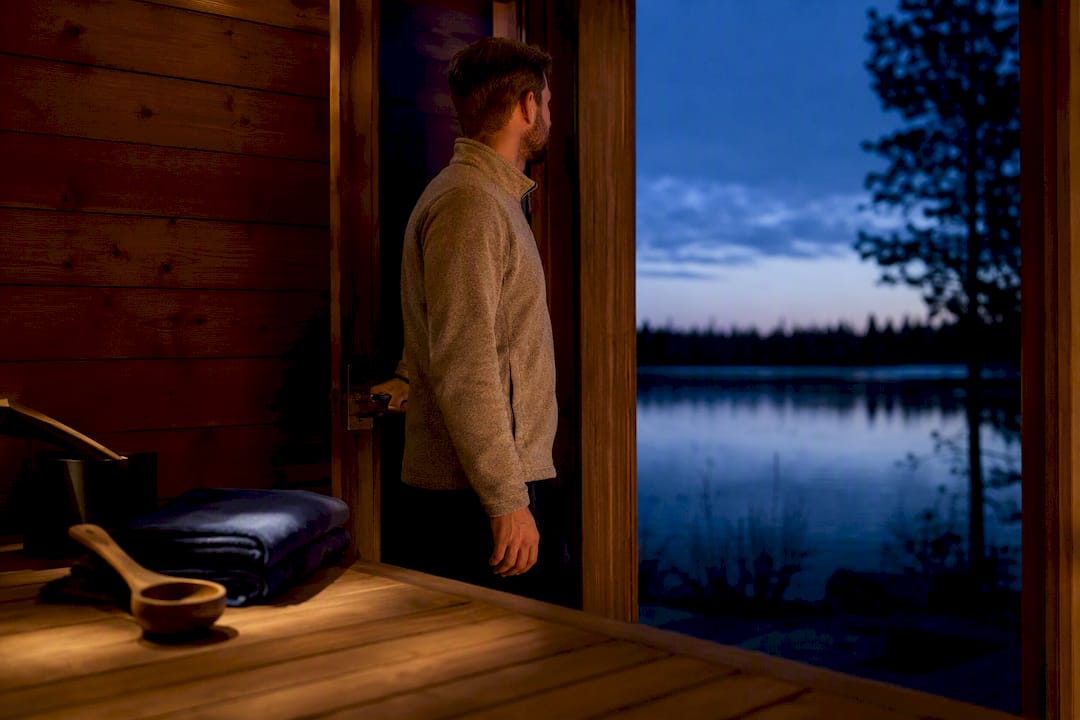
Finnish sauna culture also belongs on the list, not as an afterthought but as a genuine local tradition that pairs naturally with cold-weather evenings. A private sauna session, ideally lakeside or with a view of the sky, gives guests a way to experience a defining piece of Finnish life while they wait for conditions to clear.
Seasonal food traditions, including reindeer, Arctic char, and foraged berries prepared by local chefs, round out a culturally grounded trip. The best luxury operators fold these elements into the schedule around aurora windows rather than treating culture and sky-watching as separate itineraries competing for the same evening hours.
Sustainability and eco-friendly luxury travel options in Lapland
Luxury and low-impact travel are not opposites in Lapland, and several properties have built their reputation on exactly that balance. Many wilderness lodges run on renewable energy sources, given the region’s access to hydropower, and design their glass suites to minimize light pollution, which helps aurora visibility as much as it helps the surrounding ecosystem.
Small-group and private guiding, already a hallmark of the luxury tier, also tends to reduce the environmental footprint compared to large coach tours, since fewer vehicles and fewer people move through sensitive wilderness areas each night. Locally sourced dining, built around regional game, fish, and foraged ingredients, cuts down on the distance food travels and supports the same small producers featured in cultural itineraries.
Travelers who want to prioritize this angle should ask a lodge directly about its energy sourcing, waste practices, and relationships with local guiding families rather than assuming any luxury label implies a sustainable operation. The strongest properties tend to be specific and detailed when asked, which is itself a useful filter.
Health and safety considerations specific to winter luxury travel in Arctic conditions
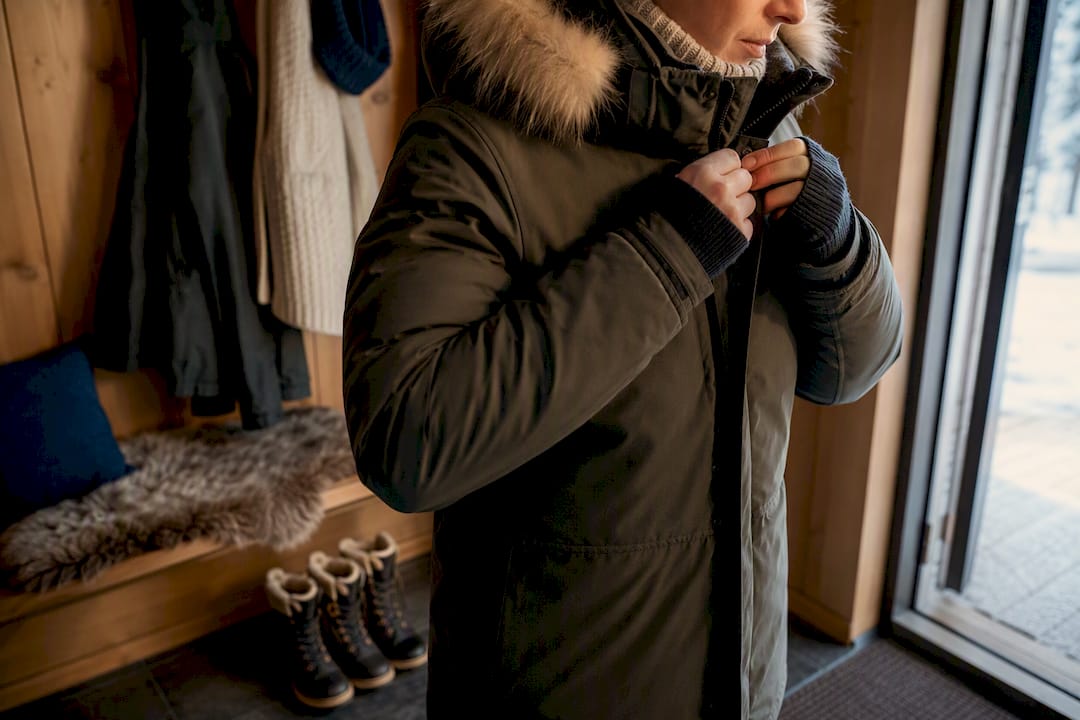
Arctic winter travel comes with real physical demands even for guests staying in heated luxury properties. Temperatures in Finnish Lapland regularly drop well below freezing overnight, and extended outdoor viewing sessions carry a genuine risk of frostbite or hypothermia without proper layering, which is why reputable lodges provide or recommend thermal outerwear rather than assuming guests will arrive prepared.
Travelers with respiratory or cardiovascular conditions should talk to a physician before planning extended cold-weather excursions, since the combination of cold air and physical activity, such as snowmobiling or dog sledding, can be more taxing than it appears. Comprehensive travel insurance that covers medical evacuation is worth confirming before departure, given the remote location of many premium lodges relative to full-service hospitals.
Road conditions and daylight hours also shift the calculus for private transfers. Confirm that any driver or guide is experienced with winter conditions and that vehicles carry appropriate cold-weather safety equipment, since this is a basic expectation for concierge-level service rather than an optional upgrade.
Concierge practices that raise the odds of a sighting
With extensive experience arranging high-end journeys across Europe, a well-run night matters as much as the season itself. The difference between an average trip and a concierge-grade one usually comes down to pre-arranged clear-sky transfers, a guide watching conditions overnight rather than checking once at dinner, and the flexibility to move guests at short notice when a pocket of clear sky opens elsewhere.
— tammylevent@gmail.com
How Elite Travel designs a luxury Lapland aurora trip
These trips are built around flexibility first: multi-night stays, private guides, and a plan that can shift the moment conditions change, designed to maximize the chance of a sighting.
- Customized itineraries built around preferred lodge style, whether glass suite or wilderness cabin.
- Local partnerships to handle clear-sky transfers and Aurora-alert coordination.
- Around-the-clock support, recognizing that an aurora window may occur outside regular office hours.
If Lapland’s luxury Northern Lights season fits your travel plans, explore Elite Travel’s Luxury Vacation Packages to start a conversation about a custom itinerary.
Planning resources and aurora forecast tools worth bookmarking
For seasonality and practical tips, Visit Finland’s guidance is a solid starting point, alongside real-time auroral-oval forecast maps and any lodge’s own Aurora-alert service.
Sources
- Best times to see the Northern Lights in Finland | Visit Finland
- Auroral activity — Auroral oval (SpaceWeatherLive)
FAQ
Which luxury hotel is best for viewing the Northern Lights?
There is no single best property, since the right choice depends on whether you prioritize in-room glass viewing, wilderness seclusion, or proximity to guided private hunts. Glass-sky suites suit travelers who want to watch from bed, while remote wilderness lodges suit those who want darker skies and private transfers to chase clearer conditions.
What month is best for Northern Lights in Lapland?
The strongest statistical activity tends to cluster around the equinox periods, in September and October and again in February and March. The full season runs from late August through early April, so travelers have a wide window to choose from beyond just those peak months.
Is Lapland very expensive?
Costs vary widely depending on lodge type, season, and how much private guiding and transfer service you build into the trip, with glass-suite and remote wilderness properties sitting at the higher end. A concierge-planned itinerary can help control costs by matching the level of private service to your actual priorities rather than defaulting to every add-on a property offers.
What are some of the best luxury hotels in Lapland?
Finland’s luxury lodging scene includes glass cabins, sky suites, and boutique wilderness lodges that commonly offer Aurora-alert services, private transfers, and on-site spa or sauna facilities. The right pick depends on whether you want in-room viewing, deep seclusion, or a boutique property with the most curated guiding and dining program.
