



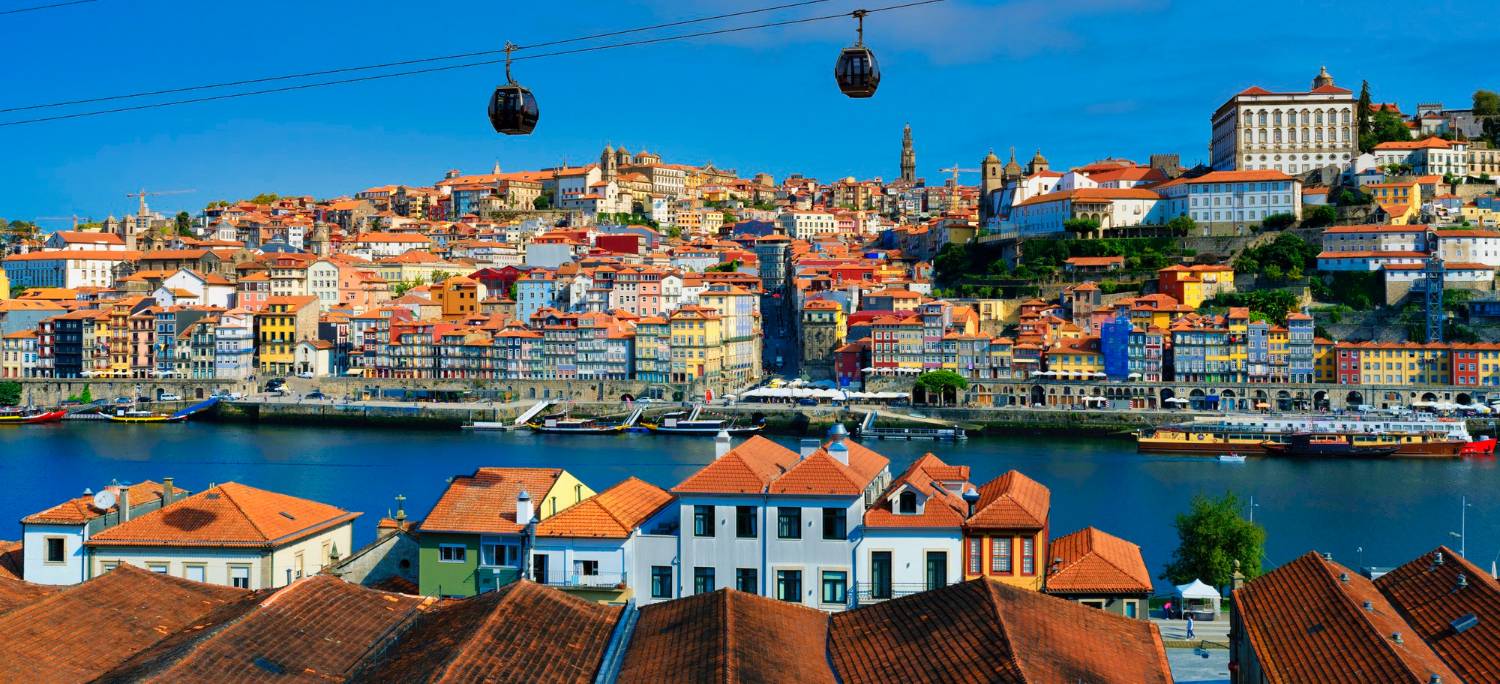
Porto: Where Riverfront Charm and Port Wine Come to Life
Porto is a soulful city of terracotta rooftops, riverside cafés, and historic wine cellars. Perched on the hills above the Douro River in northern Portugal, it blends medieval lanes, Belle Époque elegance, and a modern creative energy. From tiled train stations to legendary bookshops, and from the aroma of grilled fish along the quay to the city’s intimate, authentic, and beautifully alive feel, Porto feels intimate, authentic, and beautifully alive.
Highlights of Porto
– Ribeira District
Porto’s colorful riverfront quarter, with narrow lanes, stacked houses, and lively terraces along the Douro. The historic center, including Ribeira and the Dom Luís I Bridge, is a UNESCO World Heritage Site.
– Vila Nova de Gaia & the Port Wine Lodges
Just across the river, Gaia is home to the famous Port wine lodges, where barrels have aged for centuries. Many cellars offer guided tours, tastings, and panoramic views back over Porto’s skyline.
– Dom Luís I Bridge
The double-deck iron arch bridge soaring over the Douro is Porto’s most iconic landmark. It connects Porto and Gaia and offers spectacular views from its upper deck.
– Livraria Lello & Clérigos
Often ranked among the most beautiful bookshops in the world, Livraria Lello is a neo-Gothic treasure with a sweeping staircase and stained-glass ceiling, just steps from the Clérigos Tower and church.
– São Bento Station
A working railway station turned art gallery, São Bento is famous for its vast azulejo (tile) panels depicting Portuguese history in blue and white.
– Foz do Douro & Atlantic Beaches
Where the Douro meets the Atlantic: chic cafés, a seaside promenade, and easy access to beaches and surf spots make this area perfect for a sunset stroll.
– WOW – World of Wine
A modern cultural complex in Gaia set in regenerated wine warehouses, with museums, restaurants, and experiences dedicated to wine, Porto’s history, and Portuguese culture.
Call Elite Travel at (727) 726-9090 to book your trip today.
15 Fun Facts about Porto :
1. Ancient port city: Porto’s roots stretch back around 2,000 years; the Romans called it Portus, meaning “port,” which later helped give Portugal its name.
2. UNESCO-listed heart: The historic center of Porto, together with the Dom Luís I Bridge and nearby monastery, is a recognized UNESCO World Heritage area.
3. Home of Port wine: True Port wine must come from the Douro Valley and has traditionally been aged and stored in the lodges of Vila Nova de Gaia, just across the river from Porto.
4. A city of six bridges: Porto’s skyline is defined by six bridges spanning the Douro, including the Dom Luís I, Arrábida, and Maria Pia bridges—often admired on “six bridges” boat cruises.
5. An Eiffel connection: The Dom Luís I Bridge was designed by Théophile Seyrig, a disciple and former partner of Gustave Eiffel, and opened in the late 19th century as an iron engineering masterpiece.
6. World-famous bookstore: Livraria Lello, opened in 1906, is frequently ranked among the world’s most beautiful bookshops, with neo-Gothic architecture and a dramatic forked staircase.
7. Tile art everywhere: Porto is a city of azulejos—most famously at São Bento Station, where thousands of tiles illustrate historic battles, royal processions, and rural life.
8. Francesinha feast: Porto’s signature sandwich, the francesinha (“little French girl”), stacks cured meats, steak, melted cheese, and a rich beer-based sauce—comfort food turned legend.
9. Rabelo boats on the river: Traditional rabelo boats once carried Port barrels downriver from the Douro Valley vineyards to Gaia; today they mostly serve sightseeing cruises.
10. Mild Atlantic climate: Porto enjoys a temperate Atlantic climate with warm summers and relatively gentle winters, making it a great year-round destination.
11. WOW factor: The World of Wine district in Gaia transformed old Port warehouses into museums, restaurants, and cultural spaces, giving Porto a new hub for wine and culture lovers.
12. Blue-and-white cityscape: Many churches, like Igreja do Carmo and Capela das Almas, are wrapped in blue-and-white tile murals, turning Porto into a living ceramic gallery.
13. Steep streets, big views: Built on hills, Porto rewards every climb with dramatic viewpoints over the river, bridges, and layered rooftops.
14. Old-world charm, fresh creativity: Alongside historic cafés and traditional taverns, Porto has a thriving contemporary art and design scene, especially around the Miguel Bombarda art district.
15. Budget-friendly gem: Compared to many Western European cities, Porto often offers excellent value on dining, wine, and accommodation—one reason it’s frequently called an “underrated” European city.
Questions and Answers about Porto:
1. Where is Porto located?
-Porto is in northern Portugal, on the banks of the Douro River, a few kilometers from where it meets the Atlantic Ocean.
2. What is Porto best known for?
-Porto is famous for its Port wine, UNESCO-listed historic center, riverside Ribeira district, iconic Dom Luís I Bridge, and beautifully tiled buildings and churches.
3. Why is Porto important to the history of Port wine?
-Port wine is produced in the Douro Valley but has historically been aged, blended, and shipped from the lodges in Vila Nova de Gaia, making Porto central to the wine’s story and trade.
4. What is there to do in the Ribeira district?
-In Ribeira, you can wander narrow medieval streets, relax at riverside cafés, take a Douro river cruise, photograph the colorful facades, and cross the Dom Luís I Bridge to Gaia.
5. Can you walk across the Dom Luís I Bridge?
-Yes. You can walk across both the lower deck (close to the river) and the upper deck (shared with the metro), which offers some of the best views over Porto and Gaia.
6. What are Port wine lodges, and can visitors tour them?
-Port wine lodges are cellars where Port is aged and stored. Many in Vila Nova de Gaia are open to visitors, offering guided tours, tastings, and terraces overlooking Porto.
7. What makes Livraria Lello so special?
-Livraria Lello is known for its ornate facade, stained-glass skylight, and curving staircase—so striking that it’s often listed among the most beautiful bookshops in the world and draws book lovers from everywhere.
8. Is Porto a walkable city?
-Yes—most main sights are within walking distance in the historic center. However, Porto is hilly, so expect stairs and inclines; many visitors mix walking with trams, metro, and taxis.
9. What local foods should I try in Porto?
-Don’t miss francesinha, fresh grilled sardines, cod dishes (*bacalhau*), caldo verde soup, and pastries or cheese paired with a glass of Port or Douro wine.
10. Is Porto good for a weekend break or should I stay longer?
-Porto is perfect for a 2–3 day city break, but many travelers stay longer to enjoy wine tours in the Douro Valley, beach time along the coast, and deeper exploration of museums and neighborhoods.
11. What is WOW (World of Wine)?
-WOW is a cultural district in Vila Nova de Gaia built in renovated wine warehouses, featuring museums, wine experiences, restaurants, and panoramic viewpoints over Porto.
12. When is the best time to visit Porto?
-Spring and early autumn are ideal, with warm, pleasant weather and fewer crowds, but Porto’s mild climate makes it attractive year-round.
13. Is Porto safe for travelers?
-Porto is generally considered very safe. As in any popular city, standard precautions against pickpockets in busy tourist areas are recommended.
14. Can I combine Porto with a Douro Valley trip?
-Yes. Many visitors take a day trip or overnight stay in the Douro Valley to visit wine estates (*quintas*), sample wines, and enjoy scenic boat or train journeys along the river.
15. What makes Porto different from Lisbon?
-Porto feels more compact and intimate, with a slightly more traditional, local vibe. It’s known for its wine culture, dramatic riverside setting, and steep cobbled streets, while Lisbon has a larger, more sprawling coastal feel. Together, they make a perfect Portugal duo.
Call Elite Travel at
(727) 726-9090 to book your trip today.