



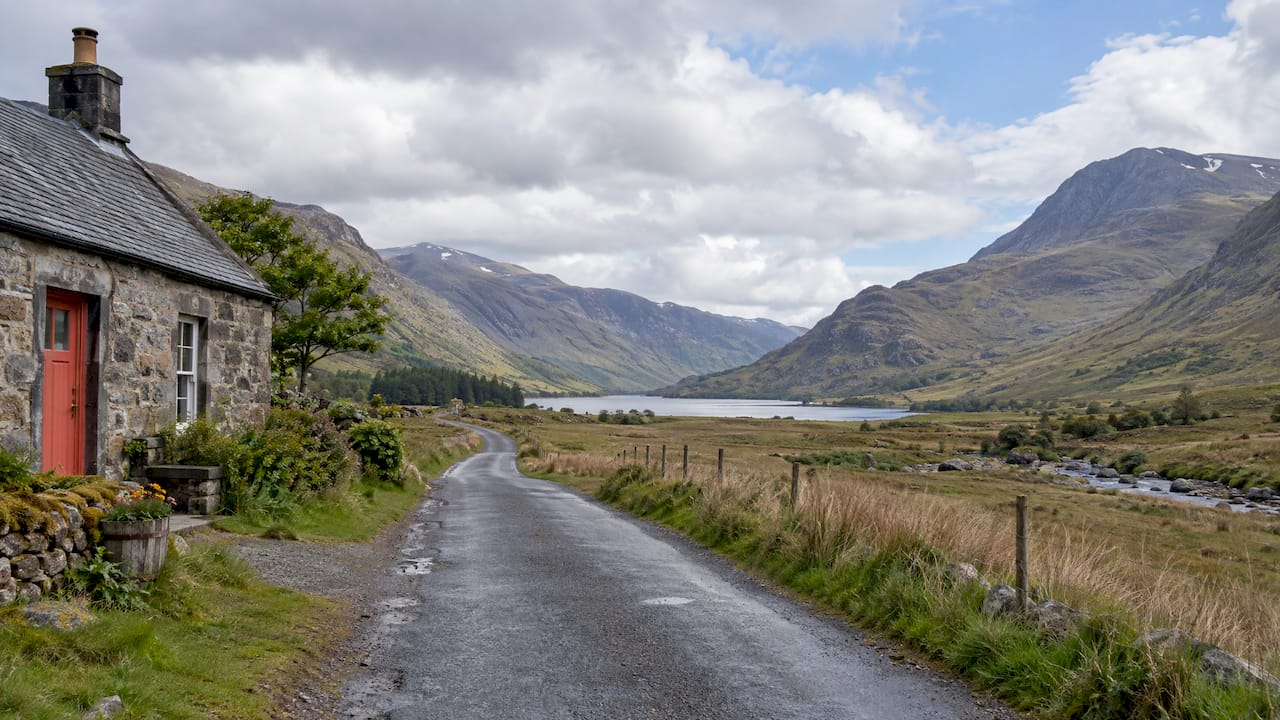
The best time to visit Scotland for most travelers is May, June or September: long daylight, the driest stretch of the year, fewer crowds than July and August, and midges that are either not yet out or already fading. The right month for you also depends on what the trip is for. A honeymoon in the Highlands, a whisky itinerary, a family holiday timed to school breaks and a corporate incentive group each pull toward a different window, and we plan all of them around Scotland’s calendar.
TL;DR
- Best overall: May, June and September balance dry weather, daylight and manageable crowds.
- Warmest and busiest: July and August bring highs around 18°C (64°F), festivals, peak crowds and peak midges.
- Midges: They are active from late May to early September, worst on the west coast from late July to early August, and almost absent in the east.
- Quietest: November to February is cold, dark and wet, but it brings Hogmanay, Burns Night and dark skies for stargazing.
- Book early: The best hotels and private experiences in peak weeks and festival periods fill well ahead.
Table of Contents
- The short answer: three months that work for almost everyone
- Scotland weather by month at a glance
- Spring (March to May): lambs, empty roads and the start of the golf season
- Summer (June to August): the longest days and the biggest crowds
- Autumn (September to November): golden light and the stag rut
- Winter (December to February): Hogmanay, whisky and dark skies
- Midge season in Scotland: when it is worst and how to avoid it
- East versus west: why location matters as much as month
- When Scotland is busiest, and what that means for luxury travel
- Matching the month to the trip
- Planning around your dates: practical points for American travelers
- Plan your Scotland trip with us
- FAQ
- Sources
The short answer: three months that work for almost everyone
Scotland is mild, wet and windy, with warm months rather than hot ones. No month guarantees clear skies, so the goal is to choose the window where the odds, the light and the crowds all lean in your favor.
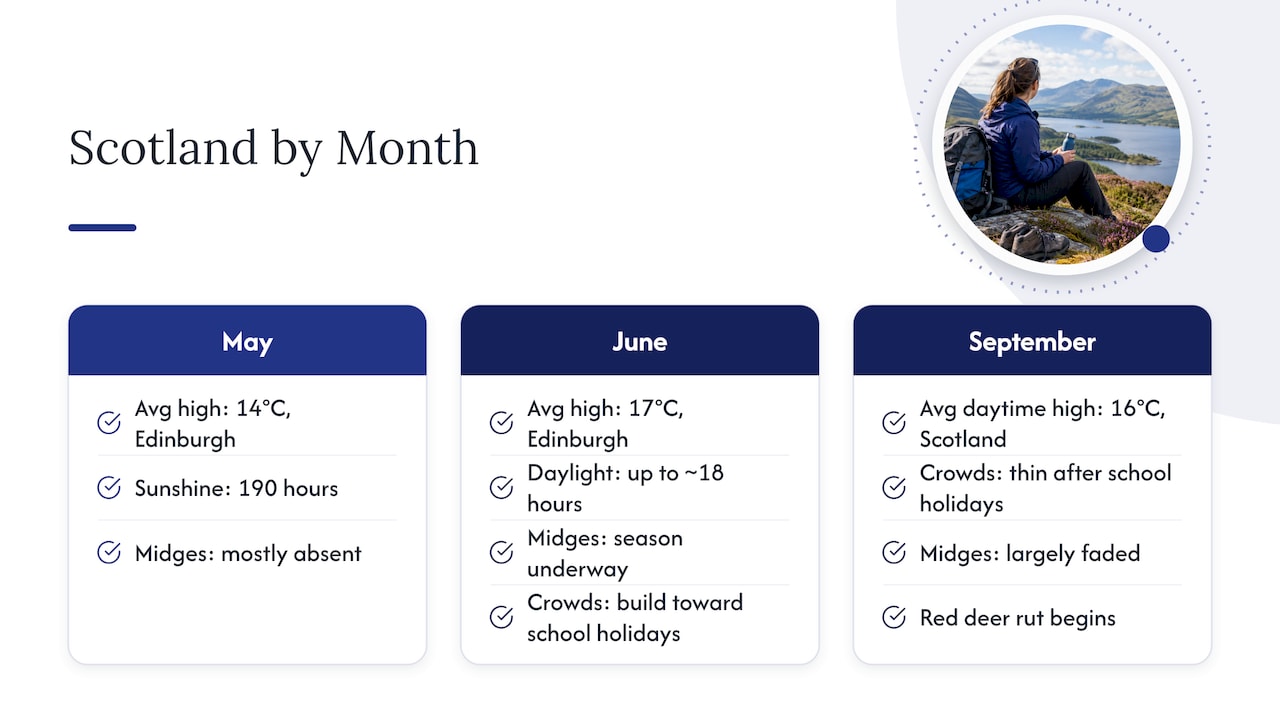
May is the pick many Scots make. Lonely Planet notes that many Scots rate it the best month of the year, with long days, rising temperatures, dry weather and mostly no midges. Edinburgh’s average high is 14°C (57°F) in May. Meteorological records for 1991 to 2020 show May is the sunniest month in Edinburgh, with 190 hours of sunshine, more than July.
June gives you the longest days of the year, up to roughly 18 hours of daylight, and Edinburgh’s average high climbs to 17°C (62°F). Its trade-off is that the Highland midge season is underway and crowds build toward the school holidays.
September is the quiet favorite. Weather2Travel’s figures put the average daytime high across Scotland at 16°C (61°F) in September, crowds thin once the school holidays end, and the midges have largely faded. It is also when the red deer rut begins in the Highlands.
If you can only remember one rule: aim for the shoulder seasons. Our own guide to shoulder season across Europe explains why the weeks on either side of peak summer usually deliver the best hotel availability and the least friction.
Scotland weather by month at a glance
Scotland’s climate is largely temperate, if changeable, and rarely extreme at either end. VisitScotland puts winter temperatures at roughly 2°C to 6°C (36°F to 43°F) and the July and August peak at about 12°C to 19°C (54°F to 66°F).
The monthly pattern from Weather2Travel’s Scotland climate averages looks like this:
| Period | Typical daytime high | Daylight and rain notes |
|---|---|---|
| January and February | 6°C (43°F) | Coldest months; January has about 18 days with some rain and only about 1 hour of sunshine a day |
| April | Mild, cool | Driest month on average, at 46 mm of rain |
| May | 14°C (57°F) | Long days, one of the sunniest months |
| June | Up to about 17°C (62°F) in Edinburgh | Up to 18 hours of daylight and about 6 hours of sunshine a day |
| July and August | 18°C (64°F) | Warmest months, around 14 rain days in July |
| September | 16°C (61°F) | Settled, crisp days and 13 hours of light in Inverness |
| October | Cooling | Wettest month on average, at 73 mm |
| December | 7°C in Edinburgh | About 7 hours of daylight |
Two points matter more than the averages. First, April, May and June are the driest and sunniest months almost everywhere, while October to January are the wettest. Second, the east is far drier than the west, which we cover below.
Daylight shapes a trip as much as temperature. Around midsummer you get about 18 hours of light in central Scotland and almost no full darkness in the far north, while at midwinter it drops to roughly 6 to 7 hours. Long evenings in June mean a late dinner after a day on the water without losing a minute of the landscape.
Spring (March to May): lambs, empty roads and the start of the golf season
Spring in Scotland is a gentle build. VisitScotland lists leaves and plants bursting into life, newborn animals and Whisky Month among the season’s draws. National Geographic adds that many attractions are open without the summer crowds, golf courses open in April and the season officially starts in May.
March and early April can still feel like winter in the Highlands, so if mountains and glens are the point, wait for May. Early April also lands on the Scottish Easter break, one of the busiest windows of the year, so a quiet April trip means avoiding the Easter weeks.
Spring suits couples, golfers, whisky travelers and anyone who wants Edinburgh, St Andrews and the Highlands with room to breathe.
Summer (June to August): the longest days and the biggest crowds
Summer brings sunshine, festivals and Highland games. July and August bring the warmest weather, with city highs of 17°C to 19°C (63°F to 66°F), and the Edinburgh festivals in August are a global draw. Daylight is generous, which makes road trips and island hopping easy.
The cost is demand. Scotland’s busiest windows are the summer school holidays from late June to mid-August and the Edinburgh Festival in August. National Geographic notes that accommodation along popular routes such as the West Highland Way fills up well in advance. Luxury properties, private guides and the best tables follow the same pattern.
Summer is the right call when school dates dictate your calendar, when you want the festivals, or when you are traveling as a multigenerational family and need the warmest odds. Book it early, and plan the west coast with midges in mind.
Autumn (September to November): golden light and the stag rut
Autumn begins as Scotland’s best-kept secret and ends as a moody, wet season. VisitScotland points to golden leaves, migrating birds and St Andrews Day. National Geographic highlights the changing leaves that create arresting scenes in forests.
September is the sweet spot. Highland daytime highs around 16°C (61°F), crisp mornings, around 13 hours of daylight in Inverness and crowds easing after the school holidays make it excellent for scenic drives, distillery visits and walking. Weather2Travel’s Inverness figures show about 4 hours of bright sunshine a day in September, but also frequent showers, so pack layers and a proper waterproof.
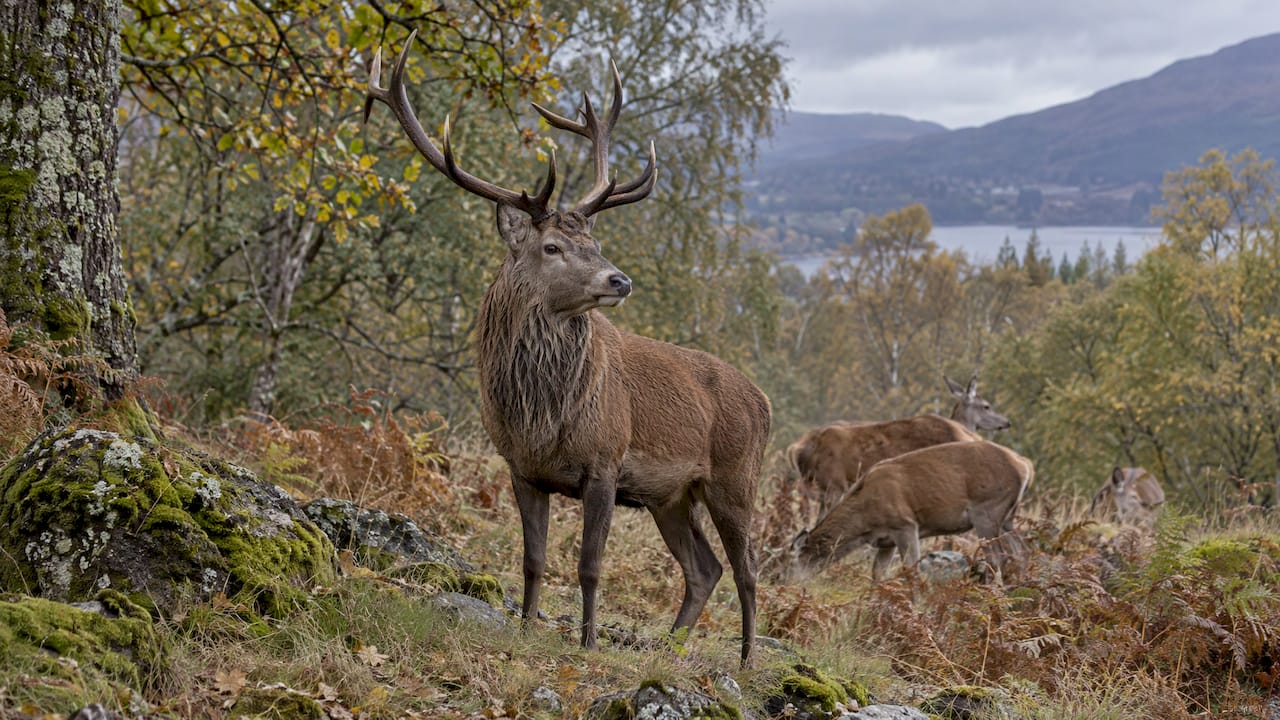
October is the wettest month on average and has its own busy spell around the mid-October half-term, but it is quiet outside that week and the midges are gone. November is cold and dark, and the Edinburgh Christmas Market begins that month.
Winter (December to February): Hogmanay, whisky and dark skies
Winter is for a different kind of trip. VisitScotland lists snow, Christmas fairs, Hogmanay and Burns Night. Lonely Planet says the November to March stretch is wilder and cozier, with whisky-warmed nights, and it is also the best time to stargaze and watch for the northern lights.
Daylight is short, at about 7 hours in December, and many rural attractions run reduced hours. That makes winter the season where good planning matters most: private transfers, hotels with a fireside and a pre-booked distillery visit turn short days into an asset. It is also the cheapest period, since November, January and February are the lowest-priced months, apart from Hogmanay week itself.
If the aurora is your main goal, weigh Scotland against other northern destinations. Our comparison of Iceland versus Norway for the northern lights shows how to decide, and Iceland’s own seasons are laid out in a best time to visit Iceland guide.
Midge season in Scotland: when it is worst and how to avoid it
Midges are tiny biting flies, and they are the one weather-adjacent factor that can change how a Highland day feels. According to Scotland Tourism, they emerge in clouds on still, damp evenings from late May to early September, peak from late July to early August, and are mostly a west coast problem. Think Skye, Lochaber and Torridon. They cannot fly in wind above about 6 mph, dislike bright sunshine and are nearly absent on the east coast.
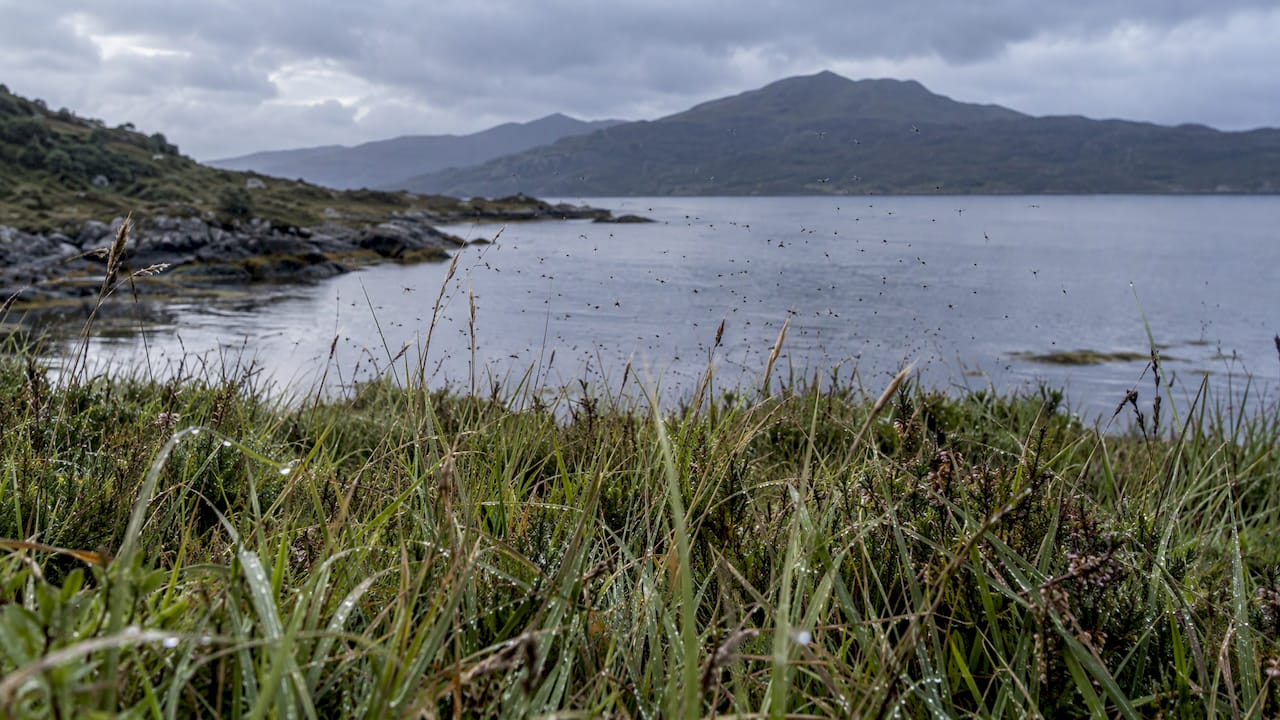
Lonely Planet adds that the shoulder seasons border midge season, which runs from May to October, and that the flies are ubiquitous west of the Highlands, on the islands and in parts of the Cairngorms.
How to keep them from spoiling a trip:
- Choose your month. Late April to early May, or mid-September onward, sidesteps the peak.
- Choose your coast. The east coast and breezy island locations see far fewer.
- Plan the hours. Dawn and dusk are worst, so schedule dinners indoors or on a breezy terrace.
- Cover up. Light-colored long sleeves and trousers help, as does a repellent containing DEET or Saltidin (icaridin).
- Make your own breeze. A handheld fan or a fire pit keeps them away from an evening outdoors.
For the reader who wants a Highland itinerary in July without the swarms, the answer is route design: east coast and coastal-breeze stops by evening, indoor and boat-based activities at dusk.
East versus west: why location matters as much as month
The same week can be dry in Edinburgh and soaked on Skye. Edinburgh and the east coast typically see around 130 to 150 rain days a year, while the west Highlands get 200 to 250. That is why a month-only answer is incomplete.
In practice:
- Edinburgh, St Andrews and the east: drier, cooler winds off the sea, nearly no midges, a good base from spring through autumn.
- Skye, Lochaber and the west Highlands: the most dramatic scenery, but the wettest and the most midge-prone in midsummer. September and May are the safest months.
- Islands: breezy, which helps with midges, but exposed. Ferry and weather flexibility matter.
The Highlands have a maritime climate in which good weather is not guaranteed in any month. The difference between a great week and a poor one is less about the monthly average than whether a settled high-pressure spell arrives, so build slack into the schedule and keep an indoor option for each day.
When Scotland is busiest, and what that means for luxury travel
The peaks are predictable: early April for Scottish Easter, late June to mid-August for school holidays, August for the Edinburgh Festival and mid-October for half-term. November to February are the quietest months by a long way.
For a traveler booking quality, crowds matter less in terms of sightseeing queues and more in terms of availability. A castle hotel with eight rooms, a private distillery tour, a skilled driver-guide or a lodge on a loch can be committed months ahead for festival weeks and prime summer dates. If your dates are fixed by school or work, the earlier you start, the more choice you have. If your dates are flexible, May, early June and September are where the best properties are easiest to secure.
Matching the month to the trip
| Trip | Best window | Why |
|---|---|---|
| Honeymoon or romantic escape | Late May to June, or September | Long evenings, dry weather, fewer midges |
| Whisky and distillery travel | May (Whisky Month) or September | Comfortable weather, quieter distilleries |
| Golf | May to September | Courses fully into the season from May |
| Family or multigenerational | July and August | Matches school holidays, warmest odds; plan midge-free stops |
| Wildlife and photography | September and early October | Stag rut, golden light, clear visibility |
| Corporate incentive group | May, early June or September | Better group availability and lower pressure on venues |
| Winter celebration | Late December to January | Hogmanay and Burns Night, cozy-castle stays |
If whisky is part of your plan, see how we approach whisky experiences for U.S. travelers and our guide to whiskey tours in Edinburgh. For group programs, our guide to European incentive trips covers timing and planning.
Planning around your dates: practical points for American travelers
A few things make the best month work in practice:
- Build in two to three nights per base. Scotland’s roads are slower than the map suggests, and single-track roads in the Highlands add time.
- Pack layers in every month. Even in July, a waterproof layer earns its space.
- Check mountain forecasts if you plan hill days. The Mountain Weather Information Service (MWIS) publishes multi-day hill forecasts.
- Think about jet lag and flights. Evening arrivals from the U.S. work well with a night in Edinburgh or Glasgow before heading north.
- Start with the international checklist. Our 12 essential actions for planning an international trip walks through documents, timing and logistics.
Our perspective: choose the month, then design the days around it
After 35 years of designing high-end journeys, we have learned that the question “when should we go?” is really two questions: which month suits your priorities, and which route suits that month. Scotland rewards that second step more than most places. The same September can mean crisp, golden days on the east coast and a soaking on the west, and the same July can be a festival delight in Edinburgh and a midge-bound evening on Skye.
That is why we build Scotland itineraries around the season rather than slotting a season into a standard route. We know the destinations and the right on-the-ground partners, so a peak-season trip can pair west coast scenery with breezy, midge-light stops at dusk, and a winter trip can put a private distillery visit and a fireside dinner where the short days would otherwise cost you time.
We charge no service fees, we offer a price match guarantee so you can book with confidence, and we are open 24/7, because weather and travel do not keep office hours.
tammylevent@gmail.com
Plan your Scotland trip with us
If you have a month in mind, or only a rough season, we can shape the rest. Elite Travel designs one-on-one, concierge-level itineraries for Scotland, from honeymoons and milestone celebrations to family trips and corporate groups, with hotels, experiences and timing chosen around the weather and crowd patterns above. Start with our Scotland vacation packages, or explore luxury vacation packages more broadly.
Honeymooners can see our honeymoon vacation packages, and groups can read about incentive travel planning.
FAQ
What is the best month to visit Scotland?
For the best balance, choose May or September. May offers long days, some of the driest and sunniest weather and mostly no midges, while September has settled weather, thinner crowds and the start of the deer rut. June is a close third if you want maximum daylight.
When is midge season in Scotland?
Highland midges are active from late May to early September, with the worst of it from late July to early August on the west coast. They are nearly absent on the east coast and struggle in wind and bright sun. Visiting in April, early May or from mid-September avoids most of the problem.
What is Scotland’s weather like in September?
Expect daytime highs around 16°C (61°F), cooler nights, about 13 hours of daylight in Inverness and a mix of bright spells and showers. It is often among the most stable months of the year, though no month is guaranteed, so pack layers and a waterproof.
How many days do I need for Scotland?
Plan at least five to seven days to combine Edinburgh with one region such as the Highlands or Speyside whisky country, and ten days or more to add Skye or the islands. Slow roads and changeable weather reward a few nights in each base rather than daily moves.
Sources
- VisitScotland: Frequently Asked Questions about Scotland
- Lonely Planet: The best time to visit Scotland
- Weather2Travel: Scotland weather by month
- Scotland Tourism: Scotland weather by month
- Scotland Tourism: Scotland travel tips
- National Geographic: The essential guide to visiting Scotland
- Love from Scotland: When to visit Scotland
- Easy Transfer Iceland: Best time to visit Iceland
