




An all-inclusive corporate retreat bundles lodging, meals, drinks, activities and often meeting space into one per-person rate, so your team spends its energy on the agenda instead of on receipts. The catch is that “all-inclusive” has no standard definition. One resort folds in taxes, fees and gratuities, while another charges them on top, and meeting-room access is where the surprises tend to hide. This guide shows what packages usually cover, what to confirm in writing, how to estimate the real total and how to build a schedule that works.
TL;DR
- An all-inclusive retreat rate usually covers rooms, food, beverages and activities, but taxes, service fees, AV and beverage upgrades vary by property, so ask for a line-by-line list.
- Published group packages in the US show the range: one Texas venue advertises $545 to $650 per person, per night with taxes, fees and gratuities included.
- The headline rate is not your budget. Food-and-beverage minimums, attrition clauses, cancellation terms and meeting-room rules decide the final bill.
- Settle dates, headcount, goals, dietary needs and transportation before you contract, then compare venues on the same criteria.
- A luxury travel advisor who charges no service fee can do the comparison and negotiation for you.
Table of Contents
- What an all-inclusive corporate retreat package typically includes
- Meeting space and services to confirm before you choose
- Activities: team building, wellness and leisure
- A sample four-day retreat itinerary
- How to estimate the real cost
- Read the contract before you sign
- Compare destinations and venues on the same criteria
- What to settle before you contract
- Our perspective: where retreat planning goes wrong
- Let us plan your retreat
- FAQ
- Sources
What an all-inclusive corporate retreat package typically includes
The core is simple. All-Inclusive by Marriott describes its corporate offering as one price covering rooms, food, beverages, entertainment, taxes, fees, gratuities and experiences, with amenities varying by property. That is the generous end of the definition.
A wellness-focused example shows how differently a package can be built. Miraval Austin’s team retreat package includes discounted accommodations, meals, snacks, smoothies, non-alcoholic beverages, one private group culinary experience, airport shuttle service or parking, access to resort amenities, scheduled wellbeing programming and gratuities. Taxes and service fees still apply there, and alcohol is not part of the bundle.
A ranch-style venue is different again. Lucky Arrow Retreat in Texas lists lodging, chef-prepared catering, meeting spaces, AV technology, planning and event coordination, resort amenities, staffing, taxes, fees and gratuities in its per-person rate. Customized beverage packages and curated experiences can be added.
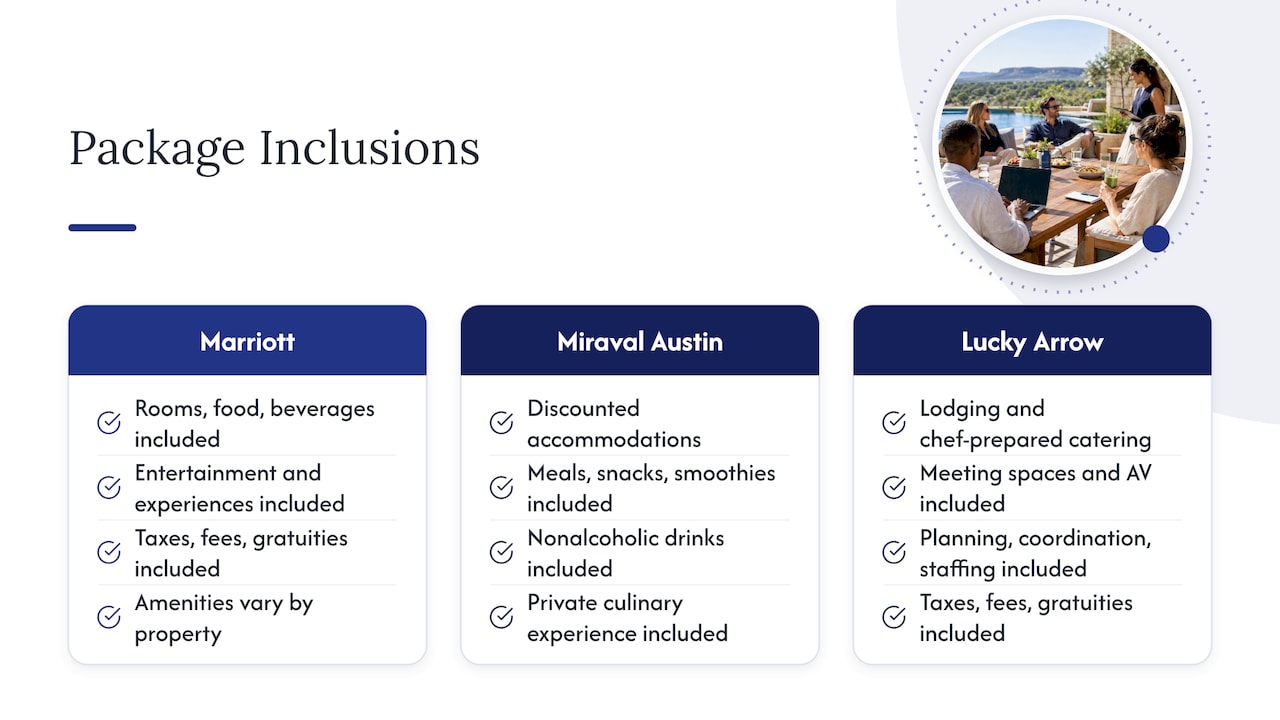
Three packages, three different answers to the same question. Before you compare prices, compare what each price contains.
Usually included
- Guest rooms for the nights stated
- Daily meals and, depending on the property, snacks and non-alcoholic drinks
- Access to resort amenities such as pools, fitness spaces and spas
- Some scheduled activities or entertainment
Often extra or negotiable
- Premium or customized beverage packages
- Private culinary experiences, excursions and guided activities beyond the base program
- Meeting-room rental, AV equipment and technical support, when not bundled
- Airport transfers and ground transportation
- Taxes, service fees and gratuities, if the quote does not say they are included
Meeting space and services to confirm before you choose
A retreat is still a business event. The meeting room should work as well as the pool. Many resorts have indoor and outdoor venues for meetings, presentations, workshops and receptions, but the spaces vary a great deal by property, so ask for room dimensions and capacity by layout (theater, classroom, rounds, U-shape).
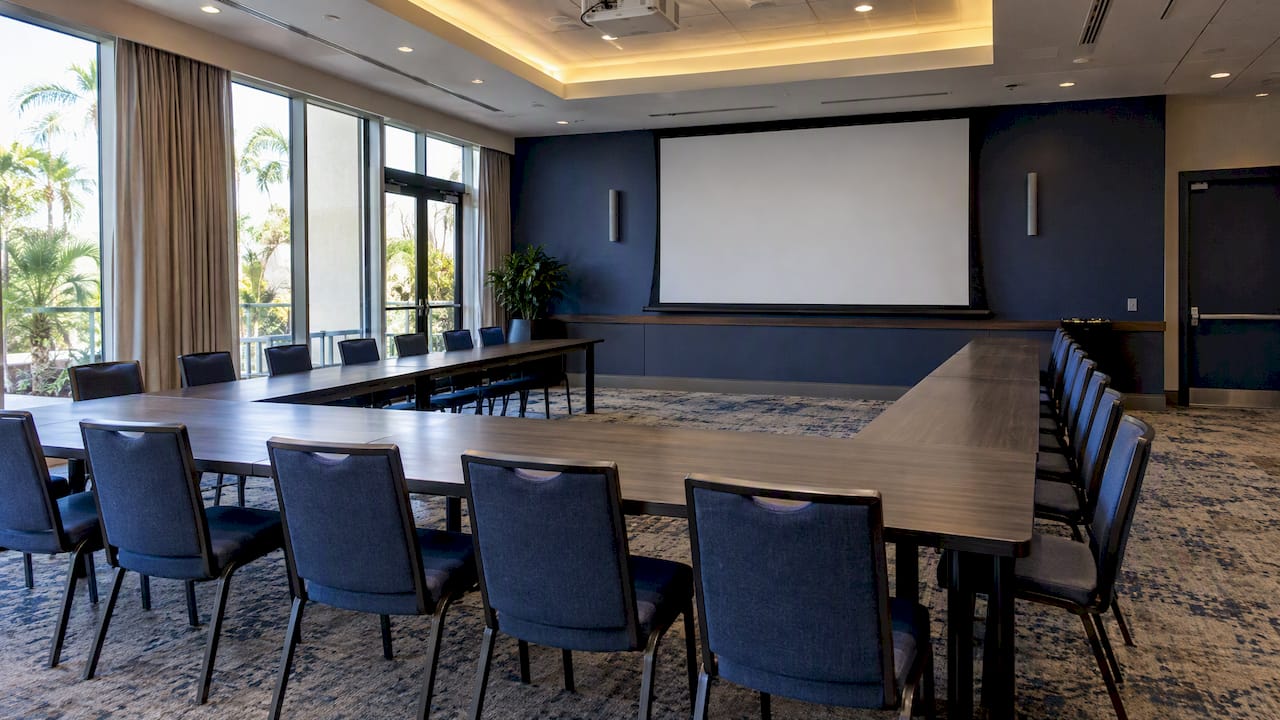
A venue-contract guide from the American Phytopathological Society is a good checklist. It advises confirming whether these are included: meeting-room rental, setup and breakdown time, furniture, Wi-Fi, AV equipment and technical support. It also flags possible service, administrative, tax, cleaning, security, overtime, deposit, cancellation and room-reset charges.
Turn that into questions for every venue on your shortlist:
- Is meeting space included in the per-person rate, or billed separately?
- During which hours can we use it, and can the room stay set overnight?
- What does Wi-Fi cost for the group, and is there a technical contact on site?
- Can we bring our own vendors, speakers or facilitators?
- What are the emergency procedures and the insurance requirements?
- Is the space accessible for every attendee?
If your leadership team wants real work done, such as strategy sessions or planning, the answers matter more than the spa menu.
Activities: team building, wellness and leisure
Offsite budgets are easy to justify when the program has a purpose. Resort packages can include aquatic activities, sports and fitness, nightly entertainment, cultural experiences, spas and outdoor activities, according to Marriott’s corporate events page, though each property differs.
Match activities to the goal, not the brochure:
- Alignment or strategy retreat: keep mornings for sessions, leave afternoons open, and use one shared activity such as a hike or a cooking class to break up the day.
- Reward or recognition trip: more leisure, fewer sessions, one memorable group dinner. If this is your goal, our incentive travel planning goes further than a standard retreat.
- Wellness reset: yoga, nature walks, spa time and mindful sessions suit teams facing burnout. See our approach to wellness travel.
- Cross-department bonding: shared challenges, group culinary experiences and low-pressure evening social time work better than forced icebreakers.
For ideas on what a well-designed group experience looks like beyond the resort, see these luxury group experience examples.
A sample four-day retreat itinerary
Miraval Austin’s published program gives a useful template. Its team retreat page lists arrival, lunch and drinks on day one. Day two brings a mindful meeting, a reception and a culinary dinner. Day three has a nature walk, a mindful meeting, a spirit-and-soul activity and a spa service, and day four closes with yoga, a mindful meeting and a reflection gathering. You can find it on the venue’s team retreat page.
Here is how we would adapt that rhythm for a company that wants results as well as rest:
| Day | Morning | Afternoon | Evening |
|---|---|---|---|
| 1 | Arrivals and transfers | Light lunch, settle in, optional amenity time | Welcome reception, relaxed dinner |
| 2 | Working session on the main goal | Breakout groups, then free time | Private group dinner or culinary experience |
| 3 | Short outdoor activity, then working session | Spa, sports or excursion by choice | Open evening, no mandatory events |
| 4 | Reflection session and commitments | Departures | None |
The pattern that holds up: two or three focused work blocks, one shared experience, and unscheduled time. Teams remember the unstructured conversations as much as the agenda.
How to estimate the real cost
Start with the per-person, per-night rate. The Lucky Arrow package, for example, advertises $545 to $650 per person, per night, covering lodging, meeting spaces, chef-prepared meals, planning, staffing, taxes, fees and gratuities. Pricing there varies by season, length of stay and catering selections, which is typical.
A quick worked example using that range: 30 guests for 3 nights is 90 person-nights. At $545 that comes to $49,050, and at $650 it is $58,500. That is before flights, any beverage upgrades or curated experiences. It is an illustration of the arithmetic, not a quote from any venue.
Then add what the headline rate does not show. The contract guidance from the American Phytopathological Society explains why: meeting access rules, food-and-beverage minimums, AV, taxes, service fees, attrition, cancellation and operational charges can materially change the final budget.
A budget worksheet in five lines:
- Per-person nightly rate times headcount times nights
- Taxes, service fees and gratuities, if not included
- Meeting-space, AV and Wi-Fi charges, if not included
- Beverage upgrades, excursions and private experiences
- Travel: flights, ground transportation, and a contingency line
Group ground transport is easy to overlook. If your venue is far from the airport, price group van transportation against shuttle service, and confirm whether the resort’s shuttle covers your arrival times.
If your company books travel often, it is also worth learning how to get better hotel corporate rates for the pre- and post-retreat nights your package does not cover.
Read the contract before you sign
An all-inclusive quote is a sales document. The contract is what binds you. The same venue guide recommends documenting, before signing:
- Room capacity by layout and accessibility
- Meeting-space access hours
- Food-and-beverage minimums
- AV and Wi-Fi costs
- Outside-vendor rules
- Emergency procedures, insurance and security
- Deposits and payment schedules
- Cancellation terms and attrition exposure
Two terms deserve extra attention. Attrition is the share of your room block you must pay for even if fewer people show up. If your headcount could shift, negotiate a band that gives you room to drop. Cancellation terms decide what you owe if plans change. Have your legal or finance team review both. For anything binding, a contract review by your own counsel is the safe step.
Compare destinations and venues on the same criteria
A resort in the Caribbean, a ranch in the Mountain West and a wellness property in Texas can each be right for different teams. A venue planning guide from Eden Resort suggests comparing venues on group size, room layouts and breakout capacity, meeting and technology needs, accessibility, lodging inventory, dining and dietary needs, activities, exclusivity, goals, and airport and ground-transportation practicality.
Turn that list into a simple scorecard:
| Criterion | What to ask |
|---|---|
| Group fit | Can we fit everyone in one property, with breakouts, without sharing with other groups? |
| Meeting needs | Room layouts, AV, Wi-Fi, access hours |
| Access | Nearest airport, drive time, transfer options |
| Food | Dietary and allergy handling, private dining |
| Activities | Options that suit the goal and every ability level |
| Exclusivity | Buyout, partial buyout or shared property |
| Total price | Everything in the budget worksheet above |
Score each venue the same way, and the shortlist often picks itself. Texas is a strong option for US-based teams that want short flights and resort-level wellness or ranch settings, and you can see our Texas vacation packages for the kind of destination knowledge we bring.
What to settle before you contract
Venues like Lucky Arrow recommend settling dates, guest count, goals and budget, capacity and layouts, meeting needs, dietary restrictions, transportation and activities before contracting. In practice, that means a short brief you can hand to every venue so quotes are comparable:
- Dates: two or three options, with flexibility on weekdays
- Headcount: a realistic range, plus how many need single rooms
- Goal: one sentence on what success looks like
- Budget: per-person ceiling, including travel
- Meetings: number of sessions, layouts, AV needs
- Dietary and accessibility needs: collected by survey early
- Transportation: where people fly from and when they land
If your team is spread across several cities, our piece on corporate group travel workflows covers how to collect this information without a spreadsheet chase.
Our perspective: where retreat planning goes wrong
We have spent 35 years designing high-end journeys, and corporate groups teach the same lesson every time: the venue is rarely the problem. The problem is the gap between what the quote says and what the group experiences.
Three patterns come up most. First, companies choose on the nightly rate and discover later that meeting space, AV and beverages were separate. Second, they plan the program for the agenda and forget the people, so there is no downtime and no reason for anyone to talk to colleagues outside their department. Third, they leave transportation until the end, and half the team arrives at midnight.
Our approach is to start with the outcome, then work back. We know the destinations and the on-the-ground partners, we compare options for you, and we make sure the quote and the contract say the same thing. We charge no service fees, we offer a price match guarantee, and we are available 24/7, which matters when a flight changes the night before your group lands. We earn our commission from suppliers, not from you.
— tammylevent@gmail.com
Let us plan your retreat
If you would rather hand the comparison, negotiation and logistics to someone who does this every day, we can help. Our team designs customized corporate programs, from a three-night leadership offsite to a reward trip for top performers. Start with our corporate incentive travel page, or explore our group incentive travel options.
Tell us your headcount, goals and rough budget, and we will come back with a shortlist and a clear picture of what is and is not included. You can reach us through our main site.
FAQ
What does “all-inclusive” mean for a corporate retreat?
It generally means one per-person price that covers lodging, meals, drinks and some activities. What else is bundled depends on the property: some include taxes, fees, gratuities and meeting space, and others charge them separately. Ask for a written list of inclusions and exclusions.
How much does an all-inclusive corporate retreat cost per person?
It depends on the venue, season and length of stay. One published example in Texas advertises $545 to $650 per person, per night, including taxes, fees and gratuities. Always add travel, beverage upgrades and any meeting or AV charges not in the rate.
Can we hold real business meetings at an all-inclusive resort?
Yes, if you check the meeting facilities first. Confirm room layouts, capacity, AV, Wi-Fi, access hours and technical support, and whether they are included or billed. Many resorts have indoor and outdoor spaces for workshops and presentations, but the quality varies.
What should we negotiate in the contract?
Focus on attrition, cancellation terms, food-and-beverage minimums, deposits and payment schedules. Also ask about outside-vendor rules and insurance requirements. Have your counsel review the final document before you sign.
Does a travel advisor cost extra for retreat planning?
At Elite Travel we charge no service fees. We are paid by the travel suppliers for booked travel, and we back our bookings with a price match guarantee.
Sources
- All-Inclusive Corporate Retreats, All-Inclusive by Marriott
- Team Retreats, Miraval Austin
- Corporate Retreat Venue Near Austin, Lucky Arrow Resort
- What to Look for in your Hotel/Venue Contract, American Phytopathological Society
- Planning a Corporate Retreat in Pennsylvania, Eden Resort
