



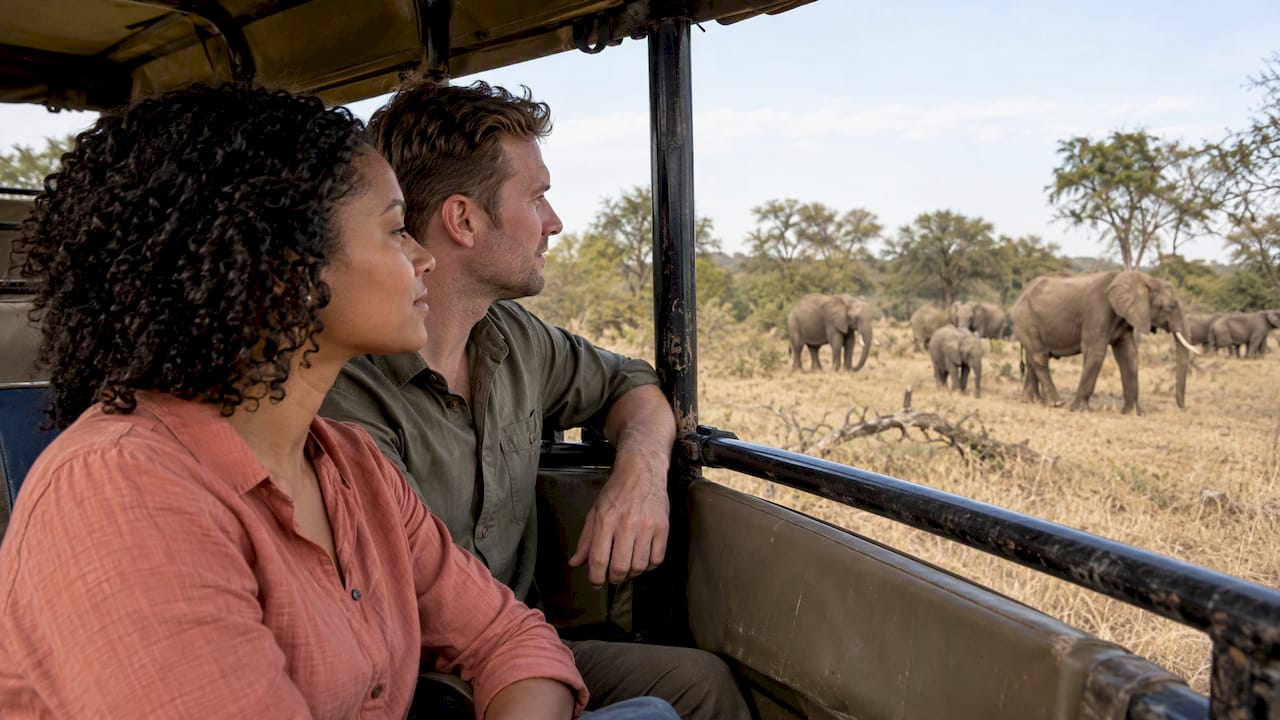
A great safari honeymoon comes down to five decisions made in the right order: the region, the season, the length, the beach or city add-on, and the health and travel paperwork. Get those right and the rest, from lodge choice to private game drives, falls into place. This guide walks through each one so you can plan with clarity, whether you are twelve months out or six.
TL;DR
- Choose the region first (Botswana, Kenya, Tanzania or South Africa), because it decides the season, the lodge style and the beach options.
- Dry-season months generally give the easiest wildlife viewing and also the highest rates, so book early for those dates.
- Plan roughly three to four nights per lodge or area, and add a beach, Cape Town or Victoria Falls at the start or end.
- See a travel medicine specialist well before departure about yellow fever and malaria prevention, and arrange medical evacuation insurance.
- Work with a planner who knows the on-the-ground partners, since the best small camps book out first.
Table of Contents
- Start with the region, not the lodge
- Pick the season for what you want to see
- How long to stay and how to split your time
- What makes a safari honeymoon feel special
- Budgeting a safari honeymoon
- Health, documents and preparation for US travelers
- Why couples plan this with a specialist
- Plan your safari honeymoon with Elite Travel
- A planning timeline that works
- FAQ
- Sources
Start with the region, not the lodge
Most couples begin by scrolling lodge photos. A better first step is choosing the country, because each one offers a different kind of honeymoon.
The Knot names Botswana as its best overall African honeymoon destination, Kenya as best for all-inclusive honeymoon resorts, Sabi Sand as its best safari destination and the Seychelles as its best beach destination. That gives you a useful map of the trade-offs:
| Region | What it suits | Typical pairing |
|---|---|---|
| Botswana | Remote, intimate camps and water-based safaris | Victoria Falls, or Cape Town |
| Kenya | Classic savanna, the Maasai Mara, all-inclusive comfort | Lamu Island or Mount Kenya |
| Tanzania | Big open plains and a long safari tradition | Zanzibar |
| South Africa (Sabi Sand, Kruger area) | Private reserves with superb leopard sightings and easy flights | Cape Town and the Winelands |
Kenya works well as a multi-stop trip. The Knot describes it as a route combining Nairobi, the Maasai Mara and either Lamu Island or Mount Kenya, which gives you a safari and a change of pace in one itinerary. If Kenya is on your list, see our luxury Kenya vacation packages for how we shape that route.
For couples who want a first safari without a complicated journey, South Africa is the most forgiving. Our Cape Town and safari 7-day package shows how a city, a vineyard dinner and a private reserve fit into one week. If you want the wilder, quieter feel, our Botswana 6-day package is a good starting point. For the Serengeti side of things, look at our Tanzania 8-day package.
Questions to settle together
Before you talk to anyone, answer these as a couple:
- Do you want to see as many species as possible, or spend long, unhurried time with a few?
- Is a private vehicle and a private guide a priority, or are shared drives fine?
- Do you want a beach finish, a city finish, or a straight safari?
- How do you feel about small bush planes between camps?
- Is there a milestone date, such as a wedding date or an anniversary, that fixes your travel window?
Your answers shape every later choice. A couple who wants privacy and stillness will usually choose fewer, smaller camps. A couple who wants variety may prefer a route with more movement.
Pick the season for what you want to see
Safari seasons follow rainfall. In general, the drier months bring animals to remaining water, thin out the vegetation and make sightings easier. They are also the busiest and most expensive months at top camps. The green or wetter months bring lush scenery, newborn animals, fewer vehicles and often gentler rates, with the trade-off of thicker bush and more unpredictable weather.
The pattern differs between regions, so match the month to the place:
- Southern Africa (South Africa, Botswana): the drier winter months are the classic window for game viewing, and the evenings and mornings are cool enough that you will want layers on open vehicles.
- East Africa (Kenya, Tanzania): the main dry stretch is in the middle of the year, with a shorter dry window around the turn of the year. The Great Migration moves through the region on a seasonal cycle, and river crossings are tied to particular months.
- Beach extensions: coastal weather runs on its own rhythm, so check the beach destination separately rather than assuming it matches the bush.
We do not recommend picking a month from a general calendar and hoping the lodge has room. Instead, name the experience you most want, whether river crossings, newborn animals or quiet green-season photography, and work backward. Our planners check the specific camp’s conditions for your dates.
A practical point about timing: the most sought-after small camps often have only a handful of tents or suites. Honeymoon couples tend to want the same peak weeks, so these fill long before the date. Start the conversation as early as you can. If your wedding date is not fixed, flexibility of even a week can open up a better camp.
How long to stay and how to split your time
Many people assume a safari honeymoon means ten days of game drives. Most couples do better with less bush and more variety.
The Points Guy reports that safari stays are generally under five days for many travelers, which leaves room to add a beach, Cape Town and wine country, Victoria Falls or Mount Kilimanjaro. That matches how we plan: a safari is intense, with early wake-ups, long drives and a lot of sensory input, so contrast makes the whole trip feel better.
A sensible rule for honeymoons is about three to four nights at each lodge or area. That is enough to settle in, learn your guide’s rhythm and have a second and third chance at the sighting you hoped for. Moving camps every night is exhausting and eats into your time with each other.
A sample ten-night shape
- Nights 1 to 2: arrive in a city, such as Cape Town or Nairobi, and recover from the flight.
- Nights 3 to 6: first safari camp, with morning and evening drives and a private dinner in the bush.
- Nights 7 to 9: second camp in a different habitat, such as a river or delta camp after a savanna one.
- Night 10: a final comfortable night near the departure airport.
This is an illustration of the pattern, not a fixed package. We adjust it around your dates, your flights and the camps that suit you.
Beach first or beach last?
Both work, and couples disagree. The Points Guy notes that many travelers go to the beach at the end of the trip to unwind, while others add it before the safari to decompress from city life and a long-haul flight. Our view: if you are marrying just before departure and arriving exhausted, start with a few quiet beach days. If you are fit and eager, put the safari first and finish with salt water and a long lunch.
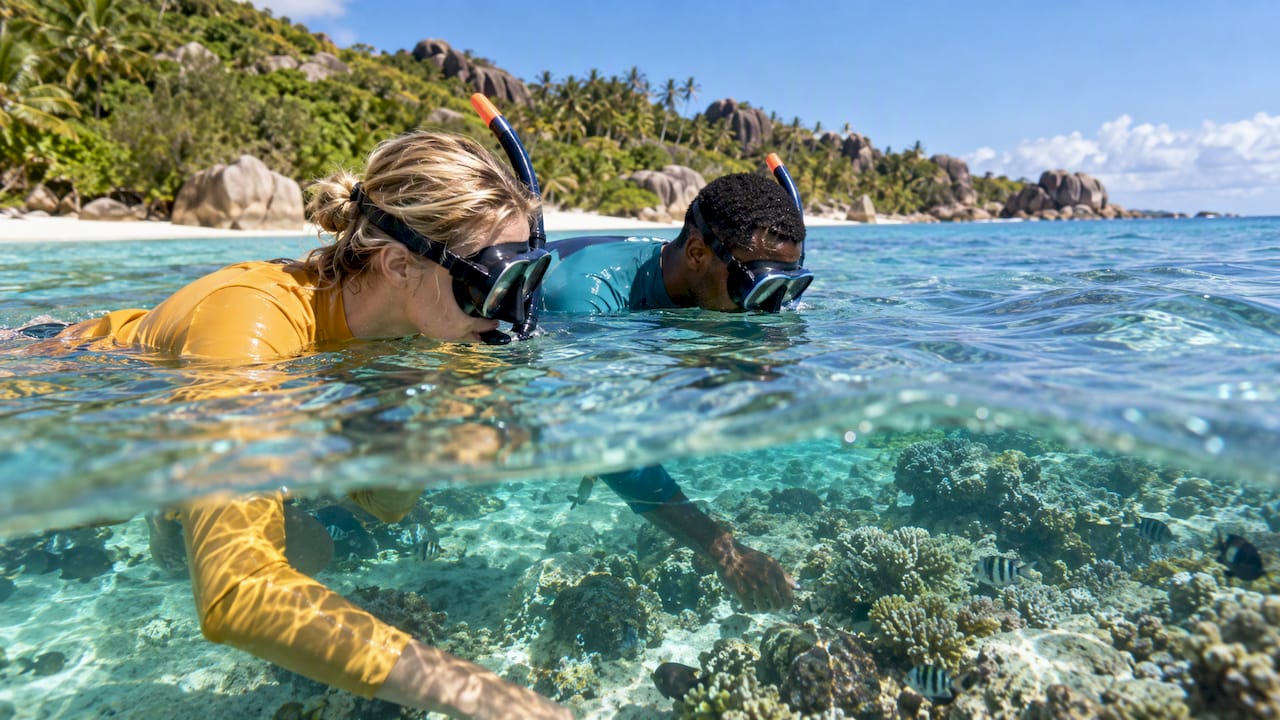
For a beach pairing, The Knot points to the Seychelles for snorkeling, diving, yacht and catamaran trips. Other classic pairings include Zanzibar after Tanzania, Lamu after Kenya, and Cape Town and the Winelands after South Africa or Botswana.
One small note on routing: some US couples connect through the Gulf on the way to East or Southern Africa. If you plan a stopover, an evening out in the dunes can be a fun change of pace, and a Dubai desert safari guide can help you see how those experiences are organized. It is a different kind of outing from a game drive, so treat it as a bonus rather than a substitute.
What makes a safari honeymoon feel special
The difference between a good safari and a memorable one is usually in small decisions made months earlier.
Private guide and vehicle. A private vehicle means you decide when to stay with a sighting and when to move on. You can linger at a leopard for an hour without negotiating with strangers. For couples, this is often the single most valuable upgrade.
Camp size and location. A camp with a dozen tents feels very different from a lodge with eighty rooms. Smaller camps offer quieter dinners, more personal service and a better chance of private touches. Location matters too: some camps sit on a river bend or a waterhole where animals come to you.
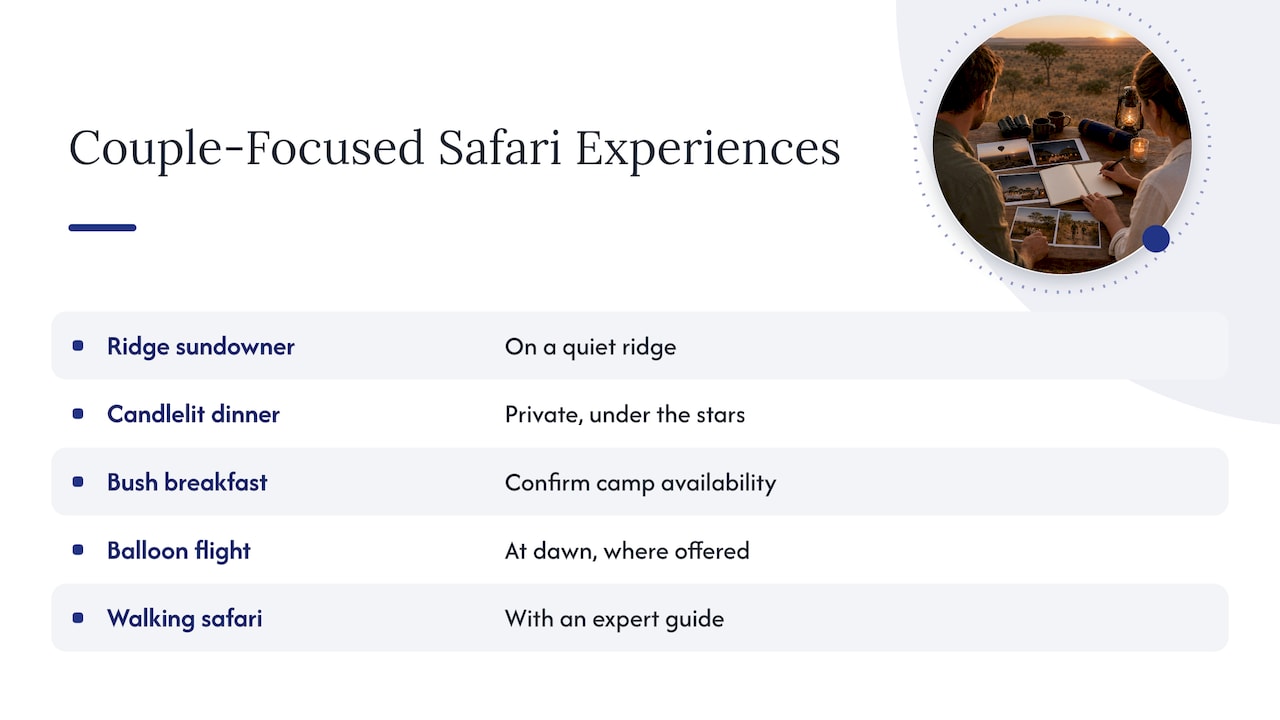
Moments built for two. Examples include a sundowner on a quiet ridge, a private candlelit dinner under the stars, a bush breakfast, a hot-air balloon flight at dawn in regions that offer it, or a walking safari with an expert guide. Not every camp offers every one, so we confirm what is available at your chosen camp for your dates. For more ideas on what makes a couple’s trip feel personal, see our guide to romantic honeymoon experiences and our honeymoon itinerary ideas.
Pace. Build in one slow morning in each camp. A late breakfast and an afternoon by the plunge pool is not wasted time on a honeymoon. It is part of the point.
Celebration details. Tell your planner about the wedding, the anniversary date or any dietary needs. Good camps will arrange a cake, flowers or a special table when they know in advance.
Budgeting a safari honeymoon
A luxury safari is a significant investment. The Points Guy states plainly that an African safari requires a hefty budget, and that is worth saying early so you plan with open eyes. Costs vary widely by country, season, camp, the number of flights and whether a beach stay is included.
The main cost drivers are:
- Camp tier and season: top camps in peak months cost the most, and shoulder months can ease the rate.
- Internal flights: small-plane transfers between camps are often part of the cost and are not optional in remote areas.
- Park and conservation fees: these are commonly built into lodge rates or itemized separately.
- Private vs shared vehicles: private use is a premium feature.
- Add-ons: a beach stay, a city night, special experiences and travel insurance.
We publish a deeper look at this in what a luxury safari really costs in 2026. Because every itinerary is built to order, we do not post set package prices. We quote your specific trip after we understand your dates and preferences.
Two things we can say about how we work: we charge no service fees, and we offer a price match guarantee. We are paid by the suppliers for booked travel, not by you for planning.
Health, documents and preparation for US travelers
This is the part couples are most likely to leave too late. Start a few months before departure.
The CDC’s Yellow Book chapter on African safaris and climbing expeditions advises safari travelers to consult a travel medicine specialist about yellow fever, use appropriate malaria chemoprophylaxis and personal protection, and arrange international health and medical evacuation insurance. It also notes that malaria is endemic to most game parks in Sub-Saharan Africa, and that safari-goers should wear long-sleeved shirts and pants and use insect repellent in addition to prescribed medicine.
In practice, that means:
- Book a travel medicine appointment early. Ask a travel medicine clinic or your doctor which vaccines and which malaria medication suit your itinerary, your health history and any pregnancy plans. Some medications need to start before you travel.
- Ask about yellow fever. Whether it is needed depends on your route, including connecting countries. Your clinic will confirm.
- Buy insurance that covers medical evacuation. Remote camps can be hours from a hospital, so evacuation cover matters. Read the policy for the activities you plan, including walking safaris and balloon flights.
- Check passports and visas. Confirm your passport validity and blank pages against the entry rules of each country on your route, using the official government sources for each. Rules change, so check close to departure.
- Use the right name on every document. If you are marrying shortly before travel and changing your name, make sure the name on your tickets matches the passport you will actually carry.
Packing, briefly
Pack light, in neutral colors, with layers for chilly dawn drives. Many small-plane itineraries limit luggage weight and require soft-sided bags, so your planner should give you the exact limits for your flights before you pack. Bring a good hat, sun protection, binoculars you are happy to share, and any medication in your carry-on.
Why couples plan this with a specialist
The best safari camps are small, the best guides are known by name, and the logistics between them (charter flights, road transfers, park access) are fragile. A single missed connection can cost a night. That is why the bulk of our work happens before you leave.
Our perspective
After 35 years of designing high-end journeys, we have learned that a safari honeymoon rarely goes wrong because of the animals. It goes right or wrong because of the planning around them: which camp, which guide, which month, how many nights, and what happens when a flight changes.
We build each honeymoon one on one, with a concierge-level approach. We know the destinations and the on-the-ground partners, and we think that is what lifts a trip from nice to exceptional. A well-chosen camp with a well-chosen guide at the right time of year is worth more than an extra day on the schedule.
We also believe you should not have to pay extra to plan well. We charge no service fees, we offer a price match guarantee, and we are open 24/7, because a delayed flight in Africa does not wait for our office hours.
tammylevent@gmail.com
Plan your safari honeymoon with Elite Travel
If you would like a trip built around your dates, your pace and your idea of romance, our team can design it with you from first conversation to the flight home. Start with our honeymoon vacation packages or explore our Africa vacation packages to see the regions we plan.
If you are still comparing ideas, our honeymoon packages guide explains how to choose a destination, and our Cape Town and Garden Route 12-day package shows a longer trip with a scenic road-and-city mix.
A planning timeline that works
Here is a working order of operations for most couples:
- 10 to 14 months out: choose the region and rough season, and talk to a planner. Peak-season small camps are the first to go.
- 8 to 10 months out: confirm camps, flights and any beach or city extension. Lock in your celebration details.
- 4 to 6 months out: book travel medicine appointments, buy insurance and check passports.
- 2 to 3 months out: finalize luggage limits, transfers and special requests. Share dietary needs and any mobility notes.
- The final month: confirm every flight, carry digital and paper copies of documents, and save your planner’s 24/7 contact.
These are planning guidelines, not rules. If your wedding is closer than a year, call anyway. Cancellations happen and flexible dates open options.
FAQ
How many days do you need for a safari honeymoon?
Most couples do well with seven to ten nights in total, with about three to four nights at each lodge or area. Safari time itself is often under five days for many travelers, with the rest spent on a beach, in Cape Town or at Victoria Falls. We shape the length around your flights and how much rest you want.
Is a safari a good honeymoon for couples who are not outdoorsy?
Yes, because a luxury safari is closer to a boutique hotel stay with game drives than to camping. Camps offer private suites, spa treatments, chef-prepared meals and a guide who handles the details. You can set the pace and skip a drive when you want to.
Should I add a beach to my safari honeymoon?
Most couples do, because the contrast makes the trip feel more complete. You can start with the beach to recover from the flight or end with it to unwind after early mornings. The Knot highlights the Seychelles for snorkeling, diving and yacht trips as a beach extension.
What health precautions do US travelers need?
See a travel medicine specialist well before departure to discuss yellow fever and malaria prevention. The CDC also recommends personal protection such as long sleeves, pants and insect repellent, along with health and medical evacuation insurance. Requirements depend on your exact route and health history.
Do you charge a fee to plan a safari honeymoon?
No. We charge no service fees, and we are paid by suppliers for travel that is booked. We also offer a price match guarantee and 24/7 support.
Sources
- The Knot: Africa Honeymoons, Best Destinations, Safaris and Things to Do
- The Points Guy: The 12 best bush-to-beach safari destinations
- CDC Yellow Book: African Safaris and Climbing Expeditions
- Dubai desert safari guide
