




The average honeymoon costs about $5,300, according to The Knot 2024 Honeymoon Study, which surveyed 662 US couples. That is an average, not a target. Couples who stay in the US spend far less, couples who fly abroad spend more, and a luxury trip with the right hotel and timing can land well above either figure. This guide shows what moves the number, what $5,000 and $10,000 realistically cover, which extra costs surprise people, and how to set a budget before you book.
TL;DR
- The average US honeymoon cost $5,300 in 2024. Domestic couples averaged $3,400 and international couples $6,800.
- Destination, season and hotel level move the total more than anything else. Off-peak travel can cut costs by 30 to 40%, according to Discover.
- Add 15 to 25% on top of your core estimate for transfers, insurance, resort fees, baggage, tips and parking.
- Luxury honeymoons commonly run from $8,000 to $15,000 and up.
- Most couples (74%) pay from their own savings, so build the budget before you choose the destination.
Table of Contents
- What the average honeymoon costs
- What makes up a honeymoon budget
- The factors that move the total most
- Is $5,000 enough for a honeymoon?
- Is $10,000 enough for a honeymoon?
- The extra costs that catch couples off guard
- Who pays, and how couples fund it
- How to build your honeymoon budget in five steps
- Ways to manage the cost without losing what matters
- Our view: why a luxury honeymoon is planned, not just priced
- Plan a honeymoon around your budget
- FAQ
- Sources
What the average honeymoon costs
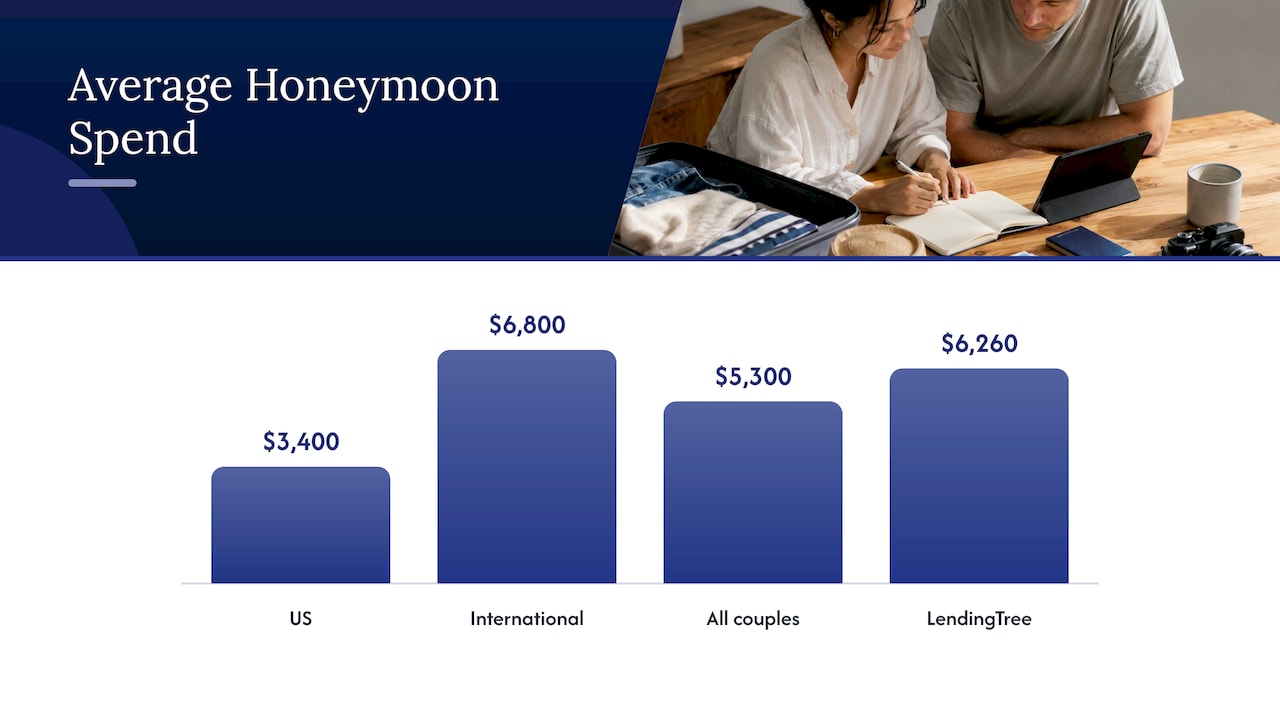
The Knot’s study found an average of $5,300 for honeymoons taken in 2024, and The Knot’s 2024 industry review splits that by where couples went:
| Honeymoon type | Average spend (2024) |
|---|---|
| Within the United States | $3,400 |
| International | $6,800 |
| All couples | $5,300 |
Other surveys land in the same neighborhood. CNBC Select, in a 2026 update on honeymoon costs, cites a LendingTree survey with an average of $6,260. The gap between $5,300 and $6,260 comes down to who was asked and when, which is a good reminder that an average describes a crowd, not your trip.
Where couples go explains much of the spread. In 2024, 41% of US couples stayed in the United States, 18% went to the Caribbean and 17% to Europe, per the same Knot review. A couple choosing a Caribbean resort or a European route is therefore choosing a different price tier from the one the national average describes.
What makes up a honeymoon budget
Every honeymoon budget is built from four buckets, as Discover’s honeymoon cost guide lays out: travel, accommodations, activities and experiences, and food and drink. SoFi’s overview adds the smaller lines that people forget: taxes, tips and fees.
Here is how to think about each one.
Travel
Flights, trains, rental cars, ferries and private transfers. For an international trip, airfare is often the single largest line. A honeymoon with two flights (say, a long-haul leg plus an island hop) can cost more in transport than in the hotel. Booking early and flexing your departure day are the usual ways to bring this number down.
Accommodations
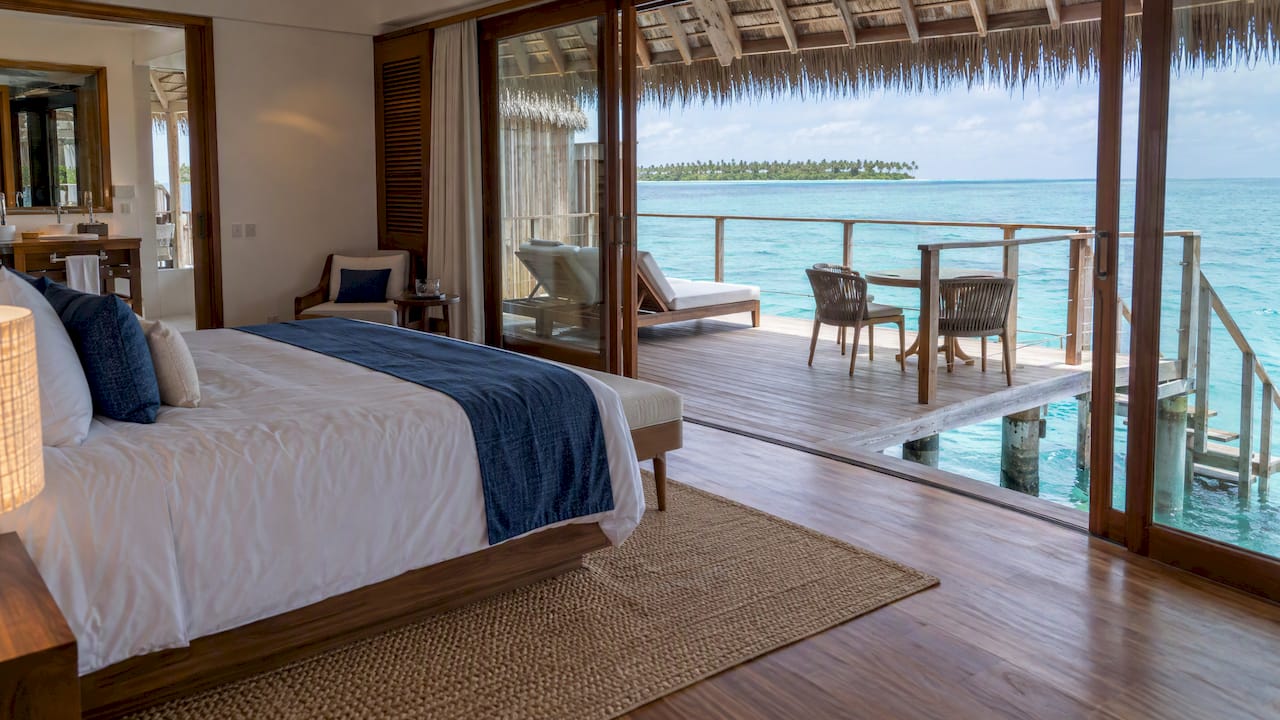
This is where the comfort level shows. A boutique hotel and an overwater villa are both “a room,” yet they can differ by thousands of dollars over a week. Because you spend your honeymoon largely at the property, many couples choose to put more of the budget here and less into trinkets and filler activities.
Activities and experiences
A sunset sail, a private cooking class, a spa day, a guided wine tour, a safari drive. These add up quickly, but they are also the moments couples remember. Decide on two or three you will not skip, price them first, and let the rest be flexible.
Food and drink
An all-inclusive resort fixes this line in advance. In a city like Paris or Rome, you control it: a mix of one special dinner every few days and simpler meals keeps it reasonable without losing the sense of occasion.
The factors that move the total most
According to Discover, the factors that affect the total most are the destination, the timing of the trip and the level of luxury in your accommodations. The Knot’s data points the same way: honeymoon costs vary with destination, time of year, trip length and upgrades.
Destination. The Knot’s numbers show it clearly: $3,400 domestic versus $6,800 international. Within each group, the spread is wide. Hawaii in peak season and a road trip through the Southwest are both “domestic,” yet they are very different bills.
Season. Travel experts cited by Discover advise that off-peak travel can reduce total trip costs by 30 to 40%. For a couple with flexible dates, that is the biggest lever available. Shoulder seasons (the weeks between high and low season) often combine good weather with lower rates and fewer crowds.
Length. Each extra night adds the hotel rate, meals and activities. A tight five or six nights at a top property can feel better than ten nights at a mid-range one, but only you know which you would rather have.
Comfort level. Room category, private transfers, premium cabins and curated experiences are upgrades. Choose the two or three that matter and stay modest on the rest.
Is $5,000 enough for a honeymoon?
For most couples, yes. The average honeymoon cost is $5,300, and domestic couples averaged $3,400, so $5,000 sits comfortably above what a typical US honeymoon costs. It will cover a well-planned trip of about a week if you make a few smart choices:
- Stay in the US or choose a destination close to home, which keeps airfare low.
- Pick an all-inclusive resort, where meals, drinks and many activities are covered in one price. Our guide on when to pay for extras at all-inclusive resorts explains what is typically covered and what is not.
- Travel in shoulder season to capture the off-peak savings noted above.
- Book early for better flight and room availability.
What $5,000 will not do, usually, is cover a week at a high-end overwater resort or a safari with private guides. That is not a drawback so much as a different tier, and it is the one we move into next.
Is $10,000 enough for a honeymoon?
Yes, and it opens real choices. Discover puts luxury honeymoon budgets at $8,000 to $15,000 and up, so $10,000 lands inside that range. With $10,000 you can reasonably consider:
- A week in a European city or countryside with a boutique hotel and a few private experiences.
- A Caribbean or Mexican resort with an upgraded room category and a spa credit.
- A split trip, such as three nights in a city and four on a beach.
- A shorter stay at a high-end property in a destination that would otherwise cost much more.
How far $10,000 goes depends on the same four things: where, when, how long and how comfortable. Flights to a far-off island can consume a large share before you reach the hotel. The same money in a closer destination can buy a noticeably more refined stay.
The extra costs that catch couples off guard
Discover notes that additional costs can add 15 to 25% to the total: airport transfers, travel insurance, resort fees, baggage fees, tips and parking. On a $6,000 plan, that is $900 to $1,500 you have not yet allocated.
Resort fees deserve special attention. CNBC Select points to a five-night Hawaii stay with a $900 resort fee, and notes that these fees can be steep and often cannot be avoided. Check them before you compare nightly rates, since a lower rate plus a high daily fee can cost more than a higher rate with no fee.
A simple way to plan for these: calculate your core budget, then add 20% as a separate line called “extras” and spend it only on those items. If you finish with money left, it becomes dinner or a spa treatment on the last night.
Who pays, and how couples fund it
The Knot found that 74% of couples paid for their honeymoon with their own savings in 2024. Among couples with a wedding registry, 23% created a honeymoon fund so guests could contribute.
That makes timing important. If you are paying for the wedding and the honeymoon from the same savings, decide on the honeymoon figure early, rather than using whatever is left after the wedding. CNBC Select also relays a finding that nearly 40% of Gen Z respondents would rather spend on a honeymoon or trip than on the wedding itself. If that is you, say so when you set the budget, so the two don’t compete by accident.
How to build your honeymoon budget in five steps
- Set a total you can pay in cash or from savings. Decide the ceiling before looking at destinations.
- Reserve 20% for extras. Transfers, insurance, fees, tips and baggage belong in the plan from day one.
- Choose your top two or three experiences. Price them first so they are protected.
- Match the destination to the remaining budget. Compare flight costs, season and the nightly rate with fees included.
- Look at dates. Moving by a few weeks into shoulder season can free up a large part of your budget.
Our honeymoon planning checklist turns this into a timeline, and the honeymoon planning guide covers the decisions that come before and after the numbers.
Ways to manage the cost without losing what matters
Discover lists the standard moves: travel off-peak, choose a destination within driving distance, book early, use an all-inclusive resort, or pick lodging with a kitchen. Each works. A few additions from how couples actually plan:
- Protect the nights, trim the days. The hotel is where you will spend your time together. Save on rental cars, group tours and extra excursions before downgrading the room.
- Split the trip. A couple of nights somewhere memorable and the rest at a quieter, cheaper base can balance the budget.
- Use celebration timing. Mention the honeymoon when booking. Hotels and cruise lines often add small touches for newlyweds, though these vary by property.
- Compare total price, not headline price. Include fees, transfers and meals.
Michelle Durpetti, an event planner who specializes in weddings and honeymoons, told CNBC Select that couples are becoming more intentional, shifting from luxury for its own sake toward meaningful experiences. That is a useful test for each line: does it add to the memory, or just to the bill?
Our view: why a luxury honeymoon is planned, not just priced
We have spent 35 years designing high-end journeys, and the pattern is consistent. Couples who are happiest with their honeymoon are rarely the ones who spent the most. They are the ones whose money went where it counted for them: the right room, the right season, a few well-arranged moments, and no surprises on the bill.
That is why we build a honeymoon backward from the experience. We ask what the two of you want the week to feel like, then match hotels, timing and on-the-ground partners to that picture. Our clients choose us for that kind of strategy. We charge no service fees, because we are paid by the travel suppliers for the trips we book, and we offer a price match guarantee so you can book with confidence. We are also open 24/7, which matters when a flight changes or a transfer is late and you are far from home.
If you are weighing a bigger budget, planning helps in a measurable way: knowing which resort fees apply, which categories are worth the upgrade and when a property is at its best for the price. Our own guides on luxury honeymoon planning and how to plan a luxury honeymoon go deeper into that approach.
— tammylevent@gmail.com
Plan a honeymoon around your budget
If you would like a honeymoon that fits your number and still feels exceptional, our team designs it with you, from first conversation to your return home. We work with couples across Europe and worldwide destinations, and our honeymoon vacation packages are a good place to start. Tell us your budget range, dates and the experiences you want, and we will show you what is possible.

If you prefer to browse first, our luxury vacation packages show the destinations we plan most often, and the honeymoon packages guide helps you choose among them.
FAQ
What is a realistic budget for a honeymoon?
The average US honeymoon cost $5,300 in 2024, according to The Knot. Domestic trips averaged $3,400 and international trips $6,800. A realistic budget starts there and adjusts for your destination, season and comfort level, with an extra 15 to 25% held back for fees and incidentals.
Is $5,000 enough for a honeymoon?
In most cases, yes. It sits just under the national average of $5,300 and well above the $3,400 domestic average. It works best for a US destination, an all-inclusive resort or travel in shoulder season. A far-off luxury resort will usually need more.
Is $10,000 enough for a honeymoon?
Yes. Luxury honeymoon budgets are commonly cited from $8,000 to $15,000 and up, so $10,000 gives you real choice, such as a week in Europe with a boutique hotel or an upgraded resort stay. How far it goes depends on the destination, the season, trip length and room category.
Who usually pays for a honeymoon?
Most couples pay themselves. In The Knot’s 2024 study, 74% used their own savings. Some couples with a registry add a honeymoon fund, which 23% of couples with a registry did. Decide the figure early so it does not compete with wedding costs.
How can I lower honeymoon costs without losing the experience?
Travel off-peak, book early, consider an all-inclusive resort or a destination close to home, and compare total prices including resort fees. Spend where it matters most to you, usually the hotel and two or three special experiences.
Sources
- The Knot: New Data Reveals How Much The Average Honeymoon Costs
- The Knot: Weddings in 2024, A Look Back at Industry Statistics
- CNBC Select: Average Honeymoon Cost
- Discover: How to Pay for a Honeymoon and Plan Costs
- SoFi: What Does the Average Honeymoon Cost?
