


TL;DR:
- Investing in employee recognition reduces turnover and increases productivity through well-designed programs. Luxury travel incentives create memorable experiences that strengthen retention and employer branding, offering high perceived value for lower costs. A structured approach with clear KPIs, stakeholder training, and strategic planning enhances program success and measurable ROI.
Investing in employee rewards pays off in a way that finance teams can actually measure. The core reason: replacing a single employee typically involves a significant portion of their annual salary, and recognition programs reduce the voluntary turnover that triggers those costs. Mature programs have been associated with multiple returns driven by retention savings and productivity gains. The industry benchmark is straightforward: allocate 1–2% of total payroll to recognition, and you have a budget that scales with headcount and survives CFO scrutiny. CIPD meta-analyses confirm that well-designed incentives and recognition produce moderate-to-large performance gains, not just goodwill.
Quick decision brief:
- Rewards reduce voluntary turnover, the single largest avoidable cost in most HR budgets.
- The 1%–2% payroll benchmark gives finance a predictable, scalable number.
- Luxury travel incentives produce outsized perceived value relative to their cost.
- Fastest next step: run your retention math, then request a pilot design from Elitetravelgroup.
Table of Contents
- What does investing in rewards actually achieve for the business?
- How do you build a financial case that survives finance review?
- Which rewards work best, and why does luxury travel stand out?
- What design rules make a rewards program actually work?
- How do you plan and run a luxury incentive program?
- What are the U.S. tax rules you need to know?
- How do you pitch this to leadership in one page?
- How does Elitetravelgroup design and deliver corporate incentive travel?
- Key Takeaways
- The case for luxury incentives is stronger than most HR teams realize
- Elitetravelgroup’s corporate incentive travel programs
- Sources and further reading
What does investing in rewards actually achieve for the business?
The business outcomes from a well-run recognition program span four areas: retention, productivity, attendance, and employer brand.
- Voluntary turnover drops. CIPD evidence reviews find a small but consistent positive relationship between perceived recognition and employees’ intention to stay, with larger effects when recognition is tied to meaningful work.
- Productivity rises. Employees who receive verbal praise or positive feedback show substantially greater intrinsic motivation than those who receive no recognition at all.
- Absenteeism falls. A randomized controlled study cited in CIPD’s scientific summary found that an attendance-recognition program substantially decreased absenteeism rates.
- Employer brand strengthens. Public recognition and experiential rewards generate social proof that attracts candidates before a job is even posted.
Luxury travel rewards amplify these effects because they carry a story. A week in the Swiss Alps or a curated European itinerary is something a top performer describes at dinner, posts on social media, and remembers for years. That narrative reach is something a gift card simply cannot replicate.
How do you build a financial case that survives finance review?
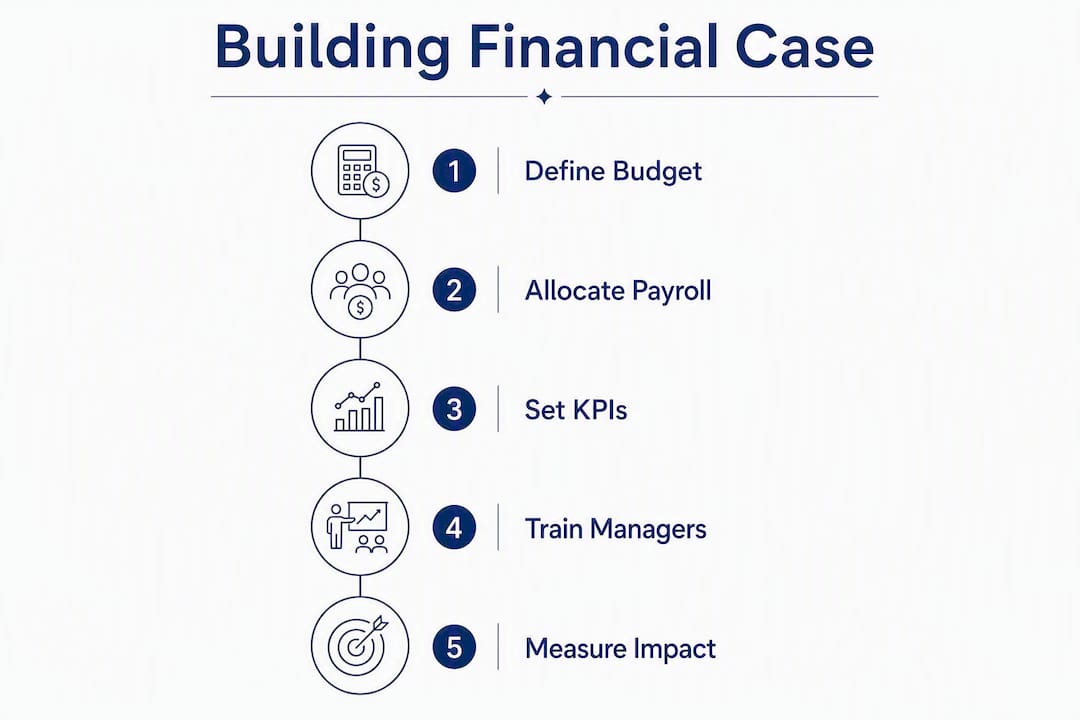
Start with the payroll anchor. A flat per-employee figure looks arbitrary to a CFO; allocating 1–2% of payroll scales automatically and benchmarks against industry practice.

| Headcount | Avg. Annual Salary | Recognition Budget (1%) | Recognition Budget (2%) |
|---|---|---|---|
| — | $35,000 | $35,000 | $70,000 |
| 500 | $35,000 | $175,000 | $350,000 |
Simple ROI example (500 employees, 1% budget): If your annual voluntary turnover is 15% (75 employees) and replacement cost averages $35,000 per person, your annual exposure is $2.625 million. A recognition program that cuts turnover significantly avoids replacement costs, generating returns before any productivity gains are counted. Add even a modest productivity lift and the ROI calculation moves well above breakeven.
KPIs to track from day one:
- Voluntary turnover rate (monthly delta vs. baseline)
- Cost per retained employee
- Productivity index (output per FTE vs. prior period)
- Program coverage (% of employees who gave or received recognition)
- Reward redemption rate
Pro Tip: Split your budget into three buckets: core (baseline recognition for all employees), performance (tied to measurable outcomes), and discretionary (manager-nominated moments). This structure lets you forecast the core spend with confidence while preserving flexibility for high-impact moments, and it makes quarterly reporting far cleaner.
Which rewards work best, and why does luxury travel stand out?
Not all rewards carry equal weight. The category matters because different reward types address different psychological needs.
- Monetary rewards (bonuses, gift cards): satisfy immediate financial needs but fade quickly and can feel transactional.
- Career rewards (training, mentorship, stretch assignments): address growth and self-actualization; strong for high-potential employees.
- Wellness rewards (fitness stipends, mental health resources): signal that the organization values the whole person, not just output.
- Experiential rewards (travel, events, curated experiences): create memories, generate social proof, and satisfy status and belonging needs simultaneously.
Luxury travel sits at the top of the experiential tier for one specific reason: perceived value far exceeds cost. A bespoke incentive trip to Europe or Asia feels like a $10,000 reward even when the program cost is significantly lower, because the experience is personal, exclusive, and impossible to replicate with a check.
For group dynamics, a shared luxury trip builds cross-functional relationships that no team-building workshop can match. For employer-brand storytelling, the photos and conversations that follow a well-designed incentive trip do marketing work for months.
Example itinerary callout: A five-night Amalfi Coast program for 20 top performers, including private villa accommodations, a cooking class with a local chef, and a chartered boat day, costs a fraction of what it would take to replace even two of those employees.
What design rules make a rewards program actually work?
Program design determines whether recognition lands or backfires. Research confirms that incentives yield larger performance and retention benefits when paired with supportive leadership and clear performance standards.
- Link every reward to a specific, observable behavior or outcome, not just tenure.
- Build procedural fairness into the criteria so employees trust the process, not just the prize.
- Enable personalization: individual incentive travel options and choice-based rewards consistently outperform one-size-fits-all gifts.
- Train managers to deliver recognition in real time, not just at annual reviews.
- Avoid over-incentivizing. Psychological research shows that when rewards become controlling pressure, they erode the intrinsic motivation they were meant to support.
Pro Tip: Make manager enablement a program requirement, not an afterthought. A recognition budget without trained managers is like a marketing campaign with no distribution. Give managers a simple monthly cadence: one peer nomination, one team shout-out, one individual conversation.
How do you plan and run a luxury incentive program?
A phased rollout reduces risk and builds the internal evidence you need to scale.
- Weeks 1–4: Audit. Pull 12 months of voluntary turnover data, exit interview themes, and current recognition spend. Set a baseline for every KPI you plan to track.
- Weeks 5–8: Design. Define the three budget buckets, set eligibility criteria, and select a vendor. For luxury travel, high-impact incentive programs require a partner with on-the-ground relationships, not just a booking engine.
- Weeks 9–12: Pilot launch. Run a 6–12 month pilot with one business unit or region. Communicate the program clearly, including how winners are selected and what the experience looks like.
- Month 6: Mid-point review. Pull KPI data, survey participants, and present a one-page update to finance.
- Month 12: Scale decision. Use pilot data to build the full-year business case.
Vendor selection checklist for luxury travel incentives:
- Concierge-level itinerary customization (not catalog-based)
- On-the-ground partners at each destination
- 24/7 support for participants during travel
- Price match guarantee
- Group logistics capability (visas, insurance, contingency planning)
- Reporting on participant satisfaction
Pro Tip: Book group incentive travel at least 9–12 months out. Premium properties in peak-season destinations sell out well in advance, and contractual deposit windows close faster than most procurement teams expect.
What are the U.S. tax rules you need to know?
Tax treatment affects your true program cost, and surprises here can derail a budget approval.
- Cash and cash-equivalent rewards (gift cards, prepaid cards) are fully taxable as ordinary income and must be included in the employee’s W-2.
- Noncash rewards (travel, merchandise) are generally taxable at fair market value, with limited exceptions for de minimis items under IRS guidelines.
- Travel incentives awarded to employees are typically treated as taxable compensation; the employer may choose to gross up the tax so the employee receives the full benefit.
- Documentation matters. Keep records of award recipients, fair market values, and the business purpose for each award.
Consult your payroll and tax teams before finalizing program design. Tax treatment can shift total cost materially, and the rules for contractors versus employees differ.
This article is general information, not tax or legal advice. Confirm current IRS rules with a qualified tax professional for your specific program.
How do you pitch this to leadership in one page?
Lead with cost avoidance, not culture. Finance funds outcomes.
Cost inputs:
- Recognition budget: 1%–2% of total payroll
- Tax gross-up reserve: 20%–30% of noncash award value
- Program administration: vendor fee or internal HR time
Conservative ROI assumptions:
- 15%–20% reduction in voluntary turnover
- 5%–10% productivity lift among recognized employees
- Zero credit for employer-brand or recruitment savings (treat as upside)
Three pilot KPIs to report monthly:
- Voluntary turnover rate vs. 12-month baseline
- Reward redemption rate
- Employee net promoter score (eNPS) delta
For a ready-made pitch framework, how to propose a travel incentive to your boss covers the exact language and structure that gets approval.
How does Elitetravelgroup design and deliver corporate incentive travel?
A mid-sized professional services firm needed to retain its top 10% of revenue producers after two consecutive years of above-average voluntary exits. The challenge was not compensation; it was recognition. High performers felt interchangeable.
Elitetravelgroup designed a tiered incentive travel program: a group experience for the top 10% and individual travel credits for the next 15%. The group component was a seven-night luxury Europe itinerary with private accommodations, curated cultural experiences, and on-the-ground concierge support throughout. Elitetravelgroup handled all logistics, from visa coordination to contingency planning for weather disruptions, with 24/7 support available to every participant.
The outcome: participants reported the experience as the single most meaningful recognition they had received in their careers. The program became a retention anchor the firm referenced in every senior hire conversation.
Service features corporate buyers rely on:
- Bespoke itinerary design (no catalog, no templates)
- On-the-ground partner network across Europe and worldwide
- Group logistics: visas, insurance, contingency planning
- 24/7 participant support during travel
- Price match guarantee and no service fees
- Post-program satisfaction reporting
Key Takeaways
Investing in employee rewards is a measurable cost-avoidance strategy: a 1%–2% payroll budget, tied to clear KPIs and delivered through high-salience experiences like luxury travel, consistently reduces turnover and lifts productivity.
| Point | Details |
|---|---|
| Budget anchor | Allocate 1%–2% of total payroll; this scales with headcount and passes CFO review. |
| ROI framing | Present the program as turnover avoidance, not culture spend; mature programs show 3–4× returns. |
| Luxury travel advantage | Experiential rewards carry perceived value far above cost and generate lasting employer-brand impact. |
| Design essentials | Link rewards to clear standards, train managers, and enable personalization to prevent program failure. |
| Elitetravelgroup | Elitetravelgroup designs bespoke corporate incentive travel with 35 years of experience, a price match guarantee, and 24/7 support. |
The case for luxury incentives is stronger than most HR teams realize
The conventional wisdom treats employee rewards as a morale expense, something you do when budgets allow. That framing is why so many programs get cut in the first downturn. The smarter frame, and the one that actually survives finance review, is cost avoidance. Every dollar spent on a well-designed recognition program is competing against the $35,000–$140,000 it costs to replace the person who leaves because they felt invisible.
What most organizations underestimate is the multiplier effect of a high-salience reward. A luxury travel experience does not just retain the person who receives it. It signals to every other employee what exceptional performance looks like and what it earns. That signal is worth more than the trip itself.
The programs that fail are not the ones with small budgets. They are the ones with no measurement plan, no manager training, and no connection between the reward and the behavior it was meant to reinforce. Get those three things right, and the budget almost takes care of itself.
Elitetravelgroup’s corporate incentive travel programs
Thirty-five years of luxury travel expertise, applied to your retention problem. Elitetravelgroup designs corporate incentive travel programs from the ground up: custom itineraries, on-the-ground partners, and full logistical support so your HR team is not managing travel logistics on top of everything else.
No service fees. A price match guarantee. Support available around the clock. Whether you are planning a group trip to Europe for your top performers or building a tiered individual reward program, Elitetravelgroup handles every detail with concierge-level precision. Request a proposal or a pilot design consultation directly at stagingelite.elitetravelgroup.net.
Sources and further reading
- PMC: The Impact of Incentives on Job Performance, Business Cycle, and Population Health
- Elitetravelgroup: Corporate Incentive Travel
- Elitetravelgroup: Examples of Bespoke Itineraries
- Elitetravelgroup: How to Propose a Travel Incentive to Your Boss
