



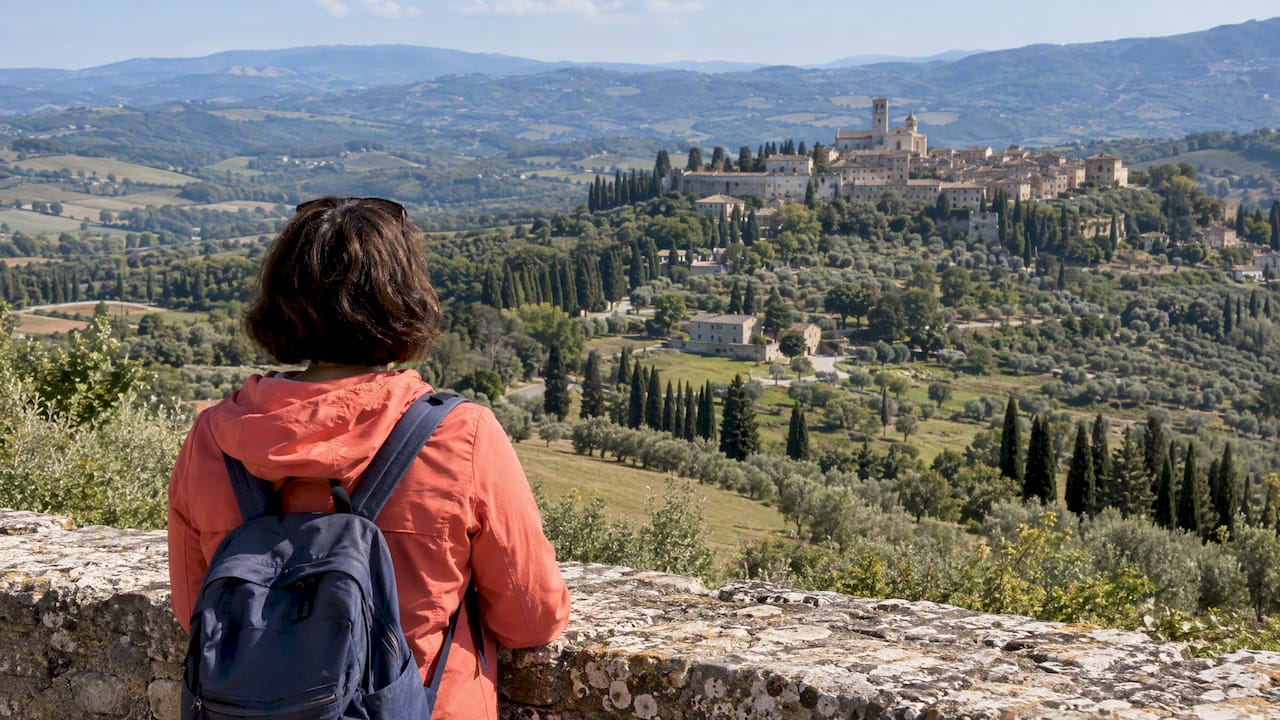
Choose Tuscany if you want Florence, Siena, famous wine roads and the widest choice of luxury hotels. Choose Umbria if you want the same hills and medieval towns with fewer people, a slower pace and more family-run estates. The landscapes overlap far more than the reputations do. What really separates the two regions is how a day feels once you are there.
We plan Italy for clients who care about that difference, and this guide is how we would walk you through the decision.
TL;DR
- Tuscany is the classic: art cities, big-name wine, the deepest bench of luxury hotels, and the most visitors.
- Umbria is the quieter alternative: hill towns, olive groves, boutique estates and a much lighter crowd.
- Both are drivable from Florence or Rome, but you need a car for the countryside in either region.
- Short on time or visiting Italy for the first time? Lean Tuscany. Returning, or craving calm? Lean Umbria. Have 8 days or more? Combine them.
- October is a standout month for both.
Table of Contents
- The real difference: icons versus atmosphere
- Side-by-side comparison
- Crowds and pace
- Hotels and where you will stay
- Food and wine
- Getting around: distances and the rental car
- Weddings and celebrations
- When to go
- Our perspective: how we would choose for you
- Sample ways to split your time
- Plan it with a specialist
- FAQ
- Sources
The real difference: icons versus atmosphere
Place a photo of a cypress-lined ridge from each region side by side and most people could not tell them apart. Travel writers make the same point: the distinction is experiential rather than geographic. Tuscany is the established choice for world-famous art cities and iconic luxury brands. Umbria, the “Green Heart of Italy,” suits travelers who value slower, boutique, under-the-radar luxury.
That gives you a simple frame:
- Tuscany is a destination you tick off and savor. Florence’s Renaissance museums, Siena’s Piazza del Campo, Chianti and Montepulciano’s wine cellars.
- Umbria is a place you settle into. Long lunches, a hilltop town you walk in an hour, a farm dinner built around what was picked that morning.
Neither is better. They answer different questions about what you want from the days between flights.
Side-by-side comparison
| Tuscany | Umbria | |
|---|---|---|
| Character | Polished, famous, well developed | Quieter, rustic, “under the radar” |
| Crowds | Heavy in Florence, Siena and San Gimignano in season | Noticeably lighter outside Assisi and Perugia |
| Signature draws | Florence, Siena, Chianti, Val d’Orcia, Montepulciano | Assisi, Orvieto, Spoleto, Lake Trasimeno, Perugia |
| Luxury hotels | Global flagship brands plus many villas | Family-run estates, castle conversions, boutique inns |
| Coast | Yes, the Tyrrhenian coast | None, Umbria is landlocked |
| Main gateways | Florence, Pisa | Rome or Florence, then drive or train |
| Best for | First Italy trip, art, wine, weddings | Repeat visitors, slow travel, privacy |
Crowds and pace
The numbers are lopsided. One travel publication reports that Tuscany draws roughly seven times as many visitors as Umbria, with more than 50 million travelers a year as of 2023. Italy’s national statistics office shows Umbria is not standing still, though: its tourist presence grew 5.0% in 2024. It is a rising region, but still a calm one.
What that means on the ground:
- In Tuscany, the famous places need planning. Timed entries, early starts and private guides make the difference between a great day in Florence and a shuffle through a queue.
- In Umbria, you can often wander into a trattoria or a cathedral without a reservation. The exceptions are Assisi and Perugia, which see visitors year-round.
If you travel for privacy, this one factor may settle the question.
Hotels and where you will stay
Tuscany is where major luxury brands such as Four Seasons, Rosewood and Belmond have established themselves. If you want a spa, a concierge desk and predictable five-star service in a Renaissance setting, Tuscany has the most options. It also has a deep supply of private villas. Our own guide to Tuscany villas matched to your trip goal shows how we sort them.
Umbria’s strength is different. Editors at Condé Nast Traveller note that a new generation of countryside hotels has put Umbria on the map. Many are family-run estates offering garden-to-table dining. Castello di Reschio, a restored estate, is the example that keeps coming up: The Times describes it as one of Italy’s most extravagant family-run estates.
A useful rule: if the hotel is the point of the trip, Umbria’s estates deliver character. If service systems and brand consistency matter most, Tuscany offers more.
Food and wine
Both regions run on olive oil, pecorino, cured meats and good red wine. Tuscany brings the marquee names: Chianti, Brunello, Vino Nobile di Montepulciano. Montepulciano is a good example of a Tuscan town worth experiencing slowly, with its wine and Renaissance streets. Our day at Torciano Winery shows what a well-arranged Tuscan tasting looks like.
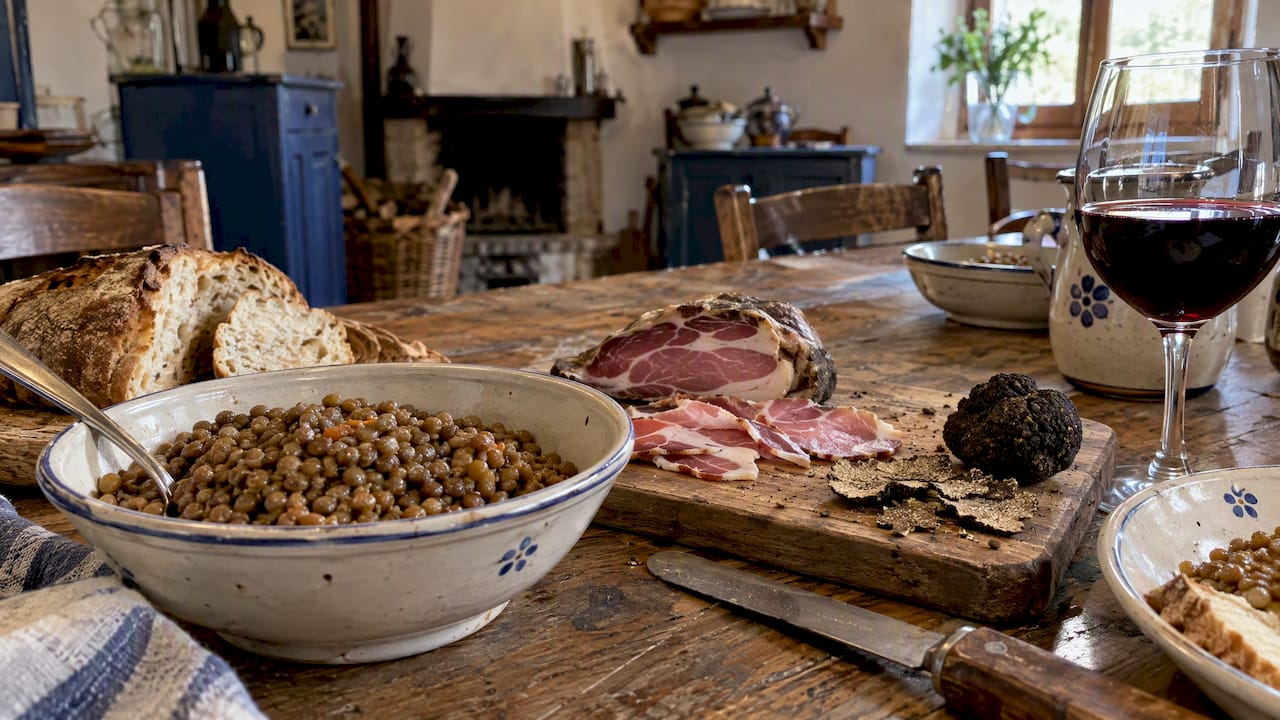
Umbria’s food is more rustic and more local: truffles, lentils from Castelluccio, cured pork from Norcia, and the Sagrantino wines of Montefalco. The meals are often at a long farm table rather than a destination restaurant.
If you love the idea of lodging that is built around what is on the plate, the same logic applies in other countries. A whole-house stay in a historic farmhouse, as in this Swedish countryside vacation guide, shows how much a private, self-contained base changes the rhythm of a trip. In Italy, a private villa or estate wing does the same job.
Getting around: distances and the rental car
The two regions touch, and the distances are manageable:
- Florence to Perugia by car takes about two hours, per Go Ask A Local.
- The same source lists direct trains from Rome to Orvieto in 1 hour 15 minutes and to Spoleto in 1 hour 45 minutes.
- Florence to Perugia by rail has a fastest journey of 1 hour 25 minutes and an average near two hours.
Trains connect the cities. The countryside is another matter. Hill towns are largely inaccessible by public transport, and the same guide advises adding 20 to 30 percent to mapped drive times because rural roads are narrow and winding. A 40-minute map estimate becomes closer to an hour.
The practical options are:
- Rent a car and enjoy the freedom, if you are comfortable with narrow roads and limited-traffic zones in historic centers.
- Hire a private driver for the long days, so you can taste wine without worrying about the drive home.
- Mix both: train between Florence, Perugia or Orvieto, then a driver for the countryside days.
For first-time visitors from the U.S., option 3 is often the most relaxed.
Weddings and celebrations
Tuscany is the heavyweight here. Data cited by Tourism Review from the Destination Wedding in Italy Observatory shows Tuscany hosting 43% of international weddings in Italy, against 8% in Umbria. The same report puts the average cost of a 3.5-day wedding experience in Italy at about €50,000 (roughly $55,000). Note that this figure dates from 2016, so treat it as a benchmark rather than a current quote.
What does that mean for you?
- Tuscany has more venues, more experienced local vendors and easier logistics for guests flying into Florence.
- Umbria offers more exclusivity. A castle or estate can feel entirely yours, and you are less likely to share the landscape with other wedding parties.
Italy’s tourism board describes couples as increasingly choosing historic villas and private residences for personalization and gastronomy, and that holds in both regions. If you are weighing this, start with our destination wedding packages and read the legal steps for U.S. couples before you commit to a date.
For a honeymoon, Umbria’s calm is hard to beat, while Tuscany gives you more variety in a week. Our honeymoon planning guide covers the trade-offs.
When to go
Both regions are at their best in late spring and early autumn. July and August bring heat and congestion, especially in the Tuscan art cities. One travel outlet singles out October for quiet luxury, calling it the best luxury-per-dollar ratio thanks to harvest-season light and emptier roads. We agree that October rewards travelers, particularly in Umbria where truffle and harvest festivals fill the calendar. Pack layers: hill-town mornings are cool, and rain is common.
Our perspective: how we would choose for you
After 35 years of designing Italy trips, we have found that clients rarely regret choosing a region. They regret choosing it for the wrong reasons. Here is how we steer the decision.
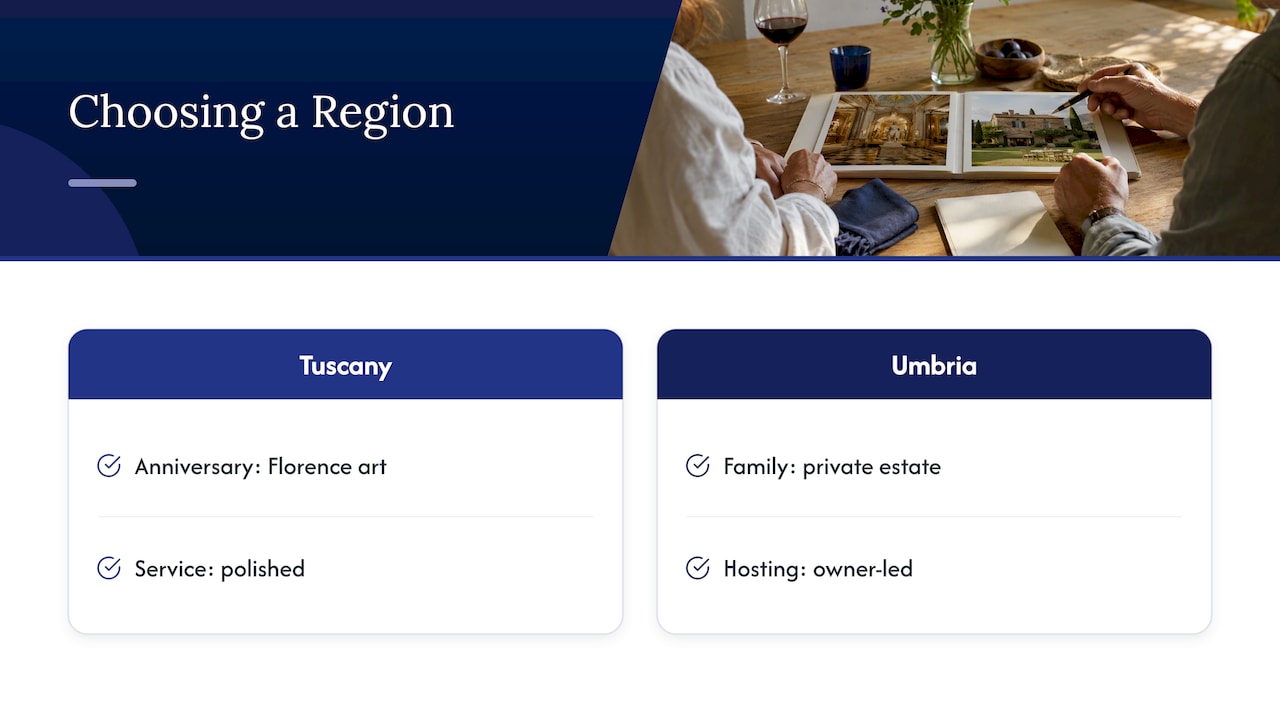
We start with the purpose, not the map. A milestone anniversary with Florence’s art on the wish list points to Tuscany. A multigenerational family wanting a private estate and no schedule often points to Umbria.
We ask how much you want to be seen and served. Tuscany excels at polished service. Umbria rewards people who like to be hosted by an owner who knows the olive grove by name.
We rarely send people to only one. With a week or more, a few nights in a Tuscan base followed by a few in Umbria gives you both energy and rest. We plan the sequence so the quiet part comes last, when you are ready for it.
We handle the unglamorous parts. Drivers, timed entries, cellar visits, restaurant tables and an on-the-ground partner to call when a plan changes. Because we charge no service fees, offer a price match guarantee and are available 24/7, you can book with confidence and reach us at any hour.
— tammylevent@gmail.com
Sample ways to split your time
| Trip length | Our suggestion |
|---|---|
| 4 to 5 days | Tuscany only: Florence plus one countryside day, or Umbria only for a pure retreat |
| 6 to 7 days | Tuscany with a night or two in Chianti, or 3 nights in each region |
| 8 to 10 days | Tuscany first (Florence, Siena, Val d’Orcia), then Umbria (Orvieto, Assisi, Lake Trasimeno) and out through Rome |
If you want to see how a Tuscan itinerary can be structured, look at our 7-day Tuscany tour, our 8-day Siena and Chianti package or the 4-day Florence package. We then tailor it, and can extend it into Umbria.
Plan it with a specialist
The right answer depends on your dates, your group and your tolerance for crowds, which is why we design each Italy trip one-on-one. Explore our luxury Italy vacation packages or talk to us about a custom itinerary. We will match hotels, drivers and experiences to the region you choose, or help you combine both.
FAQ
Which is prettier, Tuscany or Umbria?
They share the same rolling hills, cypresses and stone villages, so beauty is a matter of taste. Tuscany has more famous set pieces, such as the Val d’Orcia and Florence’s skyline. Umbria feels greener and less touched, with fewer people in the frame.
How far is Umbria from Tuscany?
The regions border each other. Florence to Perugia takes about two hours by car, and by train the fastest service takes 1 hour 25 minutes. Southern Tuscany to northern Umbria can be well under an hour, though you should add time for narrow rural roads.
Is Umbria cheaper than Tuscany?
Often yes, especially for mid-range lodging and dining, since demand is lower. At the top end the gap narrows, because Umbria’s best estates are small and exclusive. Prices vary by season and property, so we compare actual options for your dates.
Can I visit both in one trip?
Yes, and we often recommend it. With eight days or more, a Tuscany-to-Umbria route works well, ending in Rome. With less time, choose one region and do it properly.
Sources
- Tuscany and Umbria One-Week Itinerary: The Practical Guide, SmarterTravel
- Rastrello: A family-run Umbrian hotel, Luxury London
- Italian tourist flows 2024, Istat
- Tuscany vs Umbria forum thread, Tripadvisor
- 5 of the best hotels in Umbria for 2026, CN Traveller
- Reschio hotel review, The Times
- Visiting Montepulciano, Tuscany Tourism
- Umbria Travel Guide, Go Ask A Local
- Florence to Perugia by train, Rail Europe
- Italy Is the Most Popular European Wedding Destination, Tourism Review
- Wedding and luxury in Italy, ENIT
- Honeymoon Blueprint 2026, Ticketshunters
- Swedish Countryside Vacation: What to Expect and Plan
