




TL;DR:
- Effective honeymoon planning starts 9 to 12 months before the wedding. It involves aligning on travel style, budget, and building a paced itinerary for rest, exploration, and winding down. Early organization ensures availability, reduces stress, and fosters meaningful connection.
Honeymoon planning is the deliberate preparation and coordination of a couple’s first trip together after marriage, designed to create lasting memories and foster connection. Unlike a standard vacation, a honeymoon carries emotional weight that rewards intentional effort. The honeymoon planning process covers everything from setting a shared vision and budget to booking flights at the right time and building an itinerary that balances romance with real rest. Start too late, and you risk limited availability, inflated prices, and the kind of logistical stress that no couple needs right after a wedding.
What is honeymoon planning and why does it matter?
Honeymoon planning is the structured process of turning a couple’s post-wedding travel vision into a confirmed, personalized trip. Travel professionals call this bespoke itinerary design, and the best versions of it treat the trip as a curated experience rather than a series of bookings. Applying the same intentionality to honeymoon preparation that couples give to their wedding produces significantly higher satisfaction and more meaningful experiences.
The financial stakes are real. A honeymoon is often the single largest discretionary trip a couple takes together, and the emotional stakes are even higher. Getting the planning right sets the tone for how you travel as a team for years to come. Getting it wrong, through rushed decisions or mismatched expectations, creates tension at the worst possible time.
One critical early check: passports must be valid for at least 6 months beyond your return date and typically require at least 2 blank pages for international travel. Catching a passport issue 8 months out is a minor errand. Catching it 3 weeks before departure is a crisis.
What are the essential steps in the honeymoon planning process?
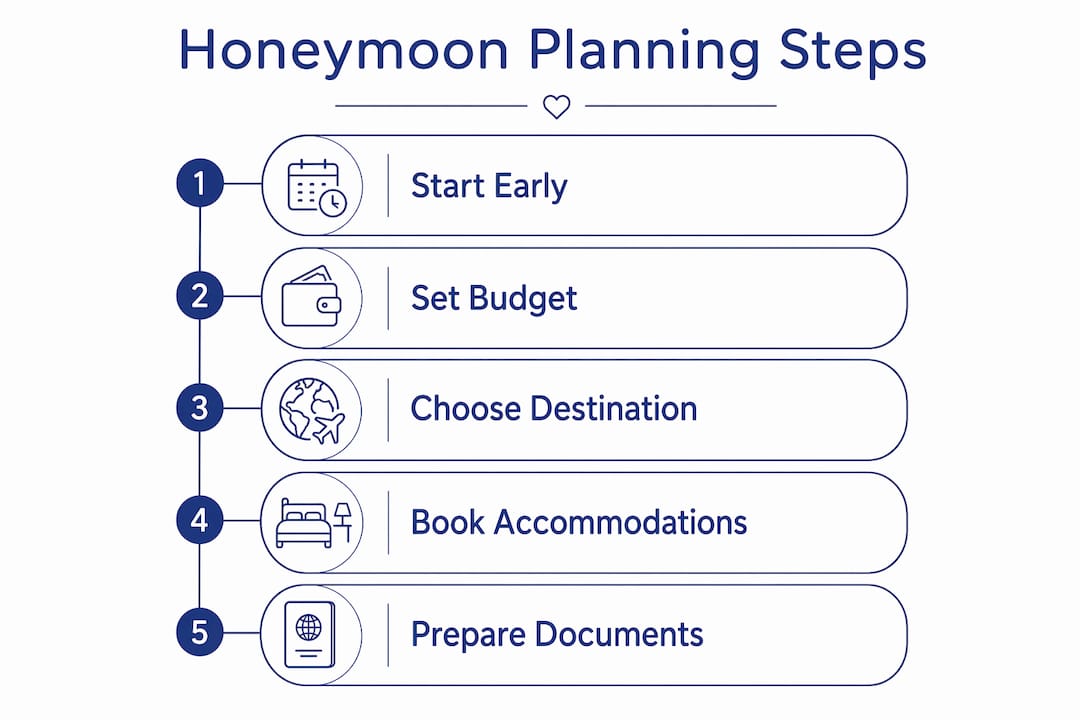
A clear sequence separates couples who arrive relaxed from those who arrive exhausted. Follow these steps in order.
Start 9–12 months out. Luxury accommodations in high-demand destinations sell out 9–12 months in advance. Starting only 4 months ahead risks limited options and higher costs. Overwater bungalows in the Maldives and private safari camps in Kenya routinely book out a full year before peak season.
Agree on your travel style together. Before you pick a destination, decide what kind of trip you both want. Beach and rest? Active adventure? Cultural immersion? Misaligned expectations are the root cause of most honeymoon disappointments.
Set a realistic budget. Your budget must cover flights, accommodations, meals, activities, transfers, gratuities, and a contingency fund of roughly 10–15%. Setting up a dedicated honeymoon savings account and using points-earning credit cards can meaningfully offset costs. Strategizing finances early prevents last-minute stress.
Build a destination shortlist. Compare 3–5 destinations on climate, travel time, activity options, and cost. Narrow to one based on your combined priorities, not social media appeal.
Book accommodations first, then flights. Secure your hotel or resort before locking in flights. Once accommodations are confirmed, book international flights at the 90-day mark to leverage airline pricing algorithms for the best rates.
Handle documents and insurance immediately. Arrange visas well in advance. Purchase travel insurance within 21 days of your first deposit to qualify for pre-existing condition coverage and the broadest policy benefits.
Build your itinerary last. Once logistics are confirmed, structure your days using a three-act model: rest, explore, and unwind. More on this in the itinerary section below.
Pro Tip: If you are exhausted from wedding planning, consider a short “minimoon” right after the ceremony and save the full honeymoon for 3–6 months later. This approach aligns your trip timing with your energy and budget.
How do couples choose the right honeymoon destination?
The most effective destination selection starts with you, not a map. Choosing based on social media appeal rather than personal needs leads to “destination fatigue,” where the location looks perfect in photos but feels wrong in person. An inverted approach works better: define your emotional and pacing needs first, then find destinations that match.

Ask yourselves two questions before looking at any destination. First, how much energy do we want to spend? Second, how far are we willing to travel right after the wedding? A 14-hour flight to Southeast Asia is spectacular, but not if you spend the first two days recovering from jet lag instead of enjoying your resort.
Once you have those answers, use this framework to compare your shortlist:
| Criteria | What to evaluate |
|---|---|
| Climate and season | Is it peak, shoulder, or off-season during your travel dates? |
| Travel time | How many hours door to door, including connections? |
| Activity fit | Does the destination offer what you both actually want to do? |
| Budget alignment | Do accommodation and dining costs fit your ceiling? |
| Visa and entry requirements | How complex and time-sensitive is the process? |
Popular destinations like Paris, Santorini, and Bali offer proven infrastructure and romance. Off-the-beaten-path options like the Azores, Slovenia, or Sri Lanka offer fewer crowds and often lower costs. The right choice depends entirely on your priorities, not on what trended last season.
Expert travel advisors can secure hard-to-book luxury accommodations and personalize the experience in ways that generic booking platforms cannot. For couples targeting specific resorts or remote destinations, professional guidance is not a luxury. It is a practical advantage. You can also explore a couple tour planning guide for detailed advice on personalizing European itineraries.
What are common pitfalls in honeymoon planning and how can couples avoid them?
Most honeymoon mistakes are predictable. Knowing them in advance is the simplest way to avoid them.
- Planning too late. The most common mistake is squeezing honeymoon planning into the weeks between sending wedding invitations and the ceremony. This leads to rushed, error-prone bookings and mismatched choices.
- Chasing Instagrammable spots. Choosing a destination for its visual appeal rather than its fit for your travel style causes disappointment. A stunning overwater bungalow means nothing if one partner gets seasick and the other is bored without activities.
- Ignoring passport and visa timelines. Passport renewal can take 6–10 weeks in peak periods. Visa applications for destinations like India, Vietnam, or Ethiopia require lead time. Missing these windows cancels trips.
- Over-scheduling every day. A packed itinerary feels exciting in planning and exhausting in practice. Couples who schedule every hour leave no room for spontaneity, rest, or the unexpected moments that become the best memories.
- Skipping travel insurance. Purchasing insurance after the 21-day deposit window closes eliminates coverage for pre-existing conditions and reduces overall protection. This is a fixed deadline, not a flexible one.
- Avoiding the budget conversation. Couples who do not align on spending expectations before booking create financial tension mid-trip. Set a clear ceiling together, then plan within it.
Pro Tip: Talk openly early in the planning process to align on priorities. Travel experts consistently identify communication failures, not budget limits, as the primary source of honeymoon conflict.
How can couples build a honeymoon itinerary that balances romance and rest?
A great honeymoon itinerary follows a three-act structure. This pacing model prevents burnout and promotes meaningful connection by matching your energy levels to your activities throughout the trip.
Act one: Rest and arrive. Spend the first 2–3 days recovering from the wedding and adjusting to your destination. Prioritize late checkouts, spa treatments, slow mornings, and meals without a schedule. This phase is not wasted time. It is the foundation for everything that follows.
Act two: Active exploration. Once you feel rested, introduce the experiences you came for. Guided cultural tours, snorkeling excursions, cooking classes, or hiking. This is the heart of the trip and where most of your planned activities belong.
Act three: Contemplative wind-down. In the final 2–3 days, slow back down. Revisit a favorite restaurant, take a sunset cruise, or simply spend unscheduled time together. This phase helps you transition back to real life without the abrupt crash of going from full activity to home.
Build flexibility into every act. Leave at least one afternoon per week completely unplanned. 1 in 4 couples now use AI-powered trip planners to create realistic day-by-day schedules and avoid overbooking. These tools help identify conflicts and pacing issues before you arrive. That said, no algorithm replaces knowing your own rhythms as a couple.
Meaningful shared experiences outperform a checklist of sights. One private dinner on a cliffside in Positano creates a stronger memory than four rushed museum visits. Prioritize depth over volume when building your honeymoon itinerary ideas.
Key Takeaways
Effective honeymoon planning requires starting 9–12 months early, aligning on shared travel goals, and building a paced itinerary that supports rest, exploration, and genuine connection.
| Point | Details |
|---|---|
| Start early | Book luxury accommodations 9–12 months out to secure availability and better pricing. |
| Align before you book | Agree on travel style and budget before choosing any destination or property. |
| Use the three-act model | Structure your itinerary around rest, exploration, and wind-down to prevent burnout. |
| Handle documents first | Check passport validity and visa requirements as soon as you set a destination. |
| Buy insurance immediately | Purchase travel insurance within 21 days of your first deposit for full coverage. |
What I have learned about planning a honeymoon the right way
Couples often treat the honeymoon as an afterthought, something to figure out once the wedding is done. That is the single most expensive mistake in the entire process, financially and emotionally.
The couples I have seen have the most restorative, connected honeymoons share one trait: they planned with honesty. They talked about what they actually wanted, not what looked impressive. One partner wanted to sleep until 10 AM every day. The other wanted one big adventure. They found a destination that offered both, and they built a schedule that honored both. That conversation took 20 minutes and saved them from a week of low-grade resentment.
Couples who plan with emotional honesty consistently report more restorative and connected experiences. This is not soft advice. It is the most practical thing you can do before you book a single night.
Stress during a honeymoon is normal. A delayed flight, a room that does not match the photos, a restaurant that is closed. None of these ruin a trip unless you let them. The couples who handle disruption well are the ones who went in with realistic expectations and a flexible mindset. Perfection is not the goal. Connection is.
Working with a trusted travel expert, particularly for complex or luxury itineraries, removes the logistical burden and gives you back the mental space to actually enjoy the planning process. That is not outsourcing your honeymoon. That is protecting it.
— tammylevent@gmail.com
How Elitetravelgroup helps couples plan their perfect honeymoon
Elitetravelgroup has spent 35 years designing luxury travel experiences for couples who want their honeymoon done right. Every itinerary is built from scratch around your preferences, your pace, and your budget, with no service fees and a price match guarantee.

Whether you are drawn to a private villa in Tuscany, an overwater suite in the Maldives, or a luxury European honeymoon with hand-selected hotels and private guides, Elitetravelgroup handles every detail. Our advisors are available 24/7, from your first conversation through your return home. You can also browse bespoke itinerary examples to see exactly how we build trips for couples like you. When the planning feels like too much, we are the team that makes it feel effortless.
FAQ
How far in advance should couples start honeymoon planning?
Start 9–12 months before your wedding date. Luxury accommodations in high-demand destinations sell out at that window, and earlier planning gives you better pricing and more options.
What documents do couples need to check before booking?
Check passport validity first. Passports must be valid for at least 6 months beyond your return date and typically need at least 2 blank pages for international travel.
When is the best time to buy travel insurance?
Purchase travel insurance within 21 days of your first trip deposit. This window qualifies you for pre-existing condition coverage and the broadest available policy benefits.
What is the three-act itinerary model for honeymoons?
The three-act model structures your trip as rest and arrival, active exploration, and a contemplative wind-down. This pacing prevents burnout and supports emotional connection throughout the trip.
Should couples use a travel advisor for honeymoon planning?
Yes, particularly for luxury or complex itineraries. Expert advisors can secure hard-to-book properties, personalize the experience, and handle logistics that generic booking platforms cannot manage.
