



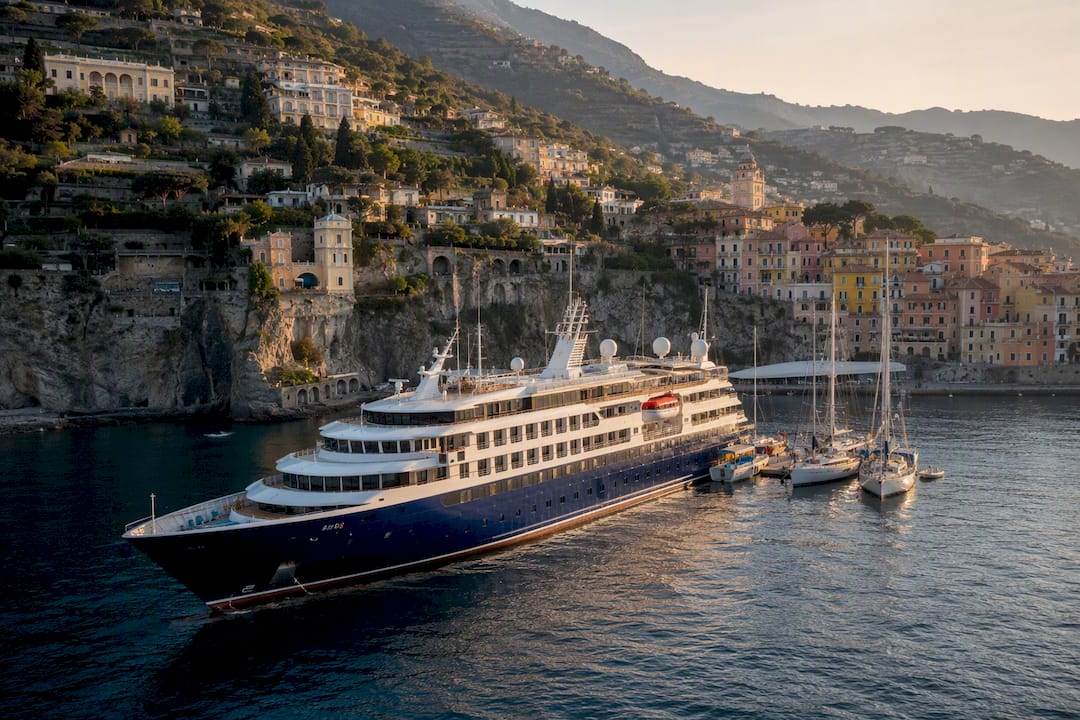
If you have 7 to 10 days, choose a Western Mediterranean small-ship itinerary threading Italy, France, and Spain. If you have 10 to 14 days, pair Greece with the Adriatic or Turkey. For 14 days or longer, combine back-to-back voyages into a Grand Mediterranean route. The right choice comes down to what you actually want from the water: quiet coves and private villa lunches, or a faster pace through marquee ports with a private guide waiting at every pier.
The best Mediterranean luxury cruise itineraries favor small ships and yacht-style vessels that can dock where mega-ships can’t, plus private shore excursions and overnight stays in headline ports like Santorini and Venice. Before picking dates or a ship class, run through this:
- Time available: 7 to 10 days for one region, 10+ for two, 14+ for a combined Grand Mediterranean voyage.
- Pace preference: a relaxed itinerary with overnights and sea days, or a whirlwind that hits a new port daily.
- Primary interest: island hopping, ancient history and architecture, or chef-led culinary experiences.
Key Takeaways
A well-designed Mediterranean luxury cruise itinerary matches voyage length to region, prioritizes small-ship port access, and books private shore excursions early enough to avoid sellouts.
| Point | Details |
|---|---|
| Match duration to region | Choose 7 to 10 days for Western Mediterranean, 7 to 12 for Greek Isles and Turkey, or combine sailings for 14 to 37 days. |
| Sail shoulder season | April through June and September through October offer milder weather and thinner crowds than peak summer. |
| Book excursions early | Reserve 3 to 5 private shore excursions per sailing as soon as your cabin is confirmed to beat sellouts. |
| Pick ship class by priority | Mega yachts and boutique ships reach smaller harbors; larger premium ships suit classic-port itineraries. |
| Use a concierge for complexity | Elite Travel coordinates combined sailings, private guides, and overnights with 24/7 support, no service fees, and a price match guarantee. |
Table of Contents
- Three Sample Mediterranean Luxury Cruise Itinerary Routes
- When Is the Best Time for a Luxury Mediterranean Cruise?
- What Makes Private Shore Excursions Worth Booking?
- How Do You Book the Right Luxury Mediterranean Sailing?
- Why Work With a Concierge Agency for a Complex Itinerary?
- What Kinds of Luxury Ships Sail the Mediterranean?
- What Onboard Amenities Should You Expect?
- How Should You Pack for a Mediterranean Cruise?
- Frequently Asked Questions
- Sources
Three Sample Mediterranean Luxury Cruise Itinerary Routes
Here’s what these voyages actually look like once you break them into days, ports, and the moments worth planning around.
1. Western Mediterranean, 7 to 10 days. Start in Barcelona or Rome, then thread Provence, the Amalfi Coast, and Monte Carlo. A typical run: two days in Barcelona and Sitges, a stop in Marseille or Cannes for a private vineyard lunch in Provence, an overnight in Monte Carlo timed around an evening at the casino district, then Portofino or Sorrento for a private villa lunch above the coastline. Close in Rome or Civitavecchia.
2. Greek Isles and Turkey, 7 to 12 days. Athens anchors the start, with a private early-morning Acropolis visit before the crowds arrive. From there: Mykonos for a chef-led market tour and lunch, Santorini for a private catamaran sail around the caldera at sunset, then Kusadasi or Bodrum for access to Ephesus. Small-ship itineraries here reach harbors that larger vessels skip entirely, which is often the whole point of choosing a yacht-style sailing in the first place.
3. The Grand Mediterranean, 14 to 30+ days. This isn’t one itinerary. It’s two or three shorter sailings booked back-to-back, typically pairing a Western Mediterranean segment with a Greek Isles or Adriatic segment, sometimes adding Croatia and Montenegro. Seasoned luxury travelers use this combining strategy specifically to avoid the friction of disembarking and re-embarking every week, and voyages built this way can stretch to roughly 37 days when three sailings are strung together.
For each of these, three practical notes matter more than the scenery:
- Book a veranda suite or higher. Balcony access changes how you experience early-morning arrivals into ports like Santorini.
- Plan 3 to 5 private shore excursions per sailing. Fewer than that wastes port days; more tends to feel rushed.
- Sail April through June or September through October for the best mix of weather, availability, and fewer crowds at anchor.
Pro Tip: If you’re combining two sailings into a Grand Mediterranean voyage, book the same cabin category on both legs. Some lines will let you skip repacking and re-clearing customs between segments if you stay aboard, which turns two cruises into one seamless voyage.
When Is the Best Time for a Luxury Mediterranean Cruise?
Shoulder season, specifically April through June and September through October, gives you the best balance of mild weather, thinner crowds at the Acropolis or in Dubrovnik’s old town, and better availability for exclusive experiences like private after-hours venue access. High summer brings reliably warm seas and long daylight, but Santorini’s caldera towns and Amalfi’s cliffside restaurants get crowded, and the most sought-after private excursions sell out earliest.
Most Mediterranean luxury cruises run 7 to 12 days, with operators increasingly building itineraries designed for combining into extended voyages up to roughly 37 days total. Season also shapes what’s operationally possible: calmer late-spring and early-fall seas make small tender landings at secluded anchorages easier, and many marquee-port overnights and private venue bookings are only available outside the peak summer crush.
- April to June: mild seas, blooming Provence and Amalfi coastlines, moderate crowds.
- July to August: warmest weather, but peak pricing and the fastest sellouts on private excursions.
- September to October: harvest season in wine regions, comfortable sailing, thinner crowds.
What Makes Private Shore Excursions Worth Booking?
A private shore excursion means a licensed local guide, a private vehicle, and a schedule built around your pace instead of a coach group’s. Most reputable providers also offer a back-to-ship guarantee, so if traffic or a lingering lunch runs long, you’re covered rather than sprinting down the pier. That alone is worth the premium over a ship-run group tour.
The signature experiences worth prioritizing, port by port:
- Private catamaran sailing around Santorini’s caldera at sunset
- Chef-led market tours and cooking sessions in Mykonos or Palermo
- Private vineyard tastings in Provence or Tuscany
- After-hours or skip-the-line access to the Acropolis or Vatican Museums
- Private tender excursions to secluded beaches inaccessible to large tour groups
- A private driver through the Amalfi Coast’s cliffside towns
- Sailing yacht day trips from Dubrovnik’s old town
- Ephesus tours with private archaeological guides from Kusadasi
Book 3 to 5 private excursions per 7 to 12 day sailing. That’s enough to cover the marquee ports without leaving you exhausted by day eight, and it leaves room for at least one unstructured day to wander a port on foot.
Pro Tip: Book Santorini and Mykonos excursions the moment your cabin is confirmed. Viator’s own listings flag many peak-season catamaran and culinary experiences as “likely to sell out,” sometimes months out.
How Do You Book the Right Luxury Mediterranean Sailing?
Before you commit to a ship or a date, get clear answers on a handful of things that separate a smooth voyage from a frustrating one.
- What’s included versus what costs extra: specialty dining, private transfers, and shore excursions vary widely by line.
- Does the itinerary include overnights in marquee ports, or just brief daytime calls?
- Can the ship access smaller harbors directly, or does it require tender landings at every stop?
- What’s the cancellation and health policy, and does it cover itinerary changes from weather?
On timing: reserve suites 9 to 12 months ahead for peak summer sailings, sooner for the most in-demand small ships. Book private shore excursions and transfers as soon as your cabin is confirmed, not closer to departure.
- Budget anchors: fares typically include the suite, main dining, and basic amenities; private transfers, specialty dining, and shore excursions are usually extra.
- Deposits generally lock in your cabin category; read the change-window terms before booking connecting flights.
- Confirm passport validity (six months beyond return is standard for most Mediterranean countries), and carry travel insurance that covers medical evacuation.
Why Work With a Concierge Agency for a Complex Itinerary?
Elite Travel Management Group has spent 35 years building relationships with the private guides, boutique hotels, and ship-side contacts that make a Mediterranean itinerary feel effortless instead of assembled. That matters most when you’re combining sailings, requesting overnight extensions in Venice, or coordinating a back-to-ship guarantee across three different excursion providers in one week.
Concierge planning earns its cost when the itinerary gets complicated: combining two cruise lines, securing a private after-hours museum visit, or rebooking an entire shore day around a change in port schedule. That’s coordination most travelers shouldn’t have to manage themselves mid-voyage.
- No service fees, and a price match guarantee on comparable bookings
- 24/7 support, useful when a port schedule shifts and your excursions need rebooking in real time
- Direct relationships with private guides and boutique ship partners across the Mediterranean
Self-booking works fine for a single 7-day sailing with no add-ons. Once you’re combining voyages, requesting group cabins for a milestone celebration, or want guaranteed overnight access in a marquee port, a concierge planner earns the fee it doesn’t even charge.
What Kinds of Luxury Ships Sail the Mediterranean?
Three ship classes dominate the high-end Mediterranean market, and each delivers a distinctly different trip.
Mega yachts and small luxury ships, typically carrying 200 to 750 guests, offer the deepest port access. These vessels can tie up in harbors like Portofino or Hvar that larger ships must bypass entirely, and they’re the class most associated with overnight stays and off-the-beaten-path anchorages rather than quick daytime calls.
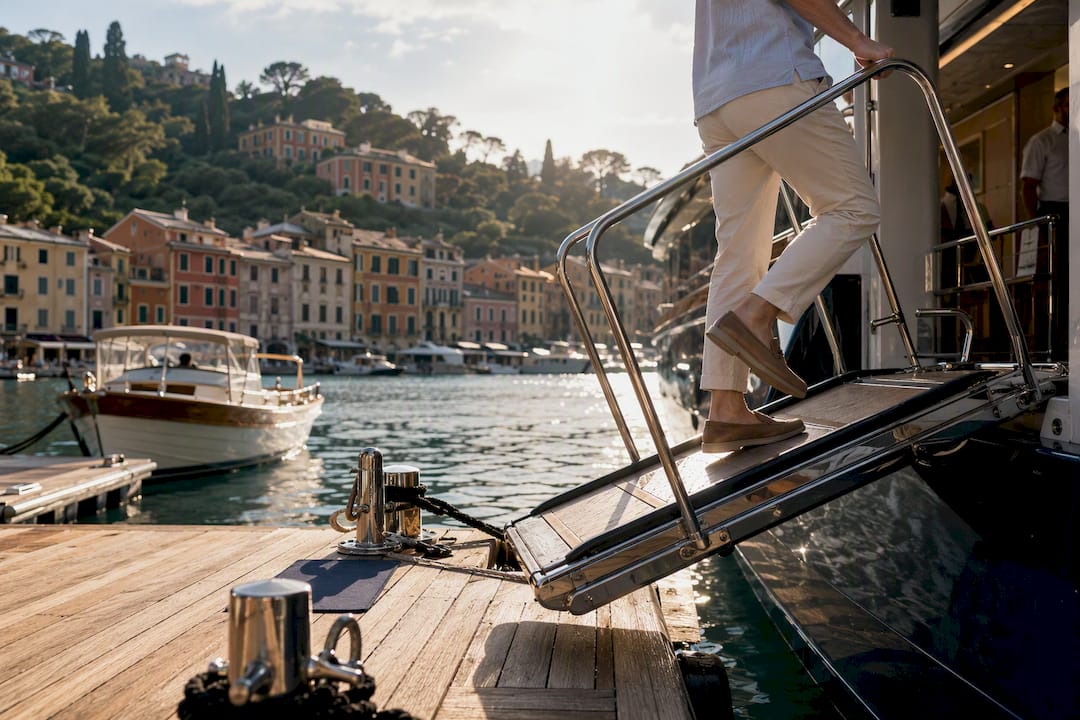
Boutique all-suite ships, often under 300 guests, trade some port flexibility for higher space-to-guest ratios and all-veranda cabin configurations. Expect butler service as standard and dining rooms where the entire ship’s passenger count could fit at once.
Sailing yachts and true private-charter vessels sit at the far end of exclusivity, sometimes carrying fewer than 50 guests. These reach coves and harbors inaccessible to anything larger, though itineraries tend to be shorter and more improvisational, built around weather and anchorage conditions rather than a fixed daily port schedule.
Larger premium ships, generally 750 to 3,000 guests, still deliver genuine luxury tiers through suite-only decks, private restaurants, and dedicated concierge staff, but they sacrifice the intimate port access that defines the small-ship experience. For a first Mediterranean sailing focused on classic ports like Rome and Barcelona, that trade-off may not matter. For travelers chasing Portofino, Hvar, or Kotor specifically, ship size becomes the deciding factor before itinerary even enters the conversation.
What Onboard Amenities Should You Expect?
Spa programs on the top Mediterranean luxury lines now rival standalone resort spas, often featuring thalassotherapy pools, private treatment suites, and partnerships with well-known skincare brands for signature treatments. Multi-night sailings typically build in at least one full sea day where the spa becomes the ship’s social center.
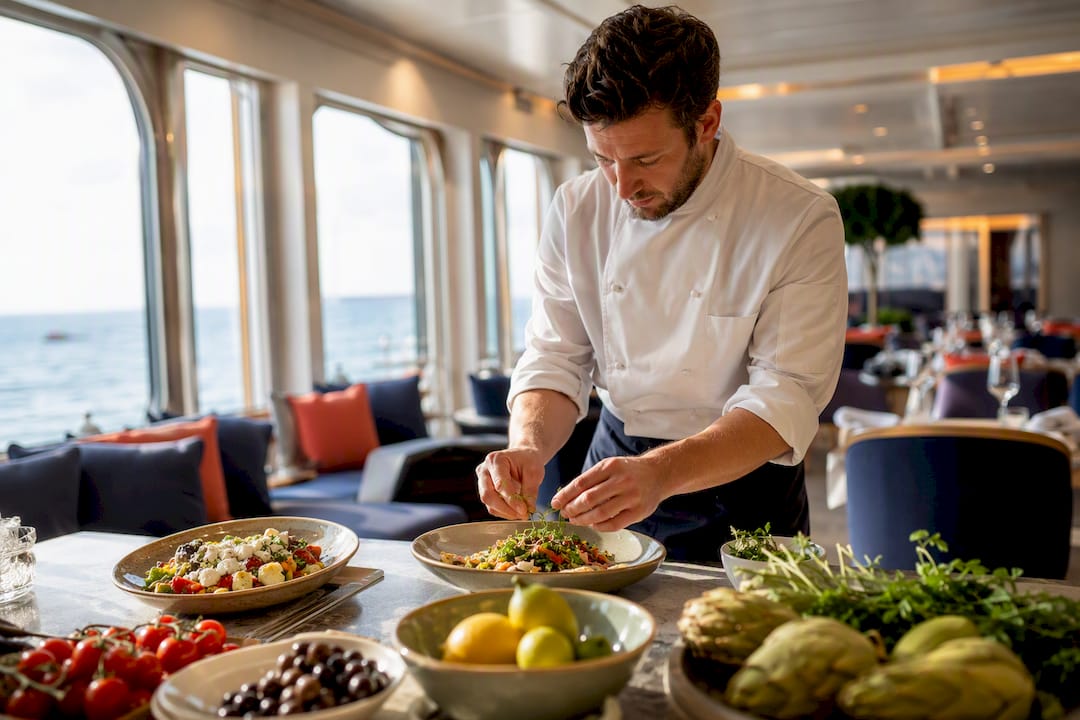
Dining has become the biggest differentiator between ships in the same price tier. Expect at least one chef-partnered specialty restaurant, wine pairings curated by an onboard sommelier, and increasingly, farm-to-table sourcing from ports along the route, so a dinner in Sicily might feature produce bought that morning at a local market.
Entertainment on true luxury ships skews toward curated rather than mass-market: string quartets over Broadway-style revues, guest lecturers on regional history or wine, and intimate lounges rather than casino floors sized for volume. Many lines also build in enrichment programming tied directly to the itinerary, a historian briefing guests on Ephesus the night before a call at Kusadasi, for instance.
Service ratios are the quiet detail worth checking. A ship running close to one staff member per guest delivers a fundamentally different pace than one running one-to-three, right down to how quickly a specialty dining reservation gets confirmed.
How Should You Pack for a Mediterranean Cruise?
Layering matters more than volume. Mediterranean weather swings between warm midday sun and cool evening breezes off the water, even in July, so pack lightweight linen and cotton for daytime plus a light jacket or wrap for evenings on deck.
Footwear deserves real thought. Cobblestone streets in Dubrovnik’s old town and uneven paths at Ephesus punish anything without real support, so bring one pair of comfortable walking shoes alongside your evening footwear. Save the heels for onboard dinners.
Pack for the dress code, which on true luxury ships tends toward elegant casual by day and smart or formal for evenings in the main dining room, particularly on port-overnight nights when many guests dine ashore first, then return for a late onboard drink. A cocktail dress or a blazer earns its suitcase space.
A few practical additions matter more than they seem: a compact day bag for shore excursions, a portable charger for full days ashore, and modest coverage (shoulders and knees) for church visits in Rome, Ephesus, or Dubrovnik’s cathedral. Sun protection is non-negotiable given how much time you’ll spend on open decks and tender boats between ship and shore.
A curator’s perspective on building the itinerary
Designing one of these voyages starts with time ashore, not the ship. Every port gets weighed by what’s actually reachable, a private guide, a quiet cove, an overnight worth staying up for, then logistics get built around trusted local partners who elevate the details a traveler would never think to ask for.
Let Elite Travel Design Your Mediterranean Voyage
A concierge itinerary means someone else handles the combining, the private guides, and the 24/7 rebooking when a port schedule shifts, backed by no service fees and a price match guarantee.
Elite Travel’s planners build bespoke European itineraries around the exact mix of small-ship access, private shore days, and overnight stays this guide walks through, then coordinate every reservation so the pieces arrive already assembled. If you want to see what that looks like before reaching out, browse sample bespoke itineraries for different travel styles. When you’re ready, request a consultation and get a Mediterranean voyage built around your dates, your pace, and the ports you actually want to stand in.
Frequently Asked Questions
How many days should a Mediterranean luxury cruise itinerary be?
Most run 7 to 12 days for a single region. Travelers wanting to cover both the Western and Eastern Mediterranean typically combine two or three sailings back-to-back, creating voyages that can stretch to roughly 37 days.
What’s the difference between a Western and Eastern Mediterranean itinerary?
Western routes cover Italy, France, and Spain, with ports like Rome, Monte Carlo, and Barcelona. Eastern and Greek Isles routes cover Greece, the Adriatic, and Turkey, with stops in Santorini, Dubrovnik, and Kusadasi.
Is a small-ship or yacht-style cruise worth the extra cost?
For travelers who want to reach boutique harbors like Portofino or Hvar and enjoy overnight port stays, yes. Larger premium ships still deliver strong luxury amenities but trade away that intimate port access.
How far in advance should I book private shore excursions?
As soon as your cabin is confirmed. Peak-season experiences in Santorini and Mykonos routinely sell out months ahead.
Should I book directly or use a concierge travel agency?
Direct booking works for a straightforward single sailing. A concierge agency earns its place once you’re combining voyages, requesting overnight extensions, or coordinating multiple private excursion providers across one itinerary.
Sources
- Seabourn Cruises — CruiseMapper
- Mediterranean Private Cruise Excursions from 80+ Ports — Private Shore Trips
- Shore excursions in the Mediterranean — Viator
- The Four Seasons Mediterranean — Four Seasons Yachts
