



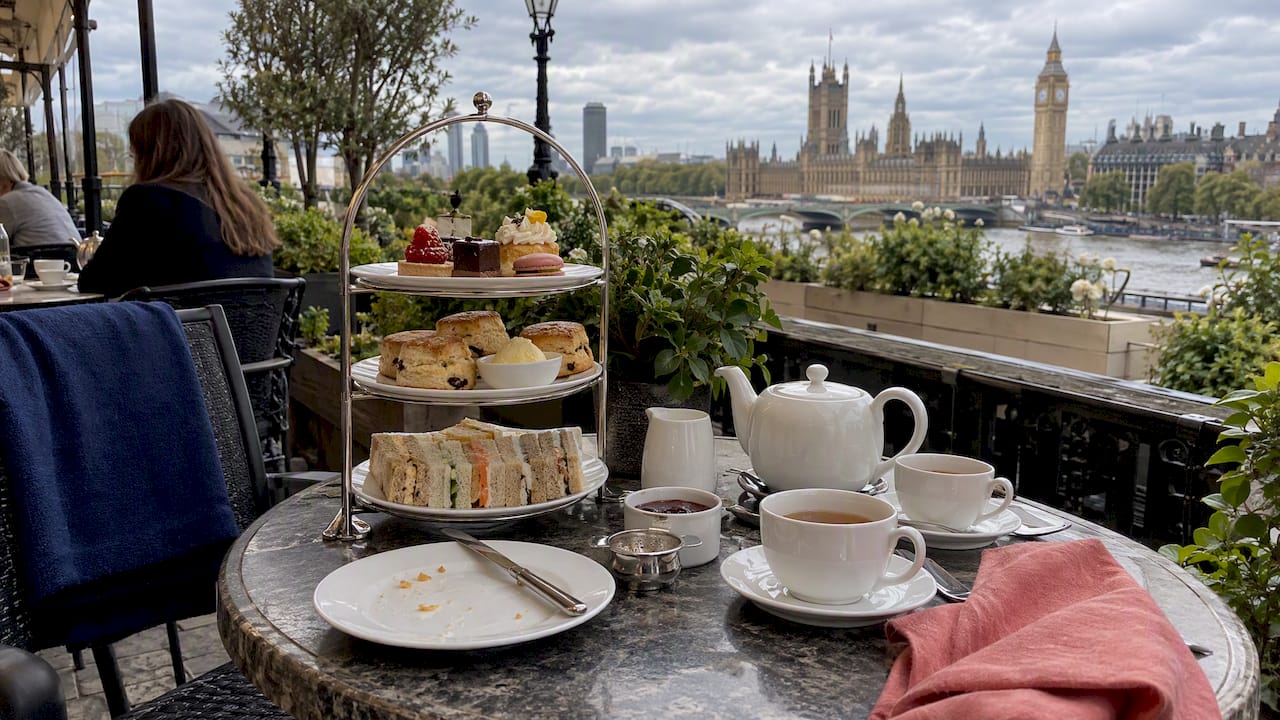
A luxury London itinerary needs a well-placed hotel base, one signature British tradition like afternoon tea, at least one private cultural access point, a standout viewpoint, and a fine dining plan that matches the occasion. Before anything else, lock in your fixed, timed reservations: West End shows, private tours, and sought-after dining slots sell out first. Everything flexible, like shopping or parks, can wait until those anchors are set, and a concierge planner can secure the upgrades that are hard to book alone.
TL;DR:
- Book West End tickets, private tours, and in demand dining as soon as dates are set; performances and tasting menus can sell out weeks ahead.
- Choose Mayfair for heritage hotels and boutiques, Knightsbridge for Harrods, Belgravia for a quieter stay, or Kensington for major museums; hotel location shapes transfer times.
- Allow 60 to 90 minutes for Tower Bridge and about 30 minutes for the London Eye ride; alternate major sightseeing with slower afternoons.
- Timed entry guarantees an arrival window but not priority, while priority tickets reduce waiting; private bookings reserve the venue and staff for your party.
Table of Contents
- A compact weekend or 3-day luxury itinerary
- A full 5 to 7 day itinerary with a day trip
- Choosing the right luxury neighborhood and hotel
- Matching your dining format to the occasion
- The signature bookings worth reserving first
- Planning rules that make the trip feel effortless
- Shopping and spa time that fits the rhythm
- Arrival and getting around without losing time
- Cultural etiquette for a smoother luxury stay
- The access only a travel agent can unlock
- Why bespoke planning matters for a London trip like this
- Let us build your bespoke London itinerary
- FAQ
- Sources
- Official pages to verify times, ticket types, and booking rules
A compact weekend or 3-day luxury itinerary
Three days is enough to hit the highlights without feeling rushed, provided you book the fixed items the moment your dates are confirmed.
- Day 1: Arrive and settle in at a relaxed pace, then book a mid-afternoon tea or a private museum slot. In the evening, aim for a Michelin-style dinner or a counter-seat experience before a West End show with VIP seating.
- Day 2: Spend the morning on a royal route past Buckingham Palace and Westminster, then move to a private Thames cruise or a champagne capsule on the London Eye. Close the day with shopping in Mayfair or Knightsbridge and a late-afternoon spa treatment.
- Day 3: Keep the morning light with a museum visit in South Kensington or a bespoke local experience, then transfer privately to the airport.
West End tickets and dining reservations should go first, ideally as soon as travel dates are fixed, since popular evening performances and tasting menus book out weeks ahead. The London Eye and similar timed attractions require online pre-booking, and Fast-Track or private-capsule options need to be reserved in advance too.
Pro Tip: Choose your hotel base before booking anything else: a location near your priority neighborhoods can save time compared with choosing an upgrade alone, as explained in how to combine lodging and dining for a better trip.
A full 5 to 7 day itinerary with a day trip
A week in London gives you room to alternate intense sightseeing with rest, and to add one day outside the city without feeling like you are losing London time.
- Early in the trip: Cover major museums and landmarks such as the Tower of London, St Paul’s, and The Shard, giving each major sight ample time. VisitLondon’s own seven-day guidance recommends mixing top sights with pre-booked tickets to make the most of a longer stay.
- Day 3: Reserve a West End evening and treat the afternoon as recovery time, perhaps a hotel spa session or a slow walk through a royal park.
- Day 4: Take a private museum or royal access experience, such as a guided walk through a historic route, then follow with afternoon tea.
- Day 5: Use a chauffeured day trip to Windsor, Oxford, or Stonehenge. Guidance on combining central London with short excursions notes that these trips fit comfortably within a longer stay without sacrificing a full London day.
- Days 6 to 7: Shift into shopping and spa time, with one more fine dining experience reserved as the trip’s closing highlight.
Spacing matters as much as the sights themselves:
- Tower Bridge visits run about 60 to 90 minutes and should be pre-booked to guarantee a timeslot.
- The London Eye typically operates from 11am to 6pm, with the standard ride lasting around 30 minutes.
- West End evening performances, including Phantom of the Opera, usually start at 7:30pm Monday through Saturday.
Build rest into the middle of the week rather than only at the end. A day that mixes one major sight with a slower afternoon tends to feel more luxurious than one that stacks three attractions back to back.
Choosing the right luxury neighborhood and hotel
Where you stay shapes how the whole trip feels, not just where you sleep. The luxury districts sit close enough to combine, but each has a different character and purpose).
- Mayfair suits travelers who want grand-hotel heritage, historic restaurants, and boutique shopping within walking distance, anchored by names like Claridge’s and The Connaught.
- Knightsbridge prioritizes Harrods and dense luxury retail, making it ideal for a shopping-focused stay.
- Belgravia is quieter and residential, better suited to travelers who want refined dining without the bustle, and is now also home to The Peninsula London.
- Kensington places major museums and Kensington Palace within easy reach, a natural fit for culture-first travelers.
Newer entrants such as Raffles London at The OWO sit alongside these established neighborhoods, and a 2026 roundup of London’s luxury hotels highlights their spas, on-site Michelin restaurants, and chauffeur services as defining features. When you brief a planner, ask specifically about late checkout, a private transfer on arrival, and connecting rooms or suite upgrades, since these are the details that are easiest to secure before arrival rather than at the front desk.
Matching your dining format to the occasion
Fine dining in London is not one thing: a counter seat, a tasting menu, and a private room each create a different kind of memory, and picking the wrong format can flatten a celebration.
- Counter-theatre dining, like the 18-seat counter at Kitchen Table, puts you face to face with the kitchen for conversation and spectacle rather than formality.
- Multi-act tasting menus, such as the 15-course, three-act experience at ROW on 5, build ceremony into the meal itself.
- Private rooms, including The King’s Table at Dinner by Heston Blumenthal, are built for a milestone toast away from the main room.
Reservation timelines vary by format. ROW on 5 accepts bookings up to three months ahead for parties of up to six, and typically requires a deposit with a defined cancellation window, while counter seats can sometimes be secured on shorter notice. Restaurant status can also change: Pétrus by Gordon Ramsay in Knightsbridge keeps Michelin recognition but closes on Monday and Sunday, and some long-running chef residencies have ended, so confirm hours and availability close to your travel dates.
Pro Tip: Mix formats across a longer stay: one counter dinner, one tasting menu, and one private room keeps the week from feeling repetitive.
The signature bookings worth reserving first
A handful of experiences define a London luxury trip, and they share one trait: limited capacity that fills up early.
- Private museum or royal access visits need to be arranged well ahead, since guided slots are limited and popular routes book out.
- A private Thames cruise or a champagne capsule on the London Eye works well for couples or small groups marking an occasion. Visit London notes that the Eye’s private capsule can hold up to 25 guests, so it scales from an intimate pair to a full group.
- West End VIP seating for a show like Phantom of the Opera should be booked as soon as travel dates are fixed, since prime seats move fastest.
Understand the difference between ticket types before you book: Fast-Track and Flexi Fast-Track reduce wait time at a fixed slot, timed entry guarantees a window but not priority, and a fully private booking buys the location and staff to yourselves. Match the option to your party size and the occasion you are celebrating.
Planning rules that make the trip feel effortless
The sequence you book in matters almost as much as what you book.
- Lock fixed items first: shows, private tours, and sought-after dining all have limited inventory and should be reserved before anything flexible.
- Alternate intensity: pair a major museum or palace day with a park, a tea, or a slow dinner rather than stacking several big sights back to back.
- Budget realistic visit lengths: Tower Bridge needs 60 to 90 minutes, while the London Eye’s ride itself runs about 30 minutes, so plan buffer time around each.
- Match transport to the day: a hotel near your main interests cuts transfer time, and a chauffeur-for-the-day works best for days with multiple stops or an evening event.
Pro Tip: Treat your hotel location as a routing decision, not just a comfort one. It can save more time across a week than any single upgrade.
Shopping and spa time that fits the rhythm
Luxury shopping clusters around Bond Street, Harrods, and the Burlington Arcade, and each rewards an unhurried afternoon rather than a rushed stop between other plans.
- Pair Bond Street boutiques with a Mayfair lunch to avoid backtracking across the city.
- Treat Harrods as a half-day destination in Knightsbridge rather than a quick errand.
- Schedule spa treatments, whether in-hotel or in a private suite, on a lower-intensity day so you leave relaxed rather than rushed to the next reservation.
- Save gift purchases for the Burlington Arcade, known for jewelry and small luxury goods suited to a special occasion.
Arrival and getting around without losing time
A private arrival transfer with meet-and-greet service and direct luggage handling turns a tiring flight into a smooth start, and it is worth booking before you land rather than arranging on arrival.
- Choose a chauffeur-for-the-day for days with multiple stops, like a day trip or an evening show, rather than booking separate point-to-point rides.
- Confirm that your hotel’s location keeps your main sights within a reasonable transfer time, since this changes significantly between Mayfair and outer Kensington.
Cultural etiquette for a smoother luxury stay
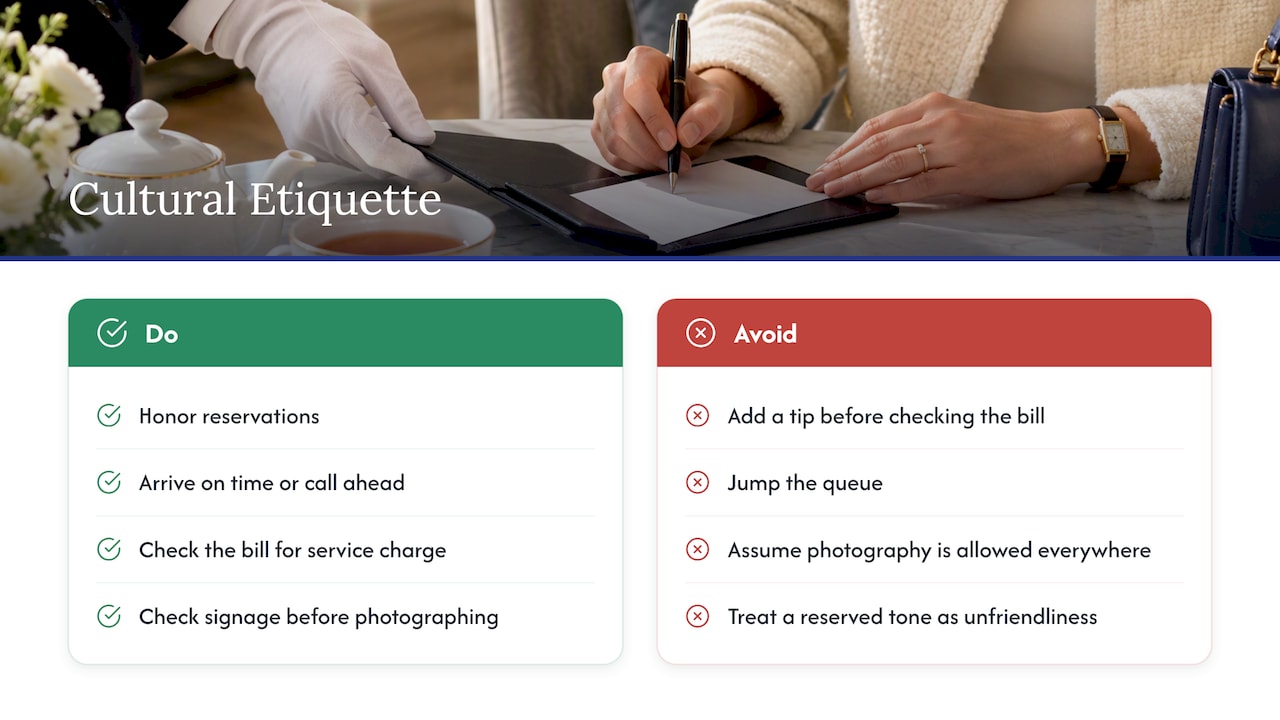
A few habits go a long way toward a comfortable, friction-free trip in London. Reservations, once made, are expected to be honored. Arriving on time, or calling ahead if you are running late, is standard courtesy at both restaurants and private tours.
Tipping in restaurants is often included as a service charge, so check your bill before adding more. Dress codes at formal dining rooms and theaters tend to be smart but not rigid, though a private room or a tasting menu experience generally calls for a more polished look than a casual counter dinner.
Queuing is taken seriously, even at luxury attractions, and jumping a line, even inadvertently, draws more attention in London than in many other cities. At museums and palaces, photography rules vary by room, so check signage rather than assuming you can shoot everywhere.
Conversational tone tends to run a notch more reserved than in some other major cities, particularly with hotel and restaurant staff on a first encounter. Warmth builds over the stay rather than arriving instantly, and that reserve is not unfriendliness, just a different rhythm. Showing basic awareness of these norms, especially around timing and reservations, tends to translate into warmer service and smoother access throughout a luxury stay.
The access only a travel agent can unlock
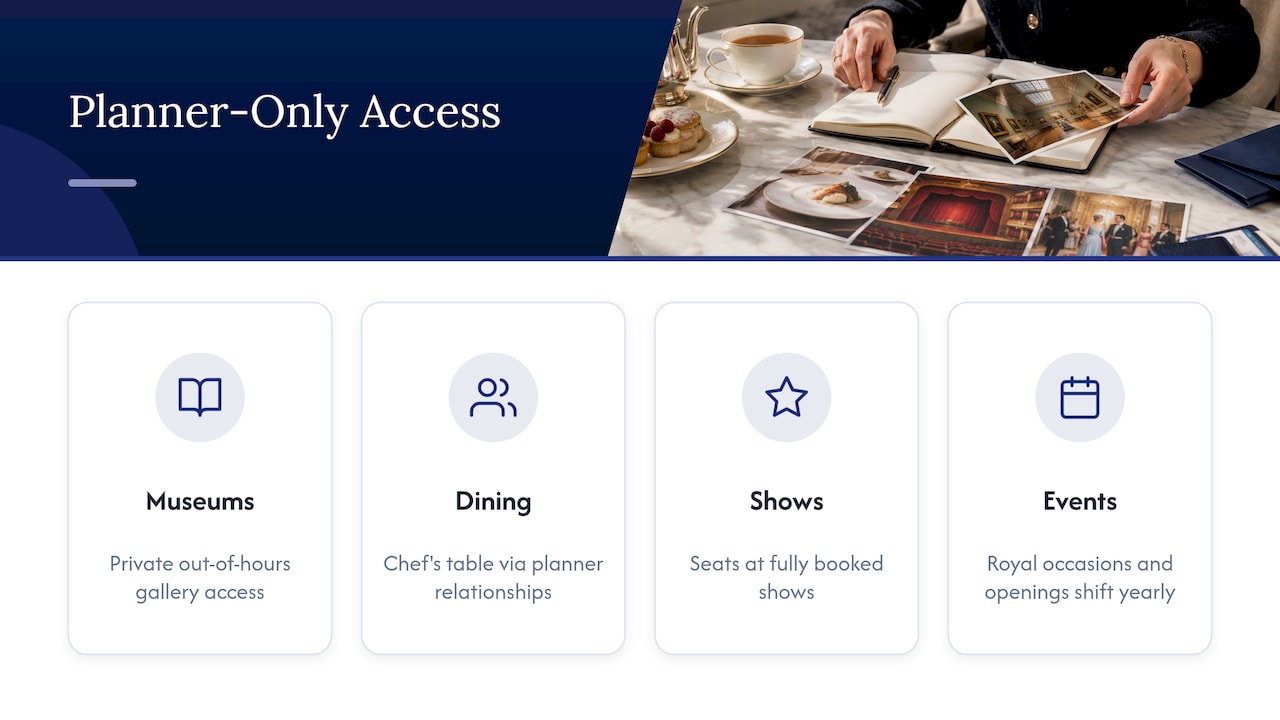
Some of the most memorable parts of a London trip never appear on a public booking page. Private out-of-hours access to a museum gallery, a chef’s table arranged through a restaurant’s relationship with a planner rather than its public reservation system, or a seat at a fully booked show often comes down to who you know on the ground, not how early you tried to book online.
Seasonal events add another layer: London’s calendar includes royal ceremonial occasions, West End openings, and holiday light displays that shift year to year, and a planner with current, on-the-ground knowledge can tell you which ones are worth building a trip around for your specific travel window. This kind of access tends to come from standing relationships with hotels, restaurants, and venues, the sort built over years rather than assembled for a single booking.
Why bespoke planning matters for a London trip like this
Having planned European itineraries, the clearest lesson is that routing and relationships matter more than any single booking. A planner who knows which Mayfair restaurant has a table when the website says fully booked, or which museum will open a gallery after hours, changes the shape of a trip entirely. Whatever you book, recheck opening hours, dress codes, and cancellation terms close to your travel dates, since restaurants and attractions do update their policies.
— tammylevent@gmail.com
Let us build your bespoke London itinerary
Everything above works best when someone handles the routing, the reservations, and the backup plan if a show sells out or a restaurant closes its doors. That is the work we do: custom itinerary design that pairs the right hotel base with private bookings and signature experiences. Ask us about service fees and whether a price match is available, so you can compare a tailored package with other options.
To get started, share a few details with our team:
- Your travel dates and length of stay
- Your party size and the occasion, if any
- Your priorities: dining, shows, private access, or a mix
Explore our luxury London vacation packages or request a consultation to start building an itinerary around what matters most to you.
FAQ
How many days for London is enough?
Three days covers the core highlights at a comfortable pace, while five to seven days allows for a deeper mix of museums, private experiences, and at least one day trip outside the city. Choose based on whether you want a focused weekend or a fuller week that includes rest days.
What are some luxurious things to do in London?
Signature luxury experiences include a private Thames cruise or champagne capsule on the London Eye, a West End show with VIP seating, afternoon tea, and a private museum or royal access tour. Pairing one of each across a trip creates variety rather than repeating the same type of experience.
What are 50 must-see places in London?
There is no single official list of must-see places, since priorities vary by traveler, but official tourism guidance for longer stays groups the city’s highlights into major landmarks, museums, royal sites, and skyline viewpoints. A concierge planner can tailor a shortlist from these categories to match your specific interests.
What are 10 must-see things to do in London?
A strong shortlist includes Tower Bridge, the London Eye, a West End show, afternoon tea, a royal palace visit, a Thames cruise, a Michelin-level dinner, Harrods or Bond Street shopping, a South Kensington museum, and a skyline view from The Shard. VisitLondon’s own itinerary guidance for shorter stays covers a similar core list with booking notes.
Can Elite Travel plan the whole itinerary for me?
Yes, we design custom itineraries that include hotel selection, private bookings, and ongoing support, available through our luxury vacation packages service. Pricing depends on your dates, party size, and priorities, and is provided after an initial consultation.
Sources
- London Eye tickets and experiences | Book and plan your visit
- Royal and historic walking routes
- The Best Luxury Hotels in London, England
Official pages to verify times, ticket types, and booking rules
Confirm exact hours, ticket types, and inclusions before you book, since these details change.
