



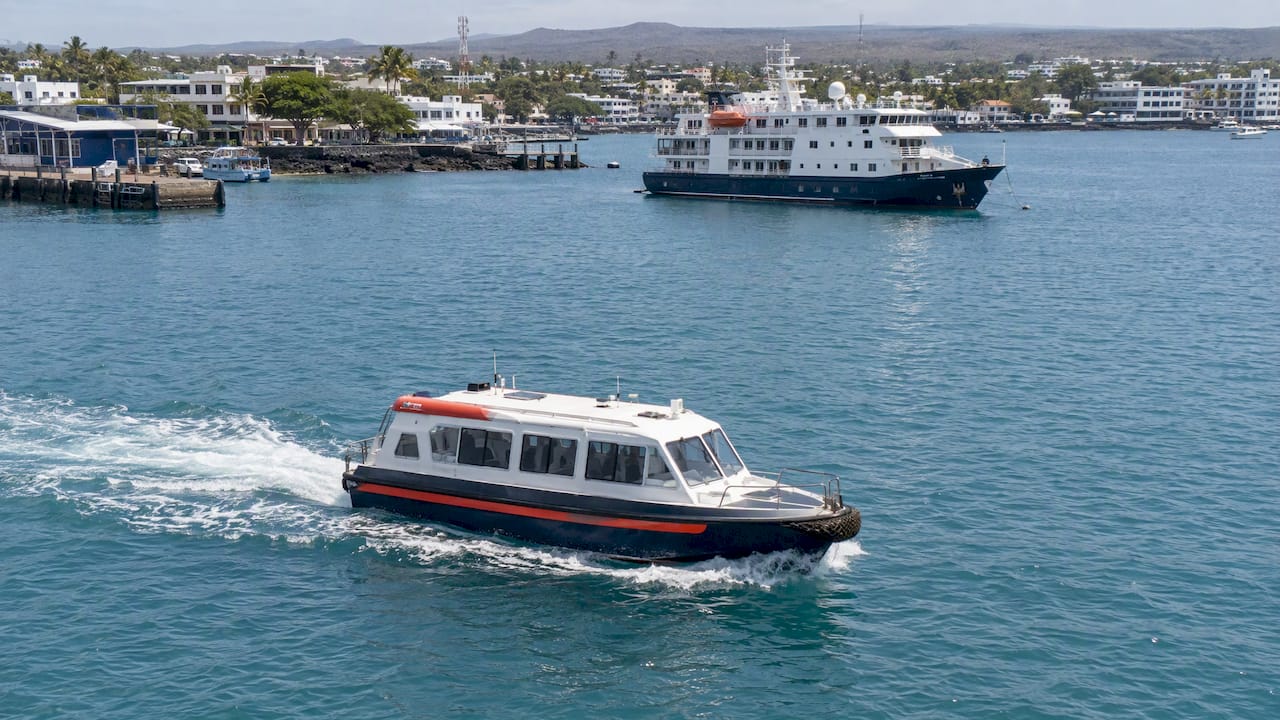
For most travelers who want the widest, wildest Galápagos, a small-ship cruise is the better choice. It reaches remote islands that day trips from land cannot, and it makes the best use of a limited vacation. A land-based trip wins on comfort, flexibility, time in towns and lower upfront commitment. This guide shows what each style really gives you, where each falls short, and how to decide.
TL;DR
- Choose a cruise if wildlife variety, remote islands and efficient use of a week matter most. Overnight sailing covers distances a land trip can’t.
- Choose a land-based trip if you want a real bed that doesn’t move, freedom over meals and schedule, and time with local communities.
- Cruise pricing is bundled (lodging, meals, guides, activities), while land trips add up hotel, tours, ferries and meals one by one.
- Some sites are cruise-only, including Española, famous for waved albatrosses, and Genovesa.
- A hybrid is possible: a few land nights plus a shorter cruise, planned in the right order.
Table of Contents
- How the two styles actually work
- Which islands you can reach
- Pace, comfort and daily rhythm
- Getting around on a land-based trip
- What each one costs, and what’s included
- Side-by-side comparison
- Which style suits which traveler
- The question of environmental impact
- Our perspective: how we would decide for you
- Combining both: the hybrid itinerary
- How to decide: five questions
- Plan your Galápagos trip with us
- FAQ
- Sources
How the two styles actually work
A cruise means you sleep aboard a small vessel that moves between islands, usually overnight, so you wake up at a new landing each morning. Guides lead you ashore for walks and snorkeling, and meals are served onboard.
A land-based trip, often called island hopping, means you base yourself in hotels on the populated islands (Santa Cruz, San Cristóbal, Isabela and Floreana). You take day tours by boat or on foot, and move between islands by passenger launch.
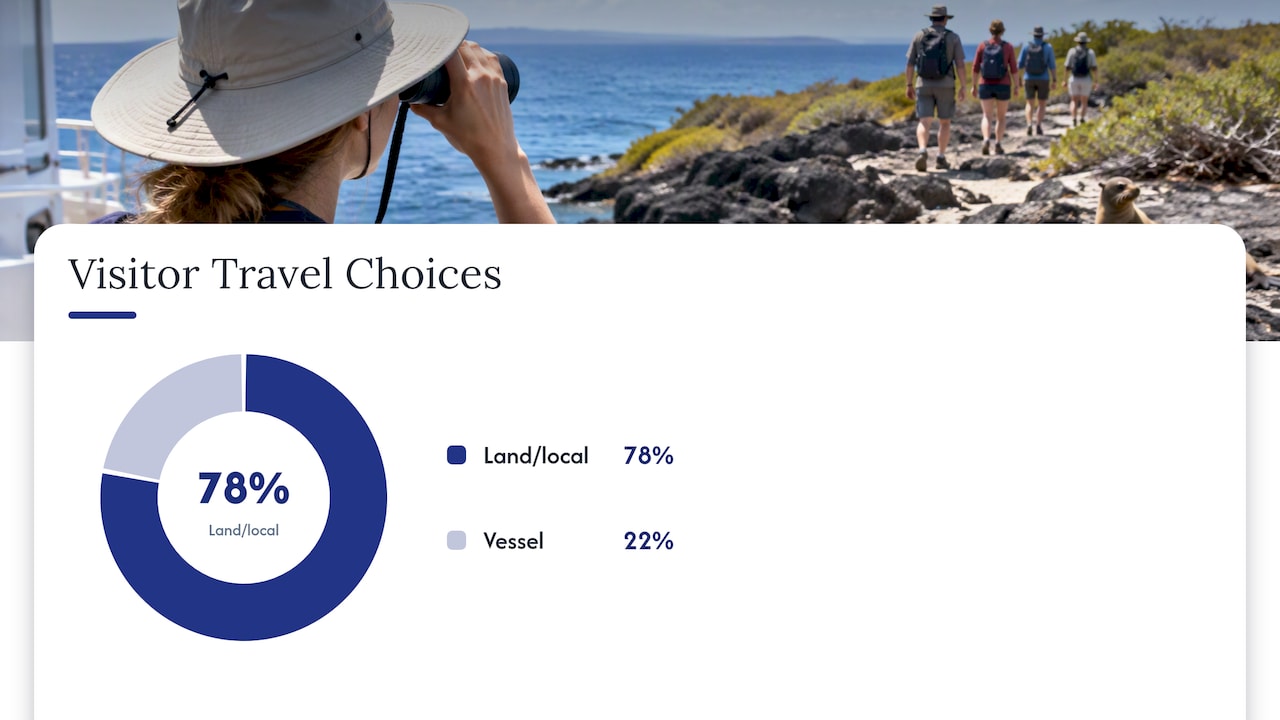
The split in how people travel is lopsided. According to the Galápagos National Park’s 2024 visitor statistics, 78% of visitors chose land or local tourism, and 22% traveled aboard a vessel. Popularity is not the same as the best fit, though. Many land visitors are on short trips or tighter budgets, and many never see what a cruise reaches.
Which islands you can reach
This is the deciding factor for many travelers, so start here.
The Galápagos National Park Directorate lists 176 visitor sites, 91 marine and 85 terrestrial, authorized for different tourism modalities. Not every site is open to every kind of visitor, and that is where the two styles diverge.
What land travelers can see
From a base such as Puerto Ayora on Santa Cruz, Lonely Planet describes day tours to North Seymour, South Plaza, Bartolomé and Santa Fe. You can also visit the Santa Cruz highlands and the Charles Darwin Research Station, and take ferries to Isabela, San Cristóbal and Floreana.
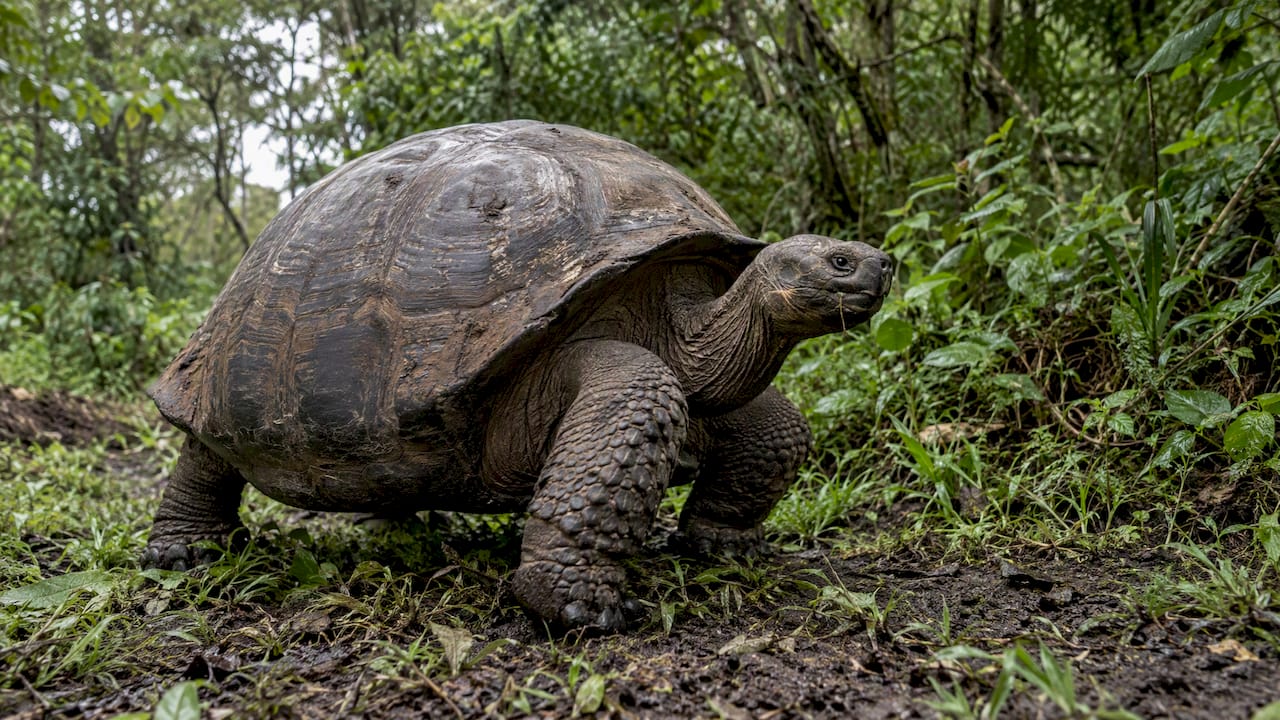
The park’s 2024 visitor report shows how much land-accessible activity exists near the towns: Tortuga Bay, Las Grietas and Garrapatero Beach on Santa Cruz, Cerro Tijeretas and Punta Carola on San Cristóbal, and the Sierra Negra–Volcán Chico area on Isabela. These are excellent places. Sea lions on the town docks, marine iguanas and giant tortoises are all within reach without ever boarding a cruise ship.
What only a cruise reaches
Lonely Planet says a cruise is the only way to reach Española, and that Genovesa is accessible by boat. Española’s Punta Suárez is the place for waved albatrosses, which nest from April to December. The official visitor guide, as summarized in the same article, adds that more remote sites on Fernandina, Genovesa and Española are reachable only by cruise.
If waved albatrosses, remote seabird colonies or the westernmost landscapes are on your list, a land-based trip will leave gaps. If your list is sea lions, tortoises, snorkeling with turtles and a few classic islands, land covers it well.
Pace, comfort and daily rhythm
On a cruise
Overnight crossings are the point. Lonely Planet’s assessment is that cruises cover more islands and remote sites in a shorter period because the longer crossings happen while you sleep. Itineraries are set, with guided landings and snorkeling outings on a schedule, so you rarely lose time to logistics.
The trade-offs are real. Cabins are compact. Your day follows the ship’s program. Evening swells can bother anyone prone to motion sickness, particularly on crossings. If you value unstructured afternoons, a cruise can feel busy.
On land
Land-based travelers generally have more living space in hotels than in boat cabins, while liveaboard boats make more efficient use of vacation time. You sleep in the same bed for several nights, choose your own restaurants and can skip an outing if you are tired.
Land travel also brings you into the communities. The same National Geographic piece notes more contact with residents, local hotels and restaurants, and chances to practice Spanish, while cruise itineraries run on set schedules.
One caution from that article: the small boats used for inter-island travel on land tours can cause worse seasickness than larger cruise vessels. Crossings between islands are not trivial, so if you are sensitive, plan around them.
Getting around on a land-based trip
The logistics are the hidden work of land travel. The National Park’s transport page says travelers can move among the four populated islands by passenger launch; crossings take about two to three hours and the listed fare is US$30 per person per route, with permitted departure times varying by route. Inter-island flights also exist.
A few practical consequences:
- Every island change eats part of a day, between packing, the transfer and the crossing.
- Departure times are fixed per route, so your sequence of islands depends on the schedule, not just your preference.
- Day tours to outlying islands are booked separately and run when the weather and permits allow.
- A rough sea day can compress your plans, which matters on a short trip.
This is why a land-based trip of five or six days usually settles on two islands rather than four. Trying to see everything by launch turns a vacation into a series of transfers.
What each one costs, and what’s included
A Galápagos trip is expensive either way, and the way the cost is structured differs more than the total.
Cruise pricing is bundled. Lonely Planet notes that cruise prices include lodging, meals, activities, guides and gear, and often transfers or other logistical support. The ship class drives the price: simple tourist-class boats, midrange ships and high-end yachts or small expedition vessels differ in cabin size, guide-to-guest ratio, food and extras such as dedicated naturalist guides.
Land-based trips can start at a lower spending level, but the same article cautions that lodging, meals, drinks, day tours, transfers, tips and other extras add up. You are also buying hotels, tours and ferries as separate pieces, which means more planning and more places for a plan to slip.
Two costs apply to both styles and are easy to forget: the international and domestic flights to the islands, and the park entry requirements. Because these change, confirm current amounts on the official Galápagos National Park pages and with your travel advisor before you budget.
A fair way to compare
Don’t compare a cruise’s price to a land trip’s hotel rate. Compare the total for the same number of days, including every tour, ferry, meal, drink and tip. For a luxury traveler the question usually shifts: not “which is cheaper” but “which gives me the experience I’m paying for.” On a high-end land trip, you often pay for private day boats and guides separately, which can narrow the gap.
Side-by-side comparison
| Factor | Cruise | Land-based tour |
|---|---|---|
| Islands and sites | Wider range, including remote sites such as Española and Genovesa | Santa Cruz, San Cristóbal, Isabela, Floreana, plus day trips to nearby islands |
| Use of time | Overnight sailing; more sites in fewer days | Daytime ferries and transfers take hours |
| Sleeping | Compact cabin; motion at sea | Hotel room, more space, stable bed |
| Food | Onboard meals | Restaurants of your choice |
| Schedule | Set program | Flexible, with room to skip or add |
| Community contact | Limited | High: residents, shops, restaurants |
| Pricing | Bundled | Itemized; extras add up |
| Planning effort | Low | Higher: hotels, tours, ferries |
| Seasickness risk | Present, on a larger and steadier vessel | Present on small inter-island launches |
Which style suits which traveler
Couples and honeymooners
A cruise gives a sense of seamless, private adventure with fewer decisions, and a small luxury yacht can feel intimate. A land-based stay suits couples who want long dinners, spa time and a hotel with a view. Many honeymooners like the comfort of a land stay for the first few nights, then a short cruise. If you are planning a honeymoon, our honeymoon vacation packages page shows how we approach it.
Families
Families with teens often love a cruise because snorkeling, kayaking and guided walks fill each day. Younger children, or families who need space and flexible nap and meal times, can find a land base easier. National Geographic’s piece on traveling with teens captures the split: land offers living space, the boat offers efficient use of time.
Solo travelers
Solo travelers face single supplements on many cruise cabins, while land hotels may be easier to manage on a per-person basis. On the other hand, a cruise provides built-in company and guidance. Weigh the supplement against the social setup you want.
Travelers who get seasick or dislike structure
If rough crossings worry you, remember that land trips also involve small-boat transfers. A larger, stabilized cruise vessel may be gentler than a small launch. If you simply dislike group schedules, land is the better fit.
Wildlife enthusiasts and photographers
The cruise is usually the stronger choice, because remote islands and the extra landings per day deliver species variety. Pair it with a naturalist guide who knows the sites.
The question of environmental impact
Both styles have defenders. National Geographic’s reporting notes that there are reasonable arguments on both sides of the environmental-impact debate, and that the cruise industry has operated under strict protocols developed over 40 years. Land tourism puts money directly into island businesses and homes, while ships operate within a tightly regulated system. Either way, your choice of operator, guide and behavior on the trails matters more than the format.
Our perspective: how we would decide for you
After 35 years designing high-end trips, we have found that the wrong Galápagos choice usually comes from comparing prices rather than priorities. Here is how we frame it with clients.
First, we ask what you want to see. If the answer includes specific species or remote islands, the cruise is where we start. If the answer is “a beautiful island stay with some wildlife,” land is a strong candidate.
Second, we ask how you handle logistics and motion. A land trip looks simple on paper but depends on ferry timetables and weather. A cruise hands that complexity to the crew.
Third, we think about the days around the islands. The Galápagos is reached through mainland Ecuador, so many of our clients add Quito or other stops, and the flow of those days matters as much as the islands do. We build the whole journey with on-the-ground partners we know, rather than leaving connections to chance.
We charge no service fees, we offer a price match guarantee, and we are available 24/7, which matters when a flight changes the day before an island transfer. We earn from the suppliers we book, so our advice is about fit, not about pushing a particular product.
— tammylevent@gmail.com
Combining both: the hybrid itinerary
You don’t have to choose one. A hybrid plan places two or three nights in a comfortable hotel on Santa Cruz, with day trips and the Charles Darwin Research Station, then a shorter cruise for the remote sites. Done in the right order, the land days give you time to recover from travel and settle into the climate, and the cruise gives you the islands a day trip can’t reach.
The challenge is sequencing: flights, check-in times and ship embarkation points must line up, and the cost of a poorly timed connection is a lost day. That is the kind of detail we plan so you don’t have to.
How to decide: five questions
- Do you want Española, Genovesa or other remote sites? If yes, cruise.
- How many days do you have? The fewer days, the more a cruise’s overnight sailing helps.
- Do you care more about your bed or your list of species? Bed means land; species means cruise.
- How do you feel about fixed schedules? Dislike them, and land suits you.
- Who is traveling? Young children, solo travelers and large multigenerational groups each shift the answer, so be specific about your party.
Plan your Galápagos trip with us
If you would like a Galápagos journey built around your priorities, we design it end to end: the ship or hotels, the guides, the mainland Ecuador stops and the flights between them. Start with our Luxury Galapagos 6 Day Vacation Package or our Ecuador travel agency page, or contact us and talk to an advisor about a fully customized itinerary. If a ship is your preference, see how we approach luxury cruises and our luxury cruise booking guide.
FAQ
Is a Galápagos cruise worth it?
For most wildlife-focused travelers, yes. A cruise reaches more islands and remote sites in less time, and the price bundles lodging, meals, guides and activities. If you mainly want comfort and flexibility, a land-based trip may deliver more value for you.
What is the best way to tour the Galápagos Islands?
There is no single best way. A small-ship cruise is best for variety and remote sites, a land-based trip is best for flexibility and local contact, and a hybrid blends both. Start from what you want to see and how many days you have.
Can you see the Galápagos without a cruise?
Yes. You can stay on the populated islands and take day tours to nearby sites, and ferries link Santa Cruz, San Cristóbal, Isabela and Floreana for about US$30 per person per route. Some sites, such as Española, are reachable only by cruise.
Is a land tour cheaper than a cruise?
It can start lower, but hotels, meals, day tours, transfers and tips add up. Compare complete trip totals for the same number of days before deciding.
Sources
- The Best Way to Visit the Galápagos Islands, Lonely Planet
- Galapagos with Teens: Surf or Turf?, National Geographic
- 279.277 visitantes llegaron a las Islas Galápagos durante 2024, Galápagos National Park
- Sitios de Visita, Galápagos National Park
- Informe Semestral de Visitantes 2024, Galápagos National Park
- Transporte entre islas pobladas, Galápagos National Park
