



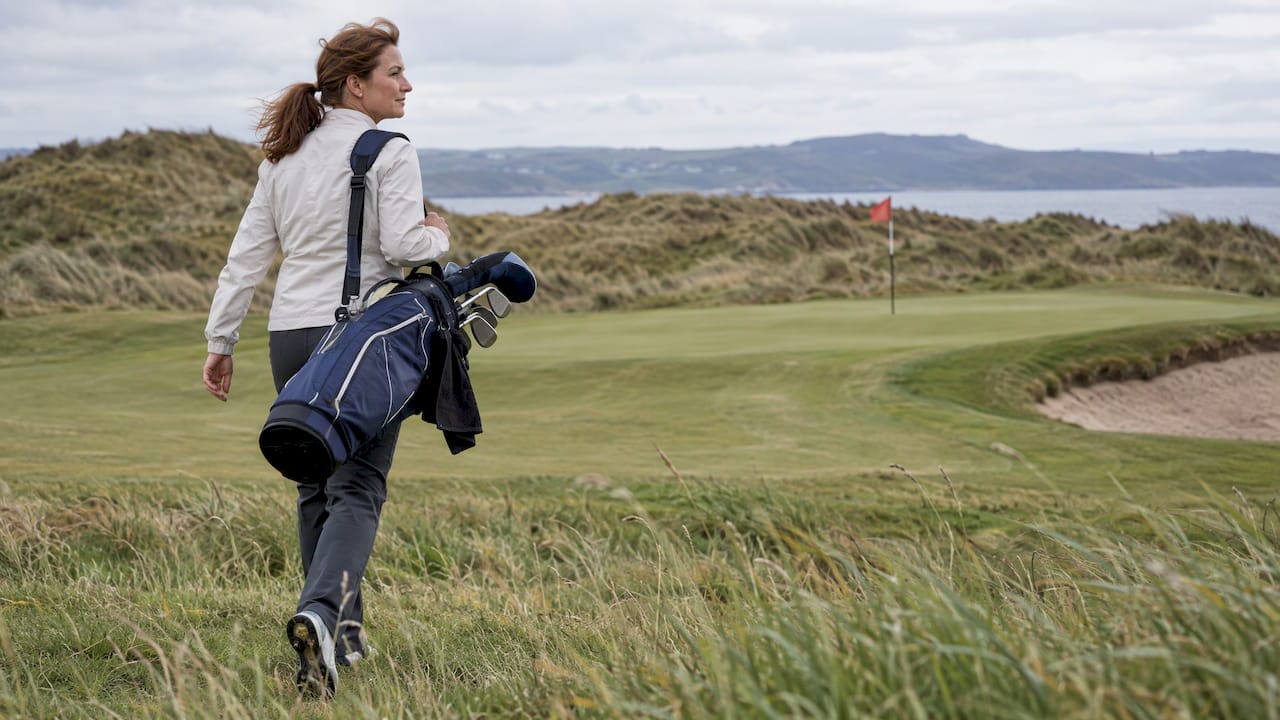
The best Scotland golf courses are links, the seaside ground where the game began, and the best trip is rarely the one with the most famous names on the scorecard. It is two or three regions, a handful of well-chosen rounds, tee times secured long before you fly, and a pace that leaves room for the country itself. We have spent 35 years designing high-end trips to Europe and beyond, and our Scotland vacation packages are built the same way: around the experience you want, with the right hotels and on-the-ground partners behind it.
TL;DR
- Links golf is rare: about 4 percent of Scotland’s coastline is true links, yet 19 Scottish links courses make Golf Digest’s 2026-2027 World’s 100 Greatest list.
- Pick two or three regions rather than chasing every name. St Andrews, East Lothian, Ayrshire, the Highlands and Aberdeenshire each give a different trip.
- Famous tee times are the bottleneck. The Old Course’s advance process typically opens in early September for the following year, so plan many months ahead.
- Budget in pounds: a Championship round at Carnoustie is £360 in high season, before caddie, lodging and transport.
Table of Contents
- What makes Scotland’s courses different
- The courses people cross the Atlantic for
- Choosing your region
- What a round costs
- When to go and how far ahead to book
- A sensible shape for the trip
- Our perspective
- Plan your Scotland golf trip with us
- FAQ
- Sources
What makes Scotland’s courses different
Scotland is where golf was born, and its courses still play the way the game was first laid out: over dunes, through wind, on firm, fast turf that rewards a bump-and-run as much as a full swing. Links land is a narrow strip of sandy coast that drains well and cannot easily be built. Golf Digest cites a geologist’s estimate that only about 300 of Scotland’s roughly 7,500 miles of coastline qualifies, just 4 percent. That scarcity is why a country this small fills so much of the world rankings.
For an American golfer, this changes how you plan. You are not choosing among interchangeable resort layouts. You are choosing among places with their own history, weather and character, and the order you play them in matters.
The courses people cross the Atlantic for
These are the names that anchor most itineraries, with what each is known for.
| Course | Region | Why golfers go |
|---|---|---|
| Old Course, St Andrews | Fife | Described by St Andrews Links as the world’s oldest course, with 600 years of golf played there |
| Prestwick | Ayrshire | Hosted the first Open Championship in 1860 |
| Royal Troon | Ayrshire | Founded in 1878; hosted the 152nd Open in 2024 |
| Turnberry (Ailsa) | Ayrshire | Four Opens, including the 1977 “Duel in the Sun” |
| Carnoustie | Angus | Known for the 1999 Open won by Paul Lawrie, and for its difficulty |
| Gleneagles (PGA Centenary) | Perthshire | Hosted the 2014 Ryder Cup and 2019 Solheim Cup |
| Cruden Bay | Aberdeenshire | Dramatic dunes |
All of those details come from VisitScotland’s guide to famous courses. Golf Digest’s list also includes two non-links courses worth knowing about, Loch Lomond and the King’s Course at Gleneagles, if you want inland variety.
How hard are they?
Prestwick gives a sense of the test. Its Links is a par-71 of 6,908 yards, and from the Championship tees it carries a slope of 145 and a course rating of 75.1. Carnoustie has handicap limits too: 28 for men and 36 for ladies. Check the limit for each course on your list early, because it can shape who in your group plays where.
Beyond the Open venues
The quieter courses often leave the strongest memories. BBC Travel’s feature on Scotland’s less famous courses singles out Musselburgh Old Links near Edinburgh, which holds a Guinness record as the world’s oldest course still in play, and Machrihanish on the Mull of Kintyre, which the author calls the best pure links. Both pair naturally with a trip that is about more than scorecards.
Choosing your region
Because the courses cluster, the sensible way to plan is by region. The main links areas are St Andrews and Fife, East Lothian, Ayrshire, the Highlands and Aberdeenshire, with Angus and Perthshire as useful additions. Here is how they differ in feel.
- St Andrews and Fife. The classic first trip. Old, New and Jubilee courses sit in the town itself, with Kingsbarns, Crail and others nearby. It suits golfers who want history and walkable evenings.
- East Lothian. Muirfield, North Berwick, Gullane and Dunbar sit within easy reach of Edinburgh, so you can stay in one base and still play strong golf each day.
- Ayrshire. Royal Troon, Prestwick, Western Gailes and Turnberry are close enough together to keep drives short.
- The Highlands. Royal Dornoch, Brora, Nairn and Cabot Highlands trade convenience for scenery and a sense of journey.
- Aberdeenshire. Royal Aberdeen, Trump International, Cruden Bay and Murcar suit golfers who want traditional links and fewer crowds.
That regional breakdown follows the courses grouped by region in one detailed planning guide. Its central advice is worth repeating: the most common mistake is trying to play too many courses that are too far apart. Pick two or three regions and spend two or three nights in each.
Build in more than golf
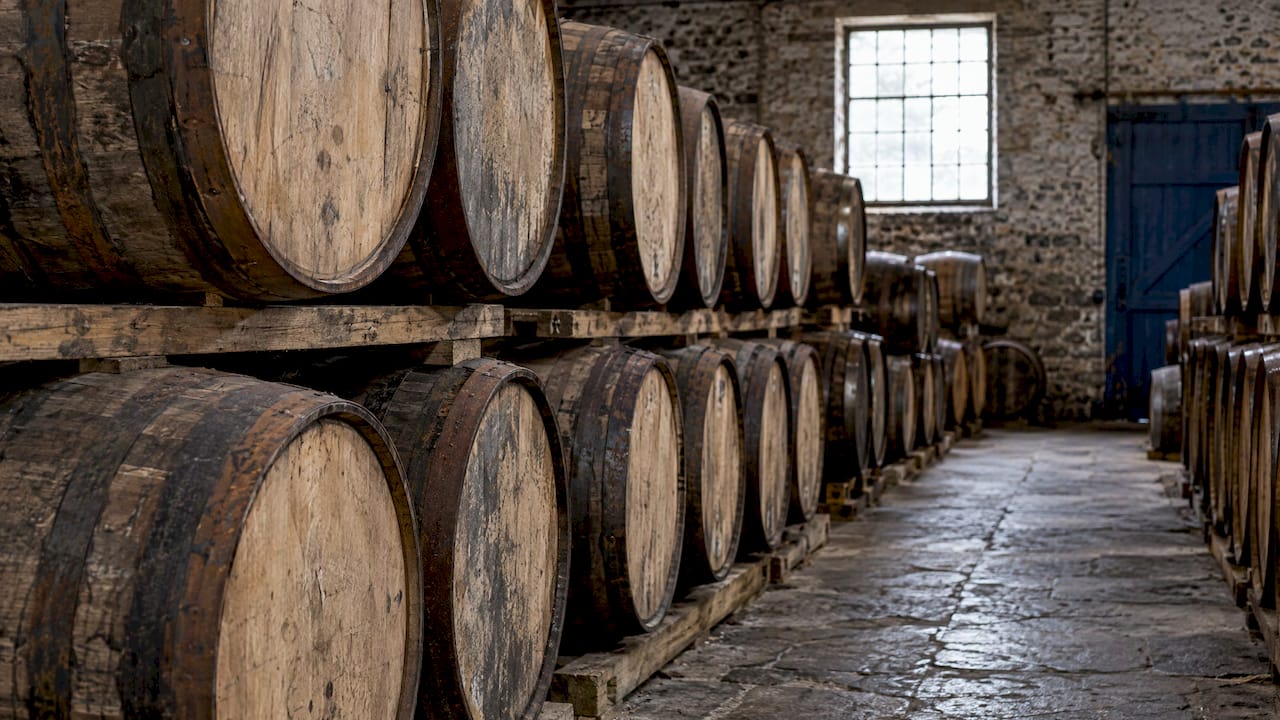
Scotland rewards a rest day. A distillery visit, a castle, a long dinner in a harbor town: these are what turn a golf week into a trip you retell. If you are weighing how to balance rounds and sightseeing, this guide to combining golf and sightseeing offers a useful way to think about pacing days. For Scotland specifically, our private warehouse whisky access and our guide to whisky tours in Edinburgh show the kind of day that sits well between two rounds.
What a round costs
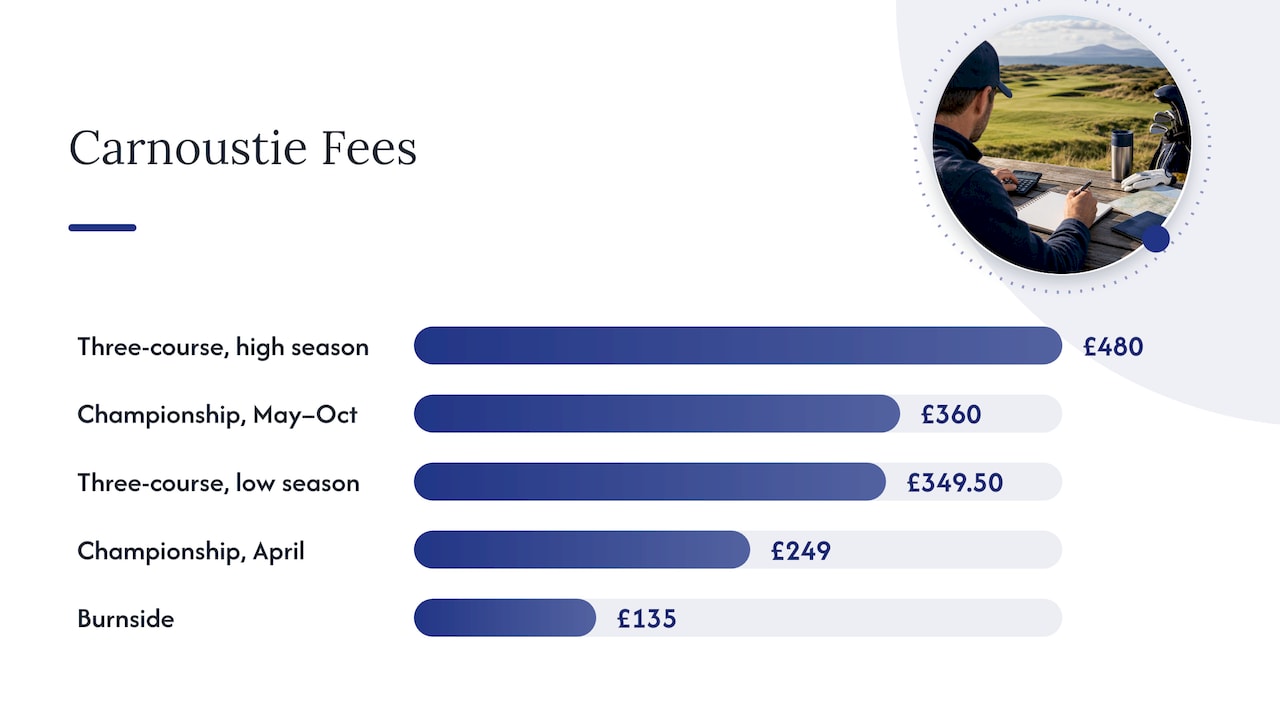
Scottish green fees are quoted in pounds and vary enormously by course and season. Carnoustie publishes a clear example for 2026: £360 for the Championship Course from 1 May to 31 October, and £249 in April. Its Burnside and Buddon courses cost £135 and £99. A three-course ticket is £480 in high season or £349.50 in low season. A caddie is £80 per bag and a PowaKaddy trolley is £25.
The same page notes that third parties may be liable for UK VAT, currently 20 percent, which is worth remembering if you buy rounds through a package. Fees at the most celebrated courses can run well above Carnoustie’s, so treat one course’s price list as a floor for the headliners, not a ceiling. To understand what a green fee typically covers and what is extra, what green fees include is a helpful primer on the categories to ask about.
Green fees are only one part of the budget. Lodging, transfers, caddies, meals and flights all add up, and the total depends far more on how you travel than on which courses you pick. If you are traveling with a group, our guidance on setting per-person ceilings with a 10 to 15 percent contingency applies just as well to a golf party.
When to go and how far ahead to book
The golf season runs through the warmer months, with late spring and early autumn often favored for the balance of light, weather and crowds. Our guide to the best time to visit Scotland covers weather, crowds and midges, which matters if you are planning rest days outdoors as well.
Tee times are the real constraint. For the Old Course, the Links Trust’s advance reservation process typically opens at the beginning of September for the following year, requires at least two golfers and allows a maximum of eight. Golfers who miss out can still enter the 48-hour ballot or look for last-minute openings. The Open returns to the Old Course in July 2027, which will compress availability around those dates, so confirm schedules directly on the St Andrews Links page.
Other clubs handle requests directly. Prestwick, for example, takes tee reservations by email or phone through an office open weekday business hours, which means time-zone planning from the US. A sound rule is to settle your headline tee times first, then book flights and hotels around them, not the other way around.
A sensible shape for the trip
A first Scotland golf trip tends to work best like this:
- Choose the experience, not the count. Decide whether you want history, drama, value or convenience, then match a region to it.
- Fix the anchor rounds. Lock in the one or two courses you would be disappointed to miss.
- Cluster the rest. Fill the other days with courses near your base so you spend your energy on golf, not on the road.
- Protect the first day. After an overnight flight from the US, keep day one light and save your best course for day three or later.
- Leave a day open. Weather in Scotland is part of the game. A flexible day keeps one wet forecast from costing you a round.
- Add the non-golf moments. Dinners, a distillery, a night somewhere memorable.
- Check entry rules. US citizens need a UK Electronic Travel Authorisation, which costs £20 as of April 2026. Confirm the current requirement on the official UK government site before you travel.
We build golf trips this way because the best ones feel unhurried.
Our perspective
Golf in Scotland is a trip where the logistics decide the experience. The courses are extraordinary, but a great round at a famous links can be spoiled by a three-hour drive, a poorly timed transfer or a hotel that is nowhere near the first tee.
That is where a travel designer earns the role. After 35 years in luxury travel, we know the destinations and the right on-the-ground partners, and we build itineraries around what you actually want from the week: the golf, the hotels, the dinners, the days off. Our approach is concierge-level, one-on-one and fully customized, whether it is a foursome of friends, a milestone birthday or a corporate incentive.
We charge no service fees, we offer a price match guarantee so you can book with confidence, and we are open 24/7, which matters when you are five hours ahead of home and a tee time moves.
tammylevent@gmail.com
Plan your Scotland golf trip with us
If you would rather spend your time choosing courses than coordinating hotels, transfers and timing, our team designs customized luxury journeys through Scotland and the rest of Europe. Tell us the regions you are drawn to and the experience you want, and we build the trip around it. Start with our Scotland vacation packages or explore our wider luxury vacation packages.
Group golf trips, milestone celebrations and corporate incentive programs are all part of what we plan, including group travel for larger parties.
FAQ
What is the most famous golf course in Scotland?
The Old Course at St Andrews. St Andrews Links says golf has been played there for 600 years and calls it the world’s oldest course. It is the anchor of most first-time itineraries, and its tee times are among the hardest to secure.
How far ahead should I book a Scotland golf trip?
For the most sought-after courses, many months. The Old Course’s advance reservation process typically opens in early September for the following year. Booking your headline tee times first and building flights and hotels around them gives you the best chance of the trip you want.
How many courses should I play?
Fewer than you think. Choosing two or three regions and spending two or three nights in each keeps drives short and leaves room for rest, weather delays and sightseeing.
How much does a round of golf in Scotland cost?
It depends on the course and season. As one published example, Carnoustie’s Championship Course is £360 per adult round from 1 May to 31 October in 2026, and £249 in April. Caddies, trolleys and UK VAT on some third-party purchases are extra, so check each course’s current fee page.
Sources
- The best golf courses in Scotland, Golf Digest
- 11 Famous Golf Courses in Scotland, VisitScotland
- St Andrews Links: The Old Course
- The Links, Prestwick Golf Club
- Green Fees, Carnoustie Golf Links
- Off the beaten fairway in Scotland, BBC Travel
- How Far in Advance Should You Book a Scotland Golf Trip?, Top 100 Golf Courses
- 2026 Scottish Golf Trip planning guide, Linksland
- Golf Trip to Scotland: 2026-27 Planning Guide
