

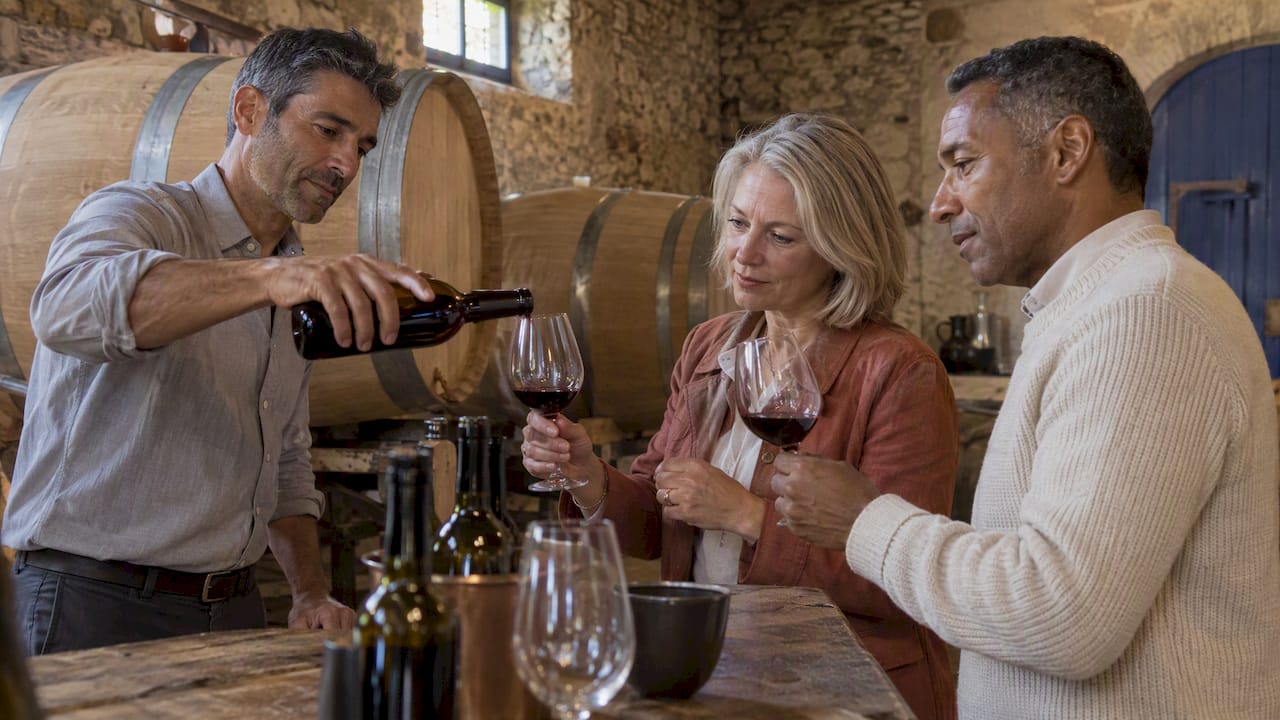
A private Tuscany wine tour means you, your travel companions and a driver or guide, with no strangers on the bus and no fixed script. You choose the region, the number of cellars, the length of lunch and the pace. The trade-off is that the best estates require advance reservations, so the quality of a private day depends on planning done weeks before you land. This guide covers where to go, how a day is structured, what drives the cost and what to confirm before you commit.
TL;DR
- Pick one wine region per day. Chianti, Montalcino and the Maremma are different experiences, and mixing them wastes time on the road.
- Plan on two or three visits, not five. Serious estate visits with a tasting and lunch run from about 1.5 hours to several hours each.
- Top estates take reservations only, and some set fixed start times, so the itinerary has to be built around those slots.
- Cost depends on estate tier, lunch, vehicle and group size. One flagship Chianti Classico experience lists €170 per person with lunch, nonrefundable.
- Check age rules, language, cancellation terms and who handles the driver before booking.
Table of Contents
- What “private” actually changes
- Choosing your wine region
- How a private tour day works
- What a private wine tour costs
- What to check before you book
- Our perspective: where private tours succeed or fail
- Build the wine day into a bigger Tuscany trip
- Let us plan your private Tuscany wine tour
- FAQ
- Sources
What “private” actually changes
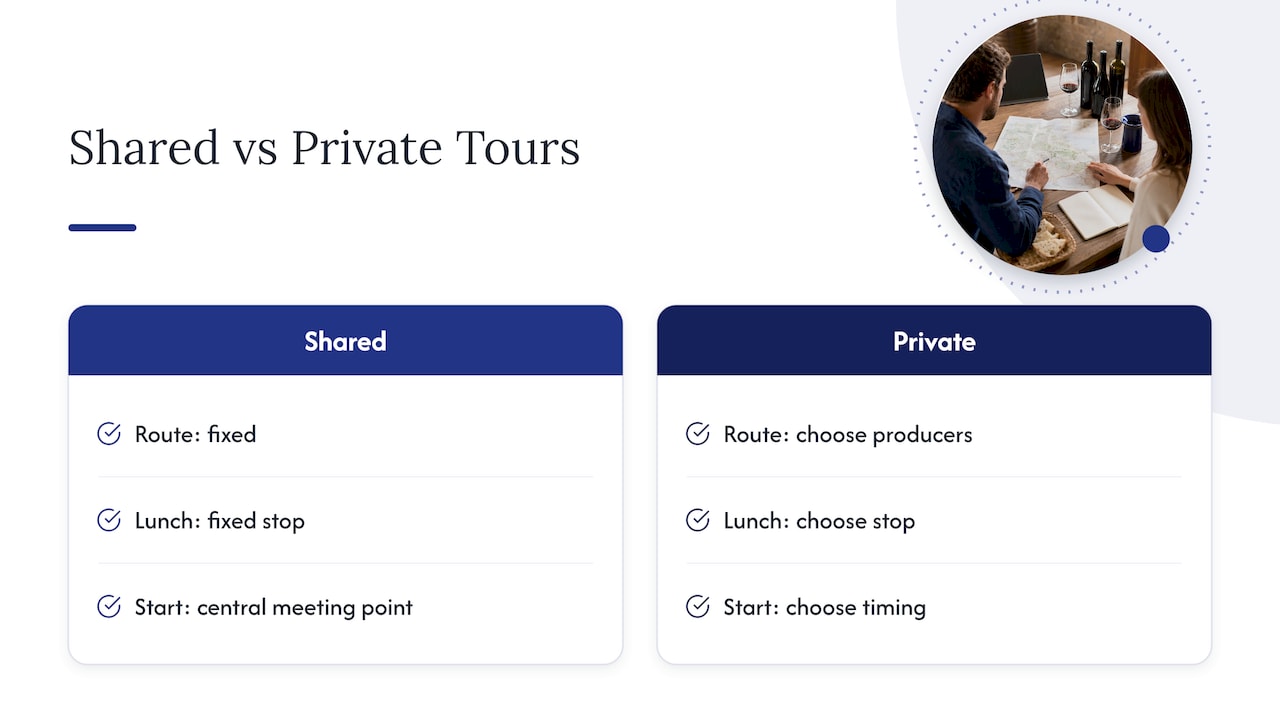
On a shared tour you get a fixed route, a fixed lunch stop and a fixed departure from a central meeting point. On a private tour, each of those becomes a decision.
Timing. You can start late after a morning in Florence, or leave early to reach a hilltop town before the crowds. Estates with scheduled tour slots still set the clock, but you choose which slots to hit.
Selection. Instead of the producers a group operator has contracts with, you can ask for a specific appellation, a family-run farm, or a famous name. Many of the most interesting cellars simply do not fit a coach.
Depth. A private guide or host can spend an hour on soil and vineyard exposure if that is what you want, or skip the technical side and focus on food and views.
Comfort. Door-to-door pickup from your hotel or villa, a driver who stays sober, and room for the bottles you buy.
If you travel with children, elderly relatives or a mixed group of drinkers and non-drinkers, the flexibility matters even more. You can shorten a day, add a stop with a garden or a farm animal, or swap a tasting for a cooking class.
Choosing your wine region
Tuscany is not one wine experience. Where you go sets the style of the whole day.
Chianti and Chianti Classico
This is the classic first choice, and the nearest to Florence. The Consorzio Vino Chianti says Chianti is produced across six provinces (Florence, Siena, Arezzo, Pisa, Pistoia and Prato) and lists seven subzones: Colli Aretini, Colli Fiorentini, Colli Senesi, Colline Pisane, Montalbano, Montespertoli and Rufina. In practice, that means the character of a Chianti changes meaningfully from one hillside to the next, and a private tour lets you choose which part of that map to explore rather than whichever stop a group itinerary uses.
Smaller farms are often the most personal option. The Consorzio’s profile of Poggio al Chiuso says tours and tastings are available on request and that English is spoken. Its profile of Paterna says guided visits and tastings are arranged by telephone or email reservation, with English and French spoken. The pattern is typical: smaller producers say yes to private visits, but only when asked in advance.
Montalcino and the south
Brunello country is a longer, more scenic day, built around hill towns and big reds. It suits travelers who want wine to be the main event rather than a backdrop. Antinori’s cellar-visit listings include Pian delle Vigne in Montalcino, among other Tuscan estates, which shows how a single producer can anchor a regional day.
Maremma and the coast
The same Antinori listings include Le Mortelle in the Maremma and Fattoria Aldobrandesca, which suit a different mood: warmer, more open landscape, less crowded roads. This is a good choice for repeat visitors who have already done Chianti.
Matching region to traveler
| Traveler | Best starting point | Why |
|---|---|---|
| First trip, short on time | Chianti Classico | Closest to Florence, many estates, easy to combine with a town |
| Serious red-wine lovers | Montalcino | Concentrated prestige producers, long scenic day |
| Repeat visitors | Maremma | Quieter, different grapes and landscape |
| Families | Chianti, one estate plus a farm or town stop | Shorter tastings, more flexibility |
| Honeymooners | One estate with lunch, then a villa or spa evening | Slow pace, privacy |
If you are still deciding between regions of Italy altogether, our comparison of Tuscany vs. Umbria can help.
How a private tour day works
Transport
Most private tours from Florence are a driver-guide or chauffeur with a sedan or minivan, picking you up at your hotel. Chianti begins just south of the city, so a day in the hills does not require an early dawn departure. Longer days to Montalcino or the Maremma need an earlier start and a driver comfortable with narrow country roads. Confirm whether your driver is also your guide: many are drivers only, and the estate host does the explaining.
Tastings
Expect estate tastings to be structured. Antinori’s Chianti Classico estate describes a Tinaia Tour covering family history, winemaking and the winery’s architecture, ending with three representative wines. Its cellar-visit listings add a Bottaia Tour with a deeper focus on enology and a four-wine tasting, and a CRU Tour with seven wines and lunch at the Rinuccio 1180 rooftop restaurant. Same estate, three very different afternoons.
Food
Tastings are rarely wine only. At La Braccesca in Montepulciano country, Antinori describes a reservation-only 1.5-hour tour with four wines, pecorino and homemade Tuscan flatbread, plus a roughly two-hour four-wine tasting with charcuterie, cheese and local specialties. A longer “cellar to the table” experience lasts about 3.5 hours and adds lunch: first course, a meat-based second course, dessert and one paired glass of estate wine.
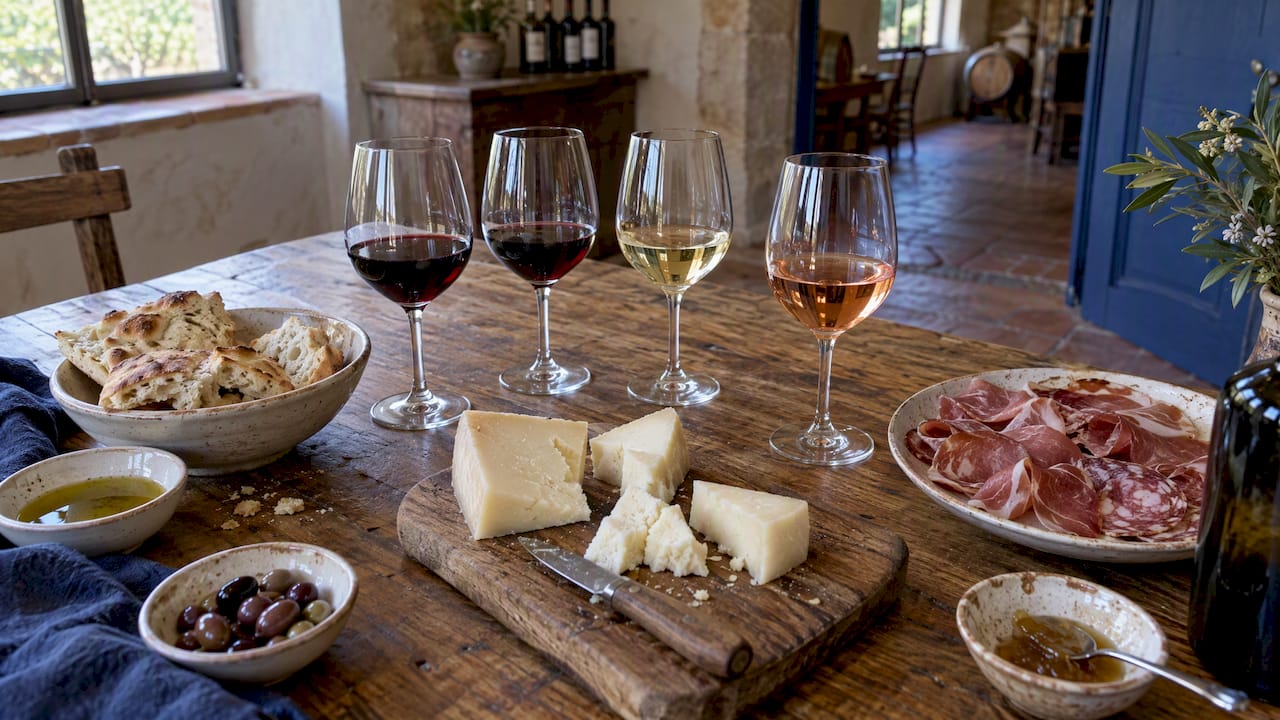
That range shows you how to think about meals. Some estates give you snacks that make a light lunch elsewhere sensible; others give you a full seated meal that is the whole afternoon. Decide this before building the day. If you enjoy comparing how different regions build food-and-drink experiences, local gastronomy experiences in other European cities show the same logic of pairing tastings with meals, as in this look at Bruges.
A sample day in Chianti
- Morning pickup from your Florence hotel or villa.
- First estate, with a guided cellar visit and a tasting of three to four wines.
- Hill-town stop for a walk and a coffee, with no tasting.
- Seated lunch at an estate or a trattoria your driver has booked.
- Second, smaller producer for a relaxed tasting and the chance to buy bottles.
- Return to the city before dinner.
Two estates plus lunch is a full day. Adding a third usually means the last tasting is rushed and the wine blurs together.
What a private wine tour costs
There is no single price, because a private day is assembled from parts: the vehicle and driver, any guide, estate tasting fees, and lunch. The factors that move the total most:
- Estate tier. Flagship producers charge for experiences that smaller farms often fold into a purchase or a modest fee.
- Lunch. A seated estate meal is a major cost, but it is also what turns a tasting into a day.
- Vehicle and group size. A sedan for two and a minivan for six are priced differently, though the cost per person usually falls as the group grows.
- Length. A half-day near Florence is a different product from a long day to Montalcino.
- Season. Harvest and early autumn are busy, and the best slots go first.
One published reference point: Antinori’s CRU Tour lists €170 per person with lunch included, and says payment is nonrefundable after reservation. That is one estate experience, not a full day with transport, so treat it as the cost of a single anchor visit, not the total. Ask any planner for a line-by-line breakdown so you can see where the money goes, and check current rates on the estate’s own page, since they change.
What to check before you book
Reservations and slots. Estates with scheduled tours do not take walk-ins. Antinori says La Braccesca requires reservations, lists tours at 11:00 a.m. and 4:00 p.m., and generally opens from 10:00 a.m. to 6:00 p.m., with winter changes. Build your day around slots like these, not the reverse.
Age suitability. Families should ask each estate directly. The CRU Tour page says the experience is not suitable for juniors and children. It lasts about 2.5 hours plus lunch, and is offered in Italian or English. A teenager who would be bored by a long tasting needs a different stop that day.
Language. Smaller farms often say English is spoken, but confirm that the person doing your tour does speak it, especially for technical explanations.
Cancellation terms. Some experiences are nonrefundable once booked. If your flights or plans could shift, ask who holds the risk.
Who is accountable. If you book a driver, a guide and three estates separately, nobody owns the day if one falls through. A single planner who coordinates them does.
Designated driver and shipping. Ask how bottles get home. Many estates ship, and it beats packing a case.
Our perspective: where private tours succeed or fail
After 35 years of designing high-end trips, we see the same pattern. The tours that disappoint are rarely the ones with the wrong wine. They are the ones with the wrong rhythm: four estates in a day, a lunch rushed to hit a slot, a long drive that eats the afternoon. The tours people talk about for years are built on restraint. Two thoughtful stops, a meal with time to linger, and a driver who knows when to propose something unplanned.
We also think wine should rarely stand alone. The strongest Tuscany itineraries place wine inside a larger trip: a villa base, a day in Florence, a quiet evening, maybe a cooking experience. That is why we build these days with on-the-ground partners we know, not with whatever is available online the week before. Our clients also get a no-service-fee model and a price match guarantee, so a custom day does not carry a hidden planning premium. And because we are available 24/7, a delayed flight or a closed cellar door gets fixed the same day.
— tammylevent@gmail.com
Build the wine day into a bigger Tuscany trip
A private tasting day works best as one chapter. If you want it designed alongside lodging, transfers and sightseeing, we have itineraries that already put wine at the center:
- Luxury Tuscany, Siena and Chianti, 8 days for a deeper stay in the hills.
- Tuscany, 7 days and 6 nights for a balanced first visit.
- Luxury Florence, 4 days if the city is your base and wine is a day trip.
- A Day at Torciano Winery for a single estate experience.
If you prefer to sleep among the vines, see our selection of Tuscany villas matched to your trip goal. Celebrating something? Our honeymoon packages and destination wedding planning often include a private tasting day.
Let us plan your private Tuscany wine tour
We design private Tuscany days one traveler at a time: the right estates for your taste, reservations secured in advance, a driver who fits your group, and lunch timed so nothing feels rushed. Tell us what you drink, who is traveling and how you like to spend a day, and we will build it. Start with our Italy vacation packages or contact us directly.
FAQ
How many wineries should a private Tuscany tour include?
Two or three is the right number for most travelers. Estate visits with a cellar tour, tasting and food can run from 1.5 hours to several hours, so more stops mean rushed tastings and less time for lunch.
Can I do a private wine tour from Florence?
Yes. Chianti begins just south of Florence, and the Consorzio Vino Chianti includes the Florence province among its production areas. Longer days to Montalcino or the Maremma are possible with an earlier start and a driver who knows the roads.
Is a private wine tour suitable for children?
Sometimes. Some estate experiences, such as Antinori’s CRU Tour, are not suitable for juniors and children. A planner can pair a shorter tasting at a family-friendly farm with a non-wine stop so the day works for everyone.
Do I need to reserve in advance?
For leading estates, yes. La Braccesca, for example, requires reservations and runs tours at set times. Smaller farms typically arrange visits by phone or email, so book weeks ahead in busy seasons.
What does a private wine tour cost?
It depends on the estate, the lunch, the vehicle and the length of the day. One flagship Chianti Classico experience lists €170 per person with lunch included, which covers only that visit, not transport. Ask for an itemized quote and confirm current rates directly.
Sources
- The Chianti Wine Lands, Consorzio Vino Chianti
- Poggio al Chiuso, Consorzio Vino Chianti
- Paterna, Consorzio Vino Chianti
- Antinori nel Chianti Classico, Marchesi Antinori
- Cellar Visits, Marchesi Antinori
- Visit La Braccesca, Marchesi Antinori
- The CRU Tour, Marchesi Antinori
- Local gastronomy experiences in Bruges
