




A group honeymoon, sometimes called a “buddymoon” or “friend-moon,” is exactly what it sounds like: you invite close friends to join your post-wedding trip, turning a private romantic escape into a shared celebration. More newlyweds are doing this than ever. One in five newlyweds would consider a buddymoon today, and the appeal is easy to understand. You get the romance, the milestone, and the people you love most, all in one place. Explaining group honeymoon experiences fully means covering not just the concept but the real logistics, the tradeoffs, and the planning moves that separate a trip people rave about from one that quietly falls apart.
What is a group honeymoon and how does it work?
A group honeymoon is a post-wedding trip where the couple travels alongside a small circle of close friends, blending couple intimacy with shared social adventures. It’s a deliberate departure from the traditional private retreat, not a compromise of it. Think of it as extending your wedding celebration into a full travel experience rather than abruptly ending the party when the reception wraps up.
The concept transforms the traditional private retreat into something more dynamic: group dinners, shared excursions, and collective memories layered on top of the romantic foundation that makes a honeymoon meaningful. Jennifer Aniston and Justin Theroux famously took this approach, heading to Bora Bora with Courteney Cox, Jason Bateman, Jimmy Kimmel, and others. Justin described it simply: they wanted to “keep the party going, relax and have fun.”
The key distinctions from a standard group vacation:
- You and your partner lead. The couple drives the itinerary; friends follow along and celebrate with you.
- Romance stays central. Couple-only dinners, private excursions, and designated alone time are planned in, not left to chance.
- The group is small. Travel planners consistently recommend 2–4 additional guests maximum to preserve intimacy and avoid logistical chaos.
- The celebration continues. Friends who couldn’t spend real time with you during the wedding finally get that quality time.
- Costs are shared. Group rates, split villa rentals, and divided dinner bills make ambitious destinations more financially realistic.
The sweet spot is a group small enough to feel personal but large enough to create real energy. A couple plus two or three close friends hits that mark consistently.
Advantages and challenges of shared honeymoon experiences
The case for a group honeymoon is stronger than most couples expect going in. The social dimension is a genuine emotional advantage: friends who were swept up in the chaos of your wedding day finally get real, unhurried time with you. That’s rare, and it gets rarer as everyone gets older and schedules get harder to align.
The real advantages:
- Extended celebration. The wedding ends in hours; a group trip stretches the joy across days.
- Cost sharing. Splitting costs in a group makes excursions and accommodations accessible that would be out of reach for two people alone. One couple’s four-day sailboat trip around Montenegro would have cost over $10,000 for two; splitting it among eight friends made it “once in a lifetime.”
- Expanded activities. Friends enable experiences a couple might skip alone. One planner described a Cape Town honeymoon where the groom’s bucket-list shark-cage dive became possible because adventurous friends were there to join him while the bride did something she preferred.
- Built-in energy. Group trips generate a momentum and spontaneity that solo couple travel rarely matches.
The real challenges:
- Couple privacy. The biggest risk is losing the intimate couple moments that define a honeymoon. FOMO is real: couples often choose group hikes over private brunches and regret it later.
- Consensus fatigue. Getting everyone to agree on a restaurant, an activity, or a departure time multiplies with every person added.
- Logistical complexity. Groups larger than 10–12 face dramatically harder logistics: dinner reservations become a nightmare, transport coordination eats hours, and the best local restaurants often can’t seat you.
- Uninvited additions. One couple’s Italy buddymoon ended with friends of friends showing up to their farewell dinner, people they’d never met.
Pro Tip: Schedule at least two or three fully couple-only days before the group arrives or after they leave. Jennifer Stiebel of SoCo Events puts it plainly: “A few days as newlyweds is a necessity after saying ‘I do.’ You will be happy that you had this time to just be together when you have to get back to reality.”
Types of group honeymoon styles you can actually pull off
Travel experts note that group honeymoons let couples redefine what a honeymoon looks like entirely, moving away from the default “beach lounging for two weeks” template toward something that actually fits who they are as a couple. The style you choose shapes everything: destination, accommodation, budget, and how you structure couple time within the group.
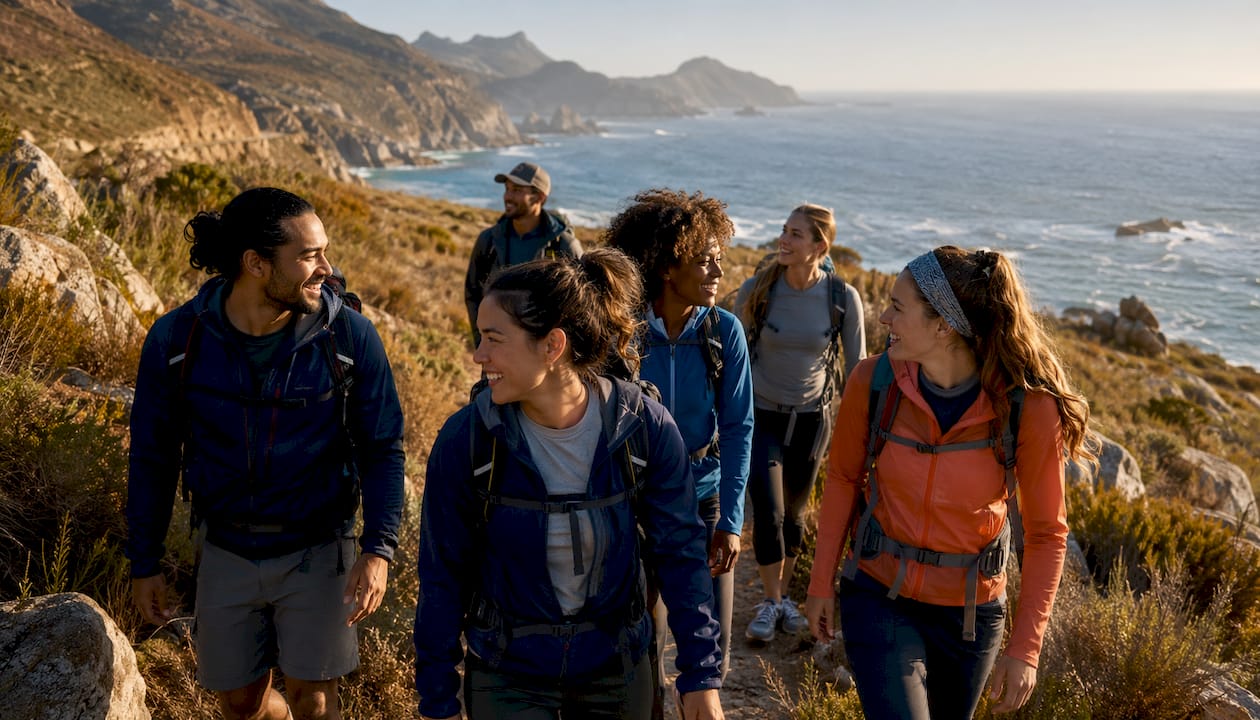
Adventure-focused. Hiking, safari, diving, zip-lining. These trips thrive in a group because shared physical challenges create bonding moments that a couple alone simply can’t replicate. One couple honeymooned with strangers on a group trip through Mexico’s Sumidero Canyon and Chiapas jungle, finding the social dimension deepened rather than diluted their experience. Another couple’s group trip to Punta Cana turned into snorkeling and cavern diving because friends pushed each other to try things they’d never have done solo.
Luxury resort stays. All-inclusive properties are actually ideal for group honeymoons because they make it easy to peel off for private time without the headache of organizing separate dinners or transportation. The beach setting gives everyone space to spread out naturally.
Cultural city tours. Multi-day itineraries through cities like Cape Town, Mexico City, or Lisbon work well for groups because the city itself provides structure. Mornings can be couple-only; afternoons open to the group.
Villa or private rental. Renting a house together, as one couple did in Antibes, France, creates a home-base dynamic where the group flows in and out of shared space naturally. This format also makes cost-sharing the most straightforward.
A few formats that work especially well for honeymoon group activities:
- Split-activity days: The couple does one thing, friends do another, everyone reunites for dinner.
- Staggered arrivals: Friends join for the middle portion of the trip; the couple has the first and last days alone.
- Parallel bookings: Friends stay at the same resort but in separate rooms or villas, giving everyone their own space.
The group’s mix matters too. A tight-knit group of three couples who travel together regularly will operate very differently from a mix of solo friends and couples who’ve never shared a trip.
How to plan a group honeymoon that actually works
Planning a group honeymoon requires more structure than a standard couple’s trip, but the couples who do it well share a few consistent habits. Start with the “vibe” conversation before you book anything. Are you planning an adventure trip or a relaxed resort stay? Is this a trip where everyone does everything together, or a home-base setup where people come and go? Getting explicit agreement on this upfront prevents the friction that derails most group trips.
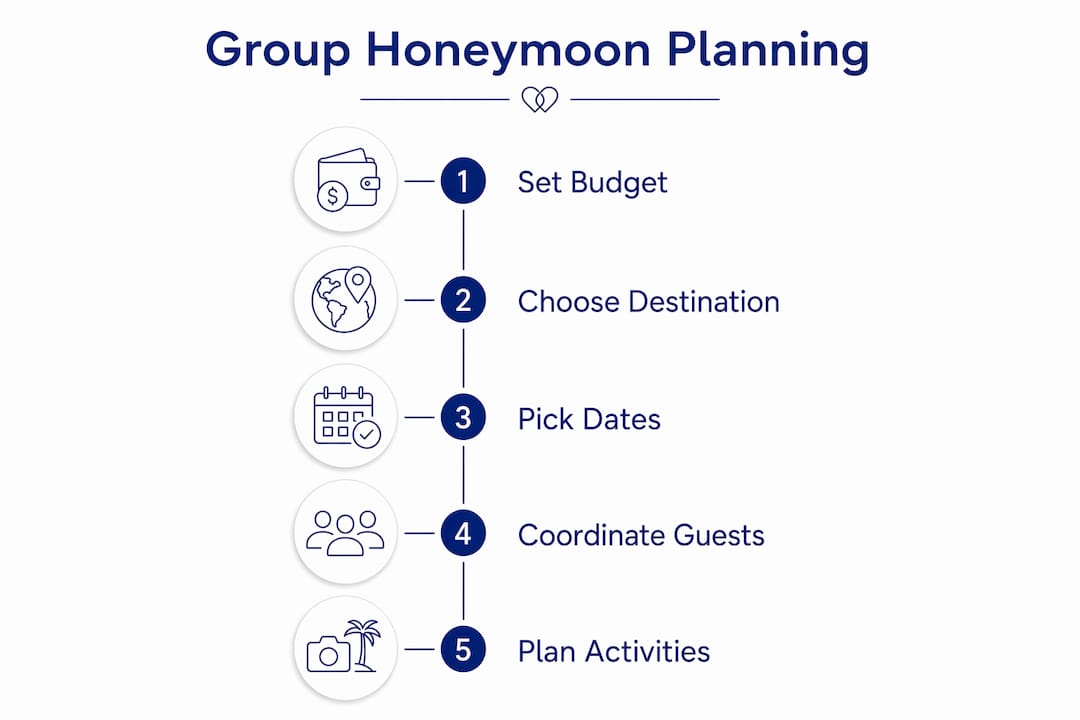
Group size is the single most important decision. Planners recommend no more than 2–4 additional guests to maintain intimacy and keep logistics manageable. One couple’s Italy trip with 10 friends ended with their farewell dinner at a tourist-trap restaurant because it was the only place that could seat them, and the bread arrived with a bite already taken out of it.
Budgeting and cost-sharing:
- Decide upfront who pays for what. The couple typically covers the villa or room rental; guests cover their own flights, activities, and meals.
- Use a shared expense app to track group costs in real time and avoid awkward conversations at checkout.
- Identify which activities require full group commitment and which are optional, so no one feels financially pressured.
- Group rates at resorts are real. Many properties offer discounts that make the per-person cost meaningfully lower than booking individually.
Communication before the trip:
- Share a clear itinerary at least three weeks out, including must-do couple-only days that are non-negotiable.
- Set expectations about response times and commitment levels. The couples who abandon buddymoon plans most often cite friends who wouldn’t commit to dates or budgets.
- Designate one person (ideally not the couple) to handle group logistics like restaurant reservations and transport bookings.
Conflict resolution:
- Agree in advance that the couple’s preferences take priority. This is still a honeymoon.
- Build in free time every day so no one feels trapped in a group itinerary.
- If someone is unhappy, address it privately and quickly. Group dynamics shift fast when one person feels left out.
Pro Tip: Stagger arrivals and departures so the couple has the first two or three days alone and the last day or two alone. This structure preserves the romantic milestone character of the trip while still delivering the full group experience in the middle.
For couples planning a luxury group honeymoon, working with a travel specialist who handles multi-party logistics removes the planning burden entirely and often unlocks access to exclusive group rates and experiences that aren’t publicly available.
What travel experts say about group honeymoon planning
The professionals who plan these trips for a living are consistent on a few points that couples often learn the hard way.
The “consensus trap” is the pitfall planners warn about most. When every decision requires group agreement, planning becomes exhausting before the trip even starts. One Denver couple abandoned their Morocco buddymoon entirely because coordinating schedules, budgets, and itinerary preferences with friends became unmanageable on top of wedding planning. The solution most experts recommend: outsourcing complex logistics to a luxury travel consultant who can manage multiple parties simultaneously, secure group-rate accommodations, and coordinate exclusive experiences the couple couldn’t access alone.
Key professional recommendations for a successful group honeymoon:
- Designate couple-only time in writing. Put it on the shared itinerary so it’s not a negotiation; it’s a given.
- Choose accommodations with natural separation. A villa with multiple bedrooms, or a resort where everyone has their own room, prevents the claustrophobia that kills group trip morale.
- Book flexible activities. Opt for experiences where the group can split based on interest rather than activities that require everyone’s participation.
- Hire local guides for group excursions. A guide manages the group’s pace and logistics, freeing the couple to actually enjoy the experience rather than herd people.
- Plan at least one genuinely romantic couple experience. A private dinner, a sunset boat ride, a spa afternoon. Something that signals to both of you that this is still your honeymoon.
The couples who look back on group honeymoons most fondly are the ones who treated the group dynamic as an addition to the romantic experience, not a replacement for it. As one writer described her France buddymoon: “It’s a myth that romance exists only between lovers. We found it among our friends too.” That framing, romance as something that expands in good company rather than shrinks, is what the best group honeymoons actually deliver.
For couples who want expert guidance on honeymoon itineraries that balance group energy with couple intimacy, the planning process itself benefits from professional input on destination selection, accommodation layout, and activity sequencing.
When you’re ready to stop researching and start building the actual trip, Elitetravelgroup specializes in exactly this kind of layered planning. With 35 years of experience designing luxury group travel experiences, no service fees, and 24/7 support, the team handles the logistics that make group honeymoons complicated so you can focus on the part that matters. Every itinerary is built around your specific group dynamic, destination preferences, and the couple-only moments that make it a real honeymoon.
Key Takeaways
A successful group honeymoon requires deliberate planning around group size, couple privacy, and cost-sharing before a single booking is made.
| Point | Details |
|---|---|
| Keep the group small | Planners recommend no more than 2–4 additional guests to preserve intimacy and avoid logistical overload. |
| Protect couple-only time | Schedule designated couple days before or after the group portion; treat them as non-negotiable on the shared itinerary. |
| Share costs clearly upfront | Agree on who covers what before the trip; group rates at resorts can meaningfully reduce per-person costs. |
| Choose the right format | Villa rentals, all-inclusive resorts, and split-activity itineraries all support group honeymoons differently; match the format to your group’s dynamic. |
| Use professional planning help | Outsourcing logistics to a travel specialist prevents consensus fatigue and unlocks exclusive group experiences. |
