



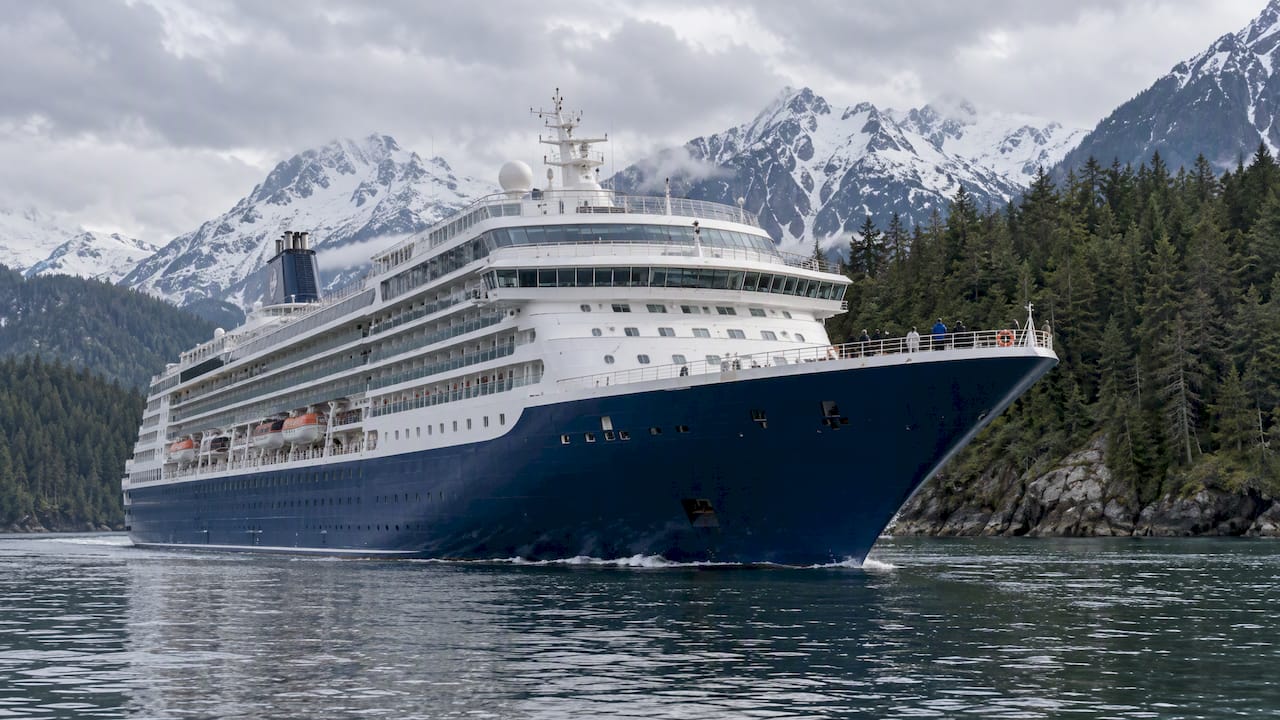
The best Alaska luxury cruise itinerary is a seven- to ten-night sailing that pairs a protected-park glacier day with small-town ports, on a ship small or refined enough that the scenery is never competing with crowds. Which route, month and suite you choose matters more than the brand on the funnel. Below, we walk through the main route types, a day-by-day sample, when to go, what “luxury” should actually include, and the planning details that decide whether the trip feels effortless.
TL;DR
- Most first-time luxury travelers do best on a 7-night Inside Passage sailing (Juneau, Skagway, Ketchikan) that includes a Glacier Bay day.
- June through August is peak for daylight and wildlife; May and September trade a few degrees for calmer ports and often lower fares.
- Luxury fares should bundle gratuities, drinks, dining and shore excursions. Compare the total trip cost, not the base fare.
- Glacier Bay entry is permit-limited, so confirm the itinerary actually enters the park, and book early.
- A planner who knows the ships and the ports can secure suites and excursions before the best ones sell out.
Table of Contents
- Three kinds of Alaska luxury itinerary
- A sample 7-night Inside Passage itinerary
- Why Glacier Bay deserves a place on your route
- When to go: month by month
- Crowd limits in Juneau and what they mean for you
- What “luxury” should include
- Our perspective: how we build an Alaska itinerary
- Paperwork: passport and ID
- Questions to settle before you pick a sailing
- Booking: what to do and when
- Plan your Alaska cruise with Elite Travel
- FAQ
- Sources
Three kinds of Alaska luxury itinerary
Alaska cruising is more varied than the brochures suggest. Most itineraries fall into one of three groups.
Classic Inside Passage, round trip. A loop from Seattle or Vancouver, calling at Juneau, Skagway, Ketchikan and often a glacier. Travel Alaska notes that most cruises to the state last seven to ten days, and this is the format most first-timers choose. It is easy to fly into, and the ports are the ones with the deepest choice of excursions.
One-way Gulf of Alaska. Vancouver to Whittier (for Anchorage) or the reverse. These sailings add Hubbard Glacier or College Fjord and usually pair naturally with a land extension to Denali. They require more flight planning, and they are often the better choice if you want to see interior Alaska as well as the coast.
Small-ship and expedition. Vessels carrying a fraction of the passengers of a mainstream ship, anchoring in coves, launching kayaks and Zodiacs, and visiting places large ships cannot reach. Cruise Critic’s 2026 look at different Alaska cruises describes how some operators favor remote Alaska over the classic ports and shopping stops. If wildlife and wilderness matter more than the ship’s restaurants, this is your category.
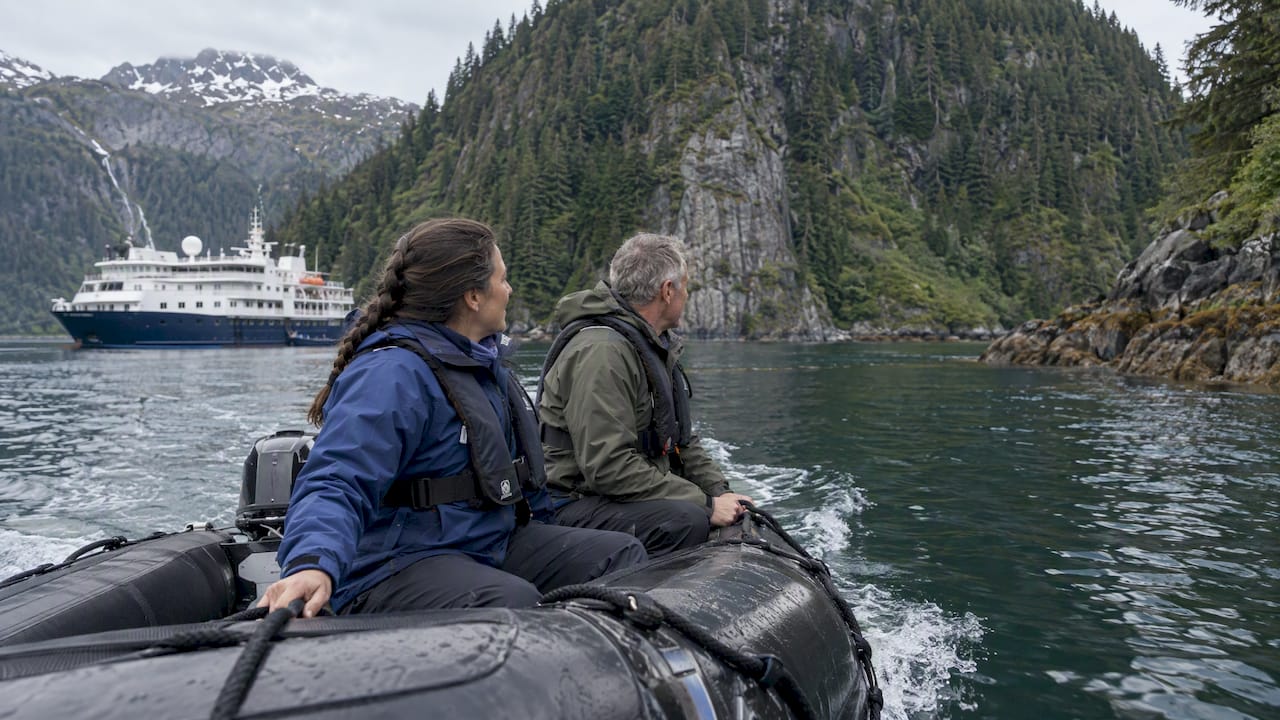
The ultra-luxury ocean-going ships sit between the first two: all-suite accommodations, high crew-to-guest ratios, and inclusive pricing, sailing the classic routes with more polish.
A sample 7-night Inside Passage itinerary
Exact ports and timings vary by ship and year, so treat this as a pattern, not a promise. Many seven-night luxury sailings follow a rhythm like this:
| Day | Stop | What a well-planned day looks like |
|---|---|---|
| 1 | Seattle or Vancouver | Board in the afternoon. Arrive a day early so a delayed flight cannot cost you the sailing. |
| 2 | At sea | Slow day: spa, lectures from onboard naturalists, first whale sightings from your veranda. |
| 3 | Ketchikan | Floatplane to Misty Fjords or a private wildlife boat tour. Totem heritage in the morning, before the crowds. |
| 4 | Juneau | Whale-watching by small boat, or a helicopter to the Juneau Icefield. Book ahead: this is the busiest port. |
| 5 | Skagway | White Pass railway, or a private guide to the Klondike Gold Rush sites. |
| 6 | Glacier Bay (scenic cruising) | A full day on deck as the ship enters the park, with park rangers often aboard. Dress in layers. |
| 7 | At sea or final port | Pack, enjoy a last dinner, and settle accounts. |
| 8 | Disembark | Plan a late flight home so you are not rushing off the ship. |
Order and port count change by sailing, and some routes swap Ketchikan for Sitka or Haines. What matters is that the highlights, a glacier day and at least one wildlife-focused excursion, are both present and that you are not spending three of your seven days at sea.
Why Glacier Bay deserves a place on your route
Glacier Bay is where an Alaska cruise stops being a coastal trip and becomes something you remember. It is also tightly managed. The National Park Service’s Glacier Bay fact sheet explains that most visitors arrive by cruise ship or tour boat, and that most of them never set foot on land in the park. Vessel numbers are limited, and seasonal restrictions apply in sensitive areas such as Johns Hopkins Inlet, where vessels must stay back from harbor seal pupping grounds from May 1 to September 1.
What that means for you:
- Check that the ship enters the park. Some itineraries only cruise near it. Ask your planner to confirm the ship holds a permit for your date, rather than reading the word “glacier” in a route name.
- Expect the park to set the schedule. The National Park Service describes how tidewater glacier viewing is balanced with seal protection, and ship speed and approach distances are shaped by that. Your captain follows the rules, not the guest timetable.
- Don’t expect a perfect calving show. Glaciers do what they like. A good naturalist onboard makes a quiet morning memorable anyway.
When to go: month by month
Travel Alaska puts the prime window for wildlife, daylight and warmer temperatures at June through August, with shoulder seasons in late April to May and September to October. In practice:
- May: Fewer ships, cooler and often drier, long days building. Wildflowers have not arrived, but whales have.
- June to August: The warmest, longest days and the biggest choice of sailings. It is also when fares and crowds peak, and when the best suites go first.
- September: Quieter ports, richer autumn color, and a real chance of rain. Late-season sailings can bring the northern lights, though Travel Alaska cautions about winter-like conditions and reduced services in port towns toward the end of the season.
The 2026 season is nearly over as we write this, so if you are planning for next year, you are looking at your best options now. Juneau’s season ran from late April to October 6 in 2026, according to KTOO, and shorter seasons mean fewer sailing dates to choose from.
Crowd limits in Juneau and what they mean for you
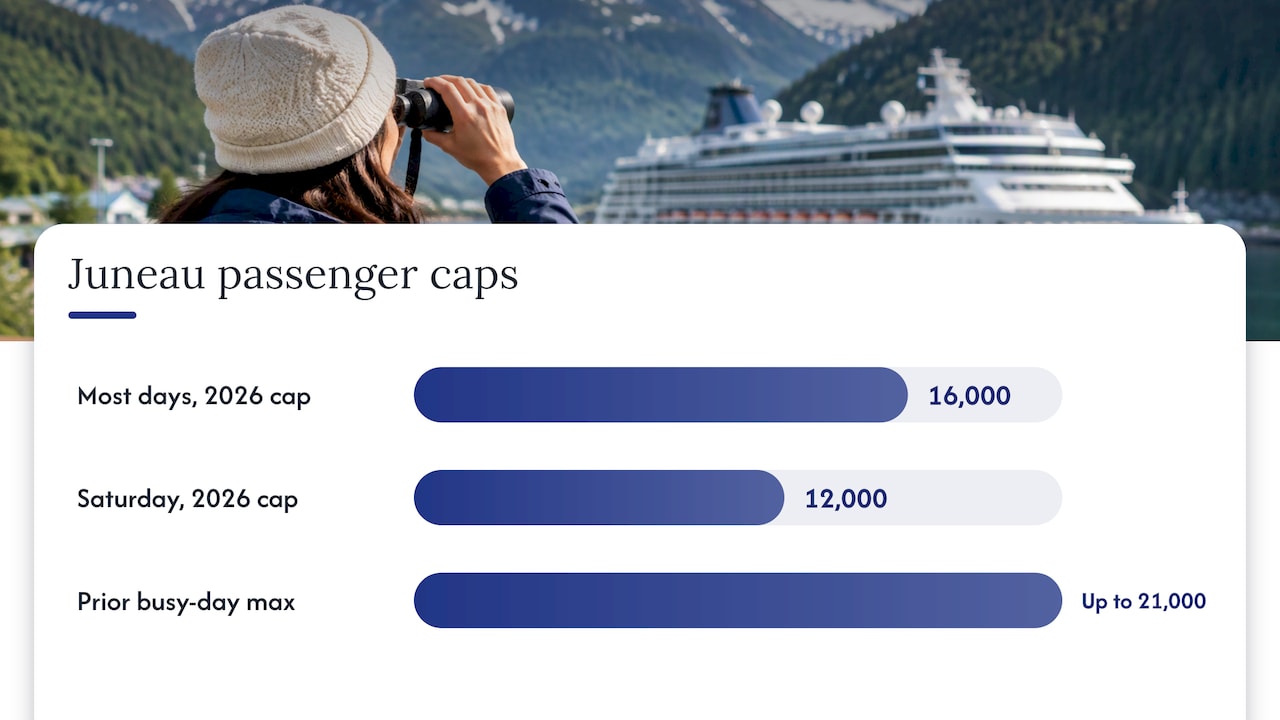
2026 was Juneau’s first year of daily passenger caps negotiated with the cruise lines: 16,000 people on most days and 12,000 on Saturdays, down from busy days of up to 21,000. CLIA Alaska describes these community agreements as part of modern Alaska cruising. The caps make the busiest port more manageable, but they also mean popular sailings and excursions fill early. Booking your private excursions when you book the cruise is no longer optional on a summer weekend.
What “luxury” should include
The word is used loosely. A luxury Alaska fare should be judged on what you do not pay for afterward. Cruise Critic’s luxury Alaska guide says luxury fares frequently bundle gratuities, premium beverages, specialty dining and guided shore excursions, which are extra daily costs on mainstream ships. It also puts peak-season luxury pricing at roughly $1,000 or more per person per night, rising with suite category and inclusions.
Use this checklist when comparing two sailings:
- Excursions: Are they included, or only a credit? Are helicopter and floatplane flights part of it?
- Beverages and dining: Premium spirits and wine, specialty restaurants and room service without surcharge.
- Gratuities: Included, or added daily?
- Suite type: Veranda size, butler service, and where on the ship it sits. On Alaska routes you will spend hours on the veranda.
- Ship size: Smaller ships reach narrower passages and tend to feel less crowded in port.
- Air and transfers: Some fares include airfare. Others do not, and a business-class ticket can change the comparison entirely.
Run the total, not the sticker. A lower-fare ship with a paid excursion in every port, specialty dining and drinks can end up costing as much as an inclusive one with a smaller crowd. We explain this thinking further in our guide to what’s really included in all-inclusive cruises and in the benefits of private cruise suites.
Our perspective: how we build an Alaska itinerary
We have been designing high-end travel for 35 years, and Alaska rewards planning more than almost any destination we handle. The scenery is the same for everyone. What differs is whether you see it from a quiet veranda or from a crowded rail, whether your floatplane seat is confirmed, and whether the day ashore matches how your family actually travels.
Our approach starts with the people, not the ship. A honeymoon couple wants a glacier day with space to breathe. A multigenerational family wants an excursion that works for an eight-year-old and an eighty-year-old. A milestone anniversary may call for a private dinner and an excursion that is a surprise. We then match that to ships and sailing dates, and use trusted on-the-ground partners for the experiences that make a trip more than a ship’s schedule.
We also give a straight answer when the fit is wrong. If the sailing you want does not include Glacier Bay entry, or the suite you like looks onto a lifeboat, you will hear it from us before you book, not after. We charge no service fees, we offer a price match guarantee, and we are available 24/7, which matters when a flight is cancelled the night before embarkation.
— tammylevent@gmail.com
Paperwork: passport and ID
For U.S. citizens on a closed-loop cruise, one that starts and ends at the same U.S. port, U.S. Customs and Border Protection says a passport is highly recommended but a government photo ID with an official birth certificate is acceptable. A passport is required when the itinerary is not closed-loop, for example a one-way sailing ending in a different country or port. International travelers need a passport and any visa required for their citizenship.
Our advice is simple: bring a passport in every case. If your flight is disrupted and you need to rejoin the ship at a foreign port, or if a Canadian call is added, a birth certificate will not help you. Many Alaska itineraries stop in Canada, so check your route with your travel advisor before you pack.
Questions to settle before you pick a sailing
- How many days are at sea? Two sea days on a seven-night route is plenty. Four is a lot of ocean.
- Round trip or one way? One-way costs more in flights but lets you add Denali or Anchorage without backtracking.
- How active are you? Helicopter glacier landings, kayaking, and dog-sledding camps are available in port. A good itinerary includes one big day and one gentle one, not seven big days.
- Are you traveling with children? Family-friendly luxury sailings differ from adults-focused ones. Tell your planner so the suite and activities match.
- Is this a celebration? Anniversaries, honeymoons and big birthdays are easier to arrange when the planner knows about them at booking. See why luxury cruises suit milestone celebrations.
Booking: what to do and when
- Choose your month first, then your ship. A June sailing and a September sailing are different trips.
- Decide your must-sees. Glacier Bay entry, a floatplane flight, a specific small port. Build the route around those.
- Compare total cost using the checklist above, including airfare, hotel nights before and after, and excursions.
- Reserve suites and private excursions early. With Juneau’s daily caps and a season that now begins in late April and ends in early October, the best cabins and guides go first.
- Arrive a day before departure. It is the cheapest insurance in travel.
Our guides on how to choose a luxury cruise and the luxury cruise booking guide go through each step in detail, and our piece on Alaska cruises with Elite Travel versus a general travel agency shows how the planning differs.
Plan your Alaska cruise with Elite Travel
If you would like a sailing designed around your dates, party and pace, our team can build it. See our Alaska vacation packages or our luxury cruises page, then tell us about your trip. We design each itinerary one on one, with no service fees and a price match guarantee.
FAQ
Which type of Alaskan cruise is best?
For most first-time luxury travelers, a seven-night round-trip Inside Passage sailing with a Glacier Bay day is the best balance of scenery, ports and ease. If you want Denali or Hubbard Glacier, consider a one-way Gulf of Alaska route. If wildlife and remote coves matter most, a small-ship expedition is better.
Why are Alaskan cruises so much more expensive?
The season is short, running from late April to early October, and demand is concentrated in June through August. Remote ports, limited park access and the cost of excursions such as flights and helicopters also add up. Peak luxury fares can reach $1,000 or more per person per night, though inclusions offset some of this.
What is the best month for an Alaska luxury cruise?
June through August gives the longest days, warmest weather and best wildlife viewing, but also the highest prices. May and September are quieter and often cheaper, with cooler or wetter weather. Choose by what you value: daylight or space.
Do I need a passport for an Alaska cruise?
U.S. citizens on a closed-loop cruise can sail with a government photo ID and birth certificate, per CBP guidance, but a passport is recommended. A passport is required if the itinerary is not closed-loop. We suggest carrying one regardless.
Sources
- Tips for Planning your Alaska Vacation, Travel Alaska
- Luxury Cruises to Alaska: Which Should You Pick?, Cruise Critic
- Here Are Cruise Lines Showing a Different Side to Alaska, Cruise Critic
- Glacier Bay Fact Sheet, National Park Service
- Tidewater glacier viewing and seals, National Park Service
- Juneau’s first cruise ship of 2026 kicks off first year of daily passenger limits, KTOO
- Economic Q & A, CLIA Alaska
- CBP reminds Seattle cruise ship passengers of ID requirements, U.S. Customs and Border Protection
