




TL;DR:
- An all-inclusive cruise provides accommodation, meals, beverages, entertainment, and services bundled into one upfront price, with true luxury lines covering all four core pillars—alcoholic drinks, gratuities, Wi-Fi, and excursions. Mainstream cruises often sell base fares with optional add-ons, which can significantly increase the actual cost, especially with excursions and premium services. To avoid hidden costs, travelers should compare total expenses by accounting for all extras and select lines that include these pillars in their base fare for a worry-free experience.
An all-inclusive cruise is defined as a vacation where accommodation, meals, beverages, entertainment, and key onboard services are bundled into a single upfront fare. The term covers a wide spectrum, from mainstream lines that sell modular add-on packages to true luxury operators like Silversea, Regent Seven Seas, and Virgin Voyages, where nearly every expense is absorbed into the base price. Understanding this distinction is the difference between a genuinely worry-free voyage and a vacation that arrives with a surprise bill at the end.
What is the explanation of all-inclusive cruises?
An all-inclusive cruise, in its truest form, bundles accommodation, dining, transportation between ports, and onboard entertainment into one price. That framing sounds simple, but the reality is more layered. The word “all-inclusive” means something fundamentally different depending on which cruise line prints it on their brochure.

The four core pillars that define a genuinely all-inclusive fare are alcoholic beverages, gratuities, Wi-Fi, and shore excursions. When all four are covered, you board the ship and spend nothing more unless you choose to. When even one is missing, you are on a partial package, not a true all-inclusive product. Most mainstream cruise lines fall into the partial category, while luxury operators tend to cover all four.
Typical inclusions across most cruise packages include:
- Accommodation in a cabin or suite
- Main dining across buffet and standard restaurants
- Non-alcoholic beverages and sometimes basic wine or beer with meals
- Onboard entertainment including shows, pools, and fitness centers
- Basic Wi-Fi on select luxury lines
- Gratuities on lines like Regent Seven Seas and Seabourn
Common exclusions on mainstream ships include premium spirits, specialty restaurant surcharges, high-speed Wi-Fi, spa treatments, casino play, and most shore excursions. These costs add up faster than most travelers anticipate.
Pro Tip: Before booking any cruise marketed as all-inclusive, request the full list of what requires an additional charge onboard. A single page of exclusions tells you more than the marketing brochure ever will.
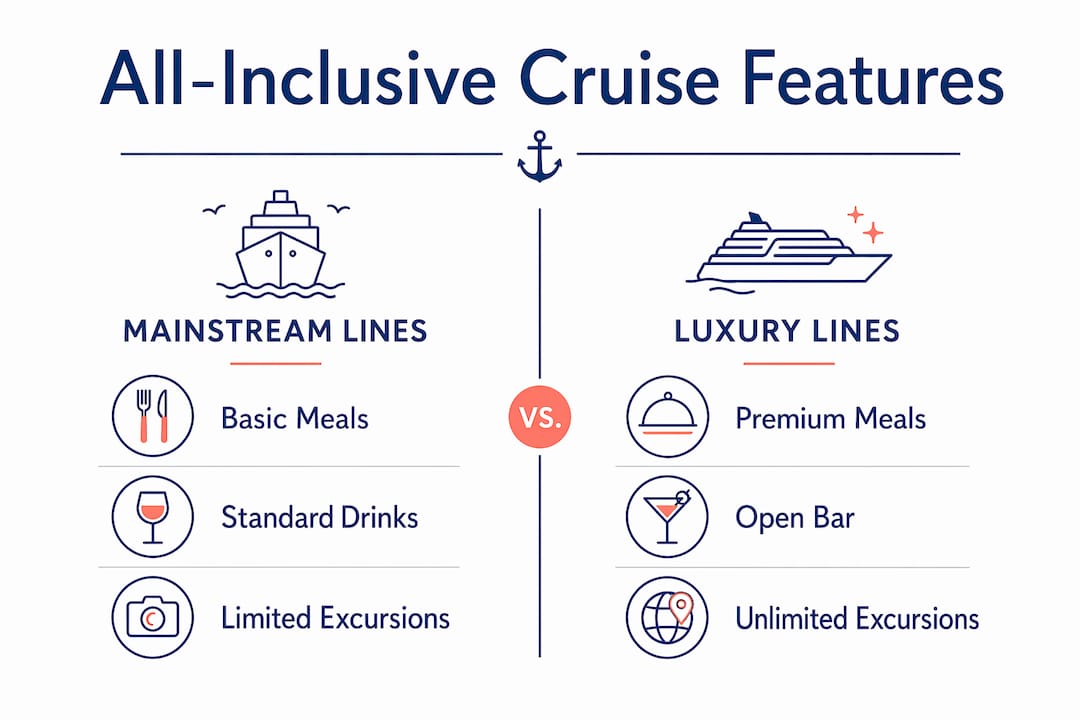
How do mainstream and luxury all-inclusive cruises differ?
The structural difference between mainstream and luxury all-inclusive cruises comes down to one word: bundling. Mainstream lines like Norwegian Cruise Line and Royal Caribbean sell a base fare and then offer optional packages for beverages, Wi-Fi, and specialty dining. Luxury lines price everything in from the start.
| Feature | Mainstream lines | Luxury all-inclusive lines |
|---|---|---|
| Alcoholic beverages | Add-on package required | Included in base fare |
| Gratuities | $14–$16 per person per day extra | Included |
| Wi-Fi | $20–$30 per person per day extra | Included |
| Shore excursions | $100–$200 per person per port | Unlimited, included |
| Ship capacity | 2,000–6,000+ passengers | 490–750 passengers |
| Airport transfers | Not included | Often included |
Luxury lines like Regent Seven Seas, Silversea, and Seabourn include premium spirits, specialty dining, unlimited shore excursions, and airport transfers in their base fares. The smaller ship capacity, ranging from 490 to 750 passengers, also means a higher staff-to-guest ratio and a noticeably more personal level of service. On a mainstream ship carrying 5,000 passengers, the experience is categorically different.
The misconception most travelers carry is that pre-purchasing a beverage package on a mainstream ship creates an all-inclusive experience. It does not. Prepaying for beverage and excursion bundles on mainstream cruises can still lead to unexpected costs due to package exclusions and limitations, unlike the “no surprise bill” model that defines luxury lines.
Pro Tip: When comparing fares, always calculate the realistic total cost of a mainstream cruise by adding gratuities, a beverage package, Wi-Fi, and at least two shore excursions per port. That number is your true comparison point against a luxury all-inclusive fare.
What are the hidden costs in all-inclusive cruise packages?
The most common mistake travelers make is treating a low base fare as the final price. Gratuities, Wi-Fi, and activity packages can nearly double the apparent cost of a mainstream cruise when not pre-paid or budgeted properly. That is not a minor rounding error. It is a structural feature of how mainstream cruise pricing works.
Consider a realistic example: a Norwegian Cruise Line base fare of $1,200 per person, plus $112 in gratuities, plus $350 for a beverage and dining package, plus $600 in shore excursions, brings the real per-person cost to $2,462. The advertised price was less than half of what the trip actually cost.
Shore excursions are the single largest hidden cost in mainstream cruise budgets. Excursion prices run $100–$200 per person per port, and a Mediterranean itinerary with seven ports can add $1,000 to $2,800 per traveler in excursion spending alone. That figure does not include specialty dining, spa visits, or premium Wi-Fi upgrades.
“The most significant variable in all-inclusive cruise costs tends to be shore excursions, making their inclusion or exclusion the key factor in any real value comparison.” — Jetsetter Guide
Watch for these specific budget traps on mainstream ships:
- Specialty restaurant surcharges ranging from $30 to $60 per person per meal
- Premium Wi-Fi that costs more than basic connectivity packages
- Spa treatments priced at resort-level rates with no package discount
- Casino charges that are never included on any cruise line
- Premium spirits excluded even from mid-tier beverage packages
Recognizing these costs before you book, rather than after you board, is what separates a well-planned cruise from a frustrating one.
How to plan and book a truly all-inclusive cruise
Booking the right all-inclusive cruise requires matching your travel habits to the right product. A traveler who drinks wine with every dinner and wants to explore every port independently will find far more value on a luxury all-inclusive line than on a mainstream ship with add-on packages. The math is straightforward once you know your own patterns.
Follow these steps to book with confidence:
- Identify your four pillars. Decide whether you need alcoholic beverages, gratuities, Wi-Fi, and shore excursions covered. If all four matter, focus your search on luxury lines like Regent Seven Seas, Silversea, or Seabourn.
- Calculate your realistic mainstream cost. Use the formula: base fare plus gratuities plus beverage package plus Wi-Fi plus excursions. Compare that total against a luxury all-inclusive fare for the same itinerary.
- Consider adult-only options. Viking Ocean, Virgin Voyages, Oceania, and Saga Cruises each offer adult-focused environments with varying degrees of all-inclusive features. These lines attract travelers who prioritize atmosphere and service quality over onboard activity volume.
- Factor in external costs. Flights, travel insurance, and pre or post-cruise hotel nights are rarely included even on luxury lines. True luxury all-inclusive lines sometimes include business-class airfares and airport-to-ship transfers, which can save hundreds or thousands of dollars. Confirm what is covered before assuming.
- Book early for the best cabin selection. Luxury lines with smaller ships sell out popular itineraries months in advance. Early booking also locks in promotional fares that include additional perks like onboard credits or complimentary upgrades.
Pro Tip: Virgin Voyages includes gratuities, Wi-Fi, specialty dining, and non-alcoholic drinks in its standard fare for Mediterranean sailings, priced from $150 to $250 per person per day. It is a strong middle-ground option for travelers who want more inclusions than a mainstream ship without the full luxury price point.
For a deeper look at how to match your preferences to the right ship, the luxury cruise booking guide from Elitetravelgroup walks through the decision process step by step.
Key takeaways
A truly all-inclusive cruise covers alcoholic beverages, gratuities, Wi-Fi, and shore excursions in the base fare. Mainstream packages that exclude even one of these pillars require careful budgeting to avoid surprise costs at the end of your voyage.
| Point | Details |
|---|---|
| Four pillars define true all-inclusive | Alcoholic beverages, gratuities, Wi-Fi, and shore excursions must all be included. |
| Mainstream costs add up fast | Gratuities, Wi-Fi, and excursions can nearly double a mainstream base fare. |
| Luxury lines offer genuine value | Regent Seven Seas, Silversea, and Seabourn bundle all four pillars plus airport transfers. |
| Shore excursions are the biggest variable | Mediterranean itineraries can add $1,000 to $2,800 per person in excursion costs alone. |
| Match your habits to your cruise type | Heavy drinkers and active explorers save more on luxury all-inclusive fares than on add-on packages. |
Why the “all-inclusive” label deserves more scrutiny than you think
After years of helping clients plan luxury cruise vacations, the pattern I see most often is this: travelers book a mainstream cruise with a beverage package, feel confident they have handled the budget, and then come home with a final bill that surprises them. The frustration is not with cruising. It is with a label that the industry uses inconsistently.
My honest view is that the term “all-inclusive” should require all four pillars to apply. When a cruise line calls itself all-inclusive but charges separately for shore excursions, it is selling a convenience bundle, not a truly worry-free vacation. That distinction matters enormously for how you plan and what you spend.
The travelers who get the most out of all-inclusive cruising are the ones who do the math before they board. They know their drinking habits, they know how many excursions they want, and they choose the product that matches those numbers. For many of my clients, a luxury all-inclusive fare that looks expensive on paper turns out to be cheaper than a mainstream cruise with every add-on stacked on top.
The types of luxury cruises available in 2026 have expanded significantly, and the value proposition for true all-inclusive lines has never been stronger. My advice: stop comparing base fares and start comparing total costs. That single shift in how you evaluate options will change every cruise decision you make.
Plan your all-inclusive cruise with Elitetravelgroup
Choosing the right all-inclusive cruise is easier when you have an expert who already knows the ships, the itineraries, and the fine print.

Elitetravelgroup has spent 35 years designing luxury travel experiences for clients who want every detail handled correctly. From identifying which lines genuinely include all four pillars to building a full itinerary with flights, transfers, and pre-cruise hotels, the team at Elitetravelgroup manages every layer of your trip. There are no service fees and a price match guarantee on every booking. Explore all-inclusive vacation packages curated specifically for travelers who want a truly worry-free voyage, and reach out any time. The team is available 24/7.
FAQ
What are all-inclusive cruises exactly?
An all-inclusive cruise bundles accommodation, meals, beverages, entertainment, and key services into one upfront fare. The term varies by line, with luxury operators like Regent Seven Seas and Silversea covering all expenses, while mainstream lines typically sell add-on packages for beverages and Wi-Fi.
Are all-inclusive cruises worth it for most travelers?
For travelers who drink alcohol regularly, want to explore ports on organized excursions, and prefer no surprise charges, luxury all-inclusive cruises deliver strong value. When you add gratuities, Wi-Fi, a beverage package, and excursions to a mainstream base fare, the total often matches or exceeds a luxury all-inclusive price.
What do cheap all-inclusive cruises actually include?
Budget-friendly all-inclusive cruise packages typically cover accommodation, main dining, non-alcoholic beverages, and basic entertainment. Alcoholic drinks, specialty restaurants, premium Wi-Fi, and shore excursions are almost always charged separately, making the true cost higher than the advertised fare.
Which are the top all-inclusive cruise lines in 2026?
Regent Seven Seas, Silversea, and Seabourn are the leading luxury all-inclusive cruise lines, covering all four core pillars in their base fares. Virgin Voyages and Oceania offer strong mid-tier options with partial all-inclusive features at lower price points.
How do I book an all-inclusive cruise without hidden costs?
Calculate your realistic total cost by adding gratuities, a beverage package, Wi-Fi, and excursions to any mainstream base fare before comparing it to a luxury all-inclusive rate. Working with a specialist agency like Elitetravelgroup removes the guesswork, since they know exactly what each line includes and can match you to the right product for your budget and travel style.
Recommended
- Types of luxury cruises: curated experiences for 2026
- 10 luxury cruise tips for an unforgettable voyage
- Luxury Cruise Booking Guide: Curate Your Dream Voyage
- How to Prepare for Luxury Cruises: Your 2026 Guide
