


U.S. citizens do not need a Schengen visa for tourism or business trips of up to 90 days. What will change is that Americans will need an ETIAS travel authorization, a short online approval that is not a visa, once the system goes live. As of October 2026 it has not launched, and you cannot apply for it yet.
That is the short answer. The details matter, because the two terms get mixed up constantly, and because a third system, the Entry/Exit System (EES), is already in force and is often confused with ETIAS.
TL;DR
- A Schengen visa is an entry permit for travelers from countries that are not visa-exempt. U.S. citizens are visa-exempt, so they only need ETIAS, not a visa, for short stays.
- ETIAS is a €20 online authorization, valid for 3 years or until your passport expires, whichever comes first. Travelers under 18 and over 70 do not pay the fee.
- ETIAS is not operating yet. Its launch has been pushed back repeatedly, and press reports now point to 2027. Until it opens, a valid passport is what you need.
- EES, the biometric border registration, is already operating and is a separate system.
- Only the official EU site issues ETIAS. Look-alike sites are a real risk.
Table of Contents
- What a Schengen visa is, and why Americans skip it
- What ETIAS is
- Schengen visa vs. ETIAS at a glance
- Where ETIAS stands right now
- EES is already here, and it is not ETIAS
- What to do before you book
- Our perspective
- How your itinerary shapes the paperwork
- Planning a trip to Europe with us
- FAQ
- Sources
What a Schengen visa is, and why Americans skip it
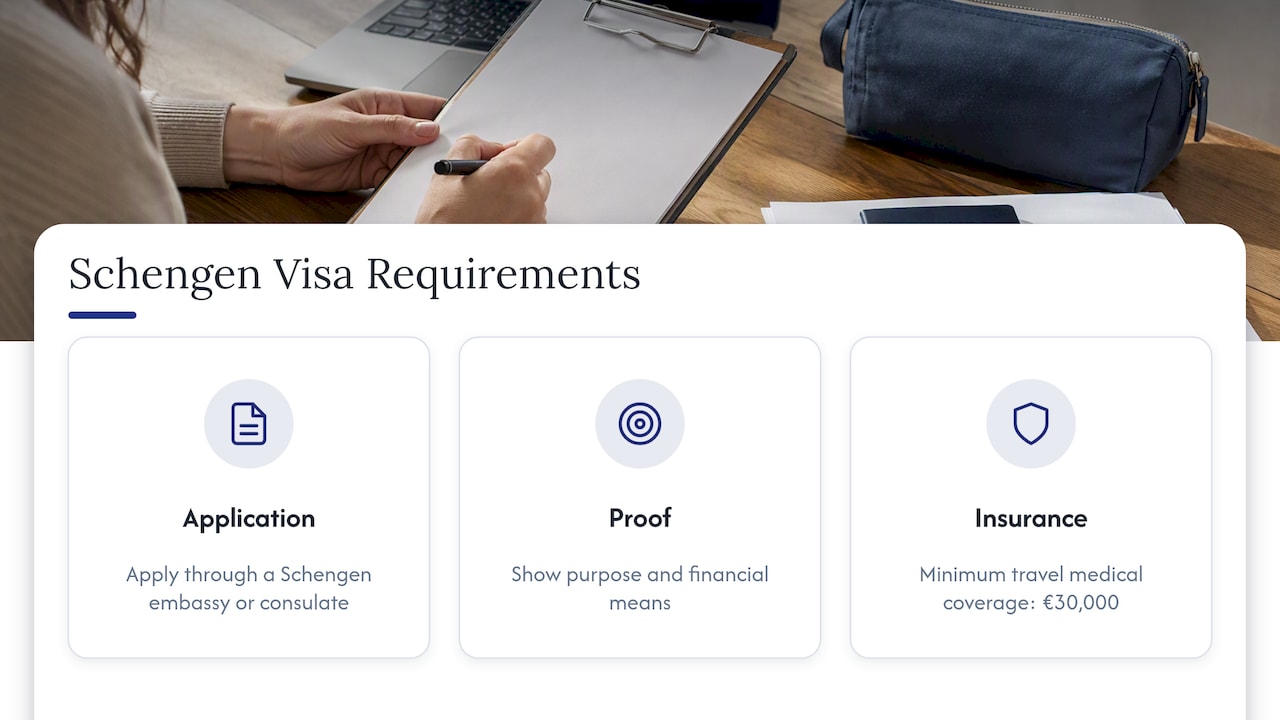
A Schengen visa is a permit issued by an embassy or consulate of a Schengen country. It lets the holder travel in all Schengen states. The EU’s general requirements document shows how heavy the process is: a consular application, proof of purpose and financial means, and travel medical insurance with a minimum coverage of €30,000.
That is the route for citizens of countries whose passports are not visa-exempt. Americans are on the exempt list. The EU’s own FAQ says U.S. citizens are visa-exempt and will remain so, which means no consulate visit, no stamp-in-advance and no insurance paperwork for a short trip.
The rule that applies to you is the 90/180 rule: up to 90 days of stay within any 180-day period. Plan a longer stay, such as a season in Provence or a work assignment, and you are in a different category. Check the national visa rules of the country you will live in, because long stays are handled country by country.
What ETIAS is
ETIAS stands for European Travel Information and Authorisation System. It is a pre-travel screening for visa-exempt visitors. Think of the U.S. ESTA, which Europeans use to visit America, or Canada’s eTA. You fill in an online form, pay the fee and receive an answer, usually quickly.
The key facts, per the EU’s official ETIAS pages:
- Fee: €20 once it launches. No fee under 18 or over 70.
- Validity: 3 years, or until the passport used to apply expires.
- Medical information: not required.
- Coverage: it applies to 30 European countries, which includes the 27 Schengen countries plus a few others, including Bulgaria and Romania.
It is tied digitally to your passport. Renew the passport and the authorization no longer works, so you apply again with the new number.
Schengen visa vs. ETIAS at a glance
| Schengen visa | ETIAS | |
|---|---|---|
| What it is | Entry permit | Travel authorization |
| Who needs it | Travelers from non-exempt countries | Visa-exempt travelers, including U.S. citizens |
| Do Americans need it? | No | Yes, once it launches |
| Where you apply | Embassy or consulate | Online, official EU site only |
| Supporting documents | Insurance, financial proof, purpose of stay | Passport details and an online questionnaire |
| Cost | Set by the consular process | €20 (free under 18 and over 70) |
| Validity | Per visa issued | 3 years or until the passport expires |
| Status in October 2026 | In use | Not yet operating |
Where ETIAS stands right now
This is where most online articles go stale. The EU’s official pages say ETIAS is currently not in operation and that the EU will announce the start date several months before launch. The site has referred to a last-quarter 2026 start. However, the Financial Times reported that the agency running the system acknowledged that launching by the end of this year was no longer feasible, and AFAR summarized that the launch has slipped to 2027.
What that means in practice:
- If you travel this fall or winter, you most likely need only your passport for ETIAS purposes. Confirm on the official site shortly before departure, since dates can change.
- If you book a trip for 2027, check the status before you pay for non-refundable elements. We would not assume either way.
- Anyone offering to process an ETIAS application today is not legitimate, because the system is not accepting applications.
EES is already here, and it is not ETIAS
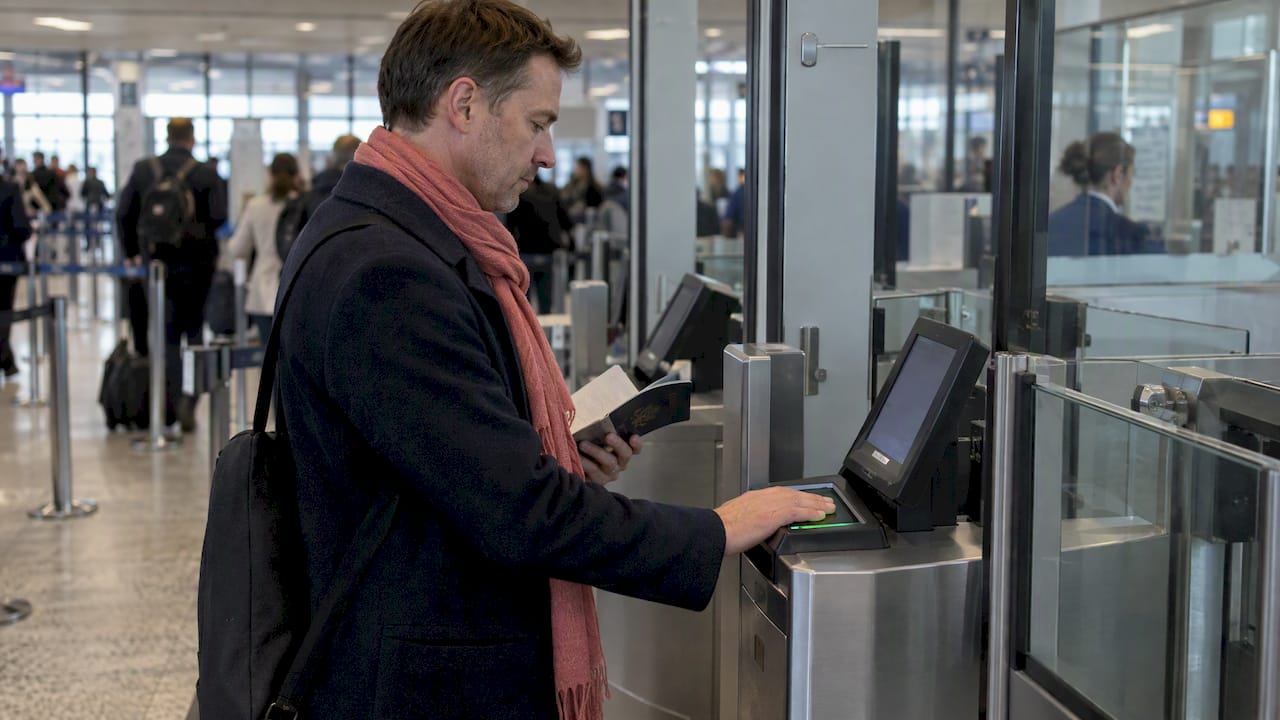
The system Americans are actually meeting at the border now is EES. The EU’s Migration and Home Affairs department explains that it has been fully operational since April 10, 2026. It records entry and exit of non-EU travelers, including visa-exempt Americans, with fingerprints and a facial image taken at the external border. You do not apply in advance, though you can pre-register data through the Travel to Europe app within 72 hours of travel.
The State Department’s guidance for U.S. travelers in Europe covers EES for visits of up to 90 days within a 180-day period.
So the three terms line up like this:
- Schengen visa: not needed by you.
- EES: happens at the border, already in force, no fee.
- ETIAS: pre-trip online approval, €20, not live yet.
Build extra time into first arrivals. Border queues were a theme of the summer, and a tight connection on a first-time EES registration is the wrong place to economize.
What to do before you book
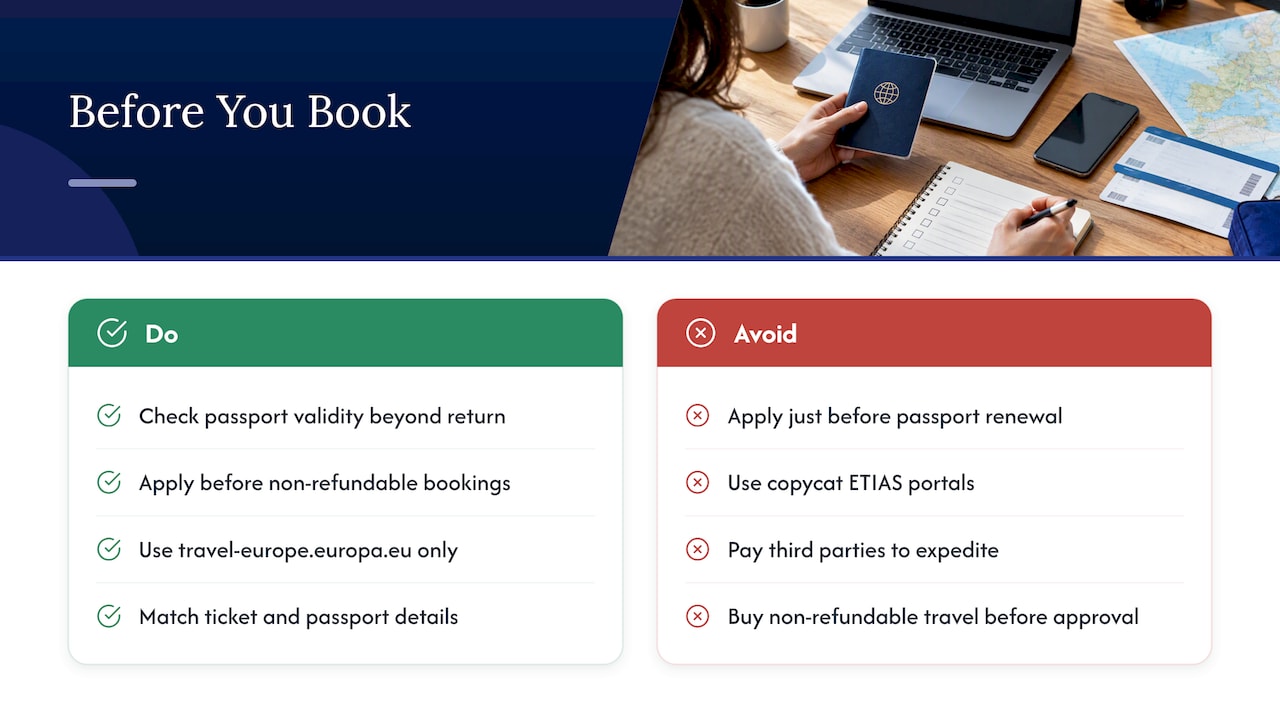
Check your passport. Look at the expiration date and plan for it to stay valid well beyond your return. When ETIAS opens, an authorization linked to an old passport becomes void if you renew, so avoid applying shortly before a renewal.
Apply before you buy non-refundable travel, once ETIAS is live. EU guidance advises securing authorization before purchasing tickets or accommodation. Most applications are expected to be decided in minutes, but a manual review can take longer, and the EU’s myths and facts page is the place to read how that works.
Use the official site only. There is one official ETIAS website, on the travel-europe.europa.eu domain. Copycat portals tend to charge multiples of the fee or collect personal data. Never pay a third party to “expedite” it.
Keep the same name and passport details across everything. The name on your authorization, your airline ticket and your passport should match exactly. We see more trouble from a mismatched name than from any policy change.
Plan the arrival, not just the entry. A smooth border crossing is part of a chain: flights, a driver at the airport, a hotel that expects you. Services built around digital concierge-style arrival coordination show the same logic in another region: confirmed transfers and pre-shared driver details remove the stress of a late or complicated landing.
Our perspective
After 35 years of designing high-end trips, we have learned that clients rarely worry about the right thing. They ask whether they need a visa. The better question is what could interrupt a trip that is otherwise perfect.
For Americans heading to Europe, the honest answer is small but real. The rules are not complicated: no Schengen visa, a €20 authorization when ETIAS opens, a biometric check at the border today. The risk sits in the details around them. A passport that expires inside the validity window. A name that differs between documents. A look-alike website. A non-refundable villa booked before anyone checked the status of a system that keeps moving its date.
That is why we treat entry requirements as part of itinerary design, not an afterthought. We build in buffer time for first arrivals under EES, we point clients to the official channel only, and we time bookings so a regulatory change does not cost them money. We have also written separate guides on ETIAS for Americans and on applying for ETIAS when you book, which we update as the launch date firms up.
Because we are open 24/7, a client who lands in Rome and meets an unexpected question at the border has someone to call.
— tammylevent@gmail.com
How your itinerary shapes the paperwork
Entry rules are the same whether you spend a week or a month, but the way you travel changes what you should check.
- Multi-country trips. The 90/180 rule counts days across the whole Schengen Area, not per country. A month in Italy followed by a month in France is two months against one 90-day allowance. Keep a simple log of days if you travel often.
- Trips that combine the UK or other non-ETIAS destinations. The UK is not part of ETIAS and has its own entry process, so a London and Paris itinerary involves two separate sets of rules.
- Cruises. A Mediterranean sailing still takes you through Schengen ports, and embarkation and disembarkation can mean border checks. Ask your planner how the cruise line handles it. See how we approach luxury cruises.
- Family travel. Children under 18 are exempt from the ETIAS fee but still need their own authorization once it is live. Each traveler needs a valid passport.
- Destination weddings and group trips. Every guest has their own passport, their own expiry date and their own authorization. For a group of 30, one expired passport can disrupt the whole schedule, so check them all early.
Planning a trip to Europe with us
If you are ready to turn this into an actual trip, our team designs custom itineraries for Europe, from city stays and private tours to honeymoons, weddings and small groups. We charge no service fees, offer a price match guarantee and handle the logistics, including reminding you of entry requirements at the right time. Start with our luxury Europe vacation packages or contact us through the main site.
FAQ
Do Americans need a Schengen visa?
No. U.S. citizens are visa-exempt and can stay up to 90 days within any 180-day period for tourism or business. The EU’s FAQ confirms they will need only ETIAS, not a visa. Longer stays or work and study require national permits.
What are the ETIAS requirements for U.S. citizens?
When it launches, you will need a valid passport, an email address, a payment card for the €20 fee and a short online form. The fee does not apply under 18 or over 70, and no medical information is required. The authorization lasts 3 years or until your passport expires.
Can I apply for ETIAS today?
No. The official EU pages state that the system is not yet in operation and that no applications are being collected. Any site that says otherwise is not the official portal. Check travel-europe.europa.eu for the announced start date.
Is ETIAS the same as the Entry/Exit System?
No. EES records fingerprints and a facial image at the border and is already in force. ETIAS is an online approval you obtain before you travel, and it has not started.
Sources
- ETIAS frequently asked questions, EU
- What is ETIAS, EU
- 7 myths and facts about ETIAS, EU
- Main differences between the EES and ETIAS, EU Migration and Home Affairs
- General Schengen visa requirements, EEAS
- U.S. Travelers in Europe, U.S. Department of State
- Europe delays ETIAS until 2027, AFAR
