




TL;DR:
- A destination wedding planner is essential for managing complex legal, vendor, and logistical needs in foreign locations. They offer cost savings through exclusive group contracts, local expertise, and coordinated vendor relationships, ensuring a smooth event. Hiring a specialist with documented experience helps couples enjoy the celebration and reduces stress.
A destination wedding planner is the single most important hire you will make for your entire event. Destination weddings account for roughly 25% of all weddings globally, with total costs ranging from $20,000 to $80,000 and an average guest count of 65. That scale demands professional coordination, not a DIY spreadsheet. The right planner handles foreign legal requirements, builds a vetted vendor team, and secures group perks that individual couples simply cannot access. Understanding why hire for destination weddings is the question that separates a smooth celebration from a logistical disaster.
Why hire for destination weddings: the core case
A destination wedding coordinator is not a luxury add-on. It is the operational backbone of an event held in a foreign country, often across multiple time zones, with guests traveling from several states or continents. The importance of wedding coordinators becomes clear the moment you try to confirm a ceremony permit in Tuscany or negotiate a room block at a resort in the Riviera Maya from your kitchen table in Ohio.
Planners bring three things no couple can replicate on their own: local vendor relationships, destination-specific legal knowledge, and the bandwidth to manage hundreds of moving parts simultaneously. Platforms like Zola and Easy Wedding directories help couples research vendors, but browsing profiles is not the same as having a planner who has worked with a florist for five years and knows their reliability firsthand. That distinction matters enormously when you are 4,000 miles away.

What logistical challenges make a planner indispensable?
International destination wedding planning involves a level of complexity that surprises most couples. Legal paperwork alone requires careful timing. Save-the-dates go out 12–14 months in advance, legal documents must be filed 4–6 months before the ceremony, and RSVPs close roughly 3 months out. Miss any of those windows and your ceremony may not be legally recognized.
Beyond paperwork, the logistical layers stack quickly:
- Marriage license rules vary by country. France, Italy, and Mexico each have different residency requirements, document translation rules, and filing deadlines.
- Vendor coordination across time zones means a florist in Santorini is unavailable during your workday. A local planner handles all communication in real time.
- Group travel and room blocks require negotiating hotel contracts, managing room assignments, and coordinating airport transfers for dozens of guests.
- Climate contingency planning is non-negotiable. Planners coordinate backup plans for weather events, vendor cancellations, and day-of emergencies so couples stay relaxed regardless of what happens.
- Guest decline rates of 30–50% are common for destination events. A planner helps you set realistic headcount expectations and build contracts that account for attrition.
Pro Tip: Book your planner 12–18 months before your wedding date. Popular destinations like Amalfi Coast, Bali, and Cabo fill up fast, and early booking gives your planner maximum leverage on venue and vendor availability.
How do planners deliver cost savings and exclusive perks?
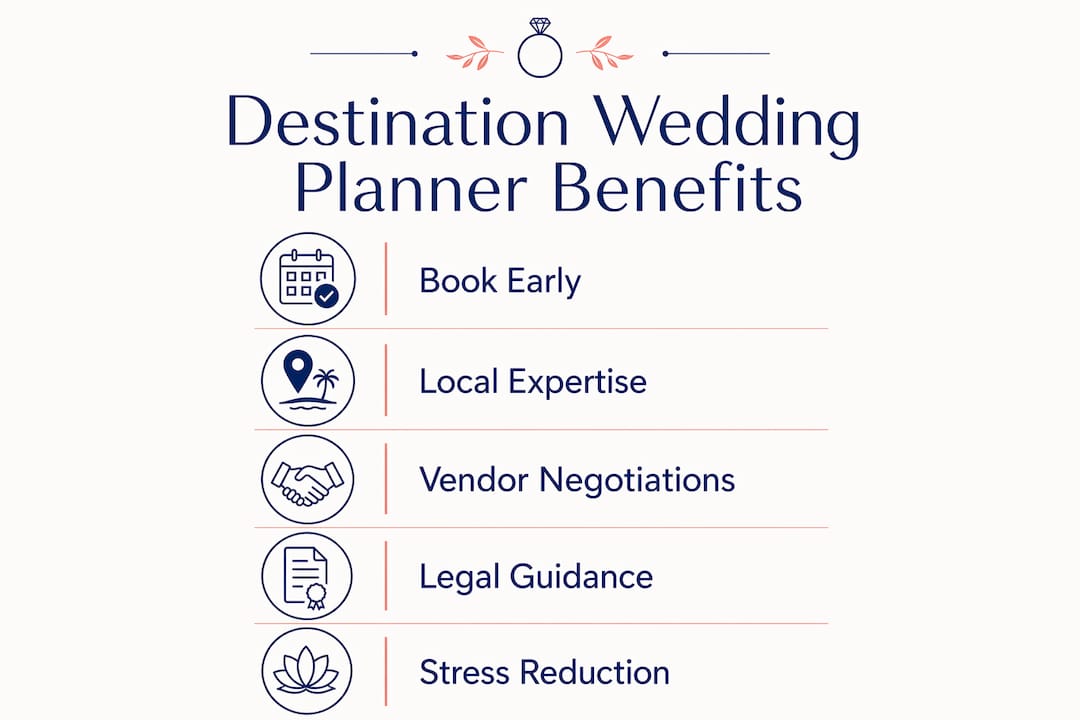
The financial case for hiring a planner is one of the most overlooked benefits of hiring planners. Many destination wedding coordinators are compensated through resort commissions, which means their services cost you nothing directly. The resort pays the planner a referral fee, and you receive professional coordination at no out-of-pocket expense.
Beyond the fee structure, planners unlock group contract benefits that individuals cannot access. These include negotiated room rates, complimentary suite upgrades, hosted welcome cocktail parties, and bundled honeymoon packages. A couple booking 30 rooms independently gets the standard rate. A planner booking those same 30 rooms under a group contract gets a lower rate plus added value.
| Planning approach | Room rates | Perks included | Vendor negotiation |
|---|---|---|---|
| Couple books independently | Standard rack rate | None | No leverage |
| Planner with group contract | Negotiated group rate | Upgrades, welcome events, honeymoon perks | Bulk pricing available |
| Planner with resort commission | Negotiated group rate | Full perk package | Planner fee covered by resort |
The savings compound when you factor in vendor negotiations. A planner who regularly books photographers, florists, and caterers at a destination can negotiate package pricing that a one-time client cannot. That buying power translates directly into budget relief.
Pro Tip: Ask any planner you interview whether they are compensated by resort commissions. If yes, confirm in writing exactly what that relationship covers and what remains your responsibility. Transparency here protects both parties.
Why is local expertise the most underrated advantage?
Curated vendor networks are the single most valuable resource a destination planner brings to your event. Remote couples cannot effectively vet vendors through photos and reviews alone. A planner who has worked in Porto Rafael, Sardinia or the Algarve in Portugal knows which caterer delivers consistently, which photographer handles outdoor lighting well, and which venue has hidden noise restrictions.
Local expertise also covers cultural and legal nuances that generic wedding advice ignores. Ceremony timing in Catholic churches in Italy follows different protocols than civil ceremonies in France. Guest seating customs differ across cultures. A planner with documented experience handling foreign laws prevents the kind of mistakes that cannot be undone on the day of your wedding.
The vendor cohesion benefit is equally significant. When a planner assembles a team of vendors who have worked together before, the on-site execution runs more smoothly. The photographer knows how the florist sets up. The caterer knows the venue’s kitchen layout. That familiarity eliminates friction that a newly assembled vendor team would create. For couples considering events in Sardinia, local hospitality expertise is particularly critical given the island’s specific vendor ecosystem and seasonal logistics.
What emotional and experiential benefits do planners provide?
The most compelling reason why choose a wedding planner comes down to one shift: you stop being the event manager and start being the guest of honor. Planners absorb guest questions, vendor issues, and rooming problems so couples never have to field a logistics call on their wedding morning.
That shift has real emotional weight. Couples who hire planners report spending less time on urgent logistical problems and more time present in their own celebration. Your wedding weekend should feel like a celebration, not a project deadline.
Planners also build out the full guest experience beyond the ceremony itself:
- Welcome events and group dinners give guests a reason to arrive early and connect before the main day.
- Curated activity schedules for free days keep guests engaged without requiring couple involvement.
- Personalized design details specific to the destination, local flowers, regional cuisine, and cultural touches, create an experience guests cannot replicate at a standard ballroom wedding.
- Communication management means guests receive clear itineraries, transportation details, and day-of instructions without the couple writing a single email.
The result is a wedding weekend that feels intentional and hosted rather than improvised and stressful. That difference is what guests remember and what couples carry with them long after the event ends.
How to choose the right destination wedding planner
Not every wedding planner qualifies as a destination wedding specialist. Choosing a planner without documented destination experience is one of the most common and costly mistakes couples make. A planner who excels at local events may mishandle foreign legal paperwork or underestimate international guest travel complexity.
Use this process to find the right fit:
- Verify destination-specific experience. Ask for case histories or testimonials from couples who married at your target destination, not just general wedding reviews.
- Confirm international logistics capability. The planner should demonstrate knowledge of marriage license requirements, document translation needs, and local filing deadlines for your specific country.
- Evaluate their vendor network. Ask how many vendors they have worked with at your destination and whether those relationships are exclusive or open to other planners.
- Ask about contingency planning. A qualified planner has a documented backup plan for weather events, vendor cancellations, and travel disruptions. If they cannot describe it clearly, keep looking.
- Contact them early. Booking 12–18 months ahead gives your planner maximum time to secure the best venues, vendors, and legal documentation windows.
- Clarify the fee structure upfront. Understand whether the planner is commission-based, fee-based, or a hybrid. Both models can work well, but you need clarity before signing anything.
The right planner does not just manage your wedding. They become your primary advocate, translator, and problem-solver in a country where you have no existing relationships.
Key takeaways
Hiring a destination wedding planner is a financial and logistical necessity, not an optional upgrade, for any couple planning a ceremony abroad.
| Point | Details |
|---|---|
| Planners are often cost-neutral | Resort commissions frequently cover planner fees, making professional coordination free to the couple. |
| Local vendor networks are irreplaceable | Planners’ established vendor relationships prevent quality failures that remote couples cannot catch through online research. |
| Legal timing is non-negotiable | Save-the-dates, legal paperwork, and RSVPs each have firm deadlines that planners track and manage. |
| Emotional presence is the real payoff | Couples with planners spend their wedding weekend as guests, not logistics managers. |
| Destination experience is non-transferable | A planner without documented destination-specific experience creates legal and cultural risk, not savings. |
What I’ve learned after years of watching couples go it alone
I have seen couples arrive at their destination wedding weekend visibly exhausted before a single vow is spoken. They spent the previous six months managing vendor emails at midnight, decoding foreign marriage license requirements, and fielding 40 guest questions about airport transfers. By the time the wedding day arrived, they were running on adrenaline and anxiety instead of joy.
The couples who hired experienced destination specialists arrived differently. They were present. They laughed at the welcome dinner. They slept the night before the ceremony. That difference is not accidental. It is the direct result of having a professional absorb the operational weight of the event.
What most couples underestimate is how much the planner does on the wedding weekend itself. The florist arrives late. A guest loses their room key. The officiant needs a last-minute document. Without a planner, those calls go to the couple. With a planner, they get resolved before the couple ever knows they happened. That invisible problem-solving is the real value, and it cannot be replicated by a well-organized spreadsheet or a helpful family member.
My honest advice: contact a destination specialist before you book a single vendor. The planner’s network will save you money, their knowledge will save you from legal mistakes, and their presence on your wedding day will give you back the experience you actually planned for.
Plan your destination wedding with Elitetravelgroup
Elitetravelgroup has spent 35 years building the kind of on-the-ground relationships that make destination weddings work. From Caribbean and Mexico destination weddings to intimate ceremonies across Europe, the team brings vetted vendor networks, group travel coordination, and concierge-level planning to every event.

Elitetravelgroup charges no service fees and offers a price match guarantee, so you get expert coordination without paying a premium for it. Whether you are planning a grand celebration or a luxury micro destination wedding for an intimate group, the specialists are available 24/7 to design an experience that reflects exactly what you envisioned. Reach out today to start building your personalized wedding plan.
FAQ
Why hire a planner specifically for destination weddings?
Destination weddings involve foreign legal requirements, remote vendor coordination, and group travel logistics that standard wedding planning does not cover. A specialist planner handles all three simultaneously, preventing costly mistakes.
Do destination wedding planners cost extra?
Many destination wedding planners are compensated through resort commissions, making their services effectively free to the couple. Always confirm the fee structure in writing before signing a contract.
How far in advance should you book a destination wedding planner?
Booking 12–18 months ahead is the standard recommendation. Early booking secures the best venues, vendors, and legal documentation timelines, especially for popular destinations.
What is the difference between a local and a destination wedding planner?
A local planner specializes in domestic events and may lack knowledge of foreign marriage laws, international vendor networks, and cross-border guest travel logistics. A destination specialist has documented experience managing all of those elements.
Can a planner really improve the guest experience?
Yes. Planners coordinate welcome events, guest transportation, activity schedules, and day-of communications so guests receive a complete, hosted experience rather than a series of logistical instructions from the couple.
Recommended
- Types of Destination Weddings: Your Planning Guide
- How to plan a luxury honeymoon: expert guide 2026
- Luxury Honeymoon Booking: Step-by-Step Guide 2026
- Expert Partners Shape Unforgettable Luxury Honeymoons
