




TL;DR:
- Romantic travel moments are created through intentional presence and small, meaningful gestures rather than lavish gestures or high costs. Incorporating scheduled alone time, phone-free rituals, and daily anchors fosters genuine connections and prevents burnout. Prioritizing authentic experiences and pre-planned partner-focused actions ensures deepening bonds rather than superficial memories.
Romantic travel moments are defined by intentional connection, not by price tags or grand gestures. The couples who return home feeling genuinely closer are not the ones who booked the most expensive suite or packed every hour with activities. They are the ones who showed up present, communicated openly, and chose a handful of small, meaningful actions that reflected what their partner actually values. This guide breaks down exactly how to create romantic travel moments through presence, simple rituals, and smart planning, so your next trip deepens your bond rather than just filling your camera roll.
How to create romantic travel moments through intentional gestures
The most durable romantic memories come from small, intentional gestures rather than elaborate productions. A handwritten note left on the pillow, a stop at the bakery that sells your partner’s favorite pastry, a playlist built around songs from your first year together. These cost almost nothing but carry enormous emotional weight because they signal that you were paying attention.
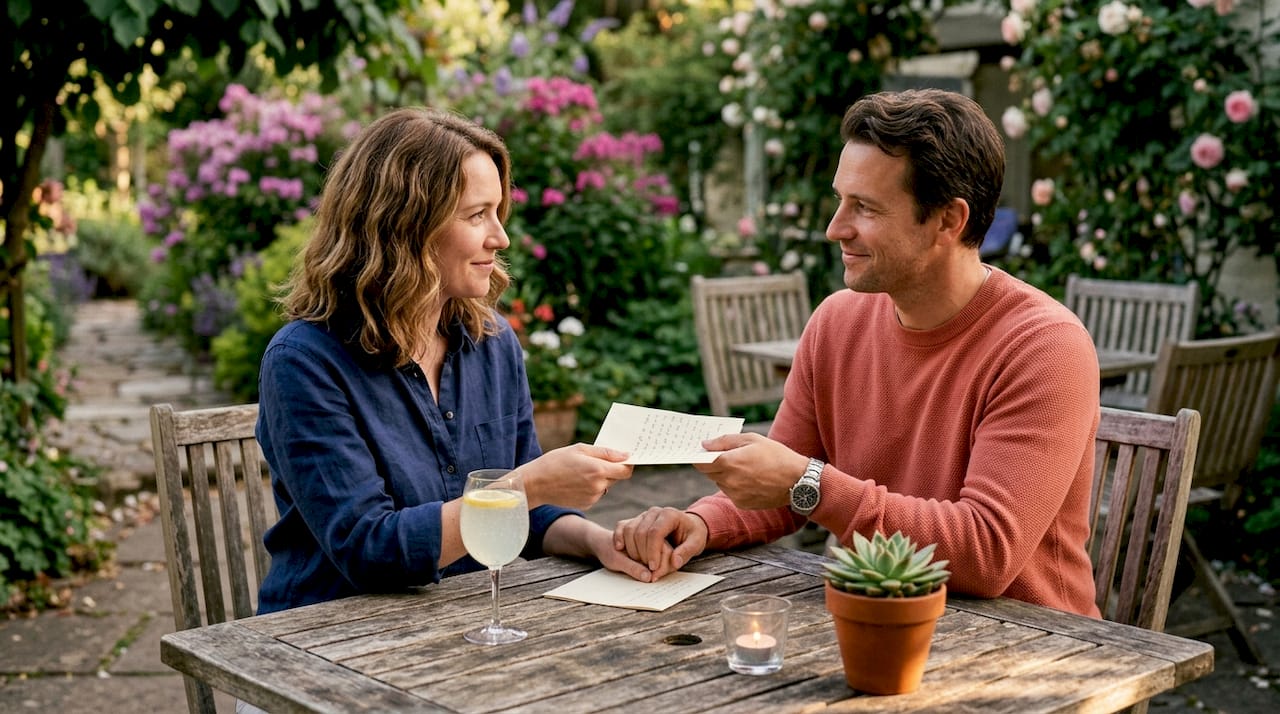
Relationship research recommends selecting 3 to 5 specific gestures before the trip rather than improvising everything in the moment. This matters because spontaneity without intention often collapses under the pressure of travel logistics. When you have a short list of meaningful acts already decided, you execute them confidently instead of scrambling.
Here are five gesture categories that consistently land well across different couple personalities:
- Sensory surprises. Pack a small item tied to a shared memory, like a specific chocolate, a scent, or a song queued up for a particular moment.
- Handwritten notes. Leave one in a coat pocket, a suitcase compartment, or tucked inside the book your partner is reading.
- Verbal acknowledgment. Expressing verbal gratitude for small acts combats relationship monotony and keeps intimacy alive during travel.
- Shared sensory experiences. Food tastings, local market visits, and cooking classes heighten intimacy by engaging multiple senses simultaneously.
- Daily bids for connection. Asking your partner’s opinion, sharing a memory, or pointing out something beautiful are critical to relationship success during travel.
Pro Tip: Choose gestures that reflect your partner’s specific preferences, not generic romance tropes. If your partner finds candlelit dinners stressful, a picnic at a viewpoint will land far better.
Why alone time makes shared time more romantic
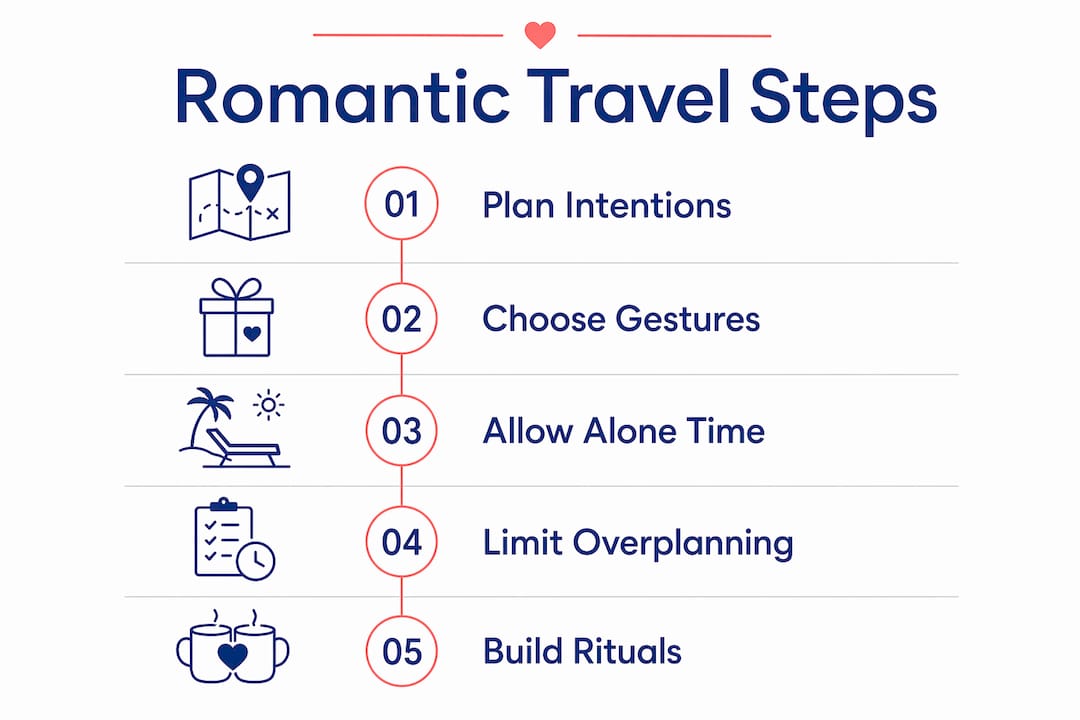
Counterintuitively, intentional alone time during a couples’ trip reduces stress and improves the quality of reconnection. Couples therapists consistently recommend building personal space into romantic getaways, not because the relationship needs distance, but because each person returns to shared time more energized and genuinely present.
The practical challenge is communicating this without it feeling like rejection. The solution is to schedule it openly before the trip begins. Here is a simple framework:
- Discuss energy levels before booking. Talk honestly about how much stimulation each of you handles well. One partner may want to explore every museum while the other needs a slow morning with coffee and a book.
- Name the solo activity explicitly. “I’d love an hour to walk alone by the water” is far less ambiguous than “I just need some space.” Specificity removes anxiety.
- Set a reunion point. Agree on where and when you’ll reconnect. This transforms alone time into something you both look forward to rather than something that feels uncertain.
- Protect the reunion ritual. When you come back together, give that moment full attention. Share what you noticed, felt, or thought about during your solo time.
Pro Tip: Solo walks in a new city are one of the highest-return investments in a romantic trip. You return with observations, stories, and a refreshed perspective that feeds genuine conversation.
Does putting your phone away actually improve romance?
The answer is yes, and the mechanism is biological. Phone-free rituals during meals or morning coffee trigger oxytocin release through eye contact and sustained presence. Oxytocin is the bonding hormone, and it requires real-time, face-to-face interaction to activate. Scrolling beside each other does not produce the same effect.
The practical barrier is that most couples never explicitly agree on digital boundaries before a trip. This leaves one partner checking notifications while the other feels ignored, which creates low-grade resentment that accumulates across days.
“Empty travel times, like waiting in line, transit, and layovers, are hidden opportunities for intimacy if phones are put away and focused conversation or observation is embraced.”
Agreements that work well in practice include:
- The morning window. No phones for the first 30 minutes after waking. Use that time for coffee, conversation, or simply watching the view together.
- The dinner rule. Phones face-down or in bags during every meal. This is the single highest-leverage phone-free commitment most couples can make.
- The transit conversation. Agree that airports, train rides, and taxi trips are phone-free zones for at least the first half of the journey.
- The physical camera swap. Bring a film camera or a dedicated point-and-shoot instead of relying on smartphones. Shooting on a physical camera fosters a shared experience in capturing memories and removes the temptation to immediately post or scroll.
How to plan a romantic getaway without killing the spontaneity
Over-planning is a primary cause of trip-related burnout, and burnout is the fastest way to drain romantic potential from any destination. The fix is not to plan less. It is to plan differently.
The most effective structure anchors each day around one meaningful experience and leaves the rest unscripted. That one anchor could be a sunset boat ride, a reservation at a restaurant you have been anticipating for months, or a morning hike to a specific viewpoint. Everything else in the day flows around it without pressure.
Here is how over-planning and intentional planning compare in practice:
| Approach | What it looks like | Romantic outcome |
|---|---|---|
| Over-planned day | 8 a.m. museum, 10 a.m. market, noon lunch, 2 p.m. tour, 4 p.m. beach, 7 p.m. dinner | Exhaustion, irritability, no room for genuine moments |
| Anchor-based day | One sunset dinner reservation; rest of day unstructured | Space for wandering, discovery, and real conversation |
| Fully unplanned day | No reservations, no agenda | Decision fatigue, potential conflict, missed experiences |
The anchor-based approach wins because it removes decision fatigue while preserving the unstructured time where the best romantic moments actually happen. Getting lost together in a new neighborhood, stumbling into a local festival, or sitting at a café for two hours with nowhere to be. These are the stories couples tell for years.
When disruptions happen, and they will, the team mentality of “us against the problem” is what separates couples who laugh about the missed train from couples who resent each other for it. Adaptation and shared problem-solving build genuine partnership.
Pro Tip: Before the trip, define your emotional goal together. Ask each other: “What do we want to feel at the end of this trip?” Reconnected? Adventurous? Rested? That answer shapes every planning decision more usefully than any destination guide.
How to build travel rituals that extend romance beyond the trip
Travel rituals are the difference between a vacation that fades into a photo album and one that permanently shifts how you relate to each other. A ritual is any repeated, intentional act that signals “this time is ours.” It does not need to be elaborate to be powerful.
Effective rituals couples use during travel include:
- Shared journaling. Each evening, both partners write one sentence about the best moment of the day, then read them aloud to each other. This practice takes three minutes and creates a written record of shared joy.
- The morning read. One partner reads a passage aloud from a travel memoir, a local history book, or even a restaurant menu in the local language. It is playful, connective, and costs nothing.
- The souvenir with a story. Rather than buying decorative objects, choose one item per trip that represents a specific moment. A small stone from a beach where you had a meaningful conversation carries more emotional weight than a generic magnet.
- The post-trip letter. Within a week of returning home, each partner writes the other a short letter about what the trip meant to them. This extends the romantic energy of travel directly into daily life.
The research on daily habits for rekindling romance confirms that simple, consistent acts of acknowledgment matter more than occasional grand gestures. Travel gives you a concentrated window to establish habits that can carry over into ordinary life. Use it deliberately.
Key takeaways
Creating romantic travel moments requires intentional presence, a small set of meaningful gestures, and a planning structure that leaves room for genuine connection to happen.
| Point | Details |
|---|---|
| Prioritize small gestures | Select 3 to 5 specific, partner-focused acts before the trip rather than improvising under pressure. |
| Schedule solo time | Intentional alone time reduces stress and improves the quality of shared moments when you reunite. |
| Go phone-free at key moments | Morning coffee and meals without phones trigger oxytocin and create the eye contact that builds real bonds. |
| Anchor each day, not every hour | One meaningful experience per day preserves spontaneity and prevents the burnout that kills romance. |
| Build rituals that travel home | Shared journaling, souvenir stories, and post-trip letters extend romantic connection well beyond the vacation itself. |
What 35 years of romantic travel planning taught me
Most couples arrive at a romantic destination with the right intentions and the wrong strategy. They book the beautiful hotel, they research the restaurants, and then they spend the first two days exhausted from travel and mildly irritated with each other because nobody discussed what “relaxing together” actually means to each of them.
The insight that has held up across decades of working with couples on honeymoons, anniversaries, and milestone trips is this: the destination is almost irrelevant. I have seen couples have transformative experiences in modest agriturismos in Tuscany and miserable ones in five-star resorts in the Maldives. The variable is never the location. It is whether both people showed up willing to be present and honest about what they needed.
The couples who get it right tend to share one habit. They talk about the trip before the trip. Not logistics, but intention. They ask each other what they are hoping to feel, what they are worried about, and what one thing would make the whole experience worth it. That conversation does more for romance than any upgrade or amenity.
My honest advice: resist the pressure to make every moment Instagram-worthy. The moments that actually matter, the ones you will still be talking about in ten years, are almost always the unplanned ones. The wrong turn that led to the best meal. The rain that forced you to sit in a café for three hours. The quiet morning when you did nothing but watch the light change. Plan enough to remove friction. Then get out of the way and let the trip happen.
Plan your next romantic trip with Elitetravelgroup
Elitetravelgroup has spent 35 years designing trips where the details do the romantic work for you. From luxury honeymoon packages built around your emotional goals to curated European itineraries with the right timing, the right hotels, and the right on-the-ground partners, every trip is built to create the moments described in this guide, not by accident, but by design.

Whether you are planning a honeymoon, a milestone anniversary, or simply a trip that finally feels like the two of you again, Elitetravelgroup’s concierge-level approach means nothing falls through the cracks. No service fees, a price match guarantee, and 24/7 availability mean you book with confidence and travel without worry. Explore romantic European getaways or speak with a travel expert today to start building an itinerary that puts connection at the center of every day.
FAQ
What makes a travel moment truly romantic?
A romantic travel moment is defined by intentional presence and personal meaning, not cost or complexity. Small, partner-specific gestures consistently create more lasting memories than expensive activities.
How many romantic gestures should couples plan per trip?
Relationship experts recommend 3 to 5 specific gestures selected before the trip begins. This focused approach creates deeper impact than attempting to improvise romance across every moment.
Should couples spend every moment together on a romantic trip?
No. Moderate, intentional alone time during a couples’ trip reduces stress and improves the quality of shared experiences. Solo walks or individual activities allow each partner to return to shared time more energized and present.
How does avoiding phones improve romantic connection while traveling?
Phone-free rituals increase oxytocin production through sustained eye contact and presence, which is the biological foundation of bonding. Even a single phone-free meal per day produces a measurable shift in connection quality.
What is the biggest planning mistake couples make on romantic trips?
Over-scheduling is the primary cause of trip-related burnout, which directly undermines romantic potential. Anchoring each day around one meaningful experience and leaving the rest unstructured consistently produces better outcomes than filling every hour.
