
The best European incentive trips start with a reward that people could not easily buy for themselves, then pick the place that delivers it. A sunrise balloon flight over vineyards, a private tasting with a winemaker, a hosted dinner in a historic quarter, a boat afternoon on the Tagus: each works because it feels earned and specific. Below you will find ideas organized by what your qualifiers care about, plus timing, pacing and the logistics that trip up first-time planners.
TL;DR
- Western Europe and the Nordics lead attendee preference in a 2025 survey, so you are choosing from destinations your team already wants to visit.
- Match the place to the reward goal: food and wine for connoisseurs, culture for curious teams, adventure for active groups, sunshine for those who want to switch off.
- Travel in late spring or early autumn when weather is good and the summer crowds thin out.
- Build in genuine free time. The most remembered moments are often the ones people choose themselves.
- Check entry rules early: the EU’s Entry/Exit System is live and ETIAS is scheduled for the last quarter of 2026.
Table of Contents
- What qualifiers actually want from a European trip
- Incentive trip ideas by reward goal
- When to go
- How to balance group activities with free time
- Travel time, group size and entry rules
- Our perspective: design the reward, then choose the place
- Plan your European incentive program with Elite Travel
- FAQ
- Sources
What qualifiers actually want from a European trip
Before you pick a city, look at what attendees say. A 2025 Incentive Research Foundation study of European attendee preferences found Western Europe was the most motivating destination, chosen by 48% of respondents, followed by the Nordics at 45% and Eastern Europe at 36%. The same study ranked beach or sunshine (35%), cultural immersion (34%) and adventure travel (33%) among the top three destination features.
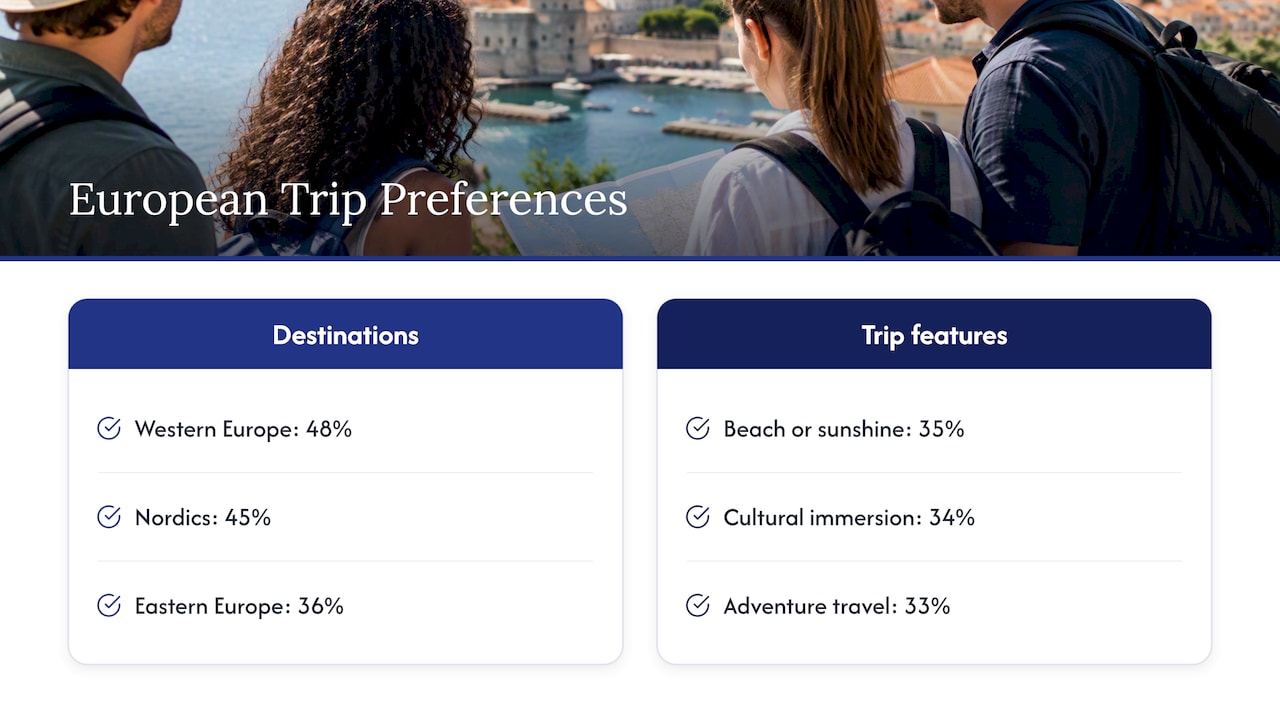
Those numbers are close together, which tells you something practical: there is no single winning feature. The study’s own reading is that desirable destinations balance relaxation with adventure and offer varied experiences. That is a design brief. Pick a base with range, then let participants choose between a few options rather than marching everyone through the same schedule.
Note that this survey covers European attendees. If your qualifiers are based in the United States, a first trip to Europe often carries extra pull, so cultural and food-led programs tend to land well. Treat that as a hypothesis to test with a short poll of your own team.
Incentive trip ideas by reward goal
| Reward goal | Idea | Where it works well |
|---|---|---|
| Indulgence and taste | Food and wine routes with producer lunches | Piedmont, Aosta Valley, Andalusia |
| Culture and discovery | Private guided history and architecture days | Lisbon, Berlin, Paris |
| Adventure | Alpine hikes, cycling, water activities | Aosta Valley, the Nordics |
| Switching off | Beach, sun and spa time with one headline event | Portugal, southern Spain |
| Recognition | Gala dinner in a historic setting | Any capital with a landmark venue |
Food and wine in Italy
For teams that love to eat, Italy is the easiest story to tell. Italy’s official tourism site describes food and wine routes through vineyards and historic villages that you can do on foot or by bicycle, with tastings of local wines and delicacies. That format scales nicely: a small top-performer group can walk and taste, while a larger one can split into cycling and walking tracks.
In the Aosta Valley, the tourism board highlights guided tastings with winemakers, vineyard walks and lunches or dinners with producers, alongside castle visits, Alpine hikes and a thermal-spa experience. It is a good example of one region covering several motivations at once: culture, nature and relaxation, all within a short transfer.
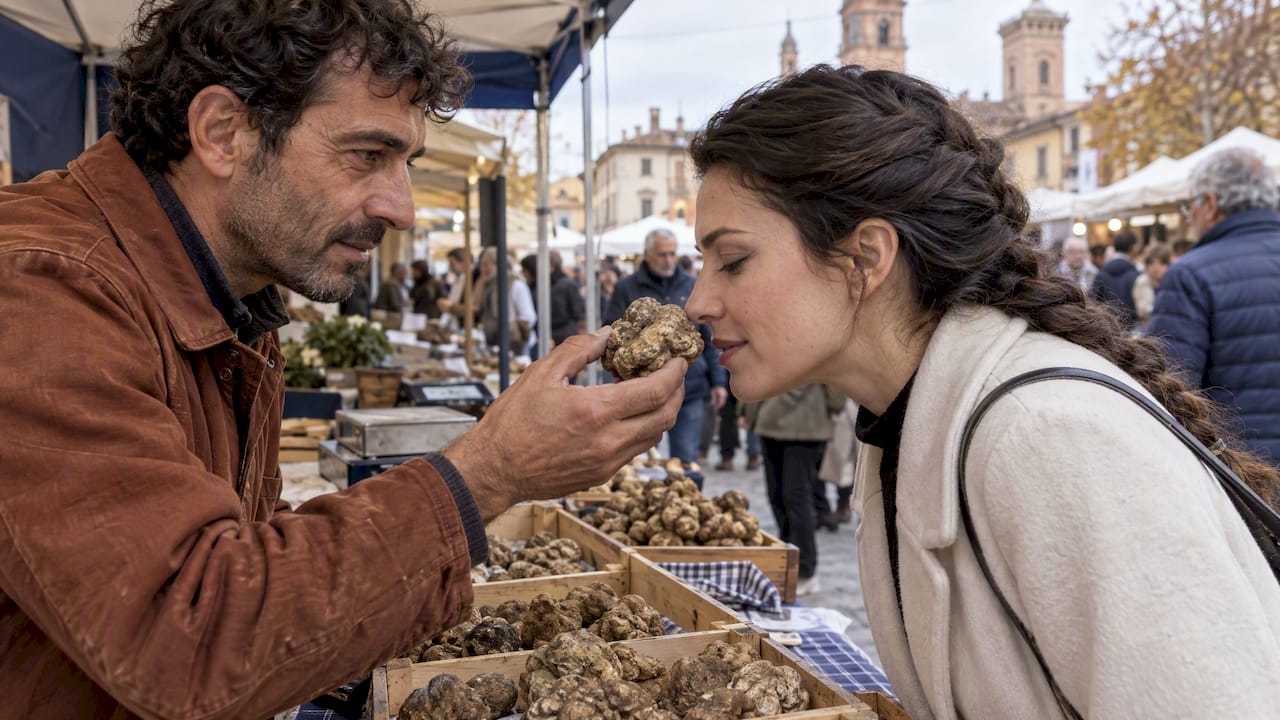
If your program can run in autumn, Piedmont’s Alba White Truffle Fair is a strong anchor. The official page describes truffle-market sensory evaluations, cooking shows, unusual dinners and wine tastings. The fair runs each autumn, so confirm the current calendar on that page before you commit dates.
Spain: sunrise over the vineyards
Spain’s official meetings guide notes that incentive programs can combine museums, nightlife, beaches, national parks, gastronomy and open-air sports, which is why it suits mixed groups where tastes differ.
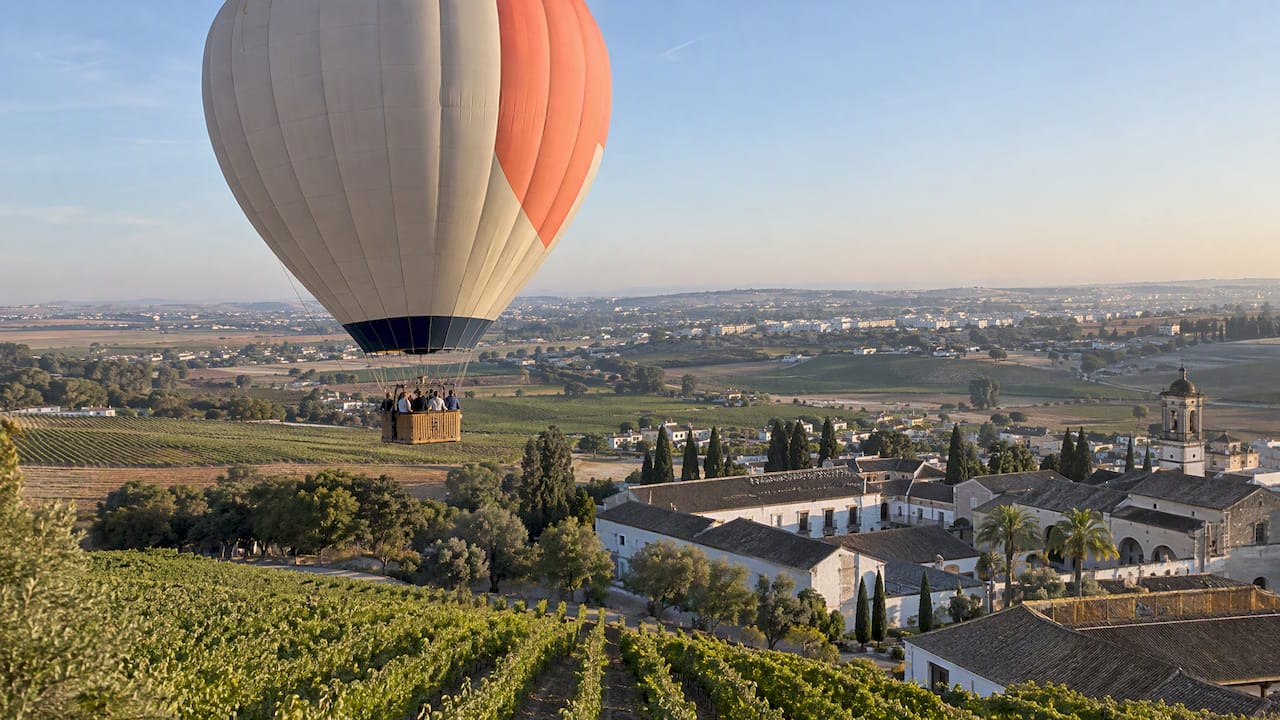
One memorable headline experience is the hot-air balloon flight over Jerez: a sunrise flight over vineyards, historic wineries and stud farms, finished with a local breakfast and cava. The listed group size is 6 to 10 people per balloon, so a larger group needs several balloons or a rotation. That makes it a natural fit for a small top-tier award group, and a reminder to check capacity before you promise anything to a big qualifier list.
Lisbon and Portugal: easy, warm and varied
Lisbon rewards teams that want a city with a relaxed pace. A typical program might open with a private guided morning in Belém, followed by a rooftop lunch over the Baixa rooftops and a winery visit in the Setúbal region, about 40 minutes from the city, a combination described in one Lisbon planning guide.
For the social highlight, the river is hard to beat. A private boat party in Lisbon gives a group a shared celebration on the water with a very different feel from another hotel ballroom, and it works as a closing event after a day of independent exploring.
Germany, Paris and the Nordics
Berlin suits teams that value history, design and nightlife; Paris and its surrounding countryside suit prestige programs with private access and formal dinners; the Nordics suit groups who prefer nature and outdoor activity, and they sit second in the IRF preference ranking. We do not recommend choosing on reputation alone. Ask what your qualifiers will actually do on day two, and whether the venue and local partners can deliver it at your group size.
For a wider, objective-matched shortlist, see our guide to European incentive destinations matched to objective.
When to go
Timing changes cost, comfort and availability. One travel guide places the best shoulder-season windows in Europe at late April through mid-June and September through October, when weather is pleasant and crowds and prices ease compared with summer. That matches our experience planning groups: late spring and early autumn give you better hotel availability and a calmer atmosphere for hosted dinners and outdoor activities.
A few practical rules by destination type:
- Wine regions: harvest season in early autumn is lively but busy, so book hotels and producers early.
- Alpine and Nordic programs: summer and early autumn suit hiking and cycling; winter programs need a different activity plan and more buffer for weather.
- Beach and sun programs: late spring and September avoid the heat and the crowds of high summer.
- Capitals: shoulder months leave more room for private venue access.
Whatever the season, check local public holidays and big events, which can swallow hotel inventory in a city you thought was quiet.
How to balance group activities with free time
The most common mistake in incentive design is filling every hour. People who earned a trip want to feel rewarded, not managed. A company guide to incentive trips recommends mixing recognition, cultural or wellness activities, hosted meals, team building and independent relaxation, and choosing experiences employees would not normally arrange themselves.
Here is a rhythm that works well for a four-night program:
- Arrival day: an easy welcome reception, nothing mandatory before dinner.
- Day two: one signature group experience in the morning (a tasting route, a private tour), free afternoon, hosted dinner.
- Day three: a choice of two or three activity tracks, such as a walking tour, a spa session or a cycling route, then regroup for the recognition evening.
- Departure day: a late breakfast and relaxed transfers.
Keep the recognition moment, the gala or awards dinner, for the evening when everyone is rested and together. Keep the optional tracks small enough that each feels personal. A group of 30 split into three tracks of ten feels more exclusive than one bus of 30.
Travel time, group size and entry rules
For a U.S. group, a flight into a major European hub plus a short transfer is far easier than a chain of connections. Favor destinations with direct service from your main departure cities, and plan arrival so nobody loses the first day to fatigue.
Group size shapes the venue list. Boutique hotels and small producers suit groups of under 20. Larger groups need properties with space for private dining, plus enough coaches and guides to avoid long waits.
Entry rules are changing, so confirm them early. According to the European Commission, the Entry/Exit System has been fully operational since April 10, 2026 for non-EU nationals visiting the 29 Schengen countries, with biometric data collected at external borders. The same page says ETIAS, the travel authorization for visa-exempt travelers including U.S. citizens, is scheduled to launch in the last quarter of 2026 and will be required before travel to 30 European countries. Check the official page for the current launch status, and build extra time into your arrival plan for border queues.
If you are weighing a European program against a trip closer to home, our comparison of domestic versus international incentive travel lays out the trade-offs.
Our perspective: design the reward, then choose the place
After 35 years of building high-end journeys, we see the same pattern: the trips people talk about for years are not the ones with the most famous address. They are the ones where someone clearly thought about the people on the trip. That means knowing who your top performers are, what they would never book for themselves, and which on-the-ground partners can open the right door at the right hour.
We start with the objective, whether that is recognizing a sales team, rewarding a single standout employee or hosting key clients, and then work backward to destination, hotel and timing. We prefer a small number of memorable moments with room to breathe between them over a packed schedule. Because we work on commission from suppliers rather than charging service fees, our advice is not tied to selling you a longer program, and our price match guarantee means you do not need to shop around to feel confident.
— tammylevent@gmail.com
Plan your European incentive program with Elite Travel
If you have a destination in mind, or only a goal and a group size, we can design the whole program: hotels, private experiences, transfers and 24/7 support while your team is on the ground. See our incentive travel planning page, or explore our luxury vacation packages to get a feel for the level of service. For group-specific needs, our business group incentive travel page is the best place to start.
FAQ
What is the best European destination for an incentive trip?
There is no single best one. Western Europe and the Nordics lead attendee preference in the IRF’s 2025 research, so Portugal, Italy, Spain, Germany and France are all strong. Choose by reward goal: food and wine, culture, adventure or relaxation.
How long should a European incentive trip be?
Four to five nights is a common sweet spot for U.S. groups, because the first and last days are largely travel. That leaves two or three full days for experiences, with free time built in. Shorter trips can work for smaller or regional teams.
When is the best time of year to go?
Late April through mid-June and September through October usually give the best balance of weather, availability and crowds. Peak summer brings higher prices and busier venues. Always check local events before fixing dates.
Do U.S. travelers need anything new to enter Europe?
The Entry/Exit System is already operating at Schengen external borders, and ETIAS is scheduled to launch in the last quarter of 2026. Check the European Commission’s travel information for the current status before you finalize your arrival plans.
Sources
- 2025 European Attendee Preferences for Incentive Travel, Incentive Research Foundation
- Food and wine in Italy, Italia.it
- Enotour in Valle d’Aosta, Italia.it
- Alba White Truffle Fair, Italia.it
- Spain meetings guide, Spain.info
- Hot air balloon flight over Jerez, Spain.info
- Main differences between the EES and ETIAS, European Commission
- Best shoulder season destinations in Europe, SmarterTravel
- The complete guide for incentive trips for employees, Perk
- Corporate retreat and incentive trip in Lisbon
