


For most of sub-Saharan Africa, the best time to go on safari is the dry season, roughly June through October, when thin vegetation and shrinking water sources make animals easier to find. But “best” shifts with the country, the animals you most want to see and how much you value quiet camps and lower rates. A trip built around the Great Migration, the Okavango Delta or a first-time Kruger stay each has its own ideal window, and we design every itinerary around yours.
TL;DR
- Dry season (about June to October in East Africa and much of southern Africa) is the classic choice for easy, concentrated game viewing.
- The Great Migration is in the northern Serengeti and Maasai Mara from about July to October, while calving in the southern Serengeti peaks around February.
- Botswana’s busiest months are June to September, and March to May brings strong game viewing at gentler prices.
- Green season, outside the peak, can cut overall safari costs by 20 to 40 percent according to one Tanzanian lodge founder, and it is the best time for migratory birds.
- Seasonal patterns are typical, not guaranteed, so the right month is the one matched to your priorities, your school calendar and how far ahead you book.
Table of Contents
- Why the season matters so much on safari
- East Africa: Kenya and Tanzania
- Southern Africa: South Africa, Botswana, Zimbabwe
- Month-by-month planner
- Cheapest time for a safari, and what the low season offers
- How to choose your month
- Let us plan the right season for you
- FAQ
- Sources
Why the season matters so much on safari
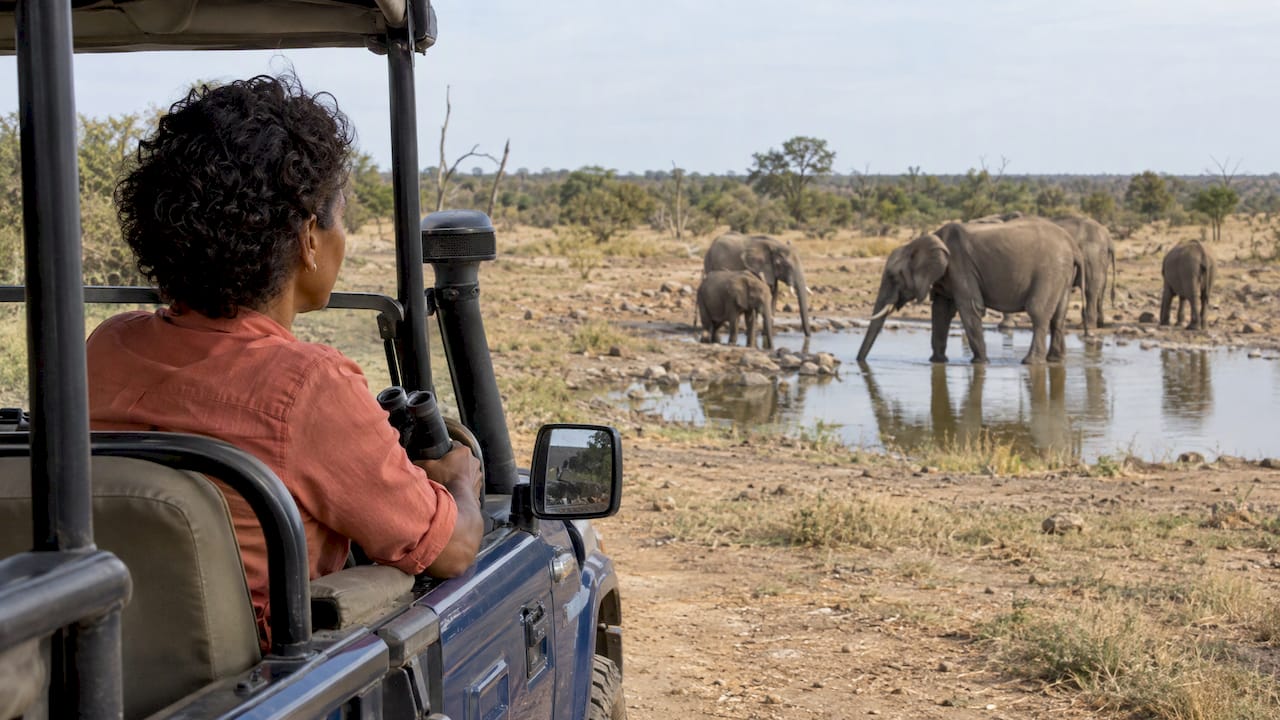
Safari wildlife follows water and food. In the dry months, grass thins out, rivers and pans shrink and animals gather around the water that remains. A wildlife photographer interviewed by The Points Guy explains that scarce water pulls animals to the same waterholes, which lets travelers see a far greater variety of species in one sitting. He recommends the dry season, typically July through October, for South Africa.
The wet or green season works differently. Landscapes turn lush, young animals arrive and migratory birds fill the skies, but dense growth and muddy tracks can make it harder to spot game. Some camps close altogether when roads flood.
Two things sit on top of the weather. The first is the calendar of the Northern Hemisphere: AFAR notes that South Africa’s July to September peak in the Lowveld and Kruger is driven as much by summer holidays as by climate. The second is lodge capacity. Small camps have a handful of tents, so the most popular weeks sell out far in advance.
East Africa: Kenya and Tanzania
East Africa has two rainy periods rather than one long wet season, which is why timing here is more nuanced than “summer or winter”.
The Great Migration
AFAR reports that July to October is peak season in the northern Serengeti and the Maasai Mara, when millions of wildebeest, zebra and gazelle move through. By November the herds and many visitors have moved on. If dramatic river crossings are your dream, this is the window, and it is also the busiest and most expensive.
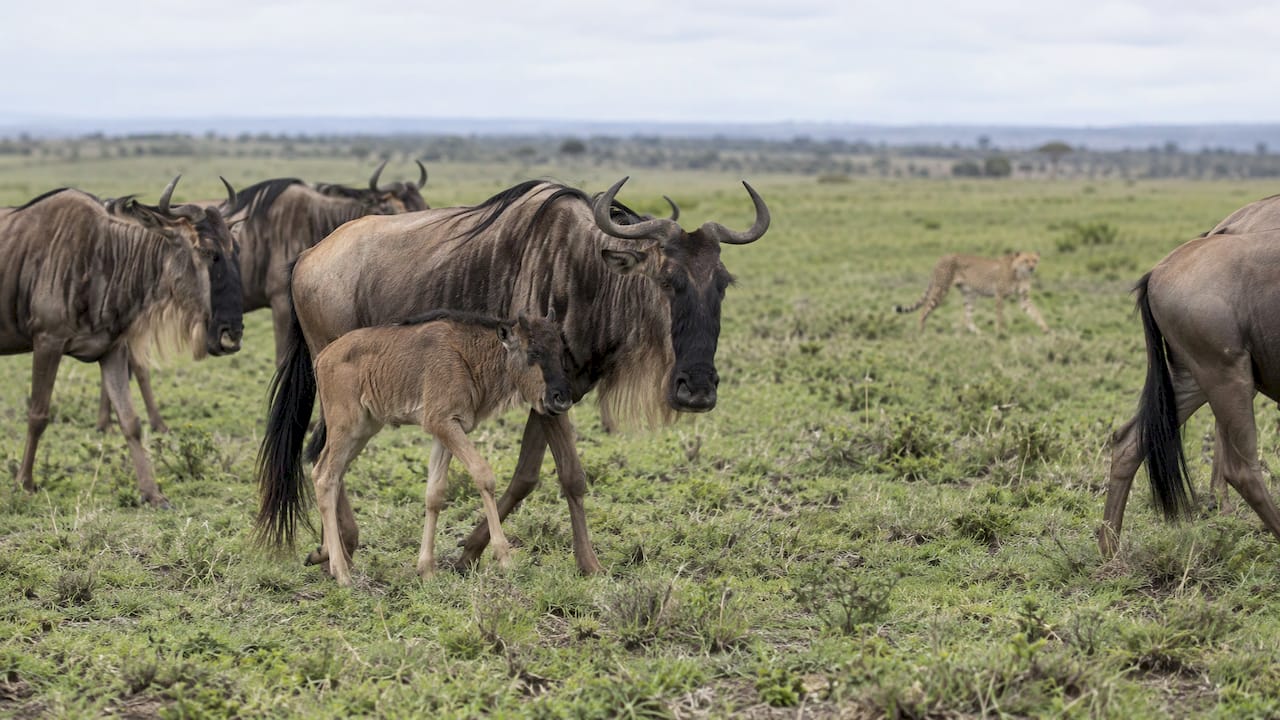
For a different kind of drama, consider the calving season. Forbes reports that travel experts name February as the best time to see the Great Migration: more than 500,000 wildebeest calves are born within a few weeks in the southern Serengeti, predators follow, and visitor numbers and prices are at their lowest in January and February. It suits travelers who want lions, leopards and cheetahs hunting, and who prefer fewer vehicles at a sighting.
The months to approach with care
AFAR advises avoiding April and May, when the long rains make game drives difficult. That is the practical reason many itineraries skip those weeks in the Serengeti and Mara, or choose lodges with good all-weather access.
If Kenya is your focus, our Luxury Kenya vacation packages are built around the Maasai Mara and the rest of the country’s safari regions, with the timing set to what you want to see.
Southern Africa: South Africa, Botswana, Zimbabwe
Southern Africa runs on a single dry season, and it falls in the cooler winter months. Lonely Planet’s Southern Africa guide puts the region at its best in the dry season, around April to October, with cold evenings in July and August. From November to March temperatures are warmest and animals disperse as water becomes plentiful.
South Africa
The Lowveld and Kruger area is busiest from July to September. Cold mornings on an open vehicle in July are real, so layers matter more than most first-time visitors expect. The summer months are also when many bird species are at their most active, which suits travelers who care about birding as much as big cats. Because South African school holidays also fill lodges, check dates at home and in South Africa before you commit, as AfricaCompass advises.
Botswana
Botswana rewards travelers who understand its water. AFAR notes that June to September is the busiest season, with the Okavango Delta mid-flood and prices at their highest. March to May offers excellent game viewing with gentler prices. The Makgadikgadi Pans zebra migration in February and March is described as the longest mammal migration in Africa.
The delta flood is counterintuitive: rain falls in the Angolan highlands in summer, and the water takes months to reach the delta, so it is fullest in the middle of the dry season. That is why a June to August stay can pair water-based experiences with dry-land game viewing.
For a South Africa and Botswana pairing, see our South Africa, Cape Town and Botswana vacation packages, including the 6-day Botswana itinerary.
Zimbabwe and Victoria Falls
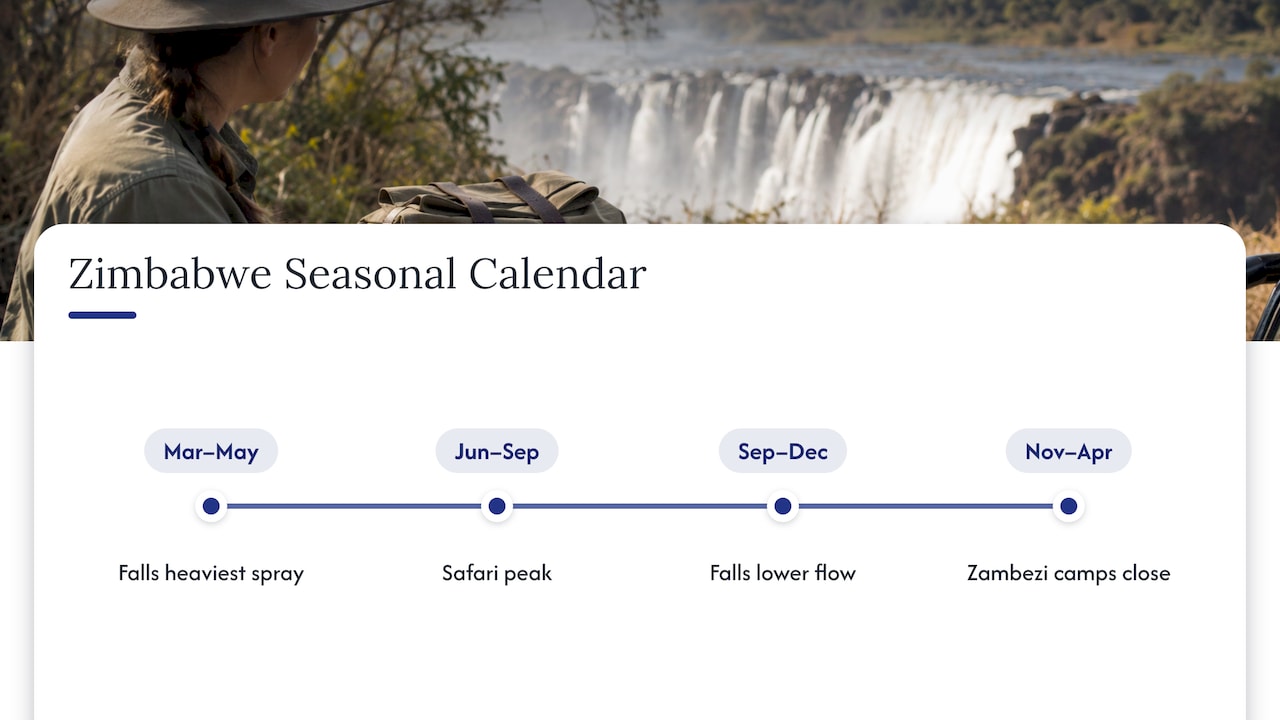
AFAR lists Zimbabwe’s peak as the dry winter, June to September, when sparse vegetation and waterholes make game easiest to spot. It also notes that many Lower Zambezi camps close from November to April when rains make roads impassable. Victoria Falls has its own rhythm: the spray is heaviest around March to May, while flow is lower from September to December.
Month-by-month planner
Use this as a starting point for conversation about your dates, not a rule. The table draws on the sources above.
| When | Where it shines | What to expect |
|---|---|---|
| January to February | Southern Serengeti calving | Predators active, lowest visitor numbers and prices in East Africa |
| February to March | Makgadikgadi Pans, Botswana | Zebra migration, green landscapes |
| March to May | Botswana, Victoria Falls | Good game viewing at gentler prices in Botswana, heaviest spray at the Falls; April and May long rains in Tanzania and Kenya |
| June to September | Okavango Delta, Zimbabwe, Kruger | Dry-season peak, mid-flood delta, cold evenings in southern Africa |
| July to October | Northern Serengeti and Maasai Mara | Great Migration season |
| November to March | Southern Africa | Warmest weather, dispersed animals, birdlife |
Cheapest time for a safari, and what the low season offers
Price follows demand, and demand follows the dry season and school holidays. Hagai Zvulun, founder of Tanzania’s Entara Lodges and Camps, told AFAR that during the green season prices drop significantly and travelers can save 20 to 40 percent on overall safari costs by booking outside peak season.
The quiet months bring their own rewards. Gina Ferguson of safari specialist Roar Africa told AFAR that migratory bird movement is a major low-season highlight, with many species, including the endangered lesser flamingo, arriving in East Africa. Add the calving season and the shoulder months, and the low season can deliver some of the most memorable wildlife of the year with fewer vehicles around you.
Shoulder months are a sweet spot for many travelers. AfricaCompass calls June, early November and February good compromises, and notes that July and August lodges are often booked a year ahead. To see how all of this translates into dollars, read what a luxury safari really costs in 2026 and what U.S. travelers really pay for an African safari.
Lonely Planet also gives general southern Africa figures: park entry fees of US$20 to 50 a day, and tented camps or lodges from US$100 to US$5,000 a night, which shows how wide the range is before you choose a camp style.
How to choose your month
Start with the one thing you cannot miss, then work outward.
- Name the headline experience. River crossings point to July through October. Newborn animals and predators point to February. A flooded delta points to June through August. Birds point to the green season.
- Match it to your calendar. Northern Hemisphere summer holidays and South African school breaks fill camps. If your dates are fixed, choose the country that suits them rather than forcing the country you first imagined.
- Decide your comfort threshold. Cold dawn drives in July suit some travelers and not others. Rain in April can mean muddy roads but green views.
- Book early for peak months. Small camps sell out up to a year ahead in July and August, so build your plan around availability.
- Treat seasons as patterns. Climate is shifting, and rains can arrive early, late or not at all, according to AfricaCompass, so confirm park opening dates with the park authority before finalizing details.
Honeymooners face an extra set of choices around romance, privacy and pacing. Our safari honeymoon planning guide walks a couple through it step by step.
Our perspective
After 35 years designing high-end journeys, we have learned that guests rarely regret choosing a trip around the experience they care about most, and often regret choosing a month because a website called it the best. A safari is not one product. The same week can be spectacular in Botswana and wet in the Serengeti, which is why we begin with what you want to see and only then fix the dates.
This is where our approach earns its keep. We know the destinations and the on-the-ground partners, and we design each itinerary one-on-one, with concierge-level attention from the first conversation until you are home. We are open 24/7, because a delayed flight or a change in weather does not wait for office hours.
We also charge no service fees and offer a price match guarantee, so you can book the camps and timing you want with confidence. If you want to travel in peak migration season, we plan early. If you want the quieter months, we show you what they do best.
tammylevent@gmail.com
Let us plan the right season for you
If you already know what you want to see, we can match it to the right country, camps and month. Our team designs customized luxury safaris across Africa, from Kenya to South Africa and Botswana, as part of our luxury vacation packages, and our Africa travel page is the place to begin.
Tell us your dates, who is traveling and the moments you cannot miss, and we will build the itinerary around them.
FAQ
What is the best time for safari?
The classic answer is the dry season, about June to October across much of sub-Saharan Africa, when vegetation is sparse and animals gather at water. The ideal month still depends on where you go: July to October for the Great Migration in the northern Serengeti and Maasai Mara, and June to September for Botswana’s Okavango Delta.
When should I go on safari to avoid crowds?
Choose the shoulder or green season. In East Africa, January and February have the lowest visitor numbers and prices, according to Forbes, and calving brings strong predator action. In Botswana, March to May offers good game viewing without the June to September crowds.
What time of year is cheapest for safari?
Outside the dry-season peak. One Tanzanian lodge founder told AFAR that green-season travelers can save 20 to 40 percent on overall costs. Peak months, especially July and August, carry the highest rates and fill early.
Which months are best avoided in East Africa?
April and May are the long-rains months in Tanzania and Kenya, when game drives become difficult. Many travelers plan around them, or choose camps in regions less affected by rain.
Sources
- Southern Africa Safaris: The Complete Planning Guide, Lonely Planet
- When is The Best Time of the Year to Go on Safari?, AFAR
- February Is The Best Time To See The Great Migration, Forbes
- Everything you need to know about going on safari in Africa, The Points Guy
- Best Time to Visit Africa: Region by Region and Month by Month, AfricaCompass
