



TL;DR:
- Planning a destination wedding takes 12 to 18 months and requires early booking of venues and vendors. It involves managing guest travel, accommodations, legal requirements, and building a balanced itinerary. Hiring a local coordinator ensures smooth coordination and helps avoid last-minute surprises.
A destination wedding is a ceremony and celebration held at a location away from the couple’s home, requiring coordinated travel, legal preparation, and hospitality logistics for both the couple and their guests. Knowing how to plan a destination wedding correctly means starting earlier than you think. The standard planning runway is 12–18 months, which is longer than a local wedding because guests need time to book flights, request time off, and arrange accommodations. This guide walks you through every critical step, from choosing your location to crafting a wedding weekend itinerary that your guests will actually enjoy.
How to plan a destination wedding: location and budget first
Choosing your location is the single decision that shapes every other planning choice. The right destination balances your aesthetic vision, your guests’ travel accessibility, and your total budget. A cliffside ceremony in Santorini carries different costs and logistics than a beach wedding in the Riviera Maya or a vineyard celebration in Tuscany. Knowing your destination wedding style early prevents expensive pivots later.
Factors to weigh when choosing your location:
- Guest travel access: Direct flights and visa-free entry increase attendance. Remote or visa-heavy destinations reduce your guest count.
- Legal complexity: Some countries require residency periods or waiting periods of 6–12 weeks before a legal ceremony. Others allow same-day licenses.
- Venue availability: Popular venues in Europe and the Caribbean book out 18–24 months in advance.
- Seasonal weather: Research shoulder seasons. A venue that looks perfect in june may be hurricane-prone in september.
- All-inclusive versus independent venues: Resort packages bundle catering, decor, and accommodations, but independent venues give you more vendor control.
Set your budget before you fall in love with a venue. Build in a 15% contingency from the start. Destination weddings carry hidden costs: vendor travel fees, import duties on floral arrangements, and currency exchange fluctuations all add up. Couples who skip the contingency fund routinely overspend by the final month.
Pro Tip: Request a detailed cost breakdown from your venue before signing any contract. Ask specifically about corkage fees, overtime charges, and mandatory gratuities, which are often buried in the fine print.
What is the ideal destination wedding checklist and timeline?
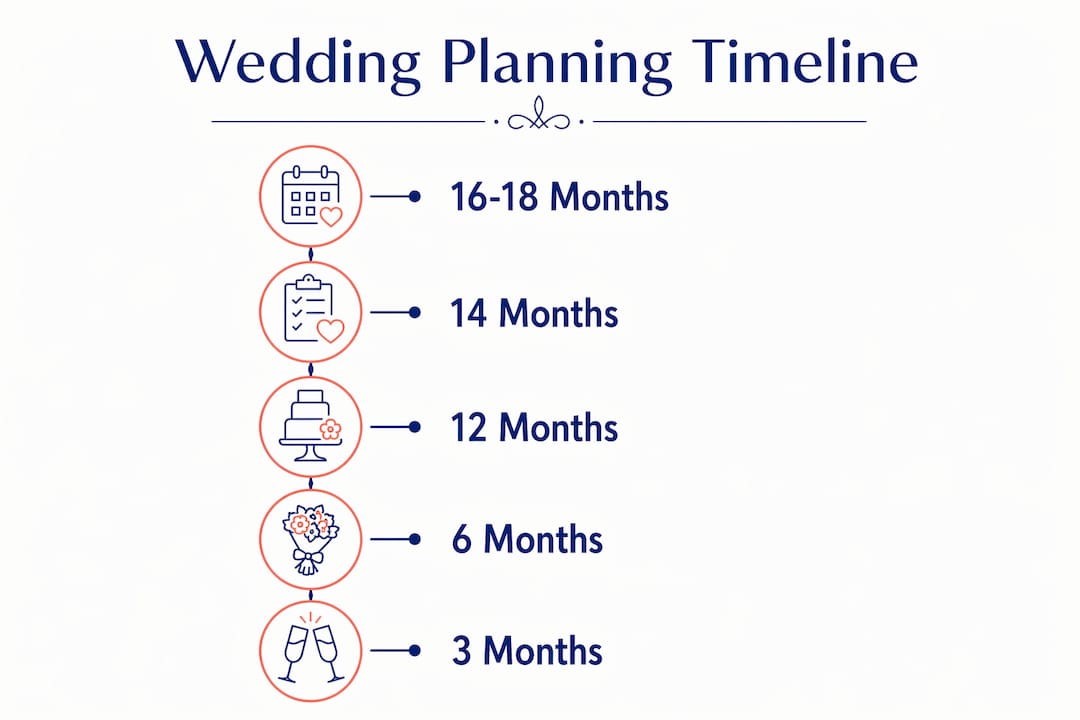
A destination wedding timeline typically runs 12–18 months, with save-the-dates sent 14 months prior, formal invitations at 8 months, and legal paperwork starting 4–6 months before the date. That structure exists because each milestone depends on the one before it. Miss one, and you compress the next.
Month-by-month planning milestones:
- 18 months out: Set your budget, choose your destination, and research venue options. Begin conversations with a destination wedding specialist like Elitetravelgroup.
- 16 months out: Book your venue and hire your local wedding planner or coordinator.
- 14 months out: Send save-the-dates. Early notice correlates directly with better attendance and better flight prices for your guests.
- 12 months out: Book your photographer, florist, and music. Photographers and florists book out quickly and should be secured right after your venue.
- 8 months out: Send formal invitations. Include hotel block details, dress codes, and your wedding website URL. Destination wedding invitations serve a dual purpose: they are not just invites but complete travel information packets.
- 4–6 months out: Start legal paperwork for an on-site ceremony. Residency or waiting periods can extend 6–12 weeks depending on the country.
- 3 months out: Set your RSVP deadline. RSVP deadlines function as catering deadlines, giving vendors enough lead time for menu selections and seating charts.
- 6–8 weeks out: Confirm all vendor contracts, finalize your weekend itinerary, and send a detailed schedule to guests.
| Milestone | Timing |
|---|---|
| Venue and planner booked | 16–18 months before |
| Save-the-dates sent | 14 months before |
| Photographer, florist, music booked | 12 months before |
| Formal invitations sent | 8 months before |
| Legal paperwork started | 4–6 months before |
| RSVP deadline | 3 months before |
Pro Tip: Create a shared planning document with your partner and planner that tracks every deadline, vendor contact, and payment due date. A missed deposit can cost you a vendor slot that took months to secure.
How do you manage guest travel and accommodations?
Guest logistics are the most underestimated part of a destination wedding. Secure hotel room blocks 9–12 months before the wedding with clear communication on booking links and cut-off dates, which typically release rooms 30–45 days before the event. Rooms held in a block are usually available at a negotiated rate, but only until that cut-off date. Guests who miss the deadline pay full price or lose access entirely.

Your wedding website is the most effective tool for reducing guest confusion. Wedding websites become the central hub for travel details, room block codes, dress codes, and weekend schedules. Guests reference them repeatedly, especially as the date approaches. A well-organized website cuts down on repetitive questions and keeps everyone on the same page.
Guest logistics checklist:
- Include the hotel block booking code and cut-off date in every invitation and on your website.
- List two or three accommodation options at different price points to accommodate guests with varying budgets.
- Add a travel FAQ page to your wedding website covering airport transfers, local transportation, and tipping customs.
- Collect travel arrival and departure details alongside RSVPs. Knowing when guests arrive helps you plan welcome events and airport shuttle schedules.
- Send a reminder email 6 weeks before the hotel block cut-off date.
Pro Tip: When negotiating your hotel room block, ask about minimum room commitments and attrition clauses. If fewer guests book than your minimum, you may owe the hotel for unbooked rooms. Negotiate that number conservatively.
Understanding wedding travel management as a discipline, not just a task, separates couples who feel in control from those who spend the final weeks firefighting logistics.
What legal requirements must you handle for a destination wedding?
Legal requirements vary more than most couples expect. Start document collection 4–6 months ahead for on-site ceremonies, since residency or waiting periods can extend 6–12 weeks depending on the country. France requires a 40-day residency period. Italy requires apostille-certified documents. Mexico requires blood tests. Each country has its own rules, and none of them wait for you to catch up.
Key legal steps to complete:
- Research the specific marriage license requirements for your chosen country at least 12 months out.
- Verify that all guests’ passports have at least 6 months of validity after the wedding date. Inadequate validity can result in denied entry at the border.
- Decide early whether you want a fully legal on-site ceremony or a symbolic ceremony abroad with a legal signing at home before or after the trip.
- Work with your local wedding planner or the nearest consulate to confirm document requirements and translation needs.
- Keep certified copies of all documents in both digital and physical form.
The symbolic ceremony option is increasingly popular. Couples complete the legal paperwork at their local courthouse, then hold the full ceremony abroad without the administrative burden of foreign marriage law. This approach works well for destinations with complex legal requirements.
How do you build a destination wedding weekend itinerary?
A typical destination wedding weekend runs 2–4 days and includes a welcome event, the ceremony and reception, and a farewell brunch with optional excursions. That structure works because it respects your guests’ vacation time without over-scheduling them. Guests who feel exhausted by day two attend fewer events and enjoy them less.
A balanced weekend flow looks like this:
- Day 1 (arrival day): Welcome cocktail reception or casual dinner. Keep it low-key. Guests are tired from travel and need time to settle in.
- Day 2 (ceremony day): The main event. Ceremony, cocktail hour, and reception. This is the one day where a full schedule is expected.
- Day 3 (farewell day): Farewell brunch. Keep it relaxed and optional for guests with early flights.
- Optional additions: Guided excursions, spa days, or group activities work well as optional add-ons, not mandatory events.
For welcome dinners, working with a hospitality partner who understands festive meal planning for events helps you create menus that reflect the local culture without alienating guests with unfamiliar ingredients. A welcome dinner that features local cuisine with familiar options sets the tone for the whole weekend.
Build buffer time into every day. Vendor meetings, final fittings, and unexpected delays all eat into your schedule. Couples who plan every hour tightly end up stressed. Couples who build in 30-minute buffers between events arrive at their own ceremony calm.
Key Takeaways
A successful destination wedding requires a 12–18 month planning timeline, early vendor and venue bookings, clear guest communications, and proactive legal research to avoid last-minute surprises.
| Point | Details |
|---|---|
| Start 12–18 months out | Book your venue and planner first, then vendors, to secure your preferred options. |
| Send save-the-dates early | Sending save-the-dates 14 months out gives guests time to book flights at better prices. |
| Secure hotel blocks early | Book room blocks 9–12 months ahead and communicate cut-off dates clearly to guests. |
| Research legal requirements | Start legal paperwork 4–6 months before to account for residency or waiting periods. |
| Keep the weekend balanced | A 2–4 day itinerary with a welcome event, ceremony, and farewell brunch respects guest energy. |
What I’ve learned after planning dozens of destination weddings
Most couples underestimate how much of destination wedding planning is actually travel management. You are not just planning a wedding. You are coordinating an international group trip for people with different budgets, travel experience levels, and tolerance for logistics. That realization changes how you prioritize your time.
The biggest mistake I see is couples who spend months perfecting floral arrangements while ignoring their hotel block cut-off date. Vendors can be replaced. A guest who could not find a room at your rate and booked elsewhere, or worse, did not come at all, cannot be undone. Guest logistics deserve the same attention as the ceremony itself.
The second mistake is treating the legal requirements as an afterthought. I have seen couples arrive in Italy with documents that were not apostille-certified, requiring a last-minute scramble with a local notary. Research the legal requirements of your specific destination at least a year out, not six months out. The six-month window is for executing the paperwork, not discovering what you need.
The couples who have the best experiences are the ones who hire a professional coordinator with real on-the-ground experience in their chosen destination. A local planner in Tuscany knows which vendors are reliable, which venues flood in april, and which caterers can handle a 60-person welcome dinner without a hiccup. That knowledge is not available in any checklist. It comes from years of working in a specific place.
Finally, build a buffer day into your own arrival schedule. Arriving two days before your wedding gives you time to meet vendors, handle any surprises, and actually sleep before the ceremony. Couples who arrive the day before their wedding are running on adrenaline by the time they say their vows.
Elitetravelgroup’s destination wedding services
Planning a destination wedding is one of the most rewarding things you can do. It is also one of the most logistically complex. Elitetravelgroup has spent 35 years coordinating luxury destination weddings across Europe, the Caribbean, and beyond, handling everything from venue sourcing and vendor management to guest travel coordination and legal paperwork support.

Elitetravelgroup charges no service fees and offers a price match guarantee, so you get expert support without paying a premium for it. Whether you are planning an intimate ceremony in the French countryside or a full weekend celebration on the Amalfi Coast, the team at Elitetravelgroup builds the itinerary around your vision and manages the details so you do not have to. Couples who want to see what a professionally planned destination wedding looks like can explore Europe vacation packages or connect with the team directly for a custom consultation.
FAQ
How far in advance should you plan a destination wedding?
The standard planning timeline for a destination wedding is 12–18 months. This runway accounts for venue availability, guest travel planning, and legal document processing.
When should save-the-dates go out for a destination wedding?
Send save-the-dates at least 12–14 months before the wedding date. Early notice gives guests time to book flights at better prices and request time off work.
What legal documents do you need for a destination wedding?
Requirements vary by country, but most require a valid passport with at least 6 months of validity after the wedding date, a birth certificate, and proof of single status. Start collecting documents 4–6 months before the ceremony.
Do you need a local wedding planner for a destination wedding?
A local coordinator with on-the-ground experience in your chosen destination is strongly recommended. They know reliable vendors, venue-specific logistics, and local legal requirements that no checklist can fully capture.
What is the difference between a legal and symbolic destination wedding ceremony?
A legal ceremony is officially registered in the destination country and recognized internationally. A symbolic ceremony is a celebration abroad with no legal standing, typically paired with a legal signing at home before or after the trip.
Recommended
- What Is a Destination Wedding? Your 2026 Guide
- Types of Destination Weddings: Your Planning Guide
- How to plan a luxury honeymoon: expert guide 2026
- Luxury honeymoon planning: expert tips for 2026
