



TL;DR:
- A destination wedding cruise combines ceremony, travel, and accommodations in one experience, simplifying planning for couples and guests. Most packages include a ceremony, officiant, basic flowers, a cake, and photography, but legal marriage requires separate arrangements before sailing. This format suits adventurous, flexible travelers but presents legal complexities and limitations in customizing the onboard celebration.
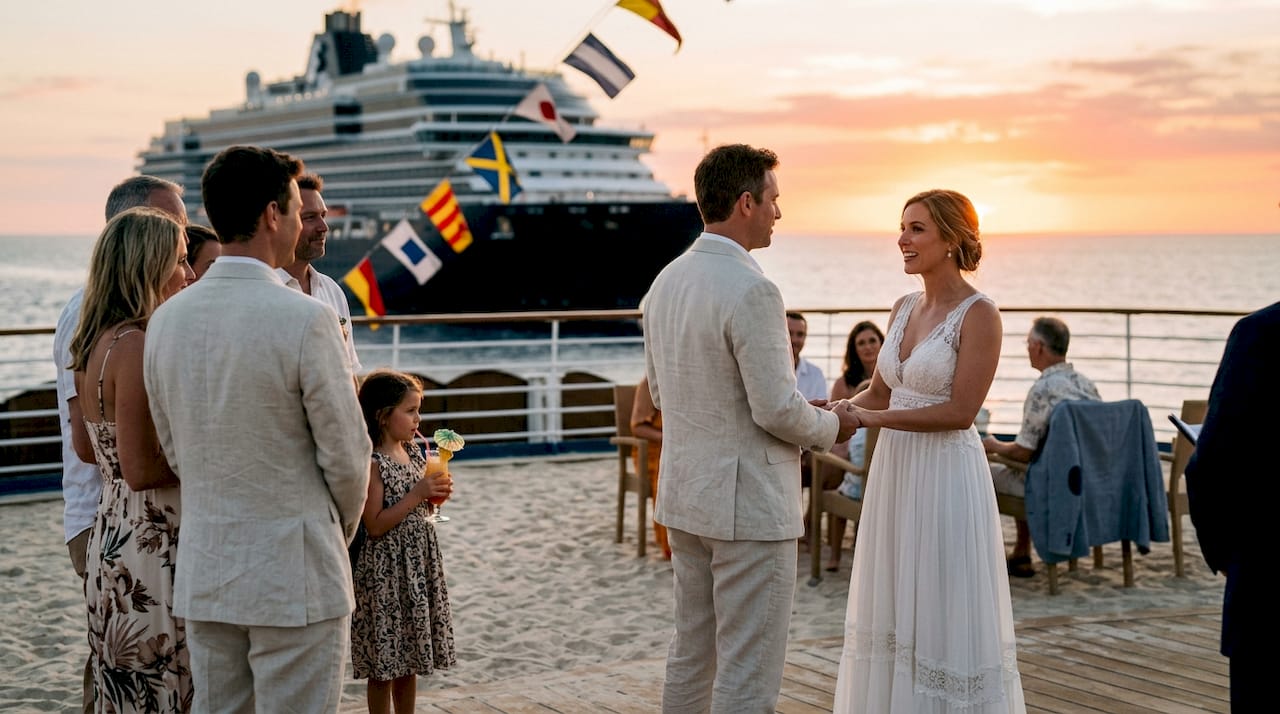
A destination wedding cruise is defined as a wedding celebration held aboard a cruise ship, combining the ceremony, reception, honeymoon, and guest travel into one integrated experience. Unlike a traditional venue booking, a cruise wedding packages the location, accommodations, and entertainment under a single contract. Couples increasingly choose this format because it removes the need to coordinate multiple vendors across multiple cities. Elitetravelgroup has planned dozens of these celebrations and consistently finds that the combined logistics of ceremony, reception, and honeymoon in one environment reduce planning stress more than any other wedding format. For couples who want adventure, intimacy, and a celebration their guests will remember for decades, a wedding at sea delivers all three.
What is a destination wedding cruise and what do packages include?
A destination wedding cruise gives couples two ceremony options: symbolic and legally binding. Most shipboard ceremonies are symbolic, meaning the legal marriage must be arranged separately through a licensed officiant on land. Legal ceremonies require obtaining a marriage license in the port of departure or a destination port, and couples must comply with local laws before sailing. This distinction surprises many couples, so clarifying it early prevents last-minute paperwork problems.
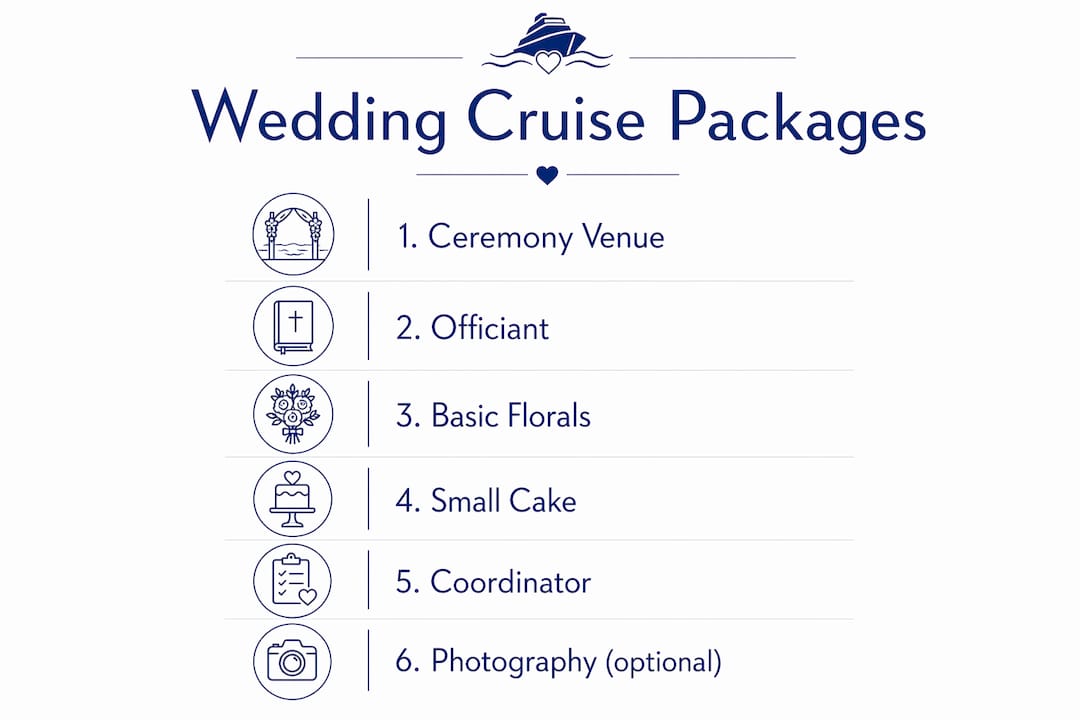
Standard wedding packages typically bundle the following elements:
- Ceremony venue (deck, chapel, or private lounge)
- Licensed officiant or celebrant
- Basic floral arrangements and bouquet
- A small wedding cake
- Photography coverage for the ceremony
- Dedicated wedding coordinator for the day
Common exclusions include upgraded photography, videography, live music, additional floral arrangements, and specialty catering beyond the standard cake. Guests pay their own flights, daily gratuities, and shore excursions separately. Communicating these exclusions clearly to guests before they book protects everyone’s expectations.
Itinerary length also shapes the experience. Short weekend sails of 3–4 days suit smaller guest lists and tighter budgets. Longer voyages of 7–10 days across multiple ports suit couples who want the wedding to double as a group vacation. The Caribbean, Mediterranean, and Alaska are the most popular routing choices for cruise weddings, each offering dramatically different scenery and port experiences.
Pro Tip: Ask the cruise line for a full written list of package inclusions and exclusions before signing. What is verbally described as “photography included” often means 30 minutes of coverage, not a full-day photographer.
How to plan a wedding cruise: logistics, timelines, and guest management
Planning a wedding cruise follows a tighter timeline than most couples expect. Book the sailing and secure group blocks 6–12 months before the departure date to lock in cabin availability and group pricing. Waiting beyond that window risks losing the staterooms your guests need, especially on popular itineraries during peak season.
A practical planning sequence looks like this:
- Choose the itinerary and sailing date. Select a route and length that fits your guest list’s travel comfort and budget. A 4–7 day sailing balances celebration time with guest convenience.
- Confirm the wedding package. Review inclusions, exclusions, and upgrade options with the cruise line’s wedding department before paying a deposit.
- Set up a group block. Reserve a block of staterooms at a negotiated group rate. This is the single most important logistical step for guest management.
- Assign a travel agent to manage guest bookings. Delegating guest reservations to a travel agent removes the couple from the middle of individual payment disputes and cabin changes.
- Handle legal paperwork. Research marriage license requirements for your port of departure at least 3 months out. Requirements vary by country and state.
- Communicate costs to guests. Send a clear breakdown of what the group rate covers and what guests pay independently, including gratuities and excursions.
- Plan anchor events. Schedule one or two group activities, such as a shore excursion or a group dinner, and leave the rest of the time unstructured for guests to enjoy freely.
Weather and port timing also affect the ceremony location. Cruise weddings move locations if a port is missed due to weather or scheduling changes. Couples who build flexibility into their expectations handle these moments far better than those who are fixed on a specific backdrop.
Pro Tip: Never act as the travel agent for your own guests. One missed payment or cabin dispute will consume your planning energy for weeks. Let a professional handle it.
What does a destination wedding cruise cost?
Cruise wedding packages start at approximately $2,500 for basic ceremonies with minimal customization. Packages range up to $10,000 or more depending on guest count, itinerary length, and the depth of inclusions. The $5,000–$10,000 range is most common for couples who want a complete, polished celebration rather than a bare-bones ceremony.
| Cost category | Typical range | Notes |
|---|---|---|
| Wedding package | $2,500–$10,000+ | Ceremony, coordinator, basic florals, cake |
| Guest cabin (per person) | Varies by ship and itinerary | Covered by each guest individually |
| Flights | Varies by origin | Not included in any package |
| Daily gratuities | $15–$20 per person per day | Guests pay this separately |
| Shore excursions | $50–$300 per person | Optional, paid individually |
| Photography upgrades | $500–$3,000+ | If the base package is insufficient |
Compared to a traditional destination wedding in Europe or the Caribbean, a cruise wedding often costs less per guest because accommodations, meals, and entertainment are bundled into the cruise fare. The couple’s wedding package cost is separate, but guests are not paying for a hotel, restaurant dinners, and separate event tickets. That bundled structure makes the total trip cost more predictable for everyone.
Budget-conscious couples should prioritize which upgrades matter most. Upgraded photography and live music tend to have the highest emotional return. Specialty floral arrangements and custom catering add cost without the same lasting impact.
- Negotiate with the cruise line’s wedding department directly for package upgrades, especially if your group block is large.
- Ask about off-peak sailing dates, which often carry lower package prices and better cabin availability.
- Confirm whether the wedding coordinator fee is included or billed separately.
What are the benefits and drawbacks of a cruise wedding?
The primary benefit of a cruise wedding is consolidated logistics. Ceremony, reception, honeymoon, and guest accommodations all exist in one place, eliminating the shuttling and multi-venue coordination that exhausts couples planning traditional destination weddings. Guests board once and stay in one place while the ship moves to new destinations each day. That structure lets everyone relax and be fully present rather than managing transportation and check-ins.
Additional benefits include:
- Built-in entertainment for guests between events (pools, restaurants, shows, casinos)
- Multi-destination experiences without separate hotel bookings
- Specialized onboard wedding planners who handle day-of coordination
- The honeymoon begins the moment the ship leaves port
The drawbacks are real and worth weighing honestly. Guests with seasickness concerns may find the experience uncomfortable, particularly on open-ocean crossings. Legal paperwork for a binding ceremony adds complexity that a land-based venue does not require. Guests also have less flexibility to extend their trip independently or explore a destination at their own pace, since the ship operates on a fixed schedule.
“A cruise wedding works best when your guest list is made up of travelers who enjoy the ship itself, not just the ports. If your guests are the type who want to spend three days in one city, a cruise may frustrate them. Know your crowd before you book.”
Couples who are best suited for cruise weddings tend to have adventurous guest lists, a preference for consolidated planning, and flexibility about specific ceremony backdrops. Couples who need a fixed, iconic location for their ceremony photos or who have many guests with mobility limitations may find a land-based destination wedding a better fit.
Key takeaways
A destination wedding cruise is the most logistically consolidated wedding format available, combining ceremony, travel, and guest accommodations into one contract.
| Point | Details |
|---|---|
| Symbolic vs. legal ceremony | Most onboard ceremonies are symbolic; legal marriage requires a separate license obtained before sailing. |
| Package pricing | Wedding packages start at $2,500 and commonly reach $5,000–$10,000 for full celebrations. |
| Book 6–12 months out | Securing group blocks early protects cabin availability and locks in group pricing. |
| Delegate guest bookings | Assign a travel agent to manage guest reservations and avoid personal liability for individual payments. |
| Know your guest list | Cruise weddings suit adventurous travelers; guests who prefer extended stays in one place may prefer a land-based format. |
Why I think most couples underestimate the legal side of cruise weddings
After years of working with couples on destination celebrations, the single most common surprise I see is the legal paperwork gap. Couples assume that booking a “wedding package” with a cruise line means they will be legally married when they disembark. That assumption is wrong more often than it should be. Legal marriage at sea is rare, and the requirements vary dramatically depending on the port of departure and the ship’s registry country.
My honest recommendation: treat the onboard ceremony as the celebration and handle the legal marriage separately, either at a courthouse before you sail or at a licensed venue in your home city. This removes all legal uncertainty and lets you focus entirely on the experience aboard the ship. Couples who try to manage both the legal and symbolic elements simultaneously often find the paperwork stress bleeds into the celebration itself.
The other thing I have seen evolve significantly is how couples approach guest experience. The best cruise weddings I have been involved with follow the anchor events model: one or two planned group moments, then freedom. Couples who over-schedule their guests with mandatory group dinners and excursions every day get pushback by day three. Give your guests room to breathe, and they will remember the wedding as a gift rather than an obligation.
Cruise weddings in 2026 are also more personalizable than they were five years ago. Couples are negotiating custom menus, bringing their own photographers aboard, and selecting itineraries specifically for the ports rather than the ship. That shift toward personalization is where the real value lives.
Planning your cruise wedding with Elitetravelgroup
Elitetravelgroup has 35 years of experience designing luxury travel for couples who want their celebration done right. For couples ready to move from concept to confirmed booking, Elitetravelgroup’s concierge team handles every detail: package negotiation, group block management, legal paperwork guidance, and bespoke itinerary design tailored to your guest list and vision.

Elitetravelgroup charges no service fees and offers a price match guarantee, so you book with full confidence. The team is available 24/7, because wedding planning questions do not follow office hours. Whether you are drawn to a Caribbean sailing, a Mediterranean route, or something more remote, Elitetravelgroup connects you with the right ship, the right package, and the right group travel support to make the experience genuinely exceptional.
FAQ
What is the difference between a symbolic and legal cruise wedding?
A symbolic ceremony is a celebration without legal standing. A legal cruise wedding requires a marriage license obtained in the port of departure or destination, following local laws, and is far less common than symbolic ceremonies.
How far in advance should you book a destination wedding cruise?
Book 6–12 months before the sailing date to secure group cabin blocks and preferred package options. Popular itineraries during peak season sell out faster than most couples expect.
What do standard wedding cruise packages typically include?
Standard packages include a ceremony venue, officiant, basic florals, a small cake, and a wedding coordinator. Photography, videography, upgraded catering, and live music are usually excluded and priced separately.
How much does a destination wedding cruise cost?
Wedding packages start at approximately $2,500 for basic ceremonies and reach $10,000 or more for fully customized celebrations. Guest cabin costs, flights, and gratuities are separate expenses paid individually by each guest.
Who is a cruise wedding best suited for?
Couples with adventurous guest lists who value consolidated planning and multi-destination experiences get the most from a cruise wedding. Couples who need a fixed iconic location or have guests with limited mobility may prefer a land-based destination wedding format.
