



TL;DR:
- Family travel safety involves preparing for medical needs, security, and emotional stability before trips. Proper planning, emergency protocols, and safety gear help protect children during transit and stays abroad. Building a written contingency plan and using official resources ensure families handle emergencies effectively.
Family travel safety is defined as the combination of medical preparedness, physical security, and emotional wellbeing strategies that protect children at every stage of a trip. Experienced travelers cite sudden illness or injury as their top travel concern, which means reactive planning is not enough. The families who travel well are the ones who prepare before they leave home. This guide covers the core principles of traveling with children safely, from pre-trip health consultations to building a crisis plan your kids can actually participate in.
What does family travel safety explained mean for parents?
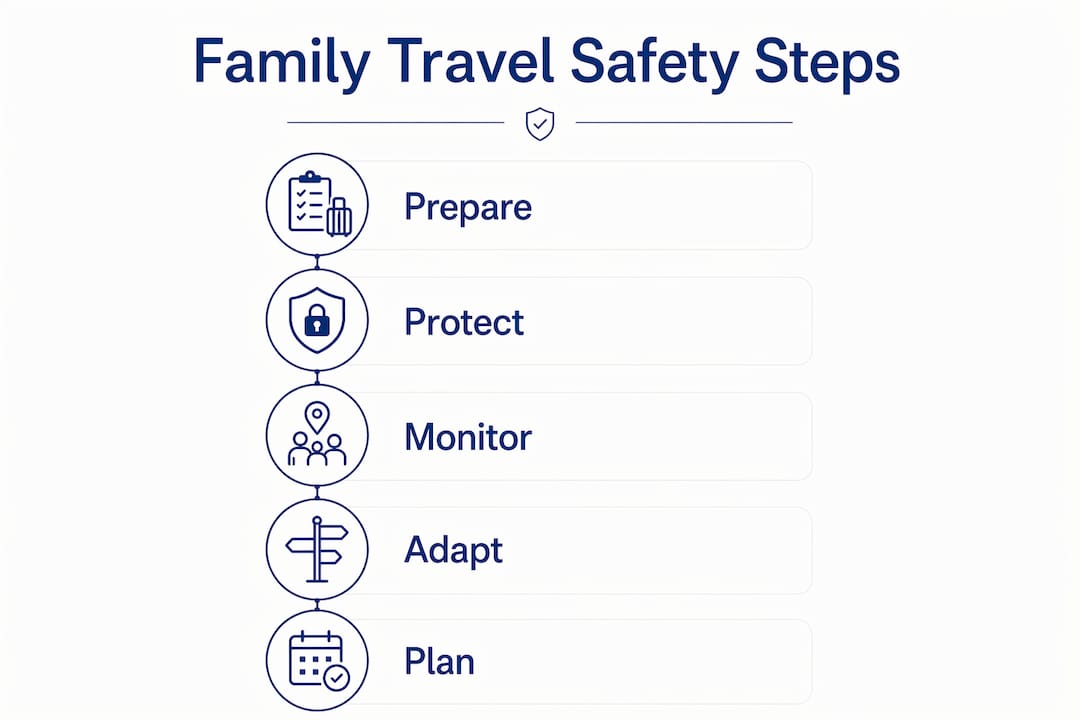
Family travel safety covers three distinct layers: physical protection, health management, and emotional stability. Most parents focus on the first two and underestimate the third. A child who is anxious, overtired, or disoriented is harder to keep safe. Addressing all three layers before you leave is the foundation of every sound safety plan.
The standard industry term for this approach is travel risk management, and pediatric travel medicine specialists apply it the same way corporate security teams do. You assess the destination, identify the risks specific to your children’s ages and health conditions, and build protocols for each scenario. The difference for families is that the protocols need to work for a five-year-old as much as for the adults.
Proactive preparation using official government resources, including the U.S. State Department’s Smart Traveler Enrollment Program (STEP), significantly improves family safety abroad. STEP sends real-time destination alerts and connects you to embassy support. Registering takes five minutes and costs nothing.
What safety preparations must parents complete before the trip?
Pre-trip preparation is where most family travel safety plans succeed or fail. The steps below are not optional extras. They are the baseline.
- Pediatric pre-travel consultation: Schedule this 4–6 weeks before departure, especially for infants or children with chronic conditions. Your pediatrician will update immunizations, prescribe destination-specific medications, and flag any health risks at your destination.
- Travel insurance with medical evacuation: Standard trip cancellation policies are not enough. Choose a policy that covers emergency medical treatment and medical evacuation. Read the fine print on pre-existing conditions before you buy.
- Document organization: Carry physical copies of passports, insurance cards, vaccination records, and prescription information. Store one set in your carry-on and leave a second set with a trusted home contact.
- Home base contact: Designate one person at home who holds copies of all critical documents and knows your full itinerary. This person is your first call if phones fail or wallets are lost.
- Age-appropriate medical kit: Pack children’s pain reliever, antihistamine, oral rehydration salts, bandages, antiseptic wipes, and any prescription medications in original labeled containers.
Pro Tip: Ask your pediatrician for a signed letter listing your children’s medications and diagnoses. This document speeds up treatment at foreign hospitals and clears customs without delays.
For more ideas on preparing for sudden illness or injury during family travel, the family travel planning guide from Elitetravelgroup covers practical steps parents often miss.
How do you keep kids physically safe during transport and at the hotel?
Physical safety during transit is the area with the clearest standards and the most preventable injuries. Follow the guidelines from the FAA and the American Academy of Pediatrics, and you eliminate the most common risks.
On the airplane
The FAA and American Academy of Pediatrics recommend that children under 2 be secured in their own FAA-approved child restraint system (CRS) rather than held on a parent’s lap. Lap-held infants are vulnerable during turbulence because a parent cannot maintain grip under sudden force. The FAA-approved CARES harness is designed specifically for children weighing 22–44 pounds and attaches directly to the aircraft seat. For infants, a rear-facing car seat that carries FAA approval works on the aircraft and in the car. For more on flying with young children, Elitetravelgroup’s guide on traveling with an infant covers seat selection and boarding logistics in detail.
In cars, taxis, and rideshares
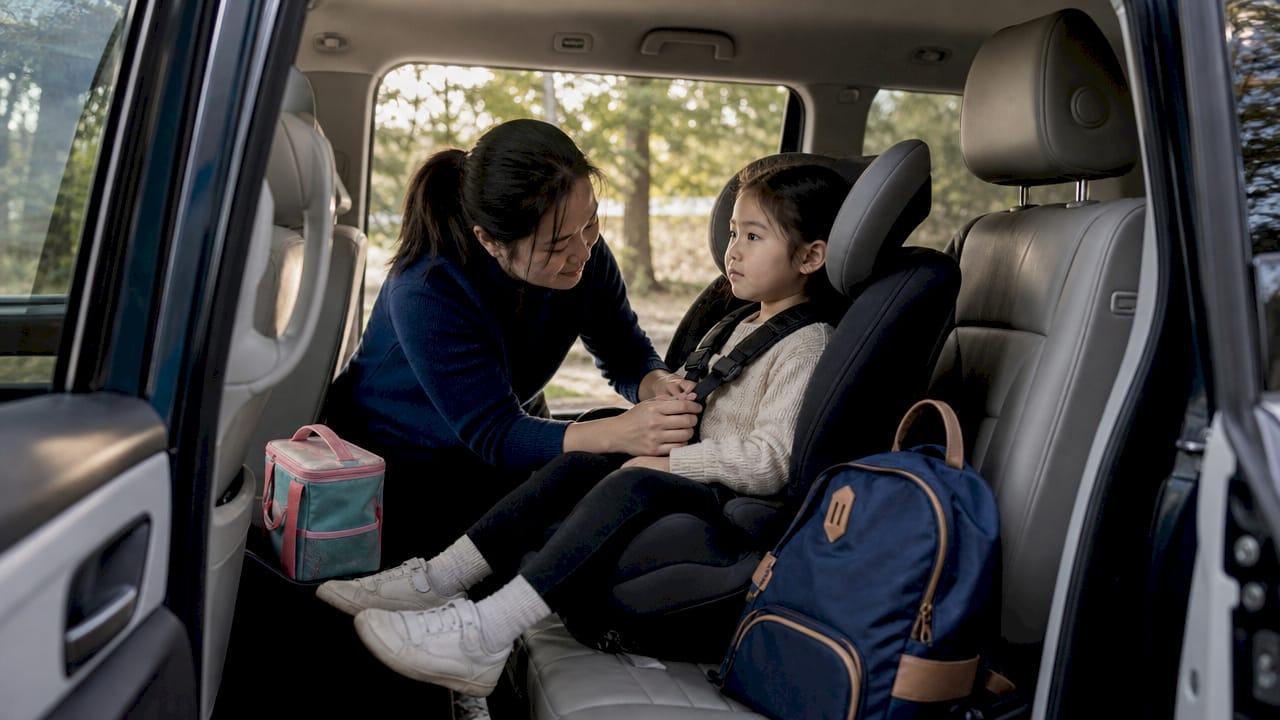
Never assume a taxi or rideshare vehicle will have a car seat. Bring a portable, lightweight car seat for any destination where you will be using ground transportation. Install it yourself and check the angle indicator before every ride.
At the hotel
| Safety Area | Risk | Solution |
|---|---|---|
| Crib safety | Hotel cribs often fail ASTM standards | Bring a portable travel crib that meets ASTM F406 |
| Door security | Toddlers can open standard hotel door handles | Install a secondary high-mounted door lock or door alarm |
| Balcony access | Falls from balconies are a leading child injury abroad | Lock balcony doors and block access with furniture |
| Outlet covers | Exposed outlets at child height | Pack universal outlet covers in your carry-on |
| Window guards | Upper-floor windows without stops | Request a lower floor or ask the hotel to install window stops |
Hotel-provided cribs frequently do not meet current safety standards. Bringing your own portable crib is one of the most underrated safety decisions a parent can make.
Pro Tip: Walk through the hotel room before your children enter. Check the balcony lock, test the crib mattress firmness, and locate the nearest emergency exit. This takes three minutes and removes the most common hazards before your kids find them.
What strategies help families manage health and supervision risks on the road?
Managing safety during the trip itself requires a different mindset than pre-trip preparation. You are making real-time decisions in unfamiliar environments, often while tired.
Maintaining predictable routines for meals and sleep reduces children’s anxiety and keeps their behavior more predictable. A well-rested child is easier to supervise. A hungry child is a distracted one. Protect nap times and mealtimes as much as your itinerary allows.
Teach your children what to do if they get separated from you. Children as young as four can memorize a parent’s phone number. School-aged children can learn to find a uniformed employee, a store cashier, or a family with children and ask for help. Practice this before you travel, not after you arrive.
- ID wristbands: Write your cell number on a waterproof wristband for children under 8. In crowded places like theme parks or markets, this is faster than any app.
- GPS trackers: Clip-on GPS devices give parents real-time location data in large venues or unfamiliar cities. They work best as a backup to supervision, not a replacement for it.
- Handwashing discipline: Wash hands before every meal and after every public transit ride. Carry alcohol-based hand sanitizer for situations where soap and water are not available.
- Early medical intervention: Do not wait to see if a fever resolves on its own. Contact your travel insurance’s 24/7 assistance line at the first sign of serious illness. Early contact activates direct billing and connects you to pre-vetted local providers.
Pro Tip: Take a photo of your children each morning before you leave the hotel. If they go missing in a crowd, you have a current image of exactly what they are wearing.
Safety strategies should shift as children age. Toddlers need physical barriers and constant proximity. School-aged children benefit more from situational awareness training and clear rules about what to do when something goes wrong.
How do you build a family travel contingency plan?
A contingency plan is a written set of instructions your family follows when something goes wrong. It removes the need to make decisions under stress.
- Divide emergency roles. One parent handles the children. The other handles communication, documents, and logistics. Decide this before you travel so there is no confusion in the moment.
- Set a meeting point. Designate a specific, easy-to-describe meeting point at every major venue you visit. Tell your children the plan before you enter.
- Store emergency contacts offline. Write the local emergency number, your hotel address, your insurance assistance line, and the nearest U.S. embassy or consulate on a physical card. Keep it in your wallet, not just your phone.
- Register with STEP. The State Department’s Smart Traveler Enrollment Program sends destination-specific alerts and gives the embassy your contact information if a crisis occurs.
- Brief your children. Run a short, age-appropriate rehearsal before the trip. Ask your child: “What do you do if you can’t find me?” Practice the answer until it is automatic.
“The families who handle travel emergencies best are the ones who made the decisions before the emergency happened.” This principle applies whether the crisis is a lost passport, a medical event, or a natural disaster.
Keeping physical, offline copies of passports and insurance documents is non-negotiable. Digital storage fails when you need it most, specifically when your phone is dead, stolen, or without a signal.
Pro Tip: Email your contingency plan to yourself and your home base contact before departure. Include hotel addresses, flight numbers, insurance policy numbers, and embassy contacts for every country on your itinerary.
Key Takeaways
Effective family travel safety requires layered preparation across health, physical security, and emotional wellbeing, starting at least 4–6 weeks before departure.
| Point | Details |
|---|---|
| Start preparation early | Schedule a pediatric travel consultation 4–6 weeks before departure to update vaccinations and address destination risks. |
| Use approved restraints | The FAA recommends a CRS for children under 2 on flights; never rely on lap-holding during turbulence. |
| Audit hotel rooms first | Bring a portable ASTM-compliant crib and secondary door locks; hotel-provided equipment often fails current safety standards. |
| Build a written contingency plan | Assign emergency roles, set meeting points, and store all critical contacts offline before you leave home. |
| Protect routines on the road | Consistent meal and sleep schedules reduce child anxiety and make supervision easier throughout the trip. |
What I’ve learned after years of watching families travel
The most common mistake I see families make is treating safety as a checklist they complete once and then forget. Real travel safety is a living practice. You reassess it every time your children grow, every time you choose a new destination, and every time the world changes around you.
Physical safety gets most of the attention, and rightly so. But the families I have seen struggle most on trips are the ones whose children are emotionally dysregulated, not physically at risk. A child who has not slept, has not eaten on schedule, and has no idea what is happening next is a child who is hard to keep track of and hard to reason with. Protecting routines is not soft parenting. It is a safety strategy.
The detail most parents overlook is the portable door lock. A standard hotel door lock stops adults. It does not stop a determined three-year-old who wakes up at 5 a.m. and wants to explore the hallway. A secondary high-mounted lock costs less than $15 and eliminates that risk entirely. I have never seen it mentioned on a hotel safety card.
My other strong opinion: stop treating government resources as bureaucratic formalities. The STEP program, the CDC’s destination health pages, and the State Department’s travel advisories exist because they work. Families who use them make better decisions. Families who skip them are planning blind.
Build your safety framework around your specific children, your specific destination, and your specific trip type. A beach week with a toddler and a ski trip with a ten-year-old require completely different protocols. The families who travel confidently are the ones who know the difference.
How Elitetravelgroup supports safe family travel
Planning a family vacation with safety built into every detail is exactly what Elitetravelgroup does best. With 35 years of experience and a concierge-level approach, Elitetravelgroup designs itineraries that account for your children’s ages, health needs, and the specific demands of each destination.

Every itinerary includes vetted accommodations, trusted ground partners, and 24/7 support so you are never making critical decisions alone. Whether you are planning a luxury adventure vacation for the whole family or a curated European trip, Elitetravelgroup handles the logistics so you can focus on the experience. No service fees, a price match guarantee, and real experts available around the clock. Contact Elitetravelgroup to start building a trip your family will travel safely and remember forever.
FAQ
What is a family travel safety checklist?
A family travel safety checklist covers pre-trip medical consultations, document organization, travel insurance, child restraint systems, hotel room hazard checks, and a written emergency plan. Complete each item at least two weeks before departure.
When should I take my child to a travel medicine doctor?
Schedule a pre-travel pediatric consultation 4–6 weeks before departure. This allows enough time to complete any required vaccine series before you leave.
Do children need their own airplane seat?
The FAA and American Academy of Pediatrics both recommend that children under 2 use an FAA-approved child restraint system in their own seat rather than sitting on a parent’s lap during flights.
What should I do if my child gets sick abroad?
Contact your travel insurance’s 24/7 assistance line immediately. Early contact activates direct billing and connects you to pre-vetted medical providers at your destination.
How do I prepare my child for getting separated in a crowd?
Teach children to memorize a parent’s phone number and to approach a uniformed employee or a family with children for help. Practice this conversation at home before the trip so the response is automatic.
