



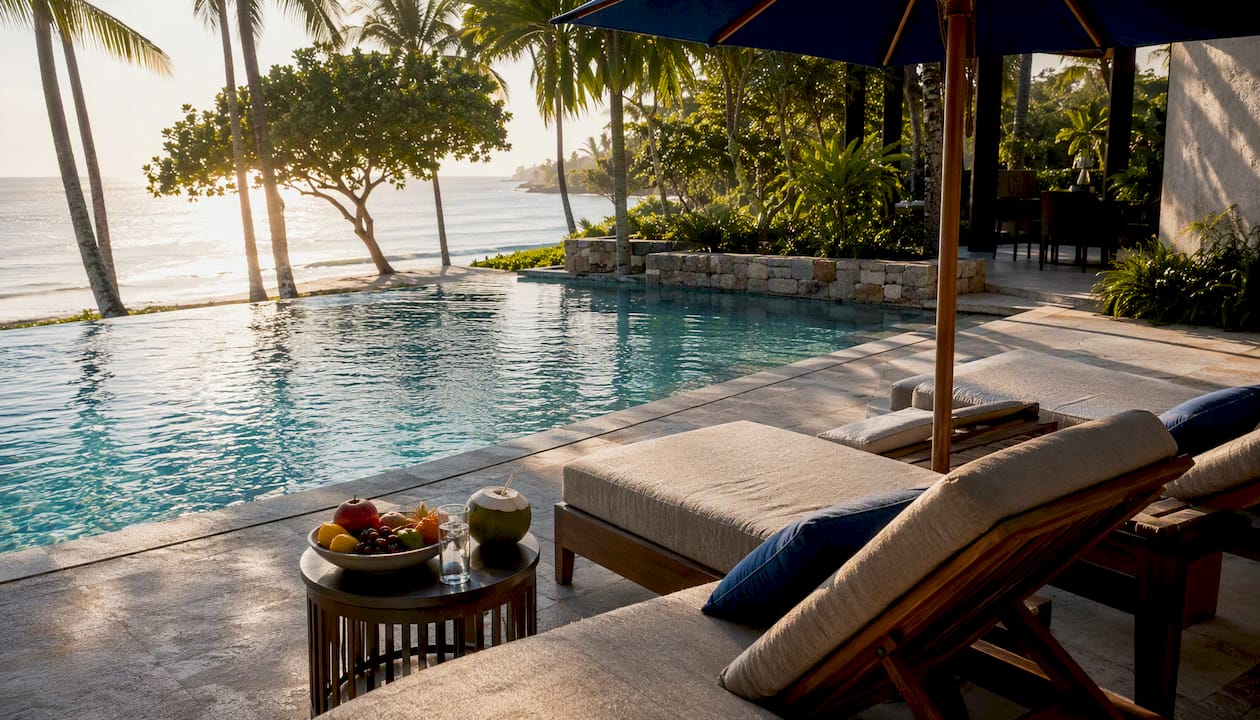
For 2026, the strongest honeymoon picks are the Maldives, Amalfi Coast, Bali, Japan, Hawaii, Mexico (Riviera Maya, Cancún, or Los Cabos), and Santorini. Each one earns its spot for a different reason: the Maldives for pure overwater seclusion, Amalfi for cinematic romance, Bali for culture and value, Japan for once-in-a-lifetime experiences, Hawaii for ease and scenery, Mexico for affordability and all-inclusive options, and Santorini for iconic views with European charm. The average U.S. honeymoon costs $6,500, and the single most important move you can make right now is to lock your budget before wedding vendors start absorbing it.
Here’s what to do this week:
- Set a honeymoon-first budget. Decide what you’ll spend on the trip before finalizing wedding contracts. The honeymoon-first approach protects your travel fund from being cannibalized by catering upgrades and floral add-ons.
- Pick a date range and place a refundable hold on your top resort choice. Popular Maldives and Santorini properties often fill many months in advance for peak dates.
- Open a honeymoon fund or registry so guests can contribute to specific experiences rather than household items.
- Decide on trip length. Most honeymoons run 5–10 days, with seven days being the sweet spot for balancing relaxation and value.
Your four immediate actions:
- Agree on a total honeymoon budget (before the next wedding vendor meeting).
- Shortlist two or three destinations using the destination cards below.
- Place a refundable hold on your top resort if your wedding date is within 12 months.
- Set up a honeymoon fund on a registry platform and add at least five itemized experiences.
Key Takeaways
The most important honeymoon planning move for 2026 is setting your budget before wedding vendor contracts absorb it, then booking your resort 9–12 months out for peak-season destinations.
| Point | Details |
|---|---|
| Set budget first | Lock your honeymoon spend before finalizing wedding contracts to protect the travel fund. |
| Book resorts early | Top Maldives, Santorini, and Amalfi properties fill 9–12 months out for peak dates. |
| Shoulder season saves 30–40% | Traveling in May, June, September, or October cuts costs significantly versus peak rates. |
| Seven days is the sweet spot | Most honeymoons run 5–10 days; seven days balances relaxation and value for most couples. |
| Elitetravelgroup advantage | No service fees, price match guarantee, and 24/7 support for concierge-level honeymoon planning. |
Table of Contents
- 1. The best honeymoon destinations for 2026
- 2. How much your 2026 honeymoon will actually cost
- 3. When to book: your 12-month planning timeline
- 4. How to pick the right destination for you
- 5. How to save money without sacrificing the experience
- 6. Travel logistics checklist: passports, insurance, and packing
- 7. When to hire a luxury honeymoon planner
- 8. Travel restrictions and entry requirements for 2026
- 9. Unique experiences worth booking for 2026 honeymooners
- 10. How to coordinate honeymoon planning alongside wedding planning
- 11. Your day-by-day honeymoon planning checklist for 2026
- What actually makes a honeymoon memorable in 2026
- Plan your 2026 honeymoon with Elitetravelgroup
- Sources
1. The best honeymoon destinations for 2026
Every destination below is worth serious consideration. What separates them is who they fit best, not which one is objectively “better.” Use these profiles to narrow your shortlist to two finalists, then apply the decision framework in Section 5.
Maldives
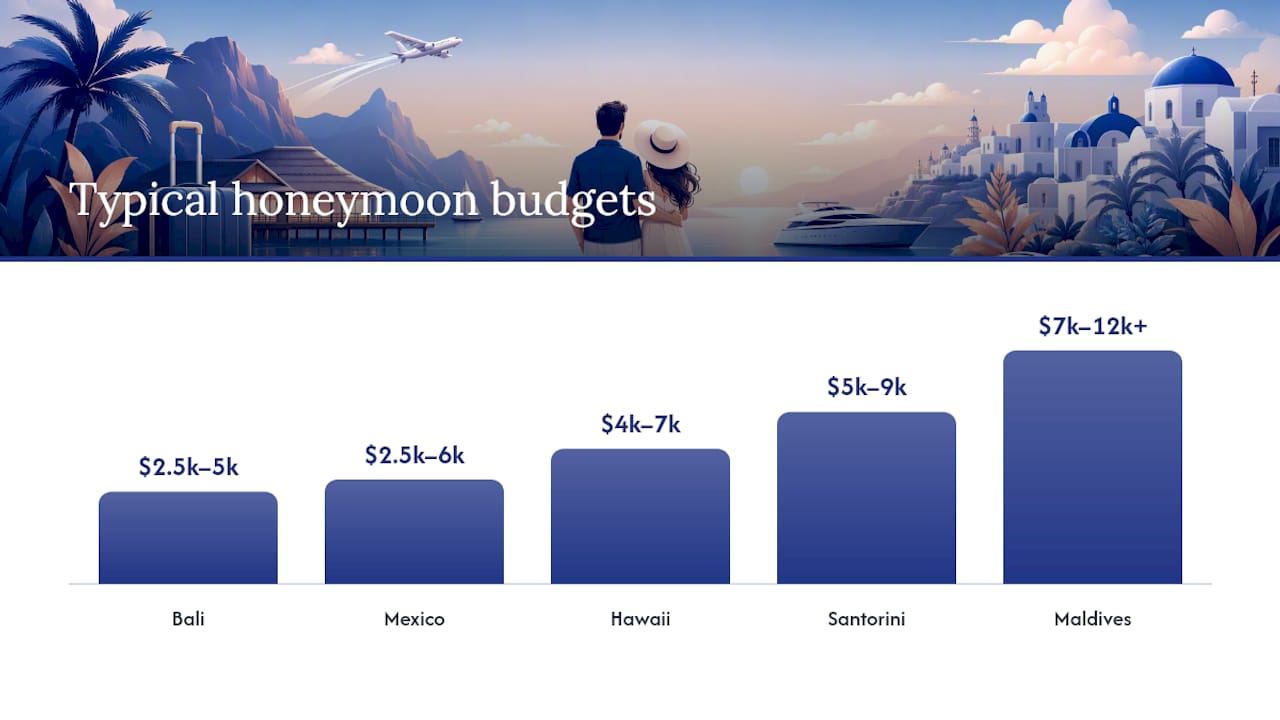
Best for: Romance and seclusion. Best season: November through April (dry season). Typical 1-week budget (2 people): $7,000–$12,000+. Recommended trip length: 7–10 days. Main cost driver: Lodging (overwater villas command premium rates).
The Maldives is the destination couples choose when they want nothing to do but exist in paradise. Overwater bungalows, private plunge pools, and house reefs steps from your deck. The trade-off is real: getting there requires a long-haul flight plus a seaplane or speedboat transfer, which adds both cost and travel time. Book resorts 9–12 months out for December and February peak dates.
Sample highlight: Sunrise snorkeling from your villa deck, followed by a private sandbank dinner arranged by the resort.
Amalfi Coast, Italy
Best for: Culture, scenery, and romance. Best season: May through June or September through October (shoulder season avoids summer crowds). Typical 1-week budget (2 people): $7,000–$10,000. Recommended trip length: 7–10 days. Main cost driver: Lodging and dining.
Positano, Ravello, and the clifftop villages between them deliver the kind of scenery that makes every photo look staged. Shoulder season travel in May or September cuts costs by roughly 30–40% versus July and August rates, and the crowds thin considerably. Pair with Rome or Naples for a multi-stop itinerary. Elitetravelgroup’s Europe vacation packages cover the Amalfi Coast with on-the-ground partners who know which cliffside hotels actually deliver on the view.
Sample highlight: Private boat tour from Positano to the sea caves at Capri, followed by dinner at a terrace restaurant in Ravello.
Bali, Indonesia
Best for: Value, culture, and adventure. Best season: April through October (dry season). Typical 1-week budget (2 people): $2,500–$5,000. Recommended trip length: 7–10 days. Main cost driver: Flights (lodging and food are affordable once you arrive).
Bali punches well above its price point. Ubud offers rice terraces, temple ceremonies, and spa culture; Seminyak and Canggu deliver beach clubs and surf; Nusa Penida adds dramatic cliffs and snorkeling. The flight from the U.S. West Coast runs roughly 20–22 hours with a connection, so factor in a recovery day on arrival.
Sample highlight: Private sunrise hike to Mount Batur, followed by a traditional Balinese couples massage at a jungle spa.
Japan
Best for: Culture, food, and unique experiences. Best season: March through May (cherry blossom season) or October through November (fall foliage). Typical 1-week budget (2 people): $4,000–$8,000. Recommended trip length: 10–14 days (Japan rewards more time). Main cost driver: Flights.
Japan is the destination that surprises couples most. The food alone justifies the trip. Tokyo, Kyoto, and Osaka form a natural multi-stop arc that you can cover by bullet train in under three hours between cities. Cherry blossom season (late March through mid-April) is spectacular but books out fast; shoulder season in November offers stunning foliage with fewer crowds. Check honeymoon itinerary ideas for multi-city Japan templates.
Sample highlight: Private tea ceremony in Kyoto, followed by a kaiseki dinner at a Michelin-starred restaurant in the Gion district.
Hawaii, USA
Best for: Ease, scenery, and domestic travel. Best season: April through June or September through November. Typical 1-week budget (2 people): $4,000–$7,000. Recommended trip length: 7–10 days. Main cost driver: Flights (from the East Coast) and lodging.
Hawaii’s biggest advantage is no passport required, no currency exchange, and no jet lag for West Coast couples. Maui is the most popular honeymoon island for good reason: Hana Highway, Haleakalā sunrise, and world-class resort beaches. Kauai is quieter and more dramatic. The Big Island adds active volcanoes and snorkeling with manta rays. Consider a domestic mini-moon in Destin, Florida if Hawaii’s budget feels steep right after the wedding.
Mexico (Riviera Maya, Cancún, Los Cabos)
Best for: Value, all-inclusive convenience, and beach relaxation. Best season: November through April (dry season). Typical 1-week budget (2 people): $2,500–$6,000. Recommended trip length: 5–7 days. Main cost driver: Lodging (all-inclusive vs. room-only makes a significant difference).
Mexico is the most accessible international honeymoon from most U.S. cities. Riviera Maya offers cenote swimming, Tulum ruins, and luxury eco-resorts. Los Cabos delivers desert-meets-ocean scenery with high-end resort infrastructure. All-inclusive packages here can actually save money compared to paying for meals and drinks separately, especially at the higher-tier properties.
Santorini, Greece
Best for: Romance, iconic views, and European culture. Best season: May through June or September through October. Typical 1-week budget (2 people): $5,000–$9,000. Recommended trip length: 5–7 days in Santorini, ideally combined with Athens or Mykonos. Main cost driver: Lodging (caldera-view suites command a significant premium).
Santorini’s caldera views from Oia are genuinely as good as the photos suggest. The island is small enough to explore fully in five days, which makes it ideal as part of a Greece island-hopping itinerary. Combine with Athens for a cultural anchor and Mykonos for nightlife if you want variety. Caldera-view suites book out 9–12 months ahead for June and July.
| Destination | Best for | Typical budget (1 week, 2 people) | Best season | Recommended trip length | Main cost driver |
|---|---|---|---|---|---|
| Maldives | Romance, seclusion | $7,000–$12,000+ | November–April | 7–10 days | Lodging |
| Amalfi Coast | Culture, scenery | $7,000–$10,000 | May–June, Sept–Oct | 7–10 days | Lodging and dining |
| Bali | Value, culture | $2,500–$5,000 | April–October | 7–10 days | Flights |
| Japan | Culture, food | $4,000–$8,000 | March–May, Oct–Nov | 10–14 days | Flights |
| Hawaii | Ease, scenery | $4,000–$7,000 | April–June, Sept–Nov | 7–10 days | Flights, lodging |
| Mexico | Value, beach | $2,500–$6,000 | November–April | 5–7 days | Lodging (all-inclusive vs. room-only) |
| Santorini | Romance, views | $5,000–$9,000 | May–June, Sept–Oct | 5–7 days | Lodging |
Pro Tip: Island-only honeymoons (Maldives, Santorini, Bali) deliver maximum relaxation but require longer flights and more advance planning. Multi-stop itineraries (Japan, Italy, Greece island-hopping) give more variety but add transit time and packing complexity. If one of you is a nervous flyer or you’re working with a tight post-wedding schedule, lean toward a single-destination trip.
2. How much your 2026 honeymoon will actually cost
The average U.S. honeymoon runs $6,500, which represents roughly 26% of the total wedding budget for most couples. That figure is a useful anchor, but the real range is wide: a week in Mexico or Bali can start at $2,500 for budget-friendly options, while luxury destinations like Maldives can cost considerably more
| Honeymoon type | Typical budget (1 week, 2 people) | Main cost driver |
|---|---|---|
| Budget-friendly (Mexico, Bali) | $2,500–$5,000 | Flights |
| Mid-range (Hawaii, Santorini) | $4,000–$8,000 | Lodging |
| Luxury (Maldives, Amalfi Coast) | $7,000–$12,000+ | Lodging |
| Domestic U.S. (Hawaii, Destin) | $2,500–$6,000 | Flights (East Coast) |
Hidden costs that catch couples off guard:
- Resort fees and daily surcharges can add hundreds of dollars to a bill that looked reasonable at booking. Always ask whether resort fees are included in the quoted rate before you confirm.
- Foreign transaction fees on credit cards (typically 1–3%) add up across a 10-day trip.
- Airport transfers and private boat transfers (especially in the Maldives) are often not included in resort rates.
- Gratuities at all-inclusive resorts, which are sometimes excluded even when meals are included.
- Travel insurance, which typically runs 4–10% of total trip cost.
$5,000 in 2026 buys you: A solid week in Mexico (Riviera Maya or Los Cabos) at a mid-tier all-inclusive, including flights from most U.S. cities. Alternatively, it covers a 7-night stay in Bali with flights from the West Coast, a private villa, and daily excursions. For Hawaii, $5,000 is workable from the West Coast but tight from the East Coast once flights are factored in.
3. When to book: your 12-month planning timeline
The biggest mistake couples make is treating flight booking and resort booking as the same decision. They’re not. Flights tend to be cheapest 3–6 months before departure, while top resorts often need 9–12 months’ advance reservations for peak dates. Plan accordingly.
12 months before departure
- Lock your honeymoon budget before signing any more wedding vendor contracts.
- Research your top three destination options using the destination cards above.
- Place refundable holds on your top resort choices, especially for Maldives, Santorini, and peak-season Amalfi Coast properties.
- Open a honeymoon fund or registry and add itemized experiences.
9–10 months before
- Narrow to one or two finalist destinations.
- Start monitoring flight prices using Google Flights price alerts.
- Lock refundable flight holds if peak-season dates are involved and fares look reasonable.
- Confirm passport validity (you need at least 6 months beyond your return date for most international destinations).
6–8 months before
- Book international flights. This window is typically the sweet spot for pricing on most routes.
- Confirm hotel or resort reservations (non-refundable if you’re confident, refundable if not).
- Book excursions and experiences that require advance reservations (private boat charters, cooking classes, guided hikes).
- Check visa requirements for your destination. Japan, Bali, and most European countries have specific entry rules for U.S. passport holders.
3–4 months before
- Purchase travel insurance. Buy it within 14–21 days of your first trip payment to access pre-existing condition coverage.
- Finalize dining reservations (especially in Italy and Japan, where top restaurants book weeks or months ahead).
- Confirm all ground transfers and airport pickups.
- Notify your bank and credit card companies of travel dates.
2–4 weeks before
- Build your carry-on plan. Never check your honeymoon outfits, documents, or medication.
- Confirm all reservations and download offline maps for your destination.
- Pack a document kit: passports, travel insurance policy, hotel confirmations, and emergency contacts.
4. How to pick the right destination for you
Before you commit to a destination, run it through four questions. This takes 20 minutes and saves weeks of second-guessing.
The four decision questions:
- Travel style: Do you want to relax on a beach, explore cities, hike and adventure, or experience a new culture? Be honest. A couple where one person wants a pool and one wants a museum needs a destination that delivers both.
- Budget: What’s your real number, including flights, lodging, food, activities, and travel insurance? Use the budget table above to eliminate destinations that don’t fit before you fall in love with them.
- Wedding timing and season: Your wedding date determines when you travel, which determines what’s in season. A December wedding means January travel, which is peak season for the Maldives and Mexico but shoulder season for Japan.
- Trip length and jet-lag tolerance: Japan and Bali reward 10–14 days and involve significant time zone shifts. Mexico and Hawaii work well in 5–7 days with minimal jet lag.
Scoring example (two finalists):
In this example, Japan wins despite the Maldives’ higher romance score, because the couple weighted culture and budget more heavily. Run the same exercise with your actual priorities.
Questions to ask resorts before booking:
- Are resort fees included in the quoted rate?
- What room upgrade options are available for honeymooners?
- Do you offer complimentary honeymoon amenities (welcome amenity, turndown service, late checkout)?
- What’s included in the all-inclusive rate versus charged separately?
Explore types of honeymoon destinations for a deeper breakdown of beach, city, adventure, and cultural options.
5. How to save money without sacrificing the experience
Cost-saving tactics that actually work:
- Travel shoulder season. May, June, September, and October hit the sweet spot across Europe and many tropical destinations: better weather than winter, smaller crowds than summer, and prices that are 30–40% lower than peak rates.
- Book all-inclusive packages in Mexico and the Caribbean. At mid-tier and above properties, all-inclusive rates often cost less than paying for meals and drinks separately. Check honeymoon packages for when bundling makes financial sense.
- Use travel rewards points for flights. Transferable points (Chase Ultimate Rewards, American Express Membership Rewards) can cover business-class flights to Europe or Asia, freeing up cash for lodging and experiences.
- Consider a mini-moon now, big trip later. Trend data shows that phased honeymoons are mainstream in 2026. A weekend in a nearby destination right after the wedding, followed by a major international trip six months later, reduces post-wedding stress and spreads cost. A Destin, Florida couples itinerary is a practical domestic mini-moon template.
Setting up your honeymoon fund:
A honeymoon fund outperforms a generic cash registry when it’s itemized. Instead of “contribute to our honeymoon,” list specific experiences with prices: “Sunset cruise in Santorini ($200),” “Private cooking class in Bali ($150),” “Overwater villa upgrade ($500).” Guests give more when they can picture what they’re funding. Add photos of each experience and include a range of price points so guests at every budget level can participate.
Platforms like Zola, Honeyfund, and WithJoy all support itemized honeymoon funds with direct deposit options.
6. Travel logistics checklist: passports, insurance, and packing
Passport and visa checklist:
- Confirm both passports are valid for at least 6 months beyond your return date. Many countries, including Japan, Indonesia, and most of Europe, enforce this rule at the border.
- Check visa requirements at Travel for your specific destination. U.S. citizens can enter most European countries visa-free for up to 90 days, but Japan and Bali have their own entry rules.
- If either passport needs renewal, start the process at least 6 months before travel. Expedited processing is available but adds cost.
- Make two copies of all travel documents: one in your carry-on and one left with a trusted contact at home.
Travel insurance:
Buy travel insurance within 14–21 days of your first trip payment to access the widest coverage, including pre-existing medical conditions and “cancel for any reason” add-ons. At minimum, your policy should cover trip cancellation, medical evacuation, emergency medical treatment, and trip interruption. For a $10,000 honeymoon, insurance typically costs $400–$1,000 depending on coverage level and destination.
Insurance callout: Medical evacuation from a remote destination like the Maldives or a rural area of Bali can cost $50,000–$100,000 without coverage. This is not optional for international travel.
Packing essentials for honeymooners:
- Document kit (passports, insurance policy, hotel confirmations, emergency contacts) in your carry-on
- Romantic outfits for dinners and special evenings, never checked
- Activity-specific gear (snorkel mask, hiking shoes, reef-safe sunscreen)
- Medication and any prescriptions in original labeled containers
- Universal power adapter for international destinations
- A small first-aid kit with motion sickness medication (especially for seaplane transfers in the Maldives)
Pro Tip: Build in at least one full recovery day between your wedding and your departure flight. Flying long-haul within 24 hours of your wedding means arriving exhausted. A single buffer night at a nearby hotel near the airport makes the difference between starting your honeymoon rested and starting it depleted.
7. When to hire a luxury honeymoon planner
Hire a planner when the stakes are high enough that a mistake costs more than the planning service would. Specifically: complex multi-stop itineraries, high-value spend (above $7,000), destinations where on-the-ground relationships matter (Maldives, Amalfi Coast, Japan), or when you simply don’t have 40+ hours to research, compare, and coordinate everything yourself.
What a concierge planner actually does:
- Designs a bespoke itinerary built around your travel style, not a template
- Leverages on-the-ground partner relationships to secure room upgrades, welcome amenities, and experiences that aren’t publicly bookable
- Negotiates resort perks and monitors for price drops
- Handles all transfers, reservations, and logistics coordination
- Provides 24/7 support if something goes wrong mid-trip
When to contact a planner (timeline markers):
- 12 months out: Ideal for Maldives, Amalfi Coast, Japan, or any multi-stop itinerary. Early contact gives the planner time to secure the best properties before they fill.
- 6 months out: Still workable for most destinations, though some peak-season options may already be gone.
- 3 months out: Possible for Mexico, Hawaii, and domestic trips. International luxury options become limited.
Elitetravelgroup has 35 years of experience designing concierge-level honeymoon itineraries, charges no service fees, offers a price match guarantee, and is available 24/7. For European honeymoons specifically, their Europe vacation packages include Amalfi Coast and Santorini itineraries with vetted on-the-ground partners.
Pro Tip: The no-service-fee model matters more than it sounds. With a commission-based planner, you pay the same rate you’d find booking directly, but you get expert itinerary design, upgrade negotiation, and 24/7 support included. The math almost always favors using a specialist for trips above $6,000.
8. Travel restrictions and entry requirements for 2026
As of 2026, COVID-19 testing and vaccination requirements have been lifted for entry into the Maldives, Bali, Japan, Greece, Italy, Mexico, and Hawaii. No destination on the top 2026 honeymoon list currently requires proof of vaccination or a negative test for U.S. travelers. That said, entry requirements can change, and the following practical rules still apply.
Destination-specific notes:
- Japan: Fully open to U.S. tourists with no vaccination or testing requirements. A tourist visa is not required for stays under 90 days.
- Bali (Indonesia): U.S. citizens can obtain a visa on arrival for stays up to 30 days. No health documentation required.
- Maldives: No visa required for U.S. citizens. Entry is straightforward; the main logistics are the seaplane or speedboat transfer to your resort island.
- Italy and Greece (Amalfi Coast, Santorini): U.S. citizens can enter visa-free for up to 90 days under the Schengen Agreement. Note that the EU’s ETIAS travel authorization system is expected to launch in 2026 for non-EU visitors; check travel.state.gov for current status before departure.
- Mexico: No visa required for U.S. citizens. A tourist card (FMM) is typically included in your airline ticket.
- Hawaii: No international entry requirements apply; it’s a U.S. state.
Always verify current requirements at travel.state.gov within 60 days of departure, as policies can shift.
9. Unique experiences worth booking for 2026 honeymooners
Generic resort packages are fine. These are better.
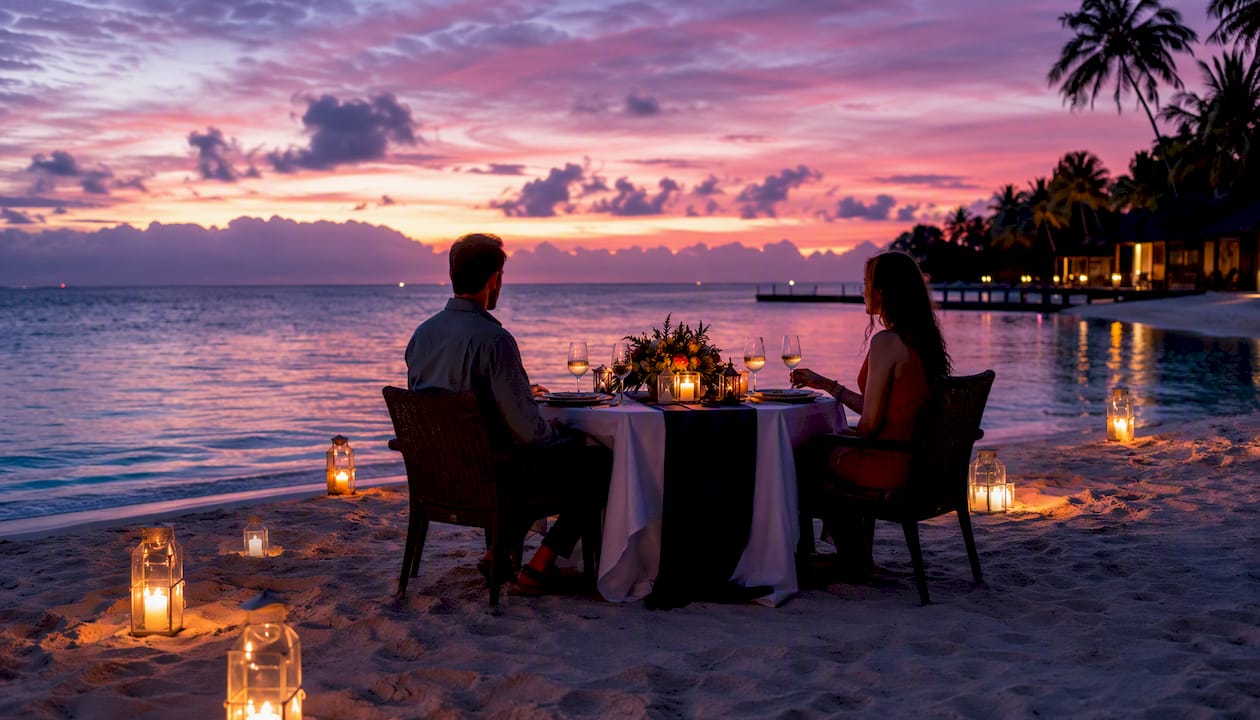
Maldives: Book a private sandbank dinner through your resort. Most overwater villa properties offer this as an add-on: a table set on a deserted sandbar surrounded by the Indian Ocean, accessible only by boat. It’s the kind of thing that doesn’t photograph well because no photo captures the silence.
Amalfi Coast: Arrange a private boat charter from Positano to Capri for a day. Skip the ferry crowds and spend the afternoon swimming in the Blue Grotto and eating at a cliffside restaurant in Anacapri. Elitetravelgroup’s romantic honeymoon experiences page covers curated Italy options in detail.
Bali: A sunrise hike to Mount Batur (an active volcano) followed by a traditional Balinese couples massage at a jungle spa in Ubud is a full-day experience that costs a fraction of what it would anywhere else. Book the guide in advance; the hike starts at 4:00 AM.

Japan: Reserve a private tea ceremony in Kyoto through a licensed tea master, not a tourist-facing demonstration. The experience is quieter, more personal, and genuinely different. Follow it with a kaiseki dinner (a multi-course Japanese tasting menu) at a Michelin-recognized restaurant in the Gion district.
Hawaii: A sunrise drive to Haleakalā summit on Maui to watch the sun rise above the clouds is free, unforgettable, and requires a timed entry reservation booked through the National Park Service. Pair it with a sunset dinner cruise along the coast.
Mexico: Cenote swimming in the Yucatán Peninsula is one of the most visually striking experiences in the Western Hemisphere. Private cenote tours through Tulum or Valladolid give you access to underground cave systems that the group tours don’t reach.
Santorini: A private catamaran sunset cruise around the caldera, with a stop for swimming at the hot springs near Nea Kameni, is the signature Santorini experience. Book through your hotel concierge or a local operator at least 4–6 weeks in advance for summer dates.
10. How to coordinate honeymoon planning alongside wedding planning
The biggest mistake couples make is treating honeymoon planning as something to handle after the wedding is fully planned. By that point, the best resort dates are gone, the budget has been absorbed, and you’re making decisions under pressure.
The practical approach: Run honeymoon planning in parallel with wedding planning, not after it. Use the same planning calendar. When you book your venue, also place a refundable hold on your top resort. When you finalize your wedding guest list, also open your honeymoon fund.
Specific coordination points:
- Wedding date determines travel season. Lock your wedding date first, then use it to filter destination options by season. A June wedding means June or July travel, which is peak season for Europe and shoulder season for the Maldives.
- Honeymoon budget should be set before wedding vendor contracts are signed. The honeymoon-first budgeting approach prevents the common scenario where couples spend more than planned on the wedding and then scramble to fund the trip.
- Delegate honeymoon research. If one partner is handling most of the wedding logistics, the other handles honeymoon research. Divide and conquer.
- Use your wedding planner’s network. Many wedding planners have relationships with travel agents or can refer you to a honeymoon specialist. Ask.
- Build a shared planning doc. One document with both the wedding checklist and the honeymoon timeline, shared between both partners, prevents things from falling through the cracks.
For a full parallel planning framework, the complete 2026 honeymoon planning guide covers both timelines in detail.
11. Your day-by-day honeymoon planning checklist for 2026
This template works for any destination. Adjust the day count to match your trip length.
Pre-departure (day before)
- Confirm all reservations (hotel, transfers, excursions)
- Charge all devices and download offline maps
- Pack document kit in carry-on
- Set out-of-office replies
Day 1: Arrival
- Check in, unpack, and do nothing else. Seriously.
- Order room service or eat at the hotel. Don’t try to sightsee on arrival day after a long flight.
- Confirm the next day’s activity or excursion with the concierge.
Days 2–3: Orientation and first experiences
- First major excursion or experience (private tour, beach day, city walk)
- First special dinner reservation
- Begin exploring the destination at your own pace
Days 4–5: Signature experience
- The one experience you planned the trip around: the sandbank dinner, the sunrise hike, the private boat charter, the kaiseki dinner
- A slower morning or afternoon to balance the activity
Days 6–7: Relaxation and reflection
- Beach or pool day with no agenda
- Spa treatment if available
- Final special dinner
- Light souvenir shopping
Day 7 or final day: Departure prep
- Reconfirm airport transfer time
- Pack the night before
- Leave a buffer of at least 3 hours before international flights
Pro Tip: Don’t over-schedule. Two or three planned experiences per day is the maximum before a honeymoon starts feeling like a tour. Leave room for the unplanned moments, because those are usually the ones you remember.
What actually makes a honeymoon memorable in 2026
The couples who come back most satisfied aren’t the ones who checked every landmark off a list. They’re the ones who picked one signature experience, built the trip around it, and let everything else be secondary.
A honeymoon in Kyoto where you spent three days in the Gion district, had one extraordinary kaiseki dinner, and wandered the Fushimi Inari shrine at dawn with no one else around is more memorable than a two-week sprint through five countries. The itinerary that tries to do everything usually delivers nothing particularly well.
What I’ve seen consistently: couples who invest in one genuinely private or exclusive experience, whether that’s a sandbank dinner in the Maldives, a private boat charter on the Amalfi Coast, or a sunrise hike in Bali, remember that moment for decades. The hotel room matters less than you think. The one thing you did that no one else in your group back home has done matters more than you’d expect.
Plan the trip you actually want, not the trip that photographs well for social media. Those are sometimes the same trip. Often they’re not.
Plan your 2026 honeymoon with Elitetravelgroup
Thirty-five years of concierge-level honeymoon planning, zero service fees, and a price match guarantee: that’s the Elitetravelgroup difference for couples who want the trip done right. Where most couples spend 40+ hours researching, comparing, and coordinating, Elitetravelgroup’s specialists handle the entire process, from destination selection and resort negotiation to on-the-ground transfers and 24/7 support if anything goes sideways mid-trip.

The agency’s strength is in the details that don’t show up on booking sites: the room upgrade negotiated before arrival, the private experience that isn’t publicly listed, the resort contact who answers the phone at 11:00 PM when your seaplane transfer gets delayed. For Amalfi Coast, Santorini, and other European honeymoons, their Europe vacation packages include vetted on-the-ground partners and bespoke itineraries built around your specific travel style. Contact Elitetravelgroup today to start designing your 2026 honeymoon.
Sources
- Best Honeymoon Destinations 2026: The Complete Planning Guide – Joy
- Honeymoon Over Wedding: The 2026 Trend Explained
- Wedding travel trends and honeymoon ideas 2026 | Stacker
- Average Honeymoon Cost: Breakdown & Smart Budgeting Tips
- Average honeymoon cost: Price breakdown, fees and ways to pay
