




Europe’s shoulder season is the stretch between the summer peak and the winter lull. For most of Western and Southern Europe, that means roughly mid-April to early June and September to mid-October. You get workable weather, thinner crowds and softer demand for hotels and flights. You also get a few traps, especially for luxury travelers: closed seasonal hotels, event weeks that fill a region overnight, and a very different story in each country. This guide covers the months, the countries, the weather and the planning details that decide whether a shoulder-season trip feels exceptional or merely cheaper.
TL;DR
- Shoulder season in Europe is generally spring (mid-April to early June) and autumn (September to mid-October), though the exact dates vary by destination.
- September suits coastal trips best, May suits gardens and city walking, and October gives the lowest crowds but more rain in many Western European cities.
- In highly seasonal places such as Croatia, many seasonal hotels and beach clubs close by late October, so the edges of the season need careful timing.
- Shoulder-season inventory at the best properties is smaller than in summer, and local events can spike prices, so book early.
- Americans should check entry rules before booking: the Entry/Exit System is already running, and ETIAS has been scheduled but its start date should be confirmed.
Table of Contents
- What shoulder season means in Europe
- Why the summer crush is worth avoiding
- Spring or autumn: which shoulder season fits you
- Not every country has the same shoulder season
- The luxury catch: closures at the edges of the season
- Events can cancel out the savings
- Who benefits most from traveling off-peak
- Entry rules for Americans: check before you book
- Our perspective: how we plan a shoulder-season trip
- Sample timing by trip type
- Getting around: transfers and logistics
- Plan your shoulder-season trip with us
- FAQ
- Sources
What shoulder season means in Europe
The term comes from the travel industry. It describes the time between a destination’s high and low seasons, so it sits between the peak and off-peak months on the calendar. There is no single official definition, and that matters. A shoulder month in Lisbon is not the same as a shoulder month in Tromsø.
For most of Western and Southern Europe, a useful working definition looks like this:
| Period | Typical label | What to expect |
|---|---|---|
| June to August | Peak | Longest days, highest demand, busiest sights |
| Mid-April to early June | Spring shoulder | Mild weather, blooming landscapes, openings of seasonal properties |
| September to mid-October | Autumn shoulder | Warm sea in the south, harvest season, falling crowds |
| Mid-October to March | Low season | Short days, some closures, lowest rates in cities |
A Wildly guide to the season puts the appeal plainly: weather is still good, crowds are thinner, and demand for flights and hotels drops enough to move prices.
Why the summer crush is worth avoiding
The numbers explain why. According to Eurostat, 31.1% of all overnight stays in EU tourist accommodation in 2025 fell in the two busiest months, July and August. Almost a third of the year’s tourism nights landed in 62 days.
On the ground, that shows up as queues at the Colosseum, full terraces on the Riviera, and hotel rates that reward anyone with flexible dates. A shoulder-season trip lets you choose the day’s plan instead of fitting it around the line.
Spring or autumn: which shoulder season fits you
The two halves of the shoulder season are not interchangeable.
Spring (mid-April to early June)
Spring suits travelers who care about culture, gardens, hiking and city walking. Days are lengthening, museums are uncrowded compared with July, and many seasonal restaurants and hotels have just reopened with fresh energy. The sea is still cool in the Mediterranean, so a beach-led trip is better saved for September.
The caveat: early spring can mean showers, and some mountain passes and island ferries run reduced schedules until late May.
Autumn (September to mid-October)
According to the Wildly guide, September is generally warmer than May across Europe because of lingering summer heat, which makes it the better choice for coastal destinations. The same source notes that October is wetter in many Western European cities such as London, Rome and Barcelona, though it also brings the lowest crowds of the shoulder months.
Temperatures back this up. Wildly cites historical climate normals of 16°C (61°F) for London’s average October high and 22°C (72°F) for Rome. Lonely Planet notes that Rome’s Forum cools to 24°C (75°F) by September, and that Athens offers discounts at ancient sites.
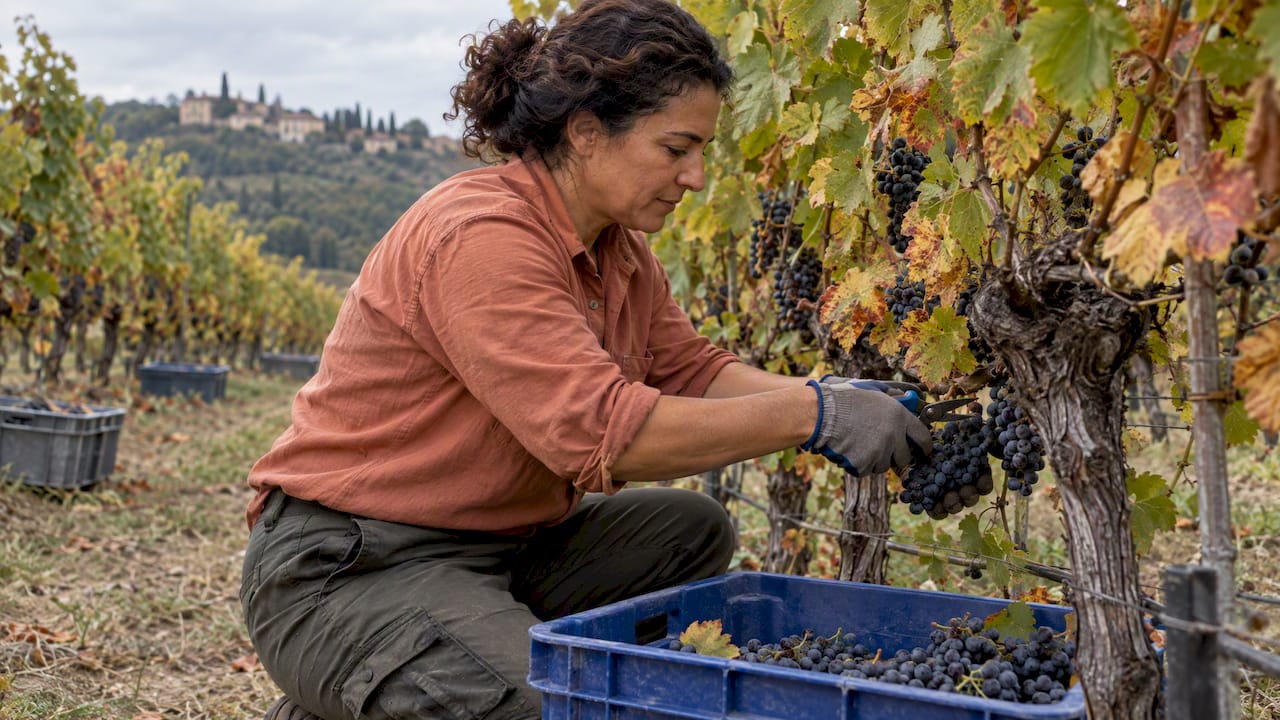
Autumn also brings harvest. Wine regions, truffle towns and olive-pressing villages come alive, which suits food-led itineraries.
Not every country has the same shoulder season
This is the part generic guides skip. Seasonality is far stronger in some countries than others. Eurostat’s seasonality report found the strongest tourism seasonality in 2025 in Croatia, Greece, Bulgaria, Montenegro and Albania. In Croatia, more than half of annual overnight stays fell in July and August.
What that means for your trip:
- In highly seasonal coastal countries, the shoulder months deliver the biggest contrast. A town that is packed in August can feel like a private village in late September. Lonely Planet notes that Dubrovnik quiets by late September.
- In year-round cities such as Rome or Paris, the drop in crowds is real but less dramatic, and the main gain is weather and room availability.
- In the north and the Alps, the shoulder season can be the awkward gap between ski and hiking seasons, with lifts and mountain huts closed. Check dates before you commit.
Croatia and the Adriatic
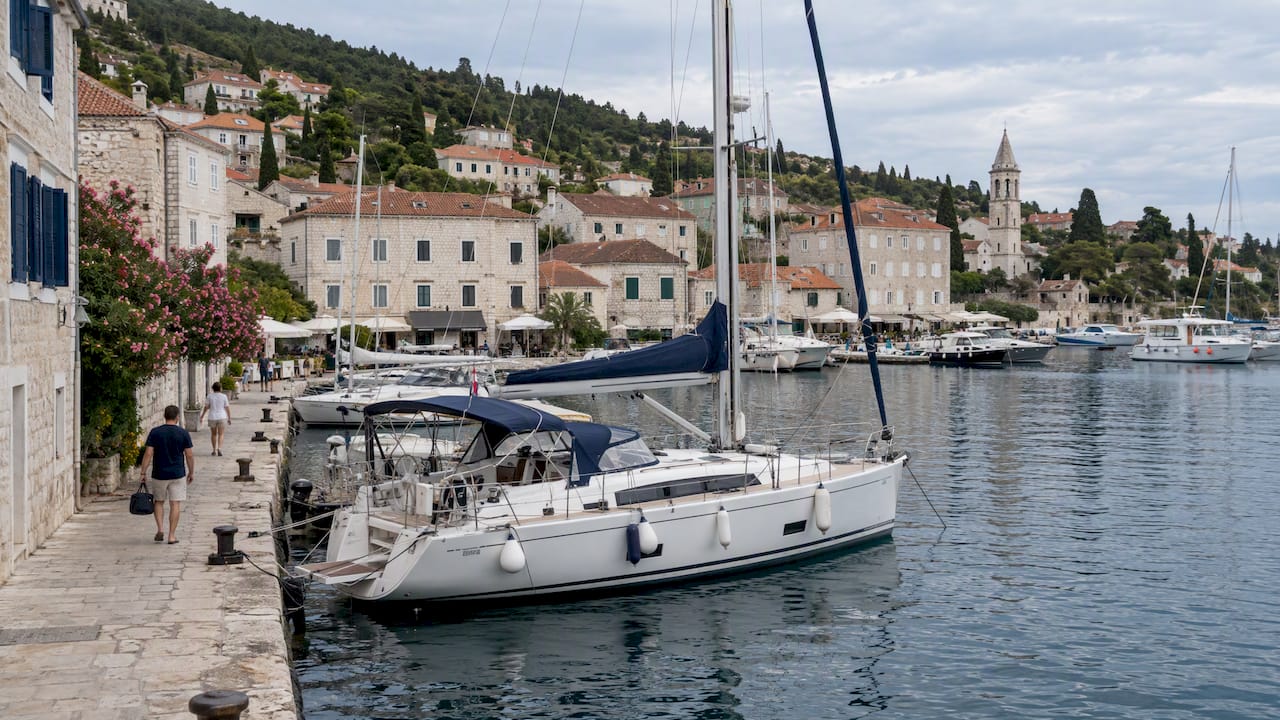
For sailing and island-hopping, late May to June and September are the sweet spots. The sea is swimmable in September, marinas have space, and the private-yacht experience is far more relaxed. If this appeals, our Croatia luxury sailing page explains how bespoke charters work, and the Croatia by sea page covers the route options. For a land-and-sea combination, there is also an 8-day Dubrovnik and Dalmatian Coast package and a 10-day Croatian coast package.
The Amalfi Coast
The Amalfi Coast is a textbook case for timing. Roads are less congested outside July and August, private boats are easier to secure, and cliffside hotels have rooms. We wrote a dedicated guide on the best time to visit the Amalfi Coast with the private-boat angle.
The luxury catch: closures at the edges of the season
A lower price is not the main reason to travel in shoulder season if you are booking at the high end. The real question is whether the experiences you want are open.
Lonely Planet points out that while major cities stay open year-round, in many smaller towns and coastal resorts the tourism season has a hard end. By late October, upscale seasonal hotels, beach clubs and boutique restaurants may close until spring. That limits the bespoke dining and service that define a luxury stay.
Practical rules we use when we plan:
- Aim for the center of the shoulder window, not its edge. Mid-May to early June and mid-September are safer than early April or late October for coastal resorts.
- Confirm opening dates property by property. A hotel’s website often shows its season, but a direct check with the property avoids surprises.
- Ask what is closed nearby, not only at your hotel: the beach club, the boat operator, the restaurant you want for your anniversary dinner.
- Choose city anchors for the extremes. In late October or early April, pair a city stay with a countryside or spa property that operates all year.
Events can cancel out the savings
Shoulder season does not mean empty. Wine harvests, film festivals, trade fairs and local holidays can push accommodation prices and limit availability as much as high summer does. The Wildly guide stresses that planners should watch regional event calendars and book early, because shoulder-season inventory is lower than in peak season.
This matters most for groups. A corporate incentive or a milestone celebration for 20 people needs a block of rooms, a private dining space and local transport on the same dates. A trade week in the same city can undo months of planning. If you are arranging something larger, our group travel and incentive travel teams check event calendars before proposing dates, and our piece on small group travel to Europe explains why smaller formats work well in the shoulder months.
Who benefits most from traveling off-peak
Shoulder season suits more people than bargain hunters. It is especially strong for:
- Honeymooners with flexible dates, who get better light for photographs and quieter restaurants. See our honeymoon packages.
- Couples and retirees. Eurostat data shows that travelers aged 65 and over spent 58% of their nights away during shoulder periods (March to June and September to November), while younger groups favored July and August, according to its report on senior travel.
- Food and wine travelers, because September and October carry harvest events.
- Families with school flexibility. Families tied to summer vacation will find the calendar harder, but spring breaks and long weekends can reach into the shoulder window. Our Europe family travel guide covers luxury itineraries.
- Anyone who dislikes crowds, which is most of us once we are standing in a line for the third time.
Entry rules for Americans: check before you book
As of October 2026, U.S. citizens making short stays in the Schengen area plus Cyprus (30 countries) do not need a visa. Two systems matter, though. The EU’s own page confirms that the Entry/Exit System has been fully operational since 10 April 2026, which collects fingerprints and a facial image at the external border. That page also described ETIAS as scheduled for the last quarter of 2026, with the exact start date to be announced officially. Because launch dates for systems like this have shifted before, confirm the current status on official EU or U.S. State Department pages shortly before you pay for non-refundable travel.
We explain the difference in our guide to Schengen visa vs. ETIAS and the application steps, including the EUR 20 fee, in ETIAS for U.S. travelers. Arrivals at borders can be slower while the new biometric checks bed in, so give yourself generous connection times, which is another reason to avoid tight itineraries.
Our perspective: how we plan a shoulder-season trip
We have been designing high-end journeys for 35 years, and shoulder season is where good planning shows most. In July, a famous hotel sells itself. In May or late September, the difference between a good trip and a great one is who knows which property is open, which boat captain has a free day, and which village is hosting a harvest festival that will fill every table.
Our approach has four parts:
- Choose the month for the experience, not the discount. If you want to swim in the Adriatic, we point you to September. If you want gardens and long walks in Italy, we point you to May.
- Verify the ground. Our on-the-ground partners tell us what is open, what is closed for renovation, and what local events will affect your dates.
- Book early. The best rooms in shoulder season go quickly because there are fewer of them.
- Keep the cost structure simple. We charge no service fees, we offer a price match guarantee, and we are reachable 24/7, which matters when a ferry schedule changes or weather shifts a plan.
The savings from shoulder season are real, but we would rather you spend them on a better room or a private guide than treat them as the point of the trip.
— tammylevent@gmail.com
Sample timing by trip type
| Trip | Best window | Why | Watch for |
|---|---|---|---|
| Adriatic sailing | Late May to June, September | Calm marinas, warm sea in September | Seasonal closures from late October |
| Amalfi and southern Italy | Late April to early June, September | Fewer road delays, easier boat availability | Easter and May bank holidays |
| Classic cities (Paris, Rome, Vienna) | April to May, late September to October | Open all year, shorter queues | Rain in October, trade fairs |
| Wine regions | September to October | Harvest activity | Event weeks that fill rooms |
| Greek islands | May to June, September | Warm sea, fewer visitors | Ferry schedules, island closures later in autumn |
| Honeymoons | May to June, September | Light, quiet restaurants | Booking early for top suites |
These are planning starting points, not guarantees. Weather varies year to year, and local calendars change.
Getting around: transfers and logistics
With fewer crowds you can plan a calmer arrival. A pre-booked chauffeur with flight tracking removes the stress of a delayed flight or a station queue, and it is worth arranging in advance in places with limited taxi supply. This guide to luxury airport transfers in Europe explains what to look for when pre-booking a vehicle and driver. For more on keeping costs sensible, our tips for saving money in Europe go through where to economize and where not to.
Plan your shoulder-season trip with us
If you want the benefits of shoulder season without the guesswork, we design each itinerary around your dates, the right properties and the local calendar. Start with our luxury vacation packages or contact us through Elite Travel and tell us when you are thinking of going. We will tell you honestly which weeks suit your plans and which do not.
FAQ
What months are shoulder season in Europe?
In most of Western and Southern Europe, shoulder season covers roughly mid-April to early June and September to mid-October. The exact dates depend on the country and the type of trip. Coastal and mountain areas have shorter windows than major cities.
Is September or October better for Europe?
September is generally warmer and better for beach and boat trips. October is quieter but wetter in many Western European cities, and some seasonal hotels and restaurants close by late October. For a first shoulder-season trip, mid-September is the safest choice.
Is it cheaper to travel to Europe in shoulder season?
Often, because demand for flights and hotels eases compared with summer. The size of the saving depends on the destination and on local events, so treat any single percentage figure with caution. Booking early still matters, since shoulder-season inventory at the best properties is limited.
Do I need a visa for Europe as an American?
Not for short stays in the Schengen area plus Cyprus, as of October 2026. You do go through the Entry/Exit System biometric check at external borders. ETIAS was scheduled for the last quarter of 2026, so verify its current start date on official sources before you travel.
Sources
- What is Shoulder Season in Europe? (AirHelp)
- Europe Shoulder Season guide (Wildly)
- Summer peak: 31% of tourism nights in August and July (Eurostat)
- Europe in Shoulder Season: 11 of the Best Cities (Lonely Planet)
- Seasonality in the tourist accommodation sector (Eurostat)
- Seniors travel closer to home and outside peak season (Eurostat)
- Main differences between the EES and ETIAS (EU Migration and Home Affairs)
