




TL;DR:
- Designing exclusive group journeys involves creating personalized itineraries with careful planning, structure, and leadership. Starting months in advance, planners lock travel dates, set budgets, and use tools like shared platforms and AI to coordinate logistics and deposits. Effective trips balance activity and free time, assign clear decision-making roles, and prepare for challenges with flexibility and contingency plans.
Curating exclusive group journeys means designing tailored travel experiences that combine personalized itineraries, shared moments, and real logistical precision from the first planning call to the final departure. In the travel industry, this practice is formally called customized group travel planning, and it goes far beyond booking a block of hotel rooms. The difference between a forgettable group trip and a truly exceptional one comes down to three things: preparation, structure, and the right leadership. This guide gives you every tool you need to get all three right.
How to curate exclusive group journeys: prerequisites and tools
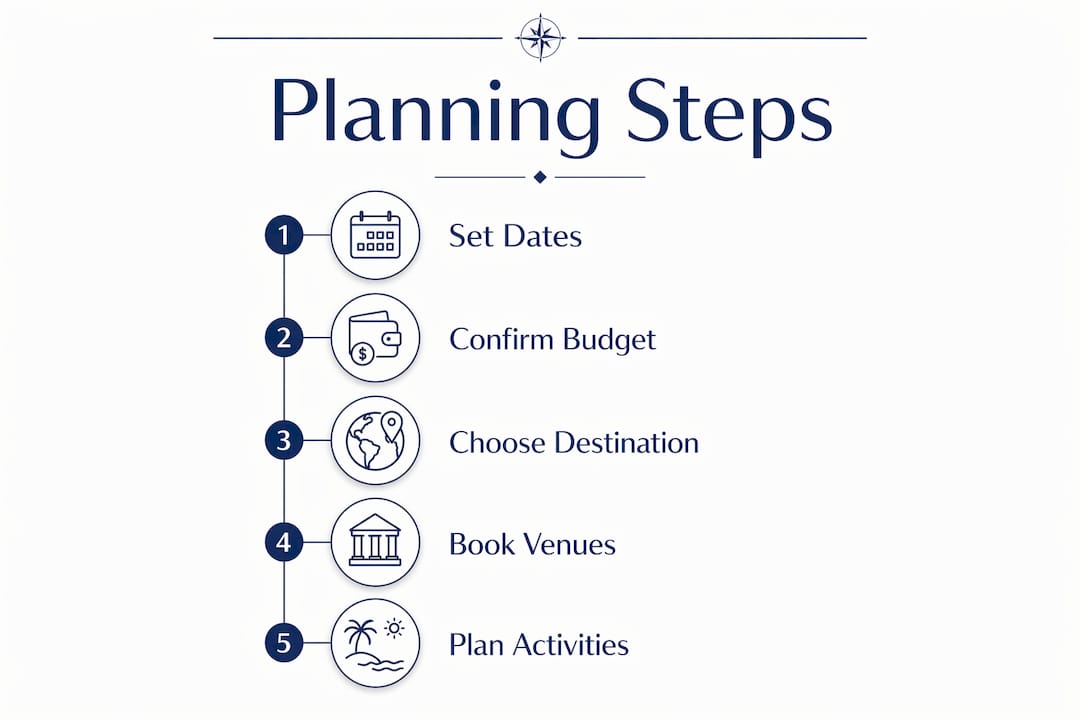
The planning process starts before you pick a single destination. Group size, travel dates, and budget must be locked in first. These three variables determine everything else, from hotel room blocks to private dining minimums.
International group trips require 6–12 months of advance planning to secure luxury venues and coordinate flights and travel documentation. That timeline is not a suggestion. Luxury properties in Europe, Asia, and the Caribbean routinely sell out private dining rooms and exclusive experiences a full year ahead, especially for milestone occasions like anniversaries and destination weddings.
Set your dates before you choose a destination. Locking dates first simplifies availability checks and booking logistics across the entire group. Once dates are fixed, destination options narrow naturally, and the decision becomes far easier to make.
Key tools and steps before you book anything:
- Define group size and type. A corporate incentive group of 20 needs different logistics than a family reunion of 12.
- Set a budget floor, not a ceiling. Plan around the lowest comfortable spend in the group, then allow individuals to upgrade privately.
- Use a shared itinerary platform. Google Docs, TripIt Pro, or Notion work well for keeping reservations, addresses, and times visible to everyone.
- Draft an initial itinerary with AI tools. AI itinerary generators like Travo accelerate the early planning phase and improve geographic and timing efficiency.
- Collect non-refundable deposits early. Early deposits filter out non-committed participants before you pay for anything.
| Planning step | Why it matters |
|---|---|
| Lock travel dates first | Simplifies availability and booking across all vendors |
| Set a budget floor | Keeps the group inclusive without limiting upgrades |
| Collect deposits early | Confirms commitment before any money is spent |
| Use a shared itinerary doc | Keeps every participant aligned on logistics |
| Draft with AI tools | Saves hours on initial route and timing planning |
Pro Tip: Ask every participant to confirm availability for the exact dates before you research a single destination. One scheduling conflict discovered after booking costs far more than a two-minute poll sent upfront.
How do you design a balanced group itinerary?
The most common mistake in designing unique group trips is over-scheduling. When every hour is filled, the group arrives home exhausted instead of refreshed. The fix is a simple ratio.

Plan roughly 70% of each trip day with structured group activities and leave 30% unstructured. That free time prevents fatigue and gives participants space for personal exploration, solo meals, or rest. A group touring Tuscany, for example, might share a morning cooking class and a winery visit, then split for the afternoon before reconvening for dinner.
Choose “anchor” activities that appeal to the widest range of participants. These are the non-negotiable shared experiences that define the trip: a private boat charter in Croatia, a guided food tour in Tokyo, or a sunrise hot air balloon ride over Cappadocia. Everything else builds around them.
Optional activities and rest days prevent fatigue and keep group energy balanced across multi-day trips. Not every participant wants to hike every morning. Building in choice keeps morale high without fracturing the group.
Practical steps for structuring each day:
- Use a poll (Google Forms or Doodle) to vote on must-do activities before the trip.
- Assign a daily point person responsible for logistics: meeting times, transport, and headcounts.
- Build at least one full free afternoon into every three days of travel.
- Keep shared itinerary details updated with exact reservation names, addresses, and confirmation numbers.
- Schedule group dinners as the social anchor each evening, even on free days.
Pro Tip: Add a private culinary experience, like a chef-led dinner with a local chef, as one of your anchor activities. Food creates shared memory faster than almost any other experience, and it works for every age and fitness level.
What are the best practices for group communication and decisions?
Planning by committee leads to indecision. The single most effective structural change you can make is designating one or two leaders with real authority to make final calls. Everyone else gives input, but the leader decides.
The “anchor-and-react” method works better than open-ended group discussion. One lead planner proposes a concrete itinerary draft. The group reacts to something specific rather than generating ideas from scratch. This cuts planning time significantly and reduces the overwhelm that kills momentum in large groups.
Budget conversations are the most common source of conflict in group travel. The budget floor approach solves this cleanly. Base all shared costs on the lowest comfortable spend in the group. Participants who want upgraded rooms, business class flights, or private transfers handle those costs themselves without disrupting group harmony.
A proven communication framework for group trips:
- Appoint one lead planner. This person proposes plans, sets deadlines, and makes final decisions.
- Use structured polls. Replace open-ended questions (“Where should we eat?”) with specific options (“Option A: seafood restaurant, Option B: local trattoria”).
- Set hard deadlines for decisions. “Please confirm your room preference by friday, march 14” removes ambiguity.
- Send weekly itinerary updates in the final month before departure.
- Create a group chat with a clear purpose. One channel for logistics, one for excitement and photos. Mixing them creates noise.
Pro Tip: Never ask the group what they want to do. Offer two or three specific options and let them vote. Open-ended questions in large groups produce silence, not answers.
Common challenges when planning exclusive group adventures
Even well-planned group trips hit friction. Knowing the most common problems in advance means you can solve them before they become crises.
Last-minute dropouts are the most disruptive issue. Collecting non-refundable deposits early addresses this directly. When participants have money on the line, commitment rates rise sharply. Always check cancellation policies on every booking and consider travel insurance for the full group.
Mixed travel styles create tension when the itinerary ignores them. A group that includes both early risers and night owls, or both adventure seekers and spa enthusiasts, needs a schedule that accommodates both. The 70/30 structure handles this naturally. Structured time together, free time apart.
Expense disputes are almost always preventable. Use a shared expense tracker like Splitwise from day one. Agree on how shared costs (taxis, group dinners, entrance fees) will be split before the trip starts, not during it.
“The best group trips are not the ones where everything goes perfectly. They are the ones where the leader knows how to adapt when something does not.”
Logistics hiccups (missed transfers, overbooked restaurants, weather delays) happen on every trip. Build buffer time between activities. Never schedule a flight connection under two hours in a foreign airport. Always have a backup restaurant or activity option for each day.
Safety and contingency planning matter more in group travel than solo travel. Share emergency contact information, travel insurance policy numbers, and the nearest embassy or consulate details with every participant before departure.
Key takeaways
Exclusive group journeys succeed when one leader owns the plan, the itinerary balances structure with free time, and budget conversations happen early and honestly.
| Point | Details |
|---|---|
| Start planning 6–12 months out | Luxury venues and exclusive experiences book far in advance. |
| Use the 70/30 itinerary rule | Fill 70% of each day with group activities; leave 30% unstructured. |
| Designate one lead planner | A single decision-maker prevents paralysis and speeds up every choice. |
| Set a budget floor, not a ceiling | Plan to the lowest comfortable spend; let individuals upgrade privately. |
| Collect deposits before booking | Non-refundable deposits confirm commitment and protect your investment. |
What I have learned from planning exclusive group trips
The word “exclusive” gets misused constantly in travel marketing. Planners assume it means expensive. It does not. Exclusivity is about access, personalization, and the feeling that this trip was designed specifically for your group. A private wine tasting in a family-owned Burgundy cellar costs less than a five-star hotel dinner and creates a far stronger memory.
The single biggest mistake I see planners make is trying to keep everyone happy at every moment. That goal is impossible in a group of more than four people. The better goal is designing a trip where everyone feels heard during the planning process and then trusts the leader to execute. That trust comes from clear communication, not from endless compromise.
Technology has genuinely changed what is possible in the early planning phase. Tools like Travo can draft a geographically logical itinerary in minutes. That draft is not the final product, but it gives the group something concrete to react to, which is exactly what the anchor-and-react method requires. The deeper connections that come from well-curated group travel are worth every hour of preparation.
My honest advice: embrace the fact that something will go wrong. A missed reservation, a rainstorm, a participant who gets sick. The groups that remember their trip as extraordinary are the ones whose leader adapted with grace and humor. Flexibility is not a backup plan. It is part of the plan.
Plan your exclusive group journey with Elitetravelgroup
Elitetravelgroup has spent 35 years designing luxury group travel experiences for milestone celebrations, destination weddings, VIP vacations, and private group adventures across Europe, Asia, and beyond. Every itinerary is built from scratch around your group’s specific interests, travel style, and budget.
Elitetravelgroup charges no service fees, offers a price match guarantee, and is available 24/7 from your first conversation through your return home. Whether you are planning a small group trip to Switzerland or a bespoke European adventure for a larger celebration, the team brings the on-the-ground expertise and vendor relationships that turn a good trip into an unforgettable one. Reach out to Elitetravelgroup to start designing your exclusive group journey today.
FAQ
How far in advance should I plan a group trip?
International luxury group trips require 6–12 months of advance planning. This timeline secures access to exclusive venues, private experiences, and preferred flight options before they sell out.
What is the 70/30 rule for group itineraries?
The 70/30 rule means filling roughly 70% of each travel day with planned group activities and leaving 30% as unstructured free time. This balance prevents fatigue and keeps group energy high across multi-day trips.
How do I handle different budgets within a group?
Set a budget floor based on the lowest comfortable spend in the group. Plan all shared costs to that baseline, and allow individuals to upgrade rooms, flights, or experiences privately without affecting group arrangements.
What is the best way to make decisions in a large travel group?
Designate one lead planner who proposes concrete options and makes final calls. Use structured polls with two or three specific choices rather than open-ended questions to avoid analysis paralysis.
What are group journey packages?
Group journey packages are pre-designed or custom travel programs built for multiple travelers, covering accommodations, transportation, and curated experiences under a single coordinated plan. Luxury versions include private access, personalized itineraries, and dedicated on-the-ground support.
